Daily Hampshire Gazette Editorial – Friday, May 23, 2014
On the Gazette’s front page Friday, reporter Rebecca Everett told the story of Abundance Farm, a project taking shape on one acre between Congregation B’nai Israel and the Northampton Water Department.
The idea is to plant fruit trees and vegetables, creating what organizers call a “food justice farm” that will provide produce for the nearby Northampton Survival Center, provide an outdoor classroom for students of the Jewish day school and be a place where everyone involved can get closer to the Valley’s agricultural roots.
The story was only the latest of many that Everett, who grew up on a dairy farm in Williamsburg, has produced that chronicle the Valley’s agricultural life. Over the past year, she has reported on the Northampton Farmers Market’s 40 years of success. She has described after-school programs at the Crimson and Clover Farm in Florence where kids dig in the dirt for carrots and beets. She has interviewed four young farmers who are setting up what they hope will be a successful economic model at the Stone Soup Cooperative Farm in Hadley.
And she has told the stories of local family farms dealing with complicated questions: Will the next generation want to take over? And if so, what changes will they need to make to be economically viable? Will there be a future for small farms in the age of industrial agribusiness?
Taken as a whole, Everett’s stories put human faces on a newly released report — described in a piece by Everett in the May 15 Gazette — that takes stock of farming in the Valley and finds encouraging trends and signs of resurgence.
The 2012 Census of Agriculture, an update of a federal study last compiled in 2007, found that:
• The number of farms in Hampshire and Franklin counties rose from 1,452 to 1,579.
• The amount of land being used for farming in the two counties increased by 8.7 percent.
• Farm product sales in Hampshire County increased from $38 million in 2007 to $49 million in 2012.
• And in Hampshire County, the number of farms selling direct to consumers increased from 160 to 221; the number of CSA (community supported agriculture) farms tripled from 20 to 67; and the value of direct sales of farm products rose from $3.3 million to $4.45 million.
The numbers reflect trends, such as the interest in buying locally grown and produced food, that have moved mainstream, at least in these parts.
The report, to be sure, included bad news as well. It confirmed what was already known, namely that dairy and tobacco operations, traditional mainstays of agriculture in western Massachusetts, continue to slide, owing to a mix of economic and regulatory factors. In Hampshire County, dairy farms declined from 29 in 2007 to 18 in 2012, while the number of tobacco farms fell to nine, down from 33 in 2007.
Despite those losses, Everett’s reporting, and the numbers compiled by the National Agricultural Statistics Service, suggest that farming remains an integral part of this area’s economy and its identity.
It suggests that some young people who could just as easily pursue other options are choosing farming and that older-generation farmers are adapting their businesses to change with the times.
Last year, in a story about the Valley’s tobacco farmers, Everett interviewed Edward and Catherine Kelly, who have farmed in Hadley for decades. They talked about the ups and downs of the tobacco business, its uncertain future — and its rewards.
“When you’re done, the fields are empty,” Catherine Kelly said, “and you can see the results of your labor.”
That seems to be one of the rewards new generations of farmers are discovering for themselves.
When it comes to promoting sustainable local agriculture, what could be more sustainable than preparing the next generation to understand and act on issues that affect local farms? That’s exactly what the Massachusetts Envirothon environmental education program for high school students has been doing this school year. And those students headed to Leominster on Thursday, May 15th to show how much they’ve learned.
After preparing for the entire school year, 250 high school students from more than 30 Massachusetts communities from Boston to the Berkshires were ready to show how much they know about the environment and this year’s Current Issue – Sustainable Local Agriculture – when they descended on Sholan to compete in the 27th annual Massachusetts Envirothon.
NOFA/Mass in the beginning stages of creating a program to focus efforts on our more suburban members. Initially we will focus on Middlesex County and do some serious and in depth research with our NOFA/Mass members, NOFA Accredited Organic Land Care Professionals, and activist organizations to get the lay of the land with respect to personal and public organic farming and gardening projects.
With this information we hope to shed light on and educate about best practices regarding organic matter development and carbon sequestration in the soil with food production as the vehicle. We want to highlight innovative gardening practices, progressive public organic land management and enhance the connection between service providers and those interested in organic gardening and land care. Hopefully the inspiring successes of those innovators who are on the ground can be spread across the region to those who are hoping to heighten local organic food production. This article is the first in a series.
Expanding (sub)urban edible gardens
In mid March when spring still seemed very far away, it was nice to speak with Ben Barkan. Ben is exemplary of the surge of young folks who have entered farming and are quickly finding successful niches in the market place. Ben founded his Arlington based business, Home Harvest, in 2008. He and his staff provide services that include design and installation of edible gardens, raised beds, landscaping, stone masonry, chicken coops, and greenhouses.
I am always curious about what kind of personality, or perhaps upbringing, allows a person to strike fearlessly out into the world to do what he or she is passionate about. It really started for Ben when he was 15 and got a summer job with Dennis Busa at Lexington Community Farm (formerly known as Busa Farm).
Here is the story, according to Ben:
“I fell in love with the physical labor of farming while working at Busa Farm… Dennis Busa was my mentor and manager while in high school. He was really supportive. I continued to work on Dennis’s farm part time while starting my edible gardening business. I grew up in Arlington and working at Busa Farm was sort of a spontaneous summer job. It was challenging. I had autonomy, and I really enjoyed it. I found out quickly that it would be hard to make a living at farming, and I looked at landscaping as an alternative.” After graduating from high school, Ben worked on over 30 organic farms in Massachusetts, Oregon, California, Hawaii, New Zealand, and Australia. “Inspired by meeting so many awesome people, I decided to start an edible gardening company in Boston,” said Ben.
“While I was traveling in Hawaii, I got a job setting up a vegetable garden. Back home, I got my first client from a connection through Busa Farm. I started the company at 18 and am now 23.” “Organic farming seems to be an emerging trend and a lot of young people are starting to see farming as a career path. Farming offers a lot of self worth,” observes Ben. “Younger people are starting to realize that we need more small-scale, local, and bio-diverse farms. I am currently learning so much in my last semester at Stockbridge School of Agriculture in the Sustainable Food and Farming program. With the proper ethics, I think farming can be a way to save the planet. The most sustainable option of all however is to grow food for yourself. All of our gardens attempt to mimic nature’s efficiency–biodiversity is an important part of sustainability.”
Knowing that growing in cities often means dealing with lead in soil, I asked Ben about contamination issues. “First we take multiple soil tests and find out where the contamination is the worst,” said Ben. “Reducing the bioavailability of lead is crucial. Liming and adding compost can reduce plants’ ability to uptake lead, and a heavy-duty barrier is necessary sometimes. We can also take tissue samples to confirm that the produce is safe. Too much of the wrong type of compost can have negative impacts. Our compost is primarily made from leaves and grass; it’s well rotted and not too rich. When growing in compost made solely from food crops, you can have too many nutrients, which causes adverse effects. Our compost is a custom mix and with all our gardens, we are relying on microbial activity and mineralization. We are letting the microbes do the work.” Ben does not use foliar nutrition sprays. He feels they are not necessary because plants absorb nutrients most efficiently through their roots. He also believes that micronutrients are rarely deficient in Northeast soils and is concerned that some organic growers use copper sulfate sprays for disease control, which can cause toxic levels of copper to accumulate in the soil. Ben is planning to graduate from The Stockbridge School of Agriculture at UMass in the spring.
Additionally, he took a 5-week permaculture design course in Oregon. He has attended numerous NOFA events. “I remember when I was at the 2009, 2010, and 2011 NOFA conferences and took workshops on soil chemistry; now I have been studying it in school and appreciate having the base foundation I acquired from NOFA,” says Ben. “I remember hearing Paul Stamets talk about mushrooms and how they can save the world. NOFA was great at introducing me to a lot of topics. Will Allen was another real inspiration.” Ben also hopes to learn more about herbalism.
I asked Ben what is remarkable about him and/or his business model. “Every garden we design and install is different. Harmonizing each garden to suit each landscape makes a lot of sense. I think the one-size fits all approach is not a good idea because each site is different. The design process takes a little longer with our methods, however our resulting gardens are more holistic and take the entire property into consideration. We try to engage our clients with our work. We want to teach them so they can maintain their own gardens. We try to listen to their goals, and we work with a wide variety of materials when building our gardens. Some customers want to maintain their own garden, and some hire us year after year to maintain [their garden]. Often, a few years after the installation, customers are confident enough to plant and tend to their own gardens. Education is a part of sustainability. Knowing how to generate your own fertility and grow your own food is important.”
Our conversation shifted to climate change. Ben shared his thoughts: “I think encouraging more localized and bio-diverse systems will help ameliorate climate change. There will be less carbon in the atmosphere. Tillage is a part of the problem, and we generally don’t till. We are huge fans of sheet mulching and mulching in general which mimics the forest. You can go into Hadley in the spring and see dust particles in the air from all the farmers plowing up their fields. That is carbon and soil I want to keep in the soil by minimizing soil disturbance. Our sheet mulch consists of cardboard, newspaper, compost, wood chips from local arborists, and local leaf mulch, especially for use with perennials. We don’t use peat moss or cocoa fiber. We try to keep all of our materials locally sourced.”
Lastly we discussed how we must move forward to promote more local agriculture in the urban/suburban setting. Said Ben: “Education is going to play a huge role. During World War II, 20 million Americans grew 40% of the nation’s vegetables. We did it before and we can do it again. Growing your own produce is empowering and the positivity is contagious. I think the movement toward local food systems is already happening. It just has to do with showing people what is possible. So much organic and nutrient dense produce can be grown in a relatively small space. A lot of people don’t know where to start. We teach folks how to take soil tests and work with lead contamination and provide a maintenance manual, discussing how to maintain gardens organically and sustainably. Getting this movement to spread is about sharing the knowledge.”
And here are Ben’s closing words: “I get really excited when I see people growing their own food. I think it is one of the most positive things we can do for our environment and for ourselves. There is such immense satisfaction in tending to your plants, watching them thrive and mature, harvesting the bounty and sharing the harvest with friends and family. This is really what humans evolved to do. Reconnecting with where our food comes from is profound and in need.”
Its the time of year when “change is in the air.” Days are getting warmer and longer, and we’ve even even been threatened by thunderclouds recently. Of course, the annual change of seasons is dwarfed by the significant life change that those of you who are graduating college are experiencing right now!
Leaving college is a big deal – right up there with going to college, getting married, having children, changing jobs or careers, retirement, etc. – you know, the big changes. Transitions.
This time of the year, I get to talk to a lot of students facing graduation – which makes me think about the last day of my own college career. I took a final exam in the morning, packed my car to drive home and was working at my first post-college job that same night – pumping gasoline (39 cents a gallon) at a gas station Continue reading Graduating College (and other transitions in life)→
HerbFest is a celebration of medicinal and aromatic plants presented by students in the Stockbridge School of Agriculture class, STOCKSCH 280 – Herbs, Spices and Medicinal Plants. It is part of the Stockbridge School Medicinal Plants Program.
The number of women who were named as the principal operator of an American farm or ranch increased by nearly 30 percent between 2002 and 2007, according to the U.S. Census of Agriculture. Women composed about 14 percent of principal farm operators in 2007, and that percentage has held steady since then, according to the preliminary 2012 census released in February.Continue reading More women in sustainable farming these days!→
By REBECCA EVERETT – Staff Writer – Daily Hampshire Gazette – April 14, 2014
JERREY ROBERTS Stone Soup Farm Co-op founders Jarrett Man, from left, Susanna Harro, Amanda Barnett and David DiLorenzo Tuesday at their farm in Hadley.
HADLEY — Most farmers will tell you that cooperation is crucial to keeping a farm running like a well-oiled threshing machine.
But at Stone Soup Farm Cooperative in Hadley, cooperation is everything.
Four young farmers formed the worker-owned farm collective last fall and they have been working together to grow greenhouse vegetables and raise chickens since. Susanna Harro, 24, David DiLorenzo, 26, Amanda Barnett, 29, and Jarrett Man, 30, are owners as well as employees at the 81 Rocky Hill Road co-op.
Stone Soup Farm Cooperative is probably the first worker-owned farm co-op in the state, said Lynda Brushett, of the Shelburne Falls-based Cooperative Development Institute, who advises people in the agricultural, fisheries and food industries on starting cooperatives.
“It’s a beautiful model. You need more than one person to run a vegetable farm,” she said.
“We’re sharing the risk and the rewards,” DiLorenzo said while the four talked and munched on spinach leaves in one of their greenhouses Wednesday. “That’s just a good way to live.”
They decided to start the co-op for numerous reasons, including the lure of owning instead of just working on a farm and the dream of forming an equitable business with good friends.
After five years of working and managing area farms, Man bought the Rocky Hill Road farmland and started working it three years ago. He said the communal nature of farming is what drew him to it in the first place, and a co-op reinforces those values. He approached DiLorenzo and Barnett, who are married, and Harro last summer with the co-op idea.
JERREY ROBERTS Amanda Barnett and David DiLorenzo pull out spinach plants in a greenhouse at Stone Soup Farm Co-op in Hadley
“I thought it would be a more meaningful way of farming, and these are the people I felt best about farming with,” he said. “So I went to them and invited them to come research and implement a co-op together.” The group officially organized as a co-op in November and is selling community supported agriculture, or CSA, shares for the summer.
There have historically been many co-ops in the agricultural industry, mostly those made up of member farms that join forces to better market and sell their products — think Cabot Creamery or the Pioneer Valley Growers Association.
Brushett expects that more and more farmers, especially young ones, will be following the lead of Stone Soup and the few other worker-owned farms in Vermont, California and Quebec.
“Recently, young people that are wanting to farm, wanting to farm with each other, and wanting access to land are looking at the co-op model as a way to do that,” she said. “We’re definitely seeing that trend around our area.”
Brushett is helping them get started. She worked with lead author Faith Gilbert to create a free guide to cooperative farming. It was downloaded over 1,000 times in the first two weeks after it was released Feb. 26 on TheGreenhorns.net, a nonprofit that supports young farmers.
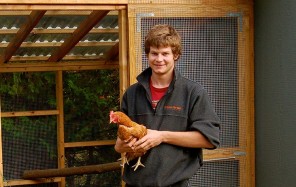
JERREY ROBERTS David DiLorenzo holds a chicken Tuesday at Stone Soup Farm Co-op
All kinds of co-ops are on the rise now, Brushett said. The Cooperative Development Institute fields several calls per week from people interested in starting market and cafe co-ops, child care co-ops, arts co-ops and others.
She credited the trend to a growing interest in socially responsible business ownership and workers’ urge to be “more than just a cog” in a company.
“It might be a consequence of the big recession,” she said. “People were losing jobs and deciding to be more in control of their lives and wanting to create more democratic businesses.”
And when people have a stake in the business, they often make better workers, Brushett said.
“They’re invested and everyone’s equal. You have colleagues you can trust to close the gate before they leave for the day,” she said.
That’s how it is at the Hadley farm cooperative, DiLorenzo said — and why the four friends chose the name Stone Soup Farm, which Man had used for his previous farm business.
In the folk story “Stone Soup,” a stranger with nothing comes to a town and pretends to make soup from just water and a stone, and convinces residents to contribute vegetables and other ingredients until it is a real soup.
“We’re each bringing a little piece to this,” DiLorenzo said.
JERREY ROBERTS Eliza Murphy washes carrots
Building a co-op
The foursome started working together to build their co-op last summer, while simultaneously working out the formal structure of the co-op. They started an LLC, established an official path to membership for future worker-owners, and made the co-op the owner of equipment.
DiLorenzo said the co-op model and Man sharing his farmland has made it possible for himself, Barnett and Harro to own a farm. “The three of us wouldn’t be owners without this, and it’s allowed us to pool our resources and talent to make this possible,” he said.
They come from different places and backgrounds, but all their stories share a common thread: none of them studied agriculture at college, but started toiling on farms after graduation and fell in love with working the land.
Man, from central Massachusetts, came to the area to attend Hampshire College. He worked on several farms before buying the Rocky Hill Road property and starting his own small farm.
Barnett, from Sharon, said she was always interested in agriculture because her mother grew up on a farm. She met DiLorenzo, a University of Massaschusetts Amherst graduate from New Hampshire, while the two worked at local farms. He apprenticed at the Kitchen Garden Farm in Sunderland.
Harro, from Saratoga Springs, N.Y., came here to apprentice at the Kitchen Garden. “I didn’t think I’d stick around long,” she said. “I definitely never thought I’d be owning a farm.”
Of course, owning a farm is not all upside. “We’re sharing the benefits of the work and also the stress of owning a business,” Barnett said.
They have divided up management responsibilities and had countless meetings to make decisions collectively. “At all times, you’re trying to strike a balance between the efficiency of one person just making a decision and having a group decision with input from everyone,” DiLorenzo said.
Each person manages a specific part of the farm. Barnett is in charge of the harvest and what gets included in the CSA shares, as well as some aspects of crop production such as irrigation. DiLorenzo does the bookkeeping, office work, and creates daily and weekly plans to make sure production is on track. Harro oversees the greenhouse production and seeding, and Man takes care of the chickens, maintains the equipment and oversees the apprentices.
The four worker-owners, who all live in Hadley, receive equal monthly stipends as pay and if there are any profits at the end of the year, they will get dividends. They declined to say how much their stipends are.
Over the winter and spring, they produced vegetables for 170 CSA shares, plus eggs for people who want them. The cold spring has delayed planting about two weeks, Man said, but they are now plowing the 15 acres that they farm around Hadley and starting plants in their greenhouses in preparation for their summer CSA. They offer CSAs in Hadley, Amherst, Northampton and Boston, but do not have any plans to sell at farmers markets. They aim to sell between 300 and 400 CSA shares for the summer season.
“We go well beyond what’s required to be certified organic,” DiLorenzo said. They try to avoid spraying at all, he said, even organic sprays.
The farm usually has three paid apprentices, Man said, and they make up a big part of the farm’s work force and identity. While they imagine future apprentices could become member-owners as well, Man said the current scale of the farm cannot support more owners now.
“We would have to have more land and sell more shares,” he said. “But we would be happy to have more owners.”
As the spring semester comes to a close, most classes begin to wind down and prepare for finals. For students enrolled in the Stockbridge School of Agriculture’s Farm Enterprise Practicum course, however, this is far from the case.
With a 1 to 6 credit course in which students plan the farming process for a 6 acre organic farm located in South Deerfield, the students enrolled in Farm Enterprise Practicum are just beginning the implementation of their work.
Their first major public activity for the new student farmers is a Special Topics Fair in which students present the results of their research.
During the spring semester course, students partake in the planning process for the farm work that will take place over the summer. Following the summer, students enroll in Stockbridge 498E, the second half of the Farm Enterprise Practicum.
“About half of the class stays in the summer to work on the farm,” said Amanda Brown, the instructor of the Farm Enterprise Practicum.
“Not only are students planning for the crops; they also each take on an area of interest and they create a research project about how they can implement this on the farm,” explained Jason Silverman, assistant manager of the University of Massachusetts Student Farm.
Among the 12 students enrolled in the course, projects covered topics such as seed saving, record keeping and farm planning, organic disease management, animal rotation, flea beetle management and draft horse husbandry.
Chris Raabe, a student enrolled in the Farm Enterprise Practicum, completed his project on the use of biodiesel. After completing research on biodiesel use at Kansas State University, Raabe was inspired to complete further work on the topic at UMass.
Raabe proposed an implementation plan that would convert cooking oil from the dining halls to biodiesel that could be used for tractors on the University farms and other resource-fueling needs across campus, such as the Physical Plant.
“It’s a compelling project with a lot of hoops you have to jump through,” Raabe explained of his implementation plan. “I’m hoping to build a task force working with different departments in order to get this project going.”
On Wednesday, students in the Farm Enterprise Practicum course showcased the projects they had completed and their plans for implementation at the Special Topics Fair, which took place in room 165 in the Campus Center basement.
“This is great because it is sort of like a big kick-off and allows students to talk to the farmers,” Brown explained.
In the fall, the students will work on marketing the crops that are being produced during the summer. In addition, students will share their research on their special topics and implementation in a student handbook that is published each year and given to the next semester’s students to serve as guidance.
“They sort of write their own textbook,” Brown said. “This is our third year doing this.”
Brown hopes to see a large collection of these handbooks for students to use as resources in the future.
The crops produced over the summer are sold through the Campus Supported Agriculture program, where students at the University can pay ahead and receive weekly shares of produce from the Student Farm.
In addition to the farm located in South Deerfield, students will also be working at the Agricultural Learning Center in North Amherst this summer, located just off of the UMass campus.
“Hopefully, this will increase visibility to other students,” said James Silverman, who graduated with a degree in Sustainable Food and Farming from the University and continues to work with the program today.
Members of the UMass Student Farm recognize the benefits of working with this program. Most specifically, Brown noted the business experience and knowledge that students gain from taking these two courses and participating on the farm.
“Each year’s success keeps it going,” Brown explained. “Half the money we make goes towards supplies and production, while half goes towards labor costs. It’s sort of like a non-profit organization.”
“Everything that we do is applicable to real life,” she said.
“This really was the capstone of my education,” added Silverman, who hopes to see a larger awareness of student farming on campus.
Katrina Borofski can be reached at kborofski@umass.edu.
NOTE: Read the quote below by UMass Extension staff, Katie-Campbell Nelson. Her own graduate research in the Stockbridge School of Agriculture questions the proposed state regulations.
SPRINGFIELD — Dairy farms and other agricultural operations across the state warned Friday they could be put out of business by proposed regulations governing how they apply manure to their lands.
“If you impose these regulations, there will be no dairy farms left in the state of Massachusetts,” Tedd White, a West Hawley dairy farmer with 114 Holsteins, told officials at the third and final Department of Agricultural Resources hearing on proposed “plant nutrient application regulations” for manure, fertilizer, compost and other materials on 10 acres or more of agricultural and non-agricultural land.
“We keep our farms going because it’s in our blood, it’s our heritage. We’re trying to hang on. Dairy farmers aren’t billion-dollar corporations. They can’t afford secretaries to handle paperwork.”
That paperwork, White and other farmers said, includes detailed records of tests of soil and manure as well as a “nutrient management plan” to be developed and updated every three years in accordance with “best practices” developed by the University of Massachusetts Extension Service.
White, who said he was “flabbergasted” by the proposal, said he already has a management plan and the regulations would be “extremely onerous.” He said that narrowly restricting manure-spreading on his seven-plus generation farm to meet guidelines set by people in Boston who have never farmed “will run us out of business,” along with the state’s 149 other dairy farms.
Expressing “anger, sadness and disgust,” Gary Gemme, of Harvest Farm in Whately, said, “I can’t believe that my state would throw its farmers under the bus for some leniency from the EPA when those farmers are as tuned to pollution issues as any in the country.”
Gemme said that farmers understand how manure and other soil nutrients have to be applied to react with flexibility in changing weather conditions, specific varieties of vegetables and fields that are “swapped” from one crop to another or even between different farmers, “responding quickly and wisely to opportunities that do pop up.”
He added, “This whole process seems like an absurd joke to me,” especially in a state that uses what he calculated as 180 times more salt on its “acres” of roads than the farmers apply in nutrients.
Deerfield dairy farmer Peter Melnik criticized the ambiguity and impracticality of the proposal, especially since it ignores the kinds of decisions farmers routinely have to make when faced with conditions such as this past winter’s ice and cold temperatures.
“I won’t know until a week or so whether that (180 acres of) alfalfa made it through the winter,” he said. “If that alfalfa died, I may have to take that land and put that into a crop that requires manure. Am I going to have to defend myself when a neighbor says, ‘Why are you spreading on this field’ or someone looks at my manure management plan that says I shouldn’t be spreading there this year? … Making those quick decisions sometimes has to happen within weeks.”
The agriculture department — which developed the regulations in accordance with 2012 state legislation so that communities can cut nitrogen and phosphorous pollution to waterways to maximize federal Environmental Protection Agency credits — was supposed to have a comment period that ended Friday. But hearing officer Lee Corte-Real announced that the comment deadline has been extended for 60 days, following hearings already held in Boston and Lakeville.
While some called for that period to be extended to 90 days to allow time for the department to consult with UMass Extension, the federal Natural Resource Conservation Service and especially farmers themselves, Ashfield crop adviser Tom Carter told the hearing that 90 days is not long enough. He pointed out that the comment period coincides with farmers’ busy growing season. He urged that discussions on the details of the regulations should not even begin until Oct. 1.
“Fertilizer recommendations without yield goals are worthless,” said Carter, who also questioned how UMass Extension or the UMass soil test lab, already hard-pressed financially, would be able to keep up with the increased burden on farmers that these regulations would impose.
Carter called the proposal “totally unrealistic and a tremendous burden … on small and large growers alike. It will make well-meaning businesspeople into criminals.”
Katie Campbell-Nelson, a UMass Extension agent from Greenfield, described how her own research showed that manure management under the proposed regulations would result in more pollutants to water sources, not less.
She said soil sampling methods differ from crop to crop and with other factors, and described how the proposed regulations differ from UMass educational materials. There are also discrepancies with UMass Extension’s recommendations for late-season manure application, she added.
Campbell-Nelson called for the regulations to allow more flexibility in scientific advances, differences in nutrient sources, weather, crop type and other variants.
“Many variables impact nutrient management decisions, and they need to be evaluated on a case-by-case basis,” said Campbell-Nelson.
Rather than increased regulations with stiff penalties, farmers and others urged the department to work on an education plan using the recommendations of UMass Extension.
In its testimony to the state, the 6,000-member Massachusetts Farm Bureau Federation criticized the lack of coordination with UMass Extension on developing regulations, as the 2012 legislation prescribed.
“Certainly these regulations are not consistent with UMass published information, educational materials and outreach programs.
The requirements of this draft go well beyond UMass information and in some instances outright conflict with UMass guidelines,” the federation’s written testimony states. “The failure of the Department to work with UMass and ensure consistency with established efforts is the major, and root flaw of these regulations.”

 The story was only the latest of many that Everett, who grew up on a dairy farm in Williamsburg, has produced that chronicle the Valley’s agricultural life. Over the past year, she has reported on the Northampton Farmers Market’s 40 years of success. She has described after-school programs at the Crimson and Clover Farm in Florence where kids dig in the dirt for carrots and beets. She has interviewed four young farmers who are setting up what they hope will be a successful economic model at the Stone Soup Cooperative Farm in Hadley.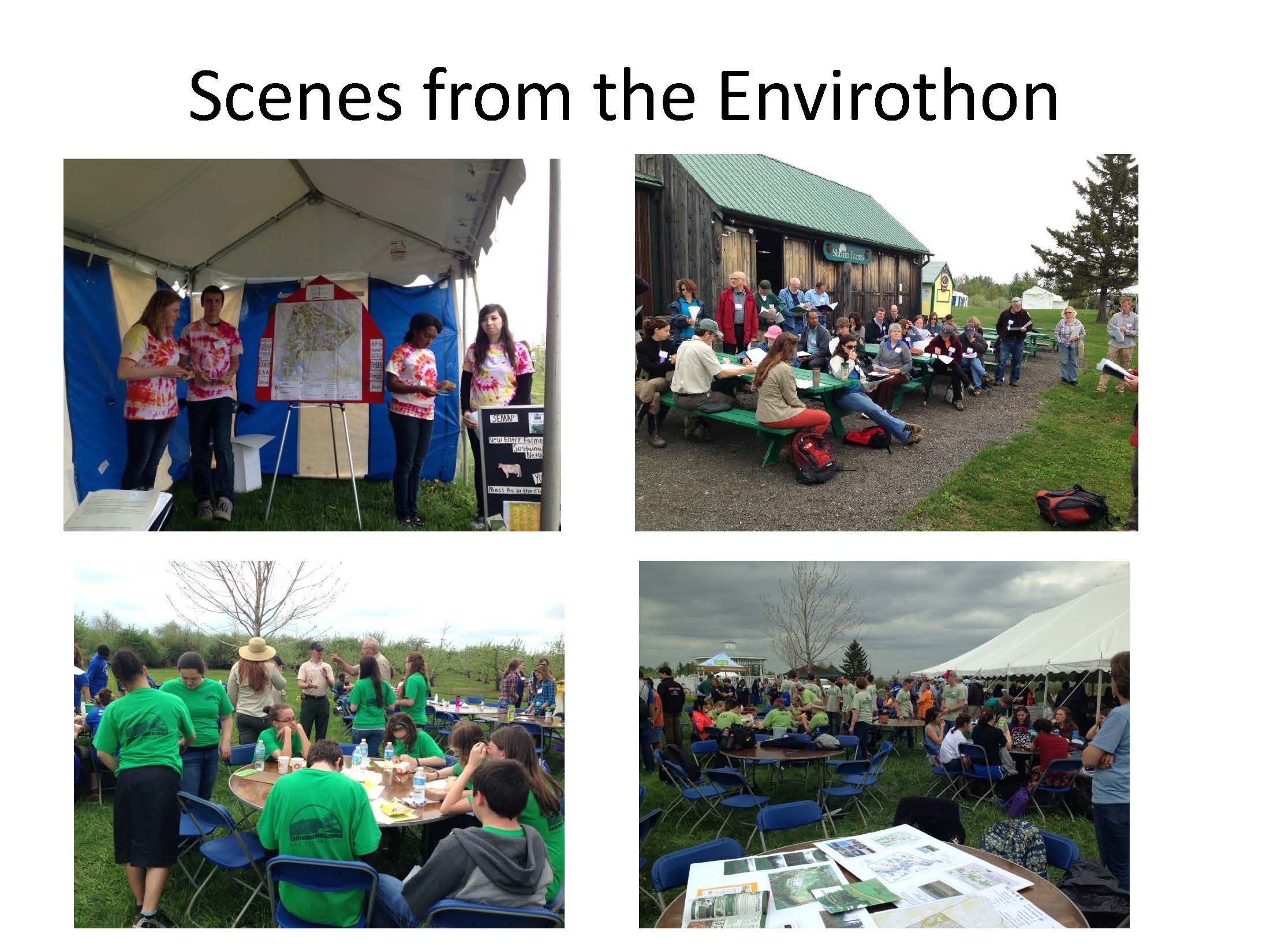
 need more small-scale, local, and bio-diverse farms. I am currently learning so much in my last semester at Stockbridge School of Agriculture in the


 UMass Sustainable Food and Farming