Category Archives: Education

The Year in Food and Farming

By Twilight Greenaway

2012-vegetable-numbers

It’s been quite a year for food and farming coverage here at Grist. Below is a wrap-up of some of the biggest stories of the year.

1. The worst drought in half a century

Corn withered, farmers scowled and resorted to feeding their cows candy, and many predicted the coming of the real Hunger Games. But the country’s worst drought in over 70 years was far more complex than most news sources reported. Most of that industrial corn was heavily propped up by crop insurance (supplemented with taxpayer dollars), while small farmers often remained invisible. droughtanimEven the silver lining — the Gulf “dead zone” shrank for the first time in years – turned out to be a little misleading, as next year’s rains could send more critter-killing farm nutrients into the Gulf of Mexico than ever before. And some scientists believed it was the corn and other huge monocrops that cover the region that were the problem because they leave farms especially vulnerable to changing weather patterns.

Do you want to know what’s really ominous? As of mid-December, Kansas, Oklahoma, and Texas still hadn’t gotten rain.

The official U.S. organic label.

2. Organic takedown

Organics were in the headlines throughout 2012, but two stories grabbed most of the attention. And although they’re very different stories, they may have had surprisingly similar effects. The first was a New York Times article that took a much-needed critical look at the way the organic industry has grown and consolidated in recent years to the possible detriment of the federal organic standards. It was an intriguing piece, but, as I wrote back in July, the author may have overshot the mark when she implied that such changes have rendered the label meaningless.

The second, more hyped story hit the presses nearly two months later, when Stanford University compiled the existing science about nutrition in organic food, and claimed that organic was — again — virtually benefit-less. Many in the food world stepped up to point to the facts that a) most people buy organic food for reasons other than nutrition; and b) the science did in fact report significant differences where it mattered most (it showed lower pesticide residue in produce and little or no antibiotic residue in meat), but that didn’t stop many from trumping the “meaninglessness” of the label. My takeaway: Organic food isn’t a panacea, but I’m still awfully glad it’s an option.

organic-gmo-tomato-carousel

3. GMOs: No labels, but lots to keep track of

The food world watched closely this year as voters in California came surprisingly close (48.5 percent in the final tally) to voting to label genetically engineered (or GMO) ingredients in processed food, despite some nearly $45 million in opposition advertising from pesticide and big processed food companies. And considering the fact that it was one of the most visible food policy fights to pit grassroots organizers against Big Ag, the fact that the race was that close  should give pessimists pause. If nothing else, it means the fight’s not over.

And it’s no wonder; the rest of this year’s GMO news can be easily seen as an argument for the importance of labeling. Scientists pointed to new evidence that genetically engineered seeds might lead to more herbicide use in large-scale farming (contrary to conventional wisdom); farmers battling herbicide resistant “superweeds” were encouraged to switch to stronger, older chemicals, and the U.S. Department of Agriculture put the onus on organic farmers to insure themselves against GMO contamination and told them they had to grow GMO sugar beets or face a sugar shortage. Optimists might take note of the fact that the Supreme Court began preparing to hear the case of a soybean farmer sued over seed patents in 2013 — a case which could put the brakes on one aspect of the biotech industry’s market domination. Either way, GMOs are probably worth paying attention to with or without labels.

raw hamburgers

4. Pink slime and beyond — food safety in the spotlight

“Pink slime” — the term used for Lean Finely Textured Beef treated with ammonia and used as an additive in conventional hamburgers — became a household name in March of 2012. The product had been in use for years, and its now-famous nickname had also been in effect for a while at that point. But the product made its big national debut on Jamie Oliver’s Food Revolution right around the time the news broke that school lunches around the nation were serving pink slime, and the rest was media history. Of course, as we reported, pink slime was just the tip of the iceberg when it comes to gross stuff in industrial meat.

In fact, there seemed to be no shortage of gross, toxic stuff in our food this year. Scientists found also a surprising quantity of arsenic in rice (hint: it gets into the soil via pesticides and fertilizer from factory farms, where chickens are fed arsenic as a growth promoter). But that’s not all. Eaters also found salmonella in peanut butter, cantaloupe (again), ground beef, tuna scrape (those extra bits they use in spicy tuna rolls), and dog food. In fact, there were so many food safety frights this year, and so little sign that the Food and Drug Administration was planning to do anything about it, that several news outlets declared food safety in this country a big old failure.

Meanwhile, the U.S. Department of Agriculture moved forward with plans to “modernize” — and by that they mean privatize — part of its meat and poultry inspection program. It’s a change that could make industrially produced poultry a lot crappier (literally).

5. The farm bill that wasn’t

Barring some kind of last-minute aberration, it’s looking like the giant, multibillion-dollar food and farming bill will have made it though an entire year of negotiations and non-negotiations (in equal parts) without moving an inch. Grist tracked the farm bill’s “progress” through the course of 2012, looked closely at what lawmakers proposed on both sides of the aisle, and the implications for the big picture. We’ve collected the bulk of our farm bill coverage here, but to make a long story short: good food movement advocates want to keep federal funding in place for things like on-farm conservation, food stamps, and organic farming, while reducing the giant subsidies for big commodity farms. Farm-state lobbyists — and the GOP-controlled House — want just the opposite. What happens if the farm bill goes over the fiscal cliff? Well, it looks like farm policy might just go back to the future.

caption6. Something’s fishy

With all the attention seafood fraud has received this year, you’d think it was all that was going on in the seafood world. Sure, no one wants rockfish when they’re paying for halibut, but the ocean (and the food we grow there) might warrant your attention for a few other reasons. We reported on the ongoing effort to keep small “forage” fish from being completely wiped out by an industry that feeds factory farm animals, for instance, as well as the recent, shocking move by the FDA to clear the way for the approval of GMO salmon, and the crucial relationship between mercury, the burning of fossil fuels, and seafood. We also helped sound the alarm about oysters, which are in danger thanks to the increasing acidification of the ocean and have inspired scientists and farmers to work together in a rare partnership. We also highlighted several attempts to crack the elusive “sustainable aquaculture code,” including this barramundi operation, an experimental deep water operation, and this project, which farms multiple edible species at once in the waters right outside New York City.

Photo: Vamapaull7. Urban farming: Blowing up

On the positive side, 2012 proved that urban farms are much more than a passing trend. Take the impressive food forest planned for Seattle, or the artist who took to grafting fruit-bearing branches onto ornamental city trees in San Francisco. How about this bee corridor? Or this giant urban farm corridor developers are planning for Chicago’s South Side? There is so much inspiring work happening on the urban farming front that several great projects sprouted this year simply to take stock of the abundance of urban farms around the country. Grist also heard from city farming legend Will Allen on the advent of the book he released. And we explored tough questions like: Can urban farms get too big? Are urban homesteaders clueless about class? And what exactly is the relationship between growing food and gentrification, anyway?

Local Food Hub in Virginia takes care of distribution for local growers.

8. Local food: Scaling up

The bad news is very few companies produce the bulk of our food, and this consolidated system puts the squeeze on both food producers and consumers. But 2012 also saw great strides in the growth of an alternative, localized system. Yes, this was the year “food hub” became a buzz word, and people all over began stepping up public and private efforts to get more local food to more people. From plans to grow and distribute food from an old prison in Illinois and mondo greenhouses outside Washington D.C.; to funds that allow ordinary people to pool their dollars to support small producers; the rapid expansion of large community-supported agriculture (CSA) box subscription services; new USDA grants for value-added foods; and other important efforts on the part of the government to boost local food infrastructure. One thing is clear: People want a choice, and choosy people want local food.

Temple Grandin has said raising pigs in gestation crates is like "living in an airplane seat."
Temple Grandin has said raising pigs in gestation crates is like “living in an airplane seat.”

9. More meat, less meat, better meat?

Factory farms aren’t going anywhere. In fact, several states have seen a rise in the number of concentrated animal farming operations (CAFOs) this year — mostly to satisfy the growing international demand for meat. These farms are still bad for the nearby land, water, and air — not to mention the animals and people involved. (In fact, some scientists are actually documenting the way factory farms impact the health of nearby residents.) CAFOs are also where a whopping 80 percent of the antibiotics in this country get put to use every year — a fact that correlates directly to the rise in antibiotic-resistant infections.

But there are many encouraging signs of change. For one, 2012 saw an amazing number of businesses — from the uber-progressive Bon Appetit Management Company to less likely candidates such as Burger King and Sysco — phase out some of the least humane practices in animal agriculture today: the use of confining gestation crates for sows.

This year also brought wind of all kinds of inspiring alternative projects. We featured a Food Inc. chicken farmer’s new, pasture-based operation, a humane farm deep in the heart of CAFO country, a group of young farmers raising heritage breeds in the Sierras, and an agroforestry expert who is grazing animals in perennial fruit and nut orchards as a way to create healthy soil and sequester carbon. And, on the macro level, we looked into a few promising experiments that could be a game changer for pasture-based systems: A business creating a national network of pastured egg operations and the first grass-fed beef mega-farm.

Rodrigos Tomatoes farmworker10. Food workers became slightly less invisible

You can’t have truly sustainable food if the people who made it are working in substandard conditions. And while food workers have traditionally gotten the short end of the stick (only 13 percent earn a living wage), 2012 may just have been the year that labor issues entered the food conversation in earnest on a national level. Organizers collected important data about workers throughout the food chain [PDF] and the media responded. Fast-food employees went on strike. Chipotle signed onto an agreement to support fair working conditions for tomato pickers after resisting for years; students on a variety of campuses pushed for more rights for cafeteria employees; and the small but important domestic fair trade effort began to take root. Now the question is: If Obama’s next term brings immigration reform, will it truly help the people who grow, harvest, transport, pack, ship, and cook the food we eat? Only time will tell.

What did we miss? Tell us which food and farming stories stuck out to you this year.

Original Post.

—————————————————————————————————————-

For anyone who wishes to study Sustainable Food and Farming, please consider our UMass Bachelor of Sciences degree or our 15 Credit Certificate Program.

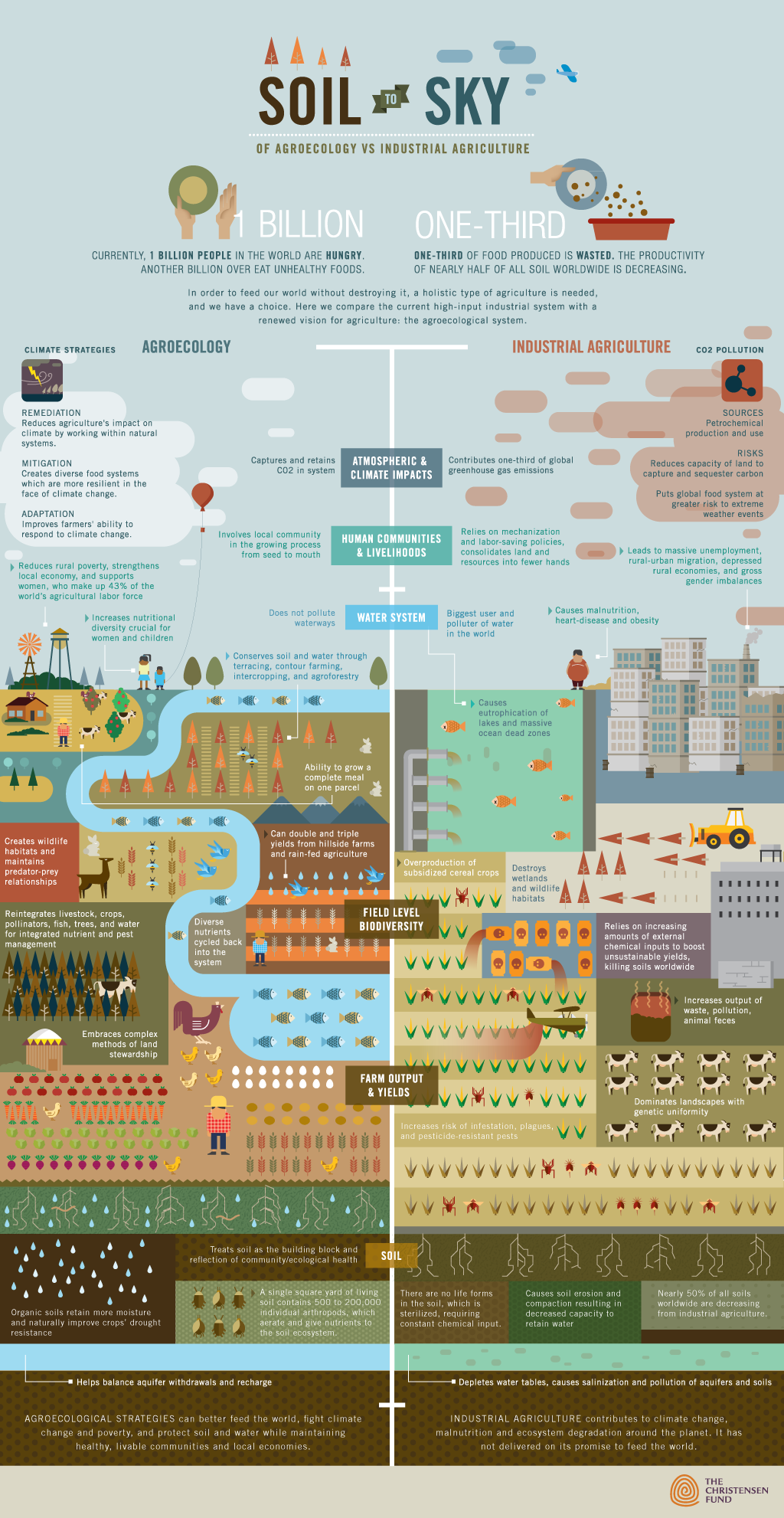
 

Agroecology or Industrial Farming?

Danielle Nierenberg

Sustainable Agriculture Expert

Take a look at this interesting infographic from The Christensen Fund that evaluates the major differences between agroecology and industrial agriculture.

Downsides of the industrial agricultural system include a huge reliance on petrochemicals and heavy mechanization. Agriculture contributes roughly one-third of global greenhouse gas emissions, and industrial agriculture can also be a tremendous user and polluter of the world’s water resources.

But the graphic also shows how agroecological approaches — including the incorporation of livestock and crops, integrated pest management, and cover cropping — can not only reduce the burden of agriculture on the environment, but also improve nutrition and increase incomes. Agroecology can actually conserve and protect both soil and water — through terracing, contour farming, intercropping, and agroforestry — and absorb greenhouse gases like carbon dioxide. And agroecological practices could double and triple yields in poorer areas, where many farms lack irrigation infrastructure, or are situated on hillsides or other difficult farming sites.

Reports and organizations such as State of the World 2011: Innovations that Nourish the Planet, the International Food Policy Research Institute, the United Nations Human Rights Council, and the International Assessment of Agricultural Knowledge, Science and Technology for Development all agree: agroecology can protect and restore degraded soils, improve biodiversity, decrease pollution, and encourage communities to become more involved in agriculture. And because agroecology operates within the natural organization of an environment, it creates diverse agricultural systems which are more resilient to dramatic weather events, making it an increasingly sound option for feeding the world.

Original Post

Ag Research Fails to Address Today's Problems

A blue-ribbon panel of scientific and technology advisers to President Obama warns that the nation risks losing its longstanding supremacy in food production because research in agriculture has not kept up with new challenges like climate change, depleted land and water resources and emerging pests, pathogens and invasive plants.

The president’s Council of Advisers on Science and Technology, chaired by John P. Holdren, director of the White House office of science and technology policy, and Eric Lander, president of the Broad Institute of Harvard University and the Massachusetts Institute of Technology, urged a commitment of $700 million in additional money for new agricultural research — but deployed in very different ways than the money that is currently doled out.

“Our most important conclusion is that our nation’s agricultural research enterprise is not prepared to meet the challenges that U.S. agriculture faces in the 21st century,” the panel states in its report, which was issued on Friday.

The report lays out seven challenges ranging from competition for water to the impacts of climate change and biofuels production on food yields. “The need to deal with these growing challenges in agriculture, including new pests and pathogens, controlling agriculture’s environmental impact, health and nutritional concerns and international food security underscores the importance of agricultural research to the health, prosperity and security of the nation,” they wrote.

But the panel found that federal money for agricultural research has, in real dollars, remained roughly the same for the last 30 years, according to the report, while financing for research in other areas of science and technology has risen strikingly.

Moreover, because so little of the money is awarded competitively, the report’s authors concluded, it is not spurring innovation and is often duplicating research being done by private companies. Excluding recent research on biofuels production, less than $500 million per year is available for competitive grants in agriculture, the report said. That amounts to roughly 2 percent of the competitive funding from the National Institutes of Health and 6 percent of that from the National Science Foundation,” the panel wrote.

“One consequence of the small amount of competitive funding for agriculture research is the decline in training of new agriculture scientists and the hindered recruitment of a new generation of the best young scientists into this area,” the study said.

The Department of Agriculture is the largest federal grantor of funds for agricultural research, but roughly 66 percent of what it distributes stays in-house to finance its own research units like the Agricultural Research Service and the Economic Research Service — roughly double the amount that other federal agencies retain for research purposes.

Additionally, some of the research dollars that the department distributes through land grant universities is used for permanent faculty salaries, which the report found “could unintentionally dissuade researchers from the challenging work of performing at the cutting edge of science and ultimately producing novel, innovative research.”

The bulk of research money is spent on a handful of commodity crops, particularly corn and soybeans, for which private companies enlist battalions of highly educated plant breeders, geneticists, laboratory technicians and other skilled workers in research and development.

The report also underscores how deeply agriculture meshes with energy, health, environmental and even national security issues. For instance, the panel noted that despite the nation’s growing reliance on biofuels, little research has been done on the impact that droughts and other extreme weather might have on the nation’s energy supply.

It also noted the growth of interest in the role of food in human health and well-being, including growing problems like obesity and diabetes. “As part of the public investment in agricultural research, funding should be provided to explore how plant and animal products can be used or modified to respond to this crisis in nutrition and health by developing new varieties of food products and new approaches to food processing,” the panel wrote.

The group also called for the proposed $700 million in new money for agricultural research to be distributed through a competitive process and that a portion be used to ensure that some of the nation’s most talented graduate students and post-doctoral researchers take part.

Original Post

USDA Response

To the Editor:

U.S. Agricultural Research Is Faltering, Report Warns” (Green blog, nytimes.com, Dec. 10) sheds light on a pressing issue: the urgent need to finance agricultural research. But as the Agriculture Department’s chief scientist, I disagree with the characterization that our research is faltering.

Agricultural science has led our country to be the global leader in feeding the world. It has also returned more than $10 to our economy for every $1 invested in research. Continued innovation and investment are critical to maintaining our leadership and our competitive edge.

Our research is focused on the grand challenges of the 21st century — providing food security while meeting other demands placed on agriculture for fiber, fuel and other feedstocks; preserving natural resources; and adapting to climate change — and on fostering a culture of open science internationally.

Despite financial constraints, the quality of our work remains of high quality and value.

CATHERINE WOTEKI
Washington, Dec. 14, 2012

The writer is under secretary for research, education and economics at the Agriculture Department.

The Next Frontier for Climate Activism: College Investments

By    Dec. 11, 2012

Climate activists need to take their victories where they can. There was little success to celebrate at the U.N. climate summit in Doha, Qatar, which concluded over the weekend. Delegates agreed to extend the expiring Kyoto Protocol by a few years — albeit without the participation of previous signatories like Japan and Russia, which really left only Australia and most of the developed economies of Europe. The U.S. — which never ratified Kyoto to begin with — offered little on its own, and developed nations put off resolving a debate over the promise of providing tens of billions in climate aid to poor nations. Delegates agreed to finalize a new, wider global pact on climate change by 2015 that would take effect by 2020 — but furnished no real details on what that agreement would actually do. Even by the low standards of the U.N. climate process, Doha was a disappointment.

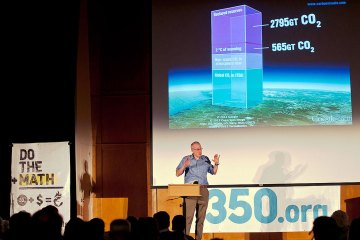
That’s one reason climate activists are focusing their efforts closer to home — particularly on America’s colleges and universities. Thanks to the efforts of the writer turned activist Bill McKibben‘s 350.org, students at schools around the country are pushing university administrators to sell off any investments in fossil fuel companies from collegiate endowment funds. The strategy is called divestment, and if it sounds familiar, it’s because student activists used the same method — mostly successfully — to push universities to stop investing in apartheid-era South Africa during the 1980s. One school, Unity College in Maine, has already taken action to dump its fossil fuel investments, and the campaign is active in more than 150 other U.S. colleges and universities. “In the near future, the political tide will turn and the public will demand action on climate change,” wrote Stephen Mulkey, the Unity College president, in a letter to other college administrators. “Our students are already demanding action, and we must not ignore them.”

(MORE: Why Global Fuel Prices Will Spark the Next Revolutions)

The money at stake in the divestment fight could be significant: colleges and universities have endowments worth more than $400 billion, depending on fluctuations in the market. While there’s no way of knowing how much of that goes to fossil fuel companies like Exxon or Shell, those firms do represent a large portion of the stock market, representing nearly 10% of the value of the Russell 3000, a broad index of 3,000 American companies.

But the divestment fight is less about money than it is about the moral status of the fossil fuel industry. By calling on universities to divest themselves of oil, gas and coal companies, student activists are trying to draw an equivalency between a what is now a widely-acknowledged social evil — an apartheid regime — and a fossil fuel industry that sells the products that are chiefly responsible for manmade global warming. To McKibben and his allies, the fossil fuel industry is the new tobacco — and should be treated as such, as he told the Huffington Post in a recent interview:

Our criteria is that it’s okay to invest in companies so long as they stop lobbying in Washington, stop exploring for new hydrocarbons, and sit down with every one else to plan to keep 80 percent of the reserves in the ground. We just need to change the power balance. They’re making so much money. The popular notion is that Americans are addicted to fossil fuels but I find that’s not true; most people would be happy to power their lives with anything else. The addicts are the big fossil fuel companies that are just fatally addicted to the level of profit they are able to deduce. They can’t help themselves you know — so we’re going to have help them.

(MORE: The New Oil and Gas Boom)

While Unity College has led the way on divestment, so far there’s little evidence that other colleges and universities are eager to follow suit, though some institutions like Tufts University in Massachusetts are at least considering calls for divestment. No school with an endowment greater than $1 billion has agreed to divest so far, and Harvard University — which has the nation’s largest endowment at $31 billion and happens to be McKibben’s alma mater — has said that it won’t divest, even though 72% of Harvard undergraduates voting in recent campus elections supported a call to ask the school to do so.

In some ways it’s not completely fair for student activists to focus on the fossil-fuel investments of their schools, given that colleges and universities are doing more to combat climate change and go green than just about any other institution in the country. More than 600 U.S. schools are part of the American College and University Presidents’ Climate Commitment, under which signatories agree to complete a greenhouse gas emissions inventory and take immediate steps to reduce carbon output. But at the same time, American universities aren’t shy about holding themselves to a still-higher standard when it comes to progressive causes — and for many college students today, there’s no cause greater than fighting climate change. University presidents who don’t fall in line should get used to hearing protests outside their offices. Just like their forerunners in the apartheid battles of the 1980s, these climate activists won’t stop until they win.

MORE: Climate Change: Polar Ice Sheets Melting Faster, Raising Sea Levels

Schools Add In-House Farms as Teaching Tools in New York City

By

scholIn the East Village, children planted garlic bulbs and harvested Swiss chard before Thanksgiving. On the other side of town, in Greenwich Village, they learned about storm water runoff, solar energy and wind turbines. And in Queens, students and teachers cultivated flowers that attract butterflies and pollinators.

Across New York City, gardens and miniature farms — whether on rooftops or at ground level — are joining smart boards and digital darkrooms as must-have teaching tools. They are being used in subjects as varied as science, art, mathematics and social studies. In the past two years, the number of school-based gardens registered with the city jumped to 232, from 40, according to GreenThumb, a division of the parks department that provides Continue reading Schools Add In-House Farms as Teaching Tools in New York City

The art of systems thinking in driving sustainable transformation

According to this blog post in The Guardian: Sustainable Business Blog systems thinking helps us to “change systems and help multiple stakeholders find a common vision.”

thinking

Systems thinking may represent the next phase in the evolution of sustainability, but it is not an arena for corporations to enter lightly.

While collaboration may offer the best opportunity for scaling up change, it is far from easy and requires a certain skill set, including a sense of humility and sensitivity, that seemingly all-powerful corporations are often not well versed in.

So I thought it would be good to outline some of the essential ingredients for a successful systems change programme.

I give the credit for these guidelines to two women I met at the SXSW Eco conference in Austin, Texas; Sarah Severn, director of stakeholder mobilisation at Nike, and Darcy Continue reading The art of systems thinking in driving sustainable transformation

UMass Stockbridge School, Wildwood embark on grow local partnership

By By NICK GRABBE Staff Writer

Thursday, October 25, 2012

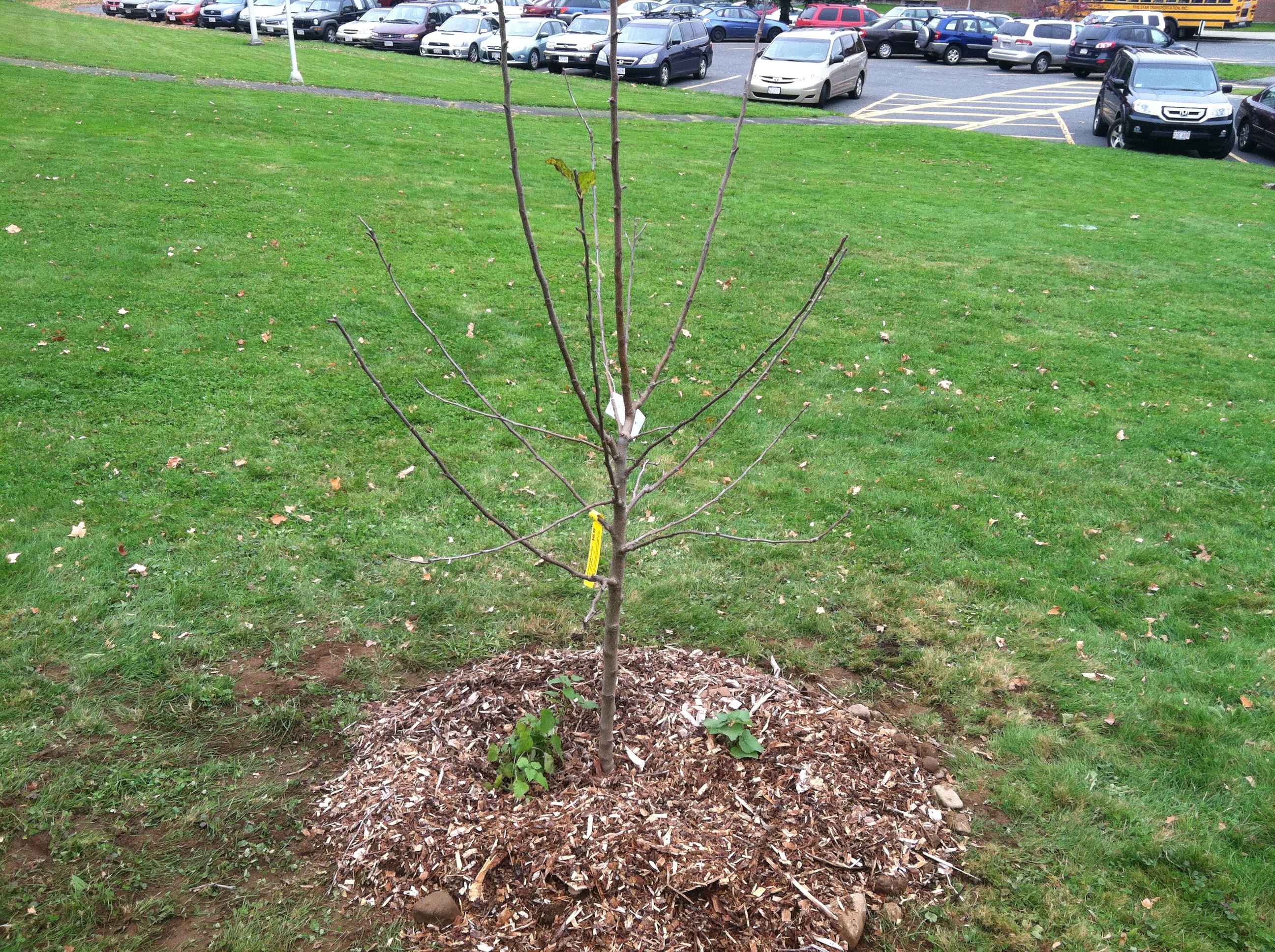
AMHERST — Wildwood School kindergarteners and Principal Nick Yaffe, sat in a circle Thursday around a hole in the ground where an apple tree was about to be planted.

Ryan Harb, coordinator of the permaculture program at the University of Massachusetts, who carted in two semidwarf apple trees, asked the children if they had ever eaten apples. Every hand shot up.

“The reason we came here and want to plant this apple tree is that we’re really passionate about growing food, so we wanted to give you an opportunity to grow some food with us,” he explained.

They shook out the dirt from the sod that Harb and his colleague, Tripper O’Mara, had dug up. One child found a large worm, and as his classmates gathered around to look at it, Continue reading UMass Stockbridge School, Wildwood embark on grow local partnership

National Grid Green Scholar Recognized at UMass

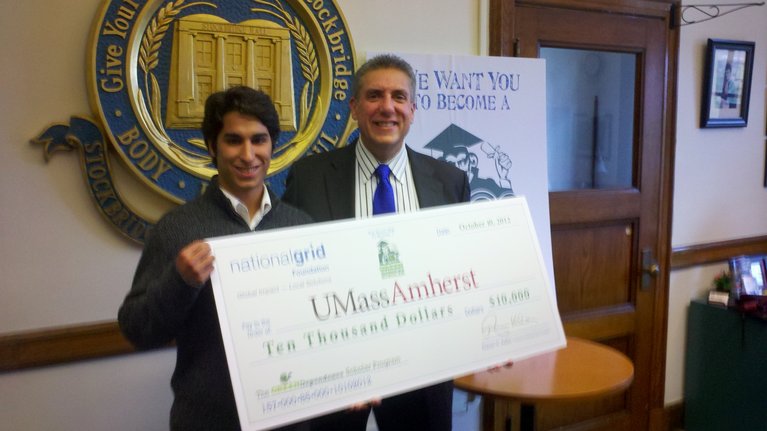
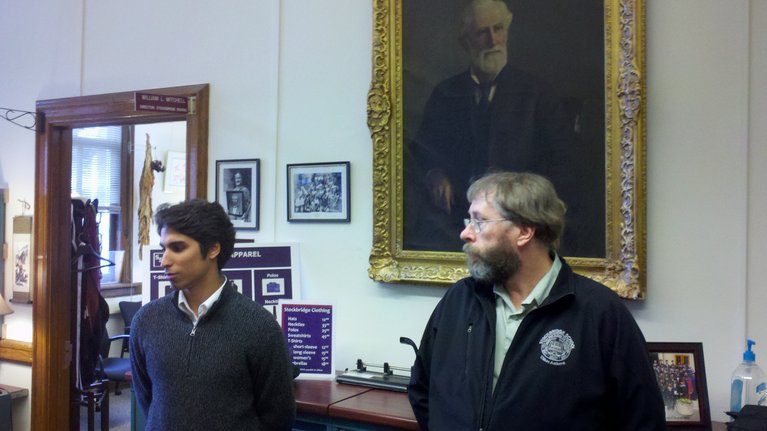
Congratulations to Mr. Derek Silva, a sophomore in the UMass Sustainable Food and Farming program in the Stockbridge School of Agriculture, for being selected as the recipient of the 2012 National Grid Foundation Green Scholarship Award.

Presenting the award in Stockbridge Hall was Mr. Robert Keller, President of the National Grid Foundation.

Derek was selected by the faculty of the Stockbridge School of Agriculture as an outstanding example of a young person committed to both academic excellence and sustainable living.  His education includes practical, scientific and policy aspects of sustainable food and farming.

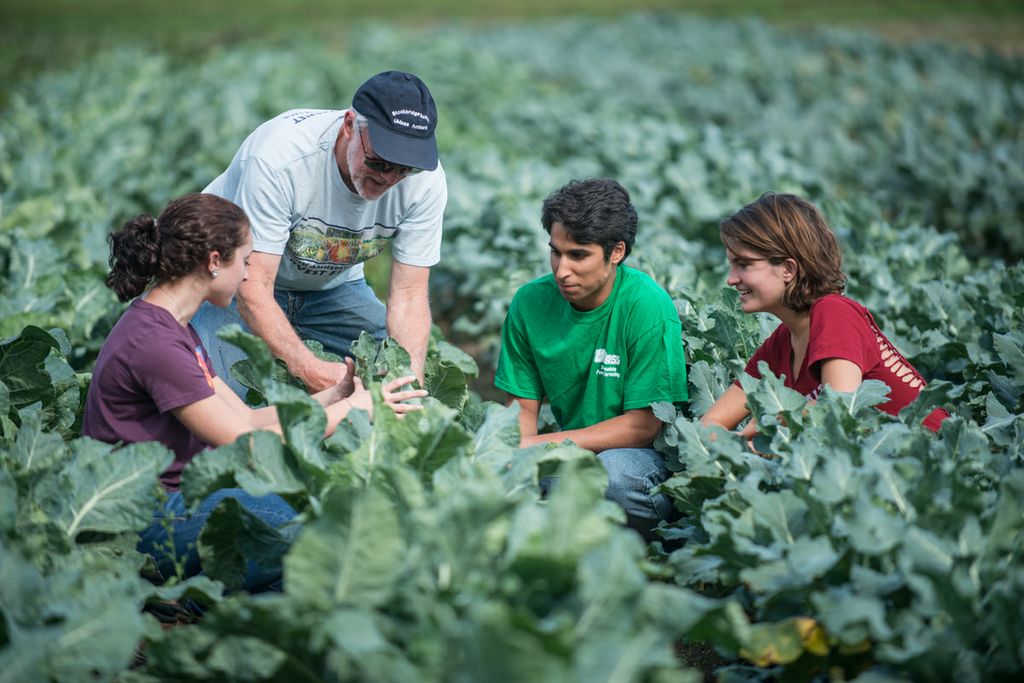
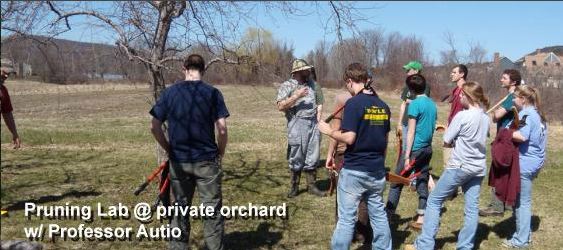
In this photo, Derek and other Sustainable Food and Farming students learn how to prepare cauliflower for harvest at Simple Gifts Farm In North Amherst, MA.   

Derek, who comes from Lowell, MA, hopes to pursue a career in advocacy for sustainable issues including local farming.  He is currently studying sustainable food and farming and will focus on public policy and advocacy in his degree.  His family originally comes from a farming community in the Azores and Derek’s grandfather is an avid gardener.

As part of the presentation, Dr. Wesley Autio (pictured above), Director of the Stockbridge School of Agriculture, met with Derek and Robert Keller to talk about the rich history of the school and its recent elevation to an academic unit in the College of Natural Sciences.

————————————————————

Special thanks to the National Grid Foundation and congratulations to Derek Silva from the faculty in the University of Massachusetts College of Natural Sciences.


Boston Globe Highlights Stockbridge School of Agriculture

September 18, 2012

UMass steps up to meet the demand

For evidence of farming’s increasing popularity, look no further than Stockbridge School of Agriculture at the University of Massachusetts Amherst. In 2000, when the school launched its sustainable food and farming program, 10 students were enrolled. Today, the program has 75 students, about 25 in the two-year associate’s degree program and 50 pursuing a four-year bachelor of science.

Stockbridge, with a total enrollment of about 329 students, also offers majors in areas such as horticulture and turfgrass management.

Not everyone who goes through the sustainable program ends up in farming. “About a third of our students are looking at small farms,” says John Gerber, a professor at the Stockbridge School. “But a third are looking at public policy and advocacy, and about a third are looking at youth education. Growing things is what we know best, but the students are broadening how we think about agricultural education.”

Keith Boyle, 22, is one recent Stockbridge graduate who started farming before the ink on his diploma was dry. At 14, the East Bridgewater native began working for cranberry grower Peter Oakley, at first reluctantly, and then with great enthusiasm. He attended Norfolk County Agricultural High School and then Stockbridge.

When a small bog came on the market a couple of years ago, Oakley purchased it and held it for Boyle until last spring, when he was able to buy it, thanks to an interest-free loan from UMass’s Lotta Crabtree fund and another loan from Oakley.

“The loan went through in April, so before I graduated, I had the property,” Boyle recounts proudly.

As of this summer, the 94-year-old UMass agriculture program has been elevated to a full academic unit, with its own faculty and education offered up to the doctorate level and a new Undergraduate Agricultural Learning Center in the offing.

“UMass has decided this is a growth area,” says Gerber, “and the Stockbridge School is growing.”

——————————

JANE DORNBUSCH

Images added by J. Gerber

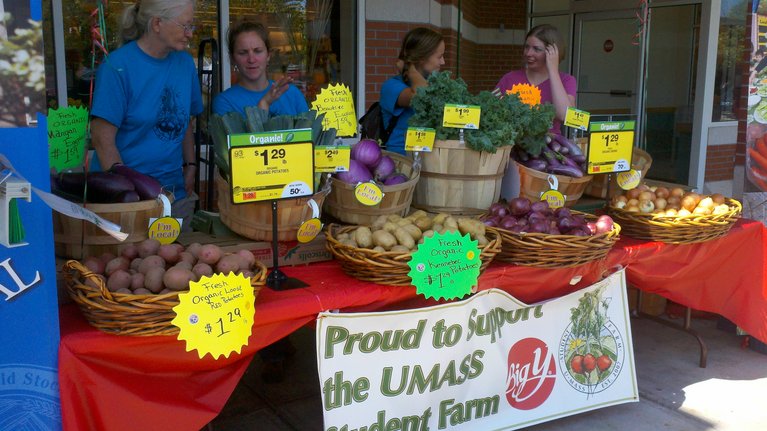
The Big Y is selling vegetables grown by UMass students

Today was the kick-off of a long-term commitment from the Big Y grocery store in Hadley, MA to sell produce grown by UMass students in the Student Farming Enterprise class.  UMass instructors, Amanda Brown and Ruth Hazzard, were out in front of the store today with several of their students displaying fresh vegetables grown at the Student Farm.

Please check out this short video about the partnership with the Big Y World Class Market!

2012 Marks the 6th season of the UMass Student Farming Enterprise program at UMass. SFE began in the fall of 2007 with two students growing kale and broccoli through an independent study project to sell to the UMass Earthfoods Cafe.  In spring 2008, the farming enterprise project was established as a year-long university class.  This year the farm will increase production again to allow more students to participate in the course and serve more diverse local markets.

The class is sponsored by the Stockbridge School of Agriculture and currently listed under the title PLSOILIN 498E – Student Farming Enterprise.  The project has received support from the Massachusetts Society for Promoting Agriculture, UMass Auxiliary Services, and the Sustainable Food and Farming program.

The Student Farming course is limited to 10 students (there is one opening remaining for this semester), and takes place both on and off campus.  Students are responsible for identifying markets for the produce, planning out in advance for the crops, visiting farms in the immediate area, managing plants in the greenhouse, using market strategies to achieve desired yields, and learning farming methods.  All produce grown is United States Department of Agriculture (USDA) certified organic.

In addition to selling to the Big Y, student farmers sell produce to the UMass Dining Services and directly to customers through their Friday afternoon farmers market in the UMass Student Union as well as a membership CSA.  In the fall of 2012, the Student Farming Enterprise will offer 50 shares of local, organic produce to the UMass community. Members include students, faculty, and staff.  Shares include over 15 pounds of fresh weekly organic produce over a 10 week period (September through November). The cost of a share is $325 for the season.  Anyone interested in purchasing a share may contact the student farmers at studentfarm.enterprise@gmail.com

For more on the UMass Student Farming Enterprise class, see this short video:

For information on the project, contact Amanda Brown at studentfarm.enterprise@gmail.com.