All posts by jgerber123

I teach sustainable food and farming at the University of Massachusetts and try to contribute to my local community without causing too much harm....

The Cost of Industrial Ag

img_1024

By Gracy Olmstead

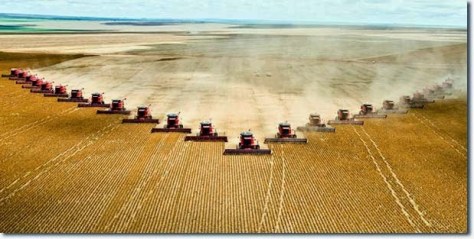
When most Americans think about agriculture, they picture a small mom and pop farm with a few hundred acres and a small group of happy cows. Few realize that small agricultural enterprises are far from the norm today: as Leah Douglas wrote for Pacific Standard yesterday, “just four companies control 65 percent of pork slaughter, 84 percent of cattle slaughter, and 53 percent of chicken slaughter. Milk production is largely shaped by one large processor, Dean Foods, and one large cooperative, Dairy Farmers of America.” What are the practical results of this? Douglas writes,

Farmers face less competitive markets in which to sell their goods, leaving them vulnerable to any price offered by a buyer. Distributors and suppliers feel their prices squeezed as large retailers like Walmart leverage their growing power over the supply chain. Eaters are faced with an illusion of choice, wandering through supermarket aisles where dozens of seemingly competitive products might be owned by the same one or two food processors. Workers on farms and in meatpacking plants face pressure to increase production, sometimes at the expense of their safety. Animals living on factory farms are crowded into stifling barns, often receive unnecessary antibiotics, and are susceptible to disease.

Crony capitalism has been a problem in American agriculture for some time; our Farm Bill (which Jim Antle has called “welfare for the rich and politically connected”) doles out subsidies and financial supports to our country’s biggest corporatized farms. This can foster the sort of consolidation described above, while having a deleterious impact on the health of our land and communities, and a detrimental effect on competition and growth in our farming economy.

Throughout this presidential election, “big business” and “big banks” have gotten a lot of attention due to Bernie Sanders’s influence. Yet despite his crusade against large U.S. corporations, very little attention has been paid to agriculture and the role industrialized farms play in helping, or hurting, the U.S. economy. Neither Clinton nor Trump have a positive record when it comes to agriculture. Donald Trump’s only stated positions on farming put him directly in the pocket of Big Ag—he’s also attacked Cruz for his stance against ethanol mandates and subsidies, while declaring his own support for the industry. “His full-throated support for the ethanol mandate puts no room between him and Hillary, who has never met a corporate handout she didn’t like,” writes Tim Carney for the Washington Examiner.

Last month, the Obama administration issued an executive order that aims to support “a fair, efficient, and competitive marketplace.” The order condemns practices such as “unlawful collusion, illegal bid rigging, price fixing, and wage setting,” as well as other practices that “stifle competition and erode the foundation of America’s economic vitality.”

Yet despite the attention this new executive order draws to the problems in the American marketplace, it seems ill suited to address the problems therein.”When you see a headline like ‘Obama to Sign Executive Order to Ignite Corporate Competition’ you have to scratch your head at the premise,” notes Clyde Wayne Crews Jr. over at Forbes. “Igniting” or fostering competition often necessitates at least some deregulation, a freeing of the market and the players in that market—”something that doesn’t involve an executive order asking for action items from agencies in 60 days.”

As our system of agriculture has grown in size, it has also grown less sustainable. And while consolidation isn’t necessarily a problem in and of itself, the obstruction of competition and sustainability are. We have begun to see this, and are starting to consider necessary adjustments. But in order to see real reform, we need to consider changes that might be made at the congressional level, specifically to the Farm Bill, which could bring greater freedom to small farmers and entrepreneurs.
Original Post

A System Of Food Production For Human Need, Not Corporate Greed

Colin Todhunter

There has been an adverse trend in the food and agriculture sector in recent times with the control of seeds and chemical inputs being consolidated through various proposed mergers. If these mergers go through, it would mean that three companies would dominate the commercial agricultural seeds and chemicals sector. Over the past couple of decades, there has already been a restriction of choice with the squeezing out of competitors, resulting in higher costs for farmers, who are increasingly reliant on corporate seeds (and their chemical inputs).

Big agribusiness players like Monsanto rely on massive taxpayer handouts to keep their business models on track; highly profitable models that have immense social, health and environmental costs to be paid for by the public. Across the globe healthy, sustainable agriculture has been uprooted and transformed to suit the profit margins of transnational agribusiness concerns. The major players in the global agribusiness sector fuel a geo-politicised, globalised system of food production that result in numerous negative outcomes for both farmers and consumers alike (listed here: 4th paragraph from the end).

corporate-global-farms

Aside from the domination of the market being a cause for concern, we should also be worried about a food system controlled by companies that have a history (see this and this) of releasing health-damaging, environmentally polluting products onto the market and engaging in activities that might be considered as constituting crimes against humanity. If we continue to hand over the control of society’s most important infrastructure – food and agriculture – to these wealthy private interests, what will the future look like?

There is no need to engage in idle speculation. Foods based on CRISPR (a gene-editing technology for which Monsanto has just acquired a non-exclusive global licensing agreement for use) and synthetic biology are already entering the market without regulation or proper health or environmental assessments. And we can expect many more unregulated GM technologies to influence the nature of our food and flood the commercial market.

Despite nice sounding rhetoric by company spokespersons about the humanitarian motives behind these endeavours, the bottom line is patents and profit. And despite nice sounding rhetoric about the precision of the techniques involved, these technologies pose health and environmental risks. Moreover, CRIPRS technology could be used to create genes drives and terminator seed trait tools could be used for unscrupulous political and commercial ends.

There could well be severe social and economic consequences too. The impacts of synthetic biology (another sector dominated by a handful of private interests) on farmers in the Global South could result in a bio-economy of landlessness and hunger. Readers are urged to read this report which outlines the effects on farming, farmers and rural economies: synthetic biology has the potential to undermine livelihoods and would mean a shift to narrower range of export-oriented mono-cropping to produce biomass for synbio processes that place stress on water resources and food security in the exporting countries.

Aside from these social, health and environmental implications, can we trust private entities like Monsanto (or Bayer) to use these powerful (potentially bio-weapon) technologies responsibly? Given Monsanto’s long history of cover-ups and duplicity, trust took the last train out a long time ago. Moreover, the legalities of existing frameworks appear to mean little to certain companies: see here what Vandana Shiva says about the illegality of Monsanto’s enterprise in India. National laws that exist to protect the public interest are little more than mere hurdles to be got around by lobbyists, lawyers and political pressure. So what can be done?

Agroecology is a force for grass-root rural change that would be independent from the cartel of powerful biotech/agribusiness companies. This model of agriculture is already providing real solutions for sustainable, productive agriculture that prioritises the needs of farmers and consumers. It represents an alternative to corporate-controlled agriculture.

However, as much as people and communities strive to become independent from unscrupulous corporate concerns and as much as localised food systems try to extricate themselves from the impacts of rigged global trade and markets, there also has to be a concerted effort to roll back corporate power and challenge what it is doing to our food. These corporations will not just go away because people eat organic or choose agroecology.

The extremely wealthy interests behind these corporations do their level best to displace or dismantle alternative models of production – whether agroecology, organic, public sector agriculture systems or anything that exists independently from them – and replace them with ones that serve their needs. Look no further than attempts to undermine indigenous edible oils processing in India, for instance. Look no further than the ‘mustard seed crisis‘ in India in 1998. Or look no further than how transnational biotech helped fuel and then benefit from the destruction of Ethiopia’s traditional agrarian economy.

Whether it’s on the back of US-backed coups (Ukraine), military conflicts (Iraq), ‘structural adjustment’ (Africa) or slanted trade deals (India), transnational agribusiness is driving a global agenda to suit its interests and eradicate impediments to profit.

To underline this point, let’s turn to what Michel Chossudovsky says in his 1997 book ‘The Globalization of Poverty’. He argues that economies are:

“opened up through the concurrent displacement of a pre-existing productive system. Small and medium-sized enterprises are pushed into bankruptcy or obliged to produce for a global distributor, state enterprises are privatised or closed down, independent agricultural producers are impoverished.” (p.16)

Increasing profit and shareholder dividends are the bottom line. And it doesn’t matter how much devastation ensues or how unsustainable their business model is, ‘crisis management’ and ‘innovation’ fuel the corporate-controlled treadmill they seek to impose.

As long as the domination of the food system by powerful private interests is regarded as legitimate and as long as their hijack of governments, trade bodies and trade deals, regulatory agencies and universities is deemed normal or is unchallenged in the sham ‘liberal democracies’ they operate within, we are destined for a future of more contaminated food, ill health, degraded environments and an agriculture displaced and uprooted for the benefit of self-interest.

The problems associated with the food system cannot be dealt with on a single-issue basis: it is not just about the labelling of GM foods; it’s not just about the impacts of Monsanto’s Roundup; it’s not just about Monsanto (or Bayer) as a company; and it’s not just about engaging in endless debates with corporate shills about the science of GMOs.

Despite the promise of the Green Revolution, hundreds of millions still go to bed hungry, food has become denutrified, functioning rural economies have been destroyed, diseases have spiked in correlation with the increase in use of pesticides and GMOs, soil has been eroded or degraded, diets are less diverse, global food security has been undermined and access to food is determined by manipulated international markets and speculation – not supply and demand.

Food and agriculture have become wedded to power structures that have created food surplus and food deficit areas and have restructured indigenous agriculture across the world and tied it to an international system of trade based on export-oriented mono-cropping, commodity production for a manipulated and volatile international market and indebtedness to international financial institutions.

The problem is the system of international capitalism that is driving a globalised system of bad food and poor health, the destruction of healthy, sustainable agriculture and systemic, half-baked attacks on both groups and individuals who oppose these processes.

At the very least, there should be full public control over all GMO/synthetic biology production and research. And if we are serious about reining in the power of profiteering corporations over food – our most basic and essential infrastructure – they should be placed under democratic ownership and control.

In finishing, let us turn to Ghiselle Karim who at the end of her insightful article says:

“… we demand that it is our basic human right to protect our food supply… [food] would be planned to meet human need, not corporate greed.  We have hunger not because there is not enough food, but rather because it is not distributed equally. The core of the problem is not a shortage of food, but capitalism!”

Colin Todhunter is an independent writer/analyst

The Food We Don’t Eat

American food writer MFK Fisher once said, “First we eat, then we do everything else.”  Food is central to so much in our lives – family, health and community. But what about the food we don’t eat?

garbage
Eight percent of the world’s greenhouse gas emissions can be ascribed to food loss and waste. Photo by jbloom/Flickr

More than a billion tons of food is never consumed by people; that’s equivalent to one-third of all food the world produces.  What many people may not know is that one in nine people on earth don’t have enough food to lead an active life, or that food loss and waste costs the global economy $940 billion each year, an amount close to what the entire UK government will spend in 2016.

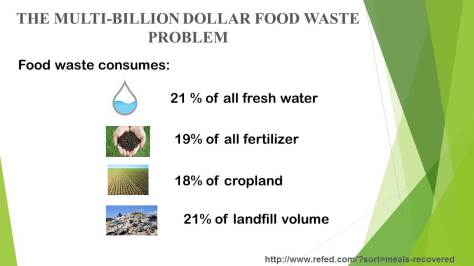
They may also not know the incredible effect food loss and waste has on the environment.  Eight percent of the greenhouse gases heating the planet are caused by food loss and waste. At the same time, food that’s harvested but lost or wasted uses 25 percent of water used in agriculture and requires cropland the size of China to be grown. What an incredibly inefficient use of precious natural resources.

When you look at the kind of impact food loss and waste has on our environment, economy and society, it’s clear why the United Nations included it among the most urgent global challenges the Sustainable Development Goals would address. Target 12.3 [2] of the goals calls for nations to “halve per capita global food waste at the retail and consumer levels and reduce food losses along production and supply chains, including post-harvest losses” by 2030. It’s certainly an ambitious challenge, but it is also one that’s achievable.

This week is Climate Week, an opportunity to take stock of where we are on critical environmental issues like food loss and waste. A new report [3] on behalf of Champions 12.3 [4] – a unique coalition of leaders across government, business and civil society who are dedicated to achieving Target 12.3 – assesses our progress so far.

The report details a number of notable steps that have happened around the world, including national food loss and waste reduction targets established in the United States and in countries across the European Union and African Union.

It also highlights efforts to help governments and companies measure food loss and waste, such as the FLW Standard [5] announced in June, and new funding like the Danish government’s subsidy program and The Rockefeller Foundation’s Yieldwise [6], a $130 million investment toward practical approaches to reducing food loss and waste in Kenya, Tanzania, Nigeria, the United States and Europe. There have also been advances in policies as well as education efforts like the Save the Food [7] campaign to raise awareness of food loss and waste.

The progress is promising. But the report also notes that the action does not yet match the scale of the problem, and much more work is needed worldwide if we are to successfully meet Target 12.3 in just 14 short years.

Why the “food movement” is unstoppable..

yes

Excerpted from “Why the food movement is unstoppable.”

The direction of the food movement

…there are profound reasons why the food movement is succeeding and growing.

This analysis suggests that the food movement, compared to other great social movements of the 20th Century (such as the labour, environment, civil rights, climate and feminist movements), has many of their strengths but not their weaknesses.

Further, the food movement is unexpectedly radical on account of having a distinct philosophy. This philosophy is fundamentally unique in human history and is the underlying explanation for the explosion of the food movement.

Like any significant novel philosophy, that of the food movement challenges the dominant thought patterns of its day and threatens the political and economic structures built on them. Specifically, the food movement’s philosophy exposes longstanding weaknesses in the ideas underpinning Western political establishments. In the simplest terms possible, the opposite of neoliberal ideology is not communism or socialism, it is the food movement.

The reason is that, unlike other systems of thought, food movement philosophy is based on a biological understanding of the world. While neoliberalism and socialism are ideologies, the food movement is concerned with erasing (at least so far as is possible) all ideologies because all ideologies are, at bottom, impediments to an accurate understanding of the world and the universe.

By replacing them with an understanding based on pure biology, the food movement is therefore in a position to supply what our society lacks: mechanisms to align human needs with the needs of ecosystems and habitats.

The philosophy of the food movement goes even further, by recognising that our planetary problems and our social problems are really the same problem. The food movement represents the beginnings of a historic ecological and social shift that will transform our relationships with each other and with the natural world.

1) The food movement is a leaderless movement

The first important piece of the food puzzle is to note that the food movement has no formal leaders. Its most famous members are individuals. Frances Moore Lappé, Joel Salatin, José Bové, Vandana Shiva, Wendell Berry, Michael Pollan, Jamie Oliver, and many others, are leaders only in the sense of being thought-leaders. Unlike most leaders, including of the environment movement, or the labour movement, or the climate movement, they have all attained visibility through popular acclaim and respect for their personal deeds, their writings, or their insights. Not one of them leads in any of the conventional senses of setting goals, giving orders, deciding tactics, or standing for high office. They are neither bureaucrats nor power-brokers, but leaders in the Confucian sense of being examples and inspirations. It is a remarkable and unprecedented characteristic that the food movement is a social movement that is organic and anarchic. This not to argue it is unstructured, far from it. Rather, the food movement is self-organised. It is a food swarm and absence of formal leadership is not a sign of weakness but of strength.

2) The food movement is a grassroots movement

A second and complementary piece of the puzzle is that the food movement is far more inclusive than other social movements. It is composed of the urban and the rural, the rich and the poor, of amateurs and experts, of home cooks and celebrity chefs, farmers and gardeners, parents and writers, the employed and the unemployed. Essentially anyone, in any walk of life, can contribute, learn or benefit. Most do all three. Importantly too, just about any skill level or contribution can often be accommodated. To take just one example, in how many other social movements can a 14-year-old make an international splash?

This inclusiveness has various aspects that contribute significantly to its success. The first of these is that, unlike many protests, there is no upper limit to membership of the food movement. It is not defined in opposition to anything – it would include the whole world if it could – and so there is no essential sense in which it is exclusive. Exclusivity is often the Achilles heel of social movements, but though its opponents have tried to label it as elitist, for good reasons they have not succeeded. Granted, Prince Charles is a very enthusiastic member, but so too are rappers from Oakland, the landless peasant movement of Brazil, the instigators of the Mexican soda tax and the urban agriculture movements of Detroit, Chicago and Cleveland. Such groups are neither elite nor elitist. A better analysis would conclude that anyone can find space under its broad umbrella because the food movement does not discriminate on any grounds, least of all class. It is beyond grassroots. People see what they want in it because it is for everyone.

The second aspect of its inclusivity is that the food movement has barriers to entry that are low or non-existent. This is an important reason it has grown rapidly. These porous boundaries make the food movement unusually hard to define, however, leading some people to mistakenly conclude it is non-existent.

3) The food movement is international

A third unconventional attribute of the food movement is to be international and multilingual. In each locality it assumes different forms. The Campaign for Real Ale, Via Campesina, the Zapatistas, Slow Food and Europe’s anti-GMO movement are very different, but instead of competing or quarreling, there are remarkable overlaps of purpose and vision between the parts. This was on show at last winter’s British Oxford Real Farming Conference where food producers and good food advocates from all over the world shared stages and perspectives and the effect was to complement and inspire each other.

4) The food movement is low-budget

The fourth distinguishing characteristic of the food movement is that it has little money behind it. It might seem natural for “social movements” to be unfunded but it is in fact very rare. The climate movement has Tom Steyer, the Tea Party has the Koch brothers, Adolf Hitler’s car, chauffeur, private secretary, and of course his blackshirts, were funded by Fritz Thyssen, Henry Ford, and some of the wealthiest people in Germany. Even the labour and environment movements have dues or wealthy backers. The food movement therefore is highly unusual in owing little to philanthropic foundations or billionaire backers. Instead, it consists overwhelmingly of amateurs, individuals and small groups and whatever money they possess has followed and not led them. This is yet another powerful indication that the food movement is spontaneous, vigorous and internally driven.

5) A movement of many values

Most social movements are organised around core values: civil rights, social equality or respect for nature are common ones. What is unique about the food movement is that it has multiple values. They include human health concerns, animal welfare, agricultural sustainability, ecological sustainability, food justice and political empowerment, but even this list does not adequately capture the range of its concerns. It is a movement with many component parts.

=========================================

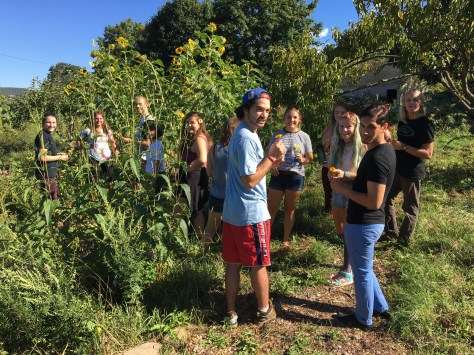
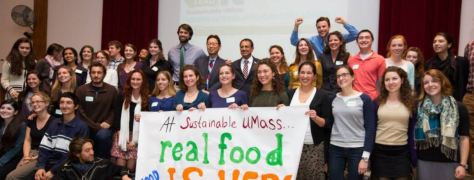
Join the Food Movement and create a career as a Sustainable Food and Farming major in the Stockbridge School of Agriculture at UMass Amherst.

Food Waste and Food Access

The University of Massachusetts Stockbridge School of Agriculture has accepted SUSTAINABILITY as one of the core principles guiding our programs.  Toward this end, we help students learn to grow and sell food in a manner more consistent with the multiple, interconnecting objectives of economic vitality, environmental integrity and social justice.

One of the areas we have identified as needing more attention however relates to food waste and food access, which are two sides of the same coin.  To help us think about these issues, the following visuals were contributed by Mary Bell.

bell-research-poster

Click here to see a pdf (expandable) version of the poster above

slide1slide2slide3slide4slide5

For details on how Massachusetts will approach this issue, see:

Massachusetts Food Action Plan

According to ME Food Systems Innovation Challenge program….

Several reports indicated that locally, nationally and globally, 30–40% of food produced for consumption is wasted every year. Food waste has significant implications for the economy, the environment and growing problem of food insecurity.

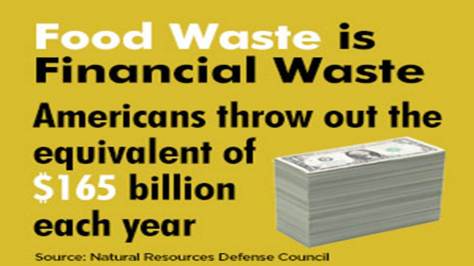
Economically, food loss and waste in US costs $165 billion per year. Globally, Forbes estimates the loss at $1 trillion per year.  Environmentally, the impact globally of approximately 130 billion tonnes of food waste is a massive resource drain, using 45 trillion gallons of fresh water and generating about 8 percent of global greenhouse gas emissions. Globally over 800 million suffer from hunger and food insecurity and of that 48 million are in the US.

Reducing food waste could create economic opportunity and growth, conserve water, reduce greenhouse gases and eradicate the problem food insecurity and hunger.

Homecoming is for alumni!

stockbanner2

If you graduated from the Stockbridge School of Agriculture, the Plant and Soil Sciences Department, or BDIC with a degree in Sustainable Food and Farming, Sustainable Agriculture, or a related area in BDIC….. well….

You are invited to join us to reconnect with your alma mater, your old teachers, and your friends!


Join us Saturday, October 1 starting at 9:30 am for a fun-filled day at UMass Homecoming! Start the day with coffee and light refreshments, and then join us for tours, program information, games, and lunch!

Register today! https://goo.gl/hpTAIZ

studentmarket

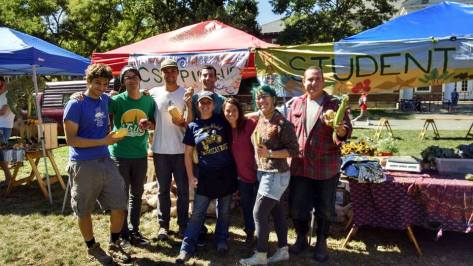
ACTIVITIES include a Farmer’s market where UMass Student Farm produce will be available for purchase; Building tours; Information tables for each of our majors; DIY photo booth. Continue reading Homecoming is for alumni!

GardenShare is full!

gsone.jpg

Our one credit, pass/fail class designed to help “non-gardeners” gain experience and learn from other students is now full.  Watch for it next semester and register for STOCKSCH 298G early!  This is student run class which meets on Mondays from 2:30pm-3:45pm and requires additional time in the garden at the top of Eastman Hill.

To register on SPIRE, look for STOCKSCH 298G – GardenShare Practicum (75664)

gardenshare

The first class was loads of fun (according to the participants).  If you want to stay connected and/or volunteer, join the Facebook group here:

https://www.facebook.com/UMassGardenShare/

Student Facilitators:

Mission Statement: GardenShare is a student-run community garden where students of all academic interests and background can come together to learn how to grow healthy food. Through community and self-directed learning students at UMass are able to engage Continue reading GardenShare is full!

We’ve got great food at our college!

The Princeton Review Ranks UMass Amherst No. 1 for Best Campus Food

At least part of the reason is our commitment to buying local food and supporting the UMass Student Farm!

AMHERST, Mass. – The Princeton Review today ranked the University of Massachusetts Amherst No. 1 for best campus food in the nation.

After being ranked among the top three schools nationally since 2013, news of the No. 1 ranking is being celebrated by UMass Dining staff, who have worked tirelessly to achieve national recognition, says Ken Toong, executive director of Auxiliary Enterprises at UMass Amherst.

The university was among the schools featured live on NBC’s Today Show on Tuesday, Aug. 30. Sam the Minuteman, the UMass mascot, made a guest appearance and delivered a tray of delicacies, including pork sliders and Napoleons.

Robert Franek, senior vice president of Princeton Review, praised the university’s dining as “fresh, local and delicious”  and called UMass Amherst “a glorious place … nourishing the body as well as the mind.”

“This honor is shared by every member of our staff who work each day to serve healthy, sustainable and delicious meals to our students,” says Toong. “This ranking is also a tribute to our students, whose high expectations drive our team to excel.”

“We’re pleased to see that The Princeton Review has recognized what all of us at UMass Amherst have long known: when it comes to college food, UMass Dining can’t be beat,” says Chancellor Kumble Subbaswamy. “Congratulations to the entire UMass Dining family.”

The rankings of the top 20 schools in 62 categories in The Princeton Review’s The Best 381 Colleges, released Aug. 29, are based on surveys of 143,000 students at the schools in the guide.

UMass Dining is now the largest college dining services operation in the country, serving 45,000 daily meals or 5.5 million per year. Since 1999, overall participation in the university meal plan has more than doubled, from 8,300 participants to more than 19,200.

The award-winning UMass Dining is a self-operated program committed to providing a variety of healthy world cuisines using the most sustainable ingredients. UMass Dining incorporates recipes from accomplished chefs and nutritionists as well as principles from the Culinary Institute of America and Harvard School of Public Health to its cycle menu. UMass Dining is known for being among the most honored collegiate dining programs in America by many national organizations. For the past six years, UMass Dining has been selected to the Princeton Review’s Best Campus Food list. Previously, it was ranked No. 10 in 2012, No. 3 in 2013 and 2014, and No. 2 in 2015 and 2016.

How To Change Careers When You Don’t Know What You Want To Do Next

Jane Porter 08.26.15 – Published in Fast Company

CareerChange

Ask yourself these tough questions to get unstuck….


Feeling stuck in your career isn’t just frustrating… it can be debilitating.

But the notion that we have to choose a single career path and stick with it from beginning to end is simply a myth. Regardless of your age or experience, we all eventually hit a roadblock at some point in our lives when we need to ask ourselves: “What’s next?”

Career impasses—those moments when you know you’re not happy where you are, yet don’t quite know what to do next—aren’t just common, they’re necessary, says Timothy Butler, psychothemythrapist and senior adviser for career development at Harvard Business School. “We build these mental models of what’s important for us and what we need to do in our lives,” says Butler. “These times of impasse when we’ve hit the wall about what we want to do [require] shattering those mental models.”

Take a step back from your own angst, and it makes perfect Continue reading How To Change Careers When You Don’t Know What You Want To Do Next

Meet our UMass students at NOFA

nofaIf you are attending the summer NOFA Conference this year, please be sure to stop by the vendors tent and look for the Stockbridge School of Agriculture booth.  Our (smiling) students will be there to greet you and tell you about their experience studying Sustainable Food and Farming at UMass.

According to the NOFA Conference web page…

The Northeast Organic Farming Association’s Summer Conference is the community learning hub of the NOFA universe. We learn, we play, and we enjoy a weekend of skill building, inspiration and entertainment. It is our opportunity to get together and inspire one another during a family friendly weekend with people living the same lifestyle, holding the same vision and working respectively in many ways toward the same goals. Continue reading Meet our UMass students at NOFA