The Amherst Saturday Market is a popular place to meet your neighbors and support local farm families!
Consumers often cite supporting the local economy as a reason why they purchase locally produced foods. To find out whether there is such an impact, a University of California Cooperative Extension team interviewed producers engaged in direct marketing to measure the economic impact of local food marketing in the Sacramento Region Their key findings indicate that, for every dollar of sales, local direct marketers are generating twice as much economic activity within the region, as compared to producers who are not involved in direct marketing. Here are the highlights of their findings:
Sacramento Region direct market producers averaged $164,631 in sales per producer, ranging from $2,141 to $4,620,000.
Of the direct market producers’ total revenues, 44 percent were generated through direct channels.
NOTE: in this article about food costs in the industrialized world, the author claims that to create a more fair society, we must pay more for food. What do you think? Add your thoughts to the comments box below.
——————————————————
By Colin Trudge – Published on Sustainable Food Trust – July 22, 2016
Nothing illustrates the weirdness, injustice, and unpleasantness of the present economy more clearly than the misdirected attempts of government to reduce the price of food. All seem to accept that to reduce food prices is good and necessary, and that it represents ‘progress’. Certainly it is necessary to ensure that everyone can afford good food, but this does not necessarily mean that we should seek to make it cheaper.
For starters, governments (and industry and the National Farmers Union and the various scientists and other intellectuals who travel in their wake) are obsessed with “efficiency” – which, like everything else in the present world, is measured entirely in terms of money. On many farms worldwide the biggest single expenditure is on labour, so the mantra is that above all, the efficiency of labour must be increased. This is achieved by sacking people, and getting more work out of those that are left. Workers are replaced by bigger and smarter machines and by industrial chemistry. But, as the numbers of unemployed increases and they become more desperate, more and more are re-employed for less Continue reading How much should food cost?→
NOTE: when you buy food from big box stores, you are supporting an industry that exploits farm workers so that you can have cheap food. The following letter from a food industry leader, asks for higher wages and better working conditions for farm workers.
By Fedele Bauccio – CEO at Bon Appetit Management Company – July 28, 2016
A crisis of epic proportions looms in American farming — and thus American food. A labor shortage is “all but guaranteeing that crops will rot in the field on many farms this year,” according to Zippy Duvall, American Farm Bureau Federation president. The Farm Bureau has just released a video in which farmers criticize the government’s delays in processing H-2A applications. “We’re going to have to make a choice,” Duvall says in the video. “We either have to import our labor — workers to harvest our crops — or we’ll have to import our food.”
With respect to Mr. Duvall, as one businessman to another, yes the H-2A process needs to be fixed — including making sure it meets grower needs without sacrificing worker protections — but I think we have another choice.
Like many of you, we watched in horror as events unfolded across the country last week, and the hell and heartache has left us reeling. We’ve long reported on food justice and last year wrote about why food belongs in our discussions of race. But we know we have a lot more work to do. In that spirit, we reached out to leaders of color in the food justice community for their thoughts about how they think the “food movement” might come together on the issues of race, equity, and access. We encourage others to speak up, add your voices to this space, and to continue the conversation.
Erika Allen, Chicago and National Projects Director, Growing Power
When people say “The Good Food Movement” are they thinking about racial and economic parity? I do, which is why I see it as a Good Food Revolution. I’m not sure how you define sustainable agriculture without this being a central point of understanding. The economic scaling up and investment in urban and sustainable agriculture without the facilitation of anti-racism work on an academic level—to truly understand one’s role as a perpetuator of racism even within liberal thought and action—is a real disconnect. Undoing racism and its companions of oppression, does not magically happen, and it requires real effort. Not just talk, or a workshop, but daily vigilance, and a real cultural shift. We are at a historic juncture. We [at Growing Power] believe that growing food and justice for all goes hand-in-hand toward the realization of a truly sustainable agriculture movement domestically and globally. To achieve that, we need to integrate our understanding on a deep level. This isn’t political rhetoric, this is what we have been struggling for since abolition of slavery. We need to address racism and white privilege and supremacy in the Good Food Movement. As the Black Lives Matter movement continues to move forward Continue reading Social Justice is a Core Component of a Sustainable Food System→
Emily Lewis-Brown – 7th April 2016 – Published in The Ecologist
Food has never been more affordable for middle class families in rich countries. But it comes at a high cost: the impact of industrial food production on health, environment and society has never been greater as Patrick Holden explained to Emily Lewis-Brown.
The post war drive for food security through industrial farming and ever-cheaper food has, ironically, put both our health and the future of farming at risk.
Food prices have been kept artificially low, while the true costs of food production have been obscured – and are increasingly unaffordable. A conference took place in April in San Francisco designed to put this right: The True Cost of American Food.
Patrick Holden – dairy farmer, sustainable food campaigner and organiser of the conference – believes that sustainable farming is being held back by the way that food prices are kept artificially low through mechanisms which hide the real cost of foods and place those costs elsewhere – on communities, our health, and the environment.
“When we unravel the hidden costs of food and farming, we find that our food systems are generating diets which we pay for many times over in hidden ways”, he says. “They are making us sick and degrading the environment, which is vital to the future of our food security and health.
“Everyone has a right to good food that is affordable and nutritious, but the belief that making food cheap was the most important goal, facilitated damage to our natural environment and public health. This was made possible by cheap oil and technological innovation. It was hard for consumers to see the changes to the food we eat, as companies increasingly obscured the story of how our food is produced.
“If you told the real story of farming, what goes on behind closed doors would be upsetting. It’s covered up by brands with images of outdoor mixed farms, with cows in meadows and hedgerow-lined hay fields blooming with wild flowers.”
Milk cheaper than bottled water
Patrick had an urban childhood, like millions of other people who live in cities now, but his family moved back to the land in the 1970s to live on a farm. His deep understanding of agricultural practice developed from farming his mixed dairy farm in Wales, where he still farms as sustainably as possible.
That means he knows from personal experience the plight faced by many farmers: “Dairy farmers are now slaves to the commodity market. To survive economically, they need more and more cows, kept more and more intensively. Milk is sold for much less than the cost of its production – it costs less than a bottle of water now. How on earth can this be? Milk is a vital source of nutrition and farmers should be paid for the true cost of its production.”
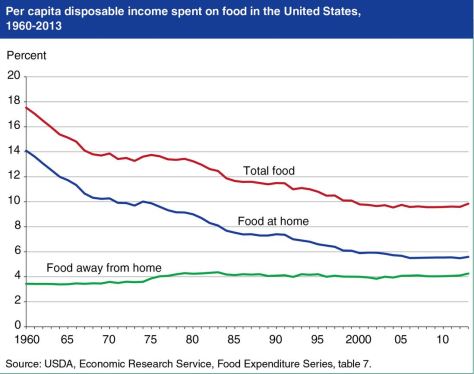
Of course for many families it’s great that we spend less now than ever before on food: most of us spend less than 10% of our disposable income on food – and this is seen as a good thing. But that cheap food comes at a high price:
“The apparent cheapness of food is an illusion, because behind the price tag lie a series of hidden costs, none of which are reflected in the price of food. These hidden costs are paid in damage to the environment, depletion of the Earth’s resources, and public health.”
Adding up the impacts
Patrick is involved in research with the UN’s The Economics of Ecosystems and Biodiversity (TEEB) initiative that traces the true costs of food. But to make all those statistics real, he says, take a carton of milk, and consider the costs of its that we have to pay for without realizing it – on top of the suffering that’s routinely inflicted on animals under industrial farming systems.
“You’ve got damage to the environment from the pollution of chemical fertilisers and pesticides, degradation of the soil and declining biodiversity, along with the contribution that agriculture makes to climate change.
“Then there’s a high cost in human health, especially, at the moment, in the rise of untreatable infectious diseases from the over-use of antibiotics in humans and farm animals. But this also includes the costs of the obesity epidemic caused by industrialised diets.
“And there are significant social costs – agricultural workers suffer unduly from labour abuses across the world which sometimes extend to the condition of slavery. These costs are not currently paid in the price of our food and this is not being recognized by politicians nor properly addressed by the people who should be addressing them.”
The True Cost of American Food
What is needed, he says, is a ‘True Cost’ account of our food system. That’s one of the core missions of the Sustainable Food Trust, which Patrick launched in 2013 at a major conference on the topic in London, bringing together the world’s leading experts on True Cost Accounting.
“For obvious reasons all farmers have to follow the best business case”, says Patrick. “But right now if you farm intensively and cause damage to the environment and public health, you will make more money than if you switch to sustainable methods. The aim of the San Francisco conference is to do something about that – we want to create the conditions where producing food in a sustainable way is the most profitable option for producers and the most affordable for consumers.
“We believe there are many opportunities to intervene and shift the dial in this direction. For instance, we can redirect Farm Bill subsidies to favour sustainable practices, we can tax farming which causes damage to the environment or public health, we can harness the power of the financial community to preferentially invest in sustainable agriculture and food companies.
“It’s all about carrots and sticks, we want to encourage the right kind of farming which benefits the environment and public health and discourages food systems which lead to climate change, pollution and disease.”
Around 2003 I came across Charlie Munger’s 1995 speech, The Psychology of Human Misjudgment, which introduced me to how behavioral economics can be applied in business and investing. More profoundly, though, it opened my mind to the power of seeking out and applying mental models across a wide array of disciplines.
A mental model is just a concept you can use to help try to explain things (e.g. Hanlon’s Razor — “never attribute to malice that which is adequately explained by carelessness.”). There are tens of thousands of mental models, and every discipline has their own set that you can learn through coursework, mentorship, or first-hand experience.
There is a much smaller set of concepts, however, that come up repeatedly in day-to-day decision making, problem solving, and truth seeking. As Munger says, “80 or 90 important models will carry about 90% of the freight in making you a worldly‑wise person.”
This post is my attempt to enumerate the mental models that are repeatedly useful to me. This set is clearly biased from my own experience and surely incomplete. I hope to continue to revise it as I remember and learn more.
How-to Use This List
I find mental models are useful to try to make sense of things and to help generate ideas. To actually be useful, however, you have to apply them in the right context at the right time. And for that to happen naturally, you have to know them well and practice using them.
Therefore, here are two suggestions for using this list:
For mental models you don’t know or don’t know well, you can use this list as a jumping off point to study them. I’ve provided links (mainly to Wikipedia) to start that process.
When you have a particular problem in front of you, you can go down this list, and see if any of the models could possibly apply.
Notes
Most of the mental models on this list are here because they are useful outside of their specific discipline. For example, use of the mental model “peak oil” isn’t restricted to an energy context. Most references to “peak x” are an invocation of this model. Similarly, inflation as a concept applies outside of economics, e.g. grade inflation and expectations inflation.
I roughly grouped the mental models by discipline, but as noted, this grouping is not to be taken as an assertion that they only apply within that dicipline. The best ideas often arise when going cross-dicipline.
I realize my definition of mental model differs from some others, with mine being more broadly defined as any concept that helps explain, analyze, or navigate the world. I prefer this broader definition because it allows me to assemble a more wide-ranging list of useful concepts that may not be mental models under other definitions, but I nevertheless find on relatively equal footing in terms of usefulness in the real world.
The numbers next to each mental model reflect the frequency with which they come up:
(1) — Frequently (63 models)
(2) — Occasionally (43 models)
(3) — Rarely, though still repeatedly (83 models)
If studying new models, I’d start with the lower numbers first. The quotes next to each concept are meant to be a basic definition to remind you what it is, and not a teaching tool. Follow the link to learn more.
I am not endorsing any of these concepts as normatively good; I’m just saying they have repeatedly helped me explain and navigate the world.
I wish I had learned many of these years earlier. In fact, the proximate cause for posting this was so I could more effectively answer the question I frequently get from people I work with: “what should I learn next?” If you’re trying to be generally effective, my best advice is to start with the things on this list.
New York Times – By EILENE ZIMMERMAN – JUNE 29, 2016
Dan Albert’s farm is far from traditional. There are no picturesque, rolling fields, no tractors tilling soil; there is no white farmhouse or red barn. For that matter, there is no soil, or sunlight.
The farm, Farmbox Greens, is inside a two-car garage behind Mr. Albert’s Seattle home. It consists of 600 square feet of microgreens grown in vertically stacked trays beneath LED lights.
The ability to grow in such a small space is the result of hydroponics, a system in which a plant’s roots sit in nutrient-rich water instead of soil.
Microgreens — the first, tiny greens on plants like arugula, radishes and bok choy — can go from seed to harvest in less than two weeks. That enables Farmbox Greens to compete on price against produce delivered from far away.
“We are fresher and our greens last 20 to 30 percent longer than those grown outside the area,” said Mr. Albert, who co-owns the farm with his wife, Lindsay Sidlauskas.
It has revenue of under $500,000, but was profitable enough in 2014 that Mr. Albert quit his day job as a landscape architect to farm full time. He now has three employees and sells his greens to about 50 restaurants in the Seattle area, a local grocery chain and four weekly farmers’ markets.
Consumer demand for locally grown food and the decreasing price and improved efficiency of LED lighting are driving the creation of more so-called vertical farm start-ups, said Chris Higgins, editor of Urban Ag News, which follows this segment of farming.
Enter a captionCarrot microgreens, ready to harvest at City-Hydro.
Energy costs are still a significant barrier to success, making few vertical farms in the United States profitable. Those that are tend to be smaller ones.
By JACK EVANS – Daily Hamphire Gazette – June 22, 2016
Willie Crosby, right, and Alex Dorr mix sawdust and pelletized cottonseed hulls to make a substrate for growing mushrooms at Fungi Ally in Hadley.
Forty-seven farms in western Massachusetts and eastern New York will tackle projects this summer — including a potato digger and an insulated room for a reverse osmosis machine — with help from an awards program for farmers.
The Local Farmer Awards gave more than $100,000 this year to farms for projects to improve equipment or infrastructure. The program, which began in 2015, is a project of the Harold Grinspoon Charitable Foundation and added Big Y Foods Inc. of Springfield as a partner this year.
Seventeen farms in Hampshire County were among those receiving the $2,500 grants. Max Breiteneicher, owner of Grace Hill Farm in Cummington, said his young business has benefited from the Local Farmer Awards and other programs.
“We’re only in our third year – and only entering our second full year right now,” said Breiteneicher, who will use the money to buy a pasteurizer to increase the varieties of cheese Grace Hill can produce.
He said starting a cheese farm is a difficult and expensive enterprise.
“These (grants) have really helped,” he said.
J.P. Welch of Justamere Tree Farm in Worthington and Joe Czajkowski of Joe Czajkowski Farm in Hadley both said the money will help them improve the efficiency of their operations.
Justamere, which produces maple products, focuses on energy efficiency and uses wood firing and solar power, according to its website. Welch said the farm’s new maple candy machine, which can help produce candy at a faster rate than its predecessor, has already been a significant improvement for the farm.
“We’re all about efficiency,” he said. “Anything we can do to streamline the process is what we want to do, and this just will go to help in doing that.”
Czajkowski said he became interested in making butternut oil after reading about its health benefits — it is cholesterol-free and high in Vitamin A — but lacked the equipment to separate butternut squash seeds from stringy flesh and to dry them enough to be pressed for oil.
The process lets farmers who grow butternut squash use parts of the gourd that might otherwise go to waste, he said. He’s also commissioning the building of seed driers locally to keep the money in the area economy.
“I think it’s better, if Big Y and Harold Grinspoon want to help the area,” he said. “Spending it locally is right in line with what they want.”
A cluster of Blue Oyster mushrooms growing at Fungi Ally in Hadley.
Growing mushrooms
For Fungi Ally, a mushroom-growing operation in Hadley, the award offered a chance to fast-forward existing plans. Willie Crosby, one of Fungi Ally’s co-founders, said the money will go toward building a new grow room.
The company produces about 150 pounds of mushrooms weekly, but the new room will add an additional 300 to 400 pounds to that total.
“It’s something that we were interested in and there was a desire for, but we didn’t have the capital to go for it,” Crosby said. “This is allowing us to jump forward a little bit.”
Willie Crosby rotates stock in the existing grow room at Fungi Ally in Hadley. A new larger grow room, constructed with more durable corroguated plastic panel walls, is in the process of being finished with its own climate control system.
Cari Carpenter, director of the Local Farmer Awards, said Grinspoon himself started the program to help local farms compete economically.
She said Grinspoon, an octogenarian millionaire philanthropist who made his money in real estate, also appreciates the less tangible benefits that farmers like Welch and Czajkowski provide.
“When Mr. Grinspoon started this, he wanted to help the farms compete in the marketplace, but he recognizes the environmental advantages, the health advantages and the economic advantages of local farming,” Carpenter said.
Carpenter said she already is aiming to help the program grow for next year. She received 128 applications this year — a 45 percent increase over last year, she said. And partnering with Big Y let the number of farms receiving money rise from 33 to 47.
The results of the fledgling program are already apparent, Carpenter said.
“Some of the feedback we’ve gotten that’s consistent is it’s making a big impact on the farms,” she added.
“One of the farmers basically said, ‘Farmers are so used to doing frugal fixes, and this gives us a chance to step back and see what we need to address.’”
Jack Evans can be reached at jackevan@indiana.edu.
BOSTON – Governor Charlie Baker, in support of National Pollinator Week, has declared June 20 – 26, 2016 as “Massachusetts Pollinator Week” – an opportunity to celebrate and protect our pollinator populations. Additionally, the Massachusetts Department of Agricultural Resources (MDAR) will also celebrate the opening of the first state apiary, a collection of beehives to be used for education and research.
“Massachusetts Pollinator Week is an opportunity to raise awareness of the importance of pollination to our environment and agricultural industry, and the vital need to protect Massachusetts’ pollinators,” said Governor Charlie Baker. “I encourage all residents to learn more about our native pollinators and consider planting flowers, trees and other plants to provide pollinators with nectar, pollen and habitat.”
“This week, we appreciate the importance of pollinators to Massachusetts’ ecosystems, food sources and economy,” said Lieutenant Governor Karyn Polito. “Our administration is committed to preserving our native pollinator species and their habitats, and working with local beekeepers across the Commonwealth to ensure their hives are healthy and thriving.”
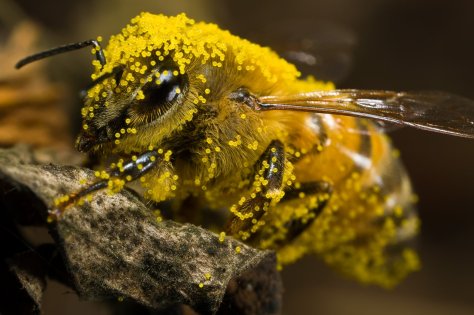
Pollinators include bees, birds, bats, butterflies and other species. Over 45 percent of agricultural commodities in Massachusetts rely on pollinator species for crop pollination and food production. There are approximately 4,500 honey beekeepers managing approximately 45,000 hives across the Commonwealth. Pollinator species provide significant environmental benefits that are necessary for maintaining healthy, diverse ecosystems, and produce valuable products including honey, propolis, royal jelly and wax.
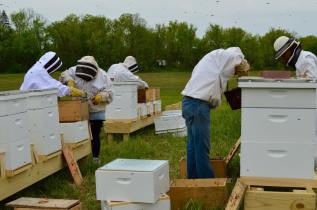
The new state apiary at the University of Massachusetts Amherst will serve as a vessel for education, outreach demonstrations and research related to agricultural sustainability, pollination, honey bee health and hive management. The apiary consists of twelve honey bee hives located within an 80 foot by 30 foot plot situated adjacent to the UMass Pollinator Conservation Project.
The apiary will also be used by the UMass Beekeeping Club and for hives maintained for UMass beekeeping courses. The apiary was funded by appropriated FY16 funds for the DAR Apiary Program designated for projects that provide research, education and general support to benefit Massachusetts honey bees.
“Given the ability to do live, in-hive demonstrations onsite, this apiary will also be an important tool for providing outreach education to farmers, land managers, beekeepers and to the public in the Commonwealth on topics related to honey bees and agriculture,” said Energy and Environmental Affairs (EEA) Secretary Matthew Beaton. “Through the new state apiary and the Massachusetts Department of Agricultural Resources’ Apiary Program, we are working hard to educate the public about honey bees and support the Commonwealth’s honey beekeepers.”
In Amherst on June 20, 2016, Assistant Secretary for Environment Daniel Sieger will be joined by MDAR Commissioner John Lebeaux and representatives from UMass Amherst College of Natural Sciences for a tour of the new state apiary on the grounds of the UMass Agricultural Learning Center.
“The apiary has received considerable interest from students engaged in farming and sustainability,” said Massachusetts Department of Agricultural Resources (MDAR) Commissioner John Lebeaux. “Currently several are doing an internship with DAR to assist in hive management throughout the summer as well as conducting their own individual research projects related to hive vitality and pest management.”
“Making sure bees stay healthy and productive is necessary for vibrant agriculture,” said State Senator Anne Gobi (D-Spencer). “I appreciate the focus of the administration and look forward to continuing to work collaboratively with our many bee organizations to achieve that goal.”
“I applaud the initiative set forth by the Baker Administration and MDAR to recognize our vital pollinator populations here in Massachusetts,” said State Representative Paul Schmid (D-Westport). “We are incredibly fortunate to have so many active beekeepers that maintain thousands of hives throughout the Commonwealth in order to provide the well-known agricultural products that make our state so great and promote environmental stewardship.”
“This is an exciting collaboration for the Stockbridge School of Agriculture at UMass Amherst,” said Frank Mangan, Director of the Agriculture Learning Center. “Maintaining a state apiary with DAR provides our students, growers and bee keepers with preventative learning tools.”
The Massachusetts Department of Agricultural Resources (MDAR) has collaborated with the University of Massachusetts Stockbridge School of Agriculture to create a state apiary at the UMass Agricultural Learning Center, 911 North Pleasant St., Amherst. The apiary consists of twelve honey bee hives located within an 80 foot by 30 foot plot situated adjacent to the UMass Pollinator Conservation Project. The apiary is surrounded by a solar powered electric fence (to deter animals and serve as a safety barrier for visitors). It consists of six wooden stands (capable of holding five hives each) partitioned into two horizontal rows. The apiary will also be used by the UMass Beekeeping Club and for hives maintained for UMass beekeeping courses.
The purpose of the apiary is to serve as a vessel for education, outreach demonstrations and research related to agricultural sustainability, pollination, honey bee health and hive management. This apiary is also considered to be a critical component of the Stockbridge School’s student farm pollinator habitat conservation project. The apiary will provide valuable pollination services to the farms cultivated acreage of crops, trees and wildflowers. Given the ability to do live, in-hive demonstrations onsite, this apiary will also be an important tool for providing outreach education to farmers, land managers, beekeepers and the public on topics related to honey bees and agriculture. The apiary will be maintained through a collaborative effort of the MDAR Apiary Program inspectors, students and faculty members on campus.


 Nothing illustrates the weirdness, injustice, and unpleasantness of the present economy more clearly than the misdirected attempts of government to reduce the price of food. All seem to accept that to reduce food prices is good and necessary, and that it represents ‘progress’. Certainly it is necessary to ensure that everyone can afford good food, but this does not necessarily mean that we should seek to make it cheaper.
 A crisis of epic proportions looms in American farming — and thus American food. A labor shortage is “all but guaranteeing that crops will rot in the field on many farms this year,”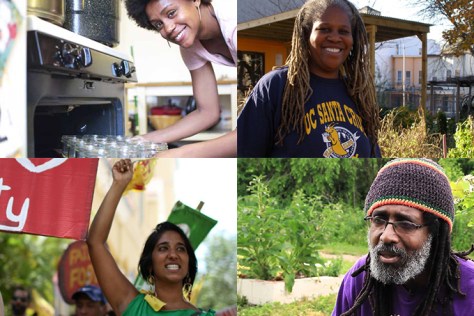



 The new state apiary at the University of Massachusetts Amherst will serve as a vessel for education, outreach demonstrations and research related to agricultural sustainability, pollination, honey bee health and hive management. The apiary consists of twelve honey bee hives located within an 80 foot by 30 foot plot situated adjacent to the UMass Pollinator Conservation Project.
 The Massachusetts Department of Agricultural Resources (MDAR) has collaborated with the University of Massachusetts Stockbridge School of Agriculture to create a state apiary at the UMass Agricultural Learning Center, 911 North Pleasant St., Amherst. The apiary consists of twelve honey bee hives located within an 80 foot by 30 foot plot situated adjacent to the UMass Pollinator Conservation Project. The apiary is surrounded by a solar powered electric fence (to deter animals and serve as a safety barrier for visitors). It consists of six wooden stands (capable of holding five hives each) partitioned into two horizontal rows. The apiary will also be used by the UMass Beekeeping Club and for hives maintained for UMass beekeeping courses.
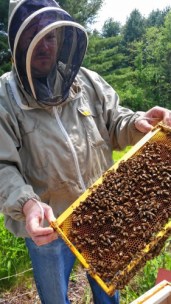 The purpose of the apiary is to serve as a vessel for education, outreach demonstrations and research related to agricultural sustainability, pollination, honey bee health and hive management. This apiary is also considered to be a critical component of the Stockbridge School’s student farm pollinator habitat conservation project. The apiary will provide valuable pollination services to the farms cultivated acreage of crops, trees and wildflowers. Given the ability to do live, in-hive demonstrations onsite, this apiary will also be an important tool for providing outreach education to farmers, land managers, beekeepers and the public on topics related to honey bees and agriculture. The apiary will be maintained through a collaborative effort of the MDAR Apiary Program inspectors, students and faculty members on campus.
 UMass Sustainable Food and Farming