Category Archives: Education

UMass agricultural programs ranked among top ten in the U.S.

SSA Logo -- blue on white with UMASSA recent ranking of the Top Agricultural Universities in the World put the University of Massachusetts at number 10 in the United States (and 11 in the world), according to the Quacquarelli Symonds (QS) World University Rankings.  UMass was the only ag school in New England to make the top 50 and second behind Cornell for best in the East.

We were delighted of course,” says Stockbridge School of Agriculture Director, Dr. Wesley Autio, when asked about the “meteoric” jump in ranking.

The rankings are based on reputation among other university faculty and employers, and research productivity.  Being placed among the list of “best Ag schools” is  an certainly an honor.  Autio  continued; “of course, we think the nearly 150 year-old University of Massachusetts has always been among the ‘go to’ schools for excellent undergraduate education, but it is nice to get this recognition.

The University of California at Davis and Cornell are perennially ranked number one and two on this annual list.  The research budgets and industry grants of these large institutions far surpass UMass.  The rankings indicate that “reputation among other university colleagues in agriculture” put UMass in the top 10.

The Stockbridge School of Agriculture offers 8 Associate of Sciences degrees and 4 Bachelor of Sciences degrees, as well as opportunities for students to work toward graduate degrees in agriculture and related fields.  The Sustainable Food and Farming Program, which allows students to concentrate on farming and marketing, agricultural education and public policy has grown from just 5 students in 2003 to 100 today. Other Associate and Bachelor programs focus on all aspects of agricultural science, important in a rapidly changing world.

Here is the ranking of U.S. agriculture and forestry universities in 2014:

  1. UC-Davis
  2. Cornell
  3. University of Wisconsin-Madison
  4. Iowa State University
  5. University of California-Berkeley
  6. Oregon State University
  7. Purdue University
  8. Texas A&M
  9. Ohio State University
  10. University of Massachusetts

For the top 50 Agriculture and Forestry Program, see “rankings 2014.”

Autio believes that the international recognition of the Stockbridge School is long overdue and that “programs such as our herbal medicine program, the Student Farm, our draft horse classes, and our Permaculture Initiative for example, have really put us on the map.” Students are encouraged to get involved in real-world applications of their course work. Autio says, “we offer both a solid Bachelor of Sciences degree as well as lots of opportunities to gain practical experience in preparation for exciting and satisfying careers.” He concludes “our alums will certainly tell you that Stockbridge is among the top agricultural programs in the world.”

Information on the food and farming degree program is available on the UMass Stockbridge School of Agriculture web site: https://stockbridge.cns.umass.edu/SFF-BS.

CONTACT
Dr. Wesley Autio, Director
413-545-2963
autio@umass.edu

Mushroom Growing Workshop for Stockbridge Students – Registration Required

 Free Workshop for Stockbridge School of Agriculture Students

Saturday, April 12 from 1:00pm – 3:00pm

at the Wysocki House in front of the UMass Agricultural Learning Center (911 North Pleasant St. – north of campus toward Puffton Village)

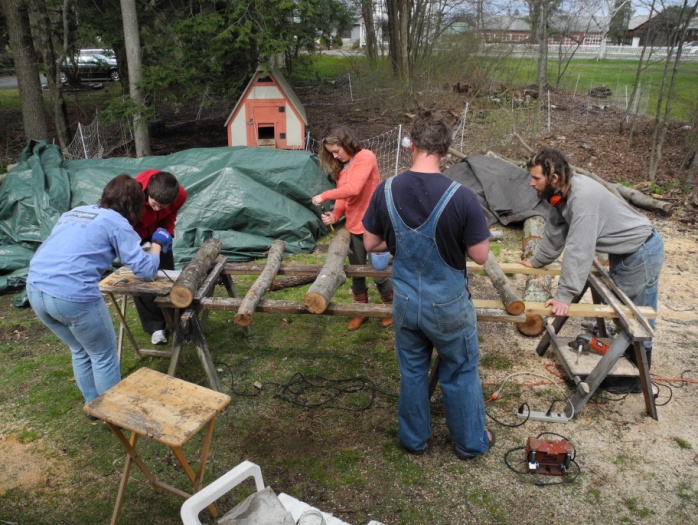
willie4Join Stockbridge graduate, Willie Crosby from Fungi Ally, for a hands-on workshop to learn the basics of growing medicinal and culinary mushrooms in your backyard. The workshop will focus on methods of growing mushrooms on wood using 3 techniques. Participants will learn the procedures of inoculating logs, totems, and woodchip beds and get to implement each one. Upon completion of the workshop students will have the knowledge and experience to cultivate mushrooms using these methods at home.

fwillie1willie2


—————————————————————————————————————

To register for this workshop, send an email to John Gerber with a contact phone number.  Willie’s workshops generally cost $25 but this one is being provided to Stockbridge students free of charge.

Summer Learning Internships in the Peruvian High Amazon

TO:  University of Massachusetts Students

FROM:  John M. Gerber, Professor of Sustainable Food and Farming

This month long internship opportunity in Peru is offered by a friend and colleague, Dr. Frederique Apffel-Marglin, a former Anthopology professor at Smith College.  I have had several students participate in one of her courses at the Sachamama Center for Biocultural Regeneration and the experience has been universally transformative.

If you are looking for a summer experience, please check this out and be sure to contact me if you want to earn academic credit for this internship.

Learning Internship Description

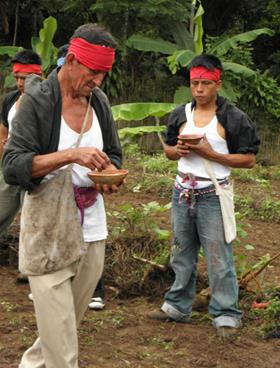
offerings.045327This internship will teach students experientially how to re-create the perennially fertile pre-Columbian anthropogenic soil known in Brazil as Terra Preta do Indio (black earth of the Indians). This soil contains a type of charcoal made with reduced oxygen, called biochar that never decomposes in the soil, retains nutrients and sequesters greenhouse gases by keeping them in the soil permanently. Students will learn to build a backyard biochar oven on the model of the successful oven at SCBR designed by its administrator, Randy Chung Gonzales. Professor F. Apffel-Marglin has been able to successfully re-create this pre-Columbian anthropogenic soil (which in SCBR we call by its Kichwa name Yana Allpa) and create extremely fertile food gardens on degraded lands in native communities as well as in several primary and high schools in the region, in collaboration with the school board of the Lamas Province. Students will learn from SCBR permanent technical team on its Yana Allpa project. This team consists of Ingeniero Teddy Saavedra Benzaquen and Girvan Tuanama Fasabi, a deeply knowledgeable Indigenous Kichwa young farmer. Students will be taken to visit native communities as well as some of the schools SCBR works with. Additionally, under the guidance of Professor Apffel-Marglin, students will experientially learn to relate to the earth in its many aspects as a Being – a Thou – with many different aspects rather than as an insentient, mechanical, natural resource there exclusively for satisfying some human need. Since SCBR is in an indigenous milieu, the living world of the local Kichwa indigenous people will help us to empathize and connect with that milieu without necessarily adopting their specific practices.

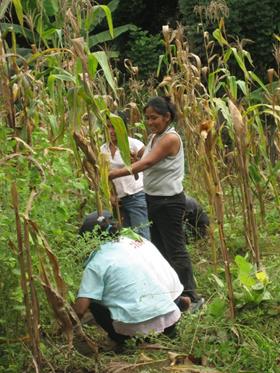
cultivatinginthechacra-huertoinshukshuyaku.050011This re-created pre-Columbian Amazonian black earth of millenarian fertility, discovered by archeologists in the last two decades, is able to give local farmers, both indigenous and mestizo, an affordable and successful alternative to slash and burn agriculture. This is urgently needed since this region has the highest rate of deforestation in all of Peru and degraded lands, where the forest is no longer able to regenerate, are growing alarmingly. This type of soil has in it biochar, a type of charcoal that allows the greenhouse gases emitted by plants and bacteria in the soil to remain in the soil and not be emitted into the atmosphere. It is a permanent type of agriculture, whereas slash and burn uses a field for only a few years, and then farmers must clear and burn another patch of forest to grow food. This type of biochar agriculture is both much more productive as well as able to strongly mitigate global warming at least three times over: by not cutting trees, not burning them and keeping greenhouse gases in the soil permanently. This recreated soil holds the promise of achieving food security and community-based food sovereignty for native communities as well as all small farmers and also holds the promise of greatly mitigating global warming. Much of this technology can be adapted to colder climates in the global North.

Further Academic Opportunities
Those students wishing to add readings and writing to this internship can work individually with Professor Apffel-Marglin to identify relevant readings and help with writing if that is desired by a student. Students of course always have the option of registering for an Independent Study in the following academic year with a willing and interested faculty in their own institution and thus gain credit for all or part of the work done at SCBR during the month of July.

Additional Possible Activities
• Students may also learn about Amazonian medicinal plants with Girvan Tuanama Fasabi who is a walking encyclopedia on that topic and grows them at SCBR.
• Students may also learn indigenous and mestizo organic “slow food” cooking with SCBR’s manager and chef, Profesora Ida Gonzales Flores.
• Students can learn in the indigenous section of Lamas, called Wayku, indigenous crafts such as ceramics, waist band weaving and more with an award winning Kichwa ceramicist and weaver, Manuela Amasifuen Sangama, at an additional cost of US $ 7.50 for an entire afternoon.
• Students wishing either to learn basic Spanish or improve their Spanish can take lessons with Abby Corbett, who has a graduate diploma in Spanish Language from the University of Louisville and several years’ experience teaching Spanish, for an additional cost to be negotiated directly with her at SCBR.

Cost
$ 1,400.00 per student; for the 31 days of July (July 1-31, 2014); includes room and board; local course related transport to visited communities; tuition to SCBR and instructors. Students are responsible for expenses incurred during their free days, although SCBR will provide a picnic lunch as well as breakfast and dinner on the weekly free days. This cost does NOT cover international air travel to and from Peru or to the city of Tarapoto where the nearest airport is located.

To reach Tarapoto in the department of San Martin, you take a flight to Lima (Peru’s capital), then a flight to Tarapoto (one hour flight; there are four airlines making daily flights Lima-Tarapoto-Lima) or a bus ride from Lima to Tarapoto (about 28 hours).  For international travel, the Panamanian COPA airline tends to be less expensive; major US airlines (United, Continental, American) also fly to Lima.
SCBR will pick up students at the Tarapoto airport for the half hour ride to Lamas.

Application
• Send a brief statement about yourself, your interest in this internship and background for it to Prof. F. Apffel-Marglin at: fmarglin@smith.edu ; If possible state which of these activities are most appealing to you and whether you are interested in guided readings and writing.
• Deadline: May 15, 2014.
• Non-refundable deposit of $ 150 due on June 1st, 2014. (payment information will be forwarded after applicants have been selected)
• Full payment due on June 15, 2014.

Frédérique Apffel-Marglin, PhD is Professor Emerita, Department of Anthropology at Smith College and Distinguished Visiting Professor, College of the Environment, Wesleyan University (2013-14). She founded SCBR in the Peruvian High Amazon in 2009 which she directs. (fmarglin@smith.edu; for more information see her biography on the SCBR website: www.casasangapilla.com/sachamamain

UMass food services expands efforts to serve sustainable food

By SCOTT MERZBACH – Monday, January 13, 2014 in Daily Hampshire Gazette

dinnngAMHERST — The University of Massachusetts is amping up efforts to rely on locally produced food with the Real Food Challenge, a national movement pushing colleges to adopt more sustainable food practices, and a two-year grant from a Boston-based foundation.

The Real Food Challenge at UMass has set a goal of ensuring 20 percent of all food served at UMass is “real food” by 2020. “Real food” is defined as food that is grown locally and regionally, is organic, and is sustainably grown, humanely raised and produced with fair trade principles.

Participation in the challenge received boost this fall when UMass snagged a two-year, $485,000 grant from the Henry P. Kendall Foundation of Boston, which aims to make contributions toward creating “a resilient and healthy food system in New England that increases the production and consumption of local, sustainably produced food.”

“We’re hoping this grant will be a catalyst for progress to this goal over the next couple Continue reading UMass food services expands efforts to serve sustainable food

Pioneer Valley Food System Resources

We live in a region in which awareness of the value of local food and building a vibrant local food system is strong.  I’ve collected some of the reports that have done analysis of the current situation and made proposals for continuing growth below.  I hope you find these useful.  IF YOU KNOW OF OTHER REPORTS, PLEASE LET ME KNOW!

PIONEER VALLEY

nohoA newsletter on efforts in Northampton to encourage production, purchasing and consumption of local food.

 A report on food security in Franklyn County, MAfrank

Pioneer Valley Planning Commission Food  pvpc
Security Plan – Nobody goes hungry!

A Pioneer Valley Report on the potential for a  localjobsstrong local food economy to create jobs.

A report on how a 25% shift in food buying in the 25%Pioneer Valley can have a huge impact on the local economy.

CISA has a new publication on how to get involved in the  local food movement. 

cisaeatNEW ENGLAND REPORTS

A vision for a robust New England Food System. newenglN

NATIONAL REPORTS

Here is a regional research project which focused on Iowa but demonstrates the impact of building a healthy local food system.

Check out this national publication which studied the impact of local food investments.

A research journal article on the value of local food.

An Orion Magazine article on rebuilding a local foods infrastructure.

Driven by Student Demand, Agriculture Expands at UMass Amherst

By Nicole Belanger, NOFA/Mass PR Coordinator & Newsletter Editor

Farming at the University of Massachusetts Amherst is seeing a resurgence after decades of waning interest in agriculture and shifting university priorities. A long way from its origins as an agricultural land grant college in the 1860s, many barns and other agricultural facilities on campus were dismantled or repurposed in the 1950s and 1960s as its student body, and the culture at large, became less interested in small scale family farms. Only one barn remains on campus, an old horse barn originally built in 1894 that is now out of place as new buildings rise around it.

In the past ten years enrollment in the Stockbridge School of Agriculture’s Sustainable Food and Farming major has increased from five students to nearly 100. Many on campus hope that the days of students needing to drive to farm sites off campus, or worse, working solely in labs and greenhouses and never setting foot in a field, are long gone.

Stephen Herbert saw that last horse barn on campus, 40 acres of under-utilized farmland owned by the university, and the increasing need for students to get hands-on experience in the field as a match. Herbert was, until recently, the Director of the Center for Agriculture and is now returning to his role as teaching faculty. In the 1960s the 40+ acre field just north of campus was purchased by the University from four farm families. When the University of Massachusetts Medical School, originally slated for that parcel, was built elsewhere, those 40 acres became hay fields for the next 50 years.

This site has become the Agricultural Learning Center (ALC)–the only farm in walking distance of the Amherst campus. Students and faculty alike are enthusiastic about the possibility the center presents for future farmers. In 2012 a groundbreaking was held, with children of families who formerly owned the four farms in attendance to celebrate the university’s commitment to agriculture. With a well-documented aging farmer population, Agricultural Learning Center Project Manager Sandy Thomas says, “We need well educated young people learning how to grow food.”

Herbert’s ultimate vision is to relocate the last barn on campus to the ALC site, rehabilitating the barn into a functional classroom, laboratory and greenhouse space. According to Herbert, the cost of moving the barn alone is 1.5 million dollars. Rehabbing the interior could cost another million or more dollars, bringing the project’s total cost to 2.5 million. The Massachusetts Farm Bureau has raised the $500,000 they pledged to see the project happen. The ALC seeks additional major donors to complete the project. Until the funds are raised, the barn will not be moved.

Growing organically

In 2008, students approached professor Ruth Hazzard for permission to use part of a certified organic University research farm in South Deerfield to grow vegetables for Earthfoods, a student-run restaurant on campus. Since that first season, the Student Farming Enterprise has grown dramatically, now a year-round class that produces food for a 45-member CSA, a campus farmers’ market, as well as seasonal sales to the Northampton and Amherst Big Y supermarkets.
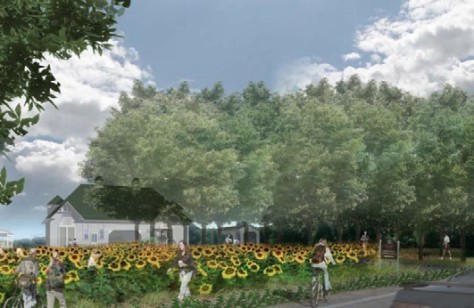
barnStudent sketches of the Agricultural Learning Center with relocated horse barn

Students in the program work over the course of one year on every aspect of the business: choosing crops to plant, purchasing seeds, and overseeing the organic certification process. Professor Amanda Brown manages the site and the class. In 2013 the class began working on a six-acre plot on the ALC site. Brown intends to work with students to get the ALC plot certified organic in 2014. Though the Student Farming Enterprise has a lot of infrastructure set up in S. Deerfield, with its 15 certified organic acres, Brown thinks it’s likely that the program will have a larger presence at the ALC site going forward.

Like most public universities, UMass’s farming education blends organic and non-organic growing methods. Very few public universities have exclusively organic farms on their campus. (Washington State’s Evergreen State College and University of California Santa Cruz are some exceptions, only farming organically.)

As the Student Farming Enterprise at the ALC will coexist with non-organic vegetable production, land care, and apple production, care must be taken to ensure organic crops are not contaminated. Brown sees good record keeping, border maintenance, equipment cleaning, and making sure organic crops like corn are not fertile at the same time as non-organic, GMO corn crops as essential to maintaining the integrity of the organic land and organic crop.

NOFA/Mass Policy Director Jack Kittredge is enthusiastic that UMass is responsive to the increasing interest in farming and the needs of their students to have direct, on-farm experience. Kittredge also applauds efforts to relocate and preserve the historic campus barn, which he says, “captures the spirit of old-fashioned New England.”

He sees the new center and renewed interest in agriculture on campus as an opportunity for Massachusetts and UMass to take a leading role in non-GMO, organic and sustainable farming. As Europe has restricted GMOs, Kittredge believes GMOs will likely be restricted in the region and country in the near future and would like to see the University at the forefront.

The future of farming on campus

In 2012 it was announced that the ALC received a $10,000 donation from the Monsanto Fund, the philanthropic branch of the Monsanto Co. Some community members and students voiced their concerns that the multinational corporation would influence the direction of the ALC.

twostudentsWhile John Gerber, Stockbridge School of Agriculture professor, thought there was legitimate concern, especially given the influence on corporate agriculture funding on other public universities, ultimately he doesn’t believe that industrialized agriculture is the future of Massachusetts farming, which has historically had small farms. According to the UMass Center for Agriculture, in 2007 the largest number of farms in the state was between 10-49 acres. Gerber sees an opportunity for Massachusetts to, “take a lead in organic and other sustainable types of farming.”

Though the USDA claims that organic and conventional crops can coexist in a close proximity, Kittredge believes that the two cannot coexist because of issues like genetic drift and ground contamination. Kittredge believes UMass is doing their best within the system and hopes to continue to see the University teach students about, and mitigate, potential problems with the two different systems coexisting.

Ultimately, John Gerber sees the push towards organic, sustainable, non-industrial farming as being lead by students, a trend he thinks will continue. In addition to their responding to a changing world, Gerber recognizes that students are hungry for meaning in their lives, in part led by a quest for an increased quality of life.

“Students want to see organic, sustainable things. A lot of [what is happening at the University] is in response to what students are saying they want to learn,” says Brown. She sees so much support for the Student Farming Enterprise and their production practices. She also recognizes there is a market for what they’re doing, saying that buyers like Big Y are “only interested in organic.”

A place for partnerships

The University does not have funds to pay for the relocation and rehabilitation of the old horse barn. Stephen Herbert hopes for a few more major donors and for individual donations to see the barn project happen.

The barn would provide needed classroom space for the University to meet growing student demand and to further partnerships with programs mitigating poverty in the Pioneer Valley, community education projects, and organizations like NOFA (who has held its 1000+ attendee summer conference at UMass since 2008), Amanda Brown is ready to get to work on the ALC, saying “whether there’s a barn there or not we are going to do it.”

To learn more about the UMass’ Agricultural Learning Center visit http://ag.umass.edu/agricultural-learning- center. To learn more about the Student Farming Enterprise visit http://extension.umass.edu/vegetable/ projects/student-farming-enterprise

The Bachelor of Sciences degree in Sustainable Food and Farming is described here.


————————————————————————————————————

Published in the NOFA November, 2013 Newsletter

nofa

UMass Honors College Explores Local Food Value

UMass Sociology Professor, Christine Glodek, has organized a panel discussion on the value and impact of food to begin with sharing of pizza made with ingredients grown by the UMass Student Farm at 5:30pm:

Thursday, November 7 from 7:00pm-9:00pm
at the new UMass Honors College Events Hall

(Join us for pizza between 5:30pm and 7:00pm)

localPlease join us for conversation and pizza!

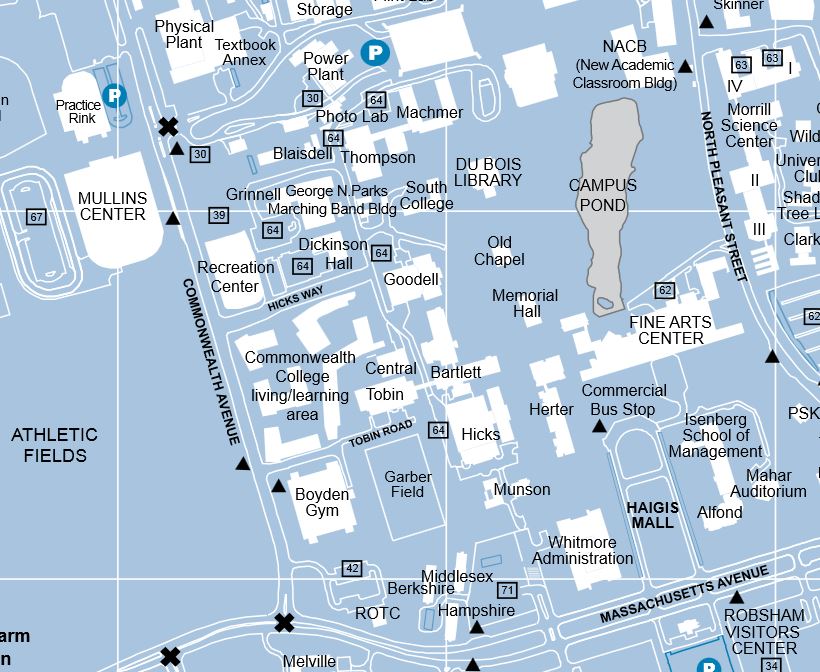
If you are coming from off-campus, you can park in the Mullins Center parking lot on Commonwealth Avenue and walk (south) toward the Honors College Living and Learning area.  Ask for the “Events Hall”.

map

Stockbridge at the Majors Fair

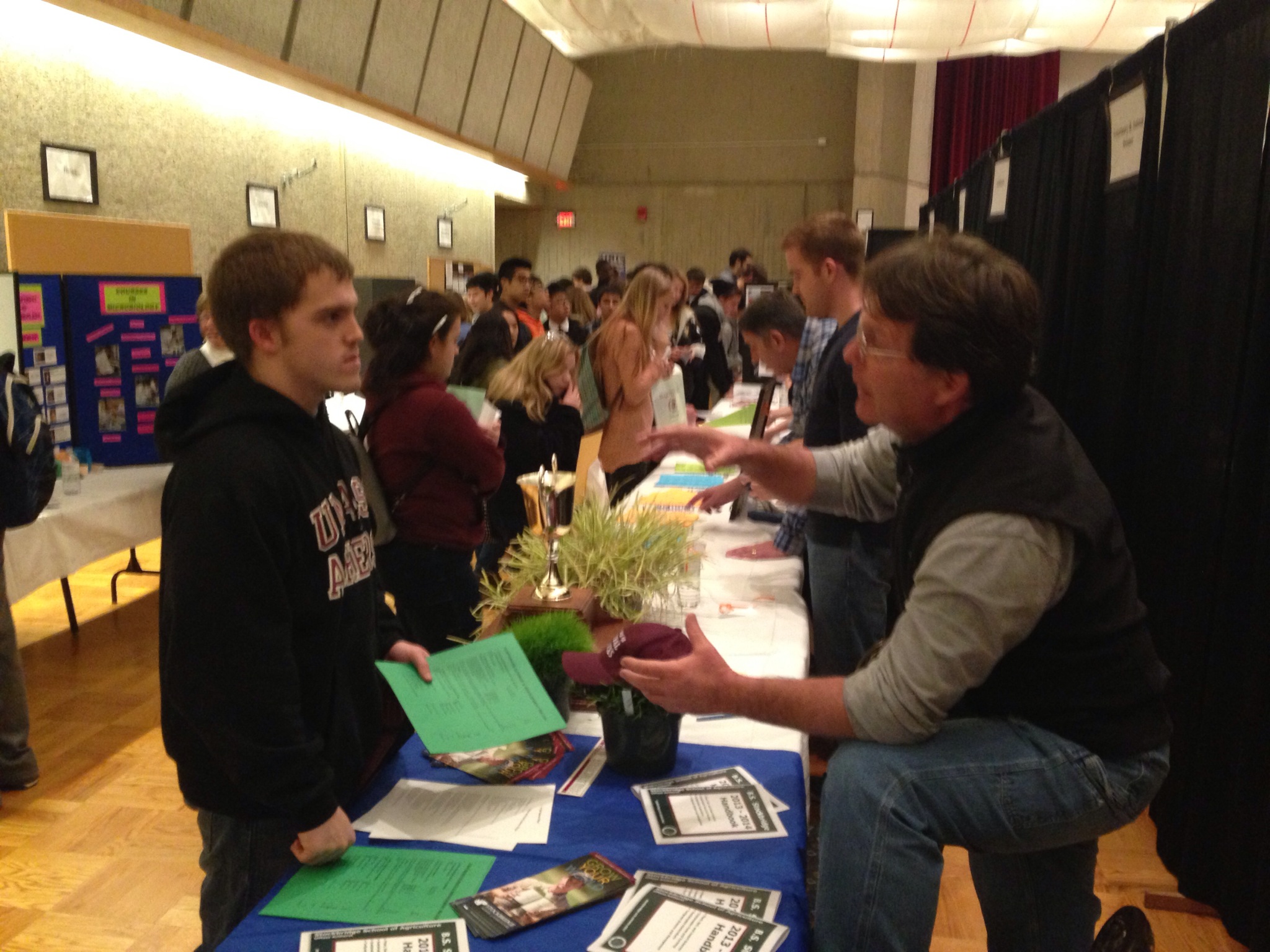
There was quite a bit of interest among undeclared students in our majors at the annual Majors Fair.  Thanks to Kathy Conway for helping to create a nice display.  Here is what it looked like before the crowds arrived.

1388562_10101635811886752_2112861219_n

And here are your departmental representatives hard at work.

1401105_10101635778109442_287309012_o

Scott is a great salesperson!

1423148_10101635769850992_734861169_o

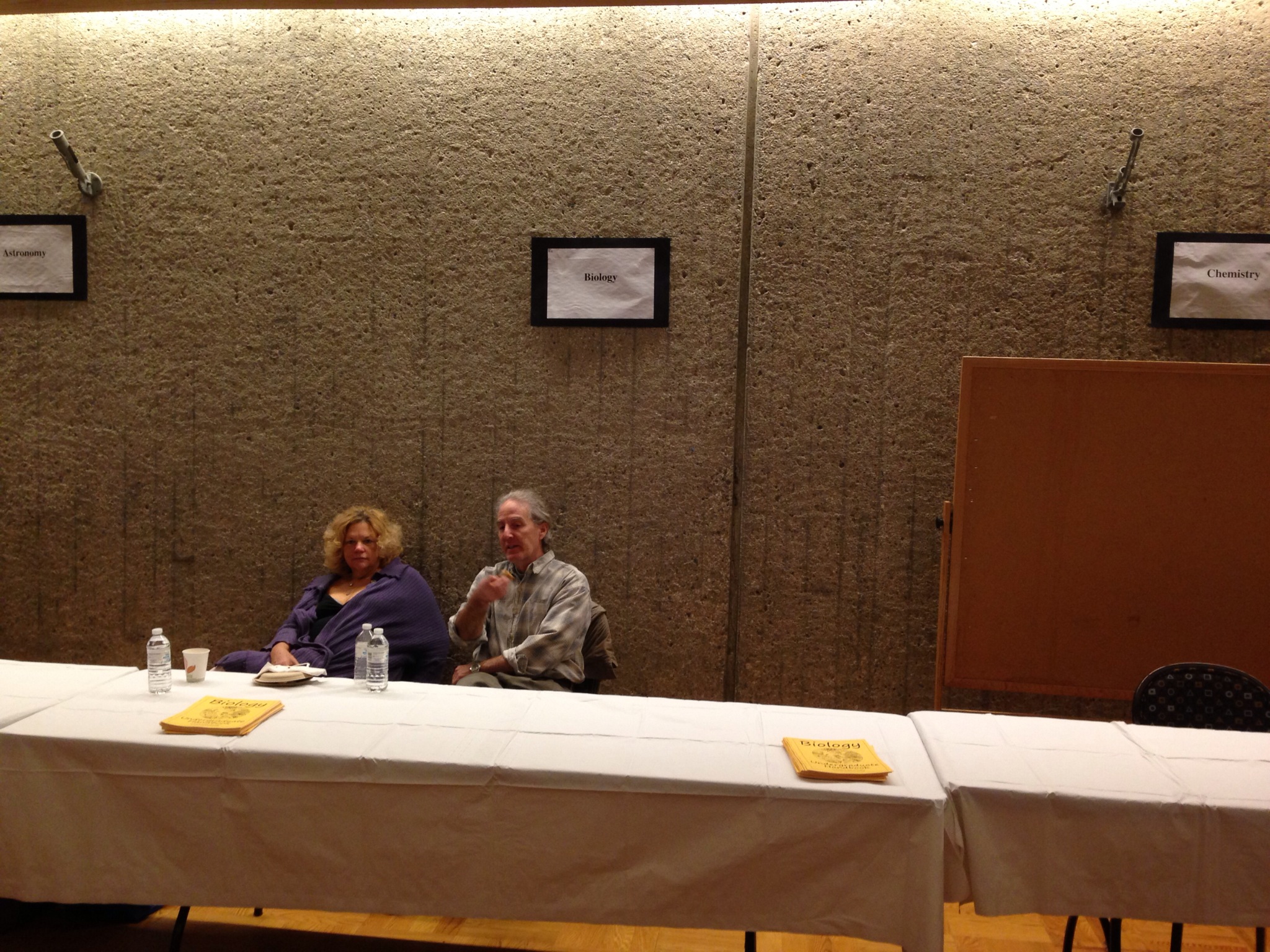
Across the aisle from us were Astronomy, Biology and Chemistry…..

1419343_10101635765744222_2081496447_o


UMass Sustainable Food and Farming Students Harvest Rice

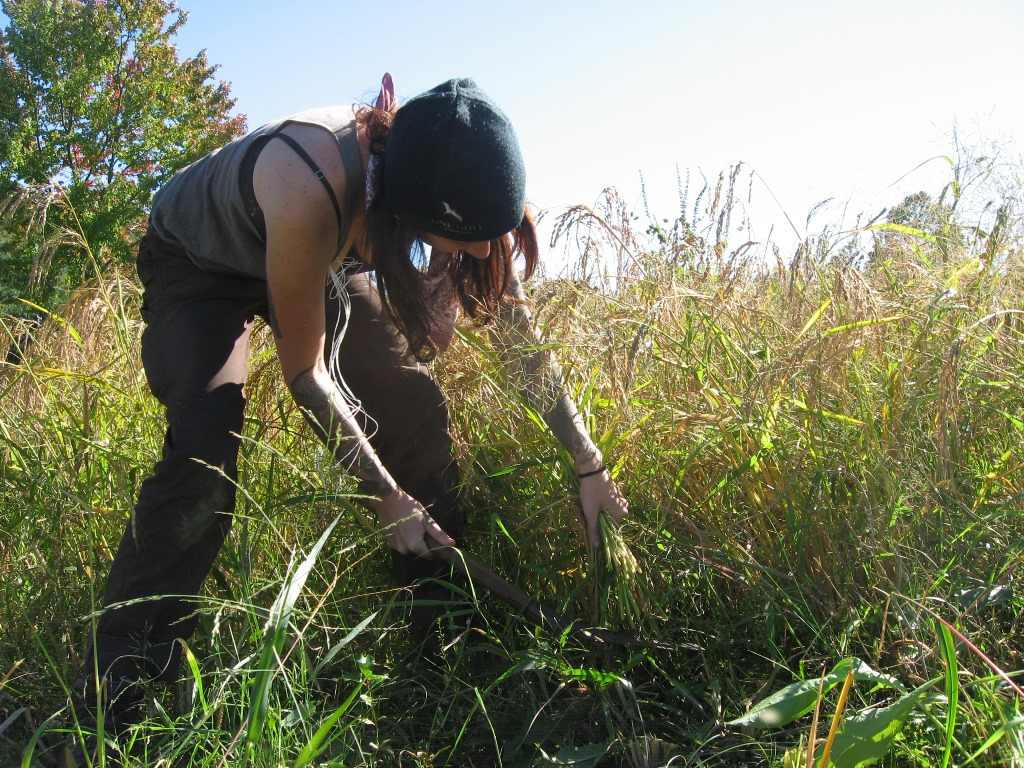
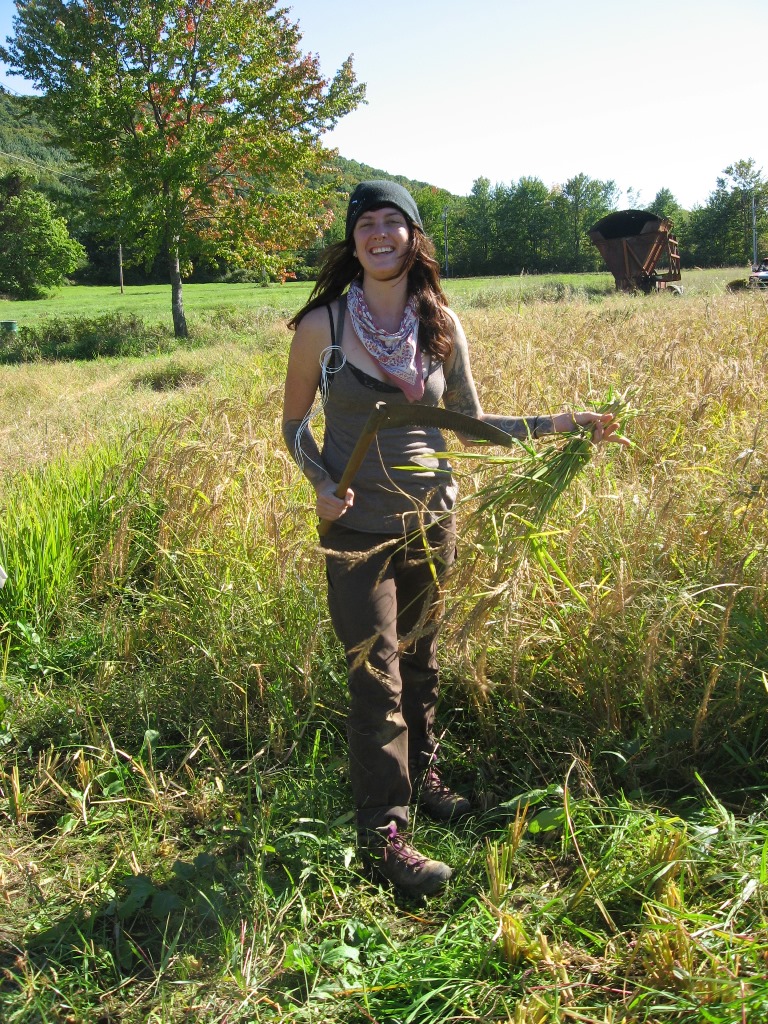
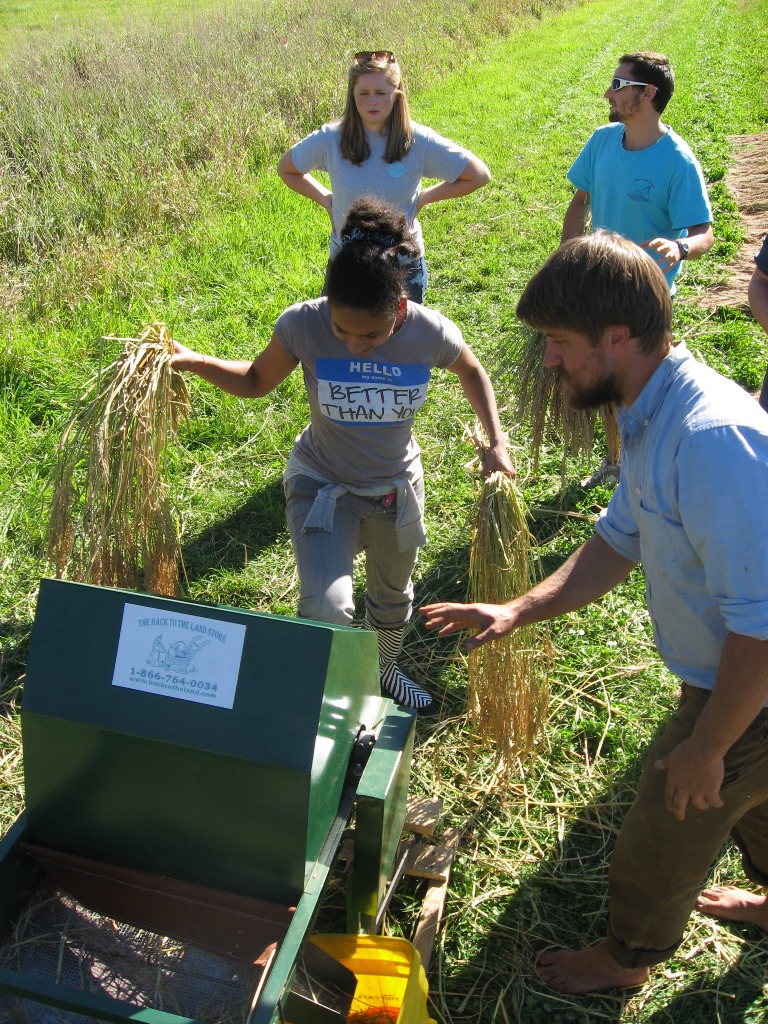
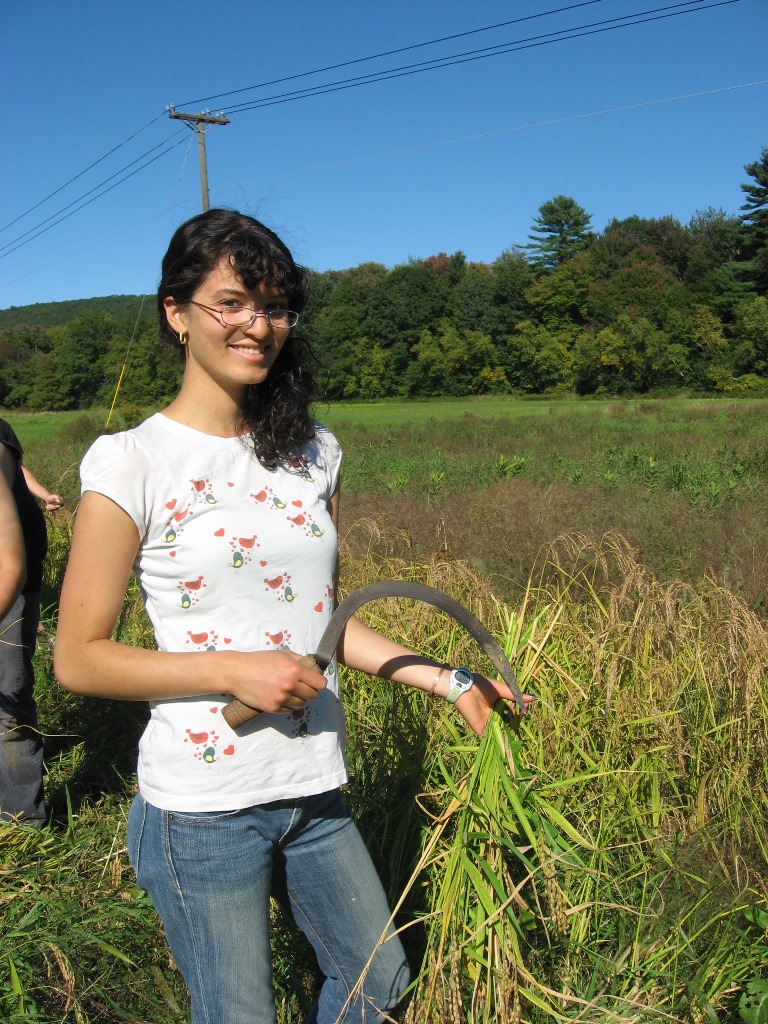
Students in our Sustainable Agriculture class, taught by Katie Campbell-Nelson, helped to harvest rice this week (and they didn’t have to travel far).  Ryan Karb, graduate of the Sustainable Food and Farming program, working with Michael Pill grew a plot of rice right here in Western Massachusetts this summer.

Here are some photos of our students harvesting rice.

IMG_5047

IMG_5048


IMG_5054


IMG_5049

Food Films – a list

Courtesy of Food Tank

Films and short videos are a powerful way of increasing awareness of and interest in the food system.With equal parts technology and artistry, filmmakers can bring an audience to a vegetable garden in Uganda, a fast food workers’ rights protest in New York City, or an urban farm in Singapore. And animation can help paint a picture of what a sustainable, just, and fair food system might look like. Film is an incredible tool for effecting change through transforming behaviors and ways of thinking.There are many incredible films educating audiences about changes being made – or that need to be made – in the food system.

Anna Lappe and Food Mythbusters, for example, just released a new animated short film on how “Big Food” marketing targets children and teenagers, filling their diets with unhealthy processed food products – Continue reading Food Films – a list