Category Archives: Education

100 Food Activist Twitter Feeds

1. Alice Waters – @AliceWaters

The queen of California cuisine, Alice Waters is the Vice President of Slow Food International, founder of the Yale Sustainable Food Project, and owner of acclaimed locavore restaurant, Chez Panisse, in Berkeley, CA.

2. allAfrica.com – @allafrica

The premier news source for African news, allAfrica.com and its Twitter feed are great for information related to development, agriculture, and other news across the 54 countries in Africa.

3. Andrew Zimmern – @andrewzimmern

Zimmern, James Beard Award winner and host of Travel Channel’s Bizarre Foods, has a unique take on the cultural significance of food and its power to bring people together.

4. Andy Bellatti – @andybellatti

Bellatti, a self-described “wonk who loves to call out food industry deception,” offers the perspective of a food activist dietician.

5. Anna Lappe – @annalappe

Lappe has made a name for herself by founding Food Mythbusters, which aims to provide a clearer picture of the food industry and the hazards of fast food. She is behind the hashtag #MomsNotLovinIt – moms, however, certainly love Lappe’s Tweets.

6. Ann Cooper – @chefannc

Cooper promotes cooking from scratch in school cafeterias, emphasizing the link between food, farming, and children’s health.

7. Anthony Bourdain – @Bourdain

Bourdain is famously unabashed in his opinions, but has charmed his Twitter audience in delivering them along with stories of his world travels and his insights on food.

8. Barilla Center for Food & Nutrition (BCFN) – @BarillaCFN

BCFN, an Italian research institute working toward a more sustainable and healthy food system, tweets fascinating facts from the organization’s research, as well as links to many BCFN reports, articles, and projects.

9. Barton Seaver – @bartonseaver

Chef, author, educator, and advocate, Seaver has seen almost every side of the food system. He has a passion for sustainable seafood.

10. Bertini & Glickman (Catherine Bertini and Dan Glickman) – @GlobalAgDev

The official Twitter account for the co-chairs of the Chicago Council’s Global Agricultural Development Initiative tweets information on development policy and food security.

11. Beth Hoffman – @bethfoodtech

Hoffman is a freelance reporter who focuses on food, agriculture, and sustainability. She tweets links to a variety of food articles, offering a bit of skepticism about the food industry.

12. Bettina Elias Siegel – @thelunchtray

Siegel’s Twitter feed not only has great tweets about food issues, but it also organizes over 500 other Twitter feeds into lists like “Kids & Food,” “Anti-Hunger Groups,” “Food Reform & Advocacy,” and “Food Writing.”

13. Bill Telepan – @billtelepan

A Culinary Institute of America-trained chef, Telepan has used his restaurants to highlight sustainability, and also works to reform the New York City school lunch program.

14. Bioneers – @bioneers

Bioneers is a multi-media platform for advancing solutions for a more just and sustainable world. The initiative focus on restorative food systems, and its Twitter feed highlights some of the most interesting solutions to food system reform.

15. Catherine Bertini – @C_A_Bertini

Bertini has an impressive resume in food and agriculture: World Food Prize Laureate, Executive Director of the World Food Programme, and current co-chair of the Chicago Council on Global Affairs’ Global Agriculture Development Initiative. She tweets job opportunities, news, and quotes about the food system.

16. Center for Food Safety – @TrueFoodNow

The Center for Food Safety is dedicated to ending harmful food production technologies and supporting sustainable agriculture.

17. Center for Science in the Public Interest – @CSPI

With a newsletter that reaches almost a million people, CSPI is a strong advocate for food, nutrition, and health policy.

18. Center for Strategic & International Studies Global Food Security Project – @CSISFood

The CSIS Global Food Security Project provides research, analysis, and policy recommendations for improving food security. This Twitter feed links to news stories about advances in agriculture and food security in the developing world.

19. The Christensen Fund – @ChristensenFund

The Christensen Fund is a private foundation that supports initiatives promoting biodiversity and cultural and environmental sustainability. Its Twitter Feed includes updates from its funded projects and programs, as well as links to news stories that relate to its mission from around the world.

20. Civil Eats – @CivilEats

One of the leading news sources for food politics, Civil Eats confronts major issues in the American food system.

21. The Coalition of Immokalee Workers – @ciw

The Coalition of Immokalee Workers was founded in 1993 and has grown into an internationally recognized organization that advocates for corporate social responsibility and sustainable food. This is a must-follow Twitter feed for those interested in farmworkers’ rights and labor issues.

22. Community for Zero Hunger – @ZHCommunity

The Community for Zero Hunger is a new independent initiative that supports the U.N. Zero Hunger Challenge, and tweets on food security and hunger in the 21st century.

23. Conservation International – @ConservationOrg

Founded in 1987, Conservation International examines the relationship between economic development and conservation. The organization researches issues ranging from climate change to food and water supply.

24. Dan Barber – @DanBarber

Executive chef and owner of Blue Hill at Stone Barns, Barber is an acclaimed writer on food and agriculture and member of the President’s Council on Physical Fitness, Sports, and Nutrition. Barber’s Twitter feed is a glimpse into the mind of one of America’s greatest chefs.

25. David A. Kessler – @DavidAKesslerMD

Kessler, former Food and Drug Administration (FDA) commissioner, is also the author of The End of Overeating. His tweets cover food and agriculture from a health perspective.

26. Department of Agriculture – @USDA

The U.S. Department of Agriculture (USDA) Twitter feed is a great place to get daily information, reports, and facts on agriculture and other food system issues in the United States. The Twitter feed also live-tweets important events.

27. Earth Eats – @eartheats

Part of Indian Public Media, Earth Eats covers news stories on food safety, policy, and sustainable agriculture, and also has a weekly podcast.

28. Eddie Gehman Kohan – @ObamaFoodorama

This fun Twitter feed keeps track of all White House food initiatives and events.

29. Edible Schoolyard – @edibleschoolyrd

Edible Schoolyard is dedicated to incorporating food education and school gardens around the country. It’s hard not to be a fan of the initiative’s mission to provide every student with a free, organic, and nutritious school lunch.

30. Environmental Working Group Toxics Team – @ewgtoxics

Cutting-edge research and advocacy are the defining characteristics of the Environmental Working Group. The EWG Twitter feed gives links to stories on their own research and to other relevant news stories.

31. Farming First – @farmingfirst

Farming First is a coalition of multi-stakeholder organizations that work to promote sustainable agriculture. Tweets are from a variety of sources that highlight sustainable agriculture.

32. Farm Labor Organizing Committee – @SupportFLOC

FLOC was founded in 1967, and grew into an innovative organization that focuses on the problems with large-scale food supply chains. FLOC has also fought to give migrant workers bargaining power in the labor market.

33. Feed the Future – @FeedtheFuture

U.S. government initiative Feed the Future works to develop long-term solutions to food insecurity and undernutrition.

34. FAO Newsroom – @FAOnews

The U.N. Food and Agriculture Organization (FAO) Newsroom is a great source for global food and agriculture news, and for updates on ongoing United Nations projects.

35. Food Chain Workers Alliance – @foodchainworkers

Founded in 2009, the Food Chain Workers Alliance is a coalition of over a dozen organizations fighting for workers’ rights. By forming a coalition, the Alliance is able to work toward a more sustainable food system with a united voice.

36. FoodCorps – @FoodCorps

By placing leaders into underserved communities, FoodCorps is educating the next generation about healthy, nutritious food. Tweets regularly highlight FoodCorps projects, gardens, and volunteers.

37. Food Day – @FoodDay2013

Save the date! October 24th is the culmination of a year’s worth of efforts for a more sustainable food system. The Twitter feed shares information about developments in the food movement and highlights Food Day events.

38. Food and Environment Reporting Network – @FERNnews

In-depth, investigative journalism related to food, agriculture, and environmental health, with stories that are rich, complex, and captivating.

39. Foodimentary – @Foodimentary

Foodimentary boasts a Twitter feed full of fun food facts and quirky news stories.

40. Food MythBusters – @FoodMythBusters

Armed with the hashtag, #MomsNotLovinIt, Food MythBusters dispels myths about the food system and exposes the real story about what we eat. The initiative also tweets about marketing by large food companies, particularly towards children.

41. Food for 9 Billion – @Foodfor9Billion

Food for 9 Billion is a multimedia collaboration that addresses the challenge of feeding nine billion people by the year 2050 with comprehensive articles, videos, and radio stories.

42. FoodRepublic.com – @foodrepublic

Food Republic examines the culture of food through stories and interviews with an international flair. Its Twitter feed links to many thoughtful articles about food.

43. Food & Think – @Food_And_Think

The food blog of Smithsonian Magazine, Food & Think offers a cultural and historical lens through which to look at food and agriculture.

44. Food & Water Watch – @foodandwater

Food & Water Watch focuses on ensuring that all food and water is safe, accessible, and sustainably produced. This initiative works to hold policy-makers accountable and to inform people about issues related to food and water.

45. Frances Moore Lappe – @fmlappe

Author of Diet for a Small Planet and co-founder of the Small Planet Institute, Lappé tweets a wide variety of sustainability- and food-related tweets.

46. Global Development – @GdnDevelopment

The Guardian’s Global Development site has some of the best, in-depth reporting of development issues available on the web, and tweets stories of development from around the globe.

47. Grist – @grist

Grist, the self-described “Beacon in the Smog,” reports on green and environmental issues with a humorous twist.

48. Hans Rosling – @HansRosling

An expert in statistics, Hans Rosling is a professor of global health and co-founder of Gapminder. Rosling is a resource for critical, and sometimes unexpected, information.

49. Heifer International – @heifer

Through gifts of livestock, seeds, and training, Heifer International works to alleviate poverty by providing individuals with the necessary tools to succeed, and regularly tweets about its many projects and success stories.

50. Henry Dimbleby – @Henry_Leon

Founder of Leon Restaurants in the United Kingdom, Henry Dimbleby has turned the traditional definition of fast food on its head. Dimbleby is also the co-author of the School Food Plan, a radical new vision for school food in the United Kingdom.

51. HuffPost Food – @HuffPostFood

The Huffington Post Food Twitter links to quick and easy reads, as well as slideshows, lists, and opinion pieces.

52. HuffPost Green – @HuffPostGreen

The Huffington Post’s Green section has interesting and sometimes entertaining stories on the environment, which it regularly shares on its Twitter feed.

53. The Hunger Project – @HungerProject

Since 1977, The Hunger Project has worked to empower men and women in the developing world to end hunger and poverty through sustainable, grassroots solutions. The Twitter feed provides “up-to-date tweets on issues that matter.”

54. Institute for Agriculture and Trade Policy – @IATP

IATP tweets about the intersection of sustainable food, farm, and trade via news stories and the organization’s own articles.

55. International Fund for Agricultural Development – @IFADnews

IFAD works to combat rural poverty, specifically focusing on food security and nutrition. The organization’s tweets highlight projects around the globe and important information related to food security and poverty.

56. Jamie Oliver – @jamieoliver

Oliver is an acclaimed television personality and chef, but is also a serious food activist. His efforts helped overhaul Britain’s school lunch program, and he has continued to advocate for a healthier food system through his foundation.

57. John Besh – @chefjohnbesh

Owner of nine restaurants, Besh is a food icon who is dedicated to preserving the culinary heritage of New Orleans through scholarships and loans to small farmers.

58. Jonathan Bloom – @WastedFood

Bloom is the author of American Wasteland, an insightful book about food waste in America. His blog Wasted Food is another medium for his interest in food waste, and his Twitter feed is a source of plentiful information on food waste.

59. José Andrés – @chefjoseandres

Andrés is the President of ThinkFoodGroup and founder of World Central Kitchen. Not only a critically acclaimed chef, he is a leader in combating global hunger one plate at a time.

60. Jose Garces – @chefjosegarces

Garces is not only a James Beard Award winner, but also the owner of a forty-acre sustainable and organic farm. He tweets many interesting tidbits about food culture, including many beautiful pictures.

61. Kat Kinsman – @kittenwithawhip

Managing editor of CNN’s Eatocracy, Kinsman’s tweets simultaneously convey her commitment to sustainable food and sense of humor.

62. Ken Cook – @EWGPrez

Co-founder and President of the Environmental Working Group, Cook is an important voice on farm policy and chemical use.

63. Kim Severson – @kimseverson

Full of wit and interesting opinions on current events, Severson is the Atlanta Bureau Chief for The New York Times and forming Dining Section writer. She has written extensively on food, including her latest book, Cook Fight.

64. Lavida Locavore – @LocavoreBlog

The Locavore Blog takes a charming and personable approach to local and sustainable agriculture.

65. Let’s Move! – @LetsMove

First Lady Michelle Obama’s initiative is dedicated to raising a healthier generation of kid by combating the obesity epidemic.

66. Marcus Samuelsson – @MarcusCooks

An Ethiopian-born, Swedish-raised, made-in-America chef, Samuelsson doesn’t fit neatly into one box. His flagship restaurant, Red Rooster, is in the heart of Harlem, but reflects Samuelsson’s international background. He is also the founder of FoodRepublic.com, a website that explores the culture of food.

67. Marc Vetri – @marcvetri

Vetri has worked to reform school lunches and educate children about healthy eating in Philadelphia, while also working as a James Beard Award-winning chef. His tweets, offering great bits of information and experience from a sustainable chef, have a Philadelphia focus.

68. Marion Nestle – @marionnestle

The woman behind Foodpolitics.com, Nestle is an acclaimed author and professor of nutrition, food studies, and public health at New York University.

69. Mark Bittman – @bittman

Time Magazine called him “Twitter’s most-followable food wonk.” Bittman, New York Times columnist and author of How to Cook Everything, is one of the most renowned writers on food and agriculture issues.

70. Michael Pollan – @michaelpollan

Author of The Omnivore’s Dilemma, In Defense of Food, and most recently, Cooked, Pollan is a leading voice for a healthier, more sustainable food system.

71. Michele Simon – @MicheleRSimon

Author of Appetite for Profit, public health lawyer, and the woman behind the website Eat Drink Politics, Simon is a leader in developing food and alcohol policy.

72. Modern Farmer – @ModFarm

The Modern Farmer Twitter feed complements their stylish website and image-laden articles, providing a wide variety of stories about farming in the 21st century.

73. Muhammad Yunus – @Yunus_Centre

2006 Nobel Peace Prize Laureate Muhammad Yunus is the founder of the Grameen Bank in Bangladesh, and tweets stories related to development and anti-poverty efforts.

74. Naomi Starkman – @NaomiStarkman

As co-founder and editor-in-chief of Civil Eats, Starkman’s Twitter feed covers important news about the food system and sustainable agriculture. She is a self-described “farmie, not a foodie.”

75. National Institute of Food and Agriculture – @USDA_NIFA

The NIFA Twitter feed features interesting research and reports related to agriculture in the United States.

76. National Sustainable Agriculture Coalition – @sustainableag

NSAC tweets highlight sustainable family farms and the Coalition’s advocacy work on behalf of family farmers.

77. New York Times Dining & Wine – @nytdining

While The New York Times’ Dining & Wine section is often filled with recipes, it also features important food news.

78. No Kid Hungry – @nokidhungry

No Kid Hungry’s tweets focus on child hunger in the U.S., and the organization’s own efforts to end child hunger. They also regularly recognize their supporters on Twitter.

79. Nourish – @Nourish_Life

Nourish is an educational initiative intended to stimulate meaningful conversations about food and sustainability. Its Twitter feed is an extension of that important dialogue.

80. NPR Food – @NPRFood

The NPR Food Twitter feed is home to the blog, The Salt, as well as all of NPR’s food-related stories. It offers in-depth coverage of a wide range of issues.

81. Oakland Institute – @oak_institute

This think tank’s investigative research delves into complex issues at the intersection of food, trade, and land. Its tweets focus on the successes and failures of projects in developing countries.

82. Olivier De Schutter – @DeSchutterUNSR

As the United Nations Special Rapporteur on the right to food, Olivier De Schutter is at the forefront of food security, and tweets news from the field.

83. ONE – @ONECampaign

The ONE Campaign’s three million members are a united voice for ending extreme poverty. Tweets are of facts, news, and stories of ONE’s advocacy efforts.

84. One Acre Fund – @OneAcreFund

Over 130,000 smallholder farmers in East Africa have been able to double their farm income on each planted acre through the One Acre Fund’s “market in a box.” Tweets focus on smallholder farmers, telling the stories of those impacted by One Acre Fund’s efforts.

85. Oxfam International – @Oxfam

Oxfam International is a collective of 17 organizations fighting poverty worldwide. The organization’s Twitter feed is a powerful testament to Oxfam’s work, and highlights crises around the world.

86. Paula Crossfield – @civileater

Crossfield is a pioneer in food reporting. As managing editor of Civil Eats and the Food and Environment Reporting Network, Crossfield tweets links to insightful articles and news stories.

87. Peter Ladner – @pladner

Ladner, an authority on urban food, is the author of The Urban Food Revolution. His tweets are part foodie, part urban, and 100 percent Canadian.

88. The Pig Idea – @ThePigIdea

The Pig Idea is a campaign to lift the ban on feeding food waste to pigs in the European Union, and regularly tweets about its progress.

89. Raj Patel – @_RajPatel

Author of Stuff and Starved, Patel tweets on a variety of contemporary issues and is currently working on a documentary on the global food system, Generation Food Project.

90. Real Food Challenge – @realfoodnows

The Real Food Challenge aims to harness the power of students to make an impact on the food system, one college campus at a time.

91. Real Food Real Jobs – @RealFoodandJobs

Real Food Real Jobs is at the nexus of workers’ rights and healthy, sustainable food. By simultaneously advocating for whole, fresh, nutritious food and fighting for a living wage for workers in the food industry, Real Food Real Jobs is an innovative food worker’s organization.

92. Rick Bayless – @Rick_Bayless

Chicago-based chef Bayless is not only known for his Mexican cuisine, but also his dedication to Midwestern farmers and his community. Through the Frontera Farmer Foundation and the Frontera Scholarship, Bayless has redefined the role of a chef to include being an active member of the community.

93. Roger Thurow – @RogerThurow

Senior Fellow at the Chicago Council on Global Affairs and author of The Last Hunger Season, Thurow tweets about hunger and food security.

94. Rodale Institute – @rodaleinstitute

The Rodale Institute has spent over 60 years researching best practices in organic agriculture, and its Twitter feed shares that research with the public.

95. Sam Fromartz – @fromartz

Fromartz is the co-founder and editor of the Food and Environment Reporting Network. His tweets focus on food issues, often with a slant toward bread, as he is currently working on a book on grains, bakers, and bread.

96. Savory Institute – @SavoryInstitute

The Savory Institute promotes land-restoration through holistic management, strategically using livestock to mimic wild herds, and the organization’s tweets focus on land degradation and restoration.

97. School Food Plan – @SchFoodPlan

With weekly Twitter chats and Q&A sessions, The School Food Plan Twitter feed is an interactive resource on a new food plan for United Kingdom schools.

98. Shamba Shape Up – @shambashapeup

With over 10 million viewers in Africa each week, Shamba Shape Up is a reality show about fixing farms and educating viewers about agriculture.

99. Slow Food USA – @SlowFoodUSA

Slow Food USA is focused on building a better food system through supporting food that is not only good for people, but the planet as well.

100. Small Planet Institute – @SmallPlanetInst

The Small Planet Institute examines the idea of a “Living Democracy,” where citizens work toward incorporating inclusion and fairness into public life. As part of this approach, the Small Planet Institute tweets links to articles related to food and agriculture in the context of its mission.
From: Food Tank’s 118 Best Twitter Feeds

Sustainability grows as a major in the Pioneer Valley

By MADELEINE LIST – Gazette Contributing Writer – Tuesday, June 4, 2013

For students in western Massachusetts, green is the new black.

Majors and certificates in different areas of sustainability are becoming increasingly popular at local colleges. Some are creating entire new programs to meet the rising demand.

In the fall, Greenfield Community College plans to introduce a program called SAGE, for Sustainable Agriculture and Green Energy — a collaboration of existing energy-efficiency and farm and food systems programs at the college, said Peter Rosnick, the college dean.

“The reason why there is so much interest in both of these programs is because (students) want to find solutions for climate change, they want to find solutions around energy and heating homes and finding means of transportation past oil,” he said.

“There is also a recognition that we need to be more self-reliant. If you are concerned about climate change, if you are concerned about the state of our environment, we need to figure out how to produce our own food,” he said.

pullcarrotEnergy efficiency and farm and food systems are both degree programs at GCC that are more related than one might think, said Abrah Dresdale, coordinator of the farm and food systems program.

“The global industrial agriculture system is the No. 1 consumer of fossil fuels, expending more carbon than any other industry, including war,” she said. “There’s a huge implication on our food availability and the whole way the system works, from the machinery used on the farm, to the plastic used in the packaging to the transportation of the food thousands of miles.”

SAGE will be the first program of its kind at GCC, and will provide opportunities not only for students, but for faculty and kindergarten through Grade 12 educators to learn ways Continue reading Sustainability grows as a major in the Pioneer Valley

Congratulations to the 2013 SFF Graduates

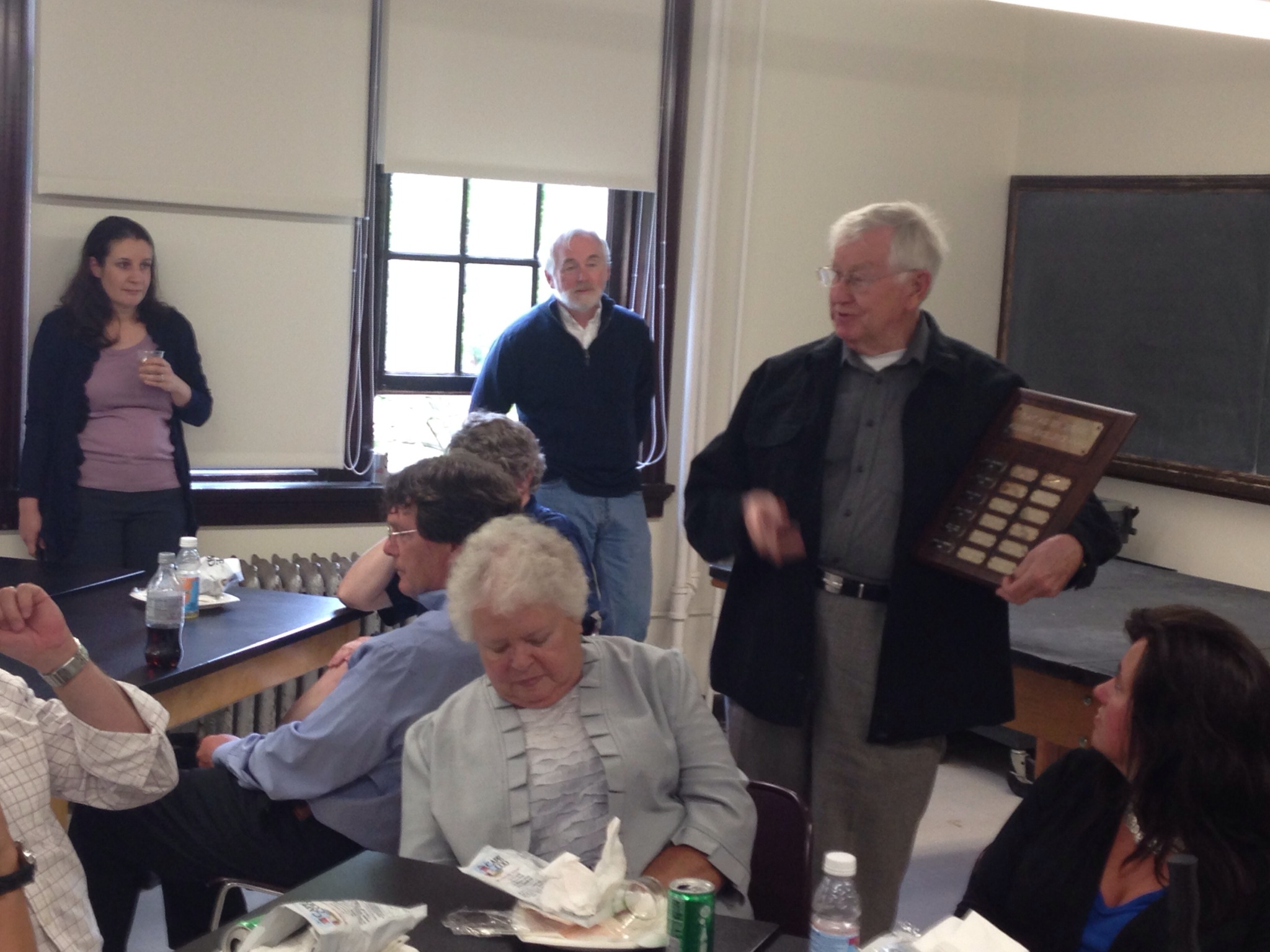
Thanks for joining us for a luncheon before the college graduation ceremony so our faculty could meet your families.

Deans Goodwin and Baker stopped by to wish our graduates well
Dr. Barker acknowledged the student with the highest GPA in the graduating class

This was the largest graduating class for the Sustainable Food and Farming major ever!  Congratulations to all of our seniors!

Getting ready outside the Mullins Center

Stockbridge was in the front row in recognition of our role at the beginning of Mass Aggie

Stockbridge was in the front row in recognition of our role at the beginning of Mass Aggie

 The Mullins Center was full!

The Mullins Center was full!
Astrid O'Connor spoke on behalf of the Stockbridge School of Agriculture
Astrid O’Connor spoke on behalf of the Stockbridge School of Agriculture


Jordan Teboldi's graduation cap
Jordan Teboldi’s graduation cap

Congratulations to Graduating Sustainable Food and Farming students:

  • Liz Altieri
  • Ashley Barrett
  • Rose Boyko
  • Max Carbone
  • Brooke Dillon
  • Becca Drew
  • Morgan Dugan
  • Thayer Dugan
  • Brian Eaton
  • Dan Finkelstein
  • Amber Halkiotis
  • Jacob Harness
  • Katie Houghton
  • Andrew Kapinos
  • Astrid O’Connor
  • Nora Seymour
  • Jordan Teboldi


Groundbreaking for Agricultural Learning Center at UMass on nearby Amherst field

By SCOTT MERZBACH Staff Writer – Thursday, April 25, 2013 –  Original Article

AMHERST — Growing up in Foxborough, Stockbridge School of Agriculture senior Jordan Tedoldi didn’t have many opportunities to work on farms before arriving in Amherst.

As a new 50-acre farm known as the Agricultural Learning Center begins life a short distance from the University of Massachusetts campus, Tedoldi and other Stockbridge and UMass students will not only have a place to learn about agriculture, but be full participants in planting and studying crops, raising livestock and practicing urban forestry.

“I know it will be an inspirational place for people who grow up away from the farms where they aren’t getting dirt under their fingernails,” Tedoldi said.

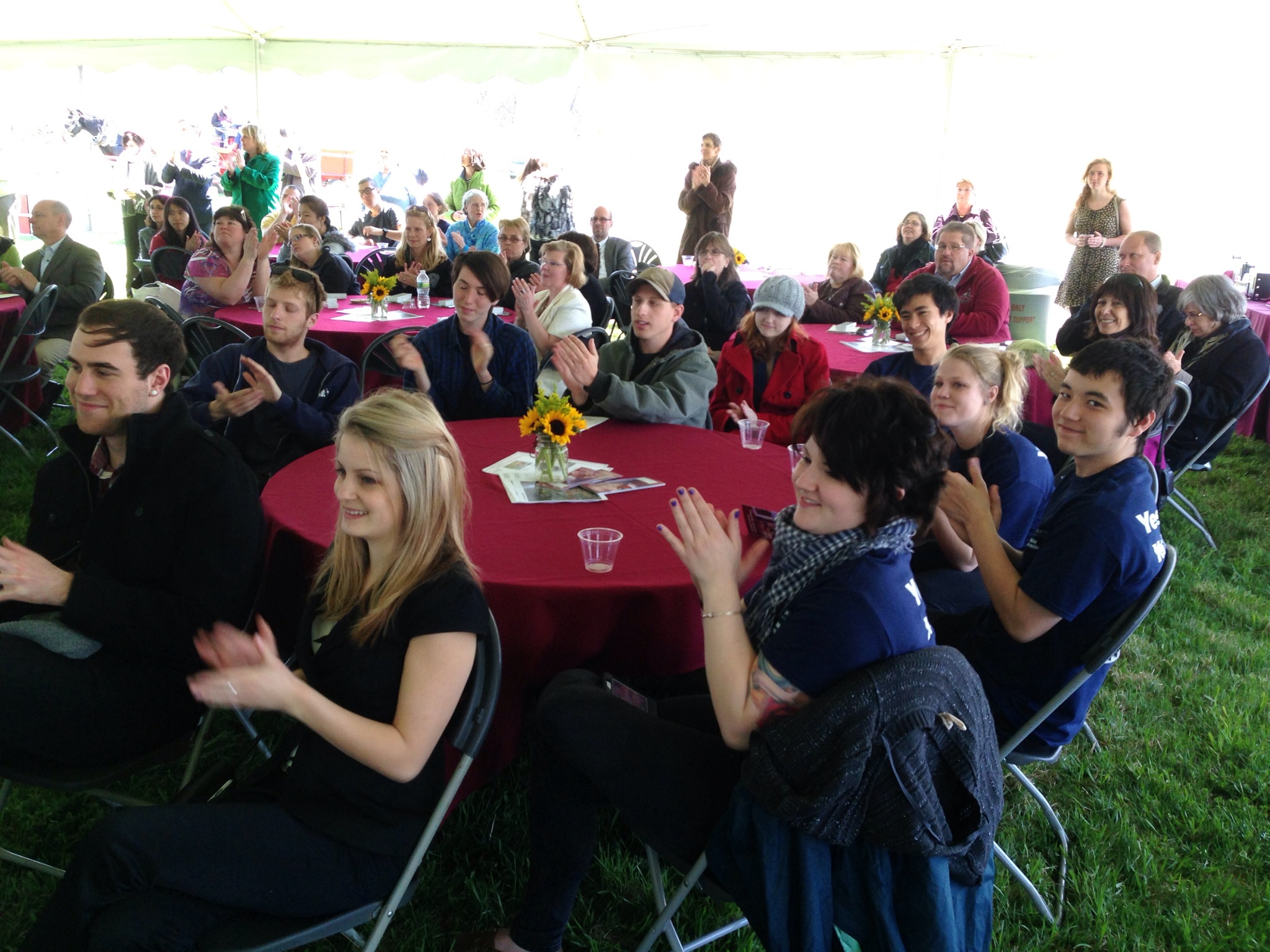
Jordan Teboldi and other Sustainable Food and Farming majors at the groundbreaking

The learning center is in part a response to the rapidly expanding Sustainable Food and Farming major at Stockbridge, which has increased from five to 80 students in the last decade. But the center also will allow other students to pursue studies focused on agriculture, including sustainable practices aimed at growing more food locally, enhancing the food supply and responding to concerns about climate change.

The center was the focus of a celebration and formal ground-breaking Thursday as part of UMass Founders Week 150th anniversary event. But it’s already very much a working farm — plowing began on some of the fields this week, where crops will soon be planted and the first livestock, belted Galloway cows, are expected to be raised.

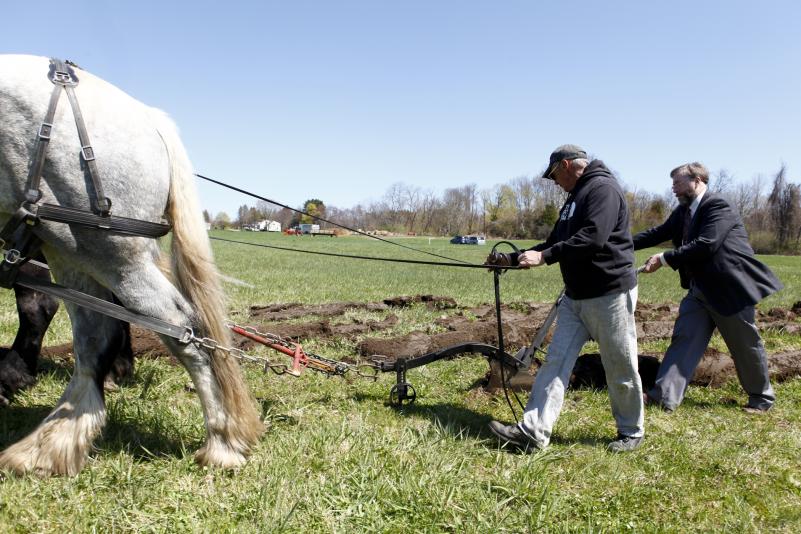
David Bradham, Business manager of Blue Star Equiculture, left, and Wesley R. Autio, Director of Stockbridge School of Agriculture use a horse-drawn hand plow, Thursday, during a groundbreaking at the site of the new UMass Agricultural Learning Center on N. Pleasant St. in Amherst.
David Bradham, Business manager of Blue Star Equiculture, left, and Wesley R. Autio, Director of Stockbridge School of Agriculture use a horse-drawn hand plow, Thursday, during a groundbreaking at the site of the new UMass Agricultural Learning Center on N. Pleasant St. in Amherst. Photo from Sarah Crosby of the Daily Hampshire Gazette.

Unlike the research farm UMass has in South Deerfield, with its turf and vegetable plots, and the Belchertown orchards, all of which are primarily for professor research and Stockbridge majors, the learning center will feature the entire spectrum of farming in New England — pastureland for livestock to graze, vegetable and agronomic crops, tree fruits and landscaping.

Stephen Herbert, director of the Center for Agriculture at UMass, said the idea is to get students into the active part of agriculture and supplement the training they get in the classroom. “Students will come and use the crops that are grown,” Herbert said.

As an example, Herbert said a student taking a soil and crop management class may get to see how the size of corn ears varies depending on how densely the crop is planted. The student will be able to see the larger or shorter ears and calculate the yields.

Other projects could include learning about planting cover crops, something that is done in campus greenhouses, which don’t always mimic real conditions.

Students are looking forward to these real-life opportunities.

“This center represents everything that I joined this program to do,” said Kaylee Brow, a junior from Northampton.

Brow said she expects the learning center will be an incredible opportunity.

“This is both very important for hands-on education and significant for the university to reinvest in agriculture,” Brow said.

Max Traunstein, a junior from Granby, said he expects the learning center will offer better hands-on experiences than other agriculture-related opportunities now on campus.

“There are some small places on campus to do permaculture, adjacent to the cafeterias,” Traunstein said.

John Gerber, a professor of Sustainable Food and Farming at Stockbridge, agreed, saying this will be real farming, not gardening.

“On campus, there’s really no sense of what farming is like,” Gerber said. “This will be a farm.”

Gerber said he anticipates that some classes will begin at the site this summer, with the year-round UMass Student Farming Enterprise class one of the first to take advantage.

Stockbridge already grows organic vegetables at the South Deerfield Farm, but the learning center, Gerber said, will allow students in both Sustainable Agriculture and Botany for Gardeners classes to actually harvest vegetables that will soon be planted.

“There are 27,000 students at UMass who don’t know where their food comes from,” Gerber said. “Our students will be a lot of the teachers when they walk over here.”

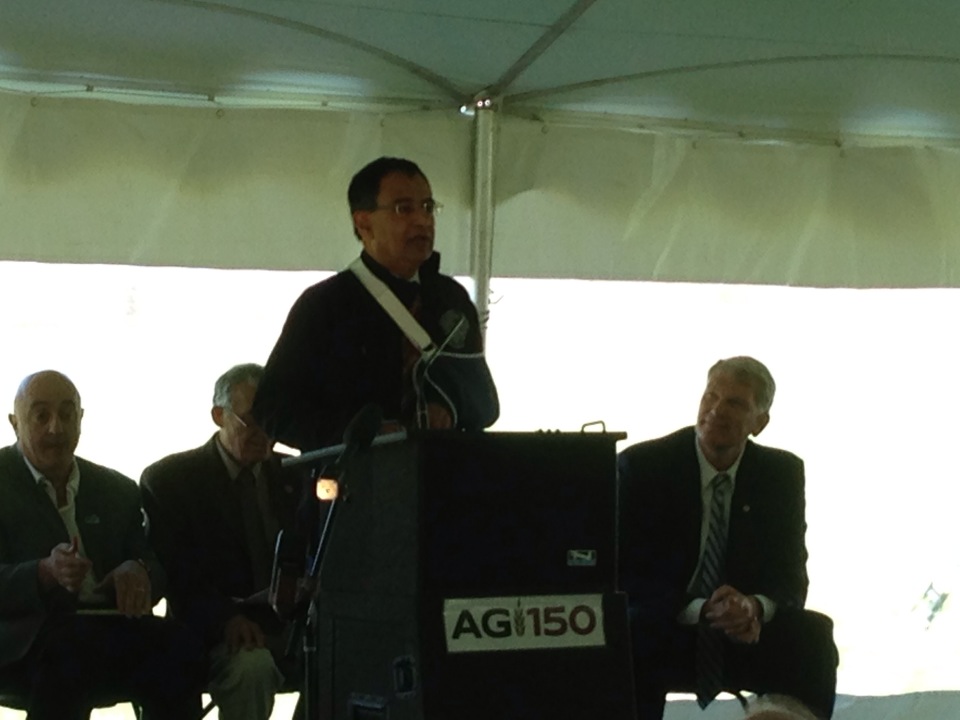
During the ground-breaking ceremony, UMass Chancellor Kumble Subbaswamy said the learning center brings UMass back to the roots when it was founded by Levi Stockbridge in 1863, but is also part of a vibrant food-secure future.

“The new center represents the spirit of our history and the cutting edge of agricultural understanding,” Subbaswamy said. “It will be a showpiece and destination for people to learn about agriculture.”

Chancellor Kumble Subbaswamy announced the creation of  the new UMass Agricultural Learning Center at the site on North Pleasant St.

Chancellor Kumble Subbaswamy announced the creation of the new UMass Agricultural Learning Center at the site on North Pleasant St.

The 50-acre site is made up of parts of four former farms, but has been primarily hayfield in recent years.

Alice Wysocki, whose family once owned a portion of the land, said she is pleased to see a return to agricultural production, especially in a sustainable way much like her family farmed it.

“My father would be very pleased. This was a way of life in the ’ 20s and ‘30s,” Wysocki said.

Jane Adams Roys, whose father Robert C. Adams ran a dairy farm on the land, traveled from Florida for the ground-breaking.

“I just think it’s wonderful for agriculture going on here,” Roys said.

Roys said she wished her father were still alive to see this project come to reality.

The learning center is expected to eventually have an 1894 horse barn and the Blaisdell House moved to the site from campus, though this depends on financing. Plans call for the ground level of the horse barn to have the horse stalls converted into a 90-seat classroom, while the loft becomes teaching laboratories.

Massachusetts Farm Bureau Federation president Rich Bonanno presented a $10,000 check in support of the project, and has pledged $500,000, and the university is expected to undertake a fundraising campaign to have work done so the center can formally open in fall 2014.

————————————————————-

And from Channel 22 TV news:  Groundbreaking new 50 acre working farm for UMass

Sustainable Food ‘Is on the Brink of Going Viral’ on Campuses

chroniccleTo the Editor:

Anyone concerned about quality of life on higher education campuses—especially food service operators—should appreciate and take heed of William R. Wootton’s “Fire Your Food Service and Grow Your Own” (The Chronicle, March 11).

I especially appreciate his point about the clashing missions of colleges and food-service providers. Whether a college food service is run independently or by a corporation, it is incongruous for the two entities to run separately and with different goals in mind. Only when food-service providers and their universities begin to align their respective missions and work collaboratively will we begin to see the systemic change his article calls for.

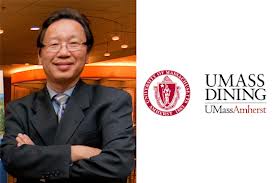
kentoongHere at the University of Massachusetts at Amherst, UMass Dining is an independent, college-operated food-service provider. UMass Dining places local, certified-organic sourcing as top priority. The students demanded it, and we’ve listened. Yet, as Mr. Wootton pointed out, it becomes difficult to change sourcing if you’re locked into a third-party contract. Nine times out of 10, financial feasibility seems to be the insurmountable hurtle—or, rather, the companies “have little financial or managerial incentive” to make changes.

If both independent and corporate food-service providers opened their eyes to the intangible values above the bottom line, we might find ourselves moving towards the future envisioned in this article.

UMass Dining’s mission is “to contribute to the campus life experience” as well as the local community. Our well-established relationships with neighboring farmers allow us to source nearly 30 percent of our produce locally. In turn, UMass provides healthy, vibrant, and engaging products, services, and knowledge that complement and support the academic, recreational, and social goals of the University.

We have successfully initiated and staffed one of the most aggressive and progressive sustainability programs in the country. Our switch to trayless dining, coupled with a dogged belief in composting and recycling has led to a waste-diversion rate in excess of 70 percent (at UMass Amherst we divert over 1,000 tons of organic waste annually), all while we continue working to reduce waste entirely.

In terms of education, UMass Dining and the university’s Stockbridge School of Agriculture have formed a partnership to expand academic programming for sustainable food systems. UMass also has one of the fastest growing undergraduate and graduate degree programs in sustainable food and farming in the nation, and many of our students elect to focus on permaculture within this degree.

UMass is not perfect, nor do we believe we have all of the answers, but we are certainly trying. In an effort to connect sustainable leaders and food-service providers from campuses around the globe, UMass Amherst is hosting the 2013 Permaculture Your Campus Conference this June. Students, food-service directors, and faculty and staff members will explore diverse models of institutional sustainability and establish an international network of colleagues working to create the culture of sustainability that every campus needs.

We pride ourselves in the fact that the aforementioned “good stuff” is a direct reflection of UMass Amherst as land-grant institution. The better our program is, the more we contribute what it means to be part of the campus community. But ours is just one example of the many university-dining programs that are joining this nationwide trend to source sustainable food and place a strong emphasis on educating their students about food and agricultural systems. The trend is on the brink of going viral. We can only hope that more universities and foodservice providers start working to the same end so we can collectively tip the scales toward a more sustainable future.

Ken Toong
Executive Director
Auxiliary Enterprises
University of Massachusetts
Amherst, Mass.

Original Post

Highlighting the Importance of Student-Run Cooperatives

geoby Meghan McDonough, (University of Massachusetts, Amherst student)

(EDITOR’S NOTE: This is an original report written for GEO.)

At the University of Massachusetts Amherst, approximately 145 full-time undergraduate students work as co-managers at seven different student-run cooperatives across campus. Ranging from a copy shop, a bike repair shop, and numerous food venues, these student-run businesses service all different areas of campus. Each co-manager in every cooperative has an equal say in business decisions, is involved in numerous committees (purchasing, marketing, catering, books, payroll, etc) and gains valuable, hands-on experience running a business.

Several student-run food venues such as Earthfoods, Greeno Sub Shop, and Sweets & More accept the Your Campus Meal Plan (YCMP) swipes, valued at $9.50 each. People’s Market, another student-run business located in the Student Union, however, is not permitted by the University to accept the YCMP meal plan because they do not technically sell “meals”, but rather food items as a market would. For several semesters, People’s has been advocating for a change to this policy so that they can begin accepting this meal exchange.

Recently at UMass, a University-owned Starbucks stand has opened in the Integrated Sciences Building, a populous and buzzing area of the University. Catering to students and faculty alike, this new coffee and pastry hotspot has stirred up controversy around campus. This venue sells Starbucks products, yet is permitted to accept the YCMP meal plan swipes whereas similar food venues such as People’s Market cannot. While meal exchange is just one of the apprehensions that this venue is raising, many other student advocacy groups such as the Student Workers Invested in Fair Treatment (SWIFT) and the Student Labor Action Program (SLAP) are voicing their concerns regarding the allowance of corporations on campus, as Starbucks is the first at UMass.

The Center for Student Businesses (CSB) is the University’s administrative department for these student-run businesses and is working to raise awareness about the benefits that each cooperative brings to the University in the hopes that more will be established on campus. Co-managers are voicing a “pro-collective” and “pro-community” mentality, not an anti-Starbucks one. They insist that the skills needed to be an effective student co-manager as well as the amount of information and abilities learned throughout a co-manager’s experience are both valuable and unique. Everything from purchasing, pricing, marketing, catering, books, payroll, cashout, community outreach and in-store responsibilities all require diligence and reliability.

The University employs 145 co-managers for this opportunity, which is a small number when compared to the 20,500 undergraduate students currently enrolled at UMass. Current co-managers would like to see this opportunity open up for more students.

Rumors have been swirling that there is intent to open even more areas on campus to sell Starbucks products, including in the Southwest residential area as well as the new honors dormitories scheduled to open in September, 2013. Though confirmation of this has been denied, if UMass continues to open University-owned Starbucks throughout the campus, co-managers argue that it would be beneficial to consider the advantages of having students more involved in the operation as the student-run cooperatives on campus already operate. Co-managers are assets to the community as well as the University. The skills acquired by working at a collective are rare in today’s workforce, where it is common for a college intern’s most important duty to be fetching coffees for the office.

The Center for Student Businesses itself is an asset to UMass as it gives students the opportunity to run a business and make all operating decisions as a collective. Should more students be given this opportunity, UMass will have an even stronger, unique community for students to gain valuable experiences.

Our College is at the heart of the UMass 150-year celebration

CNS is at the heart of UMass 150-year celebration

Dean Steve Goodwin – 03/25/2013

In April, UMass Amherst will launch a year-long commemoration of its 150th Anniversary — and as Dean of the college that proudly holds the legacy of the university’s land-grant mission, I can’t help feeling a bit of personal satisfaction. (The picture is of me in front of the new CNS Greenhouse.)

Steve Goodwin at CNS GreenhouseThe College of Natural Sciences carries forward the national land-grant university tradition of agricultural research and education that began with the creation of Massachusetts Agricultural College on April 29, 1863. “Mass Aggie,” as it was affectionately called, was founded with the proceeds from sales of land granted to Massachusetts under the federal Morrill Land Grant Act, passed by Congress and signed into law by President Lincoln in 1862.

The Stockbridge School of Agriculture has been educating students in all aspects of agriculture and the green industries for almost 100 years. The School has recently become a full academic unit with its own faculty, and has the capacity to provide research, teaching and outreach opportunities, as well as to offer AS, BS, and graduate degrees.

The college’s Center for Agriculture is the current home of two historic missions: applied research, and public outreach. The Center will soon be renamed the Center for Agriculture, Food and The Environment, to better reflect the full range of its 21st-century mission.

The Center’s Massachusetts Experiment Station supports faculty research in agriculture, food systems, nutrition, forestry, environment and other topics, and receives federal funding under both the Hatch Act of 1887 and McIntire-Stennis Forestry Research Act of 1962. Educational outreach to farmers and others goes back to Mass Aggie’s very earliest days and was formalized by the establishment of a campus Extension Service in 1909. UMass Extension, a unit of the Center for Agriculture, continues outreach to the Commonwealth, and receives funding from the USDA through the federal Smith-Lever Act of 1914.

In its time the Morrill Land Grant Act was an exciting experiment in higher education and it has had a profound impact many aspects of our lives. Today we are again experimenting with ways to integrate research, teaching, and learning across agriculture, the environment, energy, and health and wellness to benefit the public good.

As you can see from our newsletter, the College of Natural Sciences is dedicated to making a difference on campus, in the community, and in the Commonwealth. Clearly, we at CNS are carrying the torch of the land grant movement in our mission to improve the present, and impact the future. Here’s to another 150 years of innovation and tradition.

————————————————————————

New Farmer Mentoring Programs

Young and aspiring farmers face a variety of challenges—from lack of land to not being able to access markets. But there are exciting new initiatives across the world offering valuable information and guidance to new farmers.

  1. Stone Barns Center for Food & Agriculture: The Stone Barns farm in Pocantico Hills, NY is a learning hub for farmers young and old. With a goal of educating farmers in “resilient, restorative farming techniques” Stone Barns offers everything from Farm Camp for kids to Virtual Grange, an online community for young farmers to gain knowledge and mentoring.
  2. Southern Sustainable Agriculture Research and Education Grants: Offering seven different grants, for new and existing farms, Southern SARE’s grants educate, support, and allow farmers to move toward more sustainable production systems.
  3. International Fund for Agricultural Development (IFAD) – Educating Farmers in Zanzibar: Zanzibar’s farmer field schools allow new farmers to learn agricultural practices—and train to mentor other new farmers.
  4. Farmer to Farmer: This organization began as a cooperative between Wisconsin and Nicaraguan farmers to learn from one another.  Now, its efforts are focused on educating coffee farmers in Guatemala.
  5. Cultivating Success: This program offers courses to beginning and existing farmers helping them find planning and decision-making tools, production skills, and support to successfully cultivate sustainable small-acreage farms in Wisconsin and Idaho.
  6. New England Small Farm Institute (NESFI) – On Farm Mentors: NESFI provides an on farm mentoring program to new farmers because they believe that the best knowledge comes from those who are already doing it.
  7. MOSES Farmer-to-Farmer Mentoring: Pairs experienced organic farmers with those who are new to organic farming practices.
  8. Angelic Organics Learning Center Farmer Training Initiative: A recent recipient of a grant from the USDA, this mentoring program is headed by experienced farmers from the Collaborative Regional Alliance for Farmer Training and offers new sustainable farmers business planning, on-farm training and mentoring.
  9. Dakota Rural Action Farm Beginnings: A farmer-led program that links established and beginning farmers to learn about low-cost, sustainable methods of farming.
  10. Future Harvest – Beginner Farmer Training Program: This program offers classroom and shoulder-to-shoulder training for beginning and transitional sustainable farmers in the Chesapeake Bay area.

Original Post

UMass Permaculture Opportunities

Dear Campus Community,

Thanks to your continued support, the UMass Permaculture Initiative has
had remarkable success in the creation of campus edible and sustainable
landscapes.  Your support has also furthered the development of
experiential and academic programing, and strengthened our local community
to be more resilient. Thank you for your support, UMass!

If you are interested in getting involved in UMass campus sustainability,
we encourage you to apply for the UMass Permaculture Committee. The UMass
Permaculture Committee is a collaboration between staff and students and
is looking for passionate underclassmen with marketing interest or
experience who can commit to two academic semesters: Spring 2013 and Fall
2013. The Spring ‘13 meeting times are Tue/Thur 11:15-12:30 & Wed. 4:30-
6:00pm. Each student will receive 3 independent study credits per
semester, 6 credits total. Application deadline is January 28th. Download
the application here: http://bit.ly/UMPApplication & send to
info@UMassPermaculture.com

For more information and to meet the committee, please visit:
http://www.UmassPermaculture.com

Looking to learn more about where your food really comes from and get
credit for it? The Real Food Challenge Internship gives you a chance to
analyze dining hall sourcing, assisting in making our campus food system
nourishing and transparent. At the same time, you will be part of a
national food movement and help educate fellow students. Join the UMass
Student Food Advocates for the Real Food Challenge Internship. Offering 1-
3 credits. For more information contact: umassforrealfood@gmail.com or
check out the class syllabus here: http://bit.ly/RealFoodIntern

Check out the National Real Food Challenge!
http://www.realfoodchallenge.org/
“Keep Calm & Compost On!” Come celebrate campus composting on January 30th
at Earthfoods in the Student Union! Attendees can take part in DIY
workshops, win free t-shirts, take part in raffles, and live funk music
all while eating great food provided by UMass Dining! Workshops include
making your own reusable bags as well as vermicomposting! Visit our
Facebook page at UMass Amherst Permaculture to learn more.

We appreciate your support and wish you luck in the spring semester.
Hope to see you around the gardens soon! Go UMass!

The UMass Permaculture Initiative

Follow us on twitter!:  http://bit.ly/UMPTwitter
Like us on Facebook!:  http://bit.ly/UMPIFB
Subscribe to our Newsletter:  http://bit.ly/UMPNewsletter