All posts by jgerber123

I teach sustainable food and farming at the University of Massachusetts and try to contribute to my local community without causing too much harm....

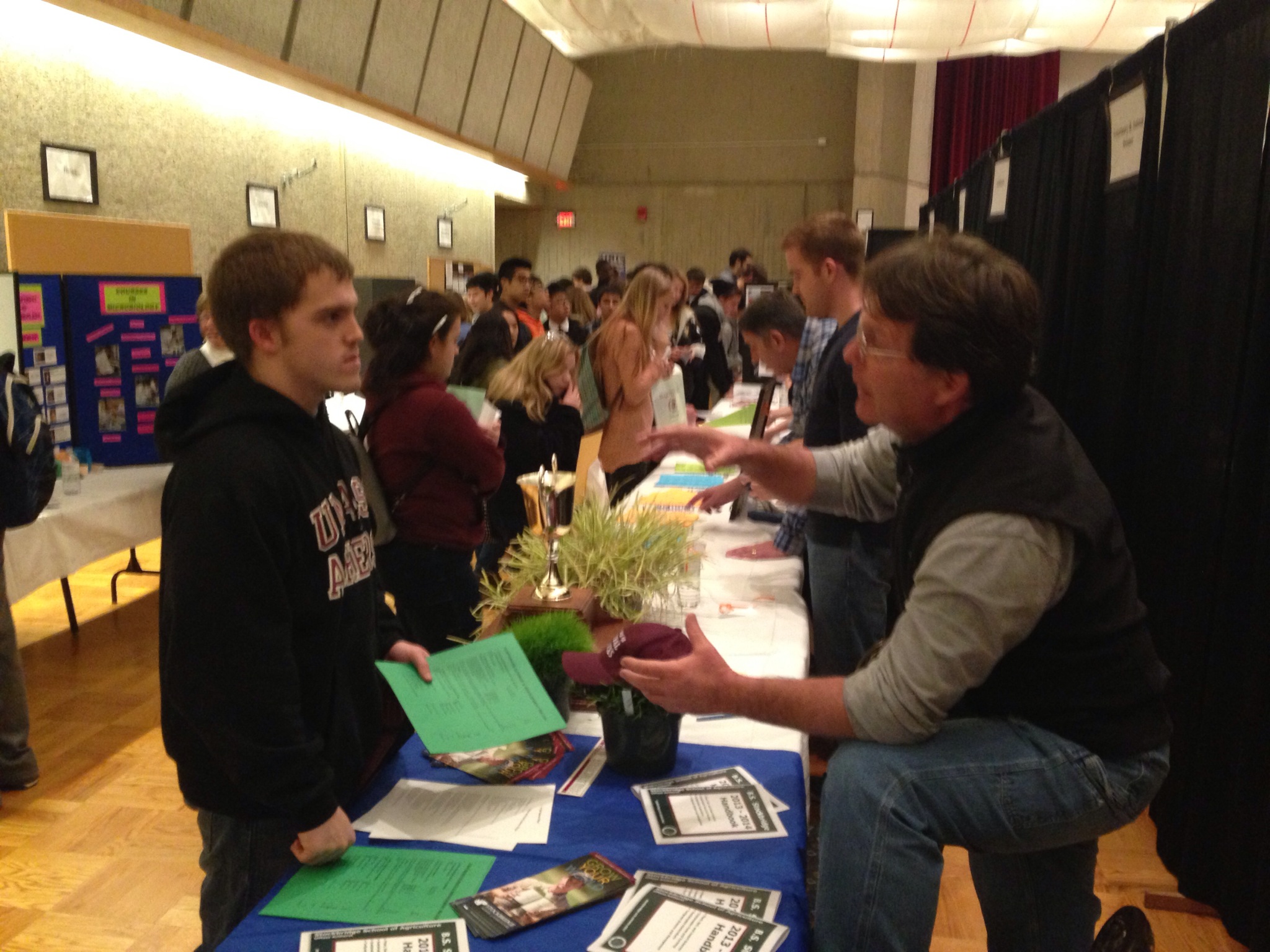
Stockbridge at the Majors Fair

There was quite a bit of interest among undeclared students in our majors at the annual Majors Fair.  Thanks to Kathy Conway for helping to create a nice display.  Here is what it looked like before the crowds arrived.

1388562_10101635811886752_2112861219_n

And here are your departmental representatives hard at work.

1401105_10101635778109442_287309012_o

Scott is a great salesperson!

1423148_10101635769850992_734861169_o

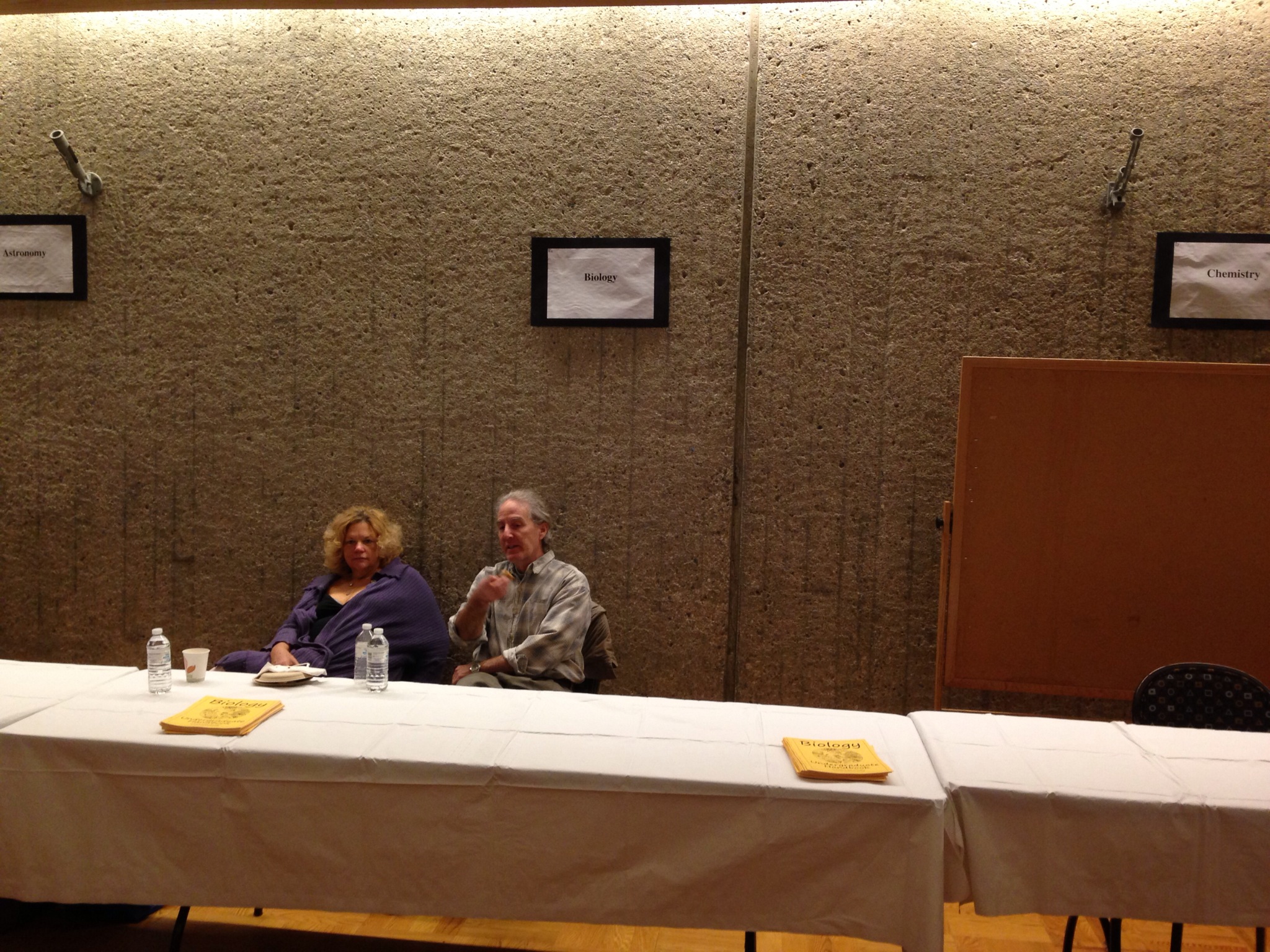
Across the aisle from us were Astronomy, Biology and Chemistry…..

1419343_10101635765744222_2081496447_o


CISA launches online calculator to encourage buying local food

By RICHIE DAVIS – Gazette Contributing Writer – Thursday, October 24, 2013

Who says you shouldn’t play with your food?

Not Community Involved in Sustaining Agriculture, the Deerfield-based nonprofit that tries to get people in the Pioneer Valley to eat more local farm products.

To encourage local voracious habits in its 20th-anniversary year, CISA has launched an online calculator to help people see for themselves the impact of buying their milk, eggs, produce and meats from local producers.

The calculator comes as the most ambitious effort in a year of innovative challenges to pump up the volume of local food consumption — activities from a “Farmstand Bingo” game during the summer to organizing local food potluck dinners this fall.

The online tool, developed with help from economists Anita Dancs of Western New England University in Springfield and Helen Scharber of Hampshire College in Amherst, lets people plug in how much of their food budget they spend on locally produced items to see how it affects the local economy.

“We wanted to find a way to help people understand the importance of food choices they’re making on a daily basis, and to demonstrate the value of buying local agricultural products,” said CISA Program Director Kelly Coleman. “None of this is totally straightforward, and we felt the accuracy of the information was really important.”

In two steps, the calculator helps a user gauge how much local food they are already buying, and then it shows how much of a difference it would make if they bought more — or less — in any given category, including cutting back on buying frozen or canned foods and “long-distance” produce, meats, dairy and eggs.

“That’s to encourage people to think about how they can do more, what the impact would be,” said Coleman.

Because even a small commitment by numbers of people to buy certain kinds of local products can affect the local economy in surprising ways, the calculator demonstrates the power of shopping locally, said Coleman.

“One of my favorite little features of it is, if you make this change, say switch $5 to local vegetables from vegetables bought from far away, it has maybe 1.77 times more of an impact on the economy, almost twice the impact,” she said. “That’s really inspiring to me. And we haven’t had that (evidence) before, for the number wonks.”

For example, by shifting $30 monthly to more local vegetables and meat, it adds 2.24 times more to the local economy than spending that same amount on nonlocal foods, according to the data presented.

The calculator uses an IMPLAN modeling program, used for economic analysis and planning, applying numbers that the user inserts according to the total amount of “intentionally” purchased local food divided by the total grocery purchases. It automatically adds 10 percent to account for other local food that may be unwittingly part of the mix.

While the calculator template may be used effectively in other parts of the country, Coleman said the data, from the National Agricultural Statistics Service, is tailored specifically to this three-county region to account for the local agricultural economy here due to different production and processing costs.

CISA did a “soft launch” of the calculator program on its website about a month ago, Coleman said, encouraging users to test it to work out confusing language and glitches.

“It’s not so much that this will make a difference to everyone,” she said. “Some people are really inspired by personal stories, while others really like the numbers. We felt this would be another way of demonstrating the impact that will inspire a certain population that really loves numbers, and this would be fun. We’ll still provide the stories and other ways” to encourage people to be “local heroes.”

On the Web: www.buylocalfood.org/buy-local/local-food-calculator/

OLYMPUS DIGITAL CAMERA

We can eat better by working together to strengthen local agriculture

WebBy MARGARET CHRISTIE and PHILIP KORMAN – Daily Hampshire Gazette

Wednesday, October 23, 2013

SOUTH DEERFIELD — Do you ever wonder how much Pioneer Valley residents’ support for local farms and food businesses impacts the local economy? It’s easy to see how buying local benefits your family (it tastes good!). Likewise, if you’re a loyal farm customer, you can guess that your purchases benefit your favorite farm’s bottom line.

But what’s the cumulative effect of our collective support for local farm businesses? Today is the third-annual Food Day, giving us a chance to tote up our joint successes — and to prepare for challenges ahead.

In honor of Food Day, CISA launched a new Local Foods Calculator at buylocalfood.org. It can help you figure out what percent of your food budget is local — and inspire you to do more by showing the impact of increasing local purchases.

For example, if you shift just $5 per week to local fruits and vegetables, it contributes almost twice as much income to the local economy as purchasing non-local fruits and vegetables. If every household in Franklin, Hampden, and Hampshire County made this shift, we would see an increase of 516 jobs and add $24 million per year to the local economy.

As a region, we can generate this economic activity by working together. For a generation now, CISA has collaborated with farmers, individuals and organizations to strengthen local farms. Our successes are many — and yet, the challenges ahead are sobering.

In the past 12 months, we’ve seen commitment to local ownership and control realized through the conversion of three local businesses to cooperatives — Real Pickles and Artisan Beverage Cooperative in Greenfield and the Old Creamery Co-op in Cummington. Other local endeavors include plans for the expansion of the North Quabbin Community Co-op into a storefront in Orange and in Springfield, community activism has created the real possibility of a full-line supermarket opening in Mason Square.

These business successes build on other positive trends related to local food. From 2008-2013, the number of farmers’ markets in our region grew 74 percent to 47 (including seven winter markets), while CSA farms grew 145 percent to 49 farms feeding approximately 40,000 people.

Local beer, brewed with local ingredients, is now created, consumed and celebrated at The People’s Pint and Northampton Brewery. Local wineries are producing more wines with local grapes. Local hard cider has experienced an amazing renaissance. And a new whole animal butcher shop, sourcing from local farmers, will open in 2014 in Northampton. We can measure the impact of our local purchases in dollars, in jobs, in businesses and in beer!

Together, we’ve begun to shift our food economy closer to home to benefit our communities. A number of factors, however, threaten our work. First, we must ensure that all residents of our region can benefit. As income inequality grows, the federal SNAP (food stamps) program is an important source of food for 15 percent of Americans, but Congressional inaction and antipathy threaten this program. Sixty percent of the farmers’ markets in the Pioneer Valley accept SNAP, and SNAP dollars used at farmers’ markets increased 41 percent from 2011 to 2012, making it a growing source of income for farmers. You can help by reminding your representatives that you support SNAP benefits and that USDA programs have helped more farmers’ markets accept SNAP and you can generously give when your farmers’ market asks for funds to match SNAP dollars.

While the debacle of the recent government shutdown reminds us why we value local action, we can’t ignore the power of the federal government to be a positive or negative force for local farmers. Decades of federal farm policies favoring the largest farms mean that in 2007, less than 2 percent of farms accounted for 50 percent of total sales of farm products (GAO Report, Concentration in Agriculture, 2009). The last five-year Farm Bill funded many innovative programs benefitting local, organic and beginning farmers, but since it expired a year ago Congress has been unable to pass a new Farm Bill. We need a new Farm Bill, and we need a better Farm Bill.

The impact of the federal government is also visible in the proposed Food Safety Modernization Act regulations. Although these regulations were created in response to food safety problems in the industrial food system, the proposed regulations would disproportionately increase costs for small, diverse farms. The result — we will lose a good number of small farms due to the high costs to comply. Comments on these rules are due Nov. 15 — learn more and take action at buylocalfood.org.

On Food Day, raise a local libation to our joint successes. Pledge to increase your local buying, and to take action to ensure that government policies benefit our farms and our neighbors. The next step for change involves not only what is on our plate and who is sitting at our table, but what are the rules that we eat by. Together, we can make sure our farms can feed us all.

Margaret Christie is special projects director and Philip Korman is executive director of Community Involved in Sustaining Agriculture (CISA).

Original Post

OLYMPUS DIGITAL CAMERA

Crisis in the beehives described in documentary ‘More than Honey’ shown at Amherst Cinema

By RICHIE DAVIS – Gazette Contributing Writer – Thursday, October 17, 2013

Honeybees are on the job from the moment they emerge from their nest. But their work, which helps create one-third of the earth’s food, is in jeopardy.

More_than_HoneyThat crisis in the hives is what drew more than 150 people to a special Communities Involved in Sustaining Agriculture showing of “More Than Honey,” a 2012 Swiss documentary last week at Amherst Cinema. Yet the mystery of Colony Collapse Disorder, a set of conditions that’s killed off more than 10 million beehives since 2006 in this country and, the film suggests, has decimated 50 to 90 percent of all bees, depending on what part of the planet you’re on, remains as mysterious as its name.

“If bees ever die out, mankind will die out four years later,” is a message in the film attributed to a quote by Einstein. A panel consisting of Dan Conlon of Warm Colors Apiary and Ben Clark of Clarkdale Fruit Farm, both in Deerfield, and Phil Korman, executive director of CISA, agreed the threat posed to the food supply is serious.

conlon“These bees live a hard life,” said Conlon, reflecting on the rigors of dealing with industrialized agriculture, pesticides and other factors shown in the film.

But this area suffers less from some of the causes of the die-off of honeybees, including pesticide use by farmers and their working with migrating pollination contractors, said Conlon, who rents his hives to just half a dozen area fruit and other growers. “The kind of farmers I deal with would never spray my bees.”

Unlike professional pollinators delivering millions of bees to North Dakota, many dead on arrival after a 1,700-mile drive from California as part of an annual migration, Conlon’s hives are moved 20 to 30 miles and fed honey rather than a corn-syrup mixture that he says is a mainstay of commercial apiaries.

clarkdale“It’s a stark contrast for us,” said Clark about the dependence of migrant colonies for California’s 810,000-acre almond-growing industry. Without bringing in any man-made hives, “We use all native pollinators. We have diverse crops, with peaches, apricots and cherries early on, so there’s a long feeding time for bees and other pollinators. I was really alarmed at the commercialization of that whole industry,” as shown in the documentary, including daytime spraying of almond orchards where bees collect fungicide along with pollen.

Clarkdale uses an “integrated pest management approach” that minimizes pesticide use and during pollination season sprays only at night, when pollinators are in their hives. “That’s your livelihood. If you wipe out the bees, you’re not going to have anything there. As farmers, that’s something we just don’t do.”

But Conlon, who lost about 30 percent of his hives over the past winter, because of everything from bears to a seemingly worsening breed of small hive beetles, said, “It’s a much bigger thing than just pesticides. … It’s the whole environment that’s coming into play with the bees.”

Honey producers, who feed their brood honey rather than corn syrup, have seemed to fare better because honey helps bees activate their immune system to filter out toxins, said Conlon.

The top problem for beekeepers around the world, especially since the late 1980s and early 1990s, is the Varroa destructor mite, followed by the loss of genetic diversity. Another key problem is loss of habitat for honeybees, with large areas of this country no longer growing food to support pollinators.

“One of the reasons Ben can still rely on native pollinators is that western Mass. is still pretty much intact, with a lot of native species doing pretty well around here,” Conlon said.

That is in sharp contrast to parts of China where pollution has so decimated the bee population that humans have to physically go from flower to flower in orchards brushing petals with pollen.

A real concern for beekeepers, said Conlon, is lawn-care applications of “neonicotinoid” insecticides which indiscriminately destroy the nervous system of any insect.

Although restrictions may finally be tightening, Conlon said, “You can buy them in any store by the gallon, and any homeowner can spray their entire yard with the stuff without any kind of licensing or training.”

Until parasitic mites became a problem a some 15 years ago, common practice among beekeepers was to let their queen bees mate with wild drones. But those fertile populations were also killed by the mites, “so for the first time, beekeepers have become critical to keeping bees going. They probably would have died off by now. Historically, we’ve moved the bee from being a wild creature to a domesticated creature.”

What that means, though, is that the bees that remain “aren’t as resilient, they aren’t as tough,” said Conlon, who this year began working exclusively with Russian bees under a U.S. Department of Agriculture program. Those hardy bees have many of the same immunities to pests and disease resistance as harder-to-manage Africanized bees.

OLYMPUS DIGITAL CAMERA

Sponsored by the Community Involved in Sustaining Agriculture

Video trailer on the Web: http://binged.it/1gkT2QM

Original post.

How to Feed the World

Mark Bitman – October 14, 2013 – New York Times

It’s been 50 years since President John F. Kennedy spoke of ending world hunger, yet on the eve of World Food Day, Oct. 16, the situation remains dire. The question “How will we feed the world?” implies that we have no choice but to intensify industrial agriculture, with more high-tech seeds, chemicals and collateral damage. Yet there are other, better options.

Something approaching a billion people are hungry, a number that’s been fairly stable for more than 50 years, although it has declined as a percentage of the total population.

“Feeding the world” might as well be a marketing slogan for Big Ag, a euphemism for “Let’s ramp up sales,” as if producing more cars would guarantee that everyone had one. But if it worked that way, surely the rate of hunger in the United States would not be the highest percentage of any developed nation, a rate closer to that of Indonesia than of Britain.

The world has long produced enough calories, around 2,700 per day per human, more than enough to meet the United Nations projection of a population of nine billion in 2050, up from the current seven billion. There are hungry people not because food is lacking, but because not all of those calories go to feed humans (a third go to feed animals, nearly 5 percent are used to produce biofuels, and as much as a third is wasted, all along the food chain).

The current system is neither environmentally nor economically sustainable, dependent as it is on fossil fuels and routinely resulting in environmental damage. It’s geared to letting the half of the planet with money eat well while everyone else scrambles to eat as cheaply as possible.

While a billion people are hungry, about three billion people are not eating well, according to the United Nations Food and Agriculture Organization, if you count obese and overweight people alongside those with micronutrient deficiencies. Paradoxically, as increasing numbers of people can afford to eat well, food for the poor will become scarcer, because demand for animal products will surge, and they require more resources like grain to produce. A global population growth of less than 30 percent is projected to double the demand for animal products. But there is not the land, water or fertilizer — let alone the health care funding — for the world to consume Western levels of meat.

If we want to ensure that poor people eat and also do a better job than “modern” farming does at preserving the earth’s health and productivity, we must stop assuming that the industrial model of food production and its accompanying disease-producing diet is both inevitable and desirable. I have dozens of friends and colleagues who say things like, “I hate industrial ag, but how will we feed the poor?”

Let’s at last recognize that there are two food systems, one industrial and one of small landholders, or peasants if you prefer. The peasant system is not only here for good, it’s arguably more efficient than the industrial model. According to the ETC Group, a research and advocacy organization based in Ottawa, the industrial food chain uses 70 percent of agricultural resources to provide 30 percent of the world’s food, whereas what ETC calls “the peasant food web” produces the remaining 70 percent using only 30 percent of the resources.

Yes, it is true that high-yielding varieties of any major commercial monoculture crop will produce more per acre than peasant-bred varieties of the same crop. But by diversifying crops, mixing plants and animals, planting trees — which provide not only fruit but shelter for birds, shade, fertility through nutrient recycling, and more — small landholders can produce more food (and more kinds of food) with fewer resources and lower transportation costs (which means a lower carbon footprint), while providing greater food security, maintaining greater biodiversity, and even better withstanding the effects of climate change. (Not only that: their techniques have been demonstrated to be effective on larger-scale farms, even in the Corn Belt of the United States.) And all of this without the level of subsidies and other support that industrial agriculture has received in the last half-century, and despite the efforts of Big Ag to become even more dominant.

In fact if you define “productivity” not as pounds per acre but as the number of people fed per that same area, you find that the United States ranks behind both China and India (and indeed the world average), and roughly the same as Bangladesh, because so much of what we grow goes to animals and biofuels. (Regardless of how food is produced, delivered and consumed, waste remains at about one third.) Thus, as the ETC’s research director, Kathy Jo Wetter, says, “It would be lunacy to hold that the current production paradigm based on multinational agribusiness is the only credible starting point for achieving food security.” This is especially true given all of its downsides.

As Raj Patel, a fellow at the Institute for Food and Development Policy, puts it, “The playing field has been tilted against peasants for centuries, and they’ve still managed to feed more people than industrial agriculture. With the right kinds of agroecological training and the freedom to shape the food system on fair terms, it’s a safe bet that they’ll be able to feed themselves, and others as well.”

Yet obviously not all poor people feed themselves well, because they lack the essentials: land, water, energy and nutrients. Often that’s a result of cruel dictatorship (North Korea) or war, displacement and strife (the Horn of Africa, Haiti and many other places), or drought or other calamities. But it can also be an intentional and direct result of land and food speculation and land and water grabs, which make it impossible for peasants to remain in their home villages. (Governments of many developing countries may also act as agents for industrial agriculture, seeing peasant farming as “inefficient.”)

The result is forced flight to cities, where peasants become poorly paid laborers, enter the cash market for (increasingly mass produced) food, and eat worse. (They’re no longer “peasants,” at this point, but more akin to the working poor of the United States, who also often cannot afford to eat well, though not to the point of starvation.) It’s a formula for making not only hunger but obesity: remove the ability to produce food, then remove the ability to pay for food, or replace it with only one choice: bad food.

It’s not news that the poor need money and justice. If there’s a bright side here, it’s that the changes required to “fix” the problems created by “industrial agriculture” are perhaps more tractable than those created by inequality.

We might begin by ditching the narrow focus on yields (as Jonathan Foley, director of the Institute on the Environment at the University of Minnesota, says, “It’s not ‘grow baby grow’ ”), which seem to be ebbing naturally as land quality deteriorates and chemicals become less effective (despite high-tech “advances” like genetically engineered crops). Better, it would seem, would be to ask not how much food is produced, but how it’s produced, for whom, at what price, cost and benefit.

We also need to see more investment in researching the benefits of traditional farming. Even though simple techniques like those mentioned above give measurably excellent results, because they’re traditional — even ancient — “technologies,” and because their benefits in profiting multinationals or international trade are limited, they’ve never received investment on the same scale as corporate agriculture. (It’s impossible not to point out here that a similar situation exists between highly subsidized and damaging fossil fuels and oft-ignored yet environmentally friendly renewables.)

Instead, the money and energy (of all kinds) focused on boosting supply cannot be overstated. If equal resources were put into reducing waste — which aside from its obvious merits would vastly prevent the corresponding greenhouse gas emissions — questioning the value of animal products, reducing overconsumption (where “waste” becomes “waist”), actively promoting saner, less energy-consuming alternatives, and granting that peasants have the right to farm their traditional landholdings, we could not only ensure that people could feed themselves but also reduce agriculture’s contribution to greenhouse gases, chronic disease and energy depletion.

This isn’t about “organic” versus “modern.” It’s about supporting the system in which small producers make decisions based on their knowledge and experience of their farms in the landscape, as opposed to buying standardized technological fixes in a bag. Some people call this knowledge-based rather than energy-based agriculture, but obviously it takes plenty of energy; as it happens, much of that energy is human, which can be a good thing. Frances Moore Lappé, author of “Diet for a Small Planet,” calls it “relational,” and says, “Agroecology is not just healthy sustainable food production but the seed of a different way of relating to one another, and to the earth.”

That may sound new age-y, but so be it; all kinds of questions and all kinds of theories are needed if we’re going to produce food sustainably. Supporting, or at least not obstructing, peasant farming is one key factor, but the other is reining in Western-style monoculture and the standard American diet it creates.

Some experts are at least marginally optimistic about the second half of this: “The trick is to find the sweet spot,” says Mr. Foley of the University of Minnesota, “between better nutrition and eating too much meat and junk. The optimistic view is to hope that the conversation about what’s wrong with our diet may deflect some of this. Eating more meat is voluntary, and how the Chinese middle class winds up eating will determine a great deal.” Of course, at the moment, that middle class shows every indication that it’s moving in the wrong direction; China is the world’s leading consumer of meat, a trend that isn’t slowing.

But if the standard American diet represents the low point of eating, a question is whether the developing world, as it hurtles toward that nutritional nadir — the polar opposite of hunger, but almost as deadly — can see its destructive nature and pull out of the dive before its diet crashes. Because “solving” hunger by driving people into cities to take low-paying jobs so they can buy burgers and fries is hardly a desirable outcome.

Mark Bittman is a food journalist, author and contributing opinion writer for The New York Times.

 Original Post

News from the Massachusetts Food Policy Alliance

Massachusetts Food Policy Alliance (MFPA), formed in 2007, is a statewide networking and information sharing entity that tracks policy, fosters advocacy, and plays a leadership role in Massachusetts’ food system planning efforts. Massachusetts Food Policy Alliance is also engaged with efforts in neighboring states to develop a New England network to advance interstate food systems collaboration and planning.

Massachusetts News
MA Farm Bureau Federation Raises Concerns About APR Program
The State’s Agricultural Preservation Restriction (APR) Program was launched in 1979 as the nation’s first statewide program that incentivizes farmers to keep land in agricultural use by purchasing deed restrictions that prevent farmland from being divided or otherwise developed. But the MA Department of Agricultural Resource (MDAR) is over-reaching the original intent of the program of preventing commercial development and protecting soil resources, says the Massachusetts Farm Bureau Federation (MFBF), and “denying [APR-protected] farms the ability to do both non-agricultural and agricultural activities on their farms, which are commonplace and allowable on non-APR farms.”

Proposed Nutrient Management Rules Coming Soon
Last year, the Massachusetts Legislature directed the Massachusetts Department of Agriculture (MDAR) to “promulgate regulations that specify when plant nutrients may be applied and locations in which plant nutrients shall not be applied.” The draft regulations have not been released for a public comment period yet but should be coming soon, since they scheduled to take effect on January 1, 2014.

Waste Not: Commercial Food Waste Ban Coming to MA
Beginning on July 1, 2014, any Massachusetts entity that disposes of at least one ton of organic waste per week will be required to donate or re-purpose the useable food. Any remaining food waste would be required to be shipped to an anaerobic digestion facility that converts food waste into renewable energy, a composting operation or an animal-feed operation. Residential food waste is not included in the ban.

Greenfield Publishes Food Plan
Greenfield Community College and Central Connecticut River Valley Institute collaborated to publish “The Greenfield Food Study,” which sets goals and examines opportunities for the town’s food system around issues of cultivation, processing, distribution, waste and more. “Greenfield has food processing and storage resources unique to the Pioneer Valley … (and) can capitalize on these resources and become a food processing, storage and distribution hub for the Franklin County and the Pioneer Valley.”

Food and Jobs in the Pioneer Valley
The Massachusetts Workforce Alliance published “Local Food, Local Jobs: Job Growth and Creation in the Pioneer Valley Food System,” describing current work in the Pioneer Valley food system, with an emphasis on jobs that are within reach of lower-skill workers, identifying promising segments of the food system that are currently generating these jobs, and looking at ways job creation and growth in this system can be fostered. “This research showed that the Pioneer Valley food system is already creating jobs. Job growth is evident on farms; business growth and development is evident in food manufacturing; innovation and business development is happening in food distribution; and, food waste management is poised to change in ways that hold possibility for business expansion and job creation.”

Public Investment in Land Conversation Yields Measurable Benefits
“The Trust for Public Land conducted an economic analysis of the return on the Commonwealth’s investment in land conservation through a variety of state funding programs and found that every $1 invested in land conservation returned $4 in natural goods and services such as water quality protection, air pollution removal, and stormwater management to the Massachusetts economy.”

Eat for a Cure
Community Servings’ recent report Food as Medicine reveals that medically tailored, home-delivered meals can  improve health outcomes for people with critical and chronic disease. Community Servings and Harvard Law School’s Center for Health Law and Policy Innovation and Food Law and Policy Clinic will co-host a symposium on the role of food in health care initiatives on October 30 from 6-8 p.m. at Harvard Law School, Room 1015 Wasserstein Hall, Caspersen Student Center (WCC 1015). Contact Jean Terranova for more information.

Honoring a Champion of Direct to Consumer Farm Sales
Former MA Ag Commissioner Gus Schumacher is being honored by the James Beard Society for “his lifelong efforts to improve access to fresh local food in underserved communities.”

Federal Updates

Food Safety
After numerous extensions, lots of wading through thousands of pages of proposed regulations, and many hearings and listening sessions and workshops, the comment period for the proposed regulations for the federal Food Safety Modernization Act is slated to come to an end on November 15. The proposed regulations include many items of concern for Massachusetts farmers – regulations which, if implemented, could have significant negative economic and operational impacts on small farms.

The Massachusetts Food Policy Alliance urges all Massachusetts organizations to learn about these proposed rules, spread the word to your membership, and consider submitting comments that support regulations promoting a safe food system that does not saddle small farms with unfairly burdensome oversight and regulations. You do not have to be an agricultural organization to comment on these rules. If enacted, these regulations will have an impact not just on our state’s farms, but on our economy as a whole, our environment, and our food security.

For details, see the following resources:

Comments Needed on SNAP Retail Store Eligibility Rules
The Food and Nutrition Service at USDA is accepting comments regarding the Supplemental Nutrition Assistance Program (SNAP) Enhancing Retail Food Store Eligibility policy. The RFI requests information to enhance retailer definitions and requirements that will improve access to healthy food choices for SNAP clients, as well as program integrity. The comment period ends Monday, October 21, 2013.

Farm Bill/SNAP
Somewhat lost in the news of the federal government shutdown and the debt limit crisis, the Federal Farm Bill expired in early October. In early October the House appointed members for a conference committee to resolve differences between the two bodies’ bills. Key sticking points include The U.S. House of Representatives’ proposal to cut $40 billion over ten years from the nation’s Supplemental Nutrition Assistance Program (SNAP) and to separate the nutrition and agriculture portions of the bill, potential cuts to subsidies for commodity crops, proposed cuts to funding for conservation programs, and possible changes to the federal dairy support program. Additional details are available from American Farm Bureau, Food Research and Action Center, National Farmers Union, The National Sustainable Agriculture Coalition, and farmpolicy.com.

What the Federal Government Shutdown Means for Agriculture
The partial shutdown of the federal government has had a real impact on agriculture programs, such as NRCS, and nutrition programs, such as WIC. New England Farmers Union offers a run-down on what the shutdown means for farmers and consumers, and this article details what it means for the USDA.

McGovern Champions Federal Government’s Role in Addressing Hunger
Between February and September, Massachusetts Congressman Jim McGovern (D-2nd) made 23 ‘End Hunger Now’ speeches on the floor of the U.S. House of Representatives.

Alliance News

Invitation to participate in a Leadership Group for MFPA
This group will serve for one year in an informal, volunteer advisory capacity to assist the MFPA managing consultants in identifying and implementing MFPA goals and objectives. These individuals will also help develop and establish a membership model to provide sustainable financial support for MFPA. Leadership Group members will participate through small group and one-on-one conversations and may be individuals as well as representatives of organizations and groups working at municipal, sub-regional, state and regional levels. This Leadership Group may choose to organize itself with a chair or elected executive committee and will assess its efficacy one year after formation. Contact us at manager@mafoodpolicyalliance.org if you are interested in participating.

MFPA Listserv
The MFPA listserv is open to anyone concerned about food systems in Massachusetts. It is an open forum for individuals and organizations to post events, queries and resources, and to connect with each other as we all pursue our work. To subscribe, send an email to sympa@elist.tufts.edu with the subject line “subscribe mfpa Firstname Lastame”  Then you can send items to MFPA@elist.tufts.edu to share them with the list.

MFPA Newsletter
As we develop this monthly newsletter we want to hear from you. Please email manager@mafoodpolicyalliance.org to suggest news, resources or other items for inclusion. If your organization has an e-newsletter or press list, please consider adding us to the list. And please forward this newsletter widely and encourage your colleagues to subscribe!

We Can Help!
The Alliance is here for you. We can help you engage your members in policy advocacy by writing articles for your newsletter, working with your staff on developing policy outreach plans, speaking at your meetings, and more. Contact us at manager@mafoodpolicyalliance.org.


The Massachusetts Food Policy Alliance (MFPA) formed in 2007 as a committed group of leaders working on food, public health, nutrition, agriculture, hunger, land preservation, and related policy issues in the Commonwealth. The MFPA worked closely with MA Representatives Stephen Kulik and Linda Forry to pass legislation establishing the Massachusetts Food Policy Council.

Christa Drew and Winton Pitcoff, co-lead consultants
manager@mafoodpolicyalliance.org

Original Post

23 Mobile Apps Changing the Food System

FROM: Foodtank

There are currently more than one billion smartphones in use across the world – and that figure is projected to double by 2015. As the use of “smart” mobile devices continues to grow, apps have become an incredibly effective way of providing information and resources to a wide audience.

An increase in smartphone use happens to coincide with the growth of a consumer demand for more sustainable food – “organic,” “locally grown,” “seasonal,” and “pesticide-free” are becoming more and more common in the vernacular of food sales. In the United States alone, annual sales of organic foods and beverages grew from US$6 billion in 2000 to US$26.7 billion in 2010. And there are nearly three times as many farmers markets in the United States today as there were in 2000.

mobile_apps_changing_food_systemIt’s no surprise, then, that there are lots of apps for those interested in eating more healthful food, wasting less food, finding sustainable sources of seafood, or buying seasonally. These 23 apps for mobile devices and tablets are helping eaters, producers, advocates, and activists lead less wasteful and more environmentally sustainable, healthy, and delicious lives.

1. Locavore (Hevva Corp.) [FREE]

Locavore helps consumers find out what local foods are in season, and locate the closest farmers markets that provide them. The app has tons of information on individual producers in a user’s area, and provides seasonal recipes to best use fresh, local ingredients.

2. HarvestMark Traceability (YottaMark, Inc.) [FREE]

The HarvestMark Traceability app allows its users to trace their fresh food back to the farm that it came from, by scanning any fruit or vegetable with the HarvestMark logo on it and pulling up the item’s information on the app. It also provides instant updates on any food recalls affecting HarvestMark produce.

3. Find Fruit (Neighborhood Fruit, LLC) [US$0.99]

For fruit that’s as fresh as possible, forego the supermarket and use the Find Fruit app to locate fruit trees growing in public spaces. Users can also search fruit trees in their area according to seasonality, type, and proximity.

4. Farmstand (Mostly Brothers) [FREE]

Use the Farmstand app to search for community farmers markets in the United States, Canada, the United Kingdom, Australia, and New Zealand. Users can also connect with other farmers marketgoers in their area.

5. Food Community (Nommunity.com) [FREE]

With the Food Community app, consumers can search and discover local vegan, vegetarian, kosher, gluten-free, locally-grown, and organic restaurants. They can also connect and collaborate with a community of people with the same dietary choices.

6. Seasons (What Is It Production Ltd.) [US$1.99]

The Seasons app helps eaters follow the natural growing seasons of fruits and vegetables in their region. They can also search a database of fruits, vegetables, herbs, and nuts for descriptions, information on seasonality, and photos.

7. NRDC Eat Local (Smart Tools) [FREE]

The Eat Local app helps locate nearby farmers markets, and provides seasonal recipes for the ingredients found there. Users can also submit and edit information for their local and favorite farmers markets in the Eat Local database.

8. Urban Farming Assistant Starter (iHuerting) [FREE]

For those planning on growing their own vegetables at home, the Urban Farming Assistant Starter app sets reminders for when to water, fertilize, and care for plants. It also helps to find organic solutions to pests, diseases, and other gardening issues.

9. Garden Tracker (Portable Database) [US$1.99]

This app helps to plan, size, and plant a vegetable garden by creating a virtual garden to imitate a real one. The Garden Tracker app lets users track a garden’s progress with a self-designed grid that can contain indicators for categories such as “last time watered” and “when to harvest.”

10. Mother Earth News Library (Ogden Publications, Inc.) [FREE]

This virtual library of different resources from Mother Earth News includes such important tools as How to Can, the Garden Insects Guide, and the Food Gardening Guide.

11. Seafood Watch (Monterey Bay Aquarium) [FREE]

The Seafood Watch app makes sustainable choices in seafood easier. It offers recommendations along with information on optimal farming or fishing practices for sushi and seafood. It can be used at restaurants and markets to make ocean-friendly seafood choices.

12. ShopNoGMO (Jeffrey Smith) [FREE]

The ShopNoGMO app provides information on the risks and science behind Genetically Modified Organisms (GMOs), and how to avoid them at the grocery store. Consumers can choose from the list of non-GMO brands in 23 food categories to customize their own “favorites” list.

13. True Food (True Food Network) [FREE]

The True Food app’s Shopper’s Guide lets users know what’s in the food they buy at the supermarket. It also provides information on Genetically Modified ingredients and tips on which brands use these in their products, and which brands don’t.

14. GoPure (Puur Buy, Inc.) [FREE]

Search local restaurants with the GoPure app to find out about their sustainable practices and the quality of their food. Users can also suggest restaurants, add information, and get the inside scoop on sustainable foods at their favorite establishments.

15. Clean Plates – Healthy Restaurants (Clean Plates) [FREE]

Search or browse the Clean Plates app database to find restaurants offering vegan, vegetarian, gluten-free and organic dining options. Professional reviews offer insight and suggestions for different dining experiences.

16. Wild Edibles (WinterRoot LLC) [US$7.99]

The Wild Edibles app helps to identify and provide information about the uses of wild edible plants. The app offers harvesting methods, preparation instructions and recipes, and medicinal information for foraged plants, as well as a botanical glossary for reference.

17. What’s On My Food? (Pesticide Action Network) [FREE]

Use this app to identify chemicals found on foods commonly sold at the grocery store. Search the database to find out which pesticides are the most dangerous, and for a crash course on pesticides for amateurs.

18. Non-GMO Project Shopping Guide (The Non-GMO Project) [FREE]

The Non-GMO Project offers an app that features a list of brands and products enrolled in the Project’s Product Verification Program. The app also includes tips on avoiding GMOs, and a list of GMO ingredients and crops.

19. Green Egg Shopper (Wise Banyan Tree Ltd) [$3.99]

With the Green Egg Shopper app, consumers can cut down on food waste by tracking their shopping lists. Create a list, plug in “use by” dates for perishable items, and set reminders to use those foods before expiry.

20. Leloca (Leloca LLC) [FREE]

The Leloca app offers real-time discounts for local restaurants with empty tables. Diners who use these discounts help cut down on food waste in restaurants as well as unnecessary expenses.

21. What’s Fresh? (Mobile Simplicity) [US$0.99]

The What’s Fresh? app tracks fruits and vegetables that are in season regionally. It offers a regional Freshness Calendar, and a locator to search the different parts of the country in which produce items are in season.

22. In Season (Light Year Software, LLC) [US$1.99]

The In Season app helps consumers find fresh produce that is in season regionally. It offers a guide for choosing the best fruits and vegetables at the grocery store, and provides advice on the best storage practices for each item.

23. 222 Million Tons (Pydexo) [FREE]

This app, named for the amount of food wasted globally each year (Ed. note: More recent estimates from the U.N. Food and Agriculture Organization (FAO) indicate that 1.3 billion tonnes of food are wasted each year), helps consumers plan grocery lists and weekly menus to waste the least amount of food possible.

by Danielle Nierenberg and Kathleen Corr

UMass Sustainable Food and Farming Students Harvest Rice

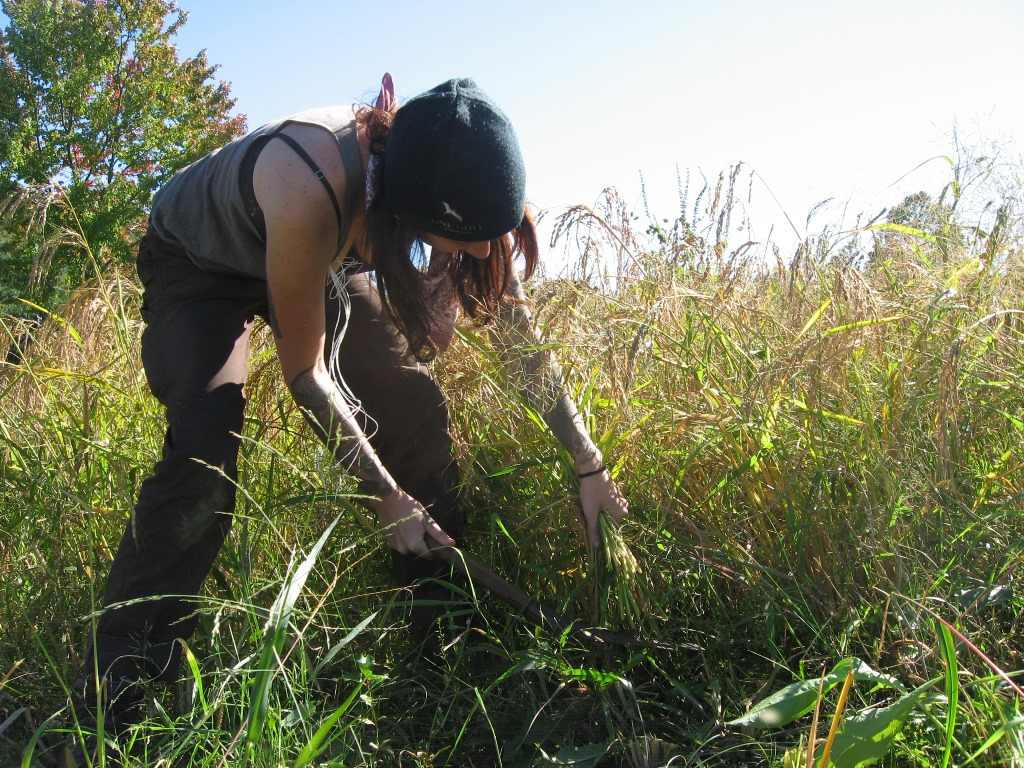
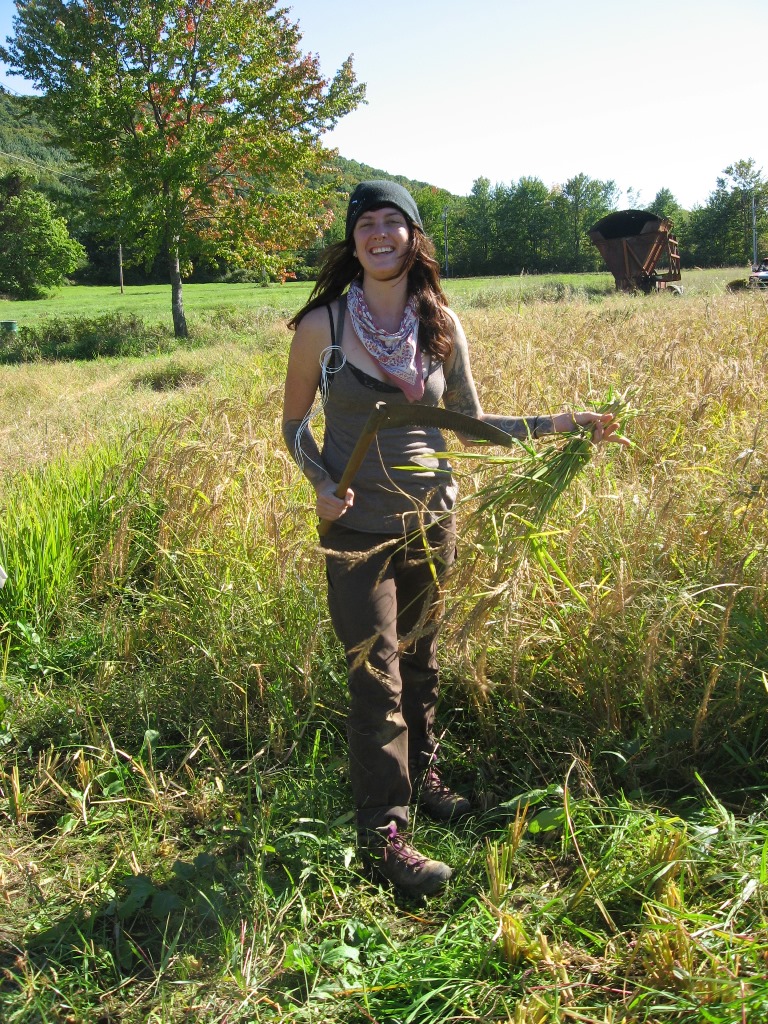
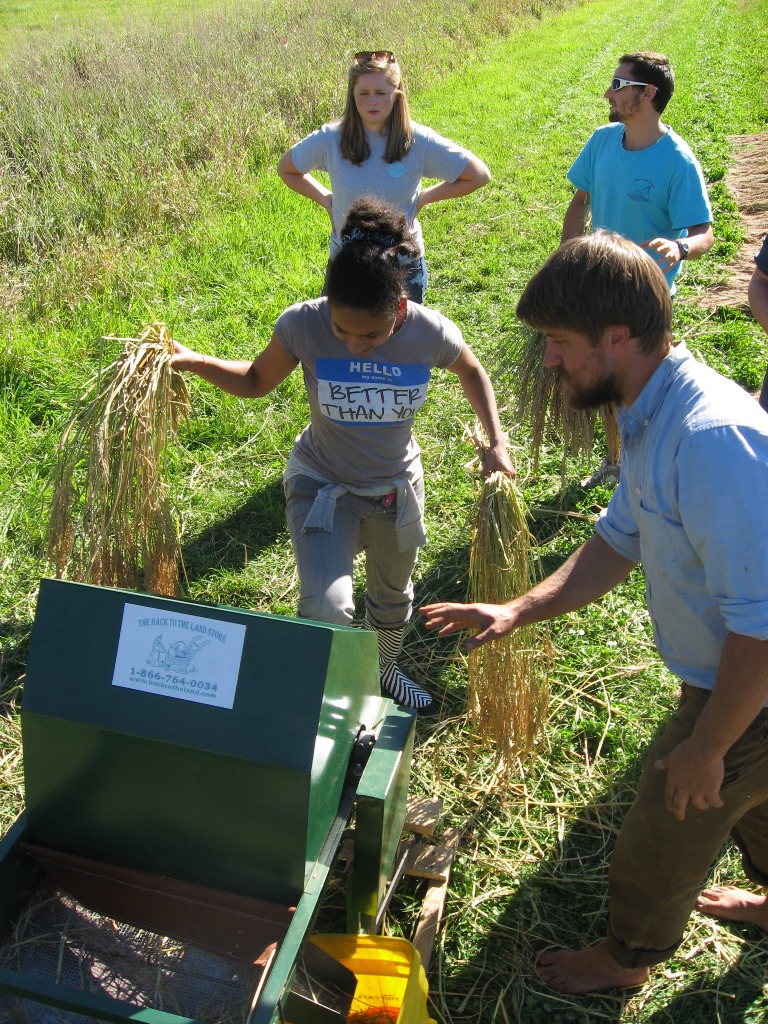
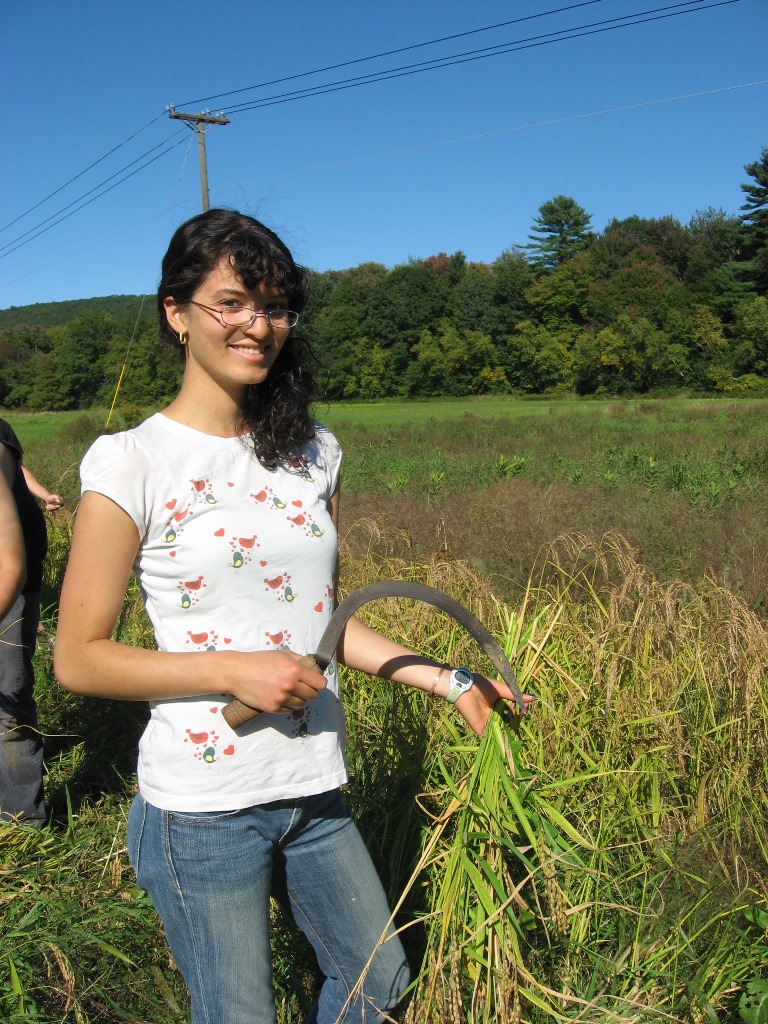
Students in our Sustainable Agriculture class, taught by Katie Campbell-Nelson, helped to harvest rice this week (and they didn’t have to travel far).  Ryan Karb, graduate of the Sustainable Food and Farming program, working with Michael Pill grew a plot of rice right here in Western Massachusetts this summer.

Here are some photos of our students harvesting rice.

IMG_5047

IMG_5048


IMG_5054


IMG_5049

Food Films – a list

Courtesy of Food Tank

Films and short videos are a powerful way of increasing awareness of and interest in the food system.With equal parts technology and artistry, filmmakers can bring an audience to a vegetable garden in Uganda, a fast food workers’ rights protest in New York City, or an urban farm in Singapore. And animation can help paint a picture of what a sustainable, just, and fair food system might look like. Film is an incredible tool for effecting change through transforming behaviors and ways of thinking.There are many incredible films educating audiences about changes being made – or that need to be made – in the food system.

Anna Lappe and Food Mythbusters, for example, just released a new animated short film on how “Big Food” marketing targets children and teenagers, filling their diets with unhealthy processed food products – Continue reading Food Films – a list

Student holds one-man protest over laws that prohibit him from raising poultry

A Valley View High School senior hopes to ruffle the feathers of Lackawanna County commissioners over municipal laws against keeping live chickens.

Evan Zavada, 18, spent part of Thursday afternoon on the lawn of courthouse square with a sign reading “Legalize Chickens” propped next to a chicken-wire cage containing a live hen. If Mr. Zavada has his way, municipalities would do away with chicken laws that prohibit or limit how many birds one can own.

“I believe it is an infringement upon individual sovereignty and property rights,” said Mr. Zavada, who has 40 chickens.

The aim of his prchikenlawotest is to gather signatures on a petition he plans to take to the commissioners. He wants them to know he’s serious about a bill he intends to present to them, entitled the “Lackawanna Right to Grow Act,” which would repeal existing municipal ordinances prohibiting the raising of poultry.

“I don’t see any legitimate reason why we shouldn’t be able to live off the land,” Mr. Zavada said.

Lackawanna County Commissioner Corey O’Brien said Mr. Zavada’s petition will be considered and commissioners will talk with borough officials to get all the facts in the case.

“We look forward to reading his petition, and we will pass his petition along to the solicitor for review,” he said. “This is a new one for Lackawanna County.”

Mr. Zavada said he was inspired by a teacher at Valley View High School several months ago to start raising chickens for their eggs. Mr. Zavada skipped school on Thursday so he could protest.

Nine chickens became 40 over the months. He kept them at his grandmother’s four-acre property in Blakely, where he thought they were safe because of the size and relative remoteness of the land. He said he would harvest the eggs and sell them in addition to eating them himself out of an interest in self-dependence.

He got into trouble when he let them roam.

“One went to some person’s yard and that person complained,” Mr. Zavada said, recalling what prompted Blakely officials to come tell him he could not keep the birds in the borough. The birds are now somewhere in Archbald, which also does not allow chickens. While Mr. Zavada would not say exactly where his 40 chickens are, he did hint that they are no longer free-ranging.

Archbald Zoning Officer Scotty Lemoncelli said if he found out a resident was keeping chickens in the borough, he would first issue a warning. If the warning is ignored, the offender will be brought before a magistrate.

“It’s not permissible in the borough,” Mr. Lemoncelli said.

Efforts to reach Blakely Borough Manager Thomas Wascura were not successful.

Other municipalities have enacted similar ordinances that prohibit or restrict certain types of farm animals. In Clarks Summit, for example, pigs, hogs and swine are strictly prohibited, according to a borough ordinance dated July 3, 2001. As for chickens, the ordinance does not expressly restrict poultry, but could make it difficult to keep a chicken in the suburban community. The chicken must be quartered no closer than 10 feet from the exterior of any dwelling or property line and must be kept in an enclosure.

“Most people have been pretty positive about it,” Mr. Zavada said of passers-by on Thursday. He said his parents have been supportive of him, too, but when they learned he skipped school for a chicken protest, his goose may be cooked.

Contact the writer: jkohut@timesshamrock.com, @jkohutTT on Twitter

For the story of how Amherst, MA changed its chicken laws, see:

Lets all raise hens!