All posts by jgerber123

I teach sustainable food and farming at the University of Massachusetts and try to contribute to my local community without causing too much harm....

CISA marks two decades of support for local farming

By RICHIE DAVIS in the Daily Hampshire Gazette

Monday, April 11, 2013

The fields around the region seemed a bit bleaker back in the late 1980s, as far as local farming was concerned.

A federal dairy herd buyout program — implemented to cut into a nationwide milk surplus that was really concentrated in Western states — gave struggling Franklin County dairy farmers a way out of their difficulties by selling off their operations, and selling off their land to developers.

Many of the farms that dominated the region tended to be large operations that sold primarily potatoes, onions, corn and other commodity crops to wholesale markets and tried to squeeze profits out of long days and a limited growing season.

The Beginning

But there was also a new energy taking place, recalls John Gerber, a professor at University of Massachusetts Stockbridge School of Agriculture, who helped launch CISA.

“We’d just gone through a terrible crisis in Massachusetts agriculture, but at the same time we were starting to see CSAs (community supported agriculture farms) popping up,” Gerber said, and a segment of the population pushing for more earth-friendly farming practices, including organic agriculture.

cisaxThe committee learned that the W.K. Kellogg Foundation was offering grants to communities that were working on food systems, applied and won $1.2 million to help farmers create and implement a vision of a more sustainable food production system as well as identify and address the main obstacles to achieving it.

Out of that grant grew Community Involved in Sustaining Agriculture, a Deerfield nonprofit organization that has helped dramatically affect the attitude toward farming not just here but nationwide. This year marks its 20th anniversary.

A Cooperative Project Emerges

“We need our farmers, and they need us,” said Juanita Nelson of Deerfield, who along with the region’s food co-ops, was one of the honorees at CISA’s annual meeting Friday in Northampton, and who in the 1980s was one of the few area farmers selling at a Greenfield farmers market .

Finding ways to support the region’s farmers was central to CISA, which immediately focused on increasing the market share for area farmers by trying to build connections between residents and farms in the area.

By doing market research, said CISA Special Projects Director Margaret Christie, “We learned that people in this area already cared about local farms and saw the connection between how they spent their food money and how it helped the local economy. They didn’t need us to point it out to them, but we made it easier for people to act on that and to show them they could make a difference and how they could do it every day.”

Even before CISA formally launched its “Be a Local Hero” campaign, with advertising, a widely recognized logo displayed at supermarkets, farm stands and restaurants, one of the organization’s working groups began meeting with dairy farmers to launch a small local milk marketing cooperative, Our Family Farms, to allow them to increase their profit.

Some farmers in the region were skeptical of the Amherst-dominated group that had just won a $1 million grant and had Hampshire College as its sponsoring umbrella — especially because it was suspected of pushing an organic agenda over more conventional approaches. But Christie, who began working for CISA soon after it was created, recalls, “I think people began to see bringing consumers on board with regular promotions and opportunities to connect to farms could make a difference for their businesses, and they wanted to be a part of this. They could see it was making a difference. There’s always skeptics out there, but there were fewer of them.”

“Local zeroes” was how some of those early skeptics reacted, recalled Upinngil farmer Clifford Hatch, an early chairman of the effort.

“The whole farming community was pretty fractured at that point, in terms of not pulling together,” Hatch said. “It’s a little more united today. ‘Local’ wasn’t fashionable at that point. The whole farming trend has gone toward more farms doing direct marketing of their product.”

Hatch, whose own farming operation has been helped by the emphasis on local agriculture that now is taken for granted in this area, says, “To tell the truth, we really astounded ourselves when we evaluated our work and found what the market penetrations had been.” Even Kellogg wasn’t convinced that the marketing campaign would work, recalls Ed Maltby, who taught agricultural courses at Smith Vocational Technical High School at the time and then was involved in helping efforts by Our Family Farms and Adams Family Farm to launch processing facilities.

But the Michigan foundation was later so encouraged by what it saw that it provided another $450,000 to help other groups around the country do similar work.

Local Heroes

cisagrocer“We came up with something that was very relevant to the Valley,” Maltby said, and that eventually even caught the attention of Kathleen Merrigan, the current assistant U.S. deputy agriculture secretary, who has promoted a “know your farmer” approach.

“We started the ‘local hero’ campaign nationally in 1999, and 10 years later, it was like the New York Times discovered it,” said Philip Korman, CISA’s current executive director. Korman says his concerns about taking the organization’s reins in 2008 as the economy soured have been overcome by seeing a growth in memberships — now at 355 farms, restaurants and organizations around the three counties — as well as sale of local products.

“I was a little concerned, about whether people would still stay focused on buying locally when they might have a little less discretionary funds, was this going to be a fad that would ebb and disappear. But people are willing to learn some new skills, alter their shopping patterns and are wanting to get more connection with farmers. It’s helpful to have the national culture echo the message that we brought.”

Changing mind-set at UMass and the Region

The surprise, for some, has been also in the number of young farmers who have been attracted to the region as CISA has contributed to a change of the cultural mind-set.

“What I couldn’t have predicted was the number of young people bringing creativity to the marketplace,” said Gerber, citing enterprises like Valley Green Feast home delivery service and Many Hands Farm Corps internship training program for farm workers. “They’re doing things no one had thought of before. That’s what was exciting: Things (like CISA) have certainly changed the landscape that makes it more receptive to those kinds of experiments.”

In fact, Gerber said, the launch of a UMass degree program in sustainable agriculture — like a similar program launched last year at Greenfield Community College — is a direct result of a renewed interest young people have in farming.

“CISA helped provide a context for that,” Gerber said, “a visibility nationally that something’s happening here in the valley. UMass just happens to be sitting in a hotbed of sustainable agriculture. The excitement that CISA represents says, ‘Something’s going on here.’ I’m getting calls from North Carolina, from California, from Arizona from people who want to transfer to UMass. Partly, it’s the farming in the Valley, partly it’s CISA bringing visibility to all this. It’s really cool.”

Vicki Van Zee, an early director of the farming nonprofit, recalled that the median age of farmers 20 years ago was around 60 in the Pioneer Valley, and that has dropped dramatically.

“What’s completely a gleeful surprise is the amount of young folks who are as interested in farming as they are. They’re the ones leading the charge now, seeing this value of farming small, that you can make a living from farming with a couple of acres and much more relational marketing.”

It’s also a surprise, she noted, that UMass, which started out as an agricultural land-grant institution, has been able to make dramatic change and launch its new program in response to this trend.

If young farmers have been attracted to take some of the courses offered by CISA and other organizations in order to start farming, that’s because CISA has helped farmers gain a new respect, Maltby said.

“Why Massachusetts has been increasing the number of farmers whereas every other part of the country it’s dropping, is … there’s a level of respect. I remember a very poignant moment when Our Family Farms was asked to be in the Franklin County Fair parade, and (co-op member) Debbie Duprey was nearly in tears at the end of the parade because she said people came up to her and thanked her, and nobody had ever done that for her as a farmer.” The renewed success for farming in the Valley, in fact, has helped drive up competition for good farmland, Maltby said.

“There’s so much competition for good land,” said Valley Land Trust Executive Director Richard Hubbard. “CISA’s raised the awareness of buying locally and that’s generated a bigger demand for that kind of product, which gets people more interested in farming, and they realize they might actually make a living doing it. As a result, we’re getting calls from people looking for farmland,” at the rate of one or two a week.

CISA — which also helped fill the role left by a diminished Cooperative Extension Service beginning in the late 1980s and the 1990s — has also helped farmers by offering an array of workshops about marketing, business practices and planning, and other technical skills for which a new generation of farmers may not have been trained, said Van Zee and others. And in recent years, it’s also helped examine issues that will affect the future of agriculture in the region, such as the need for processing and storage facilities and ways to comply with new federal food safety regulations — while also advocating that those regulations need to take into account small farm operations.

As it marks its 20th anniversary, Korman says, CISA will be pushing to play more of a role in Hampden County, where about half the population says in a 2012 marketing survey that they recognize the “local hero” campaign, but the organization will face challenges of dealing with a more urban population further removed from farms, with more cultural diversity as well as urban poverty.

To do that work, and while continuing programs like a disaster relief fund set up in the wake of devastating storm damage in the past two years, Korman said CISA will need more staff. It’s launched a $100,000 challenge fundraising campaign that will match, two-for-one, every dollar raised.

“CISA, along with its farmers, has changed the culture here locally,” Korman said. “More people care about local agriculture. The respect that farmers have always earned, but not always received, can be passed along. Now someone can be excited as a 25-yearold to be a farmer, and farmers can be respected by people who will look out for them.”

On the Web: http://www.buylocalfood.org
Original Article

Proposed Law Could Deliver Major Boost to Urban Agriculture in California

urbangarmSmall-scale farming isn’t easy. The prices farmers receive for their goods are often low, the margins are tight, the days are long, and the chores never-ending. For farmers who don’t own their own property, land insecurity compounds financial instability. It’s tough to really dig in if you don’t know how long you can stay on the piece you’re farming.

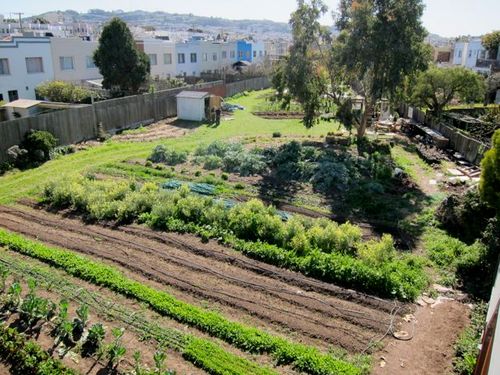
The problem of insecure land tenure is especially pressing for urban farmers in many cities, who have to contend with limited space and high real estate values. Brooke Budner and Caitlyn Galloway, the co-founders of San Francisco’s Little City Gardens, understand this better than anyone. They don’t own the three-quarter acre lot they farm and scrape by on a month-to-month lease.

“Small scale farming is already a high risk proposition,” Budner told me recently. “Anything Continue reading Proposed Law Could Deliver Major Boost to Urban Agriculture in California

Our College is at the heart of the UMass 150-year celebration

CNS is at the heart of UMass 150-year celebration

Dean Steve Goodwin – 03/25/2013

In April, UMass Amherst will launch a year-long commemoration of its 150th Anniversary — and as Dean of the college that proudly holds the legacy of the university’s land-grant mission, I can’t help feeling a bit of personal satisfaction. (The picture is of me in front of the new CNS Greenhouse.)

Steve Goodwin at CNS GreenhouseThe College of Natural Sciences carries forward the national land-grant university tradition of agricultural research and education that began with the creation of Massachusetts Agricultural College on April 29, 1863. “Mass Aggie,” as it was affectionately called, was founded with the proceeds from sales of land granted to Massachusetts under the federal Morrill Land Grant Act, passed by Congress and signed into law by President Lincoln in 1862.
The Stockbridge School of Agriculture has been educating students in all aspects of agriculture and the green industries for almost 100 years. The School has recently become a full academic unit with its own faculty, and has the capacity to provide research, teaching and outreach opportunities, as well as to offer AS, BS, and graduate degrees.

The college’s Center for Agriculture is the current home of two historic missions: applied research, and public outreach. The Center will soon be renamed the Center for Agriculture, Food and The Environment, to better reflect the full range of its 21st-century mission.

The Center’s Massachusetts Experiment Station supports faculty research in agriculture, food systems, nutrition, forestry, environment and other topics, and receives federal funding under both the Hatch Act of 1887 and McIntire-Stennis Forestry Research Act of 1962. Educational outreach to farmers and others goes back to Mass Aggie’s very earliest days and was formalized by the establishment of a campus Extension Service in 1909. UMass Extension, a unit of the Center for Agriculture, continues outreach to the Commonwealth, and receives funding from the USDA through the federal Smith-Lever Act of 1914.

In its time the Morrill Land Grant Act was an exciting experiment in higher education and it has had a profound impact many aspects of our lives. Today we are again experimenting with ways to integrate research, teaching, and learning across agriculture, the environment, energy, and health and wellness to benefit the public good.

As you can see from our newsletter, the College of Natural Sciences is dedicated to making a difference on campus, in the community, and in the Commonwealth. Clearly, we at CNS are carrying the torch of the land grant movement in our mission to improve the present, and impact the future. Here’s to another 150 years of innovation and tradition.

————————————————————————

Antibiotics and the Meat We Eat

A few weeks ago I wrote a blog titled “Antibiotic Resistance at Factory Farms “Scares the Hell Out of” Scientists.”   I mentioned this story in a class I had been invited to speak in last week and the response from most of the students was either disbelief or “where’s the science?”   Interestingly, today’s NY Times had a letter from a credible source asking a similar question.  David A. Kessler was commissioner of the Food and Drug Administration from 1990 to 1997.  Here is what he has to say.

————————————————————————————————–

SCIENTISTS at the Food and Drug Administration systematically monitor the meat and poultry sold in supermarkets around the country for the presence of disease-causing bacteria that are resistant to antibiotics. These food products are bellwethers that tell us how bad the crisis of antibiotic resistance is getting. And they’re telling us it’s getting worse.

But this is only part of the story. While the F.D.A. can see what kinds of antibiotic-resistant bacteria are coming out of livestock facilities, the agency doesn’t know enough about the antibiotics that are being fed to these animals. This is a major public health problem, because giving healthy livestock these drugs breeds superbugs that can infect people. We need to know more about the use of antibiotics in the production of our meat and poultry. The results could be a matter of life and death.

In 2011, drugmakers sold nearly 30 million pounds of antibiotics for livestock — the largest amount yet recorded and about 80 percent of all reported antibiotic sales that year. The rest was for human health care. We don’t know much more except that, rather than healing sick animals, these drugs are often fed to animals at low levels to make them grow faster and to suppress diseases that arise because they live in dangerously close quarters on top of one another’s waste.

It may sound counterintuitive, but feeding antibiotics to livestock at low levels may do the most harm. When he accepted the Nobel Prize in 1945 for his discovery of penicillin, Alexander Fleming warned that “there is the danger that the ignorant man may easily underdose himself and by exposing his microbes to nonlethal quantities of the drug make them resistant.” He probably could not have imagined that, one day, we would be doing this to billions of animals in factorylike facilities.

The F.D.A. started testing retail meat and poultry for antibiotic-resistant bacteria in 1996, shortly before my term as commissioner ended. The agency’s most recent report on superbugs in our meat, released in February and covering retail purchases in 2011, was 82 pages long and broke down its results by four different kinds of meat and poultry products and dozens of species and strains of bacteria.

It was not until 2008, however, that Congress required companies to tell the F.D.A. the quantity of antibiotics they sold for use in agriculture. The agency’s latest report, on 2011 sales and also released in February, was just four pages long — including the cover and two pages of boilerplate. There was no information on how these drugs were administered or to which animals and why.

We have more than enough scientific evidence to justify curbing the rampant use of antibiotics for livestock, yet the food and drug industries are not only fighting proposed legislation to reduce these practices, they also oppose collecting the data. Unfortunately, the Senate Committee on Health, Education, Labor and Pensions, as well as the F.D.A., is aiding and abetting them.

The Senate committee recently approved the Animal Drug User Fee Act, a bill that would authorize the F.D.A. to collect fees from veterinary-drug makers to finance the agency’s review of their products. Public health experts had urged the committee to require drug companies to provide more detailed antibiotic sales data to the agency. Yet the F.D.A. stood by silently as the committee declined to act, rejecting a modest proposal from Senators Kirsten E. Gillibrand of New York and Dianne Feinstein of California, both Democrats, that required the agency to report data it already collects but does not disclose.

In the House, Representatives Henry A. Waxman of California and Louise M. Slaughter of New York, also Democrats, have introduced a more comprehensive measure. It would not only authorize the F.D.A. to collect more detailed data from drug companies, but would also require food producers to disclose how often they fed antibiotics to animals at low levels to make them grow faster and to offset poor conditions.

This information would be particularly valuable to the F.D.A., which asked drugmakers last April to voluntarily stop selling antibiotics for these purposes. The agency has said it would mandate such action if those practices persisted, but it has no data to determine whether the voluntary policy is working. The House bill would remedy this situation, though there are no Republican sponsors.

Combating resistance requires monitoring both the prevalence of antibiotic-resistant bacteria in our food, as well as the use of antibiotics on livestock. In human medicine, hospitals increasingly track resistance rates and antibiotic prescription rates to understand how the use of these drugs affects resistance. We need to cover both sides of this equation in agriculture, too.

I appreciate that not every lawmaker is as convinced as I am that feeding low-dose antibiotics to animals is a recipe for disaster. But most, if not all of them, recognize that we are facing an antibiotic resistance crisis, as evidenced by last year’s bipartisan passage of a measure aimed at fighting superbugs by stimulating the development of new antibiotics that treat serious infections. Why are lawmakers so reluctant to find out how 80 percent of our antibiotics are used?

We cannot avoid tough questions because we’re afraid of the answers. Lawmakers must let the public know how the drugs they need to stay well are being used to produce cheaper meat.

Walmart’s Death Grip on Groceries Is Making Life Worse for Millions of People

For my own thoughts on the first announcement that the world’s largest food chain would support small, local and sustainable farmers, see my blog post from October 2010.

————————————————————————————————

March 26, 2013  |

This article was published in partnership with the Institute for Local Self-Reliance [3].

walmartWhen Michelle Obama visited a Walmart in Springfield, Missouri, a few weeks ago to praise the company’s efforts to sell healthier food, she did not say why she chose a store in Springfield of all cities. But, in ways that Obama surely did not intend, it was a fitting choice. This Midwestern city provides a chilling look at where Walmart wants to take our food system.

Springfield is one of nearly 40 metro areas where Walmart now captures about half or more of consumer spending on groceries, according to Metro Market Studies.  Springfield area residents spend just over $1 billion on groceries each year, and one of every two of those dollars flows into a Walmart cash register.  The chain has 20 stores in the area and shows no signs of slowing its growth. Its latest proposal, a store just south of the city’s downtown, has provoked widespread protest.  Opponents say Walmart already has an overbearing presence in the region and argue that this new store would undermine nearby grocery stores, including a 63-year-old family-owned business which still provides delivery for its elderly customers. A few days before the First Lady’s visit, the City Council voted 5-4 to approve what will be Walmart’s 21st store in the community.

As Springfield goes, so goes the rest of the country, if Walmart has its way. Nationally, the retailer’s share of the grocery market now stands at 25 percent. That’s up from 4 percent just 16 years ago.  Walmart’s tightening grip on the food system is unprecedented in U.S. history.  Even A&P — often referred to as the Walmart of its day — accounted for only about 12 percent of grocery sales at its height in the 1940s.  Its market share was kept in check in part by the federal government, which won an antitrust case against A&P in 1946.  The contrast to today’s casual acceptance of Walmart’s market power could not be more stark.

Having gained more say over our food supply than Monsanto, Kraft, or Tyson, Walmart has been working overtime to present itself as a benevolent king. It has upped its donations to food pantries, reduced sodium and sugars in some of its store-brand products, and recast its relentless expansion as a solution to “food deserts.” In 2011, it pledged [4] to build 275-300 stores “in or near” low-income communities lacking grocery stores. The Springfield store Obama visited is one of 86 such stores Walmart has since opened.  Situated half a mile from the southwestern corner of a census tract [5] identified as underserved by the USDA, the store qualifies as “near” a food desert. Other grocery stores are likewise perched on the edge of this tract.  Although Walmart has made food deserts the vanguard of its PR strategy in urban areas, most of the stores the chain has built or proposed in cities like Chicago and Washington D.C. are in fact just blocks from established supermarkets, many unionized or locally owned.  As it pushes into cities, Walmart’s primary aim is not to fill gaps but to grab market share.

***

The real effect of Walmart’s takeover of our food system has been to intensify the rural and urban poverty that drives unhealthy food choices.  Poverty has a strong negative effect on diet, regardless of whether there is a grocery store in the neighborhood or not, a major 15-year study [6] published in 2011 in the Archives of Internal Medicine found. Access to fresh food cannot change the bottom-line reality that cheap, calorie-dense processed foods and fast food are financially logical choices for far too many American households.  And their numbers are growing right alongside Walmart.  Like Midas in reverse, Walmart extracts wealth and pushes down incomes in every community it touches, from the rural areas that produce food for its shelves to the neighborhoods that host its stores.

Walmart has made it harder for farmers and food workers to earn a living. Its rapid rise as a grocer triggered a wave of mergers among food companies, which, by combining forces, hoped to become big enough to supply Walmart without getting crushed in the process. Today, food processing is more concentrated than ever.  Four meatpackers slaughter 85 percent of the nation’s beef.  One dairy company handles 40 percent of our milk, including 70 percent of the milk produced in New England.  With fewer buyers, farmers are struggling to get a fair price. Between 1995 and 2009, farmers saw their share of each consumer dollar spent on beef fall from 59 to 42 cents [7]. Their cut of the consumer milk dollar likewise fell from 44 to 36 cents.  For pork, it fell from 45 to 25 cents and, for apples, from 29 to 19 cents.

Onto this grim reality, Walmart has grafted a much-publicized initiative to sell more locally grown fruits and vegetables.  Clambering aboard the “buy local” trend undoubtedly helps Walmart’s marketing, but, as Missouri-based National Public Radio journalist Abbie Fentress Swanson reported [8] in February, “there’s little evidence of small farmers benefiting, at least in the Midwest.”  Walmart, which defines “local” as grown in the same state, has increased its sales of local produce mainly by relying on large industrial growers. Small farmers, meanwhile, have fewer opportunities to reach consumers, as independent grocers and smaller chains shrink and disappear.

Food production workers are being squeezed too. The average slaughterhouse wage has fallen 9 percent since 1999.  Forced unpaid labor at food processing plants is on the rise.  Last year, a Louisiana seafood plant that supplies Walmart was convicted of forcing employees to work in unsafe conditions for less than minimum wage. Some workers reported peeling and boiling crawfish in shifts that spanned 24 hours.

The tragic irony is that many food-producing regions, with their local economies dismantled and poverty on the rise, are now themselves lacking grocery stores. The USDA has designated large swaths of the farm belt [9], including many agricultural areas near Springfield, as food deserts.

***

One might imagine that squeezing farmers and food workers would yield lower prices for consumers.  But that hasn’t been the case.  Grocery prices have been rising.  There are multiple reasons for this, but corporate concentration is at least partly to blame.  For most foods, the spread between what consumers pay and how much farmers receive has been widening.  Food processors and big retailers are pocketing the difference.  Even as Walmart touts lower prices than its competitors, the company’s reorganization of our food system has had the effect of raising grocery prices overall.

As Walmart stores multiply, fewer families can afford to eat well.  The company claims it stores bring economic development and employment, but the empirical evidence indicates otherwise.  A study [10] published in 2008 in the Journal of Urban Economics examined about 3,000 Walmart store openings nationally and found that each store caused a net decline of about 150 jobs (as competing retailers downsized and closed) and lowered total wages paid to retail workers.  Other research [11] by the economic consulting firm Civic Economics has found that, when locally owned businesses are replaced by big-box stores, dollars that once circulated in the community, supporting other businesses and jobs, instead leak out.  These shifts may explain the findings of another study [12], published in Social Science Quarterly in 2006, which cut straight to the bottom line: neighborhoods where Walmart opens end up with higher poverty rates and more food-stamp usage than places where the retailer does not expand.

This year, Walmart plans to open between 220 and 240 stores in the U.S., as it marches steadily on in its quest to further control the grocery market.  Policymakers at every level, from city councilors to federal antitrust regulators, should be standing in its way.  Very few are.  Growing numbers of people, though, are drawing the line, from the Walmart employees who have led a string of remarkable strikes against the company, to the coalition of small business, labor, and community groups that recently forced Walmart to step back [13] from its plans to unroll stores across New York City.

Back in Springfield, as Michelle Obama was delivering her remarks, framed by a seductive backdrop of oranges and lemons, a citizens group called Stand Up to Walmart [14] was also at work, launching a referendum drive to overturn the City Council’s vote and block Walmart from gaining any more ground in the city.


Links:
[1] http://www.alternet.org
[2] http://www.alternet.org/authors/stacy-mitchell
[3] http://www.ilsr.org/
[4] http://www.nytimes.com/2011/07/21/us/21food.html?_r=0
[5] http://obamafoodorama.blogspot.com/2013/02/michelle-obama-talks-business-at.html
[6] http://archinte.jamanetwork.com/article.aspx?articleid=1106078
[7] http://www.ilsr.org/infographic-walmart-food/
[8] http://www.npr.org/blogs/thesalt/2013/02/04/171051906/can-small-farms-benefit-from-wal-mart-s-push-into-local-foods
[9] http://www.ers.usda.gov/data-products/food-desert-locator.aspx%23.UVCXMb-i8W8
[10] http://www.socsci.uci.edu/~dneumark/walmart.pdf
[11] http://www.ilsr.org/key-studies-walmart-and-bigbox-retail/%231
[12] http://onlinelibrary.wiley.com/doi/10.1111/j.1540-6237.2006.00377.x/abstract
[13] http://www.nytimes.com/2013/03/07/business/a-respite-in-efforts-by-wal-mart-in-new-york.html?pagewanted=all
[14] https://www.facebook.com/groups/300521090064564/
[15] http://www.alternet.org/tags/walmart
[16] http://www.alternet.org/tags/food-0
[17] http://www.alternet.org/tags/poverty-0
[18] http://www.alternet.org/%2Bnew_src%2B


The “superstars” of the food movement honored on International Women’s Day

Did you know that 60% of the students in the Sustaianble Food and Farming major at the University of Massachusetts are women. 

——————————————————————————-

March 8 was International Women’s Day – a day to recognize the steps that have been taken to improve gender equality and to acknowledge that much more needs to be done to level the playing field for women in all sectors, including agriculture.

Olivier De Shutter, the U.N. Special Rapporteur on the Right to Food, recently wrote an op-ed in The New York Times, The Feminization of Farming, drawing attention to the need to empower women farmers and remove the obstacles that hold them back from improving agricultural productivity, nutrition, and incomes. He says that “the most effective strategies to empower women who tend farm and family — and to alleviate hunger in the process — are to remove the obstacles that hinder them from taking charge of their lives.”

According to the U.N. Food and Agriculture Organization, 40 percent of agricultural laborers in developing countries are women – and in some countries, they are as much as 80 percent of the agricultural work force. But women farmers’ yields are roughly 20-30 percent less than male farmers.

If gender barriers were eliminated and women farmers were able to match the yields of male farmers, global malnourishment could be reduced by 12 to 17 percent. And a study conducted by the International Food Policy Research Institute found that almost 55 percent of the reduction in hunger from 1970 to 1995 could be attributed to improvements in women’s status in society. In our guest post on Ecoagriculture Parners Landscapes for People, Food, and Nature blog, we highlight how providing better access to credit and inputs can not only improve the livelihoods of women farmers, but translates to better nutrition for their families.

In honor of International Women’s Day, Ellen Gustafson and I want to highlight seven women working to change the food system:

Jeomek Bak
Bak is the Chairperson of the Korean Women Peasants Association. The Korean Women’s Peasant Association (KWPA) is a national organization of women farmers based in Seoul, South Korea. In 2012, Bak accepted the Food Sovereignty Prize, which recognizes the Association for its work “promoting food sovereignty, women’s rights, and the survival of small-scale Korean farmers.” KWPA helped create the National Campaign Task Force, which focuses on defending food sovereignty in  South Korea. In addition, the group organizes training programs, runs the Our Sisters Garden linking women farmers and local consumers, and their Native Seed Campaign focuses on preserving Indigenous seed varieties.

Barbara Buchner
Buchner is a member of the Barilla Center for Food & Nutrition Advisory Board and is the head of CPI Europe. Her work focuses on international climate finance and market-based mechanisms and other policy approaches to mitigating greenhouse gas emissions. Her experience is important to Barilla’s research, making sure that agriculture is brought into the discussion of climate change at the international level.

Debra Eschmeyer
Eschmeyer is the co-Founder of FoodCorps and an organic farmer. FoodCorps helps connect kids to the food system by placing leaders in communities for a year. They teach students about  where food comes from and healthy eating habits, and they establish school gardens. Eschmeyer is a recipient of the James Beard Foundation Leadership Award and serves on the advisory board of AGree.

Wenonah Hauter
Hauter is the Executive Director of Food & Water Watch. Her recent book Foodopoly: The Battle Over the Future of Food and Farming in America looks at corporate consolidation of the food system and the impacts on producers and eaters.From 1997 to 2005 she served as Director of Public Citizen’s Energy and Environment Program, focusing on water, food, and energy policy. She was also the environmental policy director for Citizen Action, where she worked with the organization’s 30 state-based groups, and she coordinated sustainable energy campaigns at the Union of Concerned Scientists.

Saru Jayaramane
Jayaraman is the Director of the Food Labor Research Center and co-Founder of theRestaurant Opportunities Centers United. In the book, Behind the Kitchen Door, Jayaraman and co-author Eric Schlosser, highlight the need for foodies to recognize that sustainable food is not just about eating local or organic–a truly sustainable restaurant is one in which wait staff and cooks are treated fairly and make a living wage, and where workers and eaters alike have a positive experience.

Sophia Murphy
Murphy is a Senior Advisor for the Institute on Agriculture and Trade Policy. Her work focuses on U.S. trade and agricultural policy and the impact of trade rules on farmers in developing countries. She has also written about the impacts of international trade on development and food security, corporate concentration in the food system, the affect of biofuels on poverty, and the impact of aid programs.

Lindiwe Sibanda
Sibanda is the Chief Executive Officer of the Food and Natural Resources Policy Analysis Network (FANRPAN) based in Pretoria, South Africa. Sibanda has led FANRPAN’s development strategy and is currently coordinating policy research and advocacy programs in Africa to improve food security in the region. In addition, she is Board Chair of the International Livestock Research Institute and she’s part of the Guardian Global Development advisory panel. Sibanda also led the No Agriculture, No Deal global campaign in 2009 to advocate for the inclusion of agriculture in the United Nations Framework on Climate Change in Copenhagen.

Original Post

Don’t let food marketers profit from your poor diet

Interestingly, this editorial was in the local newspaper the day after the new UMass FARE (Food Access Research and Engagement) Project held a forum on this topic. 

fare

PHILIP KORMAN and MARGARET CHRISTIE                      Wednesday, March 7, 2013

SOUTH DEERFIELD — Last month, on the same Sunday, the Boston Globe and the New York Times both ran stories on food. Each presented a vision for the future, and each spoke to us about the power of marketing to influence culture — for good or for ill.

The Globe portrayed Northampton and the many green initiatives it supports. The New York Times ran a story titled “The Extraordinary Science of Addictive Junk Food” describing the major food companies’ use of both science and marketing to override our bodies’ instinctive avoidance of overeating.

The Globe’s story on Northampton focused on food and community: our vibrant farmers markets, our community farm and the Pedal People’s full circle, bicycle-powered services Continue reading Don’t let food marketers profit from your poor diet

Michelle Obama: The Business Case for Healthier Food Options

By MICHELLE OBAMA

For years, America’s childhood obesity crisis was viewed as an insurmountable problem, one that was too complicated and too entrenched to ever really solve. According to the conventional wisdom, healthy food simply didn’t sell—the demand wasn’t there and higher profits were found elsewhere—so it just wasn’t worth the investment.

But thanks to businesses across the country, today we are proving the conventional wisdom wrong. Every day, great American companies are achieving greater and greater success by creating and selling healthy products. In doing so, they are showing that what’s good for kids and good for family budgets can also be good for business.image

Take the example of Wal-Mart WMT -1.23% . In just the past two years, the company reports that it has cut the costs to its consumers of fruits and vegetables by $2.3 billion and reduced the amount of sugar in its products by 10%. Wal-Mart has also opened 86 new stores in underserved communities and launched a labeling program that helps customers spot healthy items on the shelf. And today, the company is not only seeing increased sales of fresh produce, but also building better Continue reading Michelle Obama: The Business Case for Healthier Food Options

Twelve Reasons Why Globalization is a Problem

Globalization seems to be looked on as an unmitigated “good” by economists. Unfortunately, economists seem to be guided by their badly flawed models; they miss  real-world problems. In particular, they miss the point that the world is finite. We don’t have infinite resources, or unlimited ability to handle excess pollution. So we are setting up a “solution” that is at best temporary.

Economists also tend to look at results too narrowly–from the point of view of a business that can expand, or a worker who has plenty of money, even though these users are not Continue reading Twelve Reasons Why Globalization is a Problem

How Cooperatives Are Driving the New Economy

coooppic
Andrew Dwyer and Shawn Seebach are in their first year at Equal Exchange, where they are learning the business of coffee as well as how to work in a cooperative.

Our little group of a dozen families was running out of time. After meeting every weekend for three years to plan our hoped-for cohousing community, and after investing much of our savings to acquire a few acres of land, it looked as though our dream would fail. We couldn’t find a bank that would finance a cooperative.

It was our local credit union that saved us. “You’re owned by your members? What’s
so odd about that? We’re owned by our members,” the president of the Kitsap Credit Union mused.

With that financing, we were able to build 30 affordable homes and a common house, and Continue reading How Cooperatives Are Driving the New Economy