All posts by jgerber123

I teach sustainable food and farming at the University of Massachusetts and try to contribute to my local community without causing too much harm....

Ag Research Fails to Address Today's Problems

A blue-ribbon panel of scientific and technology advisers to President Obama warns that the nation risks losing its longstanding supremacy in food production because research in agriculture has not kept up with new challenges like climate change, depleted land and water resources and emerging pests, pathogens and invasive plants.

The president’s Council of Advisers on Science and Technology, chaired by John P. Holdren, director of the White House office of science and technology policy, and Eric Lander, president of the Broad Institute of Harvard University and the Massachusetts Institute of Technology, urged a commitment of $700 million in additional money for new agricultural research — but deployed in very different ways than the money that is currently doled out.

“Our most important conclusion is that our nation’s agricultural research enterprise is not prepared to meet the challenges that U.S. agriculture faces in the 21st century,” the panel states in its report, which was issued on Friday.

The report lays out seven challenges ranging from competition for water to the impacts of climate change and biofuels production on food yields. “The need to deal with these growing challenges in agriculture, including new pests and pathogens, controlling agriculture’s environmental impact, health and nutritional concerns and international food security underscores the importance of agricultural research to the health, prosperity and security of the nation,” they wrote.

But the panel found that federal money for agricultural research has, in real dollars, remained roughly the same for the last 30 years, according to the report, while financing for research in other areas of science and technology has risen strikingly.

Moreover, because so little of the money is awarded competitively, the report’s authors concluded, it is not spurring innovation and is often duplicating research being done by private companies. Excluding recent research on biofuels production, less than $500 million per year is available for competitive grants in agriculture, the report said. That amounts to roughly 2 percent of the competitive funding from the National Institutes of Health and 6 percent of that from the National Science Foundation,” the panel wrote.

“One consequence of the small amount of competitive funding for agriculture research is the decline in training of new agriculture scientists and the hindered recruitment of a new generation of the best young scientists into this area,” the study said.

The Department of Agriculture is the largest federal grantor of funds for agricultural research, but roughly 66 percent of what it distributes stays in-house to finance its own research units like the Agricultural Research Service and the Economic Research Service — roughly double the amount that other federal agencies retain for research purposes.

Additionally, some of the research dollars that the department distributes through land grant universities is used for permanent faculty salaries, which the report found “could unintentionally dissuade researchers from the challenging work of performing at the cutting edge of science and ultimately producing novel, innovative research.”

The bulk of research money is spent on a handful of commodity crops, particularly corn and soybeans, for which private companies enlist battalions of highly educated plant breeders, geneticists, laboratory technicians and other skilled workers in research and development.

The report also underscores how deeply agriculture meshes with energy, health, environmental and even national security issues. For instance, the panel noted that despite the nation’s growing reliance on biofuels, little research has been done on the impact that droughts and other extreme weather might have on the nation’s energy supply.

It also noted the growth of interest in the role of food in human health and well-being, including growing problems like obesity and diabetes. “As part of the public investment in agricultural research, funding should be provided to explore how plant and animal products can be used or modified to respond to this crisis in nutrition and health by developing new varieties of food products and new approaches to food processing,” the panel wrote.

The group also called for the proposed $700 million in new money for agricultural research to be distributed through a competitive process and that a portion be used to ensure that some of the nation’s most talented graduate students and post-doctoral researchers take part.

Original Post

USDA Response

To the Editor:

U.S. Agricultural Research Is Faltering, Report Warns” (Green blog, nytimes.com, Dec. 10) sheds light on a pressing issue: the urgent need to finance agricultural research. But as the Agriculture Department’s chief scientist, I disagree with the characterization that our research is faltering.

Agricultural science has led our country to be the global leader in feeding the world. It has also returned more than $10 to our economy for every $1 invested in research. Continued innovation and investment are critical to maintaining our leadership and our competitive edge.

Our research is focused on the grand challenges of the 21st century — providing food security while meeting other demands placed on agriculture for fiber, fuel and other feedstocks; preserving natural resources; and adapting to climate change — and on fostering a culture of open science internationally.

Despite financial constraints, the quality of our work remains of high quality and value.

CATHERINE WOTEKI
Washington, Dec. 14, 2012

The writer is under secretary for research, education and economics at the Agriculture Department.

Hardwick, MA cattle could save the planet (according to Time Magazine)

Cattle on this Hardwick, Mass., farm grow not on feedlots but in pastures, where their grazing helps keep carbon dioxide in the ground

On a farm in coastal Maine, a barn is going up. Right now it’s little more than a concrete slab and some wooden beams, but when it’s finished, the barn will provide winter shelter for up to six cows and a few head of sheep. None of this would be remarkable if it weren’t for the fact that the people building the barn are two of the most highly regarded organic-vegetable farmers in the country: Eliot Coleman wrote the bible of organic farming, The New Organic Grower, and Barbara Damrosch is the Washington Post’s gardening columnist. At a time when a growing number of environmental activists are calling for an end to eating meat, this veggie-centric power couple is beginning to raise it. “Why?” asks Coleman, tromping through the mud on his way toward a greenhouse bursting with December turnips. “Because I care about the fate of the planet.”

Ever since the U.N. Food and Agriculture Organization released a 2006 report that attributed 18% of the world’s man-made greenhouse-gas emissions to livestock — more, the report noted, than what’s produced by transportation — livestock has taken an increasingly hard rap. At first, it was just vegetarian groups that used the U.N.’s findings as evidence for the superiority of an all-plant diet. But since then, a broader range of environmentalists has taken up the cause. At a recent European Parliament hearing titled “Global Warming and Food Policy: Less Meat = Less Heat,” Rajendra Pachauri, chairman of the Intergovernmental Panel on Climate Change, argued that reducing meat consumption is a “simple, effective and short-term delivery measure in which everybody could contribute” to emissions reductions.

And of all the animals that humans eat, none are held more responsible for climate change than the ones that moo. Cows not only consume more energy-intensive feed than other livestock; they also produce more methane — a powerful greenhouse gas — than other animals do. “If your primary concern is to curb emissions, you shouldn’t be eating beef,” says Nathan Pelletier, an ecological economist at Dalhousie University in Halifax, N.S., noting that cows produce 13 to 30 lb. of carbon dioxide per pound of meat.

So how can Coleman and Damrosch believe that adding livestock to their farm will help the planet? Cattleman Ridge Shinn has the answer. On a wintry Saturday at his farm in Hardwick, Mass., he is out in his pastures encouraging a herd of plump Devon cows to move to a grassy new paddock. Over the course of a year, his 100 cattle will rotate across 175 acres four or five times. “Conventional cattle raising is like mining,” he says. “It’s unsustainable, because you’re just taking without putting anything back. But when you rotate cattle on grass, you change the equation. You put back more than you take.”

It works like this: grass is a perennial. Rotate cattle and other ruminants across pastures full of it, and the animals’ grazing will cut the blades — which spurs new growth — while their trampling helps work manure and other decaying organic matter into the soil, turning it into rich humus. The plant’s roots also help maintain soil health by retaining water and microbes. And healthy soil keeps carbon dioxide underground and out of the atmosphere.

Compare that with the estimated 99% of U.S. beef cattle that live out their last months on feedlots, where they are stuffed with corn and soybeans. In the past few decades, the growth of these concentrated animal-feeding operations has resulted in millions of acres of grassland being abandoned or converted — along with vast swaths of forest — into profitable cropland for livestock feed. “Much of the carbon footprint of beef comes from growing grain to feed the animals, which requires fossil-fuel-based fertilizers, pesticides, transportation,” says Michael Pollan, author of The Omnivore’s Dilemma. “Grass-fed beef has a much lighter carbon footprint.” Indeed, although grass-fed cattle may produce more methane than conventional ones (high-fiber plants are harder to digest than cereals, as anyone who has felt the gastric effects of eating broccoli or cabbage can attest), their net emissions are lower because they help the soil sequester carbon.

The Next Frontier for Climate Activism: College Investments

By    Dec. 11, 2012

Climate activists need to take their victories where they can. There was little success to celebrate at the U.N. climate summit in Doha, Qatar, which concluded over the weekend. Delegates agreed to extend the expiring Kyoto Protocol by a few years — albeit without the participation of previous signatories like Japan and Russia, which really left only Australia and most of the developed economies of Europe. The U.S. — which never ratified Kyoto to begin with — offered little on its own, and developed nations put off resolving a debate over the promise of providing tens of billions in climate aid to poor nations. Delegates agreed to finalize a new, wider global pact on climate change by 2015 that would take effect by 2020 — but furnished no real details on what that agreement would actually do. Even by the low standards of the U.N. climate process, Doha was a disappointment.

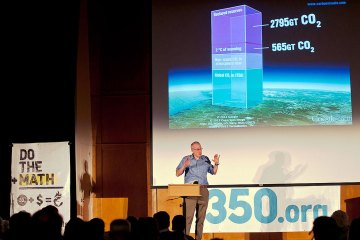
That’s one reason climate activists are focusing their efforts closer to home — particularly on America’s colleges and universities. Thanks to the efforts of the writer turned activist Bill McKibben‘s 350.org, students at schools around the country are pushing university administrators to sell off any investments in fossil fuel companies from collegiate endowment funds. The strategy is called divestment, and if it sounds familiar, it’s because student activists used the same method — mostly successfully — to push universities to stop investing in apartheid-era South Africa during the 1980s. One school, Unity College in Maine, has already taken action to dump its fossil fuel investments, and the campaign is active in more than 150 other U.S. colleges and universities. “In the near future, the political tide will turn and the public will demand action on climate change,” wrote Stephen Mulkey, the Unity College president, in a letter to other college administrators. “Our students are already demanding action, and we must not ignore them.”

(MORE: Why Global Fuel Prices Will Spark the Next Revolutions)

The money at stake in the divestment fight could be significant: colleges and universities have endowments worth more than $400 billion, depending on fluctuations in the market. While there’s no way of knowing how much of that goes to fossil fuel companies like Exxon or Shell, those firms do represent a large portion of the stock market, representing nearly 10% of the value of the Russell 3000, a broad index of 3,000 American companies.

But the divestment fight is less about money than it is about the moral status of the fossil fuel industry. By calling on universities to divest themselves of oil, gas and coal companies, student activists are trying to draw an equivalency between a what is now a widely-acknowledged social evil — an apartheid regime — and a fossil fuel industry that sells the products that are chiefly responsible for manmade global warming. To McKibben and his allies, the fossil fuel industry is the new tobacco — and should be treated as such, as he told the Huffington Post in a recent interview:

Our criteria is that it’s okay to invest in companies so long as they stop lobbying in Washington, stop exploring for new hydrocarbons, and sit down with every one else to plan to keep 80 percent of the reserves in the ground. We just need to change the power balance. They’re making so much money. The popular notion is that Americans are addicted to fossil fuels but I find that’s not true; most people would be happy to power their lives with anything else. The addicts are the big fossil fuel companies that are just fatally addicted to the level of profit they are able to deduce. They can’t help themselves you know — so we’re going to have help them.

(MORE: The New Oil and Gas Boom)

While Unity College has led the way on divestment, so far there’s little evidence that other colleges and universities are eager to follow suit, though some institutions like Tufts University in Massachusetts are at least considering calls for divestment. No school with an endowment greater than $1 billion has agreed to divest so far, and Harvard University — which has the nation’s largest endowment at $31 billion and happens to be McKibben’s alma mater — has said that it won’t divest, even though 72% of Harvard undergraduates voting in recent campus elections supported a call to ask the school to do so.

In some ways it’s not completely fair for student activists to focus on the fossil-fuel investments of their schools, given that colleges and universities are doing more to combat climate change and go green than just about any other institution in the country. More than 600 U.S. schools are part of the American College and University Presidents’ Climate Commitment, under which signatories agree to complete a greenhouse gas emissions inventory and take immediate steps to reduce carbon output. But at the same time, American universities aren’t shy about holding themselves to a still-higher standard when it comes to progressive causes — and for many college students today, there’s no cause greater than fighting climate change. University presidents who don’t fall in line should get used to hearing protests outside their offices. Just like their forerunners in the apartheid battles of the 1980s, these climate activists won’t stop until they win.

MORE: Climate Change: Polar Ice Sheets Melting Faster, Raising Sea Levels

La Via Campesina works for food sovereignty

laviaIN 2013, La Via Campesina will celebrate its 20th Anniversary.  Almost 20 years ago, in 1993 a group of farmers’ representatives – women and men – from the four continents gave birth to the movement at a meeting in Mons, Belgium.  At that time, agricultural policies and agribusiness were becoming globalized and small farmers needed to develop a common vision and organize the struggle to defend it.  
Small-scale farmers’ organizations also wanted their voices to be heard and to participate directly in the decisions that were affecting their lives. Over the last 20 years the local struggles of national organizations have been strengthened by being a part of this vibrant international peasant movement, inspired by a common struggle and the solidarity and support from other organizations.  

LaVia2La Via Campesina is now recognized as a main actor in global food and agricultural debates. It is heard by many global institutions such as the United Nations Food and Agriculture Organization (FAO), International Fund for Agricultural Development (IFAD), the United Nations (UN) Framework Convention on Climate Change (UNFCCC), the UN Committee on Food Security (CFS) and the UN Human Rights Council, The Convention on Biological Diversity (CBD) and is broadly recognized among other social movements from local to global level.

La Via Campesina has become a key global movement. It now comprises about 150 local and national farmers’ organizations in 70 countries from Africa, Asia, Europe and the Americas. Altogether representing about 200 million farmers united  in a common struggle to realize food sovereignty. 

This includes: 
  • the defense of a food system that brings healthy food to local populations and provides livelihoods to local  communities;
  • the promotion of peasant-based agroecological model of food production primarily for local markets that will sustain food supplies, equitably and sustainably, now and for future generations;
  • the recognition of the right of women and men peasants worldwide, who currently feed 70% of the world’s peoples, to have a dignified life without threat of criminalization;
  • ensuring their access to natural wealth – land, water, seed, livestock breeds – needed for agroecological food production;
  • the rejection of the corporate agribusiness, the neoliberal model of agriculture  and the instruments and commercial pressures that support it;
La Via Campesina has taken significant steps in promoting food sovereignty and small holder, peasant-based sustainable food production as a solution to the current multiple global crises. Food Sovereignty is at the heart of the changes needed to build the future we want, and is the only real path that can possibly feed all of humanity while honoring the rights of Mother Earth.  For food sovereignty to work, however, we still need genuine agrarian reform, which will change the systems and structural relations that govern resources such as land, seeds and water.  
As the climate crisis has deepened, we have made clear, in numerous global forums, that our forms of small-scale sustainable agroecological production cool the planet, care for ecosystems, provide jobs and secure the food supply for the poorest. La Via Campesina is convinced that in order to create deep social change we must build and strengthen our alliances with other sectors of society.   

Help to intensify these efforts over the coming years:
  • To increase advocacy for food sovereignty with both global institutions and with national governments.
  • To make farmers voices heard all over the world through enhanced communications
  • To cool the planet by expanding sustainable peasant agriculture through agroecology.
  • To preserve biodiversity and defend seed sovereignty through support for farmer to farmer seed exchanges.
  • To strengthen Women’s and Youth leadership for food sovereignty.
  • To increase the struggle to recover people’s natural resources: land, water and seeds.
Who is la Via Campesina? The international peasant’s voice

La Via Campesina
Via Campesina is an international movement of peasants, small- and medium-sized producers, landless, rural women, indigenous people, rural youth and agricultural workers. We are an autonomous, pluralist and multicultural movement, independent of any political, economic, or other type of affiliation. Born in 1993, La Via Campesina now gathers about 150 organisations in 70 countries in Asia, Africa, Europe, and the Americas.

Follow La Via Campesina on facebook | twitter | vimeo

Despite Rising Prices, Americans Trash 40 Percent of Food Supply

Natural Resources Defense Council

Americans are throwing away 40 percent of food in the U.S., the equivalent of $165 billion in uneaten food each year, according to a new analysis by the Natural Resources Defense Council (NRDC). In a time of drought and skyrocketing food prices, NRDC outlines opportunities to reduce wasted food and money on the farm, in the grocery store and at home.

“As a country, we’re essentially tossing every other piece of food that crosses our path–that’s money and precious resources down the drain,” said Dana Gunders, NRDC project scientist with the food and agriculture program. “With the price of food continuing to Continue reading Despite Rising Prices, Americans Trash 40 Percent of Food Supply

Worried about GMO pollen contamination? USDA recommends insurance

By Tom Laskawy

Shutterstock

One of the big debates in agriculture right now involves “coexistence” between farmers who use genetically modified or GMO seeds and those who don’t. This is far more than an academic debate; in question is the risk of “contamination” of conventional or organic crops by GMO crops. The wind, insects, and even the farmers themselves can inadvertently cause this type of cross-pollination, and it puts organic farms at risk of losing their organic status and conventional farmers at risk of losing sales to countries that don’t allow imports of GMO foods.

The risk of such “transgenic” contamination has grown along with the market share of biotech seeds developed by Monsanto and DuPont — to the point that around 90 percent of corn, 90 percent of soy, and 80 percent of cotton grown in the U.S. is genetically Continue reading Worried about GMO pollen contamination? USDA recommends insurance

Schools Add In-House Farms as Teaching Tools in New York City

By

scholIn the East Village, children planted garlic bulbs and harvested Swiss chard before Thanksgiving. On the other side of town, in Greenwich Village, they learned about storm water runoff, solar energy and wind turbines. And in Queens, students and teachers cultivated flowers that attract butterflies and pollinators.

Across New York City, gardens and miniature farms — whether on rooftops or at ground level — are joining smart boards and digital darkrooms as must-have teaching tools. They are being used in subjects as varied as science, art, mathematics and social studies. In the past two years, the number of school-based gardens registered with the city jumped to 232, from 40, according to GreenThumb, a division of the parks department that provides Continue reading Schools Add In-House Farms as Teaching Tools in New York City

NYTimes: Has organic been “oversized”?

Michael J. Potter is one of the last little big men left in organic food.

More than 40 years ago, Mr. Potter bought into a hippie cafe and “whole earth” grocery here that has since morphed into a major organic foods producer and wholesaler, Eden Foods.

But one morning last May, he hopped on his motorcycle and took off across the Plains to challenge what organic food — or as he might have it, so-called organic food — has become since his tie-dye days in the Haight district of San Francisco.

The fact is, organic food has become a wildly lucrative business for Big Food and a premium-price-means-premium-profit section of the grocery store. The industry’s image — contented cows grazing on the green hills of family-owned farms — is mostly pure fantasy. Or rather, pure marketing. Big Food, it turns out, has spawned what might be called Big Organic.

Bear Naked, Wholesome & Hearty, Kashi: all three and more actually belong to the cereals giant Kellogg. Naked Juice? That would be PepsiCo of Pepsi and Fritos fame. And behind the pastoral-sounding Walnut Acres, Health Valley and Spectrum Organics is none other than Hain Celestial, once affiliated with Heinz, the grand old name in ketchup. Continue reading NYTimes: Has organic been “oversized”?

Continued drought in the midwest will drive up food prices

The merciless drought that has scorched much of the central U.S. this year shows no signs of letting up, according to the most recent forecast from NOAA’s Climate Prediction Center.

For a massive portion of the nation — in almost every state west of the Mississippi River — drought is forecast to continue throughout the next several months: “The drought is likely to persist through the winter,” reported Weather Underground meteorologist Jeff Masters.

Beyond the winter, the forecast gets murky. “We’re expecting persistence of the drought through the winter months and through early spring, and with the climate signals being relatively weak … it’s very difficult to really say how the spring will materialize with regard to the drought outlook,” said Jon Gottschalck, a meteorologist with the Climate Prediction Center.

The area currently in a drought expanded slightly this week after a few weeks of improvement.

According to Wednesday’s U.S. Drought Monitor, a weekly federal report that tracks Continue reading Continued drought in the midwest will drive up food prices