All posts by jgerber123

I teach sustainable food and farming at the University of Massachusetts and try to contribute to my local community without causing too much harm....

INDUSTRIAL FARMING IS FAILING AMERICA

MATTERDALE, England — I am a traditional small farmer in the North of England. I farm sheep in a mountainous landscape, the Lake District fells. It is a farming system that dates back as many as 4,500 years. A remarkable survival. My flock grazes a mountain alongside 10 other flocks, through an ancient communal grazing system that has somehow survived the last two centuries of change. Wordsworth called it a “perfect republic of shepherds.”

It’s not your efficient modern agribusiness. My farm struggles to make enough money for my family to live on, even with 900 sheep. The price of my lambs is governed by the supply of imported lamb from the other side of the world. So I have one foot in something ancient and the other foot in the 21st-century global economy.

Less than 3 percent of people in modern industrial economies are farmers. But around the world, I am not alone: The United Nations estimates that more than two billion people are farmers, most of them small farmers; that’s about one in three people on the planet.

My farm is where I live, and there is actually no other way to farm my land, which is why it hasn’t changed much for a millennium or more. In truth, I could accept the changes around me philosophically, including the disappearance of farms like mine, if the results made for a better world and society. But the world I am seeing evolve in front of my eyes isn’t better, it is worse. Much worse.

In the week before the United States elected Donald J. Trump to the presidency, I traveled through Kentucky, through endless miles of farmland and small towns. It was my first visit to the United States, for a book tour. I was shocked by the signs of decline I saw in rural America.

kentucky

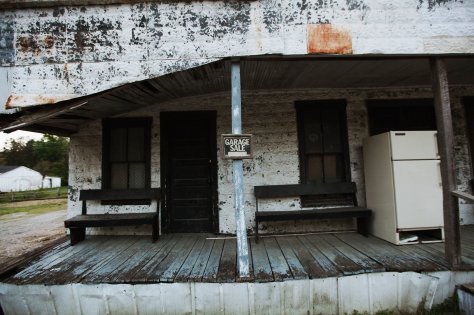
An abandoned building in Owsley County, Kentucky. Credit Mario Tama/Getty Images


I saw shabby wood-frame houses rotting by the roadside, and picket fences blown over by the wind. I passed boarded-up shops in the hearts of small towns, and tumbledown barns and abandoned farmland. The church notice boards were full of offers of help to people with drug or alcohol addictions. And yes, suddenly I was passing cars with Trump stickers on their bumpers, and passing houses with Trump flags on their lawns.

The economic distress and the Trump support are not unconnected, of course. Significant areas of rural America are broken, in terminal economic decline, as food production heads off to someplace else where it can be done supposedly more efficiently. In many areas, nothing has replaced the old industries. This is a cycle of degeneration that puts millions of people on the wrong side of economic history.

Economists say that when the world changes people will adapt, move and change to fit the new world. But of course, real human beings often don’t do that. They cling to the places they love, and their identity remains tied to the outdated or inefficient things they used to do, like being steel workers or farmers. Often, their skills are not transferable anyway, and they have no interest in the new opportunities. So, these people get left behind.

I ask myself what I would do if I didn’t farm sheep, or if I couldn’t any longer farm sheep. I have no idea.

Perhaps it is none of my business how Americans conduct their affairs and how they think about economics. I should doubtless go back to the mountains of my home here in Cumbria, and hold my tongue. But for my entire life, my own country has apathetically accepted an American model of farming and food retailing, mostly through a belief that it was the way of progress and the natural course of economic development. As a result, America’s future is the default for us all.

It is a future in which farming and food have changed and are changing radically — in my view, for the worse. Thus I look at the future with a skeptical eye. We have all become such suckers for a bargain that we take the low prices of our foodstuffs for granted and are somehow unable to connect these bargain-basement prices to our children’s inability to find meaningful work at a decently paid job.

Our demand for cheap food is killing the American dream for millions of people. Among its side effects, it is creating terrible health problems like obesity and antibiotic-resistant infections, and it is destroying the habitats upon which wildlife depends. It also concentrates vast wealth and power in fewer and fewer hands.

After my trip to rural America, I returned to my sheep and my strangely old-fashioned life. I am surrounded by beauty, and a community, and an old way of doing things that has worked for a long time rather well. I have come home convinced that it is time to think carefully, both within America and without, about food and farming and what kind of systems we want.

The future we have been sold doesn’t work. Applying the principles of the factory floor to the natural world just doesn’t work. Farming is more than a business. Food is more than a commodity. Land is more than a mineral resource.

Despite the growing scale of the problem, no major mainstream politician has taken farming or food seriously for decades. With the presidential campaign over and a president in the White House whom rural Kentuckians helped elect, the new political establishment might want to think about this carefully.

Suddenly, rural America matters. It matters for the whole world.


Original Post

James Rebanks (@herdyshepherd1) is the author of the memoir “The Shepherd’s Life: Modern Dispatches From an Ancient Landscape.”

Seeds of Time: Film and Discussion

UMass Sustainable Food and Farming (SFF) is hosting a three part PUBLIC and FREE film series to provide a community space where students can critically engage in issues surrounding the food system.  Each film is followed by a panel discussion featuring local individuals within the field.

seedsOn March 9th, 6-8pm in the W.E.B Dubois Library, Floor 19 Room 1920, SFF will be screening the documentary “Seeds of Time” followed by a panelist discussion at 7:30pm featuring professor of Economics, James Boyce, along with other individuals from the community.

Film Synopsis
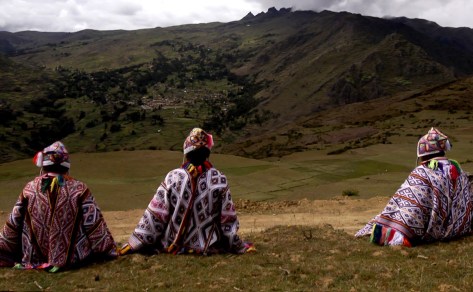
A perfect storm is brewing as agriculture pioneer Cary Fowler races against time to protect the future of our food. Seed banks around the world are crumbling, crop failures are producing starvation and rioting, and the accelerating effects of climate change are affecting farmers globally. Communities of indigenous Peruvian farmers are already suffering those effects, as they try desperately to save over 1,500 varieties of native potato in their fields. But with little time to waste, both Fowler and the farmers embark on passionate and personal journeys that may save the one resource we cannot live without: our seeds.


seeds2

10,000 years ago the biggest revolution in human history occurred: we became agrarians. We ceased hunting and gathering and began to farm, breeding and domesticating plants that have resulted in the crops we eat today. But the genetic diversity of these domesticated crops, which were developed over millennia, is vanishing today. And the consequences of this loss could be dire.

As the production of high yielding, uniform varieties has increased, diversity has declined. For example, in U.S. vegetable crops we now have less than seven percent of the diversity that existed just a century ago. We are confronted with the global pressures of feeding a growing population, in a time when staple crops face new threats from disease and changing climates.

Crop diversity pioneer Cary Fowler travels the world, educating the public about the dire consequences of our inaction. Along with his team at The Global Crop Diversity Trust in Rome, Cary struggles to re-invent a global food system so that it can, in his words: “last forever.” Cary aims to safeguard the last place that much of our diversity is left in tact: in the world’s vulnerable gene banks.

Across the Atlantic Ocean, a group of indigenous Peruvian farmers work to preserve over 1,500 native varieties of potato in their fields. Through the guidance of activist Alejandro Argumedo and the help of the International Potato Center gene bank in Lima, several communities join forces to create a new conservation grounds called “The Potato Park.”

But not all is well in this haven for diversity. The Andes Mountains, our planet’s most diverse region for potatoes, is already seeing the crippling effects of climate change. Potato production has risen more than 500 feet in altitude over the last 30 years, leaving varieties at lower elevations unable to produce. With erratic weather patterns already eroding biodiversity, what is to be done when these farmers can no longer continue moving “up”?

With a passion few possess, Cary set out to build the world’s first global seed vault – a seed collection on a scale larger than any other. The vault, located in Norway, is an unprecedented insurance policy for the crop diversity of the world. In an extraordinary gesture of support, the farmers of the Potato Park become the first indigenous community to send samples of their potato diversity to the vault for safekeeping.

But as the stakes of maintaining a secure global food system continue to rise, adaptation will become a requisite for our own survival. How can we best maintain the diversity that still exists for our food crops? How do we create new diversity to adapt our fields to a changing climate? The answers are as complex as the system they intend to fix. And it will require a combination of efforts: from scientists, plant breeders, researchers, farmers, politicians, and even gardeners.

PLEASE SHARE YOUR THOUGHTS/REFLECTIONS IN THE COMMENTS BOX BELOW

seeds3

Deregulation of Local Foods Is an Idea That’s Spreading

New bills in Montana and California would make it easier for small food entrepreneurs to thrive and for consumers to have more choices.

Newly proposed legislation in Montana and California could loosen restrictions on millions of small food entrepreneurs in those states.

bakesale_428x321In Montana, the Local Food Choice Act would “allow for the sale and consumption of homemade food and food products and… encourage the expansion of agricultural sales by ranches, farms, and home-based producers” in the state.

The law would exempt those who make and sell such foods directly to consumers from mandatory licensing, permitting, packaging, labeling, inspection, and other requirements. The law doesn’t exempt those who don’t sell food directly to consumers—as in the case of those who sell to restaurants or grocers—or to those who sell food across state lines.

“Eating what we choose should never be a crime,” said State Rep. Greg Hertz (R), as he introduced the bill last month. Indeed, Hertz’s bill would effectively legalize in Montana what is now a crime there and in almost every state: the act of selling something as basic as homemade cheese dip or pickles to your neighbor.

Hertz’s Local Food Choice Act is fashioned after Wyoming’s groundbreaking Food Freedom Act, first-in-the-nation legislation passed two years ago that deregulated many direct-to-consumer food sales within the state. As I detailed here, Colorado passed a similar law last year. Other states have also considered similar measures.

In California, a bill introduced this week by Assemblyman Eduardo Garcia (D), the Homemade Food Operations Act, “would allow home cooks to sell hot, prepared foods directly to customers.”

The California bill isn’t as ambitious as those adopted in Wyoming and Colorado or that proposed in Montana—it still contains requirements for sanitation, training, and permitting—but it’s a giant leap in the right direction.

“Many of my constituents have expressed their concerns and frustrations trying to work in compliance with the existing, overly complicated cottage food laws,” said Assemblyman Garcia in a statement announcing the bill, referencing the state’s overly restrictive cottage food laws.

Not surprisingly, all this talk of deregulating local food sales has some people nervous. State and local health officials in Montana, for example, have spoken out against the state bill, claiming it could lead to a rise in cases of foodborne illness.

“Every state that looks at setting their local food economy free inevitably finds food police lining up with statistics on how freedom of choice is a danger,” said Wyoming State Rep. Lindholm (R), who sponsored the Food Freedom Act in his state, in an email to me this week. “These individuals, bureaucrats, and industry associations all espouse their merits as to being defenders of ignorant consumers that cannot be trusted to make their own decisions as to what is best for their family.”

I asked Lindholm if there’s been any uptick in foodborne illnesses in Wyoming since the law’s passage.

“Wyoming has seen the exact opposite that these do gooders predict,” Lindholm tells me. “Wyoming[‘]s local food options have exploded and we still have had 0 foodborne illness outbreaks due to this Act passing into law.”

I’ve chuckled while hearing more than one overly cautious eater tell me they’d never eat food that was prepared in an uninspected home kitchen. Everyone should be free to avoid such food if they want, of course. But keep in mind that your own home kitchen isn’t inspected. Your parents’ kitchen and your grandparents’ kitchen weren’t inspected, either. Your friends’ and relatives’ kitchens aren’t inspected. The baked goods you took to school to sell to other kids as part of a bake sale (or that you send with your own kids to school today) haven’t earned any government seal of approval.

Avoiding all foods save for those prepared in an inspected kitchen means dining out at every meal or not eating at all. If one or both of these are your choice, then so be it. But Montana and California have moved to allow others to exercise their own choices. And I hope they succeed.

Original Post

RELATED ARTICLE


The decline of industrial agriculture

The following excerpt was taken from conservative blogger, Gracy Olmstead, writing about how a “bust” in the farm economy might open up opportunities for a more sustainable food system.  The full article is published here.

The negative impact of industrial agriculture on environmental quality and social justice is well recognized.  Industrial agriculture however has been justified by an assumed positive impact on the economy.  This article questions that assumption.


The History Of American Agriculture’s Decline

How did we get to this point? The Wall Street Journal gives a mini history lesson:

From the early 1800s until the Great Depression, the number of U.S. farms grew steadily as pioneers spread west of the Mississippi River. Families typically raised a mix of crops and livestock on a few hundred acres of land at most. After World War II, high-horsepower tractors and combines enabled farmers to cover more ground. Two decades ago, genetically engineered seeds helped farmers grow more.

Farms grew bigger and more specialized. Large-scale operations now account for half of U.S. agricultural production. Most farms, even some of the biggest, are still run by families. As farm sizes jumped, their numbers fell, from six million in 1945 to just over two million in 2015, nearing a threshold last seen in the mid-1800s. Total acres farmed in the U.S. have dropped 24% to 912 million acres.

 This short account of the jump from subsistence-style farming to today’s industrialized farming could easily fill thousands of pages (and indeed has—from John Steinbeck’s “Grapes of Wrath” to Wendell Berry’s novels).

Today’s Farms Still Follow an ‘Industrial Paradigm’

The Industrial Revolution shaped and transformed farming in seismic ways. As I wrote for Comment Magazine last year, “farming in the new, industrialized era began to favor quantity and specialization—because new machines worked most efficiently when farmers chose to harvest large, homogenous acreages instead of the small, diversified crops of the past. Farmers sought bigger and bigger swaths of land, seeing in them the promise of greater funds in the bank.”

American farms are still stuck in this “industrial paradigm,” says sustainable farmer Joel Salatin, owner of Polyface Farms. “Just like the agrarian economy gave way to the industrial, and the industrial to the information, and now the information is giving way to the regenerative economy, agriculture is changing. Because farmers tend to be conservative, agriculture is the slowest of all economic sectors to embrace the new economy.”

When Salatin’s father bought their family-operated farm in Swoope, Virginia, the land was severely eroded, and soil health was poor. “When my dad, in the early 1960s, asked agricultural advisors to tell him how to make a living on this farm, they all encouraged him to abuse the land more aggressively,” remembers Salatin. “He eschewed that counsel and did the opposite of everything they said. Today, we are healthy and profitable. Every person must decide whose advice to follow.”

Incentivizing Farmers to Destroy Neighbors’ Businesses

The WSJ piece goes on, “For some, the slump is an opportunity. Farmers with low debts and enough scale to profit from last year’s record harvests could be in a position to rent or buy up land from struggling neighbors.” In other words, large (most likely government-subsidized) farms can use this opportunity to buy out their smaller counterparts. Sounds like a great thing for the economy long-term, doesn’t it?

One chilly afternoon in October, Mr. Scheufler steered his combine across the first field he bought. The machine’s giant claw spun through rows of golden soybeans. A hawk circled the combine’s wake, hunting for exposed field mice. He recalled farmers whose land he has taken over: Ted Hartwick ’s, the Matthews’, the Profits’, his father’s.

Yes, building a large and profitable business is usually seen as an integral part of free market economics. We don’t want to prevent successful farms from getting larger. But it’s crucial to ask a few questions here: first, are these farms growing via their own merits—or via the support of the federal government? (Often, the answer is the latter.) Is their business model truly sustainable (and therefore, “successful” long term)?

Too often, the growth of a commodity farm means taking diversity, sustainability, and community, and turning these goods into homogeneity, depreciation, and solitude. This may not be Scheufler’s story. But it is, increasingly, the story of America’s heartland.  As another interviewee tells the WSJ,

There were 28 students in Mr. Scott’s graduating class at Ransom’s high school nearly four decades ago. Most were farmers’ children. This year there are nine students in the school’s senior class. ‘Farms got bigger to be more efficient, but it’s caused these towns to die a slow death,’ Mr. Scott said.

It’s not just farm towns that are ill-served by the way agriculture currently works. Land erosion, water contamination, and soil pollution are just a few of the ecological consequences of bad farming practices. “The current debacle has been coming for a long time,” says Salatin. And, he adds, “It will not end quickly. Rectifying our decades of abuse will not be easy. Healing will be disturbing.”

Farmers Aren’t Encouraged to Diversify Their Operations

Part of the problem here is that farmers, rather than diversifying their farms to protect against commodity price drops, have been encouraged (largely by subsidies, sometimes by the market) to always produce more of the same.

“Rather than studying how nature works, the informational component of the agriculture sector tends to throw out historic templates and remake life in a mechanical hubris of fatter, faster, bigger, cheaper,” says Salatin.

Many farmers who’ve expanded their enterprises have continued to grow the same exact crops on all that land. Now, writes Newman and McGroarty, “Corn and wheat output has never been higher, and never has so much grain been bunkered away.” So when the price of corn, soybeans, and wheat drops—as it is now—farmers don’t have another crop to fall back on.

In the short term, diversifying your farm operation can be more expensive, time-consuming, and physically demanding. But it also creates job security. Long-term, it protects both your farm and soil health.

When we focus on producing a few commodity crops, any country can beat us at our own game. We produce a glut of grain that global markets are no longer buying. Meanwhile, Americans living in the heartland of Iowa buy their tomatoes and peppers from South America. It seems strange, doesn’t it?


For more on industrial agriculture and the sustainable alternative, see this list of books used in classes offered by the UMass Stockbridge School of Agriculture.

Industrial Agriculture is about to “bust”

nature-sky-clouds-field1

The Wall Street Journal is predicting a farm bust on the horizon, as America’s role in the global grain market shrinks, and the price for corn continues to drop. Reporters Jesse Newman and Patrick McGroarty write

The Farm Belt is hurtling toward a milestone: Soon there will be fewer than two million farms in America for the first time since pioneers moved westward after the Louisiana Purchase.

This number definitely reflects a growing decline in farming. But what the Wall Street Journal doesn’t note is that the nation’s largest farms are only growing more powerful and large. We have fewer farms, yes, but largely because we have a greater share of larger, industrialized farms.

 The WSJ interviewed a specific type of farmer for this article: the commodity crop farmer. Yes, they represent the greatest portion of farms in the American heartland. But many are also beginning to realize that government subsidies and cushy crop insurance premiums can’t save them forever: when their supply is abundantly overstepping demand, eventually reality is going to hit. And if this WSJ piece is any indication, reality is indeed about to strike.

How America’s Heartland Farms Are Hurting

As you read through the Wall Street Journal’s article, a general outline of the farmers interviewed falls into place: 50-plus years of age, farming more than 1,000 acres, dotted across America’s flyover country in states like Iowa and Kansas. They’re all struggling to make ends meet:

Across the heartland, a multiyear slump in prices for corn, wheat and other farm commodities brought on by a glut of grain world-wide is pushing many farmers further into debt. Some are shutting down, raising concerns that the next few years could bring the biggest wave of farm closures since the 1980s.

The U.S. share of the global grain market is less than half what it was in the 1970s. American farmers’ incomes will drop 9% in 2017, the Agriculture Department estimates, extending the steepest slide since the Great Depression into a fourth year.

Many of these farmers need a second career in order to keep their businesses afloat.

‘No one just grain farms anymore,’ said Deb Stout, whose sons Mason and Spencer farm the family’s 2,000 acres in Sterling, Kan., 120 miles east of Ransom. Spencer also works as a mechanic, and Mason is a substitute mailman. ‘Having a side job seems like the only way to make it work,’ she said.

The History Of American Agriculture’s Decline

How did we get to this point? The WSJ gives a mini history lesson midway through their article:

From the early 1800s until the Great Depression, the number of U.S. farms grew steadily as pioneers spread west of the Mississippi River. Families typically raised a mix of crops and livestock on a few hundred acres of land at most. After World War II, high-horsepower tractors and combines enabled farmers to cover more ground. Two decades ago, genetically engineered seeds helped farmers grow more.

Farms grew bigger and more specialized. Large-scale operations now account for half of U.S. agricultural production. Most farms, even some of the biggest, are still run by families. As farm sizes jumped, their numbers fell, from six million in 1945 to just over two million in 2015, nearing a threshold last seen in the mid-1800s. Total acres farmed in the U.S. have dropped 24% to 912 million acres.

This short account of the jump from subsistence-style farming to today’s industrialized farming could easily fill thousands of pages (and indeed has—from John Steinbeck’s “Grapes of Wrath” to Wendell Berry’s novels).

Today’s Farms Still Follow an ‘Industrial Paradigm’

The Industrial Revolution shaped and transformed farming in seismic ways. As I wrote for Comment Magazine last year, “farming in the new, industrialized era began to favor quantity and specialization—because new machines worked most efficiently when farmers chose to harvest large, homogenous acreages instead of the small, diversified crops of the past. Farmers sought bigger and bigger swaths of land, seeing in them the promise of greater funds in the bank.”

American farms are still stuck in this “industrial paradigm,” says sustainable farmer Joel Salatin, owner of Polyface Farms. “Just like the agrarian economy gave way to the industrial, and the industrial to the information, and now the information is giving way to the regenerative economy, agriculture is changing. Because farmers tend to be conservative, agriculture is the slowest of all economic sectors to embrace the new economy.”

When Salatin’s father bought their family-operated farm in Swoope, Virginia, the land was severely eroded, and soil health was poor. “When my dad, in the early 1960s, asked agricultural advisors to tell him how to make a living on this farm, they all encouraged him to abuse the land more aggressively,” remembers Salatin. “He eschewed that counsel and did the opposite of everything they said. Today, we are healthy and profitable. Every person must decide whose advice to follow.”

Incentivizing Farmers to Destroy Neighbors’ Businesses

The WSJ piece goes on, “For some, the slump is an opportunity. Farmers with low debts and enough scale to profit from last year’s record harvests could be in a position to rent or buy up land from struggling neighbors.” In other words, large (most likely government-subsidized) farms can use this opportunity to buy out their smaller counterparts. Sounds like a great thing for the economy long-term, doesn’t it?

One chilly afternoon in October, Mr. Scheufler steered his combine across the first field he bought. The machine’s giant claw spun through rows of golden soybeans. A hawk circled the combine’s wake, hunting for exposed field mice. He recalled farmers whose land he has taken over: Ted Hartwick ’s, the Matthews’, the Profits’, his father’s.

Yes, building a large and profitable business is usually seen as an integral part of free market economics. We don’t want to prevent successful farms from getting larger. But it’s crucial to ask a few questions here: first, are these farms growing via their own merits—or via the support of the federal government? (Often, the answer is the latter.) Is their business model truly sustainable (and therefore, “successful” long term)?

Too often, the growth of a commodity farm means taking diversity, sustainability, and community, and turning these goods into homogeneity, depreciation, and solitude. This may not be Scheufler’s story. But it is, increasingly, the story of America’s heartland.  As another interviewee tells the WSJ,

There were 28 students in Mr. Scott’s graduating class at Ransom’s high school nearly four decades ago. Most were farmers’ children. This year there are nine students in the school’s senior class. ‘Farms got bigger to be more efficient, but it’s caused these towns to die a slow death,’ Mr. Scott said.

It’s not just farm towns that are ill-served by the way agriculture currently works. Land erosion, water contamination, and soil pollution are just a few of the ecological consequences of bad farming practices. “The current debacle has been coming for a long time,” says Salatin. And, he adds, “It will not end quickly. Rectifying our decades of abuse will not be easy. Healing will be disturbing.”

Farmers Aren’t Encouraged to Diversify Their Operations

Part of the problem here is that farmers, rather than diversifying their farms to protect against commodity price drops, have been encouraged (largely by subsidies, sometimes by the market) to always produce more of the same.

“Rather than studying how nature works, the informational component of the agriculture sector tends to throw out historic templates and remake life in a mechanical hubris of fatter, faster, bigger, cheaper,” says Salatin.

Many farmers who’ve expanded their enterprises have continued to grow the same exact crops on all that land. Now, writes Newman and McGroarty, “Corn and wheat output has never been higher, and never has so much grain been bunkered away.” So when the price of corn, soybeans, and wheat drops—as it is now—farmers don’t have another crop to fall back on.

In the short term, diversifying your farm operation can be more expensive, time-consuming, and physically demanding. But it also creates job security. Long-term, it protects both your farm and soil health.

When we focus on producing a few commodity crops, any country can beat us at our own game. We produce a glut of grain that global markets are no longer buying. Meanwhile, Americans living in the heartland of Iowa buy their tomatoes and peppers from South America. It seems strange, doesn’t it?

How Can Farmers Adopt to a Changing Market?

“I am concerned about the trend of making farms bigger and bigger, and more impersonal,” Maury Johnson, owner of Blue River Hybrids, told me in an email.  “American consumers have more interest in how their food is grown and produced, and the impact our conventional food system has on the environment. I personally am troubled when I drive by the feedyards and confinement buildings, and have found it difficult to eat the products coming from those environments.”

Promoting a different farming model could prove salutary for farmers. But it requires a drastically different way of thinking, and many are deeply (albeit understandably) opposed to it.

Interestingly, though, a younger generation is increasingly embracing new farming trends, seeking to build smaller, diversified, and local farming operations. As Philanthropy Daily reported last week, “All around the United States, young men and women are joining the ‘new food economy’ of small farmers and food producers. Since 2006, local food marketing channels have seen substantial growth: Farmers’ markets have grown by 180%, reaching 8,200 nationwide. 7.8% of farms in the U.S. are marketing locally, and local food sales have reached $6.1 billion.”

What Might Rebuilding a Local Food Economy Look Like?

These younger farmers, however, are struggling against the orthodoxies of their elders in the agricultural community.As author and farmer Forrest Pritchard noted in an email,  “it’s no accident that the youngest farmer cited in this article is 56; the U.S. average age for a farmer is 58 and rising.”

He adds, “It defies explanation that our nation’s food security receives such low priority in our culture. The aging of our American farmers reveals a crisis of neglect—a neglect of training young farmers, a neglect of overhauling our education system to promote alternatives to commodity-dependent agriculture, and a neglect of investing appropriate research and development for alternative types of agricultural models.”

Eduardo Andino’s article in Philanthropy Daily considers a promising shift in farming support, however. He profiles a farm loan business founded by Silicon Valley businessmen. These businessmen decided to leave the world of international business to go local. Their story, which directly addresses the plight of American’s grain farmers, is worth quoting at length:

… Sam and Scott are interested in helping Maine rebuild a local food infrastructure: By giving farmers loans to build grain mills, slaughter houses, distribution plants, and more.

Scott, who some years ago formed a social investing strategies division at TIAA-CREF’s investment department, says that infrastructure is key. ‘100 years ago, you would’ve had local financial institutions that understood how local farming worked,’ and who could help build up local processors and distributors. Today, however, everything has gravitated up to the level of big ads and ‘big food.’

… Based on their international experience, Scott and Sam have concluded that the best thing they can do for agriculture worldwide is to go local. Scott describes his desire to transition ‘from a very top down high level job to a very bottom up job’ as being partially motivated by seeing the work of Rockefeller impact investing in Africa. While observing their work on a sustainable agriculture program in Africa, Scott realized ‘the best thing anyone could do for agriculture all over the world, from poor peasant farmers in Bangladesh to anywhere else, is to fix American agriculture.’

To Survive, American FarmsNeed To Change

Farming in America is undergoing a series of shifts—hopefully for the better. But the challenges today’s farmers face should not be taken lightly. Salatin urges his fellow farmers to consider making some changes in the way they do business—not just for their bottom line, but for the sake of the next generation, and the long-term wellbeing of the land.

“I know change is difficult for everyone, but I think conventional farmers have to take a hard look at breaking out of the conventional farming scene,” Johnson says. “I understand there’s limitations … but the future does not look good for medium to small conventional farmers, and help will likely not be coming from the government and its farm programs.”

“The regenerative economy is now knocking on the door of agriculture, but nobody is listening,” Salatin says. “The soil does not enjoy being mechanized and industrialized. The agricultural orthodoxy has not asked how ecology works. … Now, nature is batting last. And all the cleverness in Wall Street ultimately can’t prevail against nature’s balance sheet.”

Original Post

Gracy Olmstead is associate managing editor at The Federalist and the Thursday editor of BRIGHT, a weekly newsletter for women. Her writings can also be found at The American Conservative, The Week, Christianity Today, Acculturated, The University Bookman, and Catholic Rural Life.

SFF Film Showing and Poster Contest

The following is a note from SFF student Sierra Torres….

I am reaching out to you all today with a really awesome opportunity to help plan some events for SFF community and beyond this semester.  Currently I am organizing a three part film series surrounding issues within the food system or related to climate justice in general. 
 
Because this event is being designed for your enjoyment, I wanted to get feedback on which films you would like to see this semester. The following link is a brief poll where you can vote on which film you would like to see. There will also be links to the trailers if you have not heard of the films.

 Click to Vote Here

The top two films will be shown in March (dates to be determined). This poll will close on February 20th.
 
Based on what movies you all choose, we hope to also host a panel of local speakers in the field of study related to the films after the showings. If you have someone in mind who might be a perfect speaker for one of the films, feel free to leave a comment on the last question on the survey or feel free to email me personally. 
easelThere will also be a contest for you all to submit designs for the poster. So if you love drawing or working with digital art, we will be running a contest for you all to submit designs of your original art work for the posters. The person with the best poster will win a Stockbridge Sweatshirt. Attached below is a PDF with the contest details.  Feel free to email me with questions.
 
Thank you all so much and I look forward to your help,
Sierra Torres
University of Massachusetts Amherst, ’20
College of Natural Sciences
Sustainable Food and Farming Major
sff-poster-contest_page_1

The Rise of Women Farmers – a few readings

Did you know that over 65% of the recent graduates of the Sustainable Food and Farming major in the UMass Stockbridge School of Agriculture are women? 

Here are a few books & websites from the Women’s Agricultural Network which showcase how women farmers are changing the food system:

The Female Farmer Project Through photographs, blog posts, podcasts and now coloring books, author and photographer Audra Mulkern and her team are working to “accurately portray a group of people who” Mulkern believes have been “invisible for far too long: The female farmer . . . This group of women who had been doing amazing things.”

Drawing on 10 years of research and work with women farmers, the Rise of Women Farmers and Sustainable Agriculture, published in 2016, explores the societal changes that have empowered women to claim the farmer identity, describes barriers that are broadly encountered by women farmers, and offers a framework to shift the US food system to one that better supports women farmers.

Soil Sistersalso published in 2016, provides a blue-print for women who want to farm. Author Lisa Kivirist, founding coordinator of the Rural Women’s Project of the Midwest Organic and Sustainable Education Service, synthesizes key information and advice from seasoned women farmers committed to sustainable agriculture.


Original Source  – Women’s Agricultural Network

Pioneer Valley is home to food entrepreneurs! NUTS….

sarahtower
Sara Tower at Nutwood Farm in Cummington, MA

or the Daily Hampshire Gazette – Monday, February 06, 2017

CUMMINGTON — When Sara Tower began farming about eight years ago, she worked mostly with vegetables, which is typical of many farmers in the area. Next fall, though, she and her partner will harvest a crop that is new to western Massachusetts — nuts.

Last year, Tower and Kalyan Uprichard, co-owners of Nutwood Farm in Cummington, planted 350 nut trees on their 8-acre farm. By 2026, they expect to harvest 10,000 pounds of nuts, including chestnuts, walnuts and hazelnuts.

“We’re changing the food system,” Tower said. Continue reading Pioneer Valley is home to food entrepreneurs! NUTS….

Veteran Farm Training

chip
Jake Alexander welcomes Chip Pinder as the new farm manager for Vets and Veggies!

We want to congratulate one of our recent Stockbridge alums, Chip Pinder, who is the new farm manager at Vets and Veggies in Athol, MA.  Chip completed the Bachelor of Sciences degree program in Sustainable Food and Farming in the UMass Stockbridge School of Agriculture just last month.

We hope you will help support this new community building and training operation for Veterans at their GoFundMe link.

veggievet

Vets and Veggies offers housing to veterans that are interested in learning how to become a sustainable farmer. Through a small scale sustainable farming operation veterans will be guided through the process of planning crops, planting, integrated pest management, and proper harvesting techniques. Veterans will work together and create a local food systems for the residents in the community.

Here are a few resources that may be of use to Veterans interested in farming:

The Stockbridge School of Agriculture welcomes Veterans to join our Bachelor of Sciences degree program in Sustainable Food and Farming.  For those Vets who are not able to join us in Amherst, MA, you may be interested in either our 15-credit online Certificate Program or our online 60-credit Associate of Sciences degree.