Category Archives: Food Policy and Advocacy

“Ugly” Fruits and Vegetables Taste Just Fine

24uglyfood-web01-master768A customer shopped at Fruta Feia, a Portuguese cooperative created to sell imperfect food. The food industry has begun looking for ways to reduce waste. Bargain-hunting consumers seem to be going for the deals. Credit Patricia De Melo Moreira for The New York Times


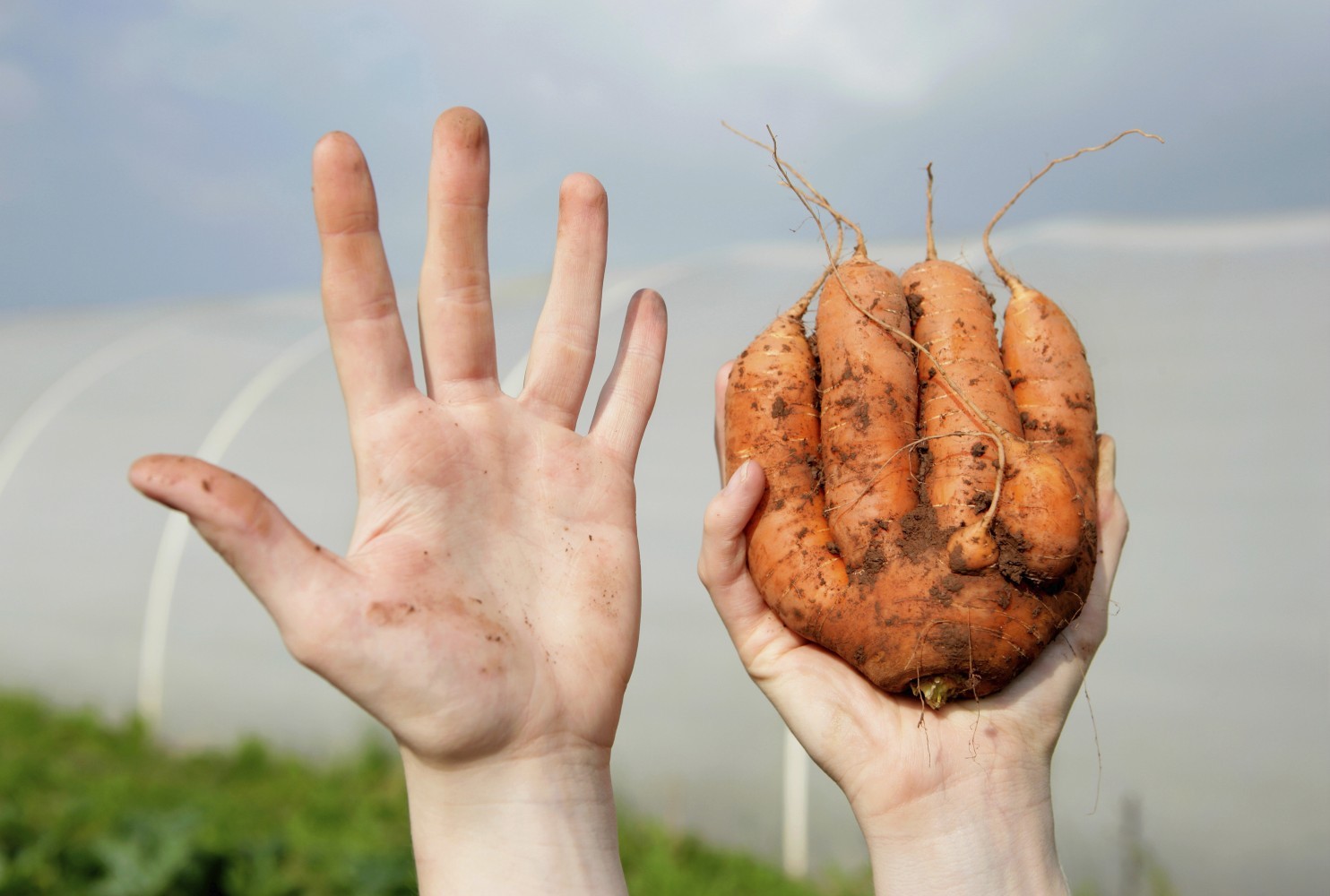
Duck-shaped potatoes. Curvy cucumbers. Broken carrots.

Some food sellers, after decades of displaying piles of identical, aesthetically pleasing produce, are starting to sell slightly less beautiful — but still tasty — fruits and vegetables.

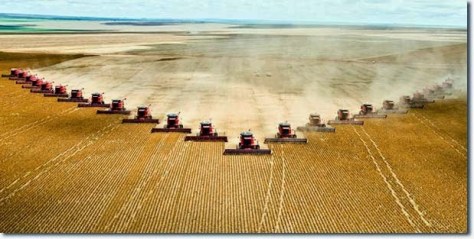
Millions of tons of food are thrown out or left to rot in fields every year in wealthy nations, simply because they do not meet cosmetic standards set by distributors or supermarkets. Under pressure from anti-waste advocates, the food industry has begun looking for ways to throw away less.

So now, in such cities as Pittsburgh and Paris, some of that imperfect produce has started to find its way into stores. And bargain-hunting consumers, who get a hefty discount for their willingness to munch on too-small apples and blemished oranges, seem to be buying it.

Along with targeting waste, being able to sell food that once would have been tossed aside gives growers a new stream of income and offers consumers a way to save money without compromising on taste or nutrition.

“There’s nothing more disheartening for a farmer than to grow something and then throw it away,” said Guy Poskitt, a carrot and parsnip farmer in Yorkshire. “Consumers hate waste, and as growers we’ve really got huge challenges in terms of profitability,” he said. Selling imperfect produce helps solve both problems, he said.

Often, the cosmetically challenged fruits and veggies are hardly distinguishable from ordinary ones — an orange with a bumpy scar on it, or a potato that is slightly smaller than its peers.

Dana Gunders, a food and agriculture expert at the Natural Resources Defense Council in San Francisco, recalled talking to a stone-fruit grower who every week produces 200,000 pounds, about 90,000 kilograms, of peaches and plums that cannot be sold. “He said, ‘Of those, you wouldn’t be able to tell me what’s wrong with eight out of 10 of them.’ ”

Abundance allows retailers in wealthy countries to be particular about aesthetics, and consumers have grown used to choosing from uniform rows of shiny red apples and perfect pears.

The industrial scale on which agriculture operates in many rich nations, and the long distances food often travels from farm to table, result in a great deal of waste. Retailers grade produce according to strict criteria to which farmers, fearful of shipping anything that might be rejected, must pay close attention.

“Sometimes it’s things like the cucumber is curved and so it doesn’t fit in the box as well as a straight cucumber,” said Ms. Gunders, author of the “Waste-Free Kitchen Handbook.”

Heather Garlich, spokeswoman for the Food Marketing Institute, a supermarket and wholesalers’ trade group in Arlington, Va., said sellers had an interest in making sure standards reflected consumer demand and that research showed shoppers choose produce based mainly on appearance.

Imperfect Produce ships aesthetically challenged fruit and vegetables to about 9,500 subscribers in and around San Francisco. Credit Jim Wilson/The New York Times

There are some hints things might be changing. In France, the Intermarché chain of supermarkets started selling what it calls “inglorious” fruits and vegetables in 2014, at 30 percent off, with an advertising and social media campaign decrying the throwing away of good food. It began as a small-scale trial, but now all Intermarché’s French stores sell imperfect produce when it is available, said Elyse Barbé, spokeswoman for Groupement des Mousquetaires, which owns the grocer.

Britain’s upscale Waitrose supermarkets offer carrots, parsnips, potatoes and onions branded “a little less than perfect,” as well as misshapen tomatoes and strawberries and weather-blemished apples, pears and green beans, when growers provide them.

Asda, a British grocery chain owned by Walmart, began offering boxes of “wonky veg” in February, at 3.50 pounds, or$4.65, for five kilograms. They were such a hit with customers that the company announced the following week it would quadruple the number of stores involved to 350. Asda said the boxes would help avert hundreds of tons of waste.

Inspired by such efforts, Giant Eagle, based in Pittsburgh, in February put “produce with personality” on sale in five stores, at up to 20 percent off. “The customer response has really been positive so far,” so the number of participating outlets has since been increased to 21, Dan Donovan, a spokesman, said.

Hannah Husband, a movement and nutrition coach of Oakland, Calif., said that after she signed up for weekly deliveries from the company Imperfect Produce, she began recommending the boxes to her clients.

“A lot of times when you’re switching gears and trying to go to a healthier way of eating, it feels like everything costs a lot,” so the discounted prices are appealing, she said.

Most of what arrives on her doorstep is just a little bigger or smaller than standard, but every now and then something truly unusual shows up. Once, “I got an eggplant that had like a nose coming off of it,” she said. “It’s been fun to post pictures of the funny vegetables and then of what I make with it afterward.”

Fighting food waste has been moving up environmentalists’ agenda as a means of combating climate change. In addition to the resources used to grow it, uneaten food generates methane, a powerful greenhouse gas, when it rots in landfills.

The United States, where the Agriculture Department says 66 million tons of food go to waste annually, last year announced a goal of halving that by 2030. Europe has a similar target.

In poorer nations, where most consumers would not dream of rejecting good food based on its odd appearance, most food waste results from infrastructure shortfalls, like a lack of refrigerated storage or poor roads that make it hard to get crops to market.

Ben Simon, chief executive of Imperfect Produce, which ships aesthetically challenged fruit and vegetables to about 9,500 subscribers in and around San Francisco, said he was stunned to see the scale of waste at farms he visited in the state’s main agricultural region, the Central Valley.

“When you look out across a huge facility and see machines just dumping out kiwis or oranges that are perfectly good, or you look across a field of celery and see that almost 50 percent of it is left behind, it really makes you wonder what we’re doing, and why,” he said.

Ms. Husband, the Imperfect Produce subscriber, said she thought consumers were more open-minded than retailers had traditionally given them credit for.

“Because we’ve been herded into this idea that everything is uniform, of course we’re used to that,” she said. “But if grocery stores included more variety, I think people would absolutely accept it.”

Related ArticleStarve the Landfill

Continue reading “Ugly” Fruits and Vegetables Taste Just Fine

The Food Movement is Unstoppable!

by Jonathan Latham, PhD

In 1381, for the first and only time, the dreaded Tower of London was captured from the King of England. The forces that seized it did not belong to a foreign power; nor were they rebellious workers – they were peasants who went on to behead the Lord Chancellor and the Archbishop of Canterbury who were, after the king, the country’s leading figures. A tad more recently, in the U.S. presidential election of 1892 a radical populist movement campaigned for wealth redistribution and profound economic reform. The populists won five states. All of them were rural.

Descent from such rebels is typically claimed by unions and groups on the political left; but, over the long run of history, the most effective opponents of excessive wealth and privilege have not normally been city dwellers, workers or unions. Instead, they have usually been those with close links to food and the land, what we would now identify as the food movement.

Even today, in more than a few countries, food is the organising principle behind the main challengers of existing power structures. In El Salvador, the National Coordinator of its Organic Agriculture Movement is Miguel Ramirez who recently explained:

We say that every square meter of land that is worked with agro-ecology is a liberated square meter. We see it as a tool to transform farmers’ social and economic conditions. We see it as a tool of liberation from the unsustainable capitalist agricultural model that oppresses farmers.

The Salvadoran Organic Agriculture Movement wants much more than improved farming. It is seeking enhanced political rights, long term ecological sustainability, social equity, and popular health. Ramirez calls it “this titanic but beautiful struggle, to reclaim the lives of all Salvadorans“.

They may be small farmers, but they have a grand ambition that is even shared worldwide. But, how realistic is it? Could the food movement be the missing vehicle for transformative social change?

The question is timely. Not long ago, the New York Times asserted that the centre aisles of US supermarkets are being called “the morgue” because sales of junk food are crashing; meanwhile, an international consultant told Bloomberg magazine that “there’s complete paranoia“, at major food companies where the food movement is being taken very seriously.

The context of that paranoia is that food movements are rapidly growing social and political phenomena almost all over the world. In the US alone, there have been surges of interest in heirloom seeds, in craft beers, in traditional bread and baking, in the demand for city garden plots, in organic food, and in opposition to GMOs. Simultaneously, there has been a massive growth of interest in food on social media and the initiation or renewal of institutions such as SlowFood USA and the Grange movement, to name just a few.

Even at the normally much quieter farming end of the food value chain, agribusiness has had to resort to buying up “independent” academics and social media supporters to boost the case for GMOs and pesticides.

So whereas not so very long ago food, and even more so agriculture, were painfully unfashionable subjects, all of a sudden, individuals all over the globe have developed an often passionate interest in the products and processes of the food system.

If food regime change is in the air, the questions are: Why? Why now? And the big one: How far will it go?

The direction of the food movement

The answer to these questions comes into focus if we analyse the food movement from the perspective of five different “puzzle pieces”. If we do that we can see that there are profound reasons why the food movement is succeeding and growing.

This analysis suggests that the food movement, compared to other great social movements of the 20th Century (such as the labour, environment, civil rights, climate and feminist movements), has many of their strengths but not their weaknesses.

Further, the food movement is unexpectedly radical on account of having a distinct philosophy. This philosophy is fundamentally unique in human history and is the underlying explanation for the explosion of the food movement.

Like any significant novel philosophy, that of the food movement challenges the dominant thought patterns of its day and threatens the political and economic structures built on them. Specifically, the food movement’s philosophy exposes longstanding weaknesses in the ideas underpinning Western political establishments. In the simplest terms possible, the opposite of neoliberal ideology is not communism or socialism, it is the food movement.

The reason is that, unlike other systems of thought, food movement philosophy is based on a biological understanding of the world. While neoliberalism and socialism are ideologies, the food movement is concerned with erasing (at least so far as is possible) all ideologies because all ideologies are, at bottom, impediments to an accurate understanding of the world and the universe.

By replacing them with an understanding based on pure biology, the food movement is therefore in a position to supply what our society lacks: mechanisms to align human needs with the needs of ecosystems and habitats.

The philosophy of the food movement even goes further, by recognising that our planetary problems and our social problems are really the same problem. The food movement therefore represents the beginnings of a historic ecological and social shift that will transform our relationships with each other and with the natural world.

1) The food movement is a leaderless movement

The first important piece of the food puzzle is to note that the food movement has no formal leaders. Its most famous members are individuals. Frances Moore Lappé, Joel Salatin, José Bové, Vandana Shiva, Wendell Berry, Michael Pollan, Jamie Oliver, and many others, are leaders only in the sense of being thought-leaders. Unlike most leaders, including of the environment movement, or the labour movement, or the climate movement, they have all attained visibility through popular acclaim and respect for their personal deeds, their writings, or their insights. Not one of them leads in any of the conventional senses of setting goals, giving orders, deciding tactics, or standing for high office. They are neither bureaucrats nor power-brokers, but leaders in the Confucian sense of being examples and inspirations. It is a remarkable and unprecedented characteristic that the food movement is a social movement that is organic and anarchic. This not to argue it is unstructured, far from it. Rather, the food movement is self-organised. It is a food swarm and absence of formal leadership is not a sign of weakness but of strength.

2) The food movement is a grassroots movement

A second and complementary piece of the puzzle is that the food movement is far more inclusive than other social movements. It is composed of the urban and the rural, the rich and the poor, of amateurs and experts, of home cooks and celebrity chefs, farmers and gardeners, parents and writers, the employed and the unemployed. Essentially anyone, in any walk of life, can contribute, learn or benefit. Most do all three. Importantly too, just about any skill level or contribution can often be accommodated. To take just one example, in how many other social movements can a 14-year-old make an international splash?

This inclusiveness has various aspects that contribute significantly to its success. The first of these is that, unlike many protests, there is no upper limit to membership of the food movement. It is not defined in opposition to anything – it would include the whole world if it could – and so there is no essential sense in which it is exclusive. Exclusivity is often the Achilles heel of social movements, but though its opponents have tried to label it as elitist, for good reasons they have not succeeded. Granted, Prince Charles is a very enthusiastic member, but so too are rappers from Oakland, the landless peasant movement of Brazil, the instigators of the Mexican soda tax and the urban agriculture movements of Detroit, Chicago and Cleveland. Such groups are neither elite nor elitist. A better analysis would conclude that anyone can find space under its broad umbrella because the food movement does not discriminate on any grounds, least of all class. It is beyond grassroots. People see what they want in it because it is for everyone.

The second aspect of its inclusivity is that the food movement has barriers to entry that are low or non-existent. This is an important reason it has grown rapidly. These porous boundaries make the food movement unusually hard to define, however, leading some people to mistakenly conclude it is non-existent.

3) The food movement is international

A third unconventional attribute of the food movement is to be international and multilingual. In each locality it assumes different forms. The Campaign for Real Ale, Via Campesina, the Zapatistas, Slow Food and Europe’s anti-GMO movement are very different, but instead of competing or quarreling, there are remarkable overlaps of purpose and vision between the parts. This was on show at last winter’s British Oxford Real Farming Conference where food producers and good food advocates from all over the world shared stages and perspectives and the effect was to complement and inspire each other.

4) The food movement is low-budget

The fourth distinguishing characteristic of the food movement is that it has little money behind it. It might seem natural for “social movements” to be unfunded but it is in fact very rare. The climate movement has Tom Steyer, the Tea Party has the Koch brothers, Adolf Hitler’s car, chauffeur, private secretary, and of course his blackshirts, were funded by Fritz Thyssen, Henry Ford, and some of the wealthiest people in Germany. Even the labour and environment movements have dues or wealthy backers. The food movement therefore is highly unusual in owing little to philanthropic foundations or billionaire backers. Instead, it consists overwhelmingly of amateurs, individuals and small groups and whatever money they possess has followed and not led them. This is yet another powerful indication that the food movement is spontaneous, vigorous and internally driven.

5) A movement of many values

Most social movements are organised around core values: civil rights, social equality or respect for nature are common ones. What is unique about the food movement is that it has multiple values. They include human health concerns, animal welfare, agricultural sustainability, ecological sustainability, food justice and political empowerment, but even this list does not adequately capture the range of its concerns. It is a movement with many component parts.

Explaining the philosophy and synergy of the food movement

For an emergent social movement to have such unique and seemingly unconnected properties suggests the possibility of a deep explanation, and in fact there is one: the food movement embodies a profound philosophical shift.

The narrative dominating international food policy, especially post-1945, has been that food is a commodity (when it is not a weapon) and agriculture is a business. According to this narrative, neither have much to do with the environment or your health. This economic and depleted conceptualisation of food is an ideological extension of the current dominant Western philosophy, which is that of the European enlightenment. The chief character of this philosophy is to be atomistic and mechanistic, meaning that in the formal and official worlds of business, government, the law, education, etc., phenomena are presumed unconnected until proven otherwise, which usually means proven by science.

The evidence for this mindset is ubiquitous. The separation of government ministries: Health from Agriculture and both being distinct from Environment. The reduction of food to the status of an industrial raw material completely measurable by yield or profit is another. The same ideology also allows, in the United States, the agriculture “industry” to be exempt from most anti-pollution legislation, and doctors not to be educated in nutrition. The privileging of the health requirements and food needs of one species (humans) – and usually just a few of those – above that of all other organisms – is a fourth data point.

Citizens in “modern” nations are thus surrounded in everyday life by institutions and practices whose founding rationale is the ideology of disconnection. Thanks to our education, we come to see this state of mind as natural – even though it came into being quite recently – and also inevitable, even though until recently it was unique to Western society.

In contrast, the food movement believes in something very different, which can be summarised as follows: that the purpose of life is health and that the optimal and most just way to attain human health is to maximise the health of all organisms, with the most effective way to do that being through food.

This belief system is derived from practical experience. The food movement has internalised certain observations: the potential of compost to improve crop growth and soil function, the human health benefits of a varied diet, the successes of numerous farming systems in the absence of synthetic inputs, these are a few of those. It also has noted apparent powerful connections between health, agriculture, animal welfare and the environment. These connections allow for the existence of a virtuous circle in which the most ecologically healthy farms generate foods that are the healthiest and the tastiest. These farms are also the most productive. For US examples see here: and for an example from rice see here.

Except for the obviously subjective ones (like taste), there is nothing unscientific about these claims.

We are familiar with the neo-Darwinist narrative of life-as-competition, but this slugfest interpretation hides a bigger and more important truth about life: that before there can be competition, there must first be at least two organisms. Life can, and often does, exist without competition, but competition cannot exist without life. In other words, the neo-Darwinist vision is wrong in that it trivialises biology. Food philosophy replaces this view with the idea that life thrives in the presence of other life. There is perfectly good evidence for this – we know, for example, that all of the tens of millions of species on earth are interdependent. Not a single species could exist if the others were removed. For example, plants and algae excrete oxygen, which all animals need. Animals eat plants and algae, but excrete nitrogen and phosphorus, which all plants and algae need.

Similarly, at the level of individuals, if we can look past the standard mechanistic view of biology offered by celebrated scientists like neo-Darwinist Richard Dawkins, who famously called organisms “lumbering robots”, we can note that all biological organisms are in fact self-optimising and self-repairing systems. They therefore tend to maximise their own robustness and health unless, as unfortunately but commonly occurs, they are actively prevented from doing so (e.g. by a limited environment or a deficient diet).

So food philosophy envisions life in an entirely novel way. There is quite a difference between seeing nature, as the self-styled biological rationalists like to portray it, as robots slowly succumbing to the teeth and claws of vicious nature in comparison to the food view of primarily mutually beneficial interactions between vibrant and dynamic systems. The unfortunate truth for the supposed rationalists is that, as recent research into the microbiome is showing, the food philosophy view better fits the facts than does the neo-Darwinist one. Prisoners of their enlightenment ideology, the neo-Darwinists have turned the message of life on its head.

The origins of food philosophy

Food philosophy has three notable antecedents. One is philosopher Peter Singer’s famous anti-speciesist argument from his book Animal Liberation: that humans have a duty of care towards all animals, with the crucial difference being that the food movement extends Singer’s argument to all organisms, not just animals.

The second antecedent is Gaia theory which proposes that life forms create and enhance their own living conditions. The main difference being that food philosophy applies this thesis to every scale, notably to soils and to landscapes.

The third is Barry Commoner and his four laws of ecology. His second and third laws are consistent with food philosophy. However, Commoner’s First law: “Everything is connected to everything else”, needs modification. The reason is that all things are not connected equally – most connections occur primarily through food. Commoner’s fourth law, which states “There is no such thing as a free lunch”, is flatly contradicted by the virtuous circle of the food movement. All ecological systems generate synergies and synergies between organisms are free lunches; which is why, excepting occasional shocks like meteor impacts, species diversity and biological productivity on earth have continuously risen over aeons.

Like every philosophy, food philosophy implies practical consequences. It becomes the task of a food system, or any sub-part of it – such as a farm – to maximise the positive aspects of each component, so that the circle can become ever more virtuous. By the same token, the food movement believes in the existence of a downward spiral – biological impoverishments such as those that result in dust bowls. Such negative possibilities could be safely ignored were it not the case that many governments and certain businesses seem determined, even enthusiastic, to plunge headlong into them.

Food philosophy therefore represents a major split from post-enlightenment philosophy in its vision of life and biology – which for most practical purposes represents the universe we live in. In so doing it highlights how much the enlightenment was not so enlightened. Enlightenment philosophers used the foundational statement “I think therefore I am” as the justification for effectively disregarding all previous thought. They then adopted the premise that only the tools of logic and deductive reasoning could extend this thought and tell us how to achieve true knowledge and spend our time. But this core presumption was wrong. As the influential philosopher of science, Paul Feyerabend put it, enlightenment ideas are “philosophical tumours” that exemplify “the poverty of abstract philosophical reasoning”.

Food philosophy is thus in the pre-enlightenment tradition of principles deduced from real world experience. It doesn’t ask: what does rational thought reveal about how we should live. It asks: what does nature reveal about how we should live? This is why food philosophy is not a different ideology from neoliberalism or communism; rather, it is the absence of ideology. So while neoliberalism and communism and socialism are products of the enlightenment, food philosophy is not, because it gathers its evidence as directly as possible from the natural world.

To the extent it can be simplified, we might summarise food philosophy approximately as follows:

1) biological interactions allow synergisms of individual health and system productivity, which can be taken advantage of in good farming; and,

2) these biological interactions occur primarily through food, which represents the chemical energy running through the system.

This philosophy is significant in two ways. First, it explains, in general, the form, structure, and composition of the food movement.

Secondly, it predicts the likely impact of the food movement on the food system and society as a whole.

Implications of food philosophy for the food movement

The distinctive features of the food movement can be seen to stem from this philosophy.

The first feature explained by its philosophy is the self-organising and leaderless nature of the food movement. Its members act as if they were reading from an invisible script, which in a sense they are. It also goes far in explaining the lack of money. The philosophy generates values and values are often the most powerful long term motivator of human behaviour.

The attitudes of the food movement also reflect the philosophy. Since the philosophy (see points 1) and 2) above) is universal, constructive, inclusive, flexible, and non-violent, so is the movement.

To take a more detailed example, whereas people outside of the food movement (with their enlightenment hats on) tend to see the issues of human health, food quality, animal welfare, and ecological and agricultural sustainability as concerns to be solved separately (if at all), those inside food movement are likely to see them as connected and therefore insoluble except together.

As people begin to sees these issues as connected, those who enter the orbit of the food movement are likely to move deeper into it. Someone who begins by buying free range eggs, perhaps for reasons of ethics, moves on to keeping chickens and perhaps to sourcing other meats more ethically or more locally. People attracted to flavourful meat or produce are likely to expand their interests into animal welfare or become locavores, and so on. This is why the food movement is deepening and growing.

This same reasoning around the connectedness of food issues also creates an important presumption: that anyone who advances one of these goals automatically advances the rest. Consequently, alliances between individuals and between organisations are likely to form around the common goals, and so the food movement emerges as a synergy between issues formerly identified as distinct, channeling a vast reservoir of positive social energy in consistent directions.

These are explanations for formation and growth of the social movement, but the food movement does not exist for its own sake; like any social movement, it aspires to solve society-sized problems. When the food movement tackles an issue, the features noted above can become enormous assets.

There is usually no actual decision (because typically there is no leader), instead, the philosophy leads its members to use whatever resources are at hand in the most appropriate manner. They develop arguments, write letters, make calls, avoid products, share information, and so on, wherever they perceive the need or opportunity to be greatest, just as the workers of an ant or bee colony do whatever job appears in front of them without explicit orders. To the multinational corporations who are its targets, movement activity may feel like a piranha feeding frenzy. Blood is scented; arguments are sharpened; protests register on social media; more attackers arrive; the target howls; opportunistic journalists pile in; maybe some legislators too, until finally the target agrees to amend, label, or remove the offending product, ingredient or publication. These are food swarms, and they are what direct democracy looks like.

Following once again its own philosophy, food is also a guide to action. Using its enlightenment rationalisations, a government can instruct people, for example, that irradiated or GMO food is safe to eat. But it cannot make them eat it. Resistance based on food logic is always likely to beat enlightenment logic when the subject is food, because it is both rational and relatively easy for the people to both form their own opinions and spend their money elsewhere. The food system is perhaps the one domain where the people retain this power, certainly more than they do in any other domain of public life.

In consequence, time and again the arguments of the food movement: over GMO safety, the benefits of organic food, the dangers of antibiotics in animal farming, food additives, GMO labeling, and so forth, have gained traction out in the public domain (though not always yet in public policy). The combination of solid logic and practical power is hard to resist. Through its philosophy, therefore, the food movement is succeeding both in building itself and winning practical victories as it does so.

Thus one can begin to see how food issues are the organizing principle for a grand social movement. Indeed, the successes of the food movement are now sufficiently evident that major parts of the old environment movement, plus the health and wellness movements, and even parts of the labour movement, have begun to reframe their activities as coming from a food system perspective. Some have largely migrated into the food movement altogether. For example, the Coalition of Immokalee Workers is much better known to the public and has been more successful through its food connections than through its union ones. To a significant degree, once separate social movements are converging to become branches of the food movement.

We can sum up this rather complex state of affairs by saying that food is a highly successful rallying point. It serves well because food is simultaneously a novel conceptual framing for much of human affairs that is strongly distinct from the standard enlightenment framings of economics and social Darwinism, but also because it acts as a potent organising principle for individuals to act around. Food succeeds as a conceptual framing because it is simultaneously anthropocentric and truthful, and it succeeds as an organising principle because food fruitfully highlights the practical biophysical linkages between issues. So while most frames are artificial mental constructs that have zero underlying biological or physical substance, the frame used by the food movement also precisely reflects the key biological reality that a universal daily requirement of all humanity, is food. Good food. And the same is true for other species. Thus, our good food also needs good food, and so on ad (almost) infinitum. Anyone who adopts that devastating logic has a huge advantage, not only in understanding how the world really works, but also in acting on that information.

How will the food movement impact society?

Ideas are the currency of power. Philosopher Peter Singer wrote the book Animal Liberation in 1975. It spawned the international animal rights movement and drove society-wide debates on the human usage of animals for research and in agriculture. Forty years later, the increasing popularity of veganism shows his ideas are still gathering momentum. Singer’s achievement was to show that enlightenment thinkers had attempted to rationalise – rather than ditch – the concept of human exceptionalism, which dated back at least to the Bible’s authorisation of Man’s dominion over the earth. At a stroke, Singer destroyed the arguments for treating animals badly and provided a perfect example of how enlightenment rationalisations have functioned to constrain modern thought, and most particularly the human potential to do good.

Because they go far beyond our treatment of sentient animals and extend to all organisms, the ideas of food philosophy are significantly more profound and far-reaching than those of Peter Singer. Food philosophy is an intellectual key to overthrowing mechanistic reductionist society. Much of standard economics, large parts of biology such as neo-Darwinism (selfish genes) and genetic determinism, reductionist biology and medicine, which at present are the centrepieces of Western education, will come to be seen in their proper light, which is as largely irrelevant to the functioning of whole systems. These are the “philosophical tumours” that stand in the way of human development. To the many individuals who suspect that enlightenment thought is the engine driving our societies over an ecological cliff, food philosophy offers the conceptual way out.

Enlightenment thought arose in tandem with industrialising societies. Enlightenment thinkers laid the groundwork for a meritocratic and commercial society to replace feudalism, but the grand irony is that they did not themselves gain acceptance solely on merit. Rather, they were selected for their usefulness. Their ideas justified the necessary concepts the new society came to rely on: mechanisation, individualism, and competition. Enlightenment philosophers were largely establishment figures giving form to establishment thought. Nowadays their ideas are used for preserving this order, but since the intellectual flaws of that understanding are increasingly manifesting as ecological crisis and social disorder, the same process is happening in reverse.

But the question has long been what will take their place? As I was completing this essay I consulted The History of Western Philosophy by Bertrand Russell. Even in 1946, Russell saw that a satisfactory philosophical resolution to the problem of how to reconcile power and the benefits of social cohesion with individual liberty was yet to be reached. At the very end of introducing modern philosophy he writes that the scientific enterprise tips the balance towards power, but is itself “a form of madness” in that it prioritises means over ends. Without a philosophical antidote this imbalance will become “dangerous”. He concludes “To achieve this a new philosophy will be needed”.

Enlightenment ideas have been developing for almost 400 years. They are largely mistaken, but they were also mistaken when they were conceived. There are two good reasons why no overhaul took place, even at the heights of the social movements of the 1960s or the environment movement in the 1970s. The first is that no adequate philosophical replacement was available. The second is nakedly political. No political force or social movement was previously in place to force the issue. The food movement, however, fulfills both requirements, and so the pieces are finally in place for a peaceful social revolution of thought and action.

The final analysis

This essay has attempted to understand how and why a successful social movement can arise, and even be called a social movement, when it lacks essentially all of the traditional props and attributes of social movements – strong leadership, organisational structures, formal outreach programs, money, and so forth.

This analysis attributes the success of the food movement largely to factors internal to itself. Its members share an infectious vision which is constructive, convivial, classless, raceless, international, and which embraces the whole world. That vision rests on a novel and harmonious philosophy. It is also deeply realistic because it is biological in nature; so while the remainder of society is naively getting further out of touch with the natural world by adopting ever fancier communications devices, internet apps, high speed travel, Pokemon Go, and so forth, the food movement is busy getting in touch with that world and being successful in working with it.

One issue largely missing from this analysis, however, is the imperative of confronting climate change. The food movement did not come together to solve this issue. Nevertheless, many in the food movement believe it has the tools to largely solve the problem. The reasons are simple. First, perhaps as much as 50% of all greenhouse gas emissions result from the activities of the industrial food sector. Secondly, carbon can easily be removed from the air and stored in soil and in the process creating the type of soil actively desired by organic and agroecological farmers. These farmers are still developing their techniques for carbon sequestration, but anecdotal evidence suggests that soil sequestration can combine with food production to store many tons of carbon per acre per year. Thus, as two recent reports show, the food system desired by the food movement can make our atmospheric carbon problem manageable and perhaps solve it completely.

This information seems not to have penetrated the mainstream climate movement. Climate leaders seem to believe solutions must be technical or social: but windmills, solar power, electric cars, dams, divestment, infrastructure protests, etc., are largely symbolic actions. Unlike reducing demand for energy by reforming and localising the food system or storing carbon in living soils, such “solutions” do not necessarily reduce overall use of fossil fuels nor prevent the release of greenhouse gases from disturbed ecosystems. Worse, as resource-intensive ways of generating and storing energy, technofix solutions have many negative consequences of their own.

Hopefully sooner, rather than later, the well-meaning but misled climate movement will come to understand the (typically enlightenment) error of singling out specific forms of pollution (CO2 or methane) and join with the food liberation movement. If not, the food movement may solve climate change without them.

In the ultimate analysis, the growth of the food movement is the people’s response to the failing ideas of the enlightenment. It represents a tectonic realignment of the forces underlying our society and a clash of ideas more profound than anything seen since the collapse of feudalism and the emergence of the industrial revolution. The outcome of this clash will determine not only the future of our society, but also whether our descendents get to live on a planet recognisable to us today. The portents are excellent. The food movement is prevailing because it takes advantage of the synergies and potentials inherent in biological systems, whereas the ideas of the enlightenment ignore, deny, and suppress these potentialities. It will indeed be a beautiful struggle to turn these portents into reality.

Original Post

The Cost of Industrial Ag

img_1024

By Gracy Olmstead

When most Americans think about agriculture, they picture a small mom and pop farm with a few hundred acres and a small group of happy cows. Few realize that small agricultural enterprises are far from the norm today: as Leah Douglas wrote for Pacific Standard yesterday, “just four companies control 65 percent of pork slaughter, 84 percent of cattle slaughter, and 53 percent of chicken slaughter. Milk production is largely shaped by one large processor, Dean Foods, and one large cooperative, Dairy Farmers of America.” What are the practical results of this? Douglas writes,

Farmers face less competitive markets in which to sell their goods, leaving them vulnerable to any price offered by a buyer. Distributors and suppliers feel their prices squeezed as large retailers like Walmart leverage their growing power over the supply chain. Eaters are faced with an illusion of choice, wandering through supermarket aisles where dozens of seemingly competitive products might be owned by the same one or two food processors. Workers on farms and in meatpacking plants face pressure to increase production, sometimes at the expense of their safety. Animals living on factory farms are crowded into stifling barns, often receive unnecessary antibiotics, and are susceptible to disease.

Crony capitalism has been a problem in American agriculture for some time; our Farm Bill (which Jim Antle has called “welfare for the rich and politically connected”) doles out subsidies and financial supports to our country’s biggest corporatized farms. This can foster the sort of consolidation described above, while having a deleterious impact on the health of our land and communities, and a detrimental effect on competition and growth in our farming economy.

Throughout this presidential election, “big business” and “big banks” have gotten a lot of attention due to Bernie Sanders’s influence. Yet despite his crusade against large U.S. corporations, very little attention has been paid to agriculture and the role industrialized farms play in helping, or hurting, the U.S. economy. Neither Clinton nor Trump have a positive record when it comes to agriculture. Donald Trump’s only stated positions on farming put him directly in the pocket of Big Ag—he’s also attacked Cruz for his stance against ethanol mandates and subsidies, while declaring his own support for the industry. “His full-throated support for the ethanol mandate puts no room between him and Hillary, who has never met a corporate handout she didn’t like,” writes Tim Carney for the Washington Examiner.

Last month, the Obama administration issued an executive order that aims to support “a fair, efficient, and competitive marketplace.” The order condemns practices such as “unlawful collusion, illegal bid rigging, price fixing, and wage setting,” as well as other practices that “stifle competition and erode the foundation of America’s economic vitality.”

Yet despite the attention this new executive order draws to the problems in the American marketplace, it seems ill suited to address the problems therein.”When you see a headline like ‘Obama to Sign Executive Order to Ignite Corporate Competition’ you have to scratch your head at the premise,” notes Clyde Wayne Crews Jr. over at Forbes. “Igniting” or fostering competition often necessitates at least some deregulation, a freeing of the market and the players in that market—”something that doesn’t involve an executive order asking for action items from agencies in 60 days.”

As our system of agriculture has grown in size, it has also grown less sustainable. And while consolidation isn’t necessarily a problem in and of itself, the obstruction of competition and sustainability are. We have begun to see this, and are starting to consider necessary adjustments. But in order to see real reform, we need to consider changes that might be made at the congressional level, specifically to the Farm Bill, which could bring greater freedom to small farmers and entrepreneurs.

Original Post

A System Of Food Production For Human Need, Not Corporate Greed

Colin Todhunter

There has been an adverse trend in the food and agriculture sector in recent times with the control of seeds and chemical inputs being consolidated through various proposed mergers. If these mergers go through, it would mean that three companies would dominate the commercial agricultural seeds and chemicals sector. Over the past couple of decades, there has already been a restriction of choice with the squeezing out of competitors, resulting in higher costs for farmers, who are increasingly reliant on corporate seeds (and their chemical inputs).

Big agribusiness players like Monsanto rely on massive taxpayer handouts to keep their business models on track; highly profitable models that have immense social, health and environmental costs to be paid for by the public. Across the globe healthy, sustainable agriculture has been uprooted and transformed to suit the profit margins of transnational agribusiness concerns. The major players in the global agribusiness sector fuel a geo-politicised, globalised system of food production that result in numerous negative outcomes for both farmers and consumers alike (listed here: 4th paragraph from the end).

corporate-global-farms

Aside from the domination of the market being a cause for concern, we should also be worried about a food system controlled by companies that have a history (see this and this) of releasing health-damaging, environmentally polluting products onto the market and engaging in activities that might be considered as constituting crimes against humanity. If we continue to hand over the control of society’s most important infrastructure – food and agriculture – to these wealthy private interests, what will the future look like?

There is no need to engage in idle speculation. Foods based on CRISPR (a gene-editing technology for which Monsanto has just acquired a non-exclusive global licensing agreement for use) and synthetic biology are already entering the market without regulation or proper health or environmental assessments. And we can expect many more unregulated GM technologies to influence the nature of our food and flood the commercial market.

Despite nice sounding rhetoric by company spokespersons about the humanitarian motives behind these endeavours, the bottom line is patents and profit. And despite nice sounding rhetoric about the precision of the techniques involved, these technologies pose health and environmental risks. Moreover, CRIPRS technology could be used to create genes drives and terminator seed trait tools could be used for unscrupulous political and commercial ends.

There could well be severe social and economic consequences too. The impacts of synthetic biology (another sector dominated by a handful of private interests) on farmers in the Global South could result in a bio-economy of landlessness and hunger. Readers are urged to read this report which outlines the effects on farming, farmers and rural economies: synthetic biology has the potential to undermine livelihoods and would mean a shift to narrower range of export-oriented mono-cropping to produce biomass for synbio processes that place stress on water resources and food security in the exporting countries.

Aside from these social, health and environmental implications, can we trust private entities like Monsanto (or Bayer) to use these powerful (potentially bio-weapon) technologies responsibly? Given Monsanto’s long history of cover-ups and duplicity, trust took the last train out a long time ago. Moreover, the legalities of existing frameworks appear to mean little to certain companies: see here what Vandana Shiva says about the illegality of Monsanto’s enterprise in India. National laws that exist to protect the public interest are little more than mere hurdles to be got around by lobbyists, lawyers and political pressure. So what can be done?

Agroecology is a force for grass-root rural change that would be independent from the cartel of powerful biotech/agribusiness companies. This model of agriculture is already providing real solutions for sustainable, productive agriculture that prioritises the needs of farmers and consumers. It represents an alternative to corporate-controlled agriculture.

However, as much as people and communities strive to become independent from unscrupulous corporate concerns and as much as localised food systems try to extricate themselves from the impacts of rigged global trade and markets, there also has to be a concerted effort to roll back corporate power and challenge what it is doing to our food. These corporations will not just go away because people eat organic or choose agroecology.

The extremely wealthy interests behind these corporations do their level best to displace or dismantle alternative models of production – whether agroecology, organic, public sector agriculture systems or anything that exists independently from them – and replace them with ones that serve their needs. Look no further than attempts to undermine indigenous edible oils processing in India, for instance. Look no further than the ‘mustard seed crisis‘ in India in 1998. Or look no further than how transnational biotech helped fuel and then benefit from the destruction of Ethiopia’s traditional agrarian economy.

Whether it’s on the back of US-backed coups (Ukraine), military conflicts (Iraq), ‘structural adjustment’ (Africa) or slanted trade deals (India), transnational agribusiness is driving a global agenda to suit its interests and eradicate impediments to profit.

To underline this point, let’s turn to what Michel Chossudovsky says in his 1997 book ‘The Globalization of Poverty’. He argues that economies are:

“opened up through the concurrent displacement of a pre-existing productive system. Small and medium-sized enterprises are pushed into bankruptcy or obliged to produce for a global distributor, state enterprises are privatised or closed down, independent agricultural producers are impoverished.” (p.16)

Increasing profit and shareholder dividends are the bottom line. And it doesn’t matter how much devastation ensues or how unsustainable their business model is, ‘crisis management’ and ‘innovation’ fuel the corporate-controlled treadmill they seek to impose.

As long as the domination of the food system by powerful private interests is regarded as legitimate and as long as their hijack of governments, trade bodies and trade deals, regulatory agencies and universities is deemed normal or is unchallenged in the sham ‘liberal democracies’ they operate within, we are destined for a future of more contaminated food, ill health, degraded environments and an agriculture displaced and uprooted for the benefit of self-interest.

The problems associated with the food system cannot be dealt with on a single-issue basis: it is not just about the labelling of GM foods; it’s not just about the impacts of Monsanto’s Roundup; it’s not just about Monsanto (or Bayer) as a company; and it’s not just about engaging in endless debates with corporate shills about the science of GMOs.

Despite the promise of the Green Revolution, hundreds of millions still go to bed hungry, food has become denutrified, functioning rural economies have been destroyed, diseases have spiked in correlation with the increase in use of pesticides and GMOs, soil has been eroded or degraded, diets are less diverse, global food security has been undermined and access to food is determined by manipulated international markets and speculation – not supply and demand.

Food and agriculture have become wedded to power structures that have created food surplus and food deficit areas and have restructured indigenous agriculture across the world and tied it to an international system of trade based on export-oriented mono-cropping, commodity production for a manipulated and volatile international market and indebtedness to international financial institutions.

The problem is the system of international capitalism that is driving a globalised system of bad food and poor health, the destruction of healthy, sustainable agriculture and systemic, half-baked attacks on both groups and individuals who oppose these processes.

At the very least, there should be full public control over all GMO/synthetic biology production and research. And if we are serious about reining in the power of profiteering corporations over food – our most basic and essential infrastructure – they should be placed under democratic ownership and control.

In finishing, let us turn to Ghiselle Karim who at the end of her insightful article says:

“… we demand that it is our basic human right to protect our food supply… [food] would be planned to meet human need, not corporate greed.  We have hunger not because there is not enough food, but rather because it is not distributed equally. The core of the problem is not a shortage of food, but capitalism!”

Colin Todhunter is an independent writer/analyst

‘Cheap’ food is costing the Earth, and our health

Emily Lewis-Brown – 7th April 2016 – Published in The Ecologist

1101090831_400

Food has never been more affordable for middle class families in rich countries. But it comes at a high cost: the impact of industrial food production on health, environment and society has never been greater as Patrick Holden explained to Emily Lewis-Brown.

The post war drive for food security through industrial farming and ever-cheaper food has, ironically, put both our health and the future of farming at risk.

Food prices have been kept artificially low, while the true costs of food production have been obscured – and are increasingly unaffordable. A conference took place in April in San Francisco designed to put this right: The True Cost of American Food.

Patrick Holden – dairy farmer, sustainable food campaigner and organiser of the conference – believes that sustainable farming is being held back by the way that food prices are kept artificially low through mechanisms which hide the real cost of foods and place those costs elsewhere – on communities, our health, and the environment.

“When we unravel the hidden costs of food and farming, we find that our food systems are generating diets which we pay for many times over in hidden ways”, he says. “They are making us sick and degrading the environment, which is vital to the future of our food security and health.

“Everyone has a right to good food that is affordable and nutritious, but the belief that making food cheap was the most important goal, facilitated damage to our natural environment and public health. This was made possible by cheap oil and technological innovation. It was hard for consumers to see the changes to the food we eat, as companies increasingly obscured the story of how our food is produced.

“If you told the real story of farming, what goes on behind closed doors would be upsetting. It’s covered up by brands with images of outdoor mixed farms, with cows in meadows and hedgerow-lined hay fields blooming with wild flowers.”

Milk cheaper than bottled water

Patrick had an urban childhood, like millions of other people who live in cities now, but his family moved back to the land in the 1970s to live on a farm. His deep understanding of agricultural practice developed from farming his mixed dairy farm in Wales, where he still farms as sustainably as possible.

That means he knows from personal experience the plight faced by many farmers: “Dairy farmers are now slaves to the commodity market. To survive economically, they need more and more cows, kept more and more intensively. Milk is sold for much less than the cost of its production – it costs less than a bottle of water now. How on earth can this be? Milk is a vital source of nutrition and farmers should be paid for the true cost of its production.”

cheapfood

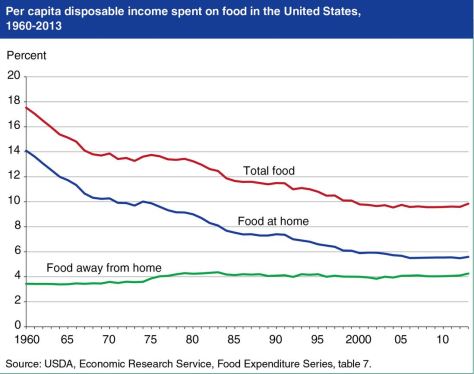
Of course for many families it’s great that we spend less now than ever before on food: most of us spend less than 10% of our disposable income on food – and this is seen as a good thing. But that cheap food comes at a high price:

“The apparent cheapness of food is an illusion, because behind the price tag lie a series of hidden costs, none of which are reflected in the price of food. These hidden costs are paid in damage to the environment, depletion of the Earth’s resources, and public health.”

Adding up the impacts

Patrick is involved in research with the UN’s The Economics of Ecosystems and Biodiversity (TEEB) initiative that traces the true costs of food. But to make all those statistics real, he says, take a carton of milk, and consider the costs of its that we have to pay for without realizing it – on top of the suffering that’s routinely inflicted on animals under industrial farming systems.

“You’ve got damage to the environment from the pollution of chemical fertilisers and pesticides, degradation of the soil and declining biodiversity, along with the contribution that agriculture makes to climate change.

“Then there’s a high cost in human health, especially, at the moment, in the rise of untreatable infectious diseases from the over-use of antibiotics in humans and farm animals. But this also includes the costs of the obesity epidemic caused by industrialised diets.

“And there are significant social costs – agricultural workers suffer unduly from labour abuses across the world which sometimes extend to the condition of slavery. These costs are not currently paid in the price of our food and this is not being recognized by politicians nor properly addressed by the people who should be addressing them.”

The True Cost of American Food

What is needed, he says, is a ‘True Cost’ account of our food system. That’s one of the core missions of the Sustainable Food Trust, which Patrick launched in 2013 at a major conference on the topic in London, bringing together the world’s leading experts on True Cost Accounting.

“For obvious reasons all farmers have to follow the best business case”, says Patrick. “But right now if you farm intensively and cause damage to the environment and public health, you will make more money than if you switch to sustainable methods. The aim of the San Francisco conference is to do something about that – we want to create the conditions where producing food in a sustainable way is the most profitable option for producers and the most affordable for consumers.

“We believe there are many opportunities to intervene and shift the dial in this direction. For instance, we can redirect Farm Bill subsidies to favour sustainable practices, we can tax farming which causes damage to the environment or public health, we can harness the power of the financial community to preferentially invest in sustainable agriculture and food companies.

“It’s all about carrots and sticks, we want to encourage the right kind of farming which benefits the environment and public health and discourages food systems which lead to climate change, pollution and disease.”


“Industrial” meat is lower priced but costs more than locally raised

free-range-chickens_xft5b1
Free range chickens are priced higher than factory raised chickens for a reason

Have you ever asked yourself why an everyday “value” chicken can now be cheaper, pound for pound, than bread? Cheap chicken has become the “healthy” meat of choice for most shoppers and sales are booming, up 20% since 2000 in the UK. But is it really either cheap or healthy?

Producers who use intensive methods are not financially accountable for the harm they cause. The apparently cheap price tag of industrial chicken does not include any of the costs related to pollution of the environment, destruction of natural capital, greenhouse gas emissions or the damage to public health resulting from such systems. It turns out that low-cost chicken isn’t cheap at all.

By contrast, a pasture-fed organic chicken is now seen as a niche market option, because it costs more than three times as much. These chickens spend much of their lives outside. Their feed is grown without the use of chemical fertilisers and synthetic pesticides. And because they are healthy and happy, with stocking densities low enough to ensure that the birds derive a significant percentage of their nutritional requirements from grazed grass, worms and insects, they need no insurance drugs or antibiotics to stop them getting sick.

Despite the fact that sustainable poultry production systems deliver huge benefits to the environment and public health, the producers using these methods have no option but to compete on an unlevel playing field. Worse, we are paying for the damage caused by industrial food production in hidden ways, through taxes, in the form of misdirected subsidies from the common agricultural policy, through water pollution clean-up costs and through national health service treatment costs.

Florida_chicken_house

If consumers knew how factory chickens were raised, they might never eat it again

If the true cost of the factory bird was added to the price tag, it might even be greater than the pasture-raised organic bird.

So who’s to blame for this crazy state of affairs? It’s tempting to blame the farmers and food companies, but we farmers are stuck in an economic system that mainly rewards those who produce food at the cheapest price, as a result of which only those who are selling into high-end niche markets can afford to do the right thing.

The truth is this is a rigged, cheap food system that has two prices: the one you pay now and the one we all pay later. It’s a story that repeats with carrots, apples and peas, meat, milk and cheese. Even breakfast cereal. At some point we need to ask ourselves, why do we support such a destructive food system?

The good news is we do have the power to change it. We should insist that, in future, common agricultural policy payments should be available only to farmers whose practices benefit the environment and improve public health; we could tax chemical fertilisers and pesticides (just like sugar) and use the money to incentivise farmers to adopt more carbon-friendly soil management. We should insist that all food for schools, hospitals and care homes is locally and sustainably sourced. We could offer tax breaks for investors who finance sustainable food businesses. Finally, we should ensure that food workers are paid a living wage and have safer working conditions.

By making these choices, we would help create a fairer, sustainable and health-promoting food system that we all want to see for ourselves, our families and our community.

Patrick Holden is executive director of the Sustainable Food Trust. He produces an organic cheddar cheese from his 80-cow milking herd in west Wales.

An Agriculture Revolution – Back to the Basics

By Brent Holiday

A batch of oak and corn bread using some of the acorns that I gathered last fall. They tend to look like a loaf of super dense rye pumpernickel, and have become a significant part of my diet.

My camera is zoomed in on the woodpecker at the top of the tree. As I am about to snap the picture, it hops to another branch. I will never be able to get the bird back into focus unless I zoom out and start all over again. Sometimes it is better simply to start over from scratch. This is where I believe we are at with agriculture. As our target is now increasing New England food production to 50% by 2060 (1), we might benefit from adopting a new form of agriculture to meet our future needs.

One of the major drawbacks of our current system is that it sharply contrasts with nature’s desires, especially here in New England. We have to fight to grow our food, and nature is a persistent opponent. Getting to 50% will be a battle, but it doesn’t have to be accomplished at the expense of the environment. I believe that if we work with nature, we can overcome some of the physical constraints that we face when growing food. The next few paragraphs illustrate how I believe we are fighting against nature as well as make suggestions for a new sustainable agriculture that mimics how nature functions here in New England.

Wood

In New England we have forests but this hasn’t always been the case. In the 1800’s large tracts of forest were cleared to graze animals and raise crops. This seemed to work for a while, but keep in mind that by the early 1800’s we had already decimated the salmon population in Southern New England through a combination of damming, pollution, and overfishing(2). Yet eventually, the farms reverted back to forests as the land was abandoned. Clearing the land was necessary to grow wheat, rye, oats, and corn. They can certainly be grown or raised in some places in New England, however if nature is any indicator, then these crops should not be part of the long term solution.

More appropriate would be using trees as food, since they naturally grow here. Opposed to eating wood? Considering that you already eat wood pulp (3) in your processed foods, this really isn’t such a radical suggestion. However, I think reaping the fruits and nuts that they offer might be more popular. We wiped out our most prolific source of forest carbohydrates, the American chestnut (Castanea dentata), by introducing a fungus about a hundred years ago. Yet the American/Chinese hybrid chestnuts are viable substitutes for the extirpated species. You might even see some of these already at your nearby farmer’s market or Co-op. We also have oaks, which can provide plenty of carbohydrates as well.

Water

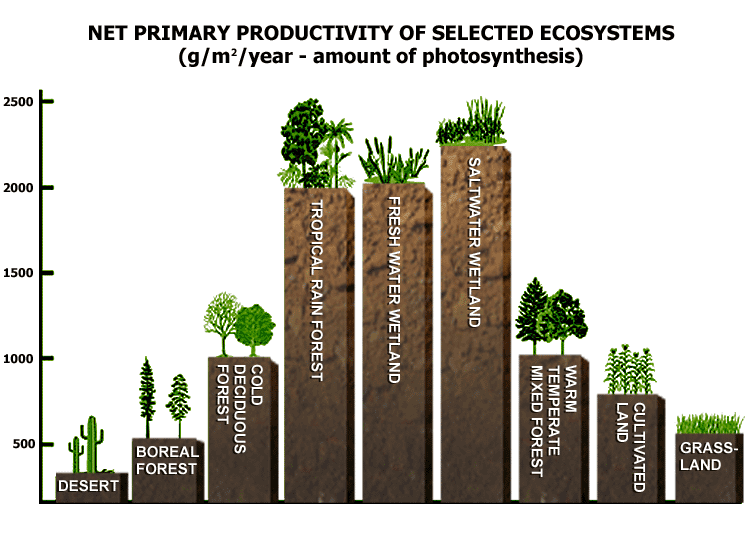
It’s pretty wet here, with precipitation year round. All of this water leads to wet soils. In the past we have spent a great deal of effort draining these wet soils so that we could grow grass crops and graze cattle, both of which are generally more adapted to well-drained soils. Turning the beavers into funky hats helped to reduce the amount of wet soils, as the beavers’ dams raised water tables and slowed the amount of time it took precipitation to drain out of the watershed. Some consider them a keystone species, as they drastically alter habitats, which serve to influence the populations of other wildlife species. Perhaps we should take a closer look as what the beaver provides (4). The ponds and marshlands that beavers create are some of the most productive ecosystems that we have on Earth, more productive than both deciduous forests and agricultural land. Farming beavers may entice some more than others (I won’t give away my bias), but we can replicate the systems that they create by forming our own earthworks to catch and store water. We could then take advantage of the productive capacity of marshlands by raising crops such as wild rice (Zizania palustris) and cattails (Typha latifolia). Don’t forget the potential for aquaculture.

forest
Freshwater wetlands vastly out-produce our forests and cultivated lands in terms of primary productivity (vegetative growth), let’s harness this potential with aquatic food crops.

A New Frame of Mind

I have overlooked many other topics for the sake of brevity. My main purpose is to get you thinking. Increasing food production in New England will bring about major changes. Yards won’t be grass, and some of our beloved forests will undoubtedly have to disappear as we take on some of the environmental burdens that we currently externalize onto other areas. It is my hope that with a more regionally-suitable agricultural model we can mitigate some of the inevitable environmental impacts as we increase food production.

To see this become a reality, we need to abandon some of our preconceptions and traditional values. We readily accept change when it comes to other parts of our lives (how many of us still refuse to abandon the VHS, or are wary of trying the internet?), yet agriculture is something we are reluctant to see change.  A new agriculture will bring new foods. Are we willing to eat persimmons and chestnuts instead of bananas and bagels? Only time will tell.

This Northampton, MA resident moose relies on forests and wetlands for local food production. Maybe we should follow suit.
  1.  http://www.foodsolutionsne.org/new-england-food-vision
  2. http://www.fws.gov/r5crc/Fish/za_sasa.html#lifehistory
  3. http://foodtechupdates.blogspot.com/2011/03/cellulose-additives-in-foods-good-or.html
  4. http://www.pbs.org/wnet/nature/leave-it-to-beavers-leave-it-to-beavers/8836/

A Rational and Just Farming System may be Incompatible with Capitalism

by Fred Magdoff, University of Vermont Professor of Agriculture

From humanitarian and ecological viewpoints, many aspects of the capitalist economic system are irrational; although they are certainly rational from the more limited standpoint of the individual business or capitalist seeking to make profits. For example, because most people lack their own means to produce an income, they must sell their labor power to companies, which in turn must normally pay a high enough wage for the reproduction of workers and their families. However, although requiring people to work in order to live, the economic system does not guarantee a job for everyone who wants and needs to work. Nor do the available jobs necessarily pay sufficient wages for a decent existence (although government regulations may in some cases compel employers to move in this direction). Practices that make eminent sense for the individual capitalist or company, such as paying only the minimum wage necessary in order to obtain sufficient workers with the needed skills, end up being a problem not only for workers, but the capitalist system itself. Low worker income contributes to problems of effective demand.

With regard to the environment there are scores of examples of irrational behavior by capitalist businesses that have the ultimate goal of making profits. Many practices and side effects of the way the system functions degrade the ecosystem and its processes on which we depend and may also directly harm humans. For example, it is not rational to introduce chemicals into the environment, including into products we use daily, that are either toxic or cause illnesses of various types. Yet there are over 80,000 chemicals used in the United States; few of them are tested for their effects on people or other species, and many commonly used ones are suspected to be carcinogens or have other detrimental effects.

For this discussion I would like to focus on a well-known passage from the third volume of Marx’s Capital: “a rational agriculture is incompatible with the capitalist system (although the latter promotes technical improvements in agriculture), and needs either the hand of the small farmer living by his own labour or the control of associated producers.”1

The U.S. food system can be thought of as being composed of a number of parts before the food reaches the public. “Farming” is the actual process of raising plants and animals for human food, animal feed, conversion to industrial chemicals and fuels for vehicles, and fiber (such as cotton). But there are “upstream” inputs required by farmers such as commercial fertilizers, pesticides, seeds, equipment, animal hormones, antibiotics, mineral feed supplements, fuel to run the equipment, and dry some crops. “Downstream” from the farm, its products are first purchased and then processed and manufactured by one or more corporations. Products are then transported from the processors and manufacturers to retail outlets for sale to the public. There are no cycles in this system as energy and nutrients flow from one location to another.

When viewed as a whole, the food system is composed of the following chain: (a) input industries; (b) farms; (c) purchasers of raw farm products; (d) processors/manufacturers; (e) retail stores; and (f) the public. The agricultural sector—“agribusiness”—is considered to be composed of (a) through (c), but basic processors (grinding, for example) are also part of the sector.

The Purposes and Outcomes of Agriculture

The main purpose of almost all farm production in the United States is to sell raw products at the highest possible profit. There are farmers producing for niche markets and/or “adding value” by processing at the farm (making such items as cheeses and jams) and selling directly to the public. However, the overwhelming quantity of food produced is by farmers selling undifferentiated commodities into a large regional or national market. This goal to maximize profit margins (selling price minus cost of production) governs:

  • What crops are planted in a given year and over time (type of rotation).
  • Which farm animals are raised, if any, where they are raised, and how they are treated.
  • The inputs used such as fertilizers, pesticides, machinery, and needed fuels.
  • The scale of production and mechanization.
  • The extent of hired farm labor and treatment of laborers.
  • When products are sold and use of futures contracts.
  • Whether direct production contracts with processors are entered into.

A “Logical” Progression

These questions are intertwined—one decision may directly lead to particular decisions on other aspects. As an example, let us look at a farmer in the U.S. Cornbelt region (the Cornbelt is centered in Iowa and Illinois, but includes large areas of Minnesota, eastern Nebraska, Missouri, western Indiana and parts of western Ohio, and the eastern Dakotas). The farmer decides to grow corn and soybeans, as many Cornbelt farmers do (often exclusively so). The infrastructure needed to deal with these crops is in place—suppliers of needed inputs, market arrangements, storage, and transportation of the crops to markets. As we go through the example you might say to yourself that the aspects discussed appear to be absolutely rational decisions. And they actually are formally rational, given the economic system in which the farmer operates. But the critical question is: are the results of such a progression of decisions and practices substantively rational from wider environmental or social points of view? Let us take a look.

The first decision to concentrate on one or two crops automatically means that a more ecologically sound and complex rotation of crops is not possible. A lack of farm diversification (and no farm animals) makes sense because farmers can then spend their time specializing as is done in other lines of business. A typical conventional farmer in the Cornbelt primarily grows corn and soybeans.2 The lack of rotation with a perennial sod-type crop (such as grass and legume hay that covers the entire soil surface all year long and helps build up organic matter) means that the soil is eroded more easily and groundwater is more polluted. Lack of a more complex rotation also makes weeds, insects, and diseases more problematic, requiring interventions, normally with pesticides. The reliance on two crops also means that if the prices for both crops decline to near or below the costs of production—as happened for corn and soybeans in the early fall of 2014—there is potential economic hardship for the farm. Government subsidies, including the federally subsidized income insurance program (with benefits overwhelmingly to the largest farms and the insurance industry), cushion the situation when revenue falls, such as when prices turn or a crop failure occurs.3 Thus one of the economic aspects of the irrationality of the system resulting from specializing on two crops and not spreading risk over a larger number of crops is partly remedied as a result of the political power of an agricultural lobby that includes farmers, input industries, processors, lenders, and, in this case, the insurance industry.

Planting corn after corn, or alternating between corn and soy, leaves the soil without living vegetation for more than half of the year. Although in undisturbed natural systems annuals die in the fall and deciduous trees lose their leaves, perennials live through the winter months. And in grasslands where the plants are dormant in the winter, they are active longer into fall and earlier the following spring than with annual crops such as corn and soy, and the soil surface is covered with their residue. In addition, the roots of living plants, even when dormant, reduce erosion by helping to hold soil in place. The problem of bare soil in the off-season is especially severe when the whole corn plant is harvested to make silage—usually to feed dairy or beef cows. When grown only for its grain, a lot of corn residue is left on the surface. While that is not the same as having a living crop in place, it is a lot better than a nearly bare soil surface. On the other hand, there is much less crop residue following soybeans than after corn. Planting cover crops to protect soil and groundwater over the late fall, winter, and early spring is becoming a more common practice. Routine use of cover crops helps to overcome this particular problem within a conventional agricultural system that exclusively raises annual crops.

Deciding how many acres of corn and soybeans to plant depends on the relative potential of profits of corn vs. soybeans—something that changes from year to year, and even shifts during the year. The projected prices that farmers will receive for corn vs. soybeans are important (and can be locked in if the farmer enters into a sales contract before the season begins). But also important are the relative costs of growing the two crops—with corn costing more, especially because of the needed nitrogen fertilizer and costs of drying harvested grain before sales.

Because per acre profits are low for these crops, more land is needed to produce sufficient total farm profits to maintain a family at current economic standards. For example, suppose the profit on raising corn or soybeans is around $200 per acre. Therefore a farm with one hundred acres of cropland with all of its fields planted to these crops will have a profit of $20,000. That is not very much money after working so hard for a full year. The result is that, unless you get an off-farm job to supplement income and provide benefits (and many farmers do this), you need to purchase or rent more land. And as the farm becomes larger it makes it more difficult for farmers to really know their land. As the old saying goes, “The farmer’s footprint is the best fertilizer.” The result of larger and larger farms is that most of the land on these operations never experiences the farmer’s footprint.4

A larger farm means that bigger machinery is needed in order to cover the extensive area. The main effect of mechanization is to increase the efficiency of labor, resulting in less labor used per acre and per unit of crop produced (i.e., per bushel, pound, or kilogram). However, mechanization does not necessarily result in higher yields per acre, unless it allows a farmer to work in a more timely manner.5 This heavier and more costly equipment has a potential downside. Larger equipment allows farmers to work on their land when it is too wet, leading to compaction, as damage to soil structure occurs more easily with a wetter soil. Although smaller equipment can also cause compaction, it is easier to work soils at inappropriate times with large tractors, which have more power than smaller ones.

Specialization in corn and soybeans leads to more pesticide use. Both corn and soybeans are annual crops, thus weeds that do well under such conditions (without perennial crops in the rotation) proliferate. In general, these types of weeds are able to grow quickly along with the crop and to complete their life cycle before the crop is harvested, providing lots of seeds for the following year. In addition, insects and disease problems proliferate by growing such large areas of predominantly two crops. Soybean cyst nematode that infests soybean roots and causes significant reductions in yields can be controlled by a rotation for two years into crops that are non-hosts such as corn or wheat. While one year of corn between soybean crops will help, yield reductions of soybeans will still occur in infested fields.

Reliance on pesticides for control of weeds, insects, nematodes, and diseases has led to what is known as a “pesticide treadmill.” Once you are on the treadmill, it is very hard to get off, because “pests” develop resistance to the pesticides used to control them. This means farmers must switch to pesticides that have different modes of action, and sometimes have to use multiple pesticides for a problem that was once taken care of by a single pesticide.

There is a vast body of literature on the toxicity of pesticides to humans and other “non-target” species. Pesticides routinely contaminate farm workers and those that live near farms, many vegetables and fruits, and water supplies. For example, the herbicide atrazine has been found to damage humans and other organisms, but nonetheless is still in widespread use and can be found in a large percentage of drinking water samples from agricultural areas.6 Many other pesticides are also commonly found in foods, as well as water supplies.7

Specialization in corn and soybeans leads to more fertilizer use than would be needed in a more complex rotation or on integrated farms raising both animals and crops. Although I will discuss this issue in more detail below, the small amount of actual nutrient cycling that occurs on these farms (when crop residue returns to the soil and decomposes), necessitates the annual input of significant quantities of fertilizers. These types of farms export all of the crop—the corn grain and soybeans—to locations far away to be used as animal feed, processing for food products (cereal, vegetable oil), food additives, or for ethanol for fueling cars. But the nutrients contained in the products exported off the farm all came from the soil and must be replaced with fertilizers.

The two crop, corn-soybean system is particularly “leaky,” with elevated levels of nitrates routinely reaching ground and surface waters. To get the highest yield from corn—which has an incredible two-month growth spurt as it increases in height and puts on more leaves and then switches from the vegetative state (growing more leaves and getting taller) to the reproductive stage (as the grain fills)—it needs to take up and assimilate nitrogen faster than can be supplied except by the most fertile soils or when corn follows a multi-year productive legume crop such as alfalfa. This makes it necessary to apply a high rate of nitrogen fertilizer to be sure that sufficient nitrogen is available when the plant needs it. Fertilizer nitrogen applications are now better matched with crop needs, but elevated nitrate levels are almost always found in soils at harvest time. Nitrate pollution of water is common in regions where this system is used because nitrate (NO3) is not well retained in soils—themselves negatively charged—and leaches easily into groundwater and tile drains, finding its way into ditches, streams, and rivers.8 With corn covering such a large portion of the land, high levels of nitrate pollution of ground water and drainage water occur. Elevated nitrate concentrations in drinking water forces some cities to use expensive procedures for reducing the concentrations to stay within the public health limit. Des Moines, Iowa, after spending close to $1 million last year to reduce nitrate levels in their drinking water taken from the Raccoon River, intends to sue three upriver counties that manage drainage districts.9 Nitrate from Midwestern cornfields is flushed down the Mississippi River, helping to create the large “dead zone” (actually a zone of very low oxygen levels) after the river empties into the Gulf of Mexico.

Because larger areas are being farmed, anything that simplifies the system is attractive to farmers and allows them to farm even larger areas. This is where genetically modified (GM) seeds come in.10 The major advantage of the GM seeds that have so far been sold to farmers from companies such as Monsanto and Syngenta is that, by simplifying what needs to be done in the field, it is much easier to farm larger areas. This has influenced the choice of seeds, with, for example, Monsanto’s GM seeds that contain herbicide resistance such as Roundup Ready corn, meaning fewer trips over the field and the use of a single herbicide until, of course, weeds develop resistance to the herbicide used. Farmers now must use additional herbicides and higher application rates in order to control weeds that have become resistant to Roundup.

A new dimension has been added over the last decade with on-the-go electronic information gathering as farmers go over land for field preparation, planting, and harvesting. These costly additions to field equipment mean that the full suite of gadgets is primarily of use to very large farms. As a large-scale (20,000 acre) Iowa farmer put it, previously “a [Cornbelt] farmer with 1,000 acres could make a good living. I’m not sure that’s going to last.”11 The specialized equipment—that is almost completely automated and is able to collect information on yields, grain moisture content, and soil, to plow to within an inch of a desired row, steer itself, etc.—is only available for certain crops. Purchasing such equipment makes it easier to farm huge areas, locking farmers even more tightly into the “easy-to-grow,” “easy-to-harvest,” and “easy-to-sell” simplified system with two crops. And the company that controls so many crop varieties, Monsanto, has bought up companies that have gotten it into providing, processing and storing agricultural information for individual fields and farms. This has given Monsanto even more sway over agricultural production.

Other Systemic Irrationalities of Capitalist Agriculture

The discussion above followed the issues as they cascaded from an initial decision to pursue one type of farming, albeit one quite common in the U.S. Midwest. All of the decisions discussed above are absolutely logical given the initial decision to grow corn and soy for the general commodity market (instead of a niche market) in that region and given the incentives and demands of capitalist market relations; government subsidies certainly make this easier. Almost all large farms, those that produce the vast majority of the nation’s food, specialize in a few crops or one type of animal. But, all together, there are many different crops grown. In the large-scale commercial sector there are farms that specialize in tree fruits (or particular tree fruits), other fruits and berries, vegetables (or specialized groups of vegetables), other agronomic crops such as potatoes, wheat, sorghum, hay crops, cotton, peanuts, and so on. And there are dairy farms and others that raise beef cows, hogs, poultry, or sheep. They tend to specialize because that allows them to more easily standardize and hone their production system.

Rather than tracing decision sequences for each of these as I did above for the Midwest corn-soybean system, let us just look at various other types of irrationalities that develop in U.S. agriculture.

Hunger amidst plenty. There are still plenty of hungry people amidst all the abundance and waste of food. If the purpose of capitalist agriculture was to grow food in order to feed people, there could be no hunger in the United States. However, well over 40 million people are considered “food insecure”—this is in a country that literally grows more food than it knows what to do with. Even in countries such as India, food is exported at the same time that people are hungry. As a Wall Street Journal headline put it in 2004: “An Indian Paradox: Bumper Harvests and Rising Hunger.”12 The scourge of hunger and malnourished people occurs in most countries around the world. There is no “right to food,” although like clean air and water it is an essential good needed by everyone. Rather, it is a commodity like any other and if you do not have the money to buy it in sufficient quantity or quality, then you will have to get what you can from a charity group or a government program.

Food waste. One of the irrationalities of the food system as a whole is the immense waste that occurs—estimated to be about one-third of the food produced in the United States. A good part of this is waste at the household level, throwing away of food that usually ends up in landfills. However, a significant amount also occurs when farmers have more crops then they can sell, or when their produce does not meet the standards demanded by retailers for size and condition. According to a 2012 report by the Natural Resources Defense Council, “One large cucumber farmer estimated that fewer than half the vegetables he grows actually leave his farm and that 75 percent of the cucumbers culled before sale are edible.”13 Additional waste occurs during processing and in the retail sector. Markets would rather have their shelves fully stocked as an indication of abundance, than look sparsely provisioned; they simply toss out what spoils. While some waste is probably unavoidable, much of the waste of food in the United States occurs because of the irrationalities built into the system.

The drive to larger farms in the United States, and now abroad, including countries in South America, has another social dimension in the massive displacement of people as their land is expropriated.14 In addition to displacement by expropriation, people are abandoning farms because they cannot compete with the low prices for imported food. Thus many Mexican farmers had to stop corn production when the North American Free Trade Agreement (NAFTA) went into full force. And farmers throughout the Caribbean and in many other countries faced such pressures following IMF-mandated “structural adjustments” in which protective tariffs on food were lowered or eliminated. One of the great problems of the twenty-first century is: If, in the future, highly mechanized farmers operating at a large scale produce all of the food needed in the world, what will happen to the billions of people that are involved in farming? There are not enough jobs available as displaced farmers move to the city slums, so they try to get by in the “informal economy.” Thus, the growth of large farm units is creating dislocations and more food insecurity.

Decline in cycling of nutrients. The growth of cities in the nineteenth and twentieth centuries separated the people from the land that produced their food. And in the mid-to-late twentieth century, factory-scale farm animal production removed animals from the fields that produced their feed. Thus farms producing food and animal feeds need to import large quantities of fertilizers while at the same time huge quantities of nutrients accumulate in cities and factory animal farms, commonly causing pollution problems. The reliance on fertilizers has allowed farmers to overcome the continuous export of nutrients in the products they sell—but this has come at significant environmental costs in terms of energy as was well as pollution in the mining and production processes. It has also come at the cost of decreasing soil health as organic matter levels decreased dramatically.

In a future rational society we will have to find a way to ensure that most of the nutrients that flow from farms to cities participate in a “return flow” to farms. This same dynamic occurs with animals, although regarding them the answer is clearly to promote integrated livestock/crop farms. These farms—although not “rational” in the capitalist sense of maximizing profits—can have more ecologically sound rotations, export many fewer nutrients from the farm, and most nutrients taken up by crops are cycled on the farm itself in the form of crop residues and animal manures.

At the current time the problem with regard to lack of return flow of nutrients from people to farms is primarily a result of suburban sprawl. Aside from other issues about the suburbs, it means that farmland suitable for accepting human wastes is farther and farther from cities. Additionally, commercially generated contaminants in cities, and people using products that they dispose of down the drains, makes using sewage sludges as fertilizers questionable in terms of safety.

Inhumane treatment of animals, and feeding ruminants a high-starch diet. The raising of animals in large “factory farms” is done under inhumane conditions. Chickens for meat (“broilers”) are raised in barns of tens of thousands of birds. The chickens have been bred to gain weight rapidly—this, of course, means more rapid “turnover” and more profits—and have large breasts because of the preference for white meat. They are less active because so much of the energy they consume is converted into growth and thus spend most of their lives sitting on the floor—even as the manure accumulates during a growing cycle—usually losing their feathers on their breast and developing sores as well because of the almost constant contact with manure. The barns are only cleaned out after the chickens have been shipped but the litter (manure) may be reused for the next group of chickens by placing a thin layer of fresh litter such as wood chips on top of the old manure. Raised mostly in dim light (companies may forbid natural lighting), they live a short six-to-eight-week life entirely in the barn. They are fed a diet laced with questionable additives such as antibiotics that enhance growth, but many die under the crowded conditions, and one of the jobs on the operation is to go through the barn regularly and remove dead birds or those with deformities.

The incredibly rapid growth of meat birds—from 0.002 to 8.8 pounds in eight weeks, analogous to a baby that weighed 6.6 pounds at birth growing around 660 pounds in two months—produces abnormal birds.15 There is no question that chickens grow faster than humans, but the extra rapid growth caused by “improved” genetics and optimal feeding has created a most unfortunate animal. Because the birds have been bred to grow so rapidly their legs may not be able to support them, so there are always lame ones, unable to walk; they are usually euthanized. New York Times columnist Nicholas Kristof commented on the treatment of meat birds: “Torture a single chicken and you risk arrest. Abuse hundreds of thousands of chickens for their entire lives? That’s agribusiness.”16 Caged layers may have it even worse, with little room and their entire lives within the small cage and no ability to even peck at the ground.

These problems are not confined to poultry. Hog gestation—with sows in crates in which they cannot turn around so as to make it “more efficient” for them to feed their piglets—is difficult to look at even in photos. Beef cows, which are ruminants, have evolved to be able to gain their entire energy diet from grasslands, with cellulose—a structural element of plants that we cannot digest—providing most of their energy as a result of the activity of microorganisms in their rumens. But in order to get them to gain weight rapidly, beef cows on feedlots, with thousands of animals, are fed diets high in corn grain, and soy to provide protein. (Growing corn and soybeans requires high rates of pesticides and fertilizers that would not be needed if cows were on pasture, where pests pose less of a problem and most of the nutrients are directly recycled onto the land as manure and urine.) Again, antibiotics and hormones have been part of the system in order to produce the most “efficient” weight gains.

Thus, because the pursuit of profit is the goal of raising these farm animals under industrial conditions—the only issue considered is how to do so as rapidly and cheaply as possible. As a recent exposé in the New York Times about the brutal treatment of farm animals in a large government financed research facility put it in its title: “U.S. Research Lab Lets Livestock Suffer in Quest for Profit.”17 There has been pushback from the public on treatment of farm animals such as the 2014 bill passed by the New Jersey legislature that would have outlawed gestation crates for hogs, but was vetoed by the governor. A humane and ecologically sound system of raising farm animals for human food would allow the animals, raised in smaller flocks and herds, to do what they have done through their evolutionary history—let cows graze in pastures and chickens have space to walk, perhaps even run around, and peck in a clean environment and to be able to roost, and let sows give birth and feed their piglets in a relaxed and less restricted way.

Farm and processor labor issues are immense. Farm workers who apply pesticides and harvest crops, especially fruits and vegetables (both types of crops are difficult to mechanize) are usually treated abysmally. Their wages are low and their housing is generally substandard, if provided at all. State laws on treatment of farm workers, not usually very strong to start with, are commonly ignored. Workers, many of whom are undocumented, are in a subservient position and rarely complain. It takes a huge effort, such as with the workers who harvest tomatoes in the Immokalee area of Florida, to win modest demands. Workers in animal-processing facilities (slaughterhouses), have high rates of injuries, and are treated “only somewhat better than the hogs at a Hormel slaughterhouse.” Eric Schlosser describes many slaughterhouse workers this way: “Recent immigrants recruited to subvert unions and reduce wages. Undocumented immigrants living in fear, reluctant to report violations of the labor code. A packinghouse culture full of stress and danger and remarkably free of mercy.”18 Meanwhile, many animal rights groups which are so concerned over the inhumane treatment of farm animals (as they should be) are very quiet about the treatment of human workers.

With the large importation of food from western and northwestern Mexico, especially during the colder months in the United States, providing over half of annual tomato consumption, this has become an important component of the U.S. food supply. The mostly indigenous laborers brought in from southern part of the country work under harsh conditions, including near-slavery. A Los Angeles Times exposé on the conditions on these farms in Mexico found that:

  • Many farm laborers are essentially trapped for months at a time in rat-infested camps, often without beds and sometimes without functioning toilets or a reliable water supply.
  • Some camp bosses illegally withhold wages to prevent workers from leaving during peak harvest periods.
  • Laborers often go deep in debt paying inflated prices for necessities at company stores. Some are reduced to scavenging for food when their credit is cut off. It is common for laborers to head home penniless at the end of a harvest.
  • Those who seek to escape their debts and miserable living conditions have to contend with guards, barbed-wire fences, and sometimes threats of violence from camp supervisors.
  • Major U.S. companies have done little to enforce social responsibility guidelines that call for basic worker protections such as clean housing and fair pay practices.19

Loss of biodiversity. There is loss of biodiversity as native plant species are eradicated in order to grow the crops desired for sale in the market. The loss of habitat for diverse species means that there is also a loss of natural control mechanisms. There is also loss of biological diversity in soils as few (or a single) crops are grown and soil organic matter is depleted. Another type of diversity loss is that of the genetic diversity of the crops themselves. In 2004 the UN’s Food and Agriculture organization estimated “that about three quarters of the genetic diversity of agricultural crops have been lost over the last century. And of 6,300 animal breeds, 1,350 are endangered.”20 Seeds from commercial companies have penetrated much of the world’s agriculture, displacing native varieties even in the areas of the species’ origin (where the highest genetic diversity is normally found). As private companies focus on few varieties that are themselves genetically uniform, this creates a lack of genetic diversity within the crop—making a field planted to one crop even more susceptible to insect infestations.

Reliance on large quantities of fossil fuels. “Modern” large-scale farming relies on significant inputs of energy, almost all from fossil fuels. Certain aspects of farming are especially energy intensive. When considering large farms we think of the huge equipment and the diesel needed to fuel its activities. While it is true that the manufacture and use of machinery takes lots of energy, approximately one-third of all the energy used to grow corn is used to make and apply the nitrogen fertilizer! It takes a lot of energy to convert nitrogen gas in the atmosphere (N2) into forms that can be used by plants (ammonium and nitrate).

The fate of the crops that are grown depends on who is willing and able to pay the most for them such as a food processor, an ethanol manufacturer, or a beef cow feedlot owner. This is supposedly evidence that every product is going to its “highest and best use” because this is the very definition of the term. But is it really in the interests of humanity and the wider environment that food be grown in the cheapest way possible and then sold to the highest bidder, which could be an export market? Aside from in the dreams of a traditional economist, how in the world can the person or company able to pay the highest price be considered best use of a product? Was it really the “best use” for India, a country with so much extreme hunger, to export 210 metric tons of grain and 100 metric tons of vegetable oil to the United States?21

An interesting aspect of farming is that agricultural commodity price changes do not have the same effect on production as price changes in other types of businesses. As with all businesses, “When prices are high, farmers seek to maximize production to capture the higher prices and maximize total net income.” But the situation when prices are low goes against the dogma of conventional economics that lower prices should lead to decreased production.

When prices are low, farmers need to maximize production in order to reduce the per-unit cost of production, with the goal of covering variable costs and as much of the fixed costs as possible. Because farmers have high fixed costs relative to other businesses where labor—that can be idled—is the highest cost[,] they face challenges quite different from those faced by Main Street businesses. For farmers working in a low price period, any contribution increased production can make toward fixed costs helps reduce losses. And, this increased production then leads to a further reduction in price.22

Thus, farmers increase production when prices are high (as they “should”) and when prices are low (which they “shouldn’t”). A rational economic decision for each individual farmer goes against the supposed capitalist economic logic and ends up being irrational for the entire group of farmers together. (It is important to note that the main way farmers rapidly increase total production in response to high prices for all the crops they grow is to convert marginal land, frequently highly erodible, from conservation buffers or strips into cultivation for cash crops. This, of course, leads to environmental damage.)

Large corporations with political connections can get laws and regulations in place that change incentives to farmers as to which crops to grow. This can also influence food prices. For example, Dwayne Andreas, the former head of the agribusiness giant Archer-Daniels-Midland (ADM), was extremely well connected to U.S. presidents and influential members of Congress. ADM is one of the world’s largest purchasers, sellers, and processors of grains and is always interested in new uses for crops and possible ventures to expand their profits. Andreas and ADM were instrumental in getting the U.S. ethanol fuel mandates. This was sold to Congress as a way to produce “home grown” energy. The ethanol blending mandate—that ethanol make up initially 10 percent of all gas sold, and according to the law, should increase to 15 percent—was in essence both a price support for corn (about 40 percent of the U.S. crop going into ethanol production in 2012) as well as a support for the ethanol industry. If corn-based ethanol production actually amounted to a major energy savings, there would still be problems with the mandate. However, it turns out that growing the corn and producing the ethanol (which must be distilled three times to remove all the water) is very energy intensive. For this reason there may actually be a net energy loss in the whole process.23

Proletarianization of farmers producing poultry and hogs under contracts to large integrated corporations. Chicken broiler production is concentrated in certain regions such as the DelMarVa peninsula (containing small portions of Delaware, Maryland, and Virginia), northern Alabama and Georgia, southern Mississippi, parts of Arkansas and western Oklahoma. These concentrated zones of meat bird production did not occur by accident. Large companies such as Tyson (headquartered in Arkansas and also into pork and beef), JBS USA (which bills itself as the largest “protein”—i.e., meat—company in the world), and Perdue decide where they want to have their processing facilities. They then contract with nearby farmers who must build barns to corporate specifications and supply the contract farmers with the baby chicks, feed, veterinary medicines, etc. The farmers own nothing but the barns and the manure, and are paid based on how many birds are produced and their rate of weight gain. The farmer is in reality a laborer for the corporation, who must follow directions or be “fired” when a contract is not renewed.24 The 2015 U.S. agricultural appropriations bill does away with modest protections for contract farmers that speak out about abuses in the industry or seek to organize with other farmers in order to have more favorable contract terms. And with all the large scale processing plants controlled by integrated corporations, independent farmers have no way to process large numbers of animals. The story is quite similar for hogs—zones of high concentrations of farms raising animals under contract to corporations.

Can Capitalist Agriculture be Improved Environmentally and Socially?

Of course! There are many things that have been done and more that can and should be accomplished in the future to deal with the ecological and social problems (irrationalities) created by capitalist agriculture. Some of these do not sufficiently threaten powerful interests that might be harmed, or the influential interests understand that, because of publicity, something must be done differently. In some instances something might be accomplished. I ran into this when talking to a group of agrichemical dealers and showed them that farmers were routinely applying too much nitrogen fertilizer to their corn crops. It was clear that something had to be done to lessen nitrate pollution of water, but to the fertilizer salespeople, it meant less income. But eventually fertilizer dealers understood that nitrate pollution is a problem and that, in order to avoid regulations, they could not oppose lower fertilizer application rates, proposed by universities, that better matched the needs of plants. Later, another dilemma developed when it was shown that farmers were overfeeding their dairy cows with unneeded phosphorus minerals; the people who sold minerals to dairy farmers were not happy, but had to go along with reducing phosphorus feeding rates. Better soil tests are helping farmers reduce the amount of fertilizers used, thereby lessening water pollution. The use of cover crops and reduced tillage are expanding so that growing primarily (or exclusively) annual crops does not result in as much soil erosion and water pollution.

Laws can be passed—if people can be mobilized to fight for change—for higher wages, and better treatment and working conditions, for farm laborers and for workers in animal slaughterhouses. A law could theoretically be passed so that contract poultry farmers, now considered to be independent contractors, can come under the labor relations laws and be allowed to organize and negotiate as a group without fear of being blackballed from future work in the industry—but, as mentioned above, the modest protections have been done away with in the 2015 agriculture appropriations bill.

With regard to farm labor, state laws on access to clean water and sanitation facilities could theoretically be strengthened and more strictly enforced, and better housing mandated. However, the power of the agricultural lobby and relative lack of power of farm labor stands in the way of strengthening farm labor protection laws.

And it is at least theoretically possible that hunger could be abolished here and abroad, because enough food is currently produced to feed everyone in the world. But while there is plenty of money to subsidize fossil fuel companies, give tax breaks to wealthy people, and to conduct wars, there is strangely not enough money to feed everyone.

There are a number of farmers that have environmental and social goals incorporated into their farming systems. Most notable among these are the Community Supported Agriculture (CSA) farms which are managed ecologically (many organically) and grow food for the purpose of feeding a specific group of people. Many have sliding-scale pricing for families or other ways to include those with low-incomes. Although operating very much in a capitalist society, these are essentially non-capitalist endeavors. However, many of these provide only a very basic living to the farmers. There are other small-scale farmers that have ecologically sound practices and good rotations and grow for varied outlets such as restaurants and farmers markets. However, some large-scale farms tout their “ecological” (or organic) practices as marketing tools, but from an economic point of view are just another brand of capitalist farms—doing perhaps less damage to the environment, but frequently not very pleasant to employees.

So while there are more rational social and ecological relations on some farms, these produce a miniscule proportion of the U.S. food supply. Although a growing portion of conventional farmers are using more environmentally sound practices such as planting cover crops and reducing tillage and better treatment of livestock, we are still left with a host of irrationalities in the system—from the simplified ecosystem created to the continued water pollution, to use of (and contamination of many with) pesticides, to poor conditions for farm and processing labor.

The Bottom Line

The pulls and pushes of the capitalist system, and the way it inherently develops as all sectors strive to maximize profits, produces an agriculture in which: (a) there are hungry people although there is an abundance of food; (b) there is little true cycling of nutrients, increasing the reliance on fertilizers at the same time that excess nutrients accumulate on factory animal farms and in the cities; (c) animals are raised inhumanely; (d) poor rotations are used; (e) farm labor and animal slaughterhouse labor is commonly treated unfairly (and/or cruelly); and (f) pollution with pesticides and fertilizers is widespread, among other problems. All of the common decisions and practices of conventional farmers and others in the agricultural system make eminent sense (that is, they are rational) only from the very narrow perspective of trying to make profits within a capitalist system. As Marx explained, “the dependence of the cultivation of particular agricultural products upon the fluctuations of market-prices, and the continual changes in this cultivation with these price fluctuations—the whole spirit of capitalist production, which is directed toward the immediate gain of money—are in contradiction to agriculture, which has to minister to the entire range of permanent necessities of life required by the chain of successive generations.”25

We must conclude that the way the capitalist agricultural system functions in the real world is environmentally and socially irrational.

But what exactly would a rational agriculture be like? I propose this definition: A rational agriculture would be carried out by individual farmers or farmer associations (cooperatives) and have as its purpose to supply the entire population with a sufficient quantity, quality, and variety of food while managing farms and fields in ways that are humane to animals and work in harmony with the ecosystem. There would be no exploitation of labor—anyone working on the farm would be like all the others, a farmer. If an individual farmer working alone needed help, then there might be a transition to a multi-person farm. The actual production of food on the land would be accomplished by working with and guiding agricultural ecosystems (instead of dominating them) in order to build the strengths of unmanaged natural systems into the farms and their surroundings.

To develop this type of agriculture will require building it within a new socioeconomic system—based on meeting the needs of the people (which include a healthy and thriving environment) instead of accumulation of profits.

Notes

  1. Karl Marx, Capital, vol. 3 (New York: International Publishers, 1967), 121 (Chapter 6, section 2).
  2. There are, of course, other types of farms in this region such as vegetable, dairy, and hog farms. But corn and soybeans dominate the region’s agriculture.
  3. Land Stewardship Program, “Crop Insurance—How a Safety Net Became a Farm Policy Disaster; White Paper 2: Crop Insurance Ensures the Big Get Bigger,” December 2, 2014, http://landstewardshipproject.org.
  4. U.S. farms raising all crops and animals continue to get larger, although there are successful small and medium size farms. About 6 percent of all farms, representing 120,000 farms, raise three-quarters of the value of food produced. See Daniel Sumner, “American Farms Keep Growing: Size, Productivity, and Policy,” Journal of Economic Perspectives 28, no. 1 (2014): 147–56, http://pubs.aeaweb.org.
  5. Fred Magdoff, “Pros and Cons of Agricultural Mechanization in the Third World,” Monthly Review 34, no. 1 (1982): 33–45.
  6. Mae Wu, Mayra Quirindongo, Jennifer Sass, and Andrew Wetzler, Still Poisoning the Well: Atrazine Continues to Contaminate Surface Water and Drinking Water in the United States, Natural Resources Defense Council, April 2010, http://nrdc.org. For a remarkable piece about the attacks by the pesticide industry on a researcher working on the health problems of Atrazine see Rachel Aviv, “A Valuable Reputation,” New Yorker, February 10, 2014, http://newyorker.com.
  7. U.S. Department of Agriculture, Agricultural Marketing Service, Pesticide Data Program: Annual Summary, Calendar Year 2011, February 2013, http://ams.usda.gov.
  8. Clays and well-decomposed organic matter contain negative charges. This permits soils to hold onto positively charged ions of calcium (Ca++), magnesium (Mg++), potassium (K+), and ammonium (NH4+), and keep these essential nutrients for plants readily available for roots to take up.
  9. Dan Charles, “Iowa’s Largest City Sues Over Farm Fertilizer Runoff In Rivers,” National Public Radio, January 12, 2015, http://npr.org.
  10. The production of GM seeds still relies on traditional breeding programs to produce varieties with good basic traits such as yield and quality. The traits that confer herbicide resistance and/or the ability to actually produce their own insecticides are then introduced into these varieties from other species.
  11. Quentin Hardy, “Working the Land and the Data,” New York Times, November 30, 2014, http://nytimes.com.
  12. Roger Thurow and Jay Solomon, “An Indian Paradox: Bumper Harvests and Rising Hunger,” Wall Street Journal, June 25, 2004, http://wsj.com.
  13. Dana Gunders, Wasted: How America Is Losing Up to 40 Percent of Its Food from Farm to Fork to Landfill, Natural Resources Defense Council Issue Paper, August 2012, http://nrdc.org.
  14. Fred Magdoff, “Twenty-First-Century Land Grabs: Accumulation by Agricultural Dispossession,” Monthly Review 65, no. 6 (November 2013): 1–18.
  15. R.F. Wideman, et al., “Pulmonary Arterial Hypertension (Ascites Syndrome) in Broilers: A Review,” Poultry Science 92, no.1 (2013): 64–83.
  16. Nicholas Kristof, “Abusing Chickens We Eat,” New York Times, December 3, 2014, http://nytimes.com.
  17. Michael Moss, “U.S. Research Lab Lets Livestock Suffer in Quest for Profit,” New York Times, January 20, 2015, http://nytimes.com.
  18. Eric Schlosser, “‘The Chain,’ by Ted Genoways,” New York Times, Sunday Book Review, November 21, 2014, http://nytimes.com.
  19. Richard Marosi, “Hardship on Mexico’s Farms, A Bounty for U.S. Tables,” Los Angeles Times, December 7, 2014, http://graphics.latimes.com.
  20. Food and Agriculture Organization of the United Nations, Regional Office for Asia and the Pacific, Biodiversity for Food Security, 2004, http://fao.org.
  21. This figure is from 2013. See United States Department of Agriculture, U.S. Food Imports, Economic Research Service, “U.S. Food Imports,” http://ers.usda.gov.
  22. Daryll Ray and Harwood Schaffer, “Farm-level Production Decisions and Industry-level Impacts,” Policy Pennings Weekly Agricultural Column, November 14, 2014, http://agpolicy.org.
  23. Fred Magdoff, “The Political Economy and Ecology of Biofuels,” Monthly Review 60, no. 3 (July–August 2008): 34–50.
  24. See R. C. Lewontin, “The Maturing of Capitalist Agriculture: Farmer as Proletarian,” Monthly Review 50, no. 3 (July–August 1998): 72–84.
  25. Marx, Capital, vol. 3, 617 (Chapter 37, “Introduction,” footnote 27).

Original Post

Continue reading A Rational and Just Farming System may be Incompatible with Capitalism

We can eat “ugly” carrots too!

uglycarrotBy Anna Lee –  March 13, 2015 – The Washington Post

You can always tell when I’ve been munching from a bowl of tortilla chips because the only ones left are the perfect ones: all three corners intact, no folded edges, no giant air bubbles. The broken chips and burnt bits and crumbs usually lurking at the bottom of the bowl are gone. I ate them.

I like to eat the weird ones, whether it’s chips or cauliflower. I habitually seek the nonconformist food products: the intertwined “love carrots,” the kiwi twins, the apples with codling moth damage, the kale leaves that the cabbage loopers have nibbled. I picked up this habit while I was working on an organic farm in California, where we grew everything from strawberries to chard to sweet corn. When we harvested “seconds” — the perfectly edible, often slightly more delicious, fruits and veggies that weren’t quite pretty enough to offer to our customers — they went directly to our own kitchen, where we ate them with (or made them into) relish.

That farm was lucky to have a built-in community of people excited to consume the odd ones, but that’s not how the rest of our food system works. The Food and Agriculture Organization of the United Nations estimates that high cosmetic standards in the retail industry exclude 20 to 40 percent of fresh produce from the market. Sometimes farmers can sell those unwanteds to processors making jam or cider or pickles, but as those systems rely increasingly on mechanization, they become less flexible when it comes to shape and size. Tons of food — 800 to 900 million tons globally each year, the weight of 9,000 Nimitz-class aircraft carriers — rot in storage or don’t make it out of the fields because farmers can’t find a market.

The organic farm where I worked marketed primarily through a farm stand and a subscription service, so we had the luxury of communicating directly with our customers about why our produce looked the way it did. But farmers selling through distributors face very different standards. Some criteria are rightly based on food-safety and shelf-life considerations, but many are manifestations of misguided normative ideas about what produce should look like. Cucumbers should be straight, cauliflower florets should be tightly held, and rhubarb stalks should be ruby red. If not, retailers tell farmers, consumers won’t buy them.

I worked on a second farm that sent much more produce to the compost pile. Beet butts, the ones that have deep vertical creases, and knobby potatoes were doomed. Kohlrabi that had grown too fast and split and Brussels sprout stalks that had seen any aphid action also got axed, even though the bugs pose no health risk. Even on the organic farm, we had to leave a lot of chard in the fields — our subscription-service customers, who tended to accept or even prefer imperfect produce, objected to certain types of damage to chard leaves.

Farmers recognize that they’re at the whim of nature, and they plan accordingly, sowing extra seed with the assumption that pests, diseases or weather will take out some of the crop. That’s part of life. But when plants survive all of that, only to be rejected because they happen to be too small, a little twisted or not quite evenly colored, the loss is harder to face. My heart broke a little as I wheeled barrows of unmarketable onions that had grown long and skinny instead of short and round to the compost pile, or surveyed a field dotted with winter squash that we’d had to leave behind because the vegetables had been nibbled by bugs or were too small. The nutrients in that produce would go back into the soil and nourish next year’s crops, which was a noble purpose in its own right. But it was not the future we’d planned for our seedlings. Good farmers invest themselves in their crops with visions of feeding their communities. To see our produce fall short of its potential, our efforts thwarted by senseless prejudice, struck me as an absurd injustice. Plant an extra row for the bugs, or one for the gophers, or one for the drought, sure — but an extra row for narrow-mindedness?

This system hurts more than the wallets and feelings of farmers — it’s a tremendous waste of resources. The U.N. Food and Agriculture Organization estimates that global food wastage, about half of which occurs during production and post-harvest handling and storage, was responsible for 3.6 billion tons of CO2 equivalent emissions in 2007, the most recent year for which data is available; that’s more CO2 than Brazil, Japan and Australia together emitted in 2011. Wasted food also takes 250 cubic kilometers of water to produce every year, which is 38 times the amount used by all households in the United States combined.

By insisting on perfect-looking produce, customers also cheat themselves of taste and variety. Apple breeders used to select specifically for russetting because it was associated with longer shelf life. That’s how we got Hudson’s Golden Gem, a delicious variety that’s a favorite among my farmer friends. But you’ll never find a Gem in a standard grocery store today, precisely because of that russetting. We’ve decided that apples should be shiny, not rough; large, not small; and red or green, but definitely not brown; so now what we find in stores are piles of uniform Red Delicious apples with latex-like skin, mealy flesh and no complexity of flavor. Customers are missing out on the pleasures of a russetted apple: the coarse texture against the tongue and the concentrated flavor of the dense flesh that accompanies it.

Consumers waste plenty of food after the point of purchase, and we can change our habits to curb that — by planning our grocery trips better; by ignoring “best by” dates, which indicate nothing about the safety of the food; by saving those overripe bananas for banana bread. But we can help cut waste upstream as well by embracing broader aesthetic standards. Choose the odd tomatoes and the gnarly parsnips. Buy the undersize beets and the broken almonds. Tell our grocers and our farmers that we’d rather have a slightly dented butternut squash than a hot, dry planet. Support businesses that help get the less-beautiful produce out of fields and onto consumers’ tables. (One French grocer, Intermarché, began buying “ugly” produce in 2014 and selling it at slightly reduced prices at several locations; the success prompted the company to expand the initiative to all of its stores.) We can stop our valuable food — every pound of which represents a sizable investment of energy, water, labor and money — from leaving the system without fulfilling is purpose.

By all means, eat the beautiful ones and celebrate the unblemished apple that nature is capable of producing. But don’t neglect their equally nutritious, no less wondrous, slightly unconventional brethren. When you stop to consider how much you’re really saving, you may even find they taste better.

Original Post


Share your thoughts on the Massachusetts Food System at this open forum at UMass

ma-food-plan-web-logoListening Sessions for the Massachusetts Food System Planning Process

Tuesday, February 3, from 4:00 to 5:30 p.m.

 Amherst Room, UMass Campus Center, 10th floor

Do you have a perspective on an aspect of our food system that you believe should be heard by the people who are developing a Food System Plan for Massachusetts, the first such plan in over 40 years?

The Commonwealth of Massachusetts, through its Food Policy Council, has engaged a partnership of four agencies to develop the plan. The plan will recommend a number of strategies to strengthen our food system, including legislative, regulatory and budget recommendations as well actions that many individuals and organizations can pursue. It will focus on increasing food production and related jobs within the state as well as on access and equity within the system and ecological resilience.

Last Fall, the Planning Partners held a number of Listening Sessions in eastern Massachusetts to seek input into the plan. Now, several groups on the UMass Amherst campus have come together to sponsor a Listening Session on campus for people from on-campus and off-campus. All are welcome. These include faculty, students and staff from UMass and the Five Colleges and all Mass. residents. Attendance at this Listening Session will be very appropriate for those who would like an introduction to the planning process and, most importantly, to provide input to the planners.

Planning Partners: Metropolitan Area Planning Council, Pioneer Valley Planning Commission, Franklin Regional Council of Governments, Massachusetts Workforce Alliance, Fertile Ground.

Listening Session Sponsors: UMass Center for Public Policy and Administration; UMass Center for Agriculture, Food and the Environment; UMass Auxiliary Services.

Listening Session Co-Sponsors: UMass Department of Nutrition, the Sustainable Food and Farming Program at the UMass Stockbridge School of Agriculture, UMass Real Food Challenge.

Details about the Listening Session:

  • Date: Tuesday, February 3, from 4:00 to 5:30 p.m.
  • Place: Amherst Room, UMass Campus Center, 10th floor
  • Admittance is without charge and RSVPs are not required. Parking is available in the adjacent Campus Center Parking Garage. For further information contact Joe Shoenfeld, shoenfeld@cns.umass.edu, 413-545-5309.