

Excerpted from “Why the food movement is unstoppable.”
The direction of the food movement
…there are profound reasons why the food movement is succeeding and growing.
This analysis suggests that the food movement, compared to other great social movements of the 20th Century (such as the labour, environment, civil rights, climate and feminist movements), has many of their strengths but not their weaknesses.
Further, the food movement is unexpectedly radical on account of having a distinct philosophy. This philosophy is fundamentally unique in human history and is the underlying explanation for the explosion of the food movement.
Like any significant novel philosophy, that of the food movement challenges the dominant thought patterns of its day and threatens the political and economic structures built on them. Specifically, the food movement’s philosophy exposes longstanding weaknesses in the ideas underpinning Western political establishments. In the simplest terms possible, the opposite of neoliberal ideology is not communism or socialism, it is the food movement.
The reason is that, unlike other systems of thought, food movement philosophy is based on a biological understanding of the world. While neoliberalism and socialism are ideologies, the food movement is concerned with erasing (at least so far as is possible) all ideologies because all ideologies are, at bottom, impediments to an accurate understanding of the world and the universe.
By replacing them with an understanding based on pure biology, the food movement is therefore in a position to supply what our society lacks: mechanisms to align human needs with the needs of ecosystems and habitats.
The philosophy of the food movement goes even further, by recognising that our planetary problems and our social problems are really the same problem. The food movement represents the beginnings of a historic ecological and social shift that will transform our relationships with each other and with the natural world.
1) The food movement is a leaderless movement
The first important piece of the food puzzle is to note that the food movement has no formal leaders. Its most famous members are individuals. Frances Moore Lappé, Joel Salatin, José Bové, Vandana Shiva, Wendell Berry, Michael Pollan, Jamie Oliver, and many others, are leaders only in the sense of being thought-leaders. Unlike most leaders, including of the environment movement, or the labour movement, or the climate movement, they have all attained visibility through popular acclaim and respect for their personal deeds, their writings, or their insights. Not one of them leads in any of the conventional senses of setting goals, giving orders, deciding tactics, or standing for high office. They are neither bureaucrats nor power-brokers, but leaders in the Confucian sense of being examples and inspirations. It is a remarkable and unprecedented characteristic that the food movement is a social movement that is organic and anarchic. This not to argue it is unstructured, far from it. Rather, the food movement is self-organised. It is a food swarm and absence of formal leadership is not a sign of weakness but of strength.
2) The food movement is a grassroots movement
A second and complementary piece of the puzzle is that the food movement is far more inclusive than other social movements. It is composed of the urban and the rural, the rich and the poor, of amateurs and experts, of home cooks and celebrity chefs, farmers and gardeners, parents and writers, the employed and the unemployed. Essentially anyone, in any walk of life, can contribute, learn or benefit. Most do all three. Importantly too, just about any skill level or contribution can often be accommodated. To take just one example, in how many other social movements can a 14-year-old make an international splash?
This inclusiveness has various aspects that contribute significantly to its success. The first of these is that, unlike many protests, there is no upper limit to membership of the food movement. It is not defined in opposition to anything – it would include the whole world if it could – and so there is no essential sense in which it is exclusive. Exclusivity is often the Achilles heel of social movements, but though its opponents have tried to label it as elitist, for good reasons they have not succeeded. Granted, Prince Charles is a very enthusiastic member, but so too are rappers from Oakland, the landless peasant movement of Brazil, the instigators of the Mexican soda tax and the urban agriculture movements of Detroit, Chicago and Cleveland. Such groups are neither elite nor elitist. A better analysis would conclude that anyone can find space under its broad umbrella because the food movement does not discriminate on any grounds, least of all class. It is beyond grassroots. People see what they want in it because it is for everyone.
The second aspect of its inclusivity is that the food movement has barriers to entry that are low or non-existent. This is an important reason it has grown rapidly. These porous boundaries make the food movement unusually hard to define, however, leading some people to mistakenly conclude it is non-existent.
3) The food movement is international
A third unconventional attribute of the food movement is to be international and multilingual. In each locality it assumes different forms. The Campaign for Real Ale, Via Campesina, the Zapatistas, Slow Food and Europe’s anti-GMO movement are very different, but instead of competing or quarreling, there are remarkable overlaps of purpose and vision between the parts. This was on show at last winter’s British Oxford Real Farming Conference where food producers and good food advocates from all over the world shared stages and perspectives and the effect was to complement and inspire each other.
4) The food movement is low-budget
The fourth distinguishing characteristic of the food movement is that it has little money behind it. It might seem natural for “social movements” to be unfunded but it is in fact very rare. The climate movement has Tom Steyer, the Tea Party has the Koch brothers, Adolf Hitler’s car, chauffeur, private secretary, and of course his blackshirts, were funded by Fritz Thyssen, Henry Ford, and some of the wealthiest people in Germany. Even the labour and environment movements have dues or wealthy backers. The food movement therefore is highly unusual in owing little to philanthropic foundations or billionaire backers. Instead, it consists overwhelmingly of amateurs, individuals and small groups and whatever money they possess has followed and not led them. This is yet another powerful indication that the food movement is spontaneous, vigorous and internally driven.
5) A movement of many values
Most social movements are organised around core values: civil rights, social equality or respect for nature are common ones. What is unique about the food movement is that it has multiple values. They include human health concerns, animal welfare, agricultural sustainability, ecological sustainability, food justice and political empowerment, but even this list does not adequately capture the range of its concerns. It is a movement with many component parts.
=========================================
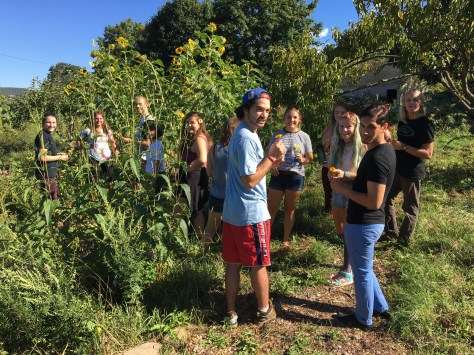
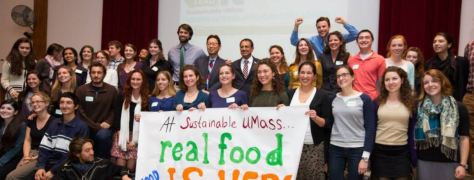
Join the Food Movement and create a career as a Sustainable Food and Farming major in the Stockbridge School of Agriculture at UMass Amherst.






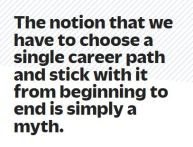 rapist and senior adviser for career development at Harvard Business School. “We build these mental models of what’s important for us and what we need to do in our lives,” says Butler. “These times of impasse when we’ve hit the wall about what we want to do [require] shattering those mental models.”
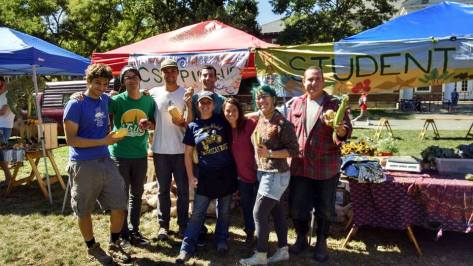
 If you are attending the summer NOFA Conference this year, please be sure to stop by the vendors tent and look for the Stockbridge School of Agriculture booth. Our (smiling) students will be there to greet you and tell you about their experience studying
 Nothing illustrates the weirdness, injustice, and unpleasantness of the present economy more clearly than the misdirected attempts of government to reduce the price of food. All seem to accept that to reduce food prices is good and necessary, and that it represents ‘progress’. Certainly it is necessary to ensure that everyone can afford good food, but this does not necessarily mean that we should seek to make it cheaper.
 A crisis of epic proportions looms in American farming — and thus American food. A labor shortage is “all but guaranteeing that crops will rot in the field on many farms this year,”
  UMass Sustainable Food and Farming