Like many of you, we watched in horror as events unfolded across the country last week, and the hell and heartache has left us reeling. We’ve long reported on food justice and last year wrote about why food belongs in our discussions of race. But we know we have a lot more work to do. In that spirit, we reached out to leaders of color in the food justice community for their thoughts about how they think the “food movement” might come together on the issues of race, equity, and access. We encourage others to speak up, add your voices to this space, and to continue the conversation.
Erika Allen, Chicago and National Projects Director, Growing Power
When people say “The Good Food Movement” are they thinking about racial and economic parity? I do, which is why I see it as a Good Food Revolution. I’m not sure how you define sustainable agriculture without this being a central point of understanding. The economic scaling up and investment in urban and sustainable agriculture without the facilitation of anti-racism work on an academic level—to truly understand one’s role as a perpetuator of racism even within liberal thought and action—is a real disconnect. Undoing racism and its companions of oppression, does not magically happen, and it requires real effort. Not just talk, or a workshop, but daily vigilance, and a real cultural shift. We are at a historic juncture. We [at Growing Power] believe that growing food and justice for all goes hand-in-hand toward the realization of a truly sustainable agriculture movement domestically and globally. To achieve that, we need to integrate our understanding on a deep level. This isn’t political rhetoric, this is what we have been struggling for since abolition of slavery. We need to address racism and white privilege and supremacy in the Good Food Movement. As the Black Lives Matter movement continues to move forward Continue reading Social Justice is a Core Component of a Sustainable Food System→
Emily Lewis-Brown – 7th April 2016 – Published in The Ecologist
Food has never been more affordable for middle class families in rich countries. But it comes at a high cost: the impact of industrial food production on health, environment and society has never been greater as Patrick Holden explained to Emily Lewis-Brown.
The post war drive for food security through industrial farming and ever-cheaper food has, ironically, put both our health and the future of farming at risk.
Food prices have been kept artificially low, while the true costs of food production have been obscured – and are increasingly unaffordable. A conference took place in April in San Francisco designed to put this right: The True Cost of American Food.
Patrick Holden – dairy farmer, sustainable food campaigner and organiser of the conference – believes that sustainable farming is being held back by the way that food prices are kept artificially low through mechanisms which hide the real cost of foods and place those costs elsewhere – on communities, our health, and the environment.
“When we unravel the hidden costs of food and farming, we find that our food systems are generating diets which we pay for many times over in hidden ways”, he says. “They are making us sick and degrading the environment, which is vital to the future of our food security and health.
“Everyone has a right to good food that is affordable and nutritious, but the belief that making food cheap was the most important goal, facilitated damage to our natural environment and public health. This was made possible by cheap oil and technological innovation. It was hard for consumers to see the changes to the food we eat, as companies increasingly obscured the story of how our food is produced.
“If you told the real story of farming, what goes on behind closed doors would be upsetting. It’s covered up by brands with images of outdoor mixed farms, with cows in meadows and hedgerow-lined hay fields blooming with wild flowers.”
Milk cheaper than bottled water
Patrick had an urban childhood, like millions of other people who live in cities now, but his family moved back to the land in the 1970s to live on a farm. His deep understanding of agricultural practice developed from farming his mixed dairy farm in Wales, where he still farms as sustainably as possible.
That means he knows from personal experience the plight faced by many farmers: “Dairy farmers are now slaves to the commodity market. To survive economically, they need more and more cows, kept more and more intensively. Milk is sold for much less than the cost of its production – it costs less than a bottle of water now. How on earth can this be? Milk is a vital source of nutrition and farmers should be paid for the true cost of its production.”
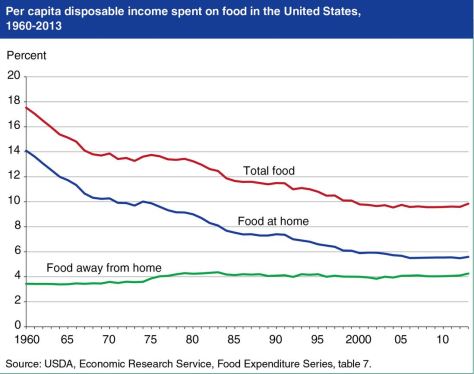
Of course for many families it’s great that we spend less now than ever before on food: most of us spend less than 10% of our disposable income on food – and this is seen as a good thing. But that cheap food comes at a high price:
“The apparent cheapness of food is an illusion, because behind the price tag lie a series of hidden costs, none of which are reflected in the price of food. These hidden costs are paid in damage to the environment, depletion of the Earth’s resources, and public health.”
Adding up the impacts
Patrick is involved in research with the UN’s The Economics of Ecosystems and Biodiversity (TEEB) initiative that traces the true costs of food. But to make all those statistics real, he says, take a carton of milk, and consider the costs of its that we have to pay for without realizing it – on top of the suffering that’s routinely inflicted on animals under industrial farming systems.
“You’ve got damage to the environment from the pollution of chemical fertilisers and pesticides, degradation of the soil and declining biodiversity, along with the contribution that agriculture makes to climate change.
“Then there’s a high cost in human health, especially, at the moment, in the rise of untreatable infectious diseases from the over-use of antibiotics in humans and farm animals. But this also includes the costs of the obesity epidemic caused by industrialised diets.
“And there are significant social costs – agricultural workers suffer unduly from labour abuses across the world which sometimes extend to the condition of slavery. These costs are not currently paid in the price of our food and this is not being recognized by politicians nor properly addressed by the people who should be addressing them.”
The True Cost of American Food
What is needed, he says, is a ‘True Cost’ account of our food system. That’s one of the core missions of the Sustainable Food Trust, which Patrick launched in 2013 at a major conference on the topic in London, bringing together the world’s leading experts on True Cost Accounting.
“For obvious reasons all farmers have to follow the best business case”, says Patrick. “But right now if you farm intensively and cause damage to the environment and public health, you will make more money than if you switch to sustainable methods. The aim of the San Francisco conference is to do something about that – we want to create the conditions where producing food in a sustainable way is the most profitable option for producers and the most affordable for consumers.
“We believe there are many opportunities to intervene and shift the dial in this direction. For instance, we can redirect Farm Bill subsidies to favour sustainable practices, we can tax farming which causes damage to the environment or public health, we can harness the power of the financial community to preferentially invest in sustainable agriculture and food companies.
“It’s all about carrots and sticks, we want to encourage the right kind of farming which benefits the environment and public health and discourages food systems which lead to climate change, pollution and disease.”
Around 2003 I came across Charlie Munger’s 1995 speech, The Psychology of Human Misjudgment, which introduced me to how behavioral economics can be applied in business and investing. More profoundly, though, it opened my mind to the power of seeking out and applying mental models across a wide array of disciplines.
A mental model is just a concept you can use to help try to explain things (e.g. Hanlon’s Razor — “never attribute to malice that which is adequately explained by carelessness.”). There are tens of thousands of mental models, and every discipline has their own set that you can learn through coursework, mentorship, or first-hand experience.
There is a much smaller set of concepts, however, that come up repeatedly in day-to-day decision making, problem solving, and truth seeking. As Munger says, “80 or 90 important models will carry about 90% of the freight in making you a worldly‑wise person.”
This post is my attempt to enumerate the mental models that are repeatedly useful to me. This set is clearly biased from my own experience and surely incomplete. I hope to continue to revise it as I remember and learn more.
How-to Use This List
I find mental models are useful to try to make sense of things and to help generate ideas. To actually be useful, however, you have to apply them in the right context at the right time. And for that to happen naturally, you have to know them well and practice using them.
Therefore, here are two suggestions for using this list:
For mental models you don’t know or don’t know well, you can use this list as a jumping off point to study them. I’ve provided links (mainly to Wikipedia) to start that process.
When you have a particular problem in front of you, you can go down this list, and see if any of the models could possibly apply.
Notes
Most of the mental models on this list are here because they are useful outside of their specific discipline. For example, use of the mental model “peak oil” isn’t restricted to an energy context. Most references to “peak x” are an invocation of this model. Similarly, inflation as a concept applies outside of economics, e.g. grade inflation and expectations inflation.
I roughly grouped the mental models by discipline, but as noted, this grouping is not to be taken as an assertion that they only apply within that dicipline. The best ideas often arise when going cross-dicipline.
I realize my definition of mental model differs from some others, with mine being more broadly defined as any concept that helps explain, analyze, or navigate the world. I prefer this broader definition because it allows me to assemble a more wide-ranging list of useful concepts that may not be mental models under other definitions, but I nevertheless find on relatively equal footing in terms of usefulness in the real world.
The numbers next to each mental model reflect the frequency with which they come up:
(1) — Frequently (63 models)
(2) — Occasionally (43 models)
(3) — Rarely, though still repeatedly (83 models)
If studying new models, I’d start with the lower numbers first. The quotes next to each concept are meant to be a basic definition to remind you what it is, and not a teaching tool. Follow the link to learn more.
I am not endorsing any of these concepts as normatively good; I’m just saying they have repeatedly helped me explain and navigate the world.
I wish I had learned many of these years earlier. In fact, the proximate cause for posting this was so I could more effectively answer the question I frequently get from people I work with: “what should I learn next?” If you’re trying to be generally effective, my best advice is to start with the things on this list.
New York Times – By EILENE ZIMMERMAN – JUNE 29, 2016
Dan Albert’s farm is far from traditional. There are no picturesque, rolling fields, no tractors tilling soil; there is no white farmhouse or red barn. For that matter, there is no soil, or sunlight.
The farm, Farmbox Greens, is inside a two-car garage behind Mr. Albert’s Seattle home. It consists of 600 square feet of microgreens grown in vertically stacked trays beneath LED lights.
The ability to grow in such a small space is the result of hydroponics, a system in which a plant’s roots sit in nutrient-rich water instead of soil.
Microgreens — the first, tiny greens on plants like arugula, radishes and bok choy — can go from seed to harvest in less than two weeks. That enables Farmbox Greens to compete on price against produce delivered from far away.
“We are fresher and our greens last 20 to 30 percent longer than those grown outside the area,” said Mr. Albert, who co-owns the farm with his wife, Lindsay Sidlauskas.
It has revenue of under $500,000, but was profitable enough in 2014 that Mr. Albert quit his day job as a landscape architect to farm full time. He now has three employees and sells his greens to about 50 restaurants in the Seattle area, a local grocery chain and four weekly farmers’ markets.
Consumer demand for locally grown food and the decreasing price and improved efficiency of LED lighting are driving the creation of more so-called vertical farm start-ups, said Chris Higgins, editor of Urban Ag News, which follows this segment of farming.
Enter a captionCarrot microgreens, ready to harvest at City-Hydro.
Energy costs are still a significant barrier to success, making few vertical farms in the United States profitable. Those that are tend to be smaller ones.
By JACK EVANS – Daily Hamphire Gazette – June 22, 2016
Willie Crosby, right, and Alex Dorr mix sawdust and pelletized cottonseed hulls to make a substrate for growing mushrooms at Fungi Ally in Hadley.
Forty-seven farms in western Massachusetts and eastern New York will tackle projects this summer — including a potato digger and an insulated room for a reverse osmosis machine — with help from an awards program for farmers.
The Local Farmer Awards gave more than $100,000 this year to farms for projects to improve equipment or infrastructure. The program, which began in 2015, is a project of the Harold Grinspoon Charitable Foundation and added Big Y Foods Inc. of Springfield as a partner this year.
Seventeen farms in Hampshire County were among those receiving the $2,500 grants. Max Breiteneicher, owner of Grace Hill Farm in Cummington, said his young business has benefited from the Local Farmer Awards and other programs.
“We’re only in our third year – and only entering our second full year right now,” said Breiteneicher, who will use the money to buy a pasteurizer to increase the varieties of cheese Grace Hill can produce.
He said starting a cheese farm is a difficult and expensive enterprise.
“These (grants) have really helped,” he said.
J.P. Welch of Justamere Tree Farm in Worthington and Joe Czajkowski of Joe Czajkowski Farm in Hadley both said the money will help them improve the efficiency of their operations.
Justamere, which produces maple products, focuses on energy efficiency and uses wood firing and solar power, according to its website. Welch said the farm’s new maple candy machine, which can help produce candy at a faster rate than its predecessor, has already been a significant improvement for the farm.
“We’re all about efficiency,” he said. “Anything we can do to streamline the process is what we want to do, and this just will go to help in doing that.”
Czajkowski said he became interested in making butternut oil after reading about its health benefits — it is cholesterol-free and high in Vitamin A — but lacked the equipment to separate butternut squash seeds from stringy flesh and to dry them enough to be pressed for oil.
The process lets farmers who grow butternut squash use parts of the gourd that might otherwise go to waste, he said. He’s also commissioning the building of seed driers locally to keep the money in the area economy.
“I think it’s better, if Big Y and Harold Grinspoon want to help the area,” he said. “Spending it locally is right in line with what they want.”
A cluster of Blue Oyster mushrooms growing at Fungi Ally in Hadley.
Growing mushrooms
For Fungi Ally, a mushroom-growing operation in Hadley, the award offered a chance to fast-forward existing plans. Willie Crosby, one of Fungi Ally’s co-founders, said the money will go toward building a new grow room.
The company produces about 150 pounds of mushrooms weekly, but the new room will add an additional 300 to 400 pounds to that total.
“It’s something that we were interested in and there was a desire for, but we didn’t have the capital to go for it,” Crosby said. “This is allowing us to jump forward a little bit.”
Willie Crosby rotates stock in the existing grow room at Fungi Ally in Hadley. A new larger grow room, constructed with more durable corroguated plastic panel walls, is in the process of being finished with its own climate control system.
Cari Carpenter, director of the Local Farmer Awards, said Grinspoon himself started the program to help local farms compete economically.
She said Grinspoon, an octogenarian millionaire philanthropist who made his money in real estate, also appreciates the less tangible benefits that farmers like Welch and Czajkowski provide.
“When Mr. Grinspoon started this, he wanted to help the farms compete in the marketplace, but he recognizes the environmental advantages, the health advantages and the economic advantages of local farming,” Carpenter said.
Carpenter said she already is aiming to help the program grow for next year. She received 128 applications this year — a 45 percent increase over last year, she said. And partnering with Big Y let the number of farms receiving money rise from 33 to 47.
The results of the fledgling program are already apparent, Carpenter said.
“Some of the feedback we’ve gotten that’s consistent is it’s making a big impact on the farms,” she added.
“One of the farmers basically said, ‘Farmers are so used to doing frugal fixes, and this gives us a chance to step back and see what we need to address.’”
Jack Evans can be reached at jackevan@indiana.edu.
BOSTON – Governor Charlie Baker, in support of National Pollinator Week, has declared June 20 – 26, 2016 as “Massachusetts Pollinator Week” – an opportunity to celebrate and protect our pollinator populations. Additionally, the Massachusetts Department of Agricultural Resources (MDAR) will also celebrate the opening of the first state apiary, a collection of beehives to be used for education and research.
“Massachusetts Pollinator Week is an opportunity to raise awareness of the importance of pollination to our environment and agricultural industry, and the vital need to protect Massachusetts’ pollinators,” said Governor Charlie Baker. “I encourage all residents to learn more about our native pollinators and consider planting flowers, trees and other plants to provide pollinators with nectar, pollen and habitat.”
“This week, we appreciate the importance of pollinators to Massachusetts’ ecosystems, food sources and economy,” said Lieutenant Governor Karyn Polito. “Our administration is committed to preserving our native pollinator species and their habitats, and working with local beekeepers across the Commonwealth to ensure their hives are healthy and thriving.”
Pollinators include bees, birds, bats, butterflies and other species. Over 45 percent of agricultural commodities in Massachusetts rely on pollinator species for crop pollination and food production. There are approximately 4,500 honey beekeepers managing approximately 45,000 hives across the Commonwealth. Pollinator species provide significant environmental benefits that are necessary for maintaining healthy, diverse ecosystems, and produce valuable products including honey, propolis, royal jelly and wax.
The new state apiary at the University of Massachusetts Amherst will serve as a vessel for education, outreach demonstrations and research related to agricultural sustainability, pollination, honey bee health and hive management. The apiary consists of twelve honey bee hives located within an 80 foot by 30 foot plot situated adjacent to the UMass Pollinator Conservation Project.
The apiary will also be used by the UMass Beekeeping Club and for hives maintained for UMass beekeeping courses. The apiary was funded by appropriated FY16 funds for the DAR Apiary Program designated for projects that provide research, education and general support to benefit Massachusetts honey bees.
“Given the ability to do live, in-hive demonstrations onsite, this apiary will also be an important tool for providing outreach education to farmers, land managers, beekeepers and to the public in the Commonwealth on topics related to honey bees and agriculture,” said Energy and Environmental Affairs (EEA) Secretary Matthew Beaton. “Through the new state apiary and the Massachusetts Department of Agricultural Resources’ Apiary Program, we are working hard to educate the public about honey bees and support the Commonwealth’s honey beekeepers.”
In Amherst on June 20, 2016, Assistant Secretary for Environment Daniel Sieger will be joined by MDAR Commissioner John Lebeaux and representatives from UMass Amherst College of Natural Sciences for a tour of the new state apiary on the grounds of the UMass Agricultural Learning Center.
“The apiary has received considerable interest from students engaged in farming and sustainability,” said Massachusetts Department of Agricultural Resources (MDAR) Commissioner John Lebeaux. “Currently several are doing an internship with DAR to assist in hive management throughout the summer as well as conducting their own individual research projects related to hive vitality and pest management.”
“Making sure bees stay healthy and productive is necessary for vibrant agriculture,” said State Senator Anne Gobi (D-Spencer). “I appreciate the focus of the administration and look forward to continuing to work collaboratively with our many bee organizations to achieve that goal.”
“I applaud the initiative set forth by the Baker Administration and MDAR to recognize our vital pollinator populations here in Massachusetts,” said State Representative Paul Schmid (D-Westport). “We are incredibly fortunate to have so many active beekeepers that maintain thousands of hives throughout the Commonwealth in order to provide the well-known agricultural products that make our state so great and promote environmental stewardship.”
“This is an exciting collaboration for the Stockbridge School of Agriculture at UMass Amherst,” said Frank Mangan, Director of the Agriculture Learning Center. “Maintaining a state apiary with DAR provides our students, growers and bee keepers with preventative learning tools.”
The Massachusetts Department of Agricultural Resources (MDAR) has collaborated with the University of Massachusetts Stockbridge School of Agriculture to create a state apiary at the UMass Agricultural Learning Center, 911 North Pleasant St., Amherst. The apiary consists of twelve honey bee hives located within an 80 foot by 30 foot plot situated adjacent to the UMass Pollinator Conservation Project. The apiary is surrounded by a solar powered electric fence (to deter animals and serve as a safety barrier for visitors). It consists of six wooden stands (capable of holding five hives each) partitioned into two horizontal rows. The apiary will also be used by the UMass Beekeeping Club and for hives maintained for UMass beekeeping courses.
The purpose of the apiary is to serve as a vessel for education, outreach demonstrations and research related to agricultural sustainability, pollination, honey bee health and hive management. This apiary is also considered to be a critical component of the Stockbridge School’s student farm pollinator habitat conservation project. The apiary will provide valuable pollination services to the farms cultivated acreage of crops, trees and wildflowers. Given the ability to do live, in-hive demonstrations onsite, this apiary will also be an important tool for providing outreach education to farmers, land managers, beekeepers and the public on topics related to honey bees and agriculture. The apiary will be maintained through a collaborative effort of the MDAR Apiary Program inspectors, students and faculty members on campus.
Jessica Wisniewski’s two children play among old beehives during a CISA sponsored tour of Warm Colors Apiary, Thursday, May 26, 2016 in South Deerfield. RECORDER STAFF/ANDY CASTILLO
——————————————————–
SOUTH DEERFIELD — The air suddenly becomes thick with angry bees as a beekeeper, garbed in white, removes the cover from a beehive at Warm Colors Apiary and searches for a queen.
Inside the swarm, the overpowering sound of wings beating against air is almost as strong as the permeating scent of raw honey, which drifts up from the cluster of hives, across a small farm yard and into a quaint building, where a group of about 20 local farmers, chefs, students and business owners have gathered for a tour of the apiary to learn both about the farm, and about honey production in the Pioneer Valley.
“We have currently about 800 (hives) that are primarily honey producing colonies, another 200 raise queens,” says Dan Conlin from the front of the room.
Conlin, who has kept bees since he was 14, owns the apiary on South Mill River Road, along with his wife Bonita Conlin. Throughout the year, the apiary produces honey, pollinates farmers’ crops, sells beeswax candles and beekeeping supplies, and offers educational classes to aspiring beekeepers.
By Naila Moreira – Daily Hamphshire Gazette – June 9, 2016
I’ve always had a thing for creepy crawlies. I was the kid who always caught the wasp stuck in the classroom to let it out the window. I’ll still crouch to move a worm from the sidewalk into the grass.
So when a colleague of mine, Sara Eddy, started her first beehive, I devoured her Facebook posts about the process. And this spring, I had a chance to visit her and her bees.
Dan Wright holds a frame of Sara Eddy’s bees. Wright, who owns about 20 hives, mentors Eddy. NAILA MOREIRA
The hive sat pertly in her Amherst backyard, painted lavender and protected from bears by an electric fence. The smoker she uses to calm the bees waited in her driveway, puffing a stream of gray into the air from its metal spout.
Asked about bee stings, Eddy shrugged it off. “Last year I was stung three times,” she said. “But one of them was in front of Seelye,” the building at Smith College where Eddy works.
Her teenage children are less relaxed, she said, yet still attracted. “My daughter gets freaked out. But she’s an artist, and bees are turning up everywhere in her art.”
There’s just something compelling about bees. At age 29, Sylvia Plath – among our region’s most well-known poets – embarked on the adventure of beekeeping. The fuzzy yellow-brown insects soon swarmed into her writing, inspiring her famous sequence of bee poems.
Plath’s queen bees are metaphors for feminine power, leaders of an army of infertile female workers who protect the hive, collect food, and raise young.
“I stand in a column/ Of winged, unmiraculous women,” wrote Plath in her poem “Stings.” “Honey-drudgers. /I am no drudge.”
Besides Plath, our region has other special connections to honeybees. The walls of Seelye Hall have been home to a huge community of 40,000 bees for more than a decade. A 2012 effort to move the bees failed because the hive’s exact location couldn’t be found.
Beekeeping ‘father’
The creator of the modern beehive, Lorenzo Langstroth, also lived and worked here, serving as pastor for Greenfield’s Second Congregational Church in the 1840s and ’50s. Sometimes called “The Father of American Beekeeping,” he was celebrated June 4 at the church’s yearly Bee Fest.
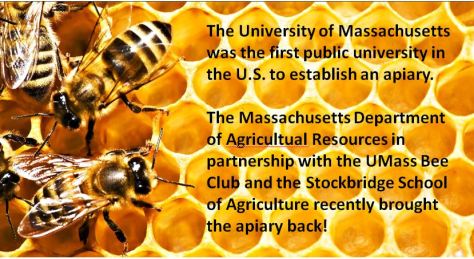
And the first university apiary program in the nation was founded at the University of Massachusetts.
Students from the UMass Beekeeping Club are installing the new hives at the UMass Apiary.
Story continued…..
In Eddy’s backyard, I watched her honey-drudgers scurry near their long, slender queen on a hive frame pockmarked with brood cells and pollen.
Eddy said she began keeping bees in part to do her share to fight back against the phenomenon of colony collapse disorder. Since 2006, an average of 30 percent of all hives yearly have failed to survive, according to USDA statistics. This past year saw a 44 percent hive loss nationwide.
But she soon found she was in for as much of a challenge as beekeepers everywhere.
Varroa mites
Her first hive contracted the bane of beekeepers: varroa mites. These tiny tick-like pests are an invasive species first documented in the United States in 1987. Despite Eddy’s efforts to overcome the infestation, the hive succumbed. By spring, the bees were dead.
“They’re little vampires, sucking the blood out of bees,” said Dan Wright, Eddy’s beekeeping mentor, who owns about 20 hives at Hampshire College, Small Ones Farm in Amherst, and near the UMass Hadley farm. “But varroa itself won’t kill bees, it’s the disease load they’re passing around from bee to bee.”
Hives infested by varroa often survive the summer but fail in winter, when bees can’t leave the hive and must survive off their summer reserves of honey and strength.
A battle has also been raging over whether a new class of pesticides used since the 1990s, neonicotinoids (known as neonics), are partly responsible for colony collapse.
Neonics aren’t sprayed on fields but instead applied to seeds before planting, theoretically making them safer. Growing plants take up pesticide into their leaves and flowers as a “systemic” pesticides that only kills insects that eat the plant.
Used on crops that bees don’t pollinate like corn and soybeans, neonics shouldn’t reach bees. But in practice, bees may get exposed by several routes.
If not carefully handled, dust from treated seeds can waft away before and during planting. Studies have found neonics in soil, water, and bee favorites such as dandelions near treated crops. Known toxins to bees, neonics can also interfere with their navigation, according to controlled studies where bees were fed the pesticide directly.
But so far, just one 2015 study has linked the amount of neonics actually present in the environment to increased levels of colony collapse. And where neonics are common, other bee toxins are often present in even higher amounts – especially pesticides sprayed by homeowners to kill mosquitos and other pests, according to a separate 2015 study in the journal Nature.
“There is not enough evidence to call for a complete ban on the neonics – there are simply too many beekeepers successfully keeping healthy hives in areas of seed-treated crops,” notes professional apiarist Randy Oliver, who writes the blog ScientificBeekeeping.com.
Multiple stresses
Experts now believe that no single problem prompts colony collapse. Varroa, pesticides, global warming, and habitat loss can all stress bees. Weakened by one problem, the hive simply can’t survive the others.
“You can’t just blame pesticides, you can’t just blame one thing. It’s a lot of factors coming together,” said Dan Conlon, who owns Warm Colors Apiary in Deerfield. He added, however, that at least in New England, varroa mites “are the number one killers of bees.”
Conlon, who provides pollinator hives to farms, noted that farmers are often eager to work with apiarists to help minimize bees’ pesticide exposure, such as by spraying at night when bees aren’t active, or choosing non-persistent chemicals.
Conlon is also one of just 15 beekeepers nationwide USDA-certified to raise and sell Russian queens, a strain of bee resistant to varroa mites. Most honeybees today come from an Italian strain imported to the U.S. in the mid 1800s.
The Russian bees remove mites from the hive, grooming them off each other and the larvae. Conlon said his 1,200 hives, all housing Russian bees, no longer require chemicals for mite control.
“They live through the winter without any special attention, they take care of the mites pretty much by themselves,” he said. “They’re resistant to a lot of diseases. They’re just hardier than other bees.”
For the backyard beekeeper, this option may help provide a respite from the struggle to keep bees alive. “The future of beekeeping is like a three-legged stool,” said Alice Armen, a Montague resident who has kept bees for 16 years and recently bought three of Conlon’s queens. A broader gene pool including bees like the Russians, a decreased reliance on pesticides, and community sharing of knowledge and ideas will help bees recover, she said.
In terms of community, beginners hoping to own a hive can join the Franklin County or Massachusetts Beekeepers’ Associations for advice getting started and to meet potential beekeeping mentors. The Massachusetts Beekeepers’ Association will also offer hands-on workshops at its annual field day June 18 at the UMass Agronomy Farm in South Deerfield.
Eddy went into the 2015-2016 winter, her second year keeping bees, with two hives of Italian bees. In spring, she discovered one hive was empty, despite having had no mites. At first, she said, she was devastated. But then she opened her surviving hive.
The number of bees had doubled. One hive had simply moved in with the other – perhaps because it lost its queen, or had been disturbed by a mouse Eddy found living underneath.
“They’re amazing,” she told me, as she slid a frame vibrating with bees back into the hive. “Sometimes I think, maybe this hobby is too expensive, and too much work. Because it is a lot of work. And it’s a lot of mental work, a lot of worry.”
She smiled. “But then I come out here and I look at them, and … I just love them.”
Naila Moreira is a writer and poet who often focuses on science, nature and the environment. She teaches science writing at Smith College and is the writer in residence at Forbes Library. She’s on Twitter @nailamoreira.
The Stockbridge School of Agriculture teaches a course, STOCKSCH 166 – Practical Beekeeping, as part of the Sustainable Food and Farming degree program.
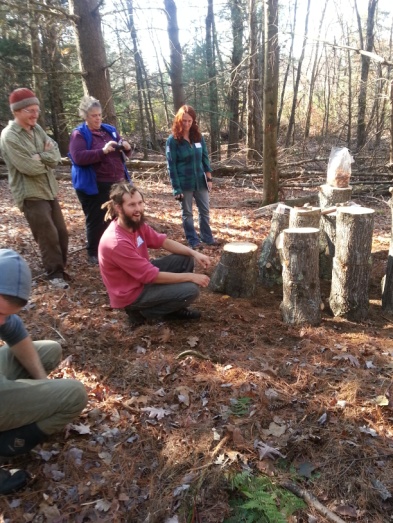
Willie Crosby teaches a class on growing mushrooms for the UMass Amherst Stockbridge School of Agriculture
HADLEY –Twenty-five year old William R. “Willie” Crosby grew up in a family of golfers in Boxboro, so it made sense that he went to school to study turf management at the Stockbridge School of Agriculture.
He earned a bachelor’s degree in plant soil science from the University of Massachusetts at Amherst in 2012, and he completed two internships at golf courses.
But he wasn’t satisfied with the work.
“I didn’t feel satisfied with the end result – a place for people to go and hit a ball around,” he said. “I want the end product (of what I do) to be something I’m really proud of and exciting to offer to my community.”
So, he changed courses and got involved in vegetable farming. Today, he is in the business of growing mushrooms.
“I didn’t see a huge opportunity to start a business in vegetable farming, so I started looking at mushrooms,” he said, noting that they are a medicinal food source and grow on waste products from other industries like sawdust or soybean hulls.
He learned how to grow mushrooms at a workshop in the state of Washington and during an internship in Nevada. He continues to learn “by trial and error,” he says, as well as from other farmers, buyers and Community Involved in Sustaining Agriculture.
Founder and owner of Fungi Ally in Hadley, Crosby began growing mushrooms in North Amherst in 2013 when he and a friend inoculated about 500 logs with shiitake mycelium.
In 2015 he moved the business to a 3,000-square-foot rented warehouse in Hadley where he and his two part-time employees harvest about 150 pounds of shiitake, oyster and lion’s mane mushrooms a week.
The process there begins with a delivery of oak sawdust from Lashway Lumber in Williamsburg – about 20 yards every couple of months.
Working with about 200 gallons of sawdust at a time, Crosby mixes in wheat bran, sorghum and gypsum to act as a nitrogen supplement. The mixture is wet and put in special 18-by-8-by-6 inch plastic bags with filters and then steamed to kill bacteria and unwanted fungi.
A small amount of mushroom mycelium is put into each bag; they are then sealed and stored in the warehouse where it takes one to three months to colonize. Holes are then poked into the bags – or the sawdust blocks are removed completely from the plastic – and placed in the fruiting (growing) room for about 10 days until the mushrooms are harvested.
Crosby eats mushrooms every day; he likes them sautéed, roasted and dried as well as in soups, salads and pate.
Mushrooms are harvested daily at Fungi Ally, where they are packaged then distributed to two area food co-operatives, restaurants and distributors for the Worcester, New York City, Boston and Providence markets.
Mushroom sales total about $10,000 a month.
Fungi Ally received a $10,000 grant earlier this year from the state Department of Agricultural Resources‘ Matching Enterprise Grants for Agriculture Program that helps beginning farmers grow or improve their farm operations. Crosby used the grant to begin construction of a lab for the steaming and inoculating process and to grow spawn to provide to people to grow mushrooms at home.
Fungi Ally sells shiitake and lion’s mane mushroom growing kits for $20; they produce about two to three pounds of mushrooms over two three months.
Grant money also was used to build a second fruiting room. “It has given us the opportunity to increase production and begin looking at large customers buying 100 to 200 pounds of mushrooms each week,” he said.
Besides selling mushrooms and kits, Fungi Ally offers workshops about mushrooms and how to grow them at home.
“Mushrooms are really tasty. They are a fun, different food source and good source of protein,” Crosby said. “And they have medicinal benefits like boosting the immune system.”
As he looks to the future, he would like to add more mushroom varieties to his business and expand production of the shiitake mushrooms, which he said are popular.
“Providing food for the community I’m living in and seeing the people my work is literally feeding feels really, really good,” he said. “As decomposers, (mushrooms) transform dead material into basic nutrients for plants and animals to use. They are a link between death and life.”
LEARN MORE
Business: Fungi Ally Where: 311 River Drive, Hadley For more info: Online, fungially.com; call (978) 844-1811





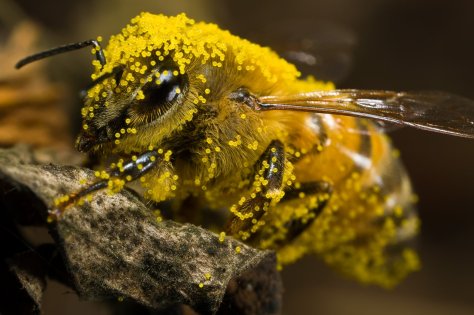
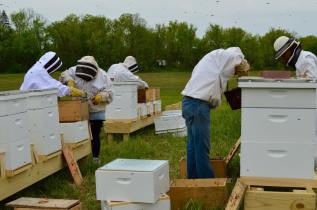 The new state apiary at the University of Massachusetts Amherst will serve as a vessel for education, outreach demonstrations and research related to agricultural sustainability, pollination, honey bee health and hive management. The apiary consists of twelve honey bee hives located within an 80 foot by 30 foot plot situated adjacent to the UMass Pollinator Conservation Project.
 The Massachusetts Department of Agricultural Resources (MDAR) has collaborated with the University of Massachusetts Stockbridge School of Agriculture to create a state apiary at the UMass Agricultural Learning Center, 911 North Pleasant St., Amherst. The apiary consists of twelve honey bee hives located within an 80 foot by 30 foot plot situated adjacent to the UMass Pollinator Conservation Project. The apiary is surrounded by a solar powered electric fence (to deter animals and serve as a safety barrier for visitors). It consists of six wooden stands (capable of holding five hives each) partitioned into two horizontal rows. The apiary will also be used by the UMass Beekeeping Club and for hives maintained for UMass beekeeping courses.
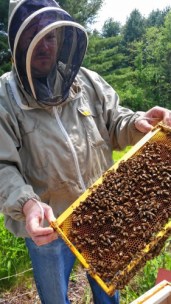 The purpose of the apiary is to serve as a vessel for education, outreach demonstrations and research related to agricultural sustainability, pollination, honey bee health and hive management. This apiary is also considered to be a critical component of the Stockbridge School’s student farm pollinator habitat conservation project. The apiary will provide valuable pollination services to the farms cultivated acreage of crops, trees and wildflowers. Given the ability to do live, in-hive demonstrations onsite, this apiary will also be an important tool for providing outreach education to farmers, land managers, beekeepers and the public on topics related to honey bees and agriculture. The apiary will be maintained through a collaborative effort of the MDAR Apiary Program inspectors, students and faculty members on campus.


 In 2015 he moved the business to a 3,000-square-foot rented warehouse in Hadley where he and his two part-time employees harvest about 150 pounds of shiitake, oyster and lion’s mane mushrooms a week.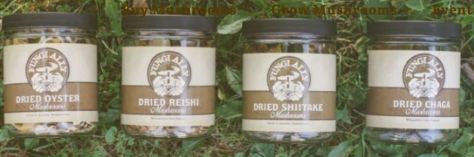
 UMass Sustainable Food and Farming