From humanitarian and ecological viewpoints, many aspects of the capitalist economic system are irrational; although they are certainly rational from the more limited standpoint of the individual business or capitalist seeking to make profits. For example, because most people lack their own means to produce an income, they must sell their labor power to companies, which in turn must normally pay a high enough wage for the reproduction of workers and their families. However, although requiring people to work in order to live, the economic system does not guarantee a job for everyone who wants and needs to work. Nor do the available jobs necessarily pay sufficient wages for a decent existence (although government regulations may in some cases compel employers to move in this direction). Practices that make eminent sense for the individual capitalist or company, such as paying only the minimum wage necessary in order to obtain sufficient workers with the needed skills, end up being a problem not only for workers, but the capitalist system itself. Low worker income contributes to problems of effective demand.
With regard to the environment there are scores of examples of irrational behavior by capitalist businesses that have the ultimate goal of making profits. Many practices and side effects of the way the system functions degrade the ecosystem and its processes on which we depend and may also directly harm humans. For example, it is not rational to introduce chemicals into the environment, including into products we use daily, that are either toxic or cause illnesses of various types. Yet there are over 80,000 chemicals used in the United States; few of them are tested for their effects on people or other species, and many commonly used ones are suspected to be carcinogens or have other detrimental effects.
For this discussion I would like to focus on a well-known passage from the third volume of Marx’s Capital: “a rational agriculture is incompatible with the capitalist system (although the latter promotes technical improvements in agriculture), and needs either the hand of the small farmer living by his own labour or the control of associated producers.”1
The U.S. food system can be thought of as being composed of a number of parts before the food reaches the public. “Farming” is the actual process of raising plants and animals for human food, animal feed, conversion to industrial chemicals and fuels for vehicles, and fiber (such as cotton). But there are “upstream” inputs required by farmers such as commercial fertilizers, pesticides, seeds, equipment, animal hormones, antibiotics, mineral feed supplements, fuel to run the equipment, and dry some crops. “Downstream” from the farm, its products are first purchased and then processed and manufactured by one or more corporations. Products are then transported from the processors and manufacturers to retail outlets for sale to the public. There are no cycles in this system as energy and nutrients flow from one location to another.
When viewed as a whole, the food system is composed of the following chain: (a) input industries; (b) farms; (c) purchasers of raw farm products; (d) processors/manufacturers; (e) retail stores; and (f) the public. The agricultural sector—“agribusiness”—is considered to be composed of (a) through (c), but basic processors (grinding, for example) are also part of the sector.
The Purposes and Outcomes of Agriculture
The main purpose of almost all farm production in the United States is to sell raw products at the highest possible profit. There are farmers producing for niche markets and/or “adding value” by processing at the farm (making such items as cheeses and jams) and selling directly to the public. However, the overwhelming quantity of food produced is by farmers selling undifferentiated commodities into a large regional or national market. This goal to maximize profit margins (selling price minus cost of production) governs:
- What crops are planted in a given year and over time (type of rotation).
- Which farm animals are raised, if any, where they are raised, and how they are treated.
- The inputs used such as fertilizers, pesticides, machinery, and needed fuels.
- The scale of production and mechanization.
- The extent of hired farm labor and treatment of laborers.
- When products are sold and use of futures contracts.
- Whether direct production contracts with processors are entered into.
A “Logical” Progression
These questions are intertwined—one decision may directly lead to particular decisions on other aspects. As an example, let us look at a farmer in the U.S. Cornbelt region (the Cornbelt is centered in Iowa and Illinois, but includes large areas of Minnesota, eastern Nebraska, Missouri, western Indiana and parts of western Ohio, and the eastern Dakotas). The farmer decides to grow corn and soybeans, as many Cornbelt farmers do (often exclusively so). The infrastructure needed to deal with these crops is in place—suppliers of needed inputs, market arrangements, storage, and transportation of the crops to markets. As we go through the example you might say to yourself that the aspects discussed appear to be absolutely rational decisions. And they actually are formally rational, given the economic system in which the farmer operates. But the critical question is: are the results of such a progression of decisions and practices substantively rational from wider environmental or social points of view? Let us take a look.
The first decision to concentrate on one or two crops automatically means that a more ecologically sound and complex rotation of crops is not possible. A lack of farm diversification (and no farm animals) makes sense because farmers can then spend their time specializing as is done in other lines of business. A typical conventional farmer in the Cornbelt primarily grows corn and soybeans.2 The lack of rotation with a perennial sod-type crop (such as grass and legume hay that covers the entire soil surface all year long and helps build up organic matter) means that the soil is eroded more easily and groundwater is more polluted. Lack of a more complex rotation also makes weeds, insects, and diseases more problematic, requiring interventions, normally with pesticides. The reliance on two crops also means that if the prices for both crops decline to near or below the costs of production—as happened for corn and soybeans in the early fall of 2014—there is potential economic hardship for the farm. Government subsidies, including the federally subsidized income insurance program (with benefits overwhelmingly to the largest farms and the insurance industry), cushion the situation when revenue falls, such as when prices turn or a crop failure occurs.3 Thus one of the economic aspects of the irrationality of the system resulting from specializing on two crops and not spreading risk over a larger number of crops is partly remedied as a result of the political power of an agricultural lobby that includes farmers, input industries, processors, lenders, and, in this case, the insurance industry.
Planting corn after corn, or alternating between corn and soy, leaves the soil without living vegetation for more than half of the year. Although in undisturbed natural systems annuals die in the fall and deciduous trees lose their leaves, perennials live through the winter months. And in grasslands where the plants are dormant in the winter, they are active longer into fall and earlier the following spring than with annual crops such as corn and soy, and the soil surface is covered with their residue. In addition, the roots of living plants, even when dormant, reduce erosion by helping to hold soil in place. The problem of bare soil in the off-season is especially severe when the whole corn plant is harvested to make silage—usually to feed dairy or beef cows. When grown only for its grain, a lot of corn residue is left on the surface. While that is not the same as having a living crop in place, it is a lot better than a nearly bare soil surface. On the other hand, there is much less crop residue following soybeans than after corn. Planting cover crops to protect soil and groundwater over the late fall, winter, and early spring is becoming a more common practice. Routine use of cover crops helps to overcome this particular problem within a conventional agricultural system that exclusively raises annual crops.
Deciding how many acres of corn and soybeans to plant depends on the relative potential of profits of corn vs. soybeans—something that changes from year to year, and even shifts during the year. The projected prices that farmers will receive for corn vs. soybeans are important (and can be locked in if the farmer enters into a sales contract before the season begins). But also important are the relative costs of growing the two crops—with corn costing more, especially because of the needed nitrogen fertilizer and costs of drying harvested grain before sales.
Because per acre profits are low for these crops, more land is needed to produce sufficient total farm profits to maintain a family at current economic standards. For example, suppose the profit on raising corn or soybeans is around $200 per acre. Therefore a farm with one hundred acres of cropland with all of its fields planted to these crops will have a profit of $20,000. That is not very much money after working so hard for a full year. The result is that, unless you get an off-farm job to supplement income and provide benefits (and many farmers do this), you need to purchase or rent more land. And as the farm becomes larger it makes it more difficult for farmers to really know their land. As the old saying goes, “The farmer’s footprint is the best fertilizer.” The result of larger and larger farms is that most of the land on these operations never experiences the farmer’s footprint.4
A larger farm means that bigger machinery is needed in order to cover the extensive area. The main effect of mechanization is to increase the efficiency of labor, resulting in less labor used per acre and per unit of crop produced (i.e., per bushel, pound, or kilogram). However, mechanization does not necessarily result in higher yields per acre, unless it allows a farmer to work in a more timely manner.5 This heavier and more costly equipment has a potential downside. Larger equipment allows farmers to work on their land when it is too wet, leading to compaction, as damage to soil structure occurs more easily with a wetter soil. Although smaller equipment can also cause compaction, it is easier to work soils at inappropriate times with large tractors, which have more power than smaller ones.
Specialization in corn and soybeans leads to more pesticide use. Both corn and soybeans are annual crops, thus weeds that do well under such conditions (without perennial crops in the rotation) proliferate. In general, these types of weeds are able to grow quickly along with the crop and to complete their life cycle before the crop is harvested, providing lots of seeds for the following year. In addition, insects and disease problems proliferate by growing such large areas of predominantly two crops. Soybean cyst nematode that infests soybean roots and causes significant reductions in yields can be controlled by a rotation for two years into crops that are non-hosts such as corn or wheat. While one year of corn between soybean crops will help, yield reductions of soybeans will still occur in infested fields.
Reliance on pesticides for control of weeds, insects, nematodes, and diseases has led to what is known as a “pesticide treadmill.” Once you are on the treadmill, it is very hard to get off, because “pests” develop resistance to the pesticides used to control them. This means farmers must switch to pesticides that have different modes of action, and sometimes have to use multiple pesticides for a problem that was once taken care of by a single pesticide.
There is a vast body of literature on the toxicity of pesticides to humans and other “non-target” species. Pesticides routinely contaminate farm workers and those that live near farms, many vegetables and fruits, and water supplies. For example, the herbicide atrazine has been found to damage humans and other organisms, but nonetheless is still in widespread use and can be found in a large percentage of drinking water samples from agricultural areas.6 Many other pesticides are also commonly found in foods, as well as water supplies.7
Specialization in corn and soybeans leads to more fertilizer use than would be needed in a more complex rotation or on integrated farms raising both animals and crops. Although I will discuss this issue in more detail below, the small amount of actual nutrient cycling that occurs on these farms (when crop residue returns to the soil and decomposes), necessitates the annual input of significant quantities of fertilizers. These types of farms export all of the crop—the corn grain and soybeans—to locations far away to be used as animal feed, processing for food products (cereal, vegetable oil), food additives, or for ethanol for fueling cars. But the nutrients contained in the products exported off the farm all came from the soil and must be replaced with fertilizers.
The two crop, corn-soybean system is particularly “leaky,” with elevated levels of nitrates routinely reaching ground and surface waters. To get the highest yield from corn—which has an incredible two-month growth spurt as it increases in height and puts on more leaves and then switches from the vegetative state (growing more leaves and getting taller) to the reproductive stage (as the grain fills)—it needs to take up and assimilate nitrogen faster than can be supplied except by the most fertile soils or when corn follows a multi-year productive legume crop such as alfalfa. This makes it necessary to apply a high rate of nitrogen fertilizer to be sure that sufficient nitrogen is available when the plant needs it. Fertilizer nitrogen applications are now better matched with crop needs, but elevated nitrate levels are almost always found in soils at harvest time. Nitrate pollution of water is common in regions where this system is used because nitrate (NO3–) is not well retained in soils—themselves negatively charged—and leaches easily into groundwater and tile drains, finding its way into ditches, streams, and rivers.8 With corn covering such a large portion of the land, high levels of nitrate pollution of ground water and drainage water occur. Elevated nitrate concentrations in drinking water forces some cities to use expensive procedures for reducing the concentrations to stay within the public health limit. Des Moines, Iowa, after spending close to $1 million last year to reduce nitrate levels in their drinking water taken from the Raccoon River, intends to sue three upriver counties that manage drainage districts.9 Nitrate from Midwestern cornfields is flushed down the Mississippi River, helping to create the large “dead zone” (actually a zone of very low oxygen levels) after the river empties into the Gulf of Mexico.
Because larger areas are being farmed, anything that simplifies the system is attractive to farmers and allows them to farm even larger areas. This is where genetically modified (GM) seeds come in.10 The major advantage of the GM seeds that have so far been sold to farmers from companies such as Monsanto and Syngenta is that, by simplifying what needs to be done in the field, it is much easier to farm larger areas. This has influenced the choice of seeds, with, for example, Monsanto’s GM seeds that contain herbicide resistance such as Roundup Ready corn, meaning fewer trips over the field and the use of a single herbicide until, of course, weeds develop resistance to the herbicide used. Farmers now must use additional herbicides and higher application rates in order to control weeds that have become resistant to Roundup.
A new dimension has been added over the last decade with on-the-go electronic information gathering as farmers go over land for field preparation, planting, and harvesting. These costly additions to field equipment mean that the full suite of gadgets is primarily of use to very large farms. As a large-scale (20,000 acre) Iowa farmer put it, previously “a [Cornbelt] farmer with 1,000 acres could make a good living…. I’m not sure that’s going to last.”11 The specialized equipment—that is almost completely automated and is able to collect information on yields, grain moisture content, and soil, to plow to within an inch of a desired row, steer itself, etc.—is only available for certain crops. Purchasing such equipment makes it easier to farm huge areas, locking farmers even more tightly into the “easy-to-grow,” “easy-to-harvest,” and “easy-to-sell” simplified system with two crops. And the company that controls so many crop varieties, Monsanto, has bought up companies that have gotten it into providing, processing and storing agricultural information for individual fields and farms. This has given Monsanto even more sway over agricultural production.
Other Systemic Irrationalities of Capitalist Agriculture
The discussion above followed the issues as they cascaded from an initial decision to pursue one type of farming, albeit one quite common in the U.S. Midwest. All of the decisions discussed above are absolutely logical given the initial decision to grow corn and soy for the general commodity market (instead of a niche market) in that region and given the incentives and demands of capitalist market relations; government subsidies certainly make this easier. Almost all large farms, those that produce the vast majority of the nation’s food, specialize in a few crops or one type of animal. But, all together, there are many different crops grown. In the large-scale commercial sector there are farms that specialize in tree fruits (or particular tree fruits), other fruits and berries, vegetables (or specialized groups of vegetables), other agronomic crops such as potatoes, wheat, sorghum, hay crops, cotton, peanuts, and so on. And there are dairy farms and others that raise beef cows, hogs, poultry, or sheep. They tend to specialize because that allows them to more easily standardize and hone their production system.
Rather than tracing decision sequences for each of these as I did above for the Midwest corn-soybean system, let us just look at various other types of irrationalities that develop in U.S. agriculture.
Hunger amidst plenty. There are still plenty of hungry people amidst all the abundance and waste of food. If the purpose of capitalist agriculture was to grow food in order to feed people, there could be no hunger in the United States. However, well over 40 million people are considered “food insecure”—this is in a country that literally grows more food than it knows what to do with. Even in countries such as India, food is exported at the same time that people are hungry. As a Wall Street Journal headline put it in 2004: “An Indian Paradox: Bumper Harvests and Rising Hunger.”12 The scourge of hunger and malnourished people occurs in most countries around the world. There is no “right to food,” although like clean air and water it is an essential good needed by everyone. Rather, it is a commodity like any other and if you do not have the money to buy it in sufficient quantity or quality, then you will have to get what you can from a charity group or a government program.
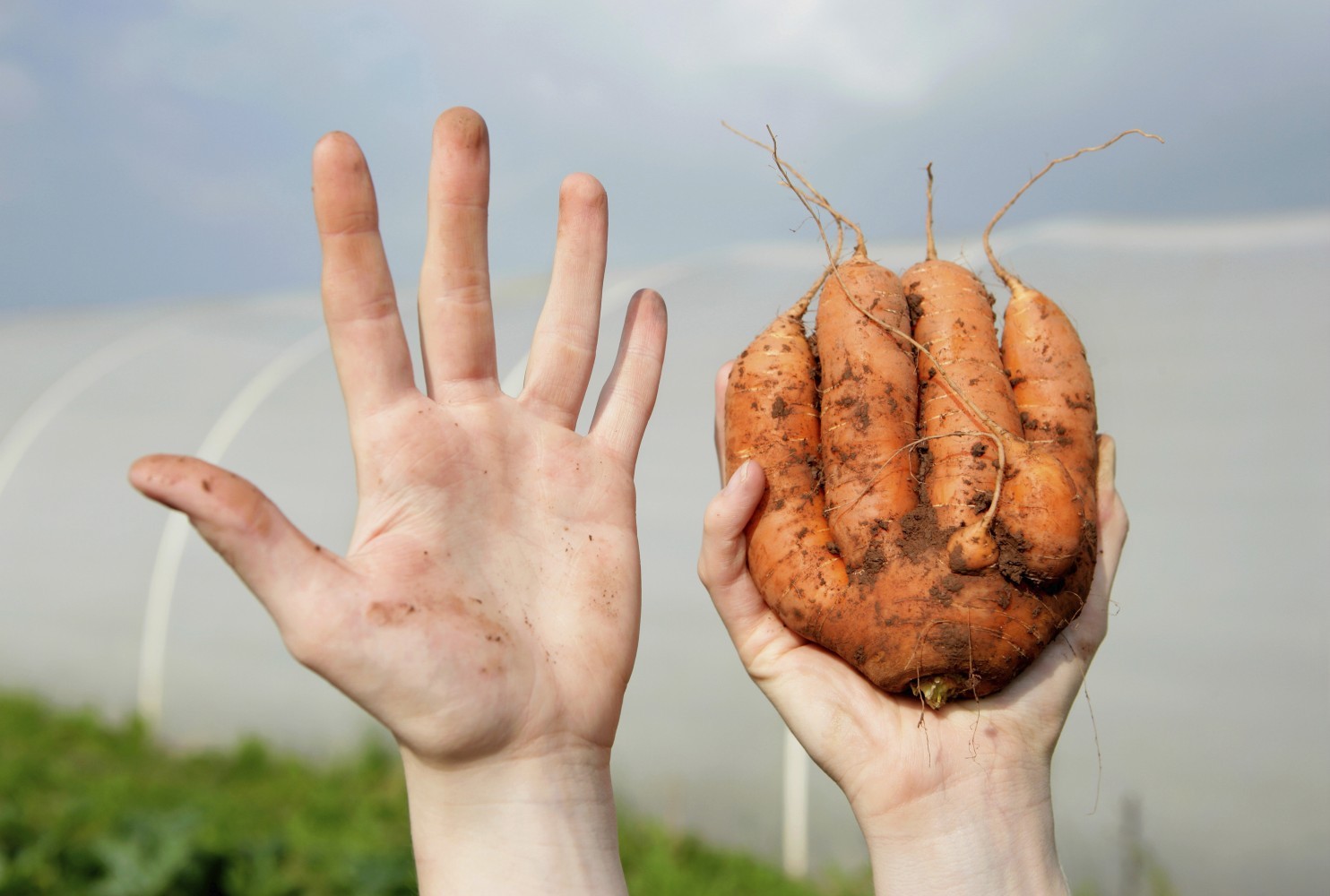
Food waste. One of the irrationalities of the food system as a whole is the immense waste that occurs—estimated to be about one-third of the food produced in the United States. A good part of this is waste at the household level, throwing away of food that usually ends up in landfills. However, a significant amount also occurs when farmers have more crops then they can sell, or when their produce does not meet the standards demanded by retailers for size and condition. According to a 2012 report by the Natural Resources Defense Council, “One large cucumber farmer estimated that fewer than half the vegetables he grows actually leave his farm and that 75 percent of the cucumbers culled before sale are edible.”13 Additional waste occurs during processing and in the retail sector. Markets would rather have their shelves fully stocked as an indication of abundance, than look sparsely provisioned; they simply toss out what spoils. While some waste is probably unavoidable, much of the waste of food in the United States occurs because of the irrationalities built into the system.
The drive to larger farms in the United States, and now abroad, including countries in South America, has another social dimension in the massive displacement of people as their land is expropriated.14 In addition to displacement by expropriation, people are abandoning farms because they cannot compete with the low prices for imported food. Thus many Mexican farmers had to stop corn production when the North American Free Trade Agreement (NAFTA) went into full force. And farmers throughout the Caribbean and in many other countries faced such pressures following IMF-mandated “structural adjustments” in which protective tariffs on food were lowered or eliminated. One of the great problems of the twenty-first century is: If, in the future, highly mechanized farmers operating at a large scale produce all of the food needed in the world, what will happen to the billions of people that are involved in farming? There are not enough jobs available as displaced farmers move to the city slums, so they try to get by in the “informal economy.” Thus, the growth of large farm units is creating dislocations and more food insecurity.
Decline in cycling of nutrients. The growth of cities in the nineteenth and twentieth centuries separated the people from the land that produced their food. And in the mid-to-late twentieth century, factory-scale farm animal production removed animals from the fields that produced their feed. Thus farms producing food and animal feeds need to import large quantities of fertilizers while at the same time huge quantities of nutrients accumulate in cities and factory animal farms, commonly causing pollution problems. The reliance on fertilizers has allowed farmers to overcome the continuous export of nutrients in the products they sell—but this has come at significant environmental costs in terms of energy as was well as pollution in the mining and production processes. It has also come at the cost of decreasing soil health as organic matter levels decreased dramatically.
In a future rational society we will have to find a way to ensure that most of the nutrients that flow from farms to cities participate in a “return flow” to farms. This same dynamic occurs with animals, although regarding them the answer is clearly to promote integrated livestock/crop farms. These farms—although not “rational” in the capitalist sense of maximizing profits—can have more ecologically sound rotations, export many fewer nutrients from the farm, and most nutrients taken up by crops are cycled on the farm itself in the form of crop residues and animal manures.
At the current time the problem with regard to lack of return flow of nutrients from people to farms is primarily a result of suburban sprawl. Aside from other issues about the suburbs, it means that farmland suitable for accepting human wastes is farther and farther from cities. Additionally, commercially generated contaminants in cities, and people using products that they dispose of down the drains, makes using sewage sludges as fertilizers questionable in terms of safety.
Inhumane treatment of animals, and feeding ruminants a high-starch diet. The raising of animals in large “factory farms” is done under inhumane conditions. Chickens for meat (“broilers”) are raised in barns of tens of thousands of birds. The chickens have been bred to gain weight rapidly—this, of course, means more rapid “turnover” and more profits—and have large breasts because of the preference for white meat. They are less active because so much of the energy they consume is converted into growth and thus spend most of their lives sitting on the floor—even as the manure accumulates during a growing cycle—usually losing their feathers on their breast and developing sores as well because of the almost constant contact with manure. The barns are only cleaned out after the chickens have been shipped but the litter (manure) may be reused for the next group of chickens by placing a thin layer of fresh litter such as wood chips on top of the old manure. Raised mostly in dim light (companies may forbid natural lighting), they live a short six-to-eight-week life entirely in the barn. They are fed a diet laced with questionable additives such as antibiotics that enhance growth, but many die under the crowded conditions, and one of the jobs on the operation is to go through the barn regularly and remove dead birds or those with deformities.
The incredibly rapid growth of meat birds—from 0.002 to 8.8 pounds in eight weeks, analogous to a baby that weighed 6.6 pounds at birth growing around 660 pounds in two months—produces abnormal birds.15 There is no question that chickens grow faster than humans, but the extra rapid growth caused by “improved” genetics and optimal feeding has created a most unfortunate animal. Because the birds have been bred to grow so rapidly their legs may not be able to support them, so there are always lame ones, unable to walk; they are usually euthanized. New York Times columnist Nicholas Kristof commented on the treatment of meat birds: “Torture a single chicken and you risk arrest. Abuse hundreds of thousands of chickens for their entire lives? That’s agribusiness.”16 Caged layers may have it even worse, with little room and their entire lives within the small cage and no ability to even peck at the ground.
These problems are not confined to poultry. Hog gestation—with sows in crates in which they cannot turn around so as to make it “more efficient” for them to feed their piglets—is difficult to look at even in photos. Beef cows, which are ruminants, have evolved to be able to gain their entire energy diet from grasslands, with cellulose—a structural element of plants that we cannot digest—providing most of their energy as a result of the activity of microorganisms in their rumens. But in order to get them to gain weight rapidly, beef cows on feedlots, with thousands of animals, are fed diets high in corn grain, and soy to provide protein. (Growing corn and soybeans requires high rates of pesticides and fertilizers that would not be needed if cows were on pasture, where pests pose less of a problem and most of the nutrients are directly recycled onto the land as manure and urine.) Again, antibiotics and hormones have been part of the system in order to produce the most “efficient” weight gains.
Thus, because the pursuit of profit is the goal of raising these farm animals under industrial conditions—the only issue considered is how to do so as rapidly and cheaply as possible. As a recent exposé in the New York Times about the brutal treatment of farm animals in a large government financed research facility put it in its title: “U.S. Research Lab Lets Livestock Suffer in Quest for Profit.”17 There has been pushback from the public on treatment of farm animals such as the 2014 bill passed by the New Jersey legislature that would have outlawed gestation crates for hogs, but was vetoed by the governor. A humane and ecologically sound system of raising farm animals for human food would allow the animals, raised in smaller flocks and herds, to do what they have done through their evolutionary history—let cows graze in pastures and chickens have space to walk, perhaps even run around, and peck in a clean environment and to be able to roost, and let sows give birth and feed their piglets in a relaxed and less restricted way.
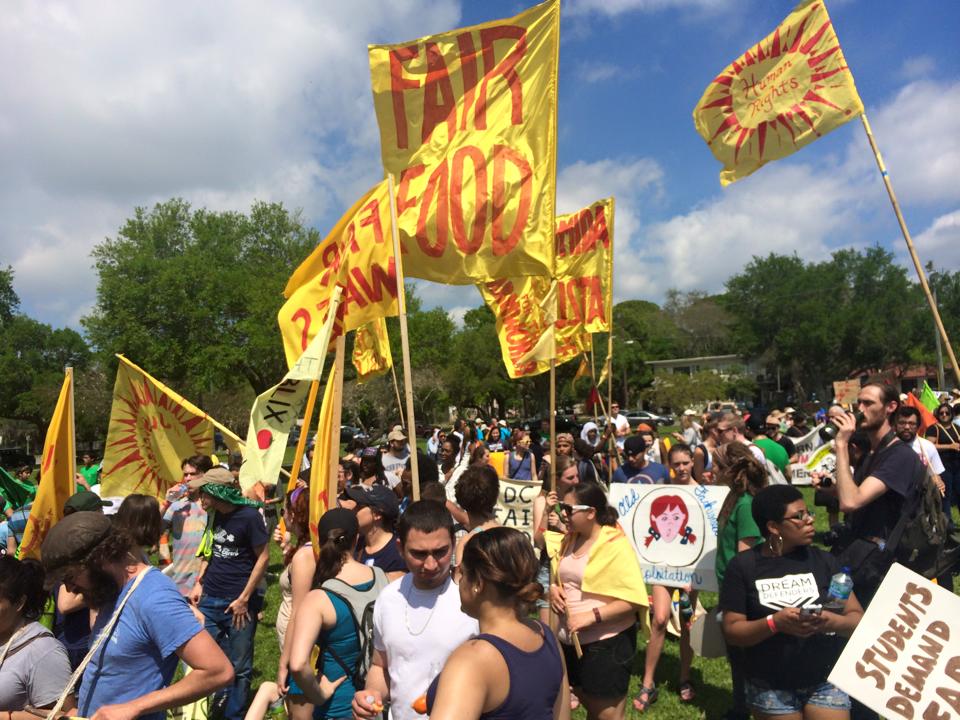
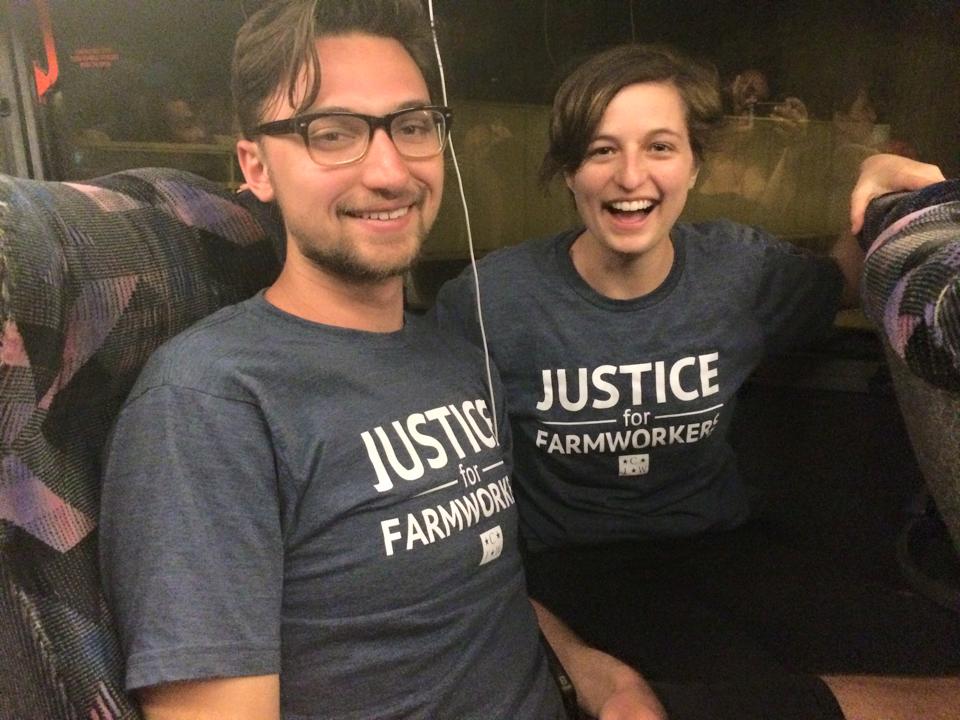
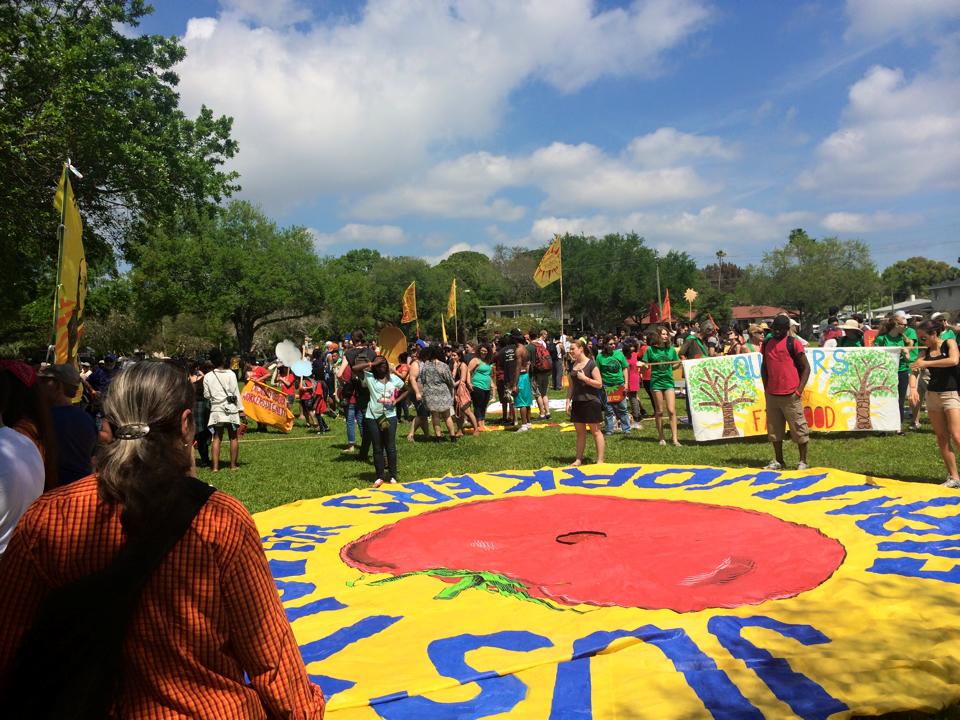
Farm and processor labor issues are immense. Farm workers who apply pesticides and harvest crops, especially fruits and vegetables (both types of crops are difficult to mechanize) are usually treated abysmally. Their wages are low and their housing is generally substandard, if provided at all. State laws on treatment of farm workers, not usually very strong to start with, are commonly ignored. Workers, many of whom are undocumented, are in a subservient position and rarely complain. It takes a huge effort, such as with the workers who harvest tomatoes in the Immokalee area of Florida, to win modest demands. Workers in animal-processing facilities (slaughterhouses), have high rates of injuries, and are treated “only somewhat better than the hogs at a Hormel slaughterhouse.” Eric Schlosser describes many slaughterhouse workers this way: “Recent immigrants recruited to subvert unions and reduce wages. Undocumented immigrants living in fear, reluctant to report violations of the labor code. A packinghouse culture full of stress and danger and remarkably free of mercy.”18 Meanwhile, many animal rights groups which are so concerned over the inhumane treatment of farm animals (as they should be) are very quiet about the treatment of human workers.
With the large importation of food from western and northwestern Mexico, especially during the colder months in the United States, providing over half of annual tomato consumption, this has become an important component of the U.S. food supply. The mostly indigenous laborers brought in from southern part of the country work under harsh conditions, including near-slavery. A Los Angeles Times exposé on the conditions on these farms in Mexico found that:
- Many farm laborers are essentially trapped for months at a time in rat-infested camps, often without beds and sometimes without functioning toilets or a reliable water supply.
- Some camp bosses illegally withhold wages to prevent workers from leaving during peak harvest periods.
- Laborers often go deep in debt paying inflated prices for necessities at company stores. Some are reduced to scavenging for food when their credit is cut off. It is common for laborers to head home penniless at the end of a harvest.
- Those who seek to escape their debts and miserable living conditions have to contend with guards, barbed-wire fences, and sometimes threats of violence from camp supervisors.
- Major U.S. companies have done little to enforce social responsibility guidelines that call for basic worker protections such as clean housing and fair pay practices.19
Loss of biodiversity. There is loss of biodiversity as native plant species are eradicated in order to grow the crops desired for sale in the market. The loss of habitat for diverse species means that there is also a loss of natural control mechanisms. There is also loss of biological diversity in soils as few (or a single) crops are grown and soil organic matter is depleted. Another type of diversity loss is that of the genetic diversity of the crops themselves. In 2004 the UN’s Food and Agriculture organization estimated “that about three quarters of the genetic diversity of agricultural crops have been lost over the last century. And of 6,300 animal breeds, 1,350 are endangered.”20 Seeds from commercial companies have penetrated much of the world’s agriculture, displacing native varieties even in the areas of the species’ origin (where the highest genetic diversity is normally found). As private companies focus on few varieties that are themselves genetically uniform, this creates a lack of genetic diversity within the crop—making a field planted to one crop even more susceptible to insect infestations.
Reliance on large quantities of fossil fuels. “Modern” large-scale farming relies on significant inputs of energy, almost all from fossil fuels. Certain aspects of farming are especially energy intensive. When considering large farms we think of the huge equipment and the diesel needed to fuel its activities. While it is true that the manufacture and use of machinery takes lots of energy, approximately one-third of all the energy used to grow corn is used to make and apply the nitrogen fertilizer! It takes a lot of energy to convert nitrogen gas in the atmosphere (N2) into forms that can be used by plants (ammonium and nitrate).
The fate of the crops that are grown depends on who is willing and able to pay the most for them such as a food processor, an ethanol manufacturer, or a beef cow feedlot owner. This is supposedly evidence that every product is going to its “highest and best use” because this is the very definition of the term. But is it really in the interests of humanity and the wider environment that food be grown in the cheapest way possible and then sold to the highest bidder, which could be an export market? Aside from in the dreams of a traditional economist, how in the world can the person or company able to pay the highest price be considered best use of a product? Was it really the “best use” for India, a country with so much extreme hunger, to export 210 metric tons of grain and 100 metric tons of vegetable oil to the United States?21
An interesting aspect of farming is that agricultural commodity price changes do not have the same effect on production as price changes in other types of businesses. As with all businesses, “When prices are high, farmers seek to maximize production to capture the higher prices and maximize total net income.” But the situation when prices are low goes against the dogma of conventional economics that lower prices should lead to decreased production.
When prices are low, farmers need to maximize production in order to reduce the per-unit cost of production, with the goal of covering variable costs and as much of the fixed costs as possible. Because farmers have high fixed costs relative to other businesses where labor—that can be idled—is the highest cost[,] they face challenges quite different from those faced by Main Street businesses. For farmers working in a low price period, any contribution increased production can make toward fixed costs helps reduce losses. And, this increased production then leads to a further reduction in price.22
Thus, farmers increase production when prices are high (as they “should”) and when prices are low (which they “shouldn’t”). A rational economic decision for each individual farmer goes against the supposed capitalist economic logic and ends up being irrational for the entire group of farmers together. (It is important to note that the main way farmers rapidly increase total production in response to high prices for all the crops they grow is to convert marginal land, frequently highly erodible, from conservation buffers or strips into cultivation for cash crops. This, of course, leads to environmental damage.)
Large corporations with political connections can get laws and regulations in place that change incentives to farmers as to which crops to grow. This can also influence food prices. For example, Dwayne Andreas, the former head of the agribusiness giant Archer-Daniels-Midland (ADM), was extremely well connected to U.S. presidents and influential members of Congress. ADM is one of the world’s largest purchasers, sellers, and processors of grains and is always interested in new uses for crops and possible ventures to expand their profits. Andreas and ADM were instrumental in getting the U.S. ethanol fuel mandates. This was sold to Congress as a way to produce “home grown” energy. The ethanol blending mandate—that ethanol make up initially 10 percent of all gas sold, and according to the law, should increase to 15 percent—was in essence both a price support for corn (about 40 percent of the U.S. crop going into ethanol production in 2012) as well as a support for the ethanol industry. If corn-based ethanol production actually amounted to a major energy savings, there would still be problems with the mandate. However, it turns out that growing the corn and producing the ethanol (which must be distilled three times to remove all the water) is very energy intensive. For this reason there may actually be a net energy loss in the whole process.23
Proletarianization of farmers producing poultry and hogs under contracts to large integrated corporations. Chicken broiler production is concentrated in certain regions such as the DelMarVa peninsula (containing small portions of Delaware, Maryland, and Virginia), northern Alabama and Georgia, southern Mississippi, parts of Arkansas and western Oklahoma. These concentrated zones of meat bird production did not occur by accident. Large companies such as Tyson (headquartered in Arkansas and also into pork and beef), JBS USA (which bills itself as the largest “protein”—i.e., meat—company in the world), and Perdue decide where they want to have their processing facilities. They then contract with nearby farmers who must build barns to corporate specifications and supply the contract farmers with the baby chicks, feed, veterinary medicines, etc. The farmers own nothing but the barns and the manure, and are paid based on how many birds are produced and their rate of weight gain. The farmer is in reality a laborer for the corporation, who must follow directions or be “fired” when a contract is not renewed.24 The 2015 U.S. agricultural appropriations bill does away with modest protections for contract farmers that speak out about abuses in the industry or seek to organize with other farmers in order to have more favorable contract terms. And with all the large scale processing plants controlled by integrated corporations, independent farmers have no way to process large numbers of animals. The story is quite similar for hogs—zones of high concentrations of farms raising animals under contract to corporations.
Can Capitalist Agriculture be Improved Environmentally and Socially?
Of course! There are many things that have been done and more that can and should be accomplished in the future to deal with the ecological and social problems (irrationalities) created by capitalist agriculture. Some of these do not sufficiently threaten powerful interests that might be harmed, or the influential interests understand that, because of publicity, something must be done differently. In some instances something might be accomplished. I ran into this when talking to a group of agrichemical dealers and showed them that farmers were routinely applying too much nitrogen fertilizer to their corn crops. It was clear that something had to be done to lessen nitrate pollution of water, but to the fertilizer salespeople, it meant less income. But eventually fertilizer dealers understood that nitrate pollution is a problem and that, in order to avoid regulations, they could not oppose lower fertilizer application rates, proposed by universities, that better matched the needs of plants. Later, another dilemma developed when it was shown that farmers were overfeeding their dairy cows with unneeded phosphorus minerals; the people who sold minerals to dairy farmers were not happy, but had to go along with reducing phosphorus feeding rates. Better soil tests are helping farmers reduce the amount of fertilizers used, thereby lessening water pollution. The use of cover crops and reduced tillage are expanding so that growing primarily (or exclusively) annual crops does not result in as much soil erosion and water pollution.
Laws can be passed—if people can be mobilized to fight for change—for higher wages, and better treatment and working conditions, for farm laborers and for workers in animal slaughterhouses. A law could theoretically be passed so that contract poultry farmers, now considered to be independent contractors, can come under the labor relations laws and be allowed to organize and negotiate as a group without fear of being blackballed from future work in the industry—but, as mentioned above, the modest protections have been done away with in the 2015 agriculture appropriations bill.
With regard to farm labor, state laws on access to clean water and sanitation facilities could theoretically be strengthened and more strictly enforced, and better housing mandated. However, the power of the agricultural lobby and relative lack of power of farm labor stands in the way of strengthening farm labor protection laws.
And it is at least theoretically possible that hunger could be abolished here and abroad, because enough food is currently produced to feed everyone in the world. But while there is plenty of money to subsidize fossil fuel companies, give tax breaks to wealthy people, and to conduct wars, there is strangely not enough money to feed everyone.
There are a number of farmers that have environmental and social goals incorporated into their farming systems. Most notable among these are the Community Supported Agriculture (CSA) farms which are managed ecologically (many organically) and grow food for the purpose of feeding a specific group of people. Many have sliding-scale pricing for families or other ways to include those with low-incomes. Although operating very much in a capitalist society, these are essentially non-capitalist endeavors. However, many of these provide only a very basic living to the farmers. There are other small-scale farmers that have ecologically sound practices and good rotations and grow for varied outlets such as restaurants and farmers markets. However, some large-scale farms tout their “ecological” (or organic) practices as marketing tools, but from an economic point of view are just another brand of capitalist farms—doing perhaps less damage to the environment, but frequently not very pleasant to employees.
So while there are more rational social and ecological relations on some farms, these produce a miniscule proportion of the U.S. food supply. Although a growing portion of conventional farmers are using more environmentally sound practices such as planting cover crops and reducing tillage and better treatment of livestock, we are still left with a host of irrationalities in the system—from the simplified ecosystem created to the continued water pollution, to use of (and contamination of many with) pesticides, to poor conditions for farm and processing labor.
The Bottom Line
The pulls and pushes of the capitalist system, and the way it inherently develops as all sectors strive to maximize profits, produces an agriculture in which: (a) there are hungry people although there is an abundance of food; (b) there is little true cycling of nutrients, increasing the reliance on fertilizers at the same time that excess nutrients accumulate on factory animal farms and in the cities; (c) animals are raised inhumanely; (d) poor rotations are used; (e) farm labor and animal slaughterhouse labor is commonly treated unfairly (and/or cruelly); and (f) pollution with pesticides and fertilizers is widespread, among other problems. All of the common decisions and practices of conventional farmers and others in the agricultural system make eminent sense (that is, they are rational) only from the very narrow perspective of trying to make profits within a capitalist system. As Marx explained, “the dependence of the cultivation of particular agricultural products upon the fluctuations of market-prices, and the continual changes in this cultivation with these price fluctuations—the whole spirit of capitalist production, which is directed toward the immediate gain of money—are in contradiction to agriculture, which has to minister to the entire range of permanent necessities of life required by the chain of successive generations.”25
We must conclude that the way the capitalist agricultural system functions in the real world is environmentally and socially irrational.
But what exactly would a rational agriculture be like? I propose this definition: A rational agriculture would be carried out by individual farmers or farmer associations (cooperatives) and have as its purpose to supply the entire population with a sufficient quantity, quality, and variety of food while managing farms and fields in ways that are humane to animals and work in harmony with the ecosystem. There would be no exploitation of labor—anyone working on the farm would be like all the others, a farmer. If an individual farmer working alone needed help, then there might be a transition to a multi-person farm. The actual production of food on the land would be accomplished by working with and guiding agricultural ecosystems (instead of dominating them) in order to build the strengths of unmanaged natural systems into the farms and their surroundings.
To develop this type of agriculture will require building it within a new socioeconomic system—based on meeting the needs of the people (which include a healthy and thriving environment) instead of accumulation of profits.
Notes
- ↩Karl Marx, Capital, vol. 3 (New York: International Publishers, 1967), 121 (Chapter 6, section 2).
- ↩There are, of course, other types of farms in this region such as vegetable, dairy, and hog farms. But corn and soybeans dominate the region’s agriculture.
- ↩Land Stewardship Program, “Crop Insurance—How a Safety Net Became a Farm Policy Disaster; White Paper 2: Crop Insurance Ensures the Big Get Bigger,” December 2, 2014, http://landstewardshipproject.org.
- ↩U.S. farms raising all crops and animals continue to get larger, although there are successful small and medium size farms. About 6 percent of all farms, representing 120,000 farms, raise three-quarters of the value of food produced. See Daniel Sumner, “American Farms Keep Growing: Size, Productivity, and Policy,” Journal of Economic Perspectives 28, no. 1 (2014): 147–56, http://pubs.aeaweb.org.
- ↩Fred Magdoff, “Pros and Cons of Agricultural Mechanization in the Third World,” Monthly Review 34, no. 1 (1982): 33–45.
- ↩Mae Wu, Mayra Quirindongo, Jennifer Sass, and Andrew Wetzler, Still Poisoning the Well: Atrazine Continues to Contaminate Surface Water and Drinking Water in the United States, Natural Resources Defense Council, April 2010, http://nrdc.org. For a remarkable piece about the attacks by the pesticide industry on a researcher working on the health problems of Atrazine see Rachel Aviv, “A Valuable Reputation,” New Yorker, February 10, 2014, http://newyorker.com.
- ↩U.S. Department of Agriculture, Agricultural Marketing Service, Pesticide Data Program: Annual Summary, Calendar Year 2011, February 2013, http://ams.usda.gov.
- ↩Clays and well-decomposed organic matter contain negative charges. This permits soils to hold onto positively charged ions of calcium (Ca++), magnesium (Mg++), potassium (K+), and ammonium (NH4+), and keep these essential nutrients for plants readily available for roots to take up.
- ↩Dan Charles, “Iowa’s Largest City Sues Over Farm Fertilizer Runoff In Rivers,” National Public Radio, January 12, 2015, http://npr.org.
- ↩The production of GM seeds still relies on traditional breeding programs to produce varieties with good basic traits such as yield and quality. The traits that confer herbicide resistance and/or the ability to actually produce their own insecticides are then introduced into these varieties from other species.
- ↩Quentin Hardy, “Working the Land and the Data,” New York Times, November 30, 2014, http://nytimes.com.
- ↩Roger Thurow and Jay Solomon, “An Indian Paradox: Bumper Harvests and Rising Hunger,” Wall Street Journal, June 25, 2004, http://wsj.com.
- ↩Dana Gunders, Wasted: How America Is Losing Up to 40 Percent of Its Food from Farm to Fork to Landfill, Natural Resources Defense Council Issue Paper, August 2012, http://nrdc.org.
- ↩Fred Magdoff, “Twenty-First-Century Land Grabs: Accumulation by Agricultural Dispossession,” Monthly Review 65, no. 6 (November 2013): 1–18.
- ↩R.F. Wideman, et al., “Pulmonary Arterial Hypertension (Ascites Syndrome) in Broilers: A Review,” Poultry Science 92, no.1 (2013): 64–83.
- ↩Nicholas Kristof, “Abusing Chickens We Eat,” New York Times, December 3, 2014, http://nytimes.com.
- ↩Michael Moss, “U.S. Research Lab Lets Livestock Suffer in Quest for Profit,” New York Times, January 20, 2015, http://nytimes.com.
- ↩Eric Schlosser, “‘The Chain,’ by Ted Genoways,” New York Times, Sunday Book Review, November 21, 2014, http://nytimes.com.
- ↩Richard Marosi, “Hardship on Mexico’s Farms, A Bounty for U.S. Tables,” Los Angeles Times, December 7, 2014, http://graphics.latimes.com.
- ↩Food and Agriculture Organization of the United Nations, Regional Office for Asia and the Pacific, Biodiversity for Food Security, 2004, http://fao.org.
- ↩This figure is from 2013. See United States Department of Agriculture, U.S. Food Imports, Economic Research Service, “U.S. Food Imports,” http://ers.usda.gov.
- ↩Daryll Ray and Harwood Schaffer, “Farm-level Production Decisions and Industry-level Impacts,” Policy Pennings Weekly Agricultural Column, November 14, 2014, http://agpolicy.org.
- ↩Fred Magdoff, “The Political Economy and Ecology of Biofuels,” Monthly Review 60, no. 3 (July–August 2008): 34–50.
- ↩See R. C. Lewontin, “The Maturing of Capitalist Agriculture: Farmer as Proletarian,” Monthly Review 50, no. 3 (July–August 1998): 72–84.
- ↩Marx, Capital, vol. 3, 617 (Chapter 37, “Introduction,” footnote 27).
Original Post


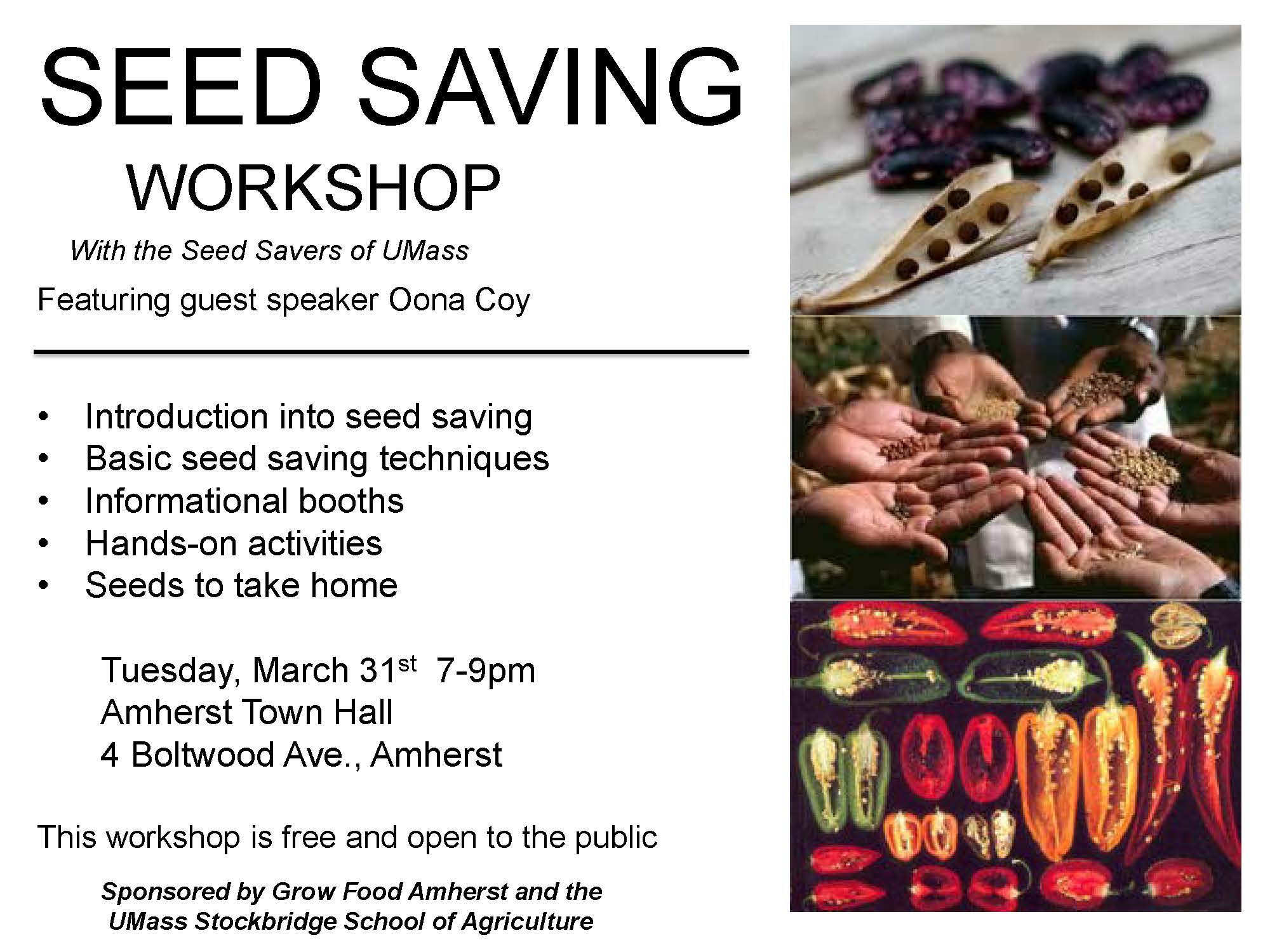 As the event drew closer, we began to organize specific details such as props and posters. Meeting every week in class was a useful way for us all to check in and help someone if they were having difficulties with their research, poster, or handouts. Before we knew it, the day of the workshop was upon us and we all arrived at town hall a bit early to help set up.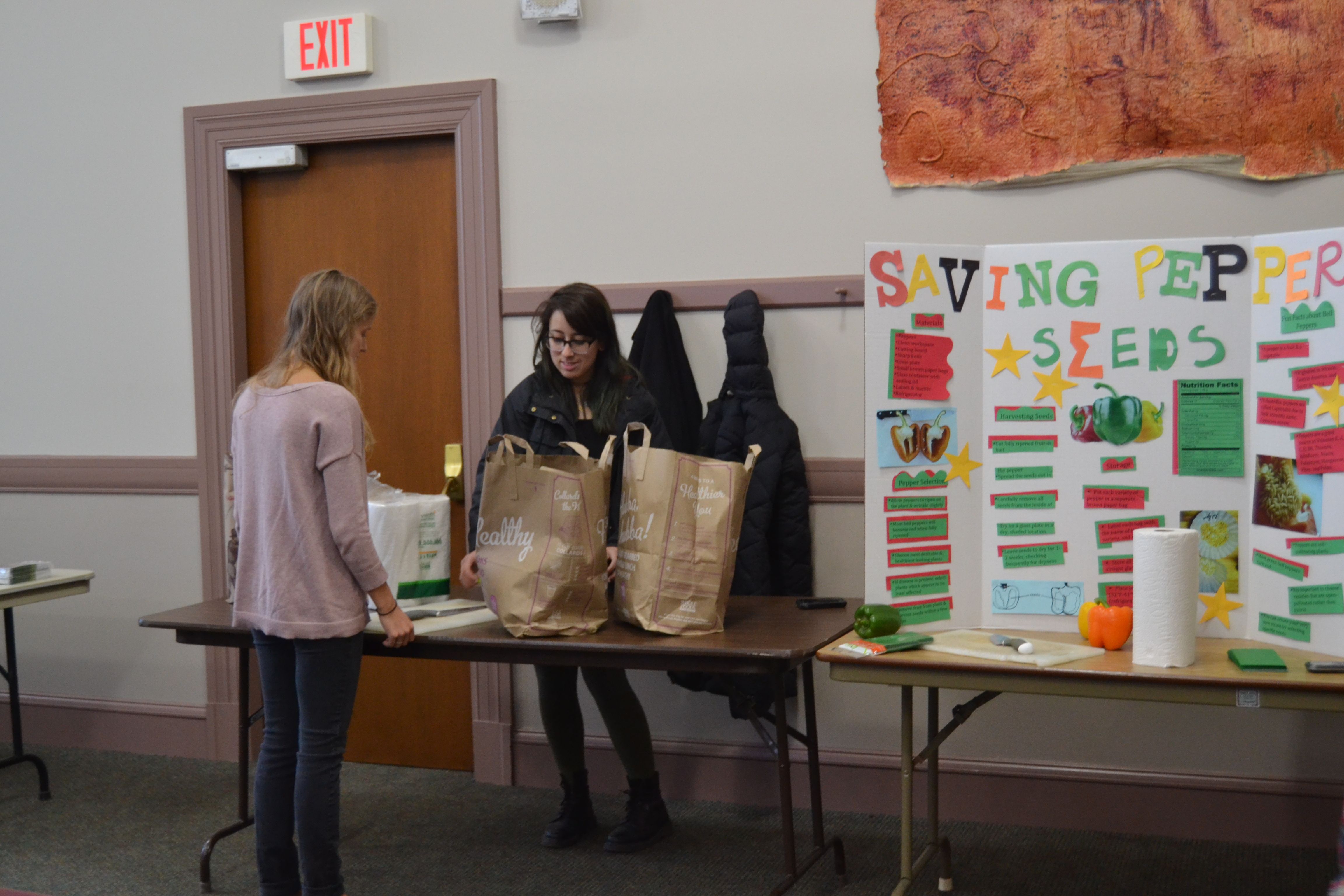









 UMass Sustainable Food and Farming