How Industrial Agriculture Has Thwarted Factory Farm Reforms

In an interview with Yale Environment 360, Robert Martin, co-author of a recent study on industrial farm animal production, explains how a powerful and intransigent agriculture lobby has successfully fought off attempts to reduce the harmful environmental and health impacts of mass livestock production.

by Christina M. Russo

In 20Robert Martin08, the Pew Commission on Industrial Farm Animal Production released a landmark report, Putting Meat on The Table: Industrial Farm Animal Production in America. The commission’s study condemned the way the U.S. raised its cattle, pigs, and chickens and made a sweeping series of recommendations on how to reduce the severe environmental, public health, and animal welfare problems created by the current system. Last month, the Johns Hopkins Center for a Livable Future (CLF) released a study analyzing the fate of these reforms and reached a stark conclusion: The power of the industrial agriculture lobby had blunted nearly all attempts at change.

In an interview with Yale Environment 360 contributor Christina Russo, Robert Martin — the executive director of the Pew Commission’s 2008 report and now the Food System Policy program director at the CLF and co-author of its recent study — discusses what went wrong and how reforms can proceed. According to Martin, the key is building public pressure on the Obama administration and Congress to demand changes from an intransigent industry that Martin describes as “having more money than Big Tobacco did in efforts to regulate cigarettes and the personality of the National Rifle Association.” One hopeful sign, said Martin, “is that there are more and more people who are concerned about where their food comes from and how it’s produced.”

Yale Environment 360: Can you highlight the findings of your latest report?

Robert Martin: There was a lot of activity generated by the Pew report, and in a very important way it focused the debate in a way that hadn’t happened before. But what we found was that very little progress had been made and that in almost every case things had worsened in the last five years.

Our number one public health recommendation [in the 2008 report] was to ban the non-therapeutic use of antibiotics, and we define therapeutic as treating sick animals that have a diagnosed microbial disease. We also had a provision for disease prevention — that is, if several animals in a flock or herd became sick, you should treat the whole flock or herd at therapeutic levels for very short period of time to try and kill the bacteria.

The practice that is common now is daily, low-level amounts of antibiotics added to the animal feed or water to really suppress bacteria long enough for the animals to get through the production system. And what this does is it leads to very serious antibiotic resistance issues that are housed in these operations but make their way into the human population either through flies carrying the resistant bacteria out, wild birds carrying them out, bacteria being flushed out in the waste of the animals, or by being carried out into the community by workers.

In the last five years, Rep. Louise Slaughter of New York has sponsored the Preservation of Antibiotics for Medical Treatment Act, which would ban for use in animal agriculture the top seven antibiotics important in human medicine. Unfortunately, that legislation has gone nowhere. Eighty percent of the antibiotics sold by weight in the country are used in food animal production. So, while we can make strides in reducing inappropriate use of antibiotics in human medicine, if 80 percent of the antibiotics are being sold and used in food animal production, clearly that is where we can now make the most important strides.

Yale Environment 360: What did you find in terms of the environmental impact of the Pew report?

Martin: On the environmental side there is a very troubling aspect. At the time of the release of the Pew Commission report, only about 34 percent of the waste generated by these operations was permitted under Clean Water Act permits; the only way you can regulate Concentrated Animal Feeding Operations — or CAFOs — is through the U.S. Environmental Protection Agency’s Clean Water Act. So the Pew Commission recommended that there be a full inventory of these operations, because we don’t even know where all of them exist. The U.S. Department of Agriculture (USDA) said these operations generate 350 million tons of waste per year. The EPA says they generate 500 million tons of waste per year. And so we said ‘Look, you need to do an inventory and you need to bring more of them under permitting.’

The Obama administration had just started to find out where these operations were. But because of pressure from the industry, they abandoned that effort late last year before the election. Every [presidential candidate] gets so focused on winning Iowa and Ohio and Minnesota — states that are heavy CAFO states — that they abandoned that effort to inventory operations. And there are more of these operations coming online everyday. The environmental damage is getting worse, and the federal regulatory agencies that should be stepping up aren’t.

As for animal welfare, the animals are overcrowded and they stand either in or over their own waste all their lives. And the only reason why they don’t die in those situations is because of the non-therapeutic use of antibiotics. And the only reason why the overcrowding can go on from a waste standpoint is because these swine barns are built over concrete waste pits that are flushed into an open cesspool twice a day. The waste is then collected and then sprayed untreated on fields surrounding the CAFOs. So, the way these animals are overcrowded with lack of natural movement, which is a very serious animal welfare issue — it’s just really all part of one system.

In looking at all these areas, I was asked by a reporter what kind of grade I would give progress on the Pew Commission’s recommendations, and I answered that I’d give the regulatory [agencies] and lawmakers an ‘F.’ Because really no progress has been made. These are enormously powerful industries. I always say that Big Ag has more money than Big Tobacco did in efforts to regulate cigarettes and the personality of the National Rifle Association. I think it puts it in a context people can understand.

Yale Environment 360: The Pew Commission’s report was released with the hope that Obama would take the lead in industrial agriculture reform, which the Bush administration had not done. What indication did you have that the Obama administration would take these recommendations seriously to begin with?

Martin: When Obama was a candidate in the Iowa caucus, his platform really read like an aggressive support for sustainable agriculture. He talked about checking the growth of the large industrial animal operations. Then, during the North Carolina primary he was shown a copy of the Pew Commission report and he said he endorsed the findings and he would work to implement its recommendations. And I take him at his word. But when you put the former governor of Iowa as the Secretary of Agriculture — Tom Vilsack, who had stated publicly there was no problem with antibiotic use and food animal production — well, Vilsack’s interest was in not really rocking the boat.

In January 2009, as Obama was taking office, the Economic Research Service at the USDA said that antibiotics tended to be overused in large-scale animal operations. And a month or two later Vilsack said we are using them judiciously, there’s no problem. And what the U.S. Food and Drug Administration (FDA) seems to be doing now is promulgating regulations — they are voluntary guidelines — only at the consent of the regulated. They are only willing to do what the industry says it will accept.

I would guess Teddy Roosevelt is spinning in his grave. He was more worried about the ‘meat cartel,’ as he called it, than Standard Oil and the railroads. And that’s why the Food and Drug Administration was formed.

Yale Environment 360: What are the most concerning environmental impacts of industrial farm animal production?

Martin: In the fields around these operations, it’s also an over-application of phosphorous, which over the long term will harm the productivity of the land because the phosphorous will burn out of the soil. And I think the public health link to this environmental damage is a real concern, as well: What kinds of pathogens are being carried in this waste into the waters that can make people sick?

There is also a very serious air quality problem. Studies by the University of Iowa and University of North Carolina have shown that up to five miles downwind of these operations children have an increase in asthma-like symptoms because of the particulate matter that is blown out of these barns by the ventilation systems.

Yale Environment 360: The Pew report said that, pound for pound, pigs produce four times the waste of a human. Can you describe in more detail the crude process of waste disposal at these facilities?

Martin: In a typical industrial swine operation, there may be 5,000 animals housed in two barns. The barns are built over concrete pits that are probably three feet deep. The animals stand on metal-slated floors, so their waste drops through the floor and is collected in these pits under the building. And two times a day the pits are flushed into what is called a waste lagoon, which is really an open cesspool containing the liquid and solid waste from the animals. When that pit fills up, the waste is either pumped into a truck and hauled a very short distance and sprayed on fields or pumped directly from the cesspool onto surrounding fields near the CAFO — with no treatment.

Not only is it serious environmental degradation because a lot of the waste just runs off into surface water, but swine waste contains a lot of the same pathogens that human waste does; physiologically, pigs and people are very similar. Untreated swine waste is 200 times more concentrated than treated human waste. And treated swine waste is 75 times more concentrated than human waste. But swine waste is not treated — it’s just held in these lagoons and pumped onto fields. And whatever is in that waste goes into the ground water and into the surface water.

Yale Environment 360: Do you think the environmental movement has appropriately seized on industrial farms as an environmental issue?

Martin: I think some of the national environmental groups have been a bit slow on this. It’s an interesting thing — people who live closest to these operations become environmentalists very quickly, because they see the damage not only to air quality, because of the stench, but they also see the damage because of the over-application of the waste.

Yale Environment 360: Undercover videos have shown animals being violently abused in the U.S. Are the efforts by animal welfare groups successfully bringing attention to the problems of the industrial livestock operations, even more so than environmentalists?

Martin: I would really have to commend the Humane Society of the United States for a couple of reasons. Number one, they did the really tough work going state by state — in some states to ban gestation crates for pigs or in other states to ban [confined] cages for chickens. They finally got the attention of the industry because everywhere they went up against the industry, the Humane Society won. So, they deserve a huge amount of credit for using the animal welfare concerns as the symptoms of a sick system.

Yale Environment 360: How does the recent purchase of Smithfield Foods by a Chinese company factor into this larger storyline?

Martin: The purchase of Smithfield by a large Chinese company is very concerning. Number one, it is a huge export of U.S. energy and grain and water to China in the form of pigs. There is a virtually insatiable appetite for pork in China. So I worry that we will be a net loser from an environmental and energy standpoint — and all we will be left with is the hog [manure].

One of the things the industry always says is, ‘Oh my god, we have to feed 10 billion people in 2050.’ The fact is there was a report called Agriculture at a Crossroads in 2008, and they said that we annually raise enough food calories for 10 billion people. The problem is what we are doing with those calories and the waste and spoilage of those systems. There is about 48

MORE FROM YALE e360

The Folly of Big Agriculture:
Why Nature Always Wins

The Folly of Big Agriculture: Why Nature Always Wins

Large-scale industrial agriculture depends on engineering the land to ensure the absence of natural diversity. But as the recent emergence of herbicide-tolerant weeds on U.S. farms has shown, Verlyn Klinkenborg writes, nature ultimately finds a way to subvert uniformity and assert itself.
READ MORE

percent wastage, especially in developing countries. But also about 80 percent of the corn we raise in the country is fed to animals that we then consume, which is an inefficient transfer of energy.

Yale Environment 360: There are so many actors in your report. Which actor could provide the most reform if it wanted to?

Martin: I think clearly if the president said, ‘I want to do X,’ then the agencies in the executive branch would have to follow suit. If he told the FDA that more voluntary guidelines weren’t the way to go on antibiotics, and he wanted rules and not suggestions, and he wanted a program to ratchet down and eliminate the non-therapeutic use of antibiotics in food animals, it could happen. They did it in Denmark. They eliminated the non-therapeutic use of antibiotics in swine production and their productivity has gone up. They have more piglets per sow, fewer infections in the swine herd, and fewer infections in the human population.

Yale Environment 360: It’s the five-year mark of the Pew report, and your assessment is quite grim in terms of reform. So how can these recommendations be implemented in the future?

Martin: The chairman of the Pew Commission was the former governor of Kansas and he had a saying that I quote all the time: ‘A politician begins to see the light when he feels the heat.’ Our conclusion in the report was that an informed and engaged public is essential to getting the attention of policy makers and regulatory officials. So a hopeful sign, actually, is that there are more and more people who are concerned about where their food comes from and are interested in how it’s produced. I think the only optimistic thing is the growing number of people who are worried about the food system.

POSTED ON 19 Nov 2013 IN Business & Innovation Business & Innovation Policy & Politics Pollution & Health Sustainability Central & South America North America

Driven by Student Demand, Agriculture Expands at UMass Amherst

By Nicole Belanger, NOFA/Mass PR Coordinator & Newsletter Editor

Farming at the University of Massachusetts Amherst is seeing a resurgence after decades of waning interest in agriculture and shifting university priorities. A long way from its origins as an agricultural land grant college in the 1860s, many barns and other agricultural facilities on campus were dismantled or repurposed in the 1950s and 1960s as its student body, and the culture at large, became less interested in small scale family farms. Only one barn remains on campus, an old horse barn originally built in 1894 that is now out of place as new buildings rise around it.

In the past ten years enrollment in the Stockbridge School of Agriculture’s Sustainable Food and Farming major has increased from five students to nearly 100. Many on campus hope that the days of students needing to drive to farm sites off campus, or worse, working solely in labs and greenhouses and never setting foot in a field, are long gone.

Stephen Herbert saw that last horse barn on campus, 40 acres of under-utilized farmland owned by the university, and the increasing need for students to get hands-on experience in the field as a match. Herbert was, until recently, the Director of the Center for Agriculture and is now returning to his role as teaching faculty. In the 1960s the 40+ acre field just north of campus was purchased by the University from four farm families. When the University of Massachusetts Medical School, originally slated for that parcel, was built elsewhere, those 40 acres became hay fields for the next 50 years.

This site has become the Agricultural Learning Center (ALC)–the only farm in walking distance of the Amherst campus. Students and faculty alike are enthusiastic about the possibility the center presents for future farmers. In 2012 a groundbreaking was held, with children of families who formerly owned the four farms in attendance to celebrate the university’s commitment to agriculture. With a well-documented aging farmer population, Agricultural Learning Center Project Manager Sandy Thomas says, “We need well educated young people learning how to grow food.”

Herbert’s ultimate vision is to relocate the last barn on campus to the ALC site, rehabilitating the barn into a functional classroom, laboratory and greenhouse space. According to Herbert, the cost of moving the barn alone is 1.5 million dollars. Rehabbing the interior could cost another million or more dollars, bringing the project’s total cost to 2.5 million. The Massachusetts Farm Bureau has raised the $500,000 they pledged to see the project happen. The ALC seeks additional major donors to complete the project. Until the funds are raised, the barn will not be moved.

Growing organically

In 2008, students approached professor Ruth Hazzard for permission to use part of a certified organic University research farm in South Deerfield to grow vegetables for Earthfoods, a student-run restaurant on campus. Since that first season, the Student Farming Enterprise has grown dramatically, now a year-round class that produces food for a 45-member CSA, a campus farmers’ market, as well as seasonal sales to the Northampton and Amherst Big Y supermarkets.

barnStudent sketches of the Agricultural Learning Center with relocated horse barn

Students in the program work over the course of one year on every aspect of the business: choosing crops to plant, purchasing seeds, and overseeing the organic certification process. Professor Amanda Brown manages the site and the class. In 2013 the class began working on a six-acre plot on the ALC site. Brown intends to work with students to get the ALC plot certified organic in 2014. Though the Student Farming Enterprise has a lot of infrastructure set up in S. Deerfield, with its 15 certified organic acres, Brown thinks it’s likely that the program will have a larger presence at the ALC site going forward.

Like most public universities, UMass’s farming education blends organic and non-organic growing methods. Very few public universities have exclusively organic farms on their campus. (Washington State’s Evergreen State College and University of California Santa Cruz are some exceptions, only farming organically.)

As the Student Farming Enterprise at the ALC will coexist with non-organic vegetable production, land care, and apple production, care must be taken to ensure organic crops are not contaminated. Brown sees good record keeping, border maintenance, equipment cleaning, and making sure organic crops like corn are not fertile at the same time as non-organic, GMO corn crops as essential to maintaining the integrity of the organic land and organic crop.

NOFA/Mass Policy Director Jack Kittredge is enthusiastic that UMass is responsive to the increasing interest in farming and the needs of their students to have direct, on-farm experience. Kittredge also applauds efforts to relocate and preserve the historic campus barn, which he says, “captures the spirit of old-fashioned New England.”

He sees the new center and renewed interest in agriculture on campus as an opportunity for Massachusetts and UMass to take a leading role in non-GMO, organic and sustainable farming. As Europe has restricted GMOs, Kittredge believes GMOs will likely be restricted in the region and country in the near future and would like to see the University at the forefront.

The future of farming on campus

In 2012 it was announced that the ALC received a $10,000 donation from the Monsanto Fund, the philanthropic branch of the Monsanto Co. Some community members and students voiced their concerns that the multinational corporation would influence the direction of the ALC.

twostudentsWhile John Gerber, Stockbridge School of Agriculture professor, thought there was legitimate concern, especially given the influence on corporate agriculture funding on other public universities, ultimately he doesn’t believe that industrialized agriculture is the future of Massachusetts farming, which has historically had small farms. According to the UMass Center for Agriculture, in 2007 the largest number of farms in the state was between 10-49 acres. Gerber sees an opportunity for Massachusetts to, “take a lead in organic and other sustainable types of farming.”

Though the USDA claims that organic and conventional crops can coexist in a close proximity, Kittredge believes that the two cannot coexist because of issues like genetic drift and ground contamination. Kittredge believes UMass is doing their best within the system and hopes to continue to see the University teach students about, and mitigate, potential problems with the two different systems coexisting.

Ultimately, John Gerber sees the push towards organic, sustainable, non-industrial farming as being lead by students, a trend he thinks will continue. In addition to their responding to a changing world, Gerber recognizes that students are hungry for meaning in their lives, in part led by a quest for an increased quality of life.

“Students want to see organic, sustainable things. A lot of [what is happening at the University] is in response to what students are saying they want to learn,” says Brown. She sees so much support for the Student Farming Enterprise and their production practices. She also recognizes there is a market for what they’re doing, saying that buyers like Big Y are “only interested in organic.”

A place for partnerships

The University does not have funds to pay for the relocation and rehabilitation of the old horse barn. Stephen Herbert hopes for a few more major donors and for individual donations to see the barn project happen.

The barn would provide needed classroom space for the University to meet growing student demand and to further partnerships with programs mitigating poverty in the Pioneer Valley, community education projects, and organizations like NOFA (who has held its 1000+ attendee summer conference at UMass since 2008), Amanda Brown is ready to get to work on the ALC, saying “whether there’s a barn there or not we are going to do it.”

To learn more about the UMass’ Agricultural Learning Center visit http://ag.umass.edu/agricultural-learning- center. To learn more about the Student Farming Enterprise visit http://extension.umass.edu/vegetable/ projects/student-farming-enterprise

The Bachelor of Sciences degree in Sustainable Food and Farming is described here.


————————————————————————————————————

Published in the NOFA November, 2013 Newsletter

nofa

Waste Not, Want Not: Away From Landfills and into Empty Stomachs

wasteBy Danielle Nierenberg

The U.S. Environmental Protection Agency (EPA) recently launched the Food Waste Challenge— a collaboration between the EPA and the U.S. Department of Agriculture (USDA)— which aims to further America’s efforts to reduce its carbon footprint while simultaneously addressing food waste and hunger.

The initiative invites businesses and organizations across the food chain to develop strategies to reduce food waste and to redirect more unspoiled food — that would otherwise end up in landfills — to food pantries, food banks, and other food recovery organizations that serve many of America’s most hungry and undernourished citizens.

The Food Waste Challenge functions as an extension of the efforts of the Food Recovery Challenge, which launched in 2010 and currently has roughly 200 participating organizations, to combat food waste in America. The Food Recovery Challenge provides free technical support for participating organizations to help them track and gradually reduce their food waste.

These initiatives are coming at a time of great need for further efforts to address food waste and hunger in the U.S. A USDA study found that 14.5 percent of households in the US were food insecure in 2012, while a 2012 study by the National Resources Defense Council reports that about 40 percent of the food America produces goes uneaten—much of which ends up in landfills.

Food makes up one of the two largest components of U.S. landfills, and food that decomposes in landfills increases greenhouse gas emissions (methane) contributing to climate change. Food waste also increases the demands for food production and transportation—processes which consume energy and contribute to greenhouse gas emissions.

The Food Waste Challenge will collaborate with the Food Recovery Challenge in a dual effort to decrease the negative environmental impacts of food waste and increase energy conservation by raising awareness about food waste while also providing organizations with the tools to make measurable progress toward more sustainable food management programs and policies.

Organizations participating in the Food Waste Challenge will help cultivate and disseminate best practices in food waste reduction, while participants of the Food Recovery Challenge set measurable quantitative food waste-reduction goals that the EPA will help them to meet by offering them tools (data management software and technical assistance) to quantify their progress and attain their goals.

The EPA aims to obtain 400 partners by 2015 and 1,000 by 2020 for the Food Waste Challenge — an initiative they hope will lead a shift in the way that the U.S. thinks about food and food waste management.

Original Post

Franklin County Community Development Corp. kitchen in Greenfield key link in local food chain

By RICHIE DAVIS   –  Gazette Contributing Writer  –   Wednesday, October 30, 2013

When Joe Czajkowski delivered a ton of carrots, already peeled and “coin-cut,” to the Western Massachusetts Food Processing Center last week from his 99-year-old Hatfield farm, Liz Buxton and her crew got to work.

cdc

Next February will be promoted as “carrot month” as part of the Massachusetts Farm to School Partnership. So the Greenfield commercial kitchen had a line of half a dozen workers blanching, bagging, and then freezing the sliced orange vegetables for delivery to schools around the region in late January so cafeteria workers can prepare them as part of locally enhanced meals.

“I noticed in Heath, where they have a really nice school garden, that the kids had grown and picked the carrots, and they all wanted the carrots,” said Buxton, who worked as Mohawk Trail Regional School’s food and nutrition service director before taking charge of the Franklin County Community Development Corp. kitchen a couple of months ago. “They’ve started to recognize what’s local, and they were invested in those carrots.”

At Mohawk, she helped buy frozen local cauliflower, broccoli, peppers and carrots from the CDC kitchen, putting on the monthly lunch menus in which local produce was being featured. “These carrots were in the ground a couple of days ago. It doesn’t get much fresher than that.”

CDC this summer processed nearly 10,000 pounds of tomatoes from Red Fire and Atlas farms that it is now getting ready to turn into marinara sauce with some of the 1,300 peppers it received from Red Fire Farm, as well as local onions. It is hiring a food development specialist to help market the local produce to food service directors and their product distributors, and also trying to work with growers to sell their fruits and vegetables to the CDC to become part of the growing local food chain.

 The CDC is also using a $250,000 U.S. Department of Agriculture loan and $50,000 grant to buy a new freezer as well as flash-freezing and related equipment to ramp up its production of local produce for school sales as well as to help farmers’ own supplies for their winter customers.

“We’re taking a risk here,” said CDC Executive Director John Waite. “Schools want it, but it’s a question of price, how we’ll distribute it, and lots of pieces of the puzzle that need to come together. Until you have the product, you can’t make it happen. And we can say that we have this product; will you buy it? It’s making it happen.”

The CDC, has had to downsize from the roughly 16,000-square-foot freezer it originally sought to one that’s maybe 12,000 square feet, and that’s slowed the process, said Waite, but it’s also given the food processing center a chance to learn the importance of working with distributors such as Sysco or Thurston Foods, since food-service directors have balked at the idea of picking up produce. It’s also about hiring someone who can handle marketing, a job that’s proven too much for Waite or Buxton to handle, so they can also promote the commercial kitchen to some of the small-scale food manufacturers who pay rent to use the facility.

Lessons learned

“We’ve learned it’s about efficiency, and efficiency comes with volume,” said Waite, who spent a few months trying to fill a staffing gap this summer while also trying to connect farmers and food service directors with products and occasionally filling in on the production line as well.

“We’re committed to this, and the only way to increase sales is to increase marketing and build relationships,” he said.

The shared kitchen last year handled 65,000 pounds of vegetables, largely freezing and canning them for schools and colleges, including Deerfield Academy, Williams College and Hampshire College in Amherst. That is down to 20,000 or 30,000 pounds this year, mostly for Community Supported Agriculture operations to offer their members and farm stands to sell to customers, in the form of spaghetti sauce and applesauce — think 1,800 pounds of apples from Atkins Farm in Amherst— as well as frozen peaches, blueberries and strawberries.

With the fast-freeze and other equipment planned for deployment at the Wells Street facility by next summer, and with the kitchen getting ready for new USDA meat inspection certification beginning next month, with a meat-pie maker already lined up to use in the kitchen, Waite said he is already looking ahead to the day when the CDC can sell local frozen vegetables through Foster’s and Green Fields Market. He’s also looking at seeking a grant to prepare soups for Just Roots community farm.

Meanwhile, Waite has been meeting with food service directors from Amherst and Hampshire colleges, as well as with Hampshire’s farm program, about continuing to use the Greenfield kitchen to process its tomatoes and other produce. The kitchen even pureed 4,000 pounds of leftover fruit from the University of Massachusetts’ Guinness-Record, 15,000-pound fruit salad in September, for freezing and later use in making smoothies.

And proving the value of connections, the CDC worked through Hampshire’s Bon Appetit food service to make tomato sauce from a Connecticut farmer for Wesleyan and St. Joseph’s colleges.

From Connecticut to southern Vermont, “When a farmer says, ‘Our stuff’s ready,’ we want to be available to them,” said Waite, adding that it’s a matter of finding temporary, seasonal workers and having enough flexibility in the kitchen schedule and the right kind of equipment for that specific crop. “What we’re trying to do is give farmers diverse options to sell. If they can make more at the farm stand, great. But if one week, all their tomatoes are ready and they can only sell so much at the farm stand or grocery store, they can sell to us as well instead of leaving it on the vine. If we can eliminate that waste and pay them for that, it’s not a loss, and the farmers can get more income.”

Another lesson along the way is about the definition of “local,” at least when it comes to processing produce to extend the marketing season for sales to institutions that keep feeding people long after the growing season has ended.

“Now a lot of local is regional,” said Waite, pointing to research efforts by Farm to Institution New England, the six-state collaboration that started with a USDA grant in 2011 to beef up agricultural sales to schools, colleges and other institutions around the region.

Working with two northern Vermont commercial kitchens, two more on the Maine coast, as well as others in Boston and Rhode Island, the CDC here is trying to avoid duplicating costs for expensive, specialized equipment that may be based elsewhere. He points to the Northern Girl processing center in Maine, which is already equipped to deal with tons of potatoes and broccoli florettes.

“Maybe there’s a little specialization around New England, where we’re cooperating instead of competing,” said Waite. “Now there are distributors bringing in vegetables from California, so they can bring from Maine to Massachusetts, from Massachusetts to Maine and go back and forth, that’s a lot better than bringing it across the country.

“We’re competing against Chile and China, and in apples we’re competing against Washington state and China. We’re not competing between Massachusetts and Maine,” he added. “There’s always some hyper-local that wants to grow in the backyard, but when it comes to feeding 15 million people, we’ve got to work together.”

Original Post

Seeds on seeds on seeds: Why more biodiversity means more food security

By Gary Naban  – Posted in Grist

It is puzzling that Monsanto’s Vice President Robert Fraley recently became one of the recipients of the World Food Prize for providing GMO seeds to combat the effects of climate change, just weeks after Monsanto itself reported a $264 million loss this quarter because of a decline in interest and plummeting sales in its genetically engineered “climate-ready” seeds. And since Fraley received his award, the production of GMO corn has been formally banned by Mexico, undoubtedly seen as one of Monsanto’s major potential markets.

seed-savingThe World Food Prize, offered each year on World Food Day, is supposed to underscore the humanitarian importance of viable strategies to provide a sustainable and nutritious food supply to the billions of hungry and food-insecure people on this planet. Ironically, what is engaging widespread public involvement in achieving this goal is not Monsanto’s GMOs, but the great diversity of farmer-selected and heirloom seeds in many communities. Why? Because such food biodiversity may be the most prudent “bet-hedging” strategy for dealing with food insecurity and climate uncertainty.

Consumer demand in the U.S. has never been stronger for a diversity of seeds and other planting stock of heirloom and farmer-selected food crops, as well as for wild native seeds. One of the many indicators that the public wants alternatives to Monsanto is that more than 150 community-controlled seed libraries have emerged across the country during the last five years. And over the last quarter century, those who voluntarily exchange seeds of heirloom and farmer-selected varieties of vegetables, fruits, and grains have increased the diversity of their offerings fourfold, from roughly 5,000 to more than 20,000 plant selections. During the same timeframe, the number of non-GMO, non-hybrid food crop varieties offered by seed catalogs, nurseries, and websites has increased from roughly 5,000 to more than 8,500 distinctive varieties.

And yet, these grassroots efforts and consumer demand are largely being overlooked by both governments and most philanthropic foundations engaged in fighting hunger and enhancing human health. Even prior to the partial U.S. government shutdown, federal support for maintaining seed diversity for food justice, landscape resilience, and ecosystems services had begun to falter. Budget cuts have crippled USDA crop resource conservation efforts and the budgets for nine of the 29 remaining NRCS Plant Materials Centers are reportedly on the chopping block. As accomplished curators of vegetable, fruit, and grain diversity retire from federal and state institutions, they are seldom replaced, leaving several historically important collections at risk.

It is as if Washington politicians and bureaucrats were failing to recognize a simple fact that more than 68 million American households of gardeners, farmers, and ranchers clearly understand: Seed diversity is as much a “currency” necessary for ensuring food security and economic well-being as money. These households spend on average hundreds of dollars each year purchasing a variety of seeds, seedlings, and fruit trees because of their concern for the nutritive value, flavor, and the quality of food they put in their bodies. While it should be obvious that, without seeds, much of the food we eat can’t be grown, few pundits recognize a corollary to that “food rule.” Without a diversity of seeds to keep variety in our grocery stores and farmers markets, those who are most nutritionally at risk would have difficulty gaining access to a full range of vitamins, minerals, and probiotics required to keep them healthy.

However, despite what portions of the government and agribusiness don’t seem to fathom, consumer involvement in recovering access to diverse seed stocks since the economic downturn began in 2008 has been nothing short of miraculous. Some call it the “Victory Garden effect,” in that unemployed and underemployed people are spending more time tending and harvesting their own food from home orchards and community gardens than they have in previous decades. Public involvement in growing food has increased for the sixth straight year, according to the National Gardening Association. But even financially strapped gardeners are not shirking from using their limited resources to purchase quality seeds of heirloom and farmer-selected vegetables. The Seed Savers Exchange in Decorah, Iowa, reports that its sales of seed packets have nearly doubled over the last five years. Another nonprofit focused on heirloom and wild-native seeds — Native Seeds/SEARCH of Tucson — saw its seed sales triple since the end of 2009. And there are between 300 and 400 other small seed companies supported by consumers in the U.S. that offer seeds by mail-order, by placing seed packets racks in nurseries and groceries, or via on the internet.

Nevertheless, the U.S. may now be approaching the largest shortfall in the availability of native and weed-free seed at any time in our history due to recent climate-related catastrophes scouring our croplands, pastures, and forests. While a few large corporations focus on a few varieties of corn, soy, and other commodity crops, there is unprecedented demand for diverse seeds to be used for a great variety of human and environmental uses in this country, and elsewhere.

It has become painfully clear that America needs to recruit and support a whole new cohort of dedicated women and men to manage seed growouts, nurseries, and on-farm breeding and crop selection efforts for the public good. To further evaluate crop varieties for their capacity to adapt to climate change, we will certainly need many more participants in such endeavors than a charismatic Johnny Appleseed or two. They must stand ready to harvest, grow, monitor, select, and store a diversity of seeds for a diversity of needs in advance of forthcoming catastrophes. And they must value acquiring and maintaining a diversity of seedstocks, much as a wise investor relies on a diversified investment portfolio. Diverse and adapted seeds are literally the foundation of our food security infrastructure. Without them, the rest is a house of cards.

seeds of successFortunately, courageous efforts have been initiated to rebuild America’s seed “caring capacity.” The collaborative effort known as Seeds of Success, which is part of an interagency Native Plant Materials Development Program, has trained dozens of young people at the Chicago Botanic Garden to collect seeds of hundreds of native species over the last few years. In the nonprofit sector, Bill McDorman of Native Seeds/SEARCH has organized six week-long Seed Schools around the country that have trained more than 330 gardeners and farmers to be seed entrepreneurs.

Elsewhere, Daniel Bowman Simon, now a graduate student at Columbia University, has helped hundreds of low-income households (eligible for USDA Food and Nutrition Program assistance) to use their “SNAP” benefits to purchase diverse seeds and seedlings of food crops at farmers markets in order to produce not just one meal, but many. In light of recent unjustified critiques of the SNAP program during farm bill debates, it is surprising that fiscal conservatives did not acknowledge how providing financially strapped families with seedstock may be one of the most cost-effective means of reducing food insecurity over the long haul. It is tangibly giving the poor the “means to fish” rather than a single meal of a fish. With more than 8,150 farmers markets in the U.S. today, compared to 1,775 in 1994, the potential for this seed dissemination strategy to help meet the nutritional needs of the poorest of the poor has never been greater.

Regardless of whether U.S. states ever require GMO labeling or ban GMOs entirely as Mexico has done, there is abundant evidence that we need to shift public investment — from subsiding market control by just a few “silver bullet” plant varieties, whether genetically engineered or not, to supporting the rediversification of America’s farms and tables with thousands of seedstocks and fruit selections. Instead of spending a projected forty to one hundred million dollars on developing, patenting, and licensing a single GMO, perhaps we should be annually redirecting that much public support toward further replenishing the diversity found in our seed catalogs, nurseries, fields, orchards, pastures, and plates. With growing evidence of the devastating effects of climate uncertainty, now is not the time to put all of our seeds into one basket.

Gary Paul Nabhan is the author of the recent book, Growing Food in a Hotter, Drier Land. He is a permaculture designer and orchard-keeper in Patagonia, Ariz., and is widely recognized as a pioneer in the local-food movement and grassroots seed conservation.

Original Post

UMass Honors College Explores Local Food Value

UMass Sociology Professor, Christine Glodek, has organized a panel discussion on the value and impact of food to begin with sharing of pizza made with ingredients grown by the UMass Student Farm at 5:30pm:

Thursday, November 7 from 7:00pm-9:00pm
at the new UMass Honors College Events Hall

(Join us for pizza between 5:30pm and 7:00pm)

localPlease join us for conversation and pizza!

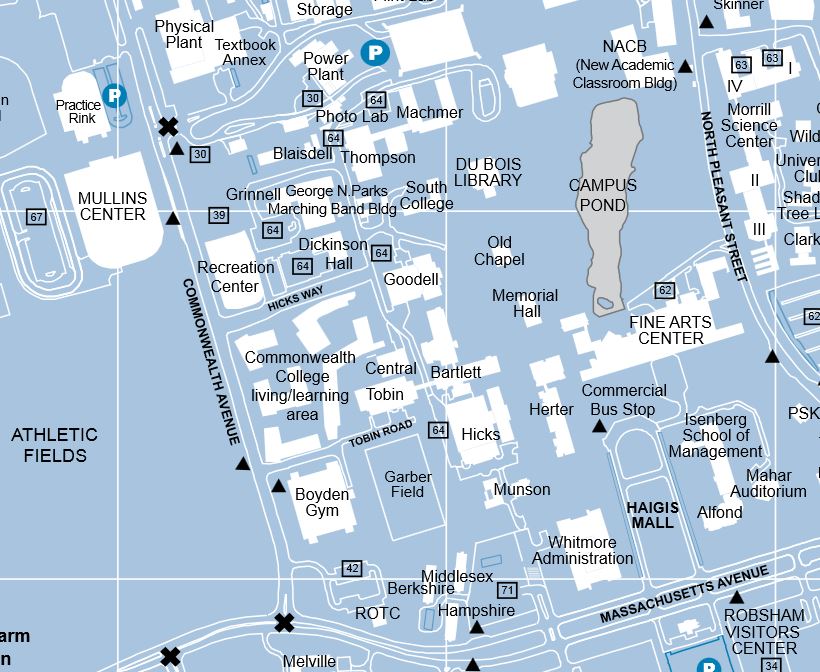
If you are coming from off-campus, you can park in the Mullins Center parking lot on Commonwealth Avenue and walk (south) toward the Honors College Living and Learning area.  Ask for the “Events Hall”.

map

The Cost of Organic Food Is Worth It and—Surprise—It’s Not Always Higher

By Charlotte Vallaeys

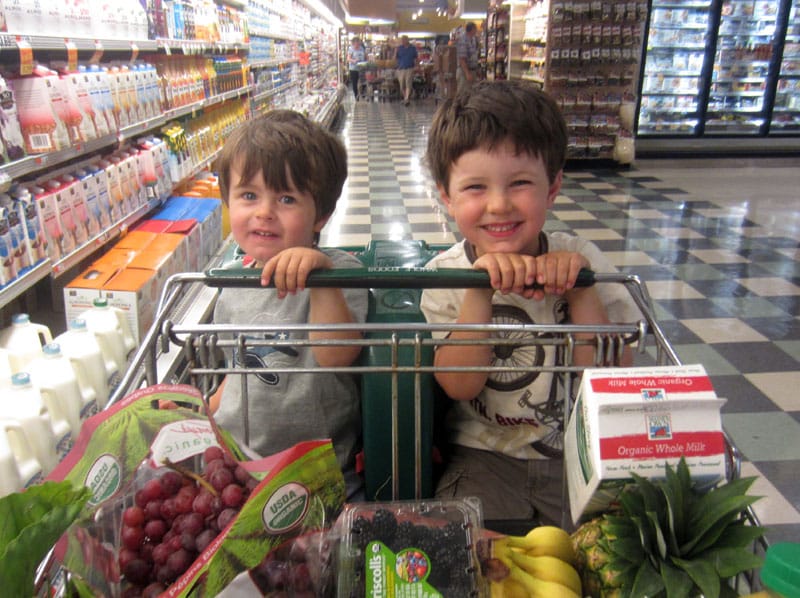
Sons Kai and Liam shopping with Charlotte 2

“Organic food is too expensive.” It’s a complaint we, as organic farmers and advocates, hear all too often. And we’ve practiced and often repeated our defense of organic food’s higher price tag: it’s worth every extra penny in terms of a long-term investment in our health and in protecting the environment.

When people complain of the high price of organic foods, farmer Joel Salatin likes to respond: “Have you priced cancer lately?”

But we shouldn’t stop at countering the myth that organic food is “too expensive”; we must also examine the assumption that organic food actually is more expensive than conventional food. It’s simply not as black-and-white as many people assume.

Yes, I readily admit that in any supermarket that offers organic strawberries, they will be pricier than the conventional. And a box of organic cereal will definitely carry a higher price tag than the cheap conventional store-brand version.

But it is also entirely possible, without much effort, to fill a shopping cart with a week’s worth of conventional foods and pay more than you would for a week’s worth of organic food.

With two young sons (Liam is 5 and Kai is 3), I buy only organic food for my family. I shop with an organic gatekeeper: Liam sits in the cart and checks every incoming item for the USDA Organic seal. Anything without it he sends back to the shelf.

I also buy as much local certified organic food as possible and carefully choose the brands that I can trust with the important job of providing nourishment for my children. So I assumed that our food budget was much higher than that of families who do not share our commitment to organics.

After doing some quick math in supermarket aisles, I discovered that this is not necessarily the case.

Liam’s lunchbox provides a perfect example. On hectic weekday mornings, I admit that “convenience foods” like a Kraft Lunchable® box—no preparation and no clean-up required—can be quite alluring. But the ingredients list of a Lunchable® box reads like a who’s who of cheap and unhealthy items, including high fructose corn syrup, partially hydrogenated oils, carrageenan, artificial colors, chemical preservatives like calcium disodium EDTA, and lots of salt and sugar.

Clearly, Kraft is not interested in healthy and wholesome foods to support my sons’ well-being, but in cheap ingredients with a long shelf life and addictive taste that augment the corporation’s bottom line. I always figured that the extra cost and extra effort of peeling organic carrots and slicing organic apples were worth it. I would add that medical issues down the road cost time as well as money, and I would gladly add five minutes to my morning routine in exchange for safe and wholesome food.

Then I compared the cost of Liam’s homemade lunchbox, filled with organic foods, with that of a typical Kraft’s Lunchable, which seems to be perpetually on sale, at $2.50 per box, at my local Stop ‘n Shop. As it turns out, the homemade lunch (containing organic bread with organic hummus, organic cheddar cheese, an organic apple, organic carrots and organic raisins) costs less than a Lunchable (a typical box contains crackers or flatbread, Oscar Mayer ham, American cheese, applesauce, a cookie or a bag of candy, and a juice box).

Then I repeated the exercise with one of Kai’s favorite foods: yogurt. I was certain that our commitment to buy only the highest quality yogurt was costing us more money. I buy whole milk Butterworks Farm yogurt, which is highly rated on Cornucopia’s organic dairy scorecard. Not only is it organic, it’s from organic pioneers Jack and Anne Lazor’s farm in Vermont (Anne was one of Cornucopia’s founding Board members). They graze their Jersey cows and sweeten their yogurt with organic maple syrup. There are no fillers like pectin or “natural flavors” or any other ingredients with dubious pedigrees.

I always felt justified about my decision to pay extra for this wonderful yogurt, until I did a price comparison. On a price-per-ounce basis, I pay less for Butterworks Farm yogurt than I would for any of the major food corporations’ yogurt products marketed to children, including Yoplait’s Go-Gurt and Dannon’s Danimals.

Go figure: organic maple-syrup- sweetened yogurt from grassfed Jersey cow milk costs less than artificially flavored, chemically colored and carrageenan-stabilized yogurt in a tube.

I understand that parents living near the poverty level are not buying Go-Gurts or Lunchables either, because when money is tight, the conventional store-brand foods in bulk are definitely the least expensive. Organic foods are not cheaper than the cheapest conventional foods—and that’s a fact. But I have found conventional foods that are pricier than organic foods in nearly every corner and aisle of the supermarket.

While the complaint that “organic food is too expensive” is commonplace, when have we ever heard people point out the high cost of Go-Gurts and Lunchables?

It’s time to shift the discourse, beginning with the real numbers: on a price-per-ounce basis, heavily advertised brand-name foods from multinational corporations like Kraft and General Mills are often more expensive than wholesome organic equivalents that do not advertise and may require the occasional scooping, peeling or slicing.

It is the Go-Gurts and the Lunchables that should be the target of mainstream criticism—for being unhealthy and expensive—not the wonderful organic foods produced by responsible stewards of the land. Organic consumers know they are getting something in return: protection from toxic pesticide residues, antibiotics or synthetic growth hormones, genetically engineered ingredients, toxic solvents and fumigants. The price premium also supports sound environmental stewardship and humane animal husbandry practices. It is all well worth the extra cost.

What are consumers getting in return for Lunchables and Go-Gurts, for Betty Crocker cake mixes and Lean Cuisine microwaveable dinners, for cans of Breakfast Essentials? Rather than paying more to avoid toxic residues and chemical ingredients, shoppers are shelling out high food prices to buy convenience.

But the cost of preparing food in a factory so we don’t have to do it at home is not the only reason for the high prices of conventional foods. I found many conventional products that cost more than the exact same organic product—with no difference in preparation or packaging.

If not convenience, what are consumers paying extra for? In some cases, the word “deluxe” or “natural” on the label shot up the price significantly, even though these gimmicky marketing tools mean nothing legally. The foods are produced with toxic agrichemicals and often with GMOs and other materials that nobody in their right mind would ever consider “natural.” For example, conventional Kashi cereal (owned by Kellogg) often costs more than Nature’s Path organic cereal. And where does the extra money spent on “natural” and “deluxe” foods end up? Not to support responsible “natural” or “deluxe” farmers, but to line the pockets of multinational corporations with clever marketing departments and ad agencies.

Orange juice at Whole Foods is another good example. Uncle Matt’s orange juice, from organic oranges grown in Florida, costs less than the similarly sized containers of Odwalla orange juice. Coca-Cola owns Odwalla, which packages conventional, pesticide-sprayed oranges in a fancy package and then charges a hefty premium.

I also saw broccoli florets in the freezer of Stop ‘n Shop that were labeled “Deluxe” and cost more than the exact same certified organic variety. Conventional pasta sauce with fancy brand names often costs more than organic versions. Chobani yogurt costs more than almost any traditional-style organic yogurt. Yes, Greek-style costs more because it requires more milk to produce. But their milk comes from cows in feedlots given GMO corn and soy grown with pesticides, which simply does not justify a price tag higher than organic versions.

Organic is expensive? Organic is “elitist”? It’s time to direct the outrage where it belongs. Corporations that buy the cheapest crops—subsidized by taxpayer dollars, sprayed with pesticides, often genetically engineered—spend money on pretty packages and advertisements, and then profiteer at the expense of consumer confusion.

Meanwhile, the bees are dying, animals are abused on factory farms, and the land is poisoned by conventional agriculture.

We have a collective responsibility to ourselves, to the hard-working people who produce our food, to the animals we raise for our nourishment, and to the Earth to be discerning shoppers. We owe it to ourselves and to society to do everything we can to support organic agriculture.

A version of this story ran in Cornucopia’s Fall newsletter.

Stockbridge at the Majors Fair

There was quite a bit of interest among undeclared students in our majors at the annual Majors Fair.  Thanks to Kathy Conway for helping to create a nice display.  Here is what it looked like before the crowds arrived.

1388562_10101635811886752_2112861219_n

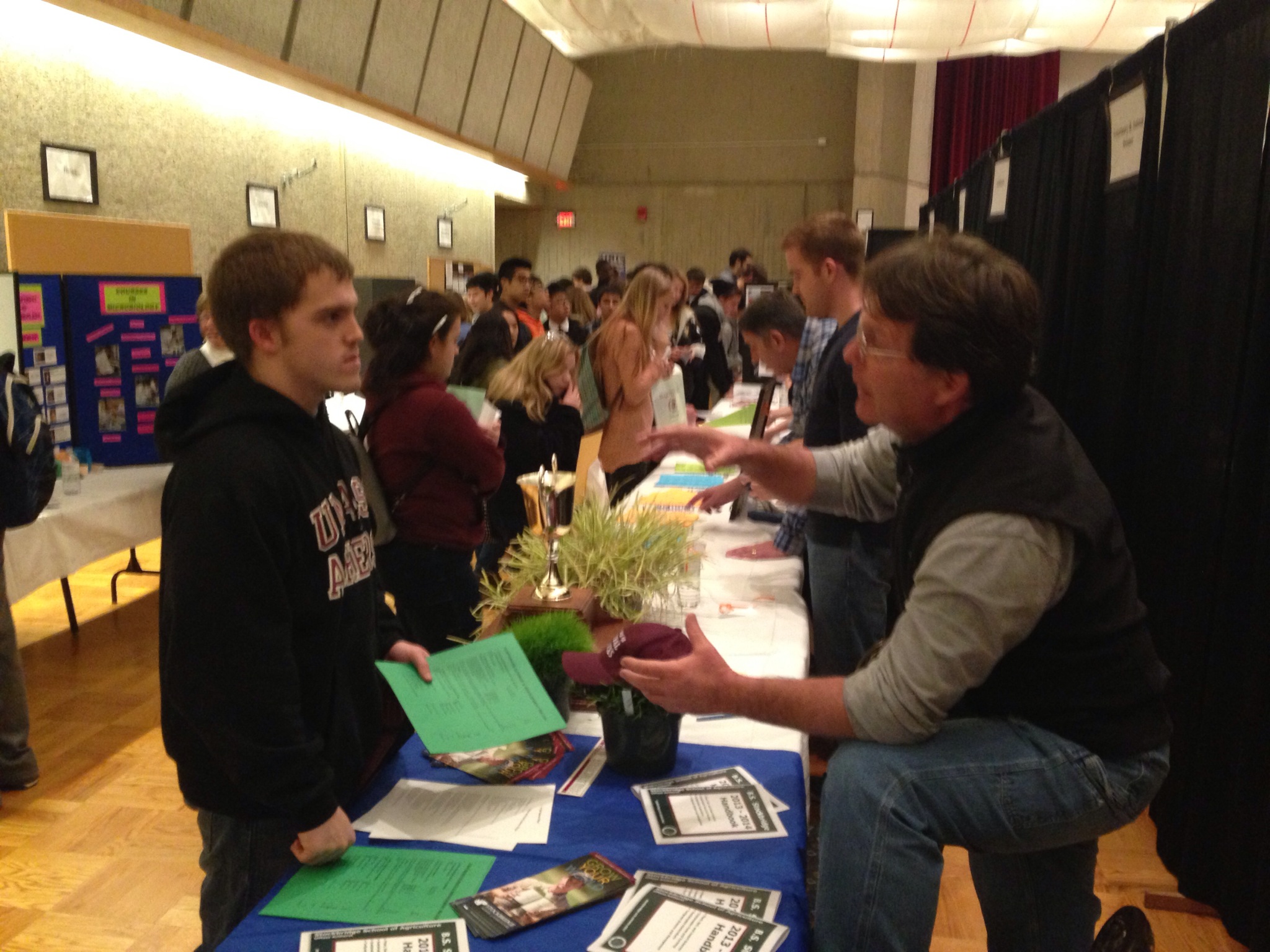
And here are your departmental representatives hard at work.

1401105_10101635778109442_287309012_o

Scott is a great salesperson!

1423148_10101635769850992_734861169_o

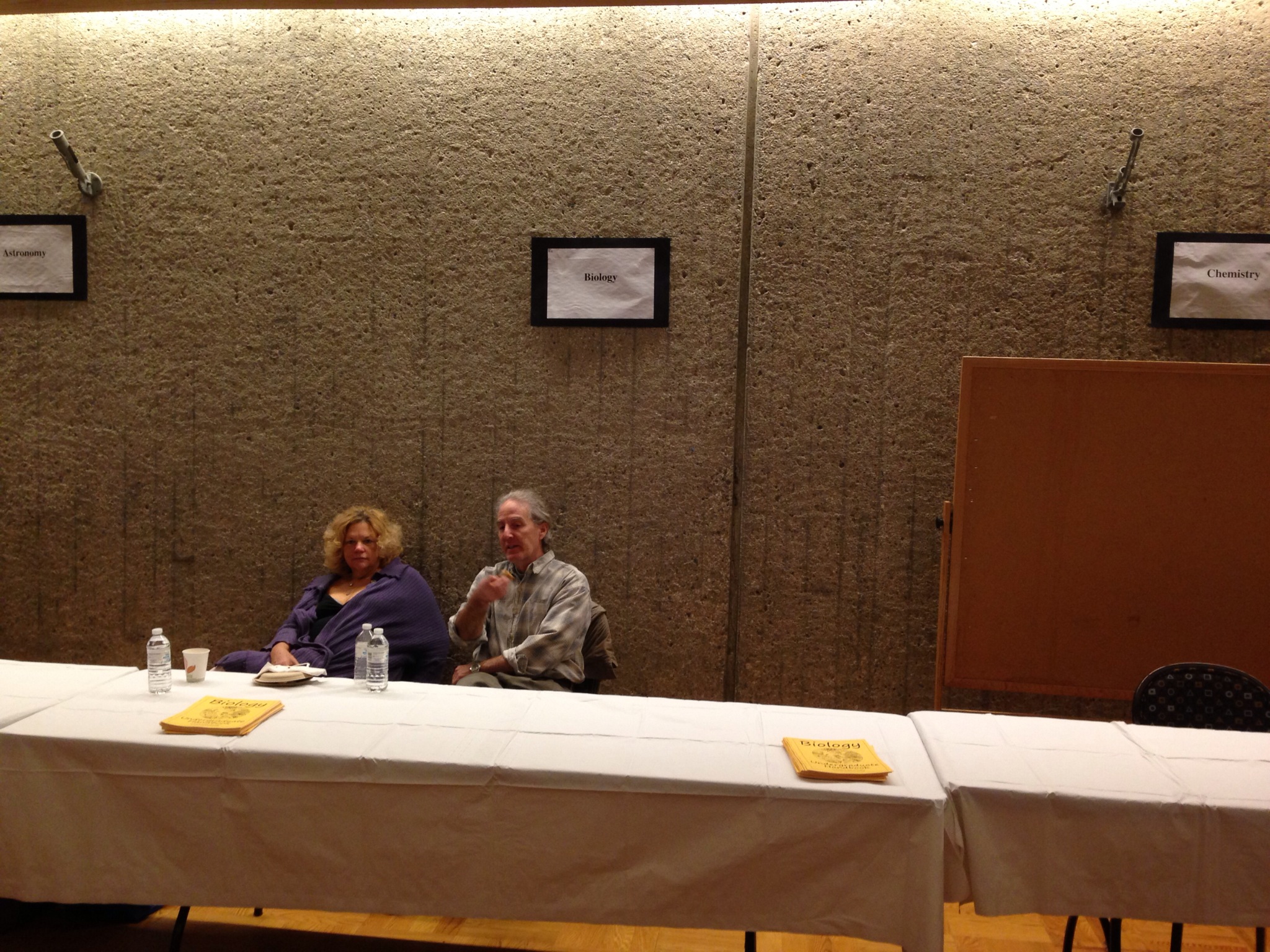
Across the aisle from us were Astronomy, Biology and Chemistry…..

1419343_10101635765744222_2081496447_o


CISA launches online calculator to encourage buying local food

By RICHIE DAVIS – Gazette Contributing Writer – Thursday, October 24, 2013

Who says you shouldn’t play with your food?

Not Community Involved in Sustaining Agriculture, the Deerfield-based nonprofit that tries to get people in the Pioneer Valley to eat more local farm products.

To encourage local voracious habits in its 20th-anniversary year, CISA has launched an online calculator to help people see for themselves the impact of buying their milk, eggs, produce and meats from local producers.

The calculator comes as the most ambitious effort in a year of innovative challenges to pump up the volume of local food consumption — activities from a “Farmstand Bingo” game during the summer to organizing local food potluck dinners this fall.

The online tool, developed with help from economists Anita Dancs of Western New England University in Springfield and Helen Scharber of Hampshire College in Amherst, lets people plug in how much of their food budget they spend on locally produced items to see how it affects the local economy.

“We wanted to find a way to help people understand the importance of food choices they’re making on a daily basis, and to demonstrate the value of buying local agricultural products,” said CISA Program Director Kelly Coleman. “None of this is totally straightforward, and we felt the accuracy of the information was really important.”

In two steps, the calculator helps a user gauge how much local food they are already buying, and then it shows how much of a difference it would make if they bought more — or less — in any given category, including cutting back on buying frozen or canned foods and “long-distance” produce, meats, dairy and eggs.

“That’s to encourage people to think about how they can do more, what the impact would be,” said Coleman.

Because even a small commitment by numbers of people to buy certain kinds of local products can affect the local economy in surprising ways, the calculator demonstrates the power of shopping locally, said Coleman.

“One of my favorite little features of it is, if you make this change, say switch $5 to local vegetables from vegetables bought from far away, it has maybe 1.77 times more of an impact on the economy, almost twice the impact,” she said. “That’s really inspiring to me. And we haven’t had that (evidence) before, for the number wonks.”

For example, by shifting $30 monthly to more local vegetables and meat, it adds 2.24 times more to the local economy than spending that same amount on nonlocal foods, according to the data presented.

The calculator uses an IMPLAN modeling program, used for economic analysis and planning, applying numbers that the user inserts according to the total amount of “intentionally” purchased local food divided by the total grocery purchases. It automatically adds 10 percent to account for other local food that may be unwittingly part of the mix.

While the calculator template may be used effectively in other parts of the country, Coleman said the data, from the National Agricultural Statistics Service, is tailored specifically to this three-county region to account for the local agricultural economy here due to different production and processing costs.

CISA did a “soft launch” of the calculator program on its website about a month ago, Coleman said, encouraging users to test it to work out confusing language and glitches.

“It’s not so much that this will make a difference to everyone,” she said. “Some people are really inspired by personal stories, while others really like the numbers. We felt this would be another way of demonstrating the impact that will inspire a certain population that really loves numbers, and this would be fun. We’ll still provide the stories and other ways” to encourage people to be “local heroes.”

On the Web: www.buylocalfood.org/buy-local/local-food-calculator/

OLYMPUS DIGITAL CAMERA

We can eat better by working together to strengthen local agriculture

WebBy MARGARET CHRISTIE and PHILIP KORMAN – Daily Hampshire Gazette

Wednesday, October 23, 2013

SOUTH DEERFIELD — Do you ever wonder how much Pioneer Valley residents’ support for local farms and food businesses impacts the local economy? It’s easy to see how buying local benefits your family (it tastes good!). Likewise, if you’re a loyal farm customer, you can guess that your purchases benefit your favorite farm’s bottom line.

But what’s the cumulative effect of our collective support for local farm businesses? Today is the third-annual Food Day, giving us a chance to tote up our joint successes — and to prepare for challenges ahead.

In honor of Food Day, CISA launched a new Local Foods Calculator at buylocalfood.org. It can help you figure out what percent of your food budget is local — and inspire you to do more by showing the impact of increasing local purchases.

For example, if you shift just $5 per week to local fruits and vegetables, it contributes almost twice as much income to the local economy as purchasing non-local fruits and vegetables. If every household in Franklin, Hampden, and Hampshire County made this shift, we would see an increase of 516 jobs and add $24 million per year to the local economy.

As a region, we can generate this economic activity by working together. For a generation now, CISA has collaborated with farmers, individuals and organizations to strengthen local farms. Our successes are many — and yet, the challenges ahead are sobering.

In the past 12 months, we’ve seen commitment to local ownership and control realized through the conversion of three local businesses to cooperatives — Real Pickles and Artisan Beverage Cooperative in Greenfield and the Old Creamery Co-op in Cummington. Other local endeavors include plans for the expansion of the North Quabbin Community Co-op into a storefront in Orange and in Springfield, community activism has created the real possibility of a full-line supermarket opening in Mason Square.

These business successes build on other positive trends related to local food. From 2008-2013, the number of farmers’ markets in our region grew 74 percent to 47 (including seven winter markets), while CSA farms grew 145 percent to 49 farms feeding approximately 40,000 people.

Local beer, brewed with local ingredients, is now created, consumed and celebrated at The People’s Pint and Northampton Brewery. Local wineries are producing more wines with local grapes. Local hard cider has experienced an amazing renaissance. And a new whole animal butcher shop, sourcing from local farmers, will open in 2014 in Northampton. We can measure the impact of our local purchases in dollars, in jobs, in businesses and in beer!

Together, we’ve begun to shift our food economy closer to home to benefit our communities. A number of factors, however, threaten our work. First, we must ensure that all residents of our region can benefit. As income inequality grows, the federal SNAP (food stamps) program is an important source of food for 15 percent of Americans, but Congressional inaction and antipathy threaten this program. Sixty percent of the farmers’ markets in the Pioneer Valley accept SNAP, and SNAP dollars used at farmers’ markets increased 41 percent from 2011 to 2012, making it a growing source of income for farmers. You can help by reminding your representatives that you support SNAP benefits and that USDA programs have helped more farmers’ markets accept SNAP and you can generously give when your farmers’ market asks for funds to match SNAP dollars.

While the debacle of the recent government shutdown reminds us why we value local action, we can’t ignore the power of the federal government to be a positive or negative force for local farmers. Decades of federal farm policies favoring the largest farms mean that in 2007, less than 2 percent of farms accounted for 50 percent of total sales of farm products (GAO Report, Concentration in Agriculture, 2009). The last five-year Farm Bill funded many innovative programs benefitting local, organic and beginning farmers, but since it expired a year ago Congress has been unable to pass a new Farm Bill. We need a new Farm Bill, and we need a better Farm Bill.

The impact of the federal government is also visible in the proposed Food Safety Modernization Act regulations. Although these regulations were created in response to food safety problems in the industrial food system, the proposed regulations would disproportionately increase costs for small, diverse farms. The result — we will lose a good number of small farms due to the high costs to comply. Comments on these rules are due Nov. 15 — learn more and take action at buylocalfood.org.

On Food Day, raise a local libation to our joint successes. Pledge to increase your local buying, and to take action to ensure that government policies benefit our farms and our neighbors. The next step for change involves not only what is on our plate and who is sitting at our table, but what are the rules that we eat by. Together, we can make sure our farms can feed us all.

Margaret Christie is special projects director and Philip Korman is executive director of Community Involved in Sustaining Agriculture (CISA).

Original Post

OLYMPUS DIGITAL CAMERA