After Graduating From College, It’s Time to Plow, Plant and Harvest

The New York Times


September 24, 2012
By NATALIE KITROEFF

RED HOOK, N.Y. — It was harvest time, and several farm hands were hunched over a bed of sweet potatoes under the midday sun, elbow deep in soil for $10 an hour. But they were not typical laborers.

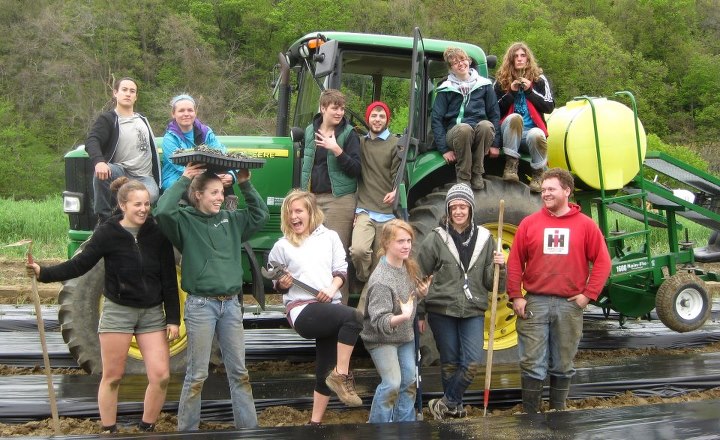
Jeff Arnold, 28, who has learned how to expertly maneuver a tractor, graduated from Colorado State University. Abe Bobman, 24, who studied sociology at Wesleyan University in Connecticut, was clearing vines alongside Nate Krauss-Malett, 25, who went to Continue reading After Graduating From College, It’s Time to Plow, Plant and Harvest

Stockbridge Students Volunteer at North Amherst Farm Fest

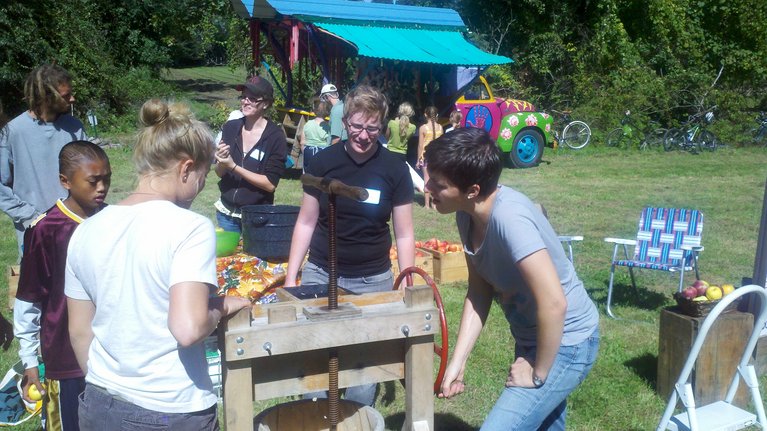
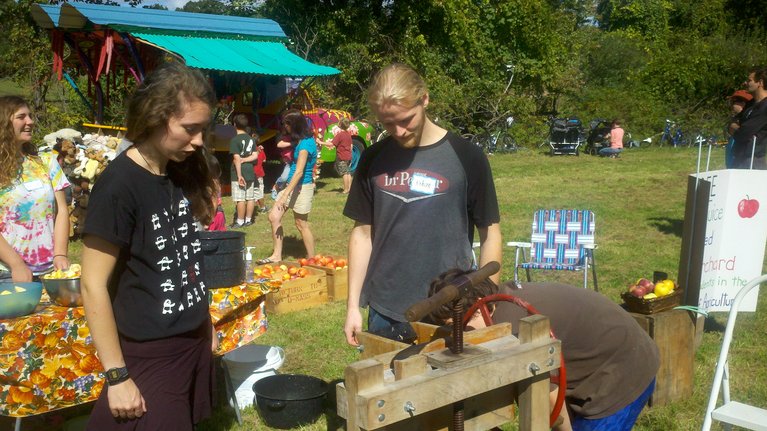
Thanks to the many Stockbridge School of Agriculture students who showed up to volunteer at the annual North Amherst Harvest Festival at Simple Gifts Farm.

It was a beautiful day and hundreds of local community members joined us to enjoy the music and sunshine.

Apples were donated by the UMass Cold Spring Orchard in Belchertown.

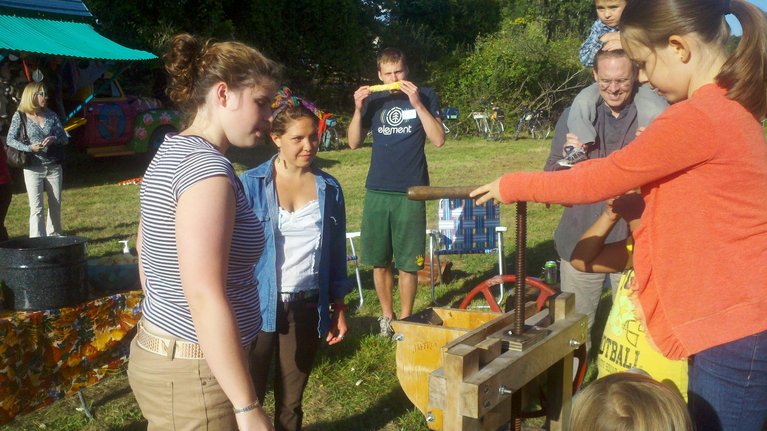
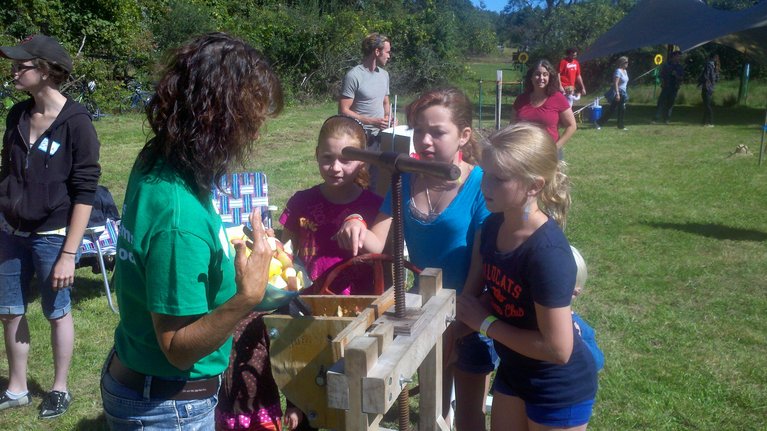
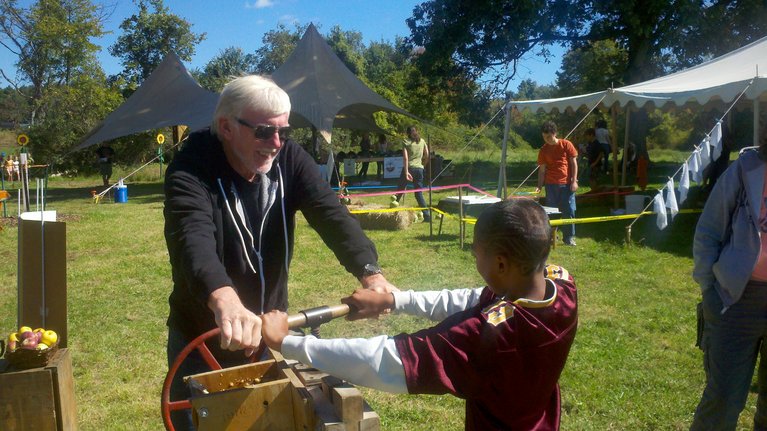
Stockbridge students cut and pressed the apples and shared the fresh apple juice with kids and adults.

The kids enjoyed helping to work the apple press.

The apple press was loaned to us by the Common School in Amherst.

Several of the big kids helped out too!

Thanks so much to the Amherst Common School, the UMass Cold Spring Orchard, and the Stockbridge School of Agriculture for contributing to the success of the 2012 North Amherst Harvest Festival.

Boston Globe Highlights Stockbridge School of Agriculture

September 18, 2012

UMass steps up to meet the demand

For evidence of farming’s increasing popularity, look no further than Stockbridge School of Agriculture at the University of Massachusetts Amherst. In 2000, when the school launched its sustainable food and farming program, 10 students were enrolled. Today, the program has 75 students, about 25 in the two-year associate’s degree program and 50 pursuing a four-year bachelor of science.

Stockbridge, with a total enrollment of about 329 students, also offers majors in areas such as horticulture and turfgrass management.

Not everyone who goes through the sustainable program ends up in farming. “About a third of our students are looking at small farms,” says John Gerber, a professor at the Stockbridge School. “But a third are looking at public policy and advocacy, and about a third are looking at youth education. Growing things is what we know best, but the students are broadening how we think about agricultural education.”

Keith Boyle, 22, is one recent Stockbridge graduate who started farming before the ink on his diploma was dry. At 14, the East Bridgewater native began working for cranberry grower Peter Oakley, at first reluctantly, and then with great enthusiasm. He attended Norfolk County Agricultural High School and then Stockbridge.

When a small bog came on the market a couple of years ago, Oakley purchased it and held it for Boyle until last spring, when he was able to buy it, thanks to an interest-free loan from UMass’s Lotta Crabtree fund and another loan from Oakley.

“The loan went through in April, so before I graduated, I had the property,” Boyle recounts proudly.

As of this summer, the 94-year-old UMass agriculture program has been elevated to a full academic unit, with its own faculty and education offered up to the doctorate level and a new Undergraduate Agricultural Learning Center in the offing.

“UMass has decided this is a growth area,” says Gerber, “and the Stockbridge School is growing.”

——————————

JANE DORNBUSCH

Images added by J. Gerber

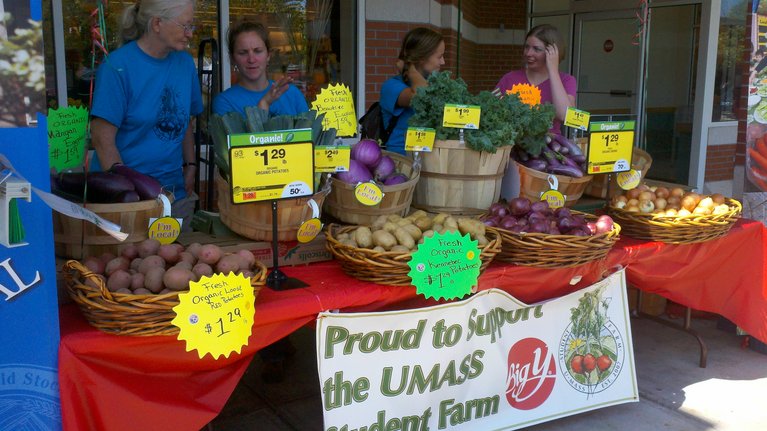
The Big Y is selling vegetables grown by UMass students

Today was the kick-off of a long-term commitment from the Big Y grocery store in Hadley, MA to sell produce grown by UMass students in the Student Farming Enterprise class.  UMass instructors, Amanda Brown and Ruth Hazzard, were out in front of the store today with several of their students displaying fresh vegetables grown at the Student Farm.

Please check out this short video about the partnership with the Big Y World Class Market!

2012 Marks the 6th season of the UMass Student Farming Enterprise program at UMass. SFE began in the fall of 2007 with two students growing kale and broccoli through an independent study project to sell to the UMass Earthfoods Cafe.  In spring 2008, the farming enterprise project was established as a year-long university class.  This year the farm will increase production again to allow more students to participate in the course and serve more diverse local markets.

The class is sponsored by the Stockbridge School of Agriculture and currently listed under the title PLSOILIN 498E – Student Farming Enterprise.  The project has received support from the Massachusetts Society for Promoting Agriculture, UMass Auxiliary Services, and the Sustainable Food and Farming program.

The Student Farming course is limited to 10 students (there is one opening remaining for this semester), and takes place both on and off campus.  Students are responsible for identifying markets for the produce, planning out in advance for the crops, visiting farms in the immediate area, managing plants in the greenhouse, using market strategies to achieve desired yields, and learning farming methods.  All produce grown is United States Department of Agriculture (USDA) certified organic.

In addition to selling to the Big Y, student farmers sell produce to the UMass Dining Services and directly to customers through their Friday afternoon farmers market in the UMass Student Union as well as a membership CSA.  In the fall of 2012, the Student Farming Enterprise will offer 50 shares of local, organic produce to the UMass community. Members include students, faculty, and staff.  Shares include over 15 pounds of fresh weekly organic produce over a 10 week period (September through November). The cost of a share is $325 for the season.  Anyone interested in purchasing a share may contact the student farmers at studentfarm.enterprise@gmail.com

For more on the UMass Student Farming Enterprise class, see this short video:

For information on the project, contact Amanda Brown at studentfarm.enterprise@gmail.com.

Update on Sustainable Food and Farming Grad – Mike Gula

The following story was originally posted in the Simple Gifts Newsletter.

———————————————————————————————

Meet the Crew: Mike Gula

It may have been a trick of the light, but Mike Gula thinks that he may have found paradise at Simple Gifts Farm one evening last year when a hazy yellow sky illuminated the strawberry fields in June. I have seen that light too, from the Festival Hill after a long day, and think I know what he means.

Most moments at the farm are mundane, but Mike finds the everyday work and community here satisfying. Mike grew up in New Bedford and Wareham. Although not a farm kid, his dad kept a garden and they spent a lot of time outdoors exploring the pine barrens and beaches of southeastern Massachusetts. His experiences in nature lead to his major in Plant and Soil Science at the University of Massachusetts. While at UMass, Mike was part of the Student Farming Enterprise, and this gave him a good basis to dive into the work here. However, our scale and degree of mechanization, and the Continue reading Update on Sustainable Food and Farming Grad – Mike Gula

Exciting Time at the UMass Stockbridge School of Agriculture

As many of you know, the Stockbridge School of Agriculture has always offered exciting programs.  However, Over the last couple of months, significant changes have occurred which will make it even better than before. These changes are born out of a committee appointed to review agricultural education at UMass and develop approaches to strengthen all agricultural work at UMass. A refocus of agricultural efforts is now the main effort as a result of this review.

The approach that we began about 1.5 years ago was to elevate the Stockbridge School of
Agriculture to a full academic unit with a faculty, education offered at all levels from A.S. to Continue reading Exciting Time at the UMass Stockbridge School of Agriculture

Exciting Time at the UMass Stockbridge School of Agriculture

As many of you know, the Stockbridge School of Agriculture has always offered exciting programs.  However, Over the last couple of months, significant changes have occurred which will make it even better than before. These changes are born out of a committee appointed to review agricultural education at UMass and develop approaches to strengthen all agricultural work at UMass. A refocus of agricultural efforts is now the main effort as a result of this review.

The approach that we began about 1.5 years ago was to elevate the Stockbridge School of
Agriculture to a full academic unit with a faculty, education offered at all levels from A.S. to Ph.D., and research and outreach responsibilities. It was difficult for the University’s system of governance to accept an academic unit with the title of “School” situated within a college, the College of Natural Sciences in our case, since schools usually referred to Continue reading Exciting Time at the UMass Stockbridge School of Agriculture

Agriculture’s Star Rises in Academia

Published on GazetteNET (http://www.gazettenet.com)

OPINION: Georgana M. Foster: Ag’s star rises in academia

When I read of the plan of Amherst College to follow Hampshire College in having a farm to grow veggies for the dining hall, and for the University of Massachusetts to activate its farm, I was fascinated.

When we arrived on the UMass campus 55 years ago, it was not far from the days of being Mass Aggie, a school which the college at the south end of town thought of as an Continue reading Agriculture’s Star Rises in Academia

NYT – Celebrate the Farmer

August 21, 2012, 8:30 pm

Celebrate the Farmer!

By MARK BITTMAN

I was at a farm dinner in Maine the other night, a long table of 60 people eating corn, chicken, salad, a spectacular herb sorbet and other goodies. When one of the hosts arose to ask someone to describe the first course on the table – huge marrow bones from the farm’s cattle- she introduced not the chef but the farmers. Similarly, at a fund-raiser on Cape Cod a week or so earlier, the talk was all about the provenance of the produce and meat rather than the cooking technique. The most popular guy was the oyster grower.

This is a fine trend. With all due respect to my chef friends (many of whom will agree with this statement), most cooking is dead-easy and pretty quick: it takes 20 minutes to roast a marrow bone, and an ambitious fifth-grader can get it right on the first try. A more complicated dish, like the seared corn with chorizo that was served a bit later, might consume an hour and require a bit of skill.

But raising and butchering the cows and pigs that produced the marrow bones and meat for the chorizo? Growing the corn? These are tasks that take weeks, if not months, of daily activity and maintenance. Like anything else, you can get good at it, but the challenges that nature (ask the corn farmers of Kansas) and the market (ask Tyson Foods, whose profits just fell 61 percent) throw at you are never even close to being under control in the same way that a cook controls the kitchen.

What a cook doesn’t control is ingredients, and that’s where the debt to farmers comes in. In the last 10 or 15 years, we’ve seen the best New York chefs scouring the Greenmarket weekly and setting up exclusive relationships with farmers throughout the Northeast; that kind of behavior is nationwide. And even before that, Alice Waters hired people full-time to make sure the ingredients her people cooked with were the best.

Since late summer brings more real food to more people than other times, right now the rest of us can eat as well as if we had our own chef. Whether it’s a salad of raw tomatoes, peaches and basil, a dish of roasted eggplant with nothing more than soy sauce, a real chicken smeared with a paste of fresh herbs, it’s all right out there. In much of the country, even some conventional supermarkets purchase from nearby farms. On my recent trip through New England, I saw a bin of corn being filled from burlap sacks by a guy (a farmer, I presume) who’d driven up in a pickup; there was a similar scene involving cucumbers. Big deal, but it shows it can be done.

The cry will ring out: Not everyone can afford fresh fruits and vegetables, especially from farm stands! And, sadly, it’s true. But this is precisely why we need to support a herd of actions that will make it possible for more people to have access to real food:

  • We need to reduce unemployment and increase the minimum wage (including that for farm and restaurant workers). This (obviously) goes beyond the realm of food, but it’s key to improving the quality of life for many if not most Americans. (Here’s a strong argument for that.)
  • We need to not cut but raise the amount of support we give to recipients of food stamps. A good example is New York City’s Health Bucks program, where food stamps are worth more at farmers’ markets (which don’t, as a rule, sell sugar-sweetened beverages!).
  • We need not only to attack the nonsensical and wasteful system that pays for corn and soybeans to be grown to create junk food and ethanol, but to support local and national legislation that encourages the birth of new small-and-medium farms. We need to encourage both new and established farms to grow a variety of fruits and vegetables, to raise animals in sensible ways and, using a combination of modern and time-tested techniques, treat those animals well and use their products sensibly.

In short, we need more real farmers, not businessmen riding on half-million-dollar combines. And if you haven’t seen a real farmer, go visit a one- or two-acre intensive garden; it’s a mind-blowing thing, how much can be grown in a relatively small space. Then imagine thousands of 10-, 20- and 100-acre farms planted similarly: the vegetables sold regionally, the pigs fed from scraps, the compost fertilizing the soil, the cattle at pasture, the milk making cheese .

The naysayers will yell, “this mode of farming will not produce enough corn and soy to feed our junk food and cheeseburger habit,” and that’s exactly the point. It would produce enough food so that we can all eat well. It’d produce enough food so we can slow the hysteria about our inability to feed the expected 9 billion earthlings. After all, we’re not doing such a great job of feeding the current 7 billion. Why? Largely because too many resources go into producing junk food and animal products.

The Northeast, where everything but dairy farming was left for dead a decade ago, and where many dairy farmers hold on for dear life, was once its own breadbasket; sometimes it feels as if it can become that again. Local food grown by local farmers is a wonderful thing; more food grown by farmers who sell regionally brings a level of practicality to the system. Boats and trains from all over the Northeast once supplied New York City (obviously incapable of producing much in the way of truly “local” food, unless you envision re-converting Westchester, Nassau, Bergen and Fairfield counties to farmland) with food that was picked during the day, shipped at night, and sold the next day. By comparison, the parsley sitting in your supermarket right now is at least a week old and probably older, barring some incredible good fortune.

Real farmers, like gardeners, take pride in every tomato. And while agribusiness continues to try to find a way to produce a decent-tasting tomato (there’s a new scheme now; it won’t work), anyone who wants to can buy tomatoes and other fantastic produce until Thanksgiving, and – in much of the country and without much effort – well into the early winter. The thrill of seasonality – not only real tomatoes but firm eggplants and cucumbers with super flavor and minimal seeds, arugula that demonstrates why it was once called rocket, peaches with loads of fuzz and so on – reminds me why I don’t often buy those things out of season.

But to get these beautiful veggies, we need real farmers who grow real food, and the will to reform a broken food system. And for that, we need not only to celebrate farmers, but also to advocate for them.

——————————————————————————————————————

Please share this post with your friends.  And for more ideas, videos and challenges along these lines, please join my Facebook Group; Just Food Now or check out my web page Just Food Now.   And go here for my World.edu posts.

Helping Students Eat Healthy; an editorial

UMass Graduate, Emily French, and Stockbridge School of Agriculture Instructor, Catherine Sands, recently published this editorial in the Daily Hampshire Gazette.

WILLIAMSBURG – There’s a lot of talk about school food these days, thanks in part to Michele Obama’s Let’s Move Campaign, and to the people chipping away at a top-heavy system that doesn’t stress fresh healthy food and the educational opportunities that abound when students learn how their food is grown and how to find it close to home.

The Farm to School movement is growing faster than we can count. Steps to provide healthy, fresh food at school meals and to build purchasing relationships between farms and institutions abound.

Fertile Ground, a grassroots farm to school initiative, recently produced a School Food and Community Forum at the Jackson Street and Williamsburg elementary schools. Funding from Cooley Dickinson Hospital and the Community Foundation of Western Massachusetts provided us with the means to facilitate two afternoons of conversation and resource sharing among teachers, food service staff, school administrators, nurses and families. Over 80 people from 20 schools attended.

These conversations now ripple out into our communities.

Here’s some of what we heard: We know that farm-to-school programs are in over 10,000 schools in all 50 states. In Massachusetts alone, over 300 public school districts, private schools and colleges are directly purchasing locally grown food from more than 110 farms.

School gardens enhance classroom learning and cafeteria choices with the hands-on experience that comes from growing our own food. We are making curriculum connections in math, science, language arts, history and economics – to teach the story of what we eat and why.

In Williamsburg, a collaboration with the local Grange brings town elders into the classroom to make jam. Students visit a neighboring sugar shack. These experiences teach children about food as a system – the whole path from farm to fork, as author Michael Pollan puts it. Snacking on kale, tomatoes, sorrel and raspberries in their school garden helps expand their palettes.

At the two forum events, we addressed new USDA regulations requiring schools to serve more fresh produce, whole grains and other healthy foods. We heard that public school food service departments are in the process of implementing new USDA food regulations. These include hefty servings of leafy greens and orange/red vegetables like squash, carrots, and beets. This is a great opportunity for our region, as our farms grow an abundance of these kinds of vegetables.

Food service directors are trying all sorts of strategies. They are buying from the local apple orchard, collaborating on purchasing among school districts, entering into non-binding agreements with local farms for produce, processing and storing food during the summer and much more.

The ingenuity we’re seeing among food service staff is inspiring.

As a member of Farm to Institution in New England (FINE), the Mass. Farm to School Project is participating in a regional project that may result in New England dairy and beef cattle being processed into local ground beef for institutional markets.

We heard a food service director note that people unfairly blame that sector for the child obesity crisis.

Talk shifted to the topic of equipment needs – for instance, not having enough refrigeration space for fresh produce, inadequate stoves and a lack of steamers. We discussed a Franklin County food processing center’s flash-freezing pilot program, an effort to provide affordable, locally grown produce to schools and institutions during the agricultural off-season, thereby extending the season for local food in schools.

One Williamsburg teacher described how her students will taste anything in the school garden: raw garlic, cucumber, sorrel and arugula, collards and kale, broccoli, you name it. They invent and prepare new recipes from the produce they have grown for an annual harvest feast. But they hesitate to taste new recipes (often using the same ingredients) in the lunchroom.

How do we change this?

In response, a parent, asked the food service director whether she would share the recipe with parents, either by sending home recipe cards or publishing recipes in the school newsletter.

It takes multiple tasting of a new food for our kids to eat it, so encouraging parents to prepare the same new healthy dishes at home might make a difference in whether the kids will eat it at school.

Together they are building a plan.

Catherine Sands directs Fertile Ground, a grassroots farm-to-school initiative and teaches Community Food Systems and Food Justice and Policy at University of Massachusetts Amherst. Emily French is the Farm to Cafeteria Director for the Mass. Farm to School Project.