July 23, 2017 – BAY SHORE, N.Y. — Jim Adams met his wife on a trip to Uganda a decade ago. Rosette Basiima Adams, 35, grew up in Kasese, a town, she said, where “everything we ate, we grew.”
“I went to see the gorillas in the Congo,” Mr. Adams, 42, recalled recently. But he left his tour group and ended up meeting Rosette, who was working at a hostel where he stayed.
Today, the couple are trying to grow a business cultivating crops on suburban lawns on Long Island. Their business, Lawn Island Farms, is the result of research and a desire to find a way to farm on the island.
“A lot of it was seeing America through Rosette’s eyes,” Mr. Adams said. In his wife’s hometown, he added, “all their food comes from within miles.”
With lots of ideas and little money, the Adamses began looking for land to farm. They started an online fund-raiser and posted fliers asking area residents to consider turning their lawns into small farms.
“There’s definitely an interest,” Mr. Adams said. “People say, like, ‘How do we replace the lawn and make it into a productive system?’”
The Adamses have received more inquiries than they can handle.
For now, the couple is farming at two locations in Bay Shore: one is a homeowner’s front lawn; the other is behind St. Peter’s by-the-Sea Episcopal Church.
They sent the additional inquiries they received to Pennie Schwartz, a home-farmer in Southold, farther east on Long Island.
Ms. Schwartz, 61, a retired chiropractor, said she wanted to help the Adamses turn each inquirer’s lawn into “an edible space.”
“It’s called foodscaping,” she said. “It’s really getting people to understand that lawns are really environmental energy suckers, for lack of a better word.”
Ms. Schwartz studies permaculture, a phenomenon that she said “combines landscape design with sustainability and environmental ecology” — and holds a certificate from Cornell.
“I don’t want to put the lawn guys out of business,” she said. But, “with all the chemicals that go into it, and all the watering we have to do to keep it green, there are better ways and better things to do.”
Ms. Schwartz wants to set up systems that landowners can maintain independently; each system should meet the landowner’s needs.
In other words, a family with children can still have a swing set.
On the two properties they farm, Mr. and Mrs. Adams are cultivating crops that grow quickly and that do not require much space, like salad greens and radishes.
One evening last month, the Adamses’ 9-year-old twins, Daisy and Curtis, ran through the front yard farm here on Hyman Street in pursuit of a rabbit.
Ms. Adams planting sunflowers in Ms. Trimarco’s lawn. Ms. Adams grew up in Kasese, Uganda, a town, she said, where “everything we ate, we grew.”CreditJames Estrin/The New York Times
Mr. and Mrs. Adams had just planted sunflowers when the homeowner, Cassandra Trimarco, drove up.
Ms. Trimarco, a physician assistant, contacted the Adamses after noticing their flier at a coffee shop.
“It’s me kind of donating in a way rather than controlling, because I don’t control anything, and it’s wonderful,” she said. “They think they’re lucky, but I think I’m lucky.”
Taking part in gardening can make a child feel happy and boost their development, research suggests. A study of 1,300 teachers and 10 schools commissioned by the Royal Horticultural Society (RHS) found children in schools that encouraged gardening became more resilient, confident and lived healthier lives. Check this out here.
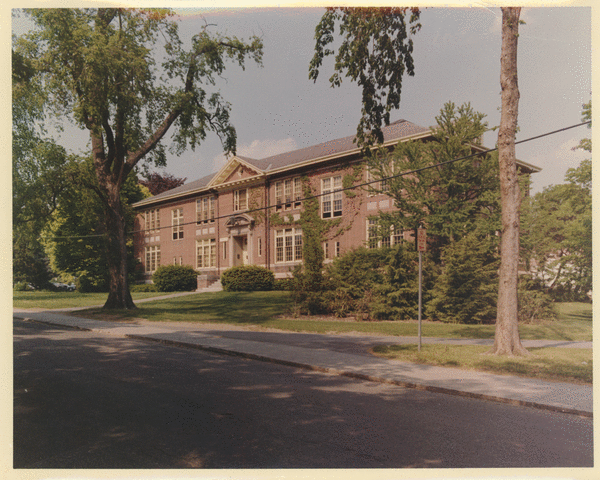
TO: Stockbridge Students who have taken classes in French Hall
FROM: John M. Gerber, Professor of Sustainable Food & Farming
While you were studying horticultural plant pathology with Bess Dicklow, or sustainable agriculture with Katie Campbell-Nelson, or visiting your adviser Doug Cox or Susan Han, did you ever wonder who French Hall was named after? Probably not.
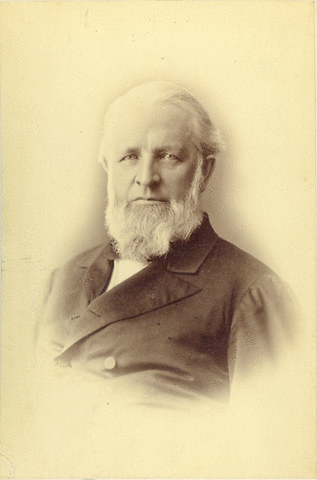
You have surely walked by the plaque near the front door commemorating Henry Flagg French, the first President of Massachusetts Agricultural College (Mass Aggie).
A native of New Hampshire and graduate of Dartmouth College and Harvard Law School, French loved agriculture but spent most of his career as a lawyer and a judge. He operated a farm, did his own agricultural research and was considered a leader in the emerging application of science to agriculture.
French held the post of president for two years, resigning in 1866 even before any students had arrived. According to Henry Bowker, a student who entered Mass Aggie with the first class in 1867, and remained connected as an alum and trustee for many years, “Judge” French “was a keen, sensitive man, with q good mind, highly trained and well informed, rather distant in manner, but kindly in nature.” Professor French was said to be well ahead of his time in his thinking on agriculture.
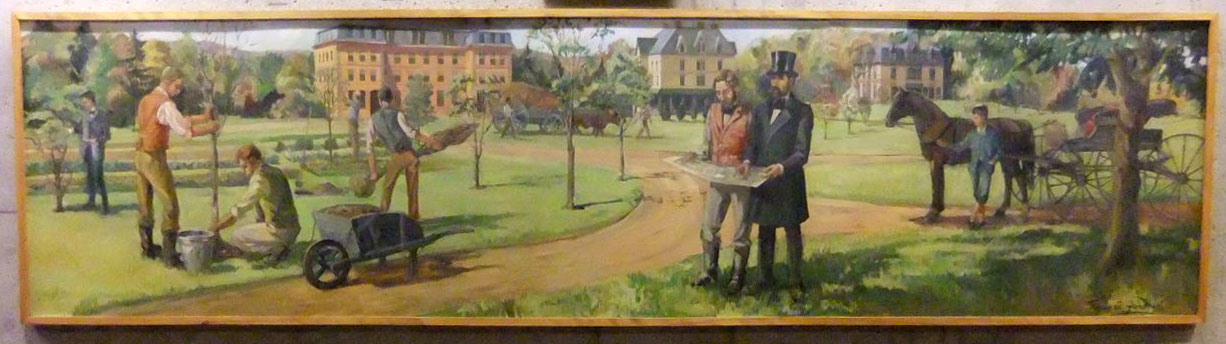
His short stay as President seems to have been because of an argument with the Board of Trustees (not an uncommon problem for college presidents then and today) over the proposed placement of new buildings. It seems that the original design for the campus was created by the famous architect who designed Central Park in N.Y. City, Frederick Law Olmsted. In 1866 the Trustees of Massachusetts Agricultural College requested that Olmsted, provide recommendations for the grounds of the newly formed institution.
Olmsted recommended that the college as a whole be modeled after a typical New England village. The Board of Trustees did not like the plan, fired Olmsted, and proceeded place buildings in a more expansive manner, spread farther apart among the fields. French seems have sided with Olmsted, and lost.
After leaving Mass Aggie, French moved to Washington D.C. and served as Assistant Secretary of the Treasury on the President’s Cabinet. He also authored a book titled “Farm Drainage” which described the way a particular type of drain was used called a “French Drain” which were probably invented in France but popularized by Professor French.
While here for only a few years, “Judge” French had a lasting impact on the policies and core values of the new college. The following was taken from a report he wrote: “Our college is to be established as part of the great scheme of public education…., not as a rival to our other excellent colleges, but as a co-worker with them in a common cause.”
Remember that prior to the Morrill Act of 1862, signed by President Lincoln, all of the colleges in the U.S. were private institutions offering education only to the wealthy. Levi Stockbridge himself, was frustrated because his father could only afford to send one of his son’s to Amherst College, and his older brother Henry was chosen. Nevertheless, Levi attended classes with his brother, and was mentored by Amherst College President Edward Hitchcock in chemistry. Public institutions, such as Mass Aggie which offered a free college education for many years to anyone qualified, was a radical departure from the elite colleges of the day.
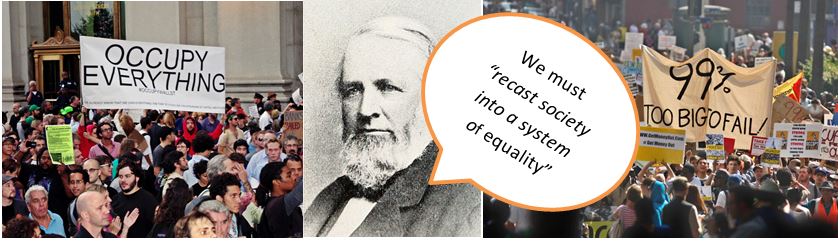
Judge French has strongly held democratic tendencies and claimed that Mass Aggie should “… differ essentially from any college existing in the country controlled by an aristocracy.” Further, he wrote in one of the first reports ever coming from the nascent University of Massachusetts Amherst that “wealth and education, monopolized by any class in any country, will draw to that class the political control of the country.” Sounds like Judge French would have camped out with the protesters at the Occupy Wall Street site!
One of my favorite quotes from French is above. He believed that we must “recast society into a system of equality.” Indeed he fully understood the purpose of the Morrill Land Grant Act of 1862, which was passed “to promote the liberal and practical education of the industrial classes in the several pursuits and professions in life.”
The industrial food system that provides 95-99% of the food to U.S. households results in the least expensive food anywhere in the world on a price basis… at a very high social, environmental, and human and animal health cost. We can do better….
HANOVER — The United States needs a new food policy, much like it already has an energy policy and an agriculture policy, journalist and author Michael Pollan told a crowd of more than 700 on Monday.
The country’s existing so-called food policy, as it has remained over the last 50 years, is to ensure Americans’ food is “plenty and cheap,” Pollan said.
On that metric, we’ve succeeded, he said — Americans spend about 9.5 percent of their disposable income on food, while Europeans spend 14 to 15 percent. United States citizens, Pollan said, enjoy cheaper food than do the citizens of any other country, now or ever.
“In the history of humankind, that is a blessing,” he said.
But cheap food incurs costs elsewhere, Pollan said.
Americans need a more thoughtful food policy, Pollan said, because left unchecked this $1.5 trillion industry produces environmental, social and medical harms, of which the public remains largely unaware.
For instance, one-third of anthropogenic greenhouse-gas pollution today results from the agriculture industry, Pollan said. Nitrogen pollution from farms — used to fertilize fields depleted by monocultural agriculture — has created a dead zone in the Gulf of Mexico the size of Massachusetts, he said. Oligopolies in the meat industry (only four meat packers slaughter 85 percent of the beef in the country, he said) mean that farmers are forced to accept unfairly low prices for their livestock — prices that prevent them from adopting sustainable practices, Pollan said. Overuse of antibiotics in the meat industry has led to evolution of antibiotic-resistant pathogens, he said. Americans suffer more chronic diseases from dietary choices than from any other cause, he added.
These and other consequences of Americans’ food consumption and food production ought to be addressed intentionally and holistically, Pollan said, through a national food policy.
Agriculture Secretary Tom Vilsack wrote in a memo leaked to the press that the Obama administration needs to coordinate such a food policy. Vilsack was on Hillary Clinton’s short list for vice presidential candidates, and Pollan said he’s likely to have her ear should Clinton win the election.
It’s worth watching for steps in this direction, should Clinton prevail, he said, but advocates for better food policy have been disappointed before. Clinton has also said she’d pursue antitrust litigation against the few meat-packing corporations that currently control the industry — “I’ll believe that when I see it,” Pollan said.
A professor at Vermont Law School is currently working with her peers at the Harvard Food Law and Policy Clinic to draft a blueprint for what a national food policy might look like.
Today, numerous agencies oversee food-related issues, and no overarching policy guides their actions with respect to food, so the agencies and the other policies they try to put in place “are not coordinated, and sometimes they’re at cross-purposes, and sometimes they undermine each other,” said Laurie Ristino, who teaches at Vermont Law School and heads the institution’s Center for Agriculture and Food Systems.
“We’d really benefit from a coordinated approach” to food, Ristino said.
As president, Clinton might invest the time and political capital that a national food policy would require, but it’s hard to say for certain, since candidates this year have articulated relatively few specific policy positions, Ristino said. No president is likely to undertake a food policy without clear support from voters, she said.
“I don’t think it’s impossible or out of the question that Clinton would focus on it … but really it has to coalesce and be part of [her] agenda, which is partly our responsibility — to say, ‘This is important,’” Ristino said.
One thing standing in the way of food-policy reform in the U.S., Pollan said, is the food movement itself.
It’s a very diverse coalition, Pollan said, “and not all interests in it care about each other.”
For instance, many activists working toward improved food-production practices care primarily about animal welfare, Pollan said. These activists don’t care nearly as much about the working conditions laborers experience while picking produce in fields or while preparing meals in fast-food restaurants, he said. Those who feel most strongly about workers’ conditions aren’t animated by concern for the environment, and those who care most about the environment aren’t typically worried about processed foods’ deleterious effects on public health, he said.
Pollan likened the situation to that experienced by members of the gay rights movement a decade ago — fractured and heterogeneous, until “some part of it decided to work on marriage equality” — and said a similar focus on a single issue could lead to real improvements in the industry.
Another obstacle to food policy reform, Pollan said, can be seen even in the congressional committees devoted to agriculture, which are composed almost entirely of representatives for agricultural interests. There are no committee members chosen to represent “eaters,” or ordinary American citizens, Pollan said.
The result is agriculture policies written to serve the agriculture industry, and to a lesser extent, farmers, he said. Ordinary Americans ought to have a seat at the table that makes these decisions, Pollan said, because, for instance, current agricultural policies drive national public health problems that ramp up health care costs.
Although corporations exercise significant influence over what Americans eat and what Americans wish to eat, Pollan said, consumers also play a role in shaping the country’s approach to food.
Among the most influential decisions Americans make in their food habits, Pollan said, is the choice to eat meat.
Americans on average consume half a pound of meat per person every day, he said.
“In the history of humankind, this is a new thing,” he said. “Meat was a luxury for most of humankind for most of human history.”
Meat requires enormous resources to produce, he said, to the point that eliminating meat from their diet is among the single most effective methods individuals have to combat anthropogenic climate change.
At some point, he said, Americans’ current meat-eating habits “will seem irresponsible.”
“I’m old enough to remember when, if you had any litter in your car, you threw it out the window,” Pollan said, and when “smoking in public places was something routine.
“I think meat eating’s going to suffer the same thing,” he said.
Although Pollan professed to enjoy eating the flesh of other animals, he said that at some point the environmental community will need to reckon with the practice.
Once that happens, he said, meat’s likely to become “something very special you have on Sunday night.”
Few things are more inspiring than seeing a young person create a meaningful place in society from scratch. That’s the case with Ava Bynum, who grew up near our home in Philipstown, N.Y., and — setting aside the idea of college — created a program for local schools, Hudson Valley Seed, built around incorporating basic learning with gardening and nutrition. The program now serves about 1,500 students a week in schools in several Hudson Valley counties.
These two videos tell the story far better than I could, so I hope you’ll spend a few minutes this Earth Day weekend watching and sharing them. (Here’s the program’s Facebook page.)
Are there gardening-education programs where you live? If not, I’m sure Bynum would be happy to spread the joy of learning.
About 25% of the students studying Sustainable Food an Farming at UMass Amherst are focused on community-based and farm-based education. To learn more, see:
For most of my adult life, I have been a teacher of sorts, first as a university professor, and now as the director of a science museum. While the students and settings have changed, the job has remained the same — to share the wonders of the natural world, and teach the science we need to understand and sustain our planet.
Over time, I have come to believe that our environmental problems stem from too many people not understanding, or intentionally overlooking, the physical and biological systems governing this planet. We have gotten very good at ignoring nature’s laws, pretending that we are exempt from them.
But we’re not, and that’s where our problems arise. Whether we’re causing dangerous climate change, degrading the world’s ecosystems, or collapsing our natural resources, environmental problems begin when we ignore the physical limits of our planet, and act as if they don’t apply to us. This is a dangerous combination of ignorance and arrogance.
As a science educator, I feel we can and should do a far better job of helping people see and understand the systems that govern our world, and internalize the lessons they can teach us. In other words, we need to truly learn the lessons our living planet can teach us, and start living by them. Only then can we truly sustain our environment, and our civilization, into the future.
And we must share these “planet lessons” with as many people as possible — presidents and preschoolers, CEOs and cab drivers, parents and policy-makers. We all need to learn the lessons of our living world, and act accordingly.
I’ve decided to do my part by sharing some of the planet lessons I’ve learned so far.
Lesson One. Physics Trumps Politics and Economics. Every Time.
The first lesson I learned from the planet is about the absurdity of our “real world” politics and economics.
Despite what many people claim, politics and economics are arbitrary systems of belief that people in power have invented over the years. And regardless of what we have been brought up to believe, the planet does not actually obey the rules of politics and economics. It never has.
Although our beliefs about these systems are often useful, ultimately they are entirely negotiable. After all, people in power just made them up. Believing otherwise isn’t just lazy thinking, it’s an excuse people use to justify poor decision-making and maintain the status quo. When you hear someone dismiss something sensible and necessary — like protecting our oceans, shifting to 100% renewable energy sources, or making agriculture sustainable — because it “isn’t economical” or “isn’t political feasible”, what they’re really saying, whether they realize or not, is “that’s kind of inconvenient for people in power right now, so please don’t talk about it.”
Instead of allowing ourselves to be trapped by arbitrary economic and political systems, we should instead focus more attention on what really governs the planet: the physical systems that have been operating here for eons.
Unlike politics and economics, Earth’s physics, chemistry, and biology are natural systems based on empirical, reproducible facts. And these facts are fixed and entirely non-negotiable. Nature doesn’t care what we choose to believe, and you can’t cheat the laws of physics. Ever. Ignoring them is at best shortsighted. At worst, it guarantees the demise of our civilization.
That’s why it is so alarming that some political leaders ignore the laws of physics and profess that climate change is not “real”. Of course it is. The greenhouse effect has been understood since the early 19th century, and we have overwhelming evidence that increasing CO2 levels are warming the planet. Denying those facts is either dishonest or delusional. While the basic physical realities of climate change are no longer debatable, the political and economic concerns are. For example, what should we do about climate change? What will it cost us, and who will pay? But let’s not confuse negotiable political and economic frameworks with the non-negotiable, inviolable laws of physics.
We can — and should — have debates about how our political and economic systems solve the problems we face. After all, economics and politics are meantto be debated. But for these debates to be rational and productive, we need to understand and acknowledge the physical realities of the planet. What we cannot do is pretend that the laws of physics are somehow ours to control or ignore, as we see fit. On that path lies delusion and ruin.
Lesson Two. Thermodynamics and Systems Thinking are Powerful Tools.
The next lesson I’ve learned over the years is that thermodynamics and systems thinking are very powerful tools for understanding and describing the workings of our planet.
Thermodynamics is the study of energy — how it flows through the universe, and how it changes from one form to another. It is also a good way to learn about life, as living systems are ultimately all about energy — energy gathered from the sun, converted to biochemical form, and consumed by countless creatures until it is ultimately released back into the universe. Energy is what fuels everything on this planet, and maintains its order, organization, and evolution. To understand Earth’s biology, climate, water cycle, chemical cycles, and so on, you must first understand the basics of thermodynamics.
Systems thinking is another powerful tool for our mental toolbox, as it helps us organize our view of the world, seeing connections among all of Earth’s living and non-living things. Systems thinking provides a framework through which to view the planet — through the lenses of complexity, feedback loops, and the countless connections of stocks and flows coursing through the environment. Systems thinking also helps us build powerful models — whether conceptual models in our heads or numerical models running on a computer — that enable us to test our understanding of the world. Of all of the things I’ve learned in my education so far, systems thinking has been the most useful.
Thermodynamics and systems thinking, combined with some keen observations of the natural world, can give us many important insights, including:
Earth is powered by renewable energy. The sun provides nearly all of the energy used to power life on Earth, as well as fueling all of our weather, ocean currents, and water cycling. Earth receives 1,370 Watts of heat and light per square meter of sunlit space — something we call the “solar constant” — and that’s been enough energy for the planet to do everything for billions of years. In fact, for all of Earth’s history, natural systems have lived on this “solar income”. And we can, too, if we put our minds to it. Sunlight — and associated energy from wind, waves, and biomass — can provide all the energy we need. Ultimately, it has to.
Nature has almost zero waste. Earth is essentially a “materially closed” system. Short of the occasional meteorite, nothing much enters the planet, and nothing much leaves the planet either. That means there are only so many carbon, nitrogen, and phosphorus atoms, water molecules, and so on, on the planet to work with. So natural systems have gotten very good at recycling everything. In fact, living things rarely create “waste.” What’s waste to one organism is quite often food for another. For example, a single phosphorous atom — a necessary ingredient for life — can be recycled hundreds of times within a forest, before it’s gently redeposited into Earth’s sediments, where geology will ultimately recycle it once again. Unfortunately, we humans use many goods only once before they become waste or toxic pollution. We need to mimic nature’s frugality with material, and get much, much better at emulating Earth’s “circular economy.”
Earth’s ecosystems build strength and resilience from diversity.Evolution has created a remarkable diversity of life, which is extremely resilient in the face of change. Nearly every flow of energy and matter, and practically every ecological niche, functional trait, and space is being used by something. And if one ecological link fails, others typically pick up the slack. Sadly, humans seem to ignore this lesson. We tend to build monocultures, especially in agriculture, with only one link; if that one fails, the whole system fails. We need to realize that diversity is essential to building strong, enduring, and sustainable systems.
Click on the image to see a presentation on the three “rules” of ecology
Lesson Three: We Need a Big Dose of Humility.
The natural world has also taught me that we should be far less arrogant about the power of our science and technology. We still have so much to learn.
It’s humbling, but we have to admit that nature does things that we cannot yet do ourselves. Even the simplest pond scum is able to run entirely on renewable energy, with nearly infinite recycling, with extraordinary diversity and resilience. In short, nature is one hell of an engineer.
Sadly, we are still far from matching the capabilities of the natural world. We still use dirty fossil fuels, not renewable energy — leading to air pollution, climate change, ocean acidification, and other critical problems. We still recklessly extract raw materials from nature, far faster than they can be regenerated, so they inevitably run out. Our throw-away culture then uses something once, creating a dangerous waste product that is tossed into the environment. Unfortunately, we continue to ignore the lessons even simple pond scum can teach us.
What we need is a big dose of humility, and to admit that we have much to learn from the rest of life on Earth. The rest of life has learned the lessons of the planet, and we have not.
Lesson Four. Go Outdoors and Observe Nature.
Nature is the best teacher I’ve ever had. I learned about photosynthesis, carbon stocks, and nutrient cycling from my garden. And I learned about meteorology and oceanography by watching clouds and waves. While classroom learning is certainly important, it is crucial that we spend time observing and interacting with the natural world to truly internalize the lessons of the planet.
Thankfully, many people are beginning to look to nature as a source of inspiration and solutions. And we can follow their lead.
For example, keen observations of the natural world have led to the basic concept and innovations of biomimicry, which seeks to design products that emulate solutions already found in nature. Observations of nature have also spurred the development of agroecology and permaculture, which seek to design agricultural systems that emulate processes found in nature. We have also begun to more keenly recognize the flow of ecosystem goods and services and how they support human wellbeing.
We should look to nature for even more practical solutions for living sustainably on planet Earth. After all, if we just stop to look, and learn, nature can teach us how to build extraordinary things, with zero waste, amazing resilience, all powered by the sun.
Final Lesson. Get to Work!
Finally, the natural world has inspired me to roll up my sleeves, focus on the problems we can solve, and get to work.
Whether we realize it or not, the fate of the planet is now in our hands. We are a driving force on an enormously complex planetary machine, and most of the people in charge have no idea how it operates, or are still under the mistaken belief that political and economic systems outweigh the laws of physics. They simply don’t know the rules. Worse yet, they are obeying the wrong rules. This is a very dangerous situation.
Our leaders — hell, all of us — urgently need a crash course in how the planet really works, including the principles we need to follow in order to thrive into the future. We must learn the lessons of the planet so we can build a civilization that endures.
So far, there is no major, and no degree that teach these lessons of the planet. It’s not that simple. In the meantime, a mix of humility, a little training in physics and systems thinking, a keen eye for observation, and a lot of time in the natural world would be a good start.
———————————————————————-
Dr. Jonathan Foley (@GlobalEcoGuy) is the executive director of the California Academy of Sciences. These views are his own, and do not reflect those of the Academy or any other organization.
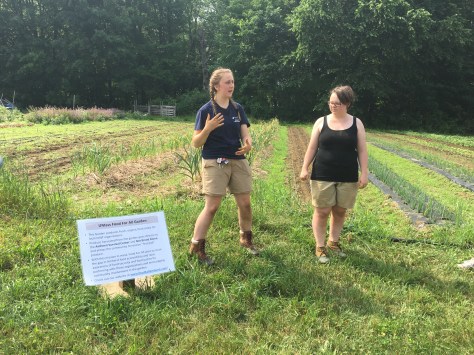
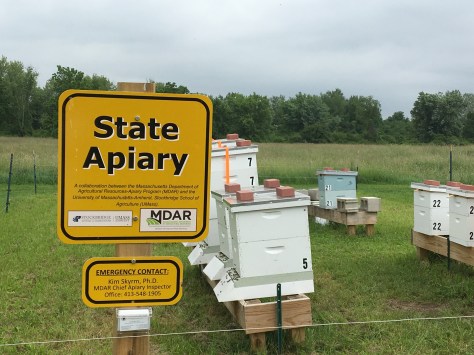
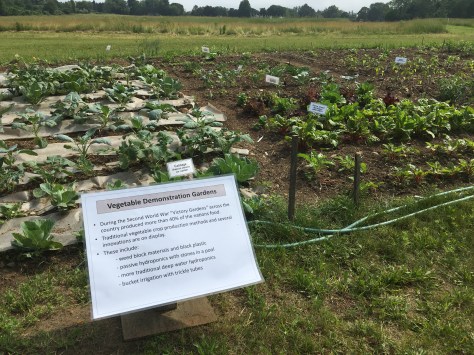
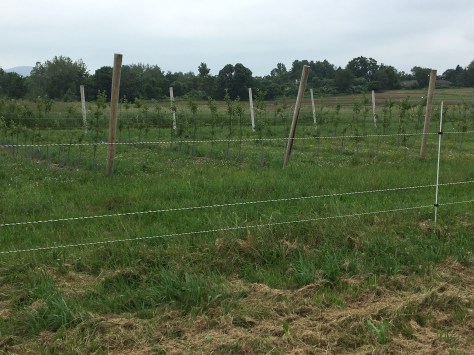
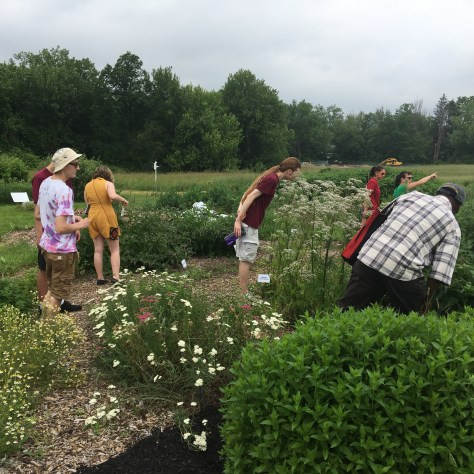
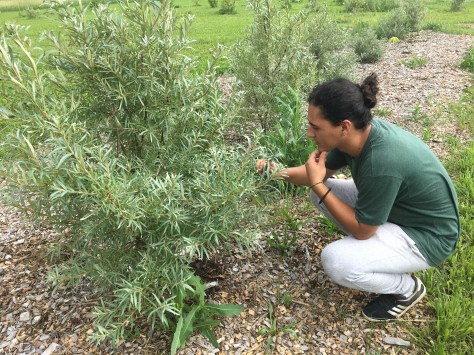
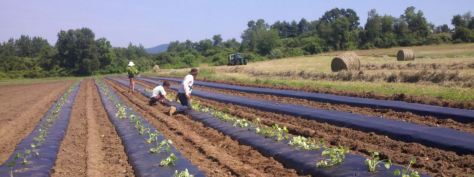
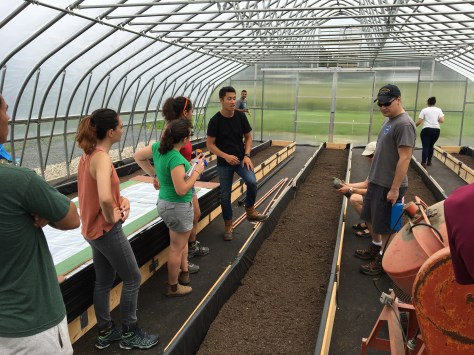
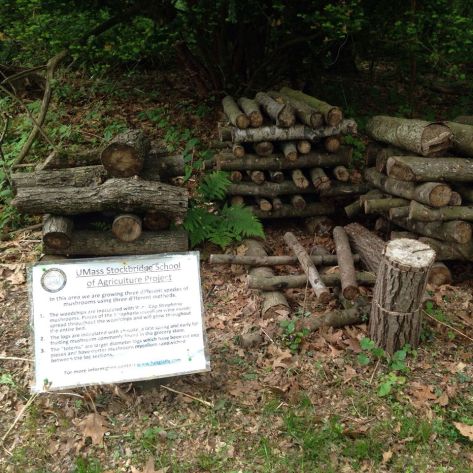
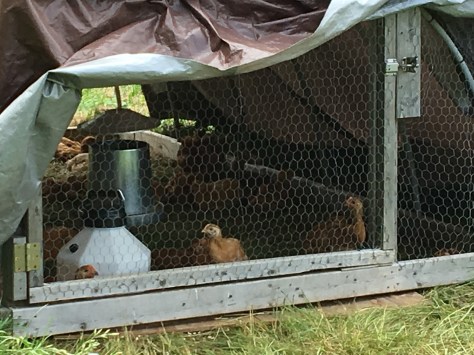
Yesterday, I took a tour of the UMass Agricultural Learning Center with our summer class, Clean Energy and Sustainable Agriculture, taught by Sarah Berquist and Amanda Brown. The Ag Learning Center is something of a “student playground” where Stockbridge School of Agriculture students get practice farming and gardening.
You are welcome to visit the facility and if you bump into any students be sure and ask them about their projects! Here is a Map to the farm and here are a few photos from the tour….
NOTE: This story isn’t over. If you buy directly from local farms, you support a neighbor and a quality of life that many of us value. In Western Massachusetts, the amount of food purchased directly from local farms is 10 times the national average.
If you buy from a big box store…… you are responsible for the following story.
—————————————————–
Published Jun 18, 2017 in The Daily Kos by Mark E Andersen
Andersen family farm
The photo above is of the Andersen family farm in Chatfield, Minnesota. It’s a farm that only exists in the memories of my brother, sister, and my cousins, as it had ceased
The end of Spring Semester is the time of year when “change is in the air.” Days are getting warmer. We have lots of daylight and we’ve even been threatened by a few late afternoon thunderclouds. Of course, the annual change of seasons is dwarfed by the significant life change those of you who are graduating college are experiencing. Leaving college is a big deal – right up there with going to college, getting married, having children, changing jobs or careers, retirement – you know, the big changes. Continue reading An open letter to graduating seniors→
The term ‘sustainable agriculture’ is used often, but what does it mean? The United Nations Food and Agriculture Organization (FAO) recently issued these five principles to define sustainable agriculture.
1. Improving efficiency in the use of resources is crucial to sustainable agriculture.
Modifying current practices can do much to improve the productivity of many food and agricultural production systems. This principle focuses on the engine of transformation. Further gains in productivity will still be needed in the future to ensure sufficient supply of food and other agricultural products while limiting the expansion of agricultural land Continue reading So, what is Sustainable Agriculture?→





 Unlike politics and economics, Earth’s physics, chemistry, and biology are natural systems based on empirical, reproducible facts. And these facts are fixed and entirely non-negotiable. Nature doesn’t care what we choose to believe, and you can’t cheat the laws of physics. Ever. Ignoring them is at best shortsighted. At worst, it guarantees the demise of our civilization.
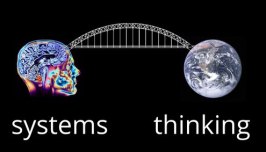 Systems thinking is another powerful tool for our mental toolbox, as it helps us organize our view of the world, seeing connections among all of Earth’s living and non-living things. Systems thinking provides a framework through which to view the planet — through the lenses of complexity, feedback loops, and the countless connections of stocks and flows coursing through the environment. Systems thinking also helps us build powerful models — whether conceptual models in our heads or numerical models running on a computer — that enable us to test our understanding of the world. Of all of the things I’ve learned in my education so far, systems thinking has been the most useful.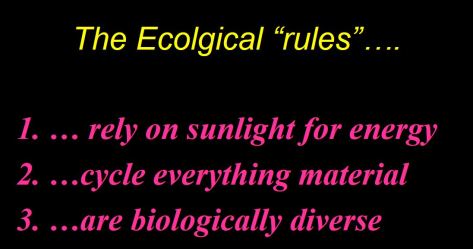

 Yesterday, I took a tour of the UMass Agricultural Learning Center with our summer class,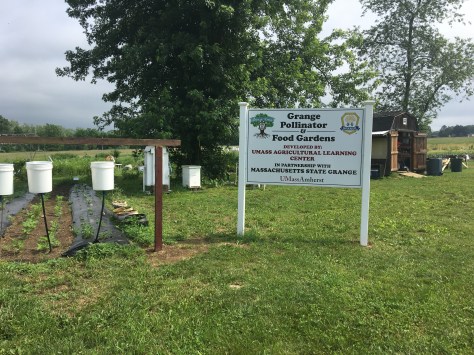




 ———————————————————————————————–


 The term ‘sustainable agriculture’ is used often, but what does it mean? The
 UMass Sustainable Food and Farming