Crisis in the beehives described in documentary ‘More than Honey’ shown at Amherst Cinema

By RICHIE DAVIS – Gazette Contributing Writer – Thursday, October 17, 2013

Honeybees are on the job from the moment they emerge from their nest. But their work, which helps create one-third of the earth’s food, is in jeopardy.

More_than_HoneyThat crisis in the hives is what drew more than 150 people to a special Communities Involved in Sustaining Agriculture showing of “More Than Honey,” a 2012 Swiss documentary last week at Amherst Cinema. Yet the mystery of Colony Collapse Disorder, a set of conditions that’s killed off more than 10 million beehives since 2006 in this country and, the film suggests, has decimated 50 to 90 percent of all bees, depending on what part of the planet you’re on, remains as mysterious as its name.

“If bees ever die out, mankind will die out four years later,” is a message in the film attributed to a quote by Einstein. A panel consisting of Dan Conlon of Warm Colors Apiary and Ben Clark of Clarkdale Fruit Farm, both in Deerfield, and Phil Korman, executive director of CISA, agreed the threat posed to the food supply is serious.

conlon“These bees live a hard life,” said Conlon, reflecting on the rigors of dealing with industrialized agriculture, pesticides and other factors shown in the film.

But this area suffers less from some of the causes of the die-off of honeybees, including pesticide use by farmers and their working with migrating pollination contractors, said Conlon, who rents his hives to just half a dozen area fruit and other growers. “The kind of farmers I deal with would never spray my bees.”

Unlike professional pollinators delivering millions of bees to North Dakota, many dead on arrival after a 1,700-mile drive from California as part of an annual migration, Conlon’s hives are moved 20 to 30 miles and fed honey rather than a corn-syrup mixture that he says is a mainstay of commercial apiaries.

clarkdale“It’s a stark contrast for us,” said Clark about the dependence of migrant colonies for California’s 810,000-acre almond-growing industry. Without bringing in any man-made hives, “We use all native pollinators. We have diverse crops, with peaches, apricots and cherries early on, so there’s a long feeding time for bees and other pollinators. I was really alarmed at the commercialization of that whole industry,” as shown in the documentary, including daytime spraying of almond orchards where bees collect fungicide along with pollen.

Clarkdale uses an “integrated pest management approach” that minimizes pesticide use and during pollination season sprays only at night, when pollinators are in their hives. “That’s your livelihood. If you wipe out the bees, you’re not going to have anything there. As farmers, that’s something we just don’t do.”

But Conlon, who lost about 30 percent of his hives over the past winter, because of everything from bears to a seemingly worsening breed of small hive beetles, said, “It’s a much bigger thing than just pesticides. … It’s the whole environment that’s coming into play with the bees.”

Honey producers, who feed their brood honey rather than corn syrup, have seemed to fare better because honey helps bees activate their immune system to filter out toxins, said Conlon.

The top problem for beekeepers around the world, especially since the late 1980s and early 1990s, is the Varroa destructor mite, followed by the loss of genetic diversity. Another key problem is loss of habitat for honeybees, with large areas of this country no longer growing food to support pollinators.

“One of the reasons Ben can still rely on native pollinators is that western Mass. is still pretty much intact, with a lot of native species doing pretty well around here,” Conlon said.

That is in sharp contrast to parts of China where pollution has so decimated the bee population that humans have to physically go from flower to flower in orchards brushing petals with pollen.

A real concern for beekeepers, said Conlon, is lawn-care applications of “neonicotinoid” insecticides which indiscriminately destroy the nervous system of any insect.

Although restrictions may finally be tightening, Conlon said, “You can buy them in any store by the gallon, and any homeowner can spray their entire yard with the stuff without any kind of licensing or training.”

Until parasitic mites became a problem a some 15 years ago, common practice among beekeepers was to let their queen bees mate with wild drones. But those fertile populations were also killed by the mites, “so for the first time, beekeepers have become critical to keeping bees going. They probably would have died off by now. Historically, we’ve moved the bee from being a wild creature to a domesticated creature.”

What that means, though, is that the bees that remain “aren’t as resilient, they aren’t as tough,” said Conlon, who this year began working exclusively with Russian bees under a U.S. Department of Agriculture program. Those hardy bees have many of the same immunities to pests and disease resistance as harder-to-manage Africanized bees.

OLYMPUS DIGITAL CAMERA

Sponsored by the Community Involved in Sustaining Agriculture

Video trailer on the Web: http://binged.it/1gkT2QM

Original post.

How to Feed the World

Mark Bitman – October 14, 2013 – New York Times

It’s been 50 years since President John F. Kennedy spoke of ending world hunger, yet on the eve of World Food Day, Oct. 16, the situation remains dire. The question “How will we feed the world?” implies that we have no choice but to intensify industrial agriculture, with more high-tech seeds, chemicals and collateral damage. Yet there are other, better options.

Something approaching a billion people are hungry, a number that’s been fairly stable for more than 50 years, although it has declined as a percentage of the total population.

“Feeding the world” might as well be a marketing slogan for Big Ag, a euphemism for “Let’s ramp up sales,” as if producing more cars would guarantee that everyone had one. But if it worked that way, surely the rate of hunger in the United States would not be the highest percentage of any developed nation, a rate closer to that of Indonesia than of Britain.

The world has long produced enough calories, around 2,700 per day per human, more than enough to meet the United Nations projection of a population of nine billion in 2050, up from the current seven billion. There are hungry people not because food is lacking, but because not all of those calories go to feed humans (a third go to feed animals, nearly 5 percent are used to produce biofuels, and as much as a third is wasted, all along the food chain).

The current system is neither environmentally nor economically sustainable, dependent as it is on fossil fuels and routinely resulting in environmental damage. It’s geared to letting the half of the planet with money eat well while everyone else scrambles to eat as cheaply as possible.

While a billion people are hungry, about three billion people are not eating well, according to the United Nations Food and Agriculture Organization, if you count obese and overweight people alongside those with micronutrient deficiencies. Paradoxically, as increasing numbers of people can afford to eat well, food for the poor will become scarcer, because demand for animal products will surge, and they require more resources like grain to produce. A global population growth of less than 30 percent is projected to double the demand for animal products. But there is not the land, water or fertilizer — let alone the health care funding — for the world to consume Western levels of meat.

If we want to ensure that poor people eat and also do a better job than “modern” farming does at preserving the earth’s health and productivity, we must stop assuming that the industrial model of food production and its accompanying disease-producing diet is both inevitable and desirable. I have dozens of friends and colleagues who say things like, “I hate industrial ag, but how will we feed the poor?”

Let’s at last recognize that there are two food systems, one industrial and one of small landholders, or peasants if you prefer. The peasant system is not only here for good, it’s arguably more efficient than the industrial model. According to the ETC Group, a research and advocacy organization based in Ottawa, the industrial food chain uses 70 percent of agricultural resources to provide 30 percent of the world’s food, whereas what ETC calls “the peasant food web” produces the remaining 70 percent using only 30 percent of the resources.

Yes, it is true that high-yielding varieties of any major commercial monoculture crop will produce more per acre than peasant-bred varieties of the same crop. But by diversifying crops, mixing plants and animals, planting trees — which provide not only fruit but shelter for birds, shade, fertility through nutrient recycling, and more — small landholders can produce more food (and more kinds of food) with fewer resources and lower transportation costs (which means a lower carbon footprint), while providing greater food security, maintaining greater biodiversity, and even better withstanding the effects of climate change. (Not only that: their techniques have been demonstrated to be effective on larger-scale farms, even in the Corn Belt of the United States.) And all of this without the level of subsidies and other support that industrial agriculture has received in the last half-century, and despite the efforts of Big Ag to become even more dominant.

In fact if you define “productivity” not as pounds per acre but as the number of people fed per that same area, you find that the United States ranks behind both China and India (and indeed the world average), and roughly the same as Bangladesh, because so much of what we grow goes to animals and biofuels. (Regardless of how food is produced, delivered and consumed, waste remains at about one third.) Thus, as the ETC’s research director, Kathy Jo Wetter, says, “It would be lunacy to hold that the current production paradigm based on multinational agribusiness is the only credible starting point for achieving food security.” This is especially true given all of its downsides.

As Raj Patel, a fellow at the Institute for Food and Development Policy, puts it, “The playing field has been tilted against peasants for centuries, and they’ve still managed to feed more people than industrial agriculture. With the right kinds of agroecological training and the freedom to shape the food system on fair terms, it’s a safe bet that they’ll be able to feed themselves, and others as well.”

Yet obviously not all poor people feed themselves well, because they lack the essentials: land, water, energy and nutrients. Often that’s a result of cruel dictatorship (North Korea) or war, displacement and strife (the Horn of Africa, Haiti and many other places), or drought or other calamities. But it can also be an intentional and direct result of land and food speculation and land and water grabs, which make it impossible for peasants to remain in their home villages. (Governments of many developing countries may also act as agents for industrial agriculture, seeing peasant farming as “inefficient.”)

The result is forced flight to cities, where peasants become poorly paid laborers, enter the cash market for (increasingly mass produced) food, and eat worse. (They’re no longer “peasants,” at this point, but more akin to the working poor of the United States, who also often cannot afford to eat well, though not to the point of starvation.) It’s a formula for making not only hunger but obesity: remove the ability to produce food, then remove the ability to pay for food, or replace it with only one choice: bad food.

It’s not news that the poor need money and justice. If there’s a bright side here, it’s that the changes required to “fix” the problems created by “industrial agriculture” are perhaps more tractable than those created by inequality.

We might begin by ditching the narrow focus on yields (as Jonathan Foley, director of the Institute on the Environment at the University of Minnesota, says, “It’s not ‘grow baby grow’ ”), which seem to be ebbing naturally as land quality deteriorates and chemicals become less effective (despite high-tech “advances” like genetically engineered crops). Better, it would seem, would be to ask not how much food is produced, but how it’s produced, for whom, at what price, cost and benefit.

We also need to see more investment in researching the benefits of traditional farming. Even though simple techniques like those mentioned above give measurably excellent results, because they’re traditional — even ancient — “technologies,” and because their benefits in profiting multinationals or international trade are limited, they’ve never received investment on the same scale as corporate agriculture. (It’s impossible not to point out here that a similar situation exists between highly subsidized and damaging fossil fuels and oft-ignored yet environmentally friendly renewables.)

Instead, the money and energy (of all kinds) focused on boosting supply cannot be overstated. If equal resources were put into reducing waste — which aside from its obvious merits would vastly prevent the corresponding greenhouse gas emissions — questioning the value of animal products, reducing overconsumption (where “waste” becomes “waist”), actively promoting saner, less energy-consuming alternatives, and granting that peasants have the right to farm their traditional landholdings, we could not only ensure that people could feed themselves but also reduce agriculture’s contribution to greenhouse gases, chronic disease and energy depletion.

This isn’t about “organic” versus “modern.” It’s about supporting the system in which small producers make decisions based on their knowledge and experience of their farms in the landscape, as opposed to buying standardized technological fixes in a bag. Some people call this knowledge-based rather than energy-based agriculture, but obviously it takes plenty of energy; as it happens, much of that energy is human, which can be a good thing. Frances Moore Lappé, author of “Diet for a Small Planet,” calls it “relational,” and says, “Agroecology is not just healthy sustainable food production but the seed of a different way of relating to one another, and to the earth.”

That may sound new age-y, but so be it; all kinds of questions and all kinds of theories are needed if we’re going to produce food sustainably. Supporting, or at least not obstructing, peasant farming is one key factor, but the other is reining in Western-style monoculture and the standard American diet it creates.

Some experts are at least marginally optimistic about the second half of this: “The trick is to find the sweet spot,” says Mr. Foley of the University of Minnesota, “between better nutrition and eating too much meat and junk. The optimistic view is to hope that the conversation about what’s wrong with our diet may deflect some of this. Eating more meat is voluntary, and how the Chinese middle class winds up eating will determine a great deal.” Of course, at the moment, that middle class shows every indication that it’s moving in the wrong direction; China is the world’s leading consumer of meat, a trend that isn’t slowing.

But if the standard American diet represents the low point of eating, a question is whether the developing world, as it hurtles toward that nutritional nadir — the polar opposite of hunger, but almost as deadly — can see its destructive nature and pull out of the dive before its diet crashes. Because “solving” hunger by driving people into cities to take low-paying jobs so they can buy burgers and fries is hardly a desirable outcome.

Mark Bittman is a food journalist, author and contributing opinion writer for The New York Times.

 Original Post

News from the Massachusetts Food Policy Alliance

Massachusetts Food Policy Alliance (MFPA), formed in 2007, is a statewide networking and information sharing entity that tracks policy, fosters advocacy, and plays a leadership role in Massachusetts’ food system planning efforts. Massachusetts Food Policy Alliance is also engaged with efforts in neighboring states to develop a New England network to advance interstate food systems collaboration and planning.

Massachusetts News
MA Farm Bureau Federation Raises Concerns About APR Program
The State’s Agricultural Preservation Restriction (APR) Program was launched in 1979 as the nation’s first statewide program that incentivizes farmers to keep land in agricultural use by purchasing deed restrictions that prevent farmland from being divided or otherwise developed. But the MA Department of Agricultural Resource (MDAR) is over-reaching the original intent of the program of preventing commercial development and protecting soil resources, says the Massachusetts Farm Bureau Federation (MFBF), and “denying [APR-protected] farms the ability to do both non-agricultural and agricultural activities on their farms, which are commonplace and allowable on non-APR farms.”

Proposed Nutrient Management Rules Coming Soon
Last year, the Massachusetts Legislature directed the Massachusetts Department of Agriculture (MDAR) to “promulgate regulations that specify when plant nutrients may be applied and locations in which plant nutrients shall not be applied.” The draft regulations have not been released for a public comment period yet but should be coming soon, since they scheduled to take effect on January 1, 2014.

Waste Not: Commercial Food Waste Ban Coming to MA
Beginning on July 1, 2014, any Massachusetts entity that disposes of at least one ton of organic waste per week will be required to donate or re-purpose the useable food. Any remaining food waste would be required to be shipped to an anaerobic digestion facility that converts food waste into renewable energy, a composting operation or an animal-feed operation. Residential food waste is not included in the ban.

Greenfield Publishes Food Plan
Greenfield Community College and Central Connecticut River Valley Institute collaborated to publish “The Greenfield Food Study,” which sets goals and examines opportunities for the town’s food system around issues of cultivation, processing, distribution, waste and more. “Greenfield has food processing and storage resources unique to the Pioneer Valley … (and) can capitalize on these resources and become a food processing, storage and distribution hub for the Franklin County and the Pioneer Valley.”

Food and Jobs in the Pioneer Valley
The Massachusetts Workforce Alliance published “Local Food, Local Jobs: Job Growth and Creation in the Pioneer Valley Food System,” describing current work in the Pioneer Valley food system, with an emphasis on jobs that are within reach of lower-skill workers, identifying promising segments of the food system that are currently generating these jobs, and looking at ways job creation and growth in this system can be fostered. “This research showed that the Pioneer Valley food system is already creating jobs. Job growth is evident on farms; business growth and development is evident in food manufacturing; innovation and business development is happening in food distribution; and, food waste management is poised to change in ways that hold possibility for business expansion and job creation.”

Public Investment in Land Conversation Yields Measurable Benefits
“The Trust for Public Land conducted an economic analysis of the return on the Commonwealth’s investment in land conservation through a variety of state funding programs and found that every $1 invested in land conservation returned $4 in natural goods and services such as water quality protection, air pollution removal, and stormwater management to the Massachusetts economy.”

Eat for a Cure
Community Servings’ recent report Food as Medicine reveals that medically tailored, home-delivered meals can  improve health outcomes for people with critical and chronic disease. Community Servings and Harvard Law School’s Center for Health Law and Policy Innovation and Food Law and Policy Clinic will co-host a symposium on the role of food in health care initiatives on October 30 from 6-8 p.m. at Harvard Law School, Room 1015 Wasserstein Hall, Caspersen Student Center (WCC 1015). Contact Jean Terranova for more information.

Honoring a Champion of Direct to Consumer Farm Sales
Former MA Ag Commissioner Gus Schumacher is being honored by the James Beard Society for “his lifelong efforts to improve access to fresh local food in underserved communities.”

Federal Updates

Food Safety
After numerous extensions, lots of wading through thousands of pages of proposed regulations, and many hearings and listening sessions and workshops, the comment period for the proposed regulations for the federal Food Safety Modernization Act is slated to come to an end on November 15. The proposed regulations include many items of concern for Massachusetts farmers – regulations which, if implemented, could have significant negative economic and operational impacts on small farms.

The Massachusetts Food Policy Alliance urges all Massachusetts organizations to learn about these proposed rules, spread the word to your membership, and consider submitting comments that support regulations promoting a safe food system that does not saddle small farms with unfairly burdensome oversight and regulations. You do not have to be an agricultural organization to comment on these rules. If enacted, these regulations will have an impact not just on our state’s farms, but on our economy as a whole, our environment, and our food security.

For details, see the following resources:

Comments Needed on SNAP Retail Store Eligibility Rules
The Food and Nutrition Service at USDA is accepting comments regarding the Supplemental Nutrition Assistance Program (SNAP) Enhancing Retail Food Store Eligibility policy. The RFI requests information to enhance retailer definitions and requirements that will improve access to healthy food choices for SNAP clients, as well as program integrity. The comment period ends Monday, October 21, 2013.

Farm Bill/SNAP
Somewhat lost in the news of the federal government shutdown and the debt limit crisis, the Federal Farm Bill expired in early October. In early October the House appointed members for a conference committee to resolve differences between the two bodies’ bills. Key sticking points include The U.S. House of Representatives’ proposal to cut $40 billion over ten years from the nation’s Supplemental Nutrition Assistance Program (SNAP) and to separate the nutrition and agriculture portions of the bill, potential cuts to subsidies for commodity crops, proposed cuts to funding for conservation programs, and possible changes to the federal dairy support program. Additional details are available from American Farm Bureau, Food Research and Action Center, National Farmers Union, The National Sustainable Agriculture Coalition, and farmpolicy.com.

What the Federal Government Shutdown Means for Agriculture
The partial shutdown of the federal government has had a real impact on agriculture programs, such as NRCS, and nutrition programs, such as WIC. New England Farmers Union offers a run-down on what the shutdown means for farmers and consumers, and this article details what it means for the USDA.

McGovern Champions Federal Government’s Role in Addressing Hunger
Between February and September, Massachusetts Congressman Jim McGovern (D-2nd) made 23 ‘End Hunger Now’ speeches on the floor of the U.S. House of Representatives.

Alliance News

Invitation to participate in a Leadership Group for MFPA
This group will serve for one year in an informal, volunteer advisory capacity to assist the MFPA managing consultants in identifying and implementing MFPA goals and objectives. These individuals will also help develop and establish a membership model to provide sustainable financial support for MFPA. Leadership Group members will participate through small group and one-on-one conversations and may be individuals as well as representatives of organizations and groups working at municipal, sub-regional, state and regional levels. This Leadership Group may choose to organize itself with a chair or elected executive committee and will assess its efficacy one year after formation. Contact us at manager@mafoodpolicyalliance.org if you are interested in participating.

MFPA Listserv
The MFPA listserv is open to anyone concerned about food systems in Massachusetts. It is an open forum for individuals and organizations to post events, queries and resources, and to connect with each other as we all pursue our work. To subscribe, send an email to sympa@elist.tufts.edu with the subject line “subscribe mfpa Firstname Lastame”  Then you can send items to MFPA@elist.tufts.edu to share them with the list.

MFPA Newsletter
As we develop this monthly newsletter we want to hear from you. Please email manager@mafoodpolicyalliance.org to suggest news, resources or other items for inclusion. If your organization has an e-newsletter or press list, please consider adding us to the list. And please forward this newsletter widely and encourage your colleagues to subscribe!

We Can Help!
The Alliance is here for you. We can help you engage your members in policy advocacy by writing articles for your newsletter, working with your staff on developing policy outreach plans, speaking at your meetings, and more. Contact us at manager@mafoodpolicyalliance.org.


The Massachusetts Food Policy Alliance (MFPA) formed in 2007 as a committed group of leaders working on food, public health, nutrition, agriculture, hunger, land preservation, and related policy issues in the Commonwealth. The MFPA worked closely with MA Representatives Stephen Kulik and Linda Forry to pass legislation establishing the Massachusetts Food Policy Council.

Christa Drew and Winton Pitcoff, co-lead consultants
manager@mafoodpolicyalliance.org

Original Post

23 Mobile Apps Changing the Food System

FROM: Foodtank

There are currently more than one billion smartphones in use across the world – and that figure is projected to double by 2015. As the use of “smart” mobile devices continues to grow, apps have become an incredibly effective way of providing information and resources to a wide audience.

An increase in smartphone use happens to coincide with the growth of a consumer demand for more sustainable food – “organic,” “locally grown,” “seasonal,” and “pesticide-free” are becoming more and more common in the vernacular of food sales. In the United States alone, annual sales of organic foods and beverages grew from US$6 billion in 2000 to US$26.7 billion in 2010. And there are nearly three times as many farmers markets in the United States today as there were in 2000.

mobile_apps_changing_food_systemIt’s no surprise, then, that there are lots of apps for those interested in eating more healthful food, wasting less food, finding sustainable sources of seafood, or buying seasonally. These 23 apps for mobile devices and tablets are helping eaters, producers, advocates, and activists lead less wasteful and more environmentally sustainable, healthy, and delicious lives.

1. Locavore (Hevva Corp.) [FREE]

Locavore helps consumers find out what local foods are in season, and locate the closest farmers markets that provide them. The app has tons of information on individual producers in a user’s area, and provides seasonal recipes to best use fresh, local ingredients.

2. HarvestMark Traceability (YottaMark, Inc.) [FREE]

The HarvestMark Traceability app allows its users to trace their fresh food back to the farm that it came from, by scanning any fruit or vegetable with the HarvestMark logo on it and pulling up the item’s information on the app. It also provides instant updates on any food recalls affecting HarvestMark produce.

3. Find Fruit (Neighborhood Fruit, LLC) [US$0.99]

For fruit that’s as fresh as possible, forego the supermarket and use the Find Fruit app to locate fruit trees growing in public spaces. Users can also search fruit trees in their area according to seasonality, type, and proximity.

4. Farmstand (Mostly Brothers) [FREE]

Use the Farmstand app to search for community farmers markets in the United States, Canada, the United Kingdom, Australia, and New Zealand. Users can also connect with other farmers marketgoers in their area.

5. Food Community (Nommunity.com) [FREE]

With the Food Community app, consumers can search and discover local vegan, vegetarian, kosher, gluten-free, locally-grown, and organic restaurants. They can also connect and collaborate with a community of people with the same dietary choices.

6. Seasons (What Is It Production Ltd.) [US$1.99]

The Seasons app helps eaters follow the natural growing seasons of fruits and vegetables in their region. They can also search a database of fruits, vegetables, herbs, and nuts for descriptions, information on seasonality, and photos.

7. NRDC Eat Local (Smart Tools) [FREE]

The Eat Local app helps locate nearby farmers markets, and provides seasonal recipes for the ingredients found there. Users can also submit and edit information for their local and favorite farmers markets in the Eat Local database.

8. Urban Farming Assistant Starter (iHuerting) [FREE]

For those planning on growing their own vegetables at home, the Urban Farming Assistant Starter app sets reminders for when to water, fertilize, and care for plants. It also helps to find organic solutions to pests, diseases, and other gardening issues.

9. Garden Tracker (Portable Database) [US$1.99]

This app helps to plan, size, and plant a vegetable garden by creating a virtual garden to imitate a real one. The Garden Tracker app lets users track a garden’s progress with a self-designed grid that can contain indicators for categories such as “last time watered” and “when to harvest.”

10. Mother Earth News Library (Ogden Publications, Inc.) [FREE]

This virtual library of different resources from Mother Earth News includes such important tools as How to Can, the Garden Insects Guide, and the Food Gardening Guide.

11. Seafood Watch (Monterey Bay Aquarium) [FREE]

The Seafood Watch app makes sustainable choices in seafood easier. It offers recommendations along with information on optimal farming or fishing practices for sushi and seafood. It can be used at restaurants and markets to make ocean-friendly seafood choices.

12. ShopNoGMO (Jeffrey Smith) [FREE]

The ShopNoGMO app provides information on the risks and science behind Genetically Modified Organisms (GMOs), and how to avoid them at the grocery store. Consumers can choose from the list of non-GMO brands in 23 food categories to customize their own “favorites” list.

13. True Food (True Food Network) [FREE]

The True Food app’s Shopper’s Guide lets users know what’s in the food they buy at the supermarket. It also provides information on Genetically Modified ingredients and tips on which brands use these in their products, and which brands don’t.

14. GoPure (Puur Buy, Inc.) [FREE]

Search local restaurants with the GoPure app to find out about their sustainable practices and the quality of their food. Users can also suggest restaurants, add information, and get the inside scoop on sustainable foods at their favorite establishments.

15. Clean Plates – Healthy Restaurants (Clean Plates) [FREE]

Search or browse the Clean Plates app database to find restaurants offering vegan, vegetarian, gluten-free and organic dining options. Professional reviews offer insight and suggestions for different dining experiences.

16. Wild Edibles (WinterRoot LLC) [US$7.99]

The Wild Edibles app helps to identify and provide information about the uses of wild edible plants. The app offers harvesting methods, preparation instructions and recipes, and medicinal information for foraged plants, as well as a botanical glossary for reference.

17. What’s On My Food? (Pesticide Action Network) [FREE]

Use this app to identify chemicals found on foods commonly sold at the grocery store. Search the database to find out which pesticides are the most dangerous, and for a crash course on pesticides for amateurs.

18. Non-GMO Project Shopping Guide (The Non-GMO Project) [FREE]

The Non-GMO Project offers an app that features a list of brands and products enrolled in the Project’s Product Verification Program. The app also includes tips on avoiding GMOs, and a list of GMO ingredients and crops.

19. Green Egg Shopper (Wise Banyan Tree Ltd) [$3.99]

With the Green Egg Shopper app, consumers can cut down on food waste by tracking their shopping lists. Create a list, plug in “use by” dates for perishable items, and set reminders to use those foods before expiry.

20. Leloca (Leloca LLC) [FREE]

The Leloca app offers real-time discounts for local restaurants with empty tables. Diners who use these discounts help cut down on food waste in restaurants as well as unnecessary expenses.

21. What’s Fresh? (Mobile Simplicity) [US$0.99]

The What’s Fresh? app tracks fruits and vegetables that are in season regionally. It offers a regional Freshness Calendar, and a locator to search the different parts of the country in which produce items are in season.

22. In Season (Light Year Software, LLC) [US$1.99]

The In Season app helps consumers find fresh produce that is in season regionally. It offers a guide for choosing the best fruits and vegetables at the grocery store, and provides advice on the best storage practices for each item.

23. 222 Million Tons (Pydexo) [FREE]

This app, named for the amount of food wasted globally each year (Ed. note: More recent estimates from the U.N. Food and Agriculture Organization (FAO) indicate that 1.3 billion tonnes of food are wasted each year), helps consumers plan grocery lists and weekly menus to waste the least amount of food possible.

by Danielle Nierenberg and Kathleen Corr

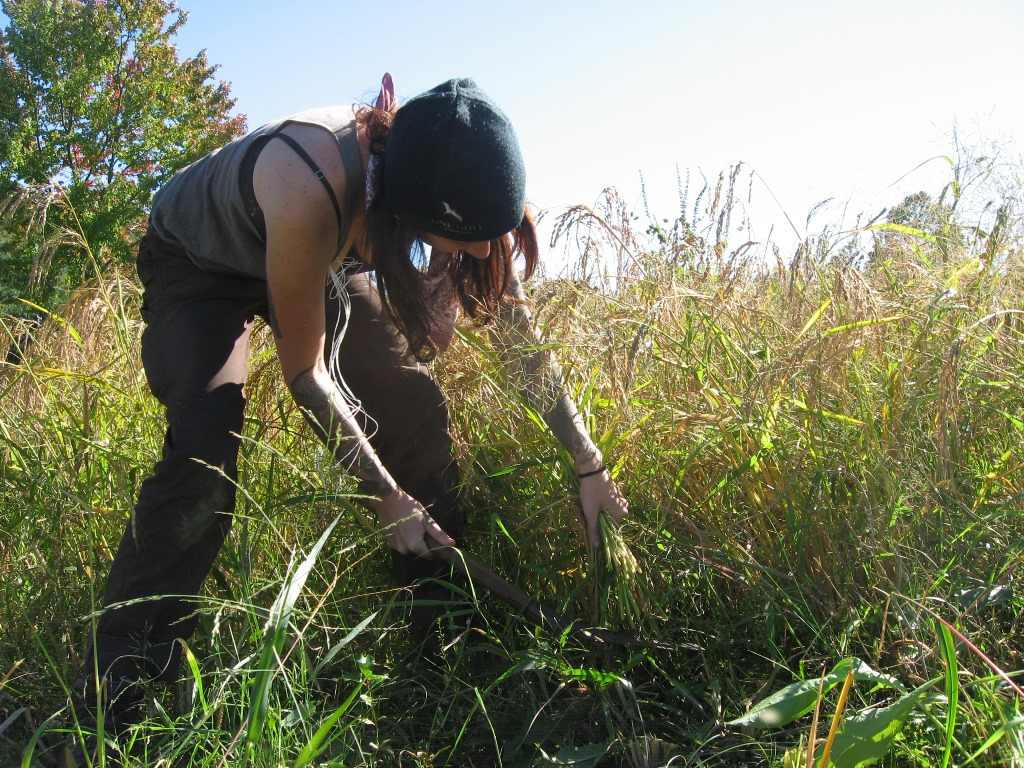
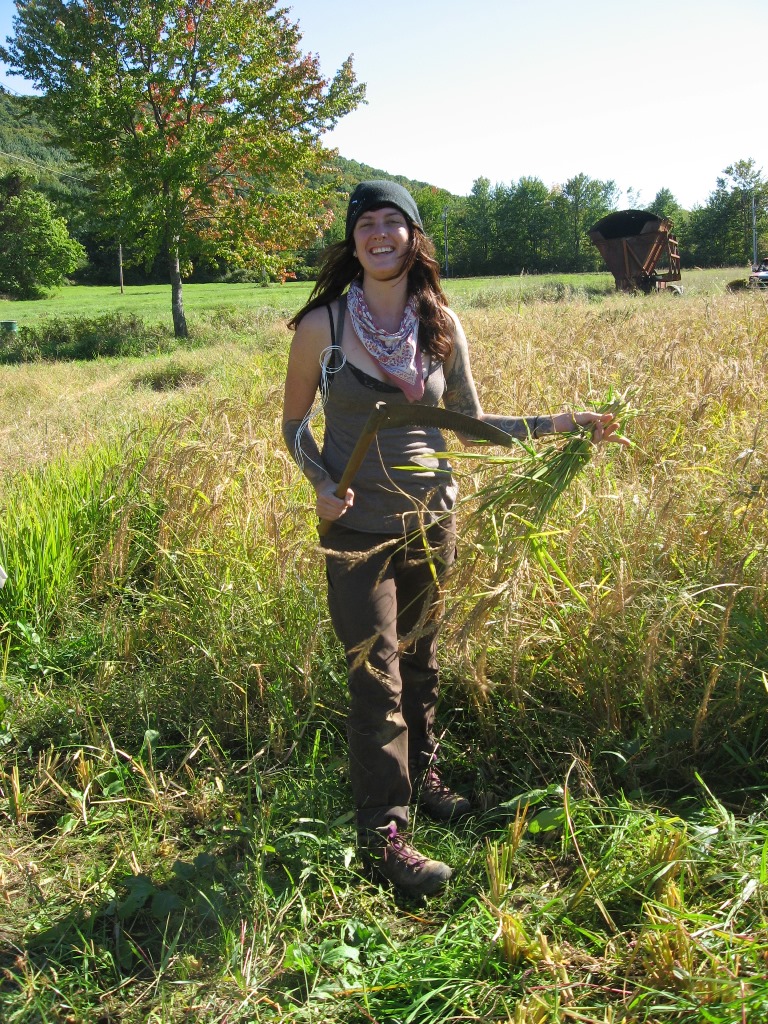
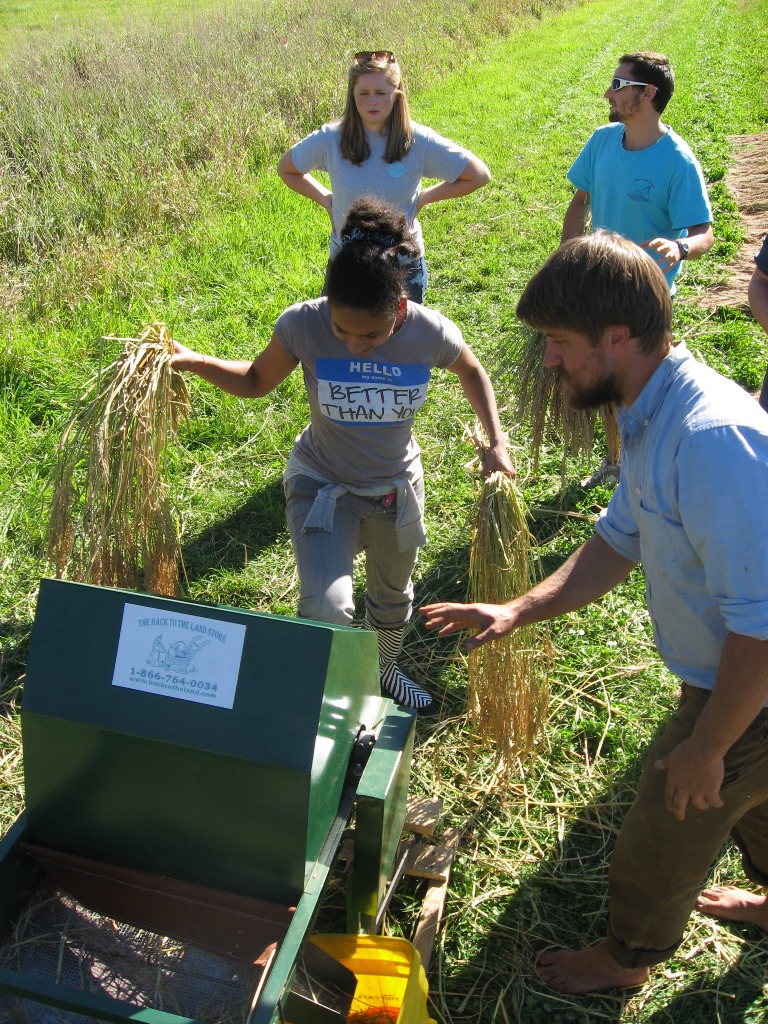
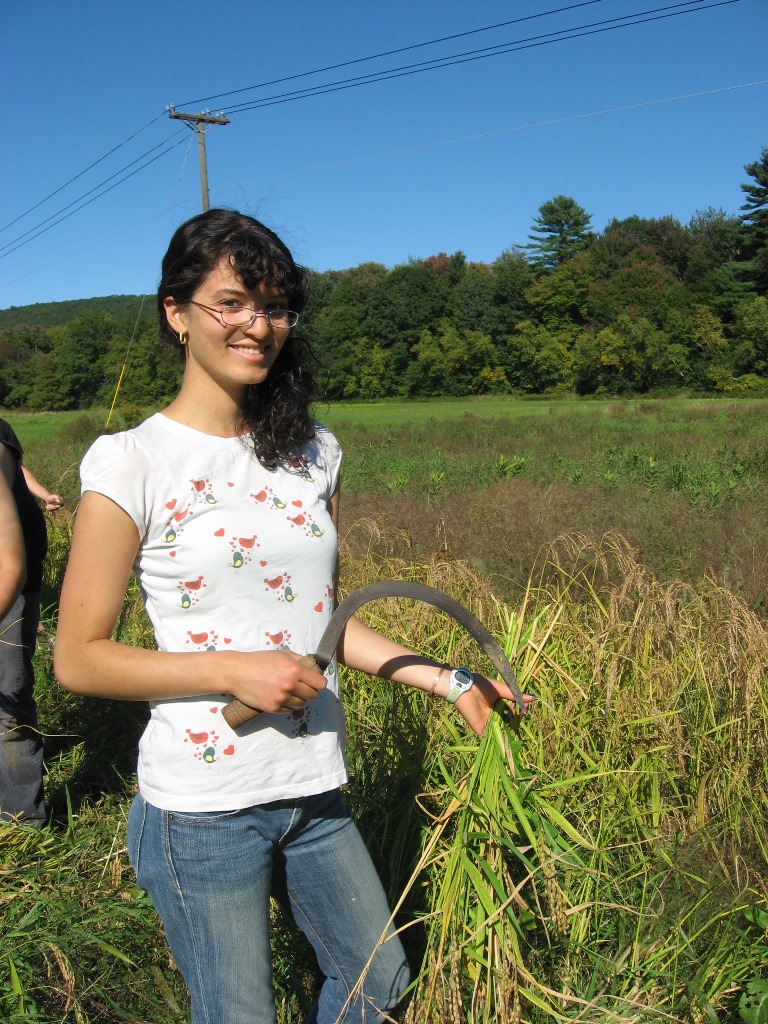
UMass Sustainable Food and Farming Students Harvest Rice

Students in our Sustainable Agriculture class, taught by Katie Campbell-Nelson, helped to harvest rice this week (and they didn’t have to travel far).  Ryan Karb, graduate of the Sustainable Food and Farming program, working with Michael Pill grew a plot of rice right here in Western Massachusetts this summer.

Here are some photos of our students harvesting rice.

IMG_5047

IMG_5048


IMG_5054


IMG_5049

Food Films – a list

Courtesy of Food Tank

Films and short videos are a powerful way of increasing awareness of and interest in the food system.With equal parts technology and artistry, filmmakers can bring an audience to a vegetable garden in Uganda, a fast food workers’ rights protest in New York City, or an urban farm in Singapore. And animation can help paint a picture of what a sustainable, just, and fair food system might look like. Film is an incredible tool for effecting change through transforming behaviors and ways of thinking.There are many incredible films educating audiences about changes being made – or that need to be made – in the food system.

Anna Lappe and Food Mythbusters, for example, just released a new animated short film on how “Big Food” marketing targets children and teenagers, filling their diets with unhealthy processed food products – Continue reading Food Films – a list

Student holds one-man protest over laws that prohibit him from raising poultry

A Valley View High School senior hopes to ruffle the feathers of Lackawanna County commissioners over municipal laws against keeping live chickens.

Evan Zavada, 18, spent part of Thursday afternoon on the lawn of courthouse square with a sign reading “Legalize Chickens” propped next to a chicken-wire cage containing a live hen. If Mr. Zavada has his way, municipalities would do away with chicken laws that prohibit or limit how many birds one can own.

“I believe it is an infringement upon individual sovereignty and property rights,” said Mr. Zavada, who has 40 chickens.

The aim of his prchikenlawotest is to gather signatures on a petition he plans to take to the commissioners. He wants them to know he’s serious about a bill he intends to present to them, entitled the “Lackawanna Right to Grow Act,” which would repeal existing municipal ordinances prohibiting the raising of poultry.

“I don’t see any legitimate reason why we shouldn’t be able to live off the land,” Mr. Zavada said.

Lackawanna County Commissioner Corey O’Brien said Mr. Zavada’s petition will be considered and commissioners will talk with borough officials to get all the facts in the case.

“We look forward to reading his petition, and we will pass his petition along to the solicitor for review,” he said. “This is a new one for Lackawanna County.”

Mr. Zavada said he was inspired by a teacher at Valley View High School several months ago to start raising chickens for their eggs. Mr. Zavada skipped school on Thursday so he could protest.

Nine chickens became 40 over the months. He kept them at his grandmother’s four-acre property in Blakely, where he thought they were safe because of the size and relative remoteness of the land. He said he would harvest the eggs and sell them in addition to eating them himself out of an interest in self-dependence.

He got into trouble when he let them roam.

“One went to some person’s yard and that person complained,” Mr. Zavada said, recalling what prompted Blakely officials to come tell him he could not keep the birds in the borough. The birds are now somewhere in Archbald, which also does not allow chickens. While Mr. Zavada would not say exactly where his 40 chickens are, he did hint that they are no longer free-ranging.

Archbald Zoning Officer Scotty Lemoncelli said if he found out a resident was keeping chickens in the borough, he would first issue a warning. If the warning is ignored, the offender will be brought before a magistrate.

“It’s not permissible in the borough,” Mr. Lemoncelli said.

Efforts to reach Blakely Borough Manager Thomas Wascura were not successful.

Other municipalities have enacted similar ordinances that prohibit or restrict certain types of farm animals. In Clarks Summit, for example, pigs, hogs and swine are strictly prohibited, according to a borough ordinance dated July 3, 2001. As for chickens, the ordinance does not expressly restrict poultry, but could make it difficult to keep a chicken in the suburban community. The chicken must be quartered no closer than 10 feet from the exterior of any dwelling or property line and must be kept in an enclosure.

“Most people have been pretty positive about it,” Mr. Zavada said of passers-by on Thursday. He said his parents have been supportive of him, too, but when they learned he skipped school for a chicken protest, his goose may be cooked.

Contact the writer: jkohut@timesshamrock.com, @jkohutTT on Twitter

For the story of how Amherst, MA changed its chicken laws, see:

Lets all raise hens!

United Nations supports small farms

United Nations urges governments to do more to support small farmers to curb hunger, poverty and climate change

in Geneva
theguardian.com, Wednesday 18 September 2013 17.33 BST

Governments in rich and poor countries alike should renounce their focus on agribusiness and give more support to small-scale, local food production to achieve global food security and tackle climate change, according to a report from Unctad, the UN trade and development body.

The 2013 Trade and Environment Review, calls on governments to “wake up before it is too late” and shift rapidly towards farming models that promote a greater variety of crops, reduced fertiliser use and stronger links between small farms and local consumers.

Persistent rural poverty, global hunger, population growth and environmental concerns must be treated as a collective crisis, argues the report, which criticises the international response to the 2008 food-price crisis for focusing on technical “quick-fixes”.

“Many people talk about energy, transport, etc, but agriculture only comes on to the agenda when there is an acute food-price crisis, or when there are conflicts at the national level over food,” said Ulrich Hoffman, senior trade policy adviser at Unctad. “At the international scene most of the discussion is on technicalities, but the matter we have before us is far more complex.”

The report warns that urgent and far-reaching action is needed before climate change begins to cause big disruptions to agriculture, particularly in vulnerable regions of poorer countries.

It says that while the 2008 crisis helped to reverse the long-term neglect of agriculture and its role in development, the focus has remained on increasing yields through industrial farming.

The report, which includes contributions from 60 international experts – covering topics from food prices and fertiliser use to international land deals and trade rules – demands a paradigm shift to focus efforts on making farming more sustainable and food more affordable through promoting local food production and consumption.

Several of the contributors call for a focus on food sovereignty, a concept introduced more than a decade ago by the international peasants’ movement La Via Campesina. Unlike food security, often defined as ensuring people have enough to eat, food sovereignty focuses on questions of power and control. It puts the needs and interests of those who produce and consume food at the heart of agricultural systems and policies.

The report argues that industrial, monoculture agriculture has failed to provide enough affordable food where it is needed, while the damage caused to the environment is “mounting and unsustainable”. It echoes the work of Nobel prize-winner Amartya Sen in arguing that the real causes of hunger – poverty and the lack of access to good, affordable food – are being overlooked.

Agricultural trade rules must be reformed, it says, to give countries more opportunity to promote policies that encourage local and regional food systems.

The report follows last week’s publication of Unctad’s annual trade and development report, which urged governments to focus more on domestic demand and inter-regional trade and rely less on exports to rich countries to fuel growth.
“Export-led growth is not the only viable development path,” said Nikolai Fuchs, president of the Geneva-based Nexus Foundation and a contributor to the trade and environment report. “We don’t say ‘no trade’, but … trade regimes should secure level playing fields for regional and local products, and allow for local and regional preference schemes, for example in public procurement.

“Highly specialised agriculture does not create enough jobs in rural areas where most of the poor are.” He argued that industrial, export-oriented farming typically offers a few highly skilled and specialised jobs, or low-skill, seasonal and precarious employment.

The report says governments should acknowledge and reward farmers for the work they do to preserve water sources, soil, landscapes and biodiversity.

Hoffman acknowledged it would be difficult to implement the agenda the report was suggesting. “Subsidies are a key hurdle … at a national level but also [in terms of] dealing with subsidies in the context of the WTO [World Trade Organisation],” he said. There must be more scrutiny of agricultural subsidies, he argued, including those that appear to promote environmentally sustainable farming, as there were “ample opportunities for abuse or misuse”.

Family farms: What if no one wants to carry on the legacy?

matuzkoBy REBECCA EVERETT @GazetteRebecca

Wednesday, August 28, 2013

“Who’s going to take over the farm?” is a question all family farms face sooner or later.

At the Williamsburg dairy farm where I grew up, the answer is unclear.

My parents built Hemenway Hill Farm from the ground up in 1985 on land that had been in my father’s family since the 1840s. Alan and Teresa Everett were the first Everetts to run a commercial dairy farm there, but past generations had used the land as an orchard and a subsistence farm.

They also raised three independent daughters who decided one by one to pursue careers off the farm. It’s unlikely my twin, Emily, or I will return to take over. But my older sister, Faith Bisbee, and her husband, Donnie Bisbee, keep cows and draft horses in Chesterfield; it’s possible they will play a role in Hemenway Hill Farm’s future.

Some Valley farms are dealing with the same situation as my parents, but there are plenty others that will have no trouble finding a young, energetic son or daughter to take over the family business.

“It’s been my plan since I was in first or second grade,” said Josef Matuszko, 20, who helps run Twin Oaks Farm in Hadley with his parents, Edwin Matuszko and Linda Kingsley.

A family farm is an all-hands-on-deck business, a one-of-a-kind home to raise a family and a rewarding place to work alongside loved ones. Children who grow up there learn lessons about life, death, and hard work at a young age. That’s according to Darryl Williams, who runs Luther Belden Farm in Hatfield with the help of his wife, Lucinda, and their four children — when they’re home, that is.

“It’s a family farm, everyone helps out. Like, you’re not going anywhere until the calves are fed,” Williams said. “And you learn responsibility pretty early on, when your father or mother says you have to check on so-and-so because she might be calving.”

Family dinners are almost always business meetings. You don’t get to leave for a job where you might also get a little space from each other after a disagreement. And forget about having time for family vacations, or even celebrating every birthday, said Edwin Matuszko.

“In 2008 it was Joe’s birthday and we started picking zucchini at 6:30 a.m. — the zucchini had decided to grow like heck — and we were out picking until 7 at night,” Edwin Matuszko said last week at the Stockbridge Road farm. “Then we had to pack it all. We didn’t get in until 9:30 or 10 p.m., so that’s when we celebrated his birthday.”

Long hours, hard work

A fairly common enterprise in the Pioneer Valley, the family farm takes different forms: the centuries-old tobacco farm run by a son from each generation, the potato farm where every employee is a relative, or the new organic farm where young people work at farmers markets alongside their parents.

In a barn at Twin Oaks Farm last week, the Matuszko and Kingsley family was putting the finishing touches on a picking of summer squash. The washed and sorted squash were packed into cardboard boxes and stacked on pallets. As soon as Edwin Matuszko secured a pallet of boxes with plastic wrap, his son scooped up the pallet with a motorized jack and wheeled it into the walk-in cooler.

The farm grows 55 to 60 acres of vegetables, including cabbage, peppers, Indian corn and pumpkins. Most of the produce is sold wholesale through the Pioneer Valley Growers Association, a cooperative the family helped found in South Deerfield in 1978. They also sell a bit to local farmers who want to augment the offerings at their farm stands or at markets.

“This is the present incarnation of Twin Oaks Farm,” Edwin Matuszko, 58, said. “I don’t know what it will be later.” Family farms, he said, have to adapt to the times.

“It might be totally different when I take over. It depends on the market, the weather, everything,” Josef Matuszko said.

Luther Belden Farm has also evolved over the years, Darryl Williams, 53, said. It started as a tobacco and onion farm, morphed into a sheep farm, and has been a dairy farm since the 1960s. Now, the family tends just over 200 cows and farm about 250 acres, mostly to produce hay and corn to feed the cows. Like Matuszko, Williams said he doesn’t know what it will look like in the future.

Standing in the yard at the Depot Road farm last week, Williams looked up to see his son, Jackson, 25, drive a tractor back to its parking spot in the yard. He was supposed to be scooping silage into a dump truck to be sold to another farmer, and he shouldn’t have been finished so soon.

“The hydraulic line blew on it,” Jackson Williams told his father before scooting off to make do with another, smaller tractor.

“It’s a typical day,” Darryl Williams said with a shrug.

He and his wife also have three daughters: Rebecca, 27, who lives in West Springfield, and Martha, 21, and Lenette, 18, both of whom live at home when they are not away at colleges in Kentucky and Idaho. Jackson Williams has a degree in biology from Berea College in Kentucky and a year of experience working on a sheep farm in New Zealand. He has been working at the family farm since he moved back a little over a year ago.

Anyone who is home is automatically a farm hand, Darryl Williams said. His wife Lucinda, who works as acquisitions supervisor for Smith College’s Neilson Library, often devotes her nights and weekends to the farm. “She bales hay, she’s planted corn,” Darryl Williams said.

While growing up, the Williams children knew everyone was expected to help with jobs like feeding calves or haying. There was always a seemingly endless amount of work to do, Jackson Williams said, but it was fun, too.

“When I was a kid, I thought it would be cool to live on a residential street,” he recalled, smiling at his childhood wish. “But I thought, ‘what would I do in my free time, when I’m not in sports or studying?’ There’s so much to do here. A lot of it is work, but a lot of fun goes along with it.”

At Twin Oaks Farm, Josef Matuszko has also been helping out for most of his life.

“I had fun. I did all the normal kid stuff and I also got to play around with some bigger toys,” he said. “I think I learned how to drive a tractor when I was 5 or 6.”

But he admits that there are downsides to farm life, too. While friends at school were going to summer camp, or on family beach trips, he was working, and the family was just too busy for some events or activities other kids did.

“Were there times I wished I could be more like my friends? Yeah,” Josef Matuszko said. “But if I didn’t enjoy this, I wouldn’t be doing it.”

Another thing you need to survive on a family farm is civility, Williams said.

“If you don’t get along as a family or you can’t work well together, it’s not going to work,” he said. “I was always blessed that my father and I always got along so well.”

Kingsley, 59, said that most of the time, her family gets along. “We enjoy each other’s company,” she said.

But as with every family, people at times get on one another’s nerves, especially after a long, hot day or a disagreement over how to do something.

“There might be a moment when you’ve got to go wheel harrow,” Edwin Matuszko said with a chuckle, referring to times he’s escaped from a family quarrel under the pretense of doing fieldwork.

“Or go check something in the greenhouse … twice,” Kingsley chimed in.

Another challenge is, unlike a job where you leave the office at the end of the day, you never really get to leave your work behind when you live on the family farm.

“Sometimes, it seems like all we talk about is business,” said Kingsley. She is especially aware of the round-the-clock farm life now, since she retired in February after 34 years working part-time in the Williamsburg Post Office.

“But, it’s also nice to get up, go out the door and you’re right on the job site,” she said.

To farm, or not to farm

At Luther Belden Farm in Hatfield, 13 generations of the same family have tilled the fertile land near the Connecticut River since 1661. In each generation, some siblings may have peeled off to do other work, but at least one stuck around.

Jackson Williams said the question of whether or not he’ll stay to take over the farm is “constantly on my mind.”

“My parents are great, they don’t put any pressure on me, but with the farm going for 13 generations, it kind of puts it on itself,” he said.

After the earlier generations cropped the land, Jackson Williams great-grandfather, Luther Belden, turned it into a sheep farm. In 1959 Belden’s daughter, Mary, married Gordon Williams, another farm kid who had grown up on Mt. Toby Farm in Sunderland. Gordon Williams studied dairy science at California Polytechnic State University, and when the young family came back to the Valley, Belden told them they ought to just build a dairy barn there and join the family business.

Darryl Williams grew up on the farm — primarily a dairy farm then — and couldn’t get the farm life out of his blood. He once thought he wanted to be a teacher and worked in the Amherst schools for one year.

“It was a nice job, but I kind of just wanted to be outside,” he said. “I liked the farm. I was living here at the time and I’d get out of work and come home and work the farm. I realized that was what I really wanted to do.”

Gordon and Mary Williams were active on the farm until a few years ago. “I still consider him a partner,” he said of his father, now 87. “My mother was always the one that fed that calves,” he said of Mary Williams, now 80. “She fed them every morning until about two years ago. She’s earned her rest.”

He said his parents never pressured him at all about staying on the farm.

“My parents had a pretty good philosophy and it’s one we try to keep,” he said. “If they want to come back, wonderful, if not, that’s OK, too.”

And if one of his children wants to take over the farm, they may have to consider changing it significantly, he said. Competition from larger farms out West and the rising cost of doing business has driven dozens of Massachusetts dairy farms out of business in the last decade. In July 2011, two dairy farms in Cummington, Howes Family Farm and Joyner Farm, sold off their herds. Now there are about 150 dairy farms in the state.

“It has to be something you want to, you have to love it,” Darryl Williams said. “And even if you love it, sometimes that’s not enough.”

Jackson Williams said he is interested in the farm, but he’s not ready to decide if he will be a career farmer.

“It’s something to think about: If I don’t take over the farm, I don’t know who of my siblings would. And seeing the farm go out of business is nothing I’m interested in,” he said.

While Twin Oaks Farm isn’t 13 generations old, the Matuszko and Kingsley family is just as interested in keeping the farm in the family.

Edwin Matuszko recalled how his grandfather started the farm, growing potatoes, onions and tobacco on the family land. But his father was injured in World War II and it was too hard for him to do the farm work, he said.

His parents, Edward and Lucy Matuszko, rented the land out to other farmers, so Edwin Matuszko still got to grow up around the farm life. He and Kingsley met when they were both working for the summer on a now defunct North Amherst farm and married in 1976.

None of Edwin Matuszko siblings wanted to work the farm. He worked briefly at Pro-Brush, a toothbrush factory in Florence, before he and Kingsley decided in 1979 to approach his parents about taking over the farm.

They started growing pickling cucumbers and have since diversified and expanded, renting 30 acres nearby in addition to the 30 they have on Stockbridge Road.

Kingsley said she would love to see her son working the land for decades to come.

“As long as that’s what he wants to do,” she said. “I would like to see him succeed in agriculture, and I think he will. He has a lot of years of experience and knowledge.”

If no family member steps up to take over the farm, selling the business is sometimes an option, though it’s more common for the farm operations to shut down and the family to rent or sell the land to other farmers.

In the case of my family, it’s unlikely some fresh face will want to buy the farm and get into dairy farming — a business that is increasingly hard to make a living in, no matter how many 16-hour days you put into it.

While my parents are still hopeful that my sister and her husband will be involved with the farm in the future, they know that might mean making changes to the operation to keep it going.

If nobody takes over the farm, that’s OK, too, Teresa Everett said. She and Alan Everett started the farm because it was the career of their dreams. They never had any expectation of how many generations it would last.

“It’s been the best experience of our lives to be able to have this career, farm on the family land, raise our daughters here and run the farm as a family,” she said.

My parents turn 60 this year and the farm is still going strong, with help from my father’s brother, Glen Everett, and two part-time hired hands.

Meanwhile, my nephew, Carson Bisbee, at 2, is already a true farm kid. I’m sure my sister’s second child, 5-month-old Brooke, will be the same.

So even if the farm doesn’t live on, at least one more generation of farm kids will trot in the barn with muddy boots and hay in their hair, just like my sisters and I did.

Rebecca Everett can be reached at reverett@gazettenet.comOriginal Post.

100 Food Activist Twitter Feeds

1. Alice Waters – @AliceWaters

The queen of California cuisine, Alice Waters is the Vice President of Slow Food International, founder of the Yale Sustainable Food Project, and owner of acclaimed locavore restaurant, Chez Panisse, in Berkeley, CA.

2. allAfrica.com – @allafrica

The premier news source for African news, allAfrica.com and its Twitter feed are great for information related to development, agriculture, and other news across the 54 countries in Africa.

3. Andrew Zimmern – @andrewzimmern

Zimmern, James Beard Award winner and host of Travel Channel’s Bizarre Foods, has a unique take on the cultural significance of food and its power to bring people together.

4. Andy Bellatti – @andybellatti

Bellatti, a self-described “wonk who loves to call out food industry deception,” offers the perspective of a food activist dietician.

5. Anna Lappe – @annalappe

Lappe has made a name for herself by founding Food Mythbusters, which aims to provide a clearer picture of the food industry and the hazards of fast food. She is behind the hashtag #MomsNotLovinIt – moms, however, certainly love Lappe’s Tweets.

6. Ann Cooper – @chefannc

Cooper promotes cooking from scratch in school cafeterias, emphasizing the link between food, farming, and children’s health.

7. Anthony Bourdain – @Bourdain

Bourdain is famously unabashed in his opinions, but has charmed his Twitter audience in delivering them along with stories of his world travels and his insights on food.

8. Barilla Center for Food & Nutrition (BCFN) – @BarillaCFN

BCFN, an Italian research institute working toward a more sustainable and healthy food system, tweets fascinating facts from the organization’s research, as well as links to many BCFN reports, articles, and projects.

9. Barton Seaver – @bartonseaver

Chef, author, educator, and advocate, Seaver has seen almost every side of the food system. He has a passion for sustainable seafood.

10. Bertini & Glickman (Catherine Bertini and Dan Glickman) – @GlobalAgDev

The official Twitter account for the co-chairs of the Chicago Council’s Global Agricultural Development Initiative tweets information on development policy and food security.

11. Beth Hoffman – @bethfoodtech

Hoffman is a freelance reporter who focuses on food, agriculture, and sustainability. She tweets links to a variety of food articles, offering a bit of skepticism about the food industry.

12. Bettina Elias Siegel – @thelunchtray

Siegel’s Twitter feed not only has great tweets about food issues, but it also organizes over 500 other Twitter feeds into lists like “Kids & Food,” “Anti-Hunger Groups,” “Food Reform & Advocacy,” and “Food Writing.”

13. Bill Telepan – @billtelepan

A Culinary Institute of America-trained chef, Telepan has used his restaurants to highlight sustainability, and also works to reform the New York City school lunch program.

14. Bioneers – @bioneers

Bioneers is a multi-media platform for advancing solutions for a more just and sustainable world. The initiative focus on restorative food systems, and its Twitter feed highlights some of the most interesting solutions to food system reform.

15. Catherine Bertini – @C_A_Bertini

Bertini has an impressive resume in food and agriculture: World Food Prize Laureate, Executive Director of the World Food Programme, and current co-chair of the Chicago Council on Global Affairs’ Global Agriculture Development Initiative. She tweets job opportunities, news, and quotes about the food system.

16. Center for Food Safety – @TrueFoodNow

The Center for Food Safety is dedicated to ending harmful food production technologies and supporting sustainable agriculture.

17. Center for Science in the Public Interest – @CSPI

With a newsletter that reaches almost a million people, CSPI is a strong advocate for food, nutrition, and health policy.

18. Center for Strategic & International Studies Global Food Security Project – @CSISFood

The CSIS Global Food Security Project provides research, analysis, and policy recommendations for improving food security. This Twitter feed links to news stories about advances in agriculture and food security in the developing world.

19. The Christensen Fund – @ChristensenFund

The Christensen Fund is a private foundation that supports initiatives promoting biodiversity and cultural and environmental sustainability. Its Twitter Feed includes updates from its funded projects and programs, as well as links to news stories that relate to its mission from around the world.

20. Civil Eats – @CivilEats

One of the leading news sources for food politics, Civil Eats confronts major issues in the American food system.

21. The Coalition of Immokalee Workers – @ciw

The Coalition of Immokalee Workers was founded in 1993 and has grown into an internationally recognized organization that advocates for corporate social responsibility and sustainable food. This is a must-follow Twitter feed for those interested in farmworkers’ rights and labor issues.

22. Community for Zero Hunger – @ZHCommunity

The Community for Zero Hunger is a new independent initiative that supports the U.N. Zero Hunger Challenge, and tweets on food security and hunger in the 21st century.

23. Conservation International – @ConservationOrg

Founded in 1987, Conservation International examines the relationship between economic development and conservation. The organization researches issues ranging from climate change to food and water supply.

24. Dan Barber – @DanBarber

Executive chef and owner of Blue Hill at Stone Barns, Barber is an acclaimed writer on food and agriculture and member of the President’s Council on Physical Fitness, Sports, and Nutrition. Barber’s Twitter feed is a glimpse into the mind of one of America’s greatest chefs.

25. David A. Kessler – @DavidAKesslerMD

Kessler, former Food and Drug Administration (FDA) commissioner, is also the author of The End of Overeating. His tweets cover food and agriculture from a health perspective.

26. Department of Agriculture – @USDA

The U.S. Department of Agriculture (USDA) Twitter feed is a great place to get daily information, reports, and facts on agriculture and other food system issues in the United States. The Twitter feed also live-tweets important events.

27. Earth Eats – @eartheats

Part of Indian Public Media, Earth Eats covers news stories on food safety, policy, and sustainable agriculture, and also has a weekly podcast.

28. Eddie Gehman Kohan – @ObamaFoodorama

This fun Twitter feed keeps track of all White House food initiatives and events.

29. Edible Schoolyard – @edibleschoolyrd

Edible Schoolyard is dedicated to incorporating food education and school gardens around the country. It’s hard not to be a fan of the initiative’s mission to provide every student with a free, organic, and nutritious school lunch.

30. Environmental Working Group Toxics Team – @ewgtoxics

Cutting-edge research and advocacy are the defining characteristics of the Environmental Working Group. The EWG Twitter feed gives links to stories on their own research and to other relevant news stories.

31. Farming First – @farmingfirst

Farming First is a coalition of multi-stakeholder organizations that work to promote sustainable agriculture. Tweets are from a variety of sources that highlight sustainable agriculture.

32. Farm Labor Organizing Committee – @SupportFLOC

FLOC was founded in 1967, and grew into an innovative organization that focuses on the problems with large-scale food supply chains. FLOC has also fought to give migrant workers bargaining power in the labor market.

33. Feed the Future – @FeedtheFuture

U.S. government initiative Feed the Future works to develop long-term solutions to food insecurity and undernutrition.

34. FAO Newsroom – @FAOnews

The U.N. Food and Agriculture Organization (FAO) Newsroom is a great source for global food and agriculture news, and for updates on ongoing United Nations projects.

35. Food Chain Workers Alliance – @foodchainworkers

Founded in 2009, the Food Chain Workers Alliance is a coalition of over a dozen organizations fighting for workers’ rights. By forming a coalition, the Alliance is able to work toward a more sustainable food system with a united voice.

36. FoodCorps – @FoodCorps

By placing leaders into underserved communities, FoodCorps is educating the next generation about healthy, nutritious food. Tweets regularly highlight FoodCorps projects, gardens, and volunteers.

37. Food Day – @FoodDay2013

Save the date! October 24th is the culmination of a year’s worth of efforts for a more sustainable food system. The Twitter feed shares information about developments in the food movement and highlights Food Day events.

38. Food and Environment Reporting Network – @FERNnews

In-depth, investigative journalism related to food, agriculture, and environmental health, with stories that are rich, complex, and captivating.

39. Foodimentary – @Foodimentary

Foodimentary boasts a Twitter feed full of fun food facts and quirky news stories.

40. Food MythBusters – @FoodMythBusters

Armed with the hashtag, #MomsNotLovinIt, Food MythBusters dispels myths about the food system and exposes the real story about what we eat. The initiative also tweets about marketing by large food companies, particularly towards children.

41. Food for 9 Billion – @Foodfor9Billion

Food for 9 Billion is a multimedia collaboration that addresses the challenge of feeding nine billion people by the year 2050 with comprehensive articles, videos, and radio stories.

42. FoodRepublic.com – @foodrepublic

Food Republic examines the culture of food through stories and interviews with an international flair. Its Twitter feed links to many thoughtful articles about food.

43. Food & Think – @Food_And_Think

The food blog of Smithsonian Magazine, Food & Think offers a cultural and historical lens through which to look at food and agriculture.

44. Food & Water Watch – @foodandwater

Food & Water Watch focuses on ensuring that all food and water is safe, accessible, and sustainably produced. This initiative works to hold policy-makers accountable and to inform people about issues related to food and water.

45. Frances Moore Lappe – @fmlappe

Author of Diet for a Small Planet and co-founder of the Small Planet Institute, Lappé tweets a wide variety of sustainability- and food-related tweets.

46. Global Development – @GdnDevelopment

The Guardian’s Global Development site has some of the best, in-depth reporting of development issues available on the web, and tweets stories of development from around the globe.

47. Grist – @grist

Grist, the self-described “Beacon in the Smog,” reports on green and environmental issues with a humorous twist.

48. Hans Rosling – @HansRosling

An expert in statistics, Hans Rosling is a professor of global health and co-founder of Gapminder. Rosling is a resource for critical, and sometimes unexpected, information.

49. Heifer International – @heifer

Through gifts of livestock, seeds, and training, Heifer International works to alleviate poverty by providing individuals with the necessary tools to succeed, and regularly tweets about its many projects and success stories.

50. Henry Dimbleby – @Henry_Leon

Founder of Leon Restaurants in the United Kingdom, Henry Dimbleby has turned the traditional definition of fast food on its head. Dimbleby is also the co-author of the School Food Plan, a radical new vision for school food in the United Kingdom.

51. HuffPost Food – @HuffPostFood

The Huffington Post Food Twitter links to quick and easy reads, as well as slideshows, lists, and opinion pieces.

52. HuffPost Green – @HuffPostGreen

The Huffington Post’s Green section has interesting and sometimes entertaining stories on the environment, which it regularly shares on its Twitter feed.

53. The Hunger Project – @HungerProject

Since 1977, The Hunger Project has worked to empower men and women in the developing world to end hunger and poverty through sustainable, grassroots solutions. The Twitter feed provides “up-to-date tweets on issues that matter.”

54. Institute for Agriculture and Trade Policy – @IATP

IATP tweets about the intersection of sustainable food, farm, and trade via news stories and the organization’s own articles.

55. International Fund for Agricultural Development – @IFADnews

IFAD works to combat rural poverty, specifically focusing on food security and nutrition. The organization’s tweets highlight projects around the globe and important information related to food security and poverty.

56. Jamie Oliver – @jamieoliver

Oliver is an acclaimed television personality and chef, but is also a serious food activist. His efforts helped overhaul Britain’s school lunch program, and he has continued to advocate for a healthier food system through his foundation.

57. John Besh – @chefjohnbesh

Owner of nine restaurants, Besh is a food icon who is dedicated to preserving the culinary heritage of New Orleans through scholarships and loans to small farmers.

58. Jonathan Bloom – @WastedFood

Bloom is the author of American Wasteland, an insightful book about food waste in America. His blog Wasted Food is another medium for his interest in food waste, and his Twitter feed is a source of plentiful information on food waste.

59. José Andrés – @chefjoseandres

Andrés is the President of ThinkFoodGroup and founder of World Central Kitchen. Not only a critically acclaimed chef, he is a leader in combating global hunger one plate at a time.

60. Jose Garces – @chefjosegarces

Garces is not only a James Beard Award winner, but also the owner of a forty-acre sustainable and organic farm. He tweets many interesting tidbits about food culture, including many beautiful pictures.

61. Kat Kinsman – @kittenwithawhip

Managing editor of CNN’s Eatocracy, Kinsman’s tweets simultaneously convey her commitment to sustainable food and sense of humor.

62. Ken Cook – @EWGPrez

Co-founder and President of the Environmental Working Group, Cook is an important voice on farm policy and chemical use.

63. Kim Severson – @kimseverson

Full of wit and interesting opinions on current events, Severson is the Atlanta Bureau Chief for The New York Times and forming Dining Section writer. She has written extensively on food, including her latest book, Cook Fight.

64. Lavida Locavore – @LocavoreBlog

The Locavore Blog takes a charming and personable approach to local and sustainable agriculture.

65. Let’s Move! – @LetsMove

First Lady Michelle Obama’s initiative is dedicated to raising a healthier generation of kid by combating the obesity epidemic.

66. Marcus Samuelsson – @MarcusCooks

An Ethiopian-born, Swedish-raised, made-in-America chef, Samuelsson doesn’t fit neatly into one box. His flagship restaurant, Red Rooster, is in the heart of Harlem, but reflects Samuelsson’s international background. He is also the founder of FoodRepublic.com, a website that explores the culture of food.

67. Marc Vetri – @marcvetri

Vetri has worked to reform school lunches and educate children about healthy eating in Philadelphia, while also working as a James Beard Award-winning chef. His tweets, offering great bits of information and experience from a sustainable chef, have a Philadelphia focus.

68. Marion Nestle – @marionnestle

The woman behind Foodpolitics.com, Nestle is an acclaimed author and professor of nutrition, food studies, and public health at New York University.

69. Mark Bittman – @bittman

Time Magazine called him “Twitter’s most-followable food wonk.” Bittman, New York Times columnist and author of How to Cook Everything, is one of the most renowned writers on food and agriculture issues.

70. Michael Pollan – @michaelpollan

Author of The Omnivore’s Dilemma, In Defense of Food, and most recently, Cooked, Pollan is a leading voice for a healthier, more sustainable food system.

71. Michele Simon – @MicheleRSimon

Author of Appetite for Profit, public health lawyer, and the woman behind the website Eat Drink Politics, Simon is a leader in developing food and alcohol policy.

72. Modern Farmer – @ModFarm

The Modern Farmer Twitter feed complements their stylish website and image-laden articles, providing a wide variety of stories about farming in the 21st century.

73. Muhammad Yunus – @Yunus_Centre

2006 Nobel Peace Prize Laureate Muhammad Yunus is the founder of the Grameen Bank in Bangladesh, and tweets stories related to development and anti-poverty efforts.

74. Naomi Starkman – @NaomiStarkman

As co-founder and editor-in-chief of Civil Eats, Starkman’s Twitter feed covers important news about the food system and sustainable agriculture. She is a self-described “farmie, not a foodie.”

75. National Institute of Food and Agriculture – @USDA_NIFA

The NIFA Twitter feed features interesting research and reports related to agriculture in the United States.

76. National Sustainable Agriculture Coalition – @sustainableag

NSAC tweets highlight sustainable family farms and the Coalition’s advocacy work on behalf of family farmers.

77. New York Times Dining & Wine – @nytdining

While The New York Times’ Dining & Wine section is often filled with recipes, it also features important food news.

78. No Kid Hungry – @nokidhungry

No Kid Hungry’s tweets focus on child hunger in the U.S., and the organization’s own efforts to end child hunger. They also regularly recognize their supporters on Twitter.

79. Nourish – @Nourish_Life

Nourish is an educational initiative intended to stimulate meaningful conversations about food and sustainability. Its Twitter feed is an extension of that important dialogue.

80. NPR Food – @NPRFood

The NPR Food Twitter feed is home to the blog, The Salt, as well as all of NPR’s food-related stories. It offers in-depth coverage of a wide range of issues.

81. Oakland Institute – @oak_institute

This think tank’s investigative research delves into complex issues at the intersection of food, trade, and land. Its tweets focus on the successes and failures of projects in developing countries.

82. Olivier De Schutter – @DeSchutterUNSR

As the United Nations Special Rapporteur on the right to food, Olivier De Schutter is at the forefront of food security, and tweets news from the field.

83. ONE – @ONECampaign

The ONE Campaign’s three million members are a united voice for ending extreme poverty. Tweets are of facts, news, and stories of ONE’s advocacy efforts.

84. One Acre Fund – @OneAcreFund

Over 130,000 smallholder farmers in East Africa have been able to double their farm income on each planted acre through the One Acre Fund’s “market in a box.” Tweets focus on smallholder farmers, telling the stories of those impacted by One Acre Fund’s efforts.

85. Oxfam International – @Oxfam

Oxfam International is a collective of 17 organizations fighting poverty worldwide. The organization’s Twitter feed is a powerful testament to Oxfam’s work, and highlights crises around the world.

86. Paula Crossfield – @civileater

Crossfield is a pioneer in food reporting. As managing editor of Civil Eats and the Food and Environment Reporting Network, Crossfield tweets links to insightful articles and news stories.

87. Peter Ladner – @pladner

Ladner, an authority on urban food, is the author of The Urban Food Revolution. His tweets are part foodie, part urban, and 100 percent Canadian.

88. The Pig Idea – @ThePigIdea

The Pig Idea is a campaign to lift the ban on feeding food waste to pigs in the European Union, and regularly tweets about its progress.

89. Raj Patel – @_RajPatel

Author of Stuff and Starved, Patel tweets on a variety of contemporary issues and is currently working on a documentary on the global food system, Generation Food Project.

90. Real Food Challenge – @realfoodnows

The Real Food Challenge aims to harness the power of students to make an impact on the food system, one college campus at a time.

91. Real Food Real Jobs – @RealFoodandJobs

Real Food Real Jobs is at the nexus of workers’ rights and healthy, sustainable food. By simultaneously advocating for whole, fresh, nutritious food and fighting for a living wage for workers in the food industry, Real Food Real Jobs is an innovative food worker’s organization.

92. Rick Bayless – @Rick_Bayless

Chicago-based chef Bayless is not only known for his Mexican cuisine, but also his dedication to Midwestern farmers and his community. Through the Frontera Farmer Foundation and the Frontera Scholarship, Bayless has redefined the role of a chef to include being an active member of the community.

93. Roger Thurow – @RogerThurow

Senior Fellow at the Chicago Council on Global Affairs and author of The Last Hunger Season, Thurow tweets about hunger and food security.

94. Rodale Institute – @rodaleinstitute

The Rodale Institute has spent over 60 years researching best practices in organic agriculture, and its Twitter feed shares that research with the public.

95. Sam Fromartz – @fromartz

Fromartz is the co-founder and editor of the Food and Environment Reporting Network. His tweets focus on food issues, often with a slant toward bread, as he is currently working on a book on grains, bakers, and bread.

96. Savory Institute – @SavoryInstitute

The Savory Institute promotes land-restoration through holistic management, strategically using livestock to mimic wild herds, and the organization’s tweets focus on land degradation and restoration.

97. School Food Plan – @SchFoodPlan

With weekly Twitter chats and Q&A sessions, The School Food Plan Twitter feed is an interactive resource on a new food plan for United Kingdom schools.

98. Shamba Shape Up – @shambashapeup

With over 10 million viewers in Africa each week, Shamba Shape Up is a reality show about fixing farms and educating viewers about agriculture.

99. Slow Food USA – @SlowFoodUSA

Slow Food USA is focused on building a better food system through supporting food that is not only good for people, but the planet as well.

100. Small Planet Institute – @SmallPlanetInst

The Small Planet Institute examines the idea of a “Living Democracy,” where citizens work toward incorporating inclusion and fairness into public life. As part of this approach, the Small Planet Institute tweets links to articles related to food and agriculture in the context of its mission.

From: Food Tank’s 118 Best Twitter Feeds