Sorry, but your meat may not be safe to eat (unless it is local)

Gut bomb: That turkey burger could kill you, and here’s why

By Tom Laskawy

OK, meat eaters, do you want the good news or the bad news first? Hey, I know! I’ll start with the bad news: In a just-released study, Consumer Reports tested 257 samples of ground turkey from supermarkets, and found that virtually every one was contaminated with either fecal bacteria, staph, or salmonella. Even worse, most of the fecal bacteria were resistant to one or more antibiotics important to human medicine.

Clearly, between this study and the Environmental Working Group’s recent report on the high rates of fecal (and antibiotic-resistant) bacteria, it’s fair to conclude that the meat industry is struggling to keep its product safe.

The bit of good news here is that Consumer Reports tested both meat raised with antibiotics and meat raised without them. While meat raised without antibiotics had about the same rates of overall contamination as the industrial alternative, it had far lower levels of antibiotic-resistant strains — and it’s the antibiotic-resistant bugs that should scare you. Infection with them puts you at far greater risk of serious illness or even death if you’re an infant, elderly, or immune-compromised.

The message to consumers is simple: Buying meat raised without antibiotics will reduce your exposure to the nastiest bacteria. Which is a good thing.

There’s a message here for the meat industry, too: Restricting agricultural use of antibiotics would have a big effect on meat safety. Of course, any Danish pig farmer would tell you the same thing. But here at home neither Big Meat nor the government agencies that police it are ready to face that reality.

The U.S. Department of Agriculture certainly understands that regulations surrounding meat safety need reform. In fact, the agency is moving forward with a proposed new regulation for poultry inspections that the administrator of its food safety division declared last year would “further the agency’s transformation to focus solely on public health and help address the challenge we have to reduce foodborne illness.”

Sadly, it would take generous definitions of most of the nouns and verbs in that sentence for it to be accurate. The new USDA regs would actually reduce the number of government inspectors, shifting responsibility for visual inspections to slaughterhouse company employees, while increasing the speed at which the chickens move along the processing line and increasing the number and frequency of chemical disinfecting washes used on the carcasses. Sigh.

It may come as a surprise to learn that virtually all of the chicken you buy at the supermarket has been chemically disinfected, most frequently with chlorine but also with other, more toxic chemicals. It’s no sure fix, of course, since pathogens can hide in nooks and crannies that the sprays, which focus on surface contamination, can’t reach. It also does nothing to address the root causes of how the bacteria got onto the meat in the first place.

The USDA claims [PDF] that its new system is a more science-based approach that relies less on inspectors’ eyes and more on risk assessments of where the pathogens are and how to kill them. That claim is, of course, the subject of some dispute. Food and Water Watch uncovered documents that suggest that slaughterhouses that tried out the new regs actually had higher rates of salmonella contamination than those using the old system.

Nonetheless, the USDA estimates the new system will prevent up to 5,000 cases of foodborne illness annually — all this, while also saving taxpayers $90 million per year and lowering industry costs by just over $250 million per year. But it sure seems like the benefits are flowing the wrong way — that is, more toward industry than consumers (as in more chickens processed per hour and more profit).

One industry-associated food safety expert I spoke to, Michael Doyle of the University of Georgia’s Center for Food Safety, said the industry has relied on chemical washes without necessarily using them appropriately, and that these new regs will help address that shortcoming. That may be. But appropriate use for carcasses may not equal appropriate use for the slaughterhouse workers who, along with the chickens, will be exposed to them.

The Washington Post ran an exposé last week on the increasing health problems those workers are suffering as a result of increased chemical exposure. The article features former USDA inspectors critical of the new meat safety rules, both because the line speeds are now too fast for inspectors to see problems and because of the reliance on chemicals.

And these former inspectors aren’t alone. Lawyer Bill Marler, who represents victims of serious foodborne illnesses and their families, agrees that it’s a misguided approach. “The whole system is flawed,” he told me in an email. As he sees it, the problem isn’t in the particulars of the rules themselves. The problem is that the USDA sets allowable levels for the presence of dangerous bacteria like salmonella or campylobacter on meat. Marler believes that the level should be zero.

“Impossible,” you say. “Bacteria are everywhere!” Well, almost 20 years ago, the USDA set a zero-tolerance policy for the deadly form of E. coli (O157:H7 for those keeping score at home) that caused the fatal Jack in the Box outbreak in 1993. And while that strain still causes problems, especially in produce, we don’t see it as frequently in meat — with one notable 2009 exception — because companies were forced to eliminate it from their facilities. They didn’t like it, they complained about cost, but they mostly succeeded.

Many consumer advocates, including Consumer Reports and the Center for Science in the Public Interest, believe that until the USDA does the same with the newer, deadlier, antibiotic-resistant strains of salmonella and other deadly bacteria, no amount of chemical washing will solve the problems with our meat. The USDA has plenty of compelling evidence that attacking the problems at the source — that is, reducing the amount of antibiotics used in meat production — could drastically lower the most dangerous forms of bacterial contamination. But the USDA is too hemmed in by industry to make those changes.

And that’s where you, the consumers, come in. Your role goes beyond practicing good food safety at home and using helpful resources, like the Center for Science in the Public Interest’s new “Risky Meat Guide,” to avoid meat with the highest rates of bacterial contamination.

One of the great food-system success stories in recent years involves the dairy industry’s reluctant abandonment of artificial growth hormones in the face of a virtual revolt by (mostly) mothers of small children. If meat eaters demand meat raised without antibiotics — it’s not significantly more expensive to buy, as it doesn’t have to be organic — the industry will be forced to respond. Producers will have to change the ways they raise animals, which will have the added benefit of lessening the need for repeated chemical disinfection at the slaughterhouse.

That’s better for the animals, for workers, and for consumers — even vegetarians, since antibiotic-resistant bacteria aren’t just on meat anymore.

So, meat eaters. What are you waiting for?

Tom Laskawy is a founder and executive director of the Food & Environment Reporting Network and a contributing writer at Grist covering food and agricultural policy. His writing has also appeared in The American Prospect, Slate, The New York Times, and The New Republic. Follow him on Twitter.

Original post.

If you live in the Amherst, MA area, you are fortunate to have several sources of safe local meat.  Try:

Simple Gifts Farm

King Creek Farm


Two farms expand stores to meet local produce demand

By REBECCA EVERETT@GazetteRebecca      Sunday, April 28, 2013

Especially in the summer and fall, Outlook Farm draws people from all over the region for apple picking, harvest festivals, pig roasts and other attractions at its spread on Route 66. It’s not unusual on a fall weekend to find its small store and restaurant so packed it’s tough to even get to the shelves of produce or the deli counter for its locally produced selection of meat.

After five years of planning, a year of construction and a $1 million investment, Outlook Farm is hosting a grand opening celebration this weekend to show off its new expanded store, which includes a new 3,000-square-foot barn modeled after a traditional post and beam barn.

Bradford Morse, who runs the farm with his wife, Erin, said they are thrilled to more than double their space. The store was 2,400-square-feet before, but half of that was an apple cooler.

The new addition at Outlook Farm in Westhampton

“We’ve been growing a lot for the last five or six years,” he said. Morse credits the “buy local” movement with drastically increasing the demand for his produce and pork.

“Five years ago, when we started with the barn, we were kind of ahead of the ‘buy local’ curve,” he said. “But now there’s still a huge market out there for it. There’s not enough produce grown in New England to keep up with the demand.”

Outlook Farm is not the only Valley operation looking to provide more produce through a store thanks to aggressive buy local initiatives.

Atlas Farm in South Deerfield will open its farm store at 218 Greenfield Road May 3. The farm, owned by Gideon Porth, previously sold its organic produce wholesale, at farmers markets or through farm shares. Porth purchased the farm store building, previously used by Deerfield Farm, along with 40 acres of adjacent farmland.

“It has been a long-term vision on the farm to do this and this was a great opportunity,” Porth said of the purchase.

The store will sell Atlas Farm produce as well as other local products like milk, flour and pickles, according to the Atlas Farm website.

Devon Whitney-Deal, of the South Deerfield nonprofit Community Involved in Sustaining Agriculture, said though several farm stores have opened in the Valley in the last five years, it’s not quite enough to be considered a trend.

It is, however, a sound business move, if perhaps also a bit complicated and capital intensive.

“It can definitely help them to sell more directly to their customers and provide a greater diversity of products — to offer more of a one-stop-shopping experience,” said Whitney-Deal, CISA’s member services coordinator. “But it’s a big investment and a big commitment, not just from the financial standpoint but also in terms of labor. You have to be open more hours, you need more staff. It’s definitely more significant than having a self-serve farmstand.”

Porth declined to say how much it cost him to start up the Farm Store. “It was definitely a big investment, but we feel like the marketplace is really good for this now,” he said. “There aren’t too many full-service farm stores like this.”

Jobs added

With his farm store expansion, Morse said he will probably hire six new workers, from counter help to managers. At the peak of the season, the farm employs about 25 people, he said.

Currently, the store’s retail shelves, meat counter, kitchen and restaurant seating is all located in the 1,200-square-foot front of the store, with a lot of the produce being displayed outside on the porch because of the limited space.

Contractors have transformed the 1,200-square-foot rear room of the store, which previously served as the apple cooler, into additional retail space. When the shelves and products are relocated there, it will allow for the restaurant that offers breakfast and lunch to expand in the front of the store and double its seating to 50.

“We have really limited seating — when you get the regulars in, there’s no room for anyone else,” Morse said Tuesday while surveying the crowded seating area.

Customers who walk to the far side of the former apple cooler space will find themselves in the meat market, where they can choose chicken, pork and beef from coolers or ask the meat cutter for a special cut of fresh pork. Previously, Morse said the meat counter was cramped in the small store and all the cutting was done in a different building, so meat could only be cut to order with advance notice.

Morse said the pork he sells is from Pennsylvania pigs slaughtered at Adams Farm and Slaughterhouse in Athol, so it arrives at Outlook Farm very fresh. “And pork is really best fresh,” he said.

Beyond the meat market is the recently completed, two-story barn, which will house most of the store’s produce as well as things that the store has never had the space to carry before, such as bulk quantities of local potatoes. Morse said he also hopes to have local artisans such as potters and quilters sell their wares here, as well.

One end of the barn is dominated by the 1880s cider press that the farm used to produce about 4,000 gallons of cider last year. It’s been on the farm since 1968, Morse said, but was located in a different barn.

“Now people can come watch cider being made,” he said. The attraction fits in perfectly with the other agritourism features that have been drawing families from near and far to Outlook. “We’re trying to make it all a destination point.”

The barn was designed as an improved replica of a late 19th-century barn that originally stood on Kennedy Road in Leeds. That barn was dismantled and given to Morse, but it blew down in February 2009 while it was still being reconstructed at Outlook Farm.

Morse said that was a huge disappointment, but he learned his lesson. “This barn is a duplicate but with beefed up engineering,” he said.

Timber framer Neil Godden of Cummington designed and framed the barn and Westhampton contractor Ronald Lamagdaline — a regular customer — built everything else, Morse said.

“We’ve been through it all, but now it’s done,” he said while surveying the interior of the new barn Tuesday. “And it’s going to be a great year.”

He’s feeling optimistic about his crops this year, including the 30 acres of fruit tree orchards. Although there have been a couple frosts, the temperatures weren’t low enough to do any damage to the fruit tree blossoms, he said.

He owns and farms 60 acres of land, half orchards and half ground crops, around the 136 Main Road store. He also rents another 30 acres around town.

The barn grand opening celebration on Saturday and Sunday will feature live music, pig roasts, barbecues, special sales, a chili cook-off and community craft and tag sales on both days from 8 a.m. to 2 p.m.

The Atlas Farm Store will open Friday at 8 a.m.

left, Tom Devine, Stephen Giard and Robert Brennan, all employees of Kevin Gray Building out of Northfield work on the barn at Atlas Farm.

Rebecca Everett can be reached at reverett@gazettenet.com.


Source URL:http://www.gazettenet.com/home/5772081-95/two-farms-expand-stores-to-meet-local-produce-demand

Groundbreaking for Agricultural Learning Center at UMass on nearby Amherst field

By SCOTT MERZBACH Staff Writer – Thursday, April 25, 2013 –  Original Article

AMHERST — Growing up in Foxborough, Stockbridge School of Agriculture senior Jordan Tedoldi didn’t have many opportunities to work on farms before arriving in Amherst.

As a new 50-acre farm known as the Agricultural Learning Center begins life a short distance from the University of Massachusetts campus, Tedoldi and other Stockbridge and UMass students will not only have a place to learn about agriculture, but be full participants in planting and studying crops, raising livestock and practicing urban forestry.

“I know it will be an inspirational place for people who grow up away from the farms where they aren’t getting dirt under their fingernails,” Tedoldi said.

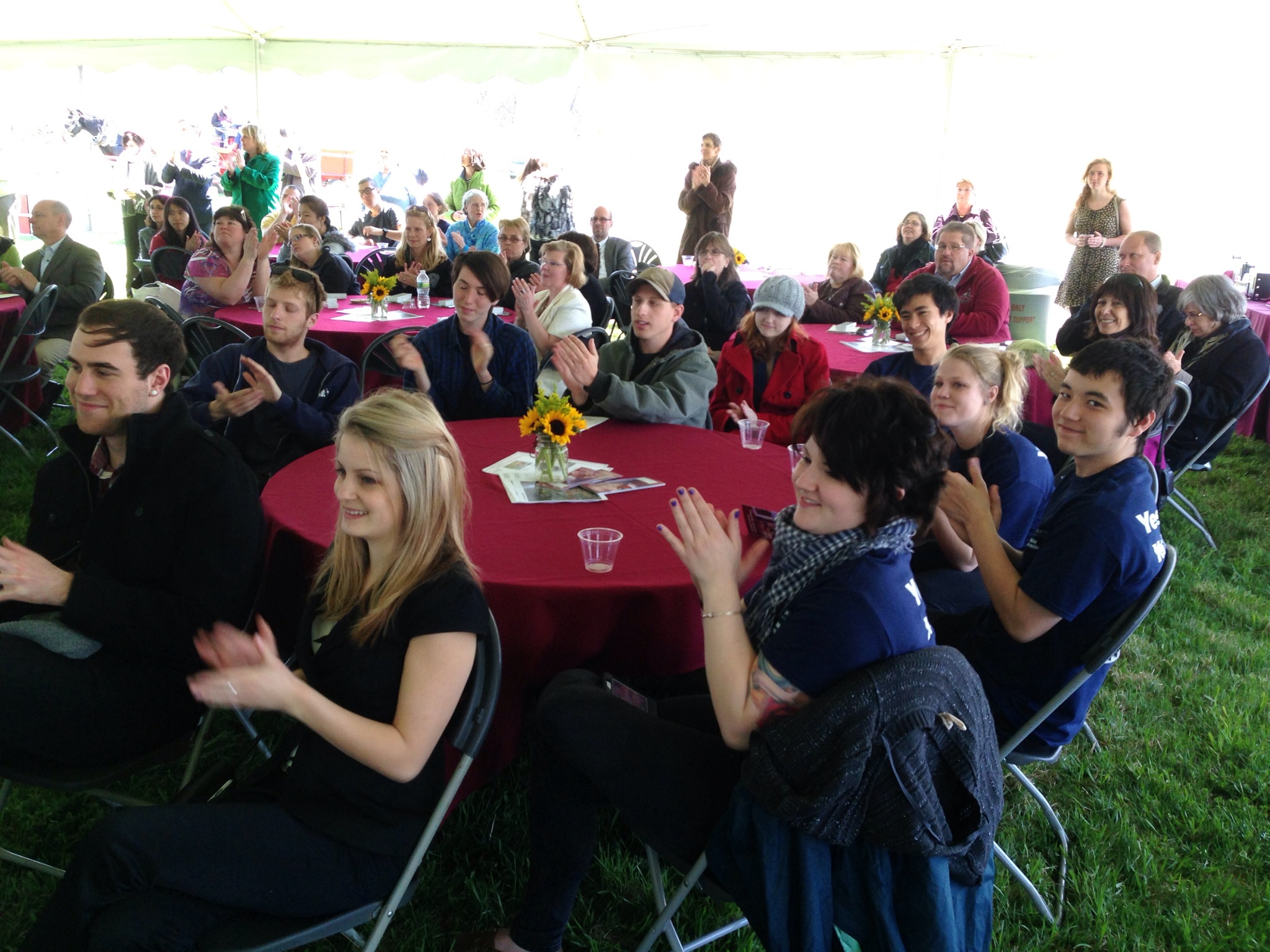
Jordan Teboldi and other Sustainable Food and Farming majors at the groundbreaking

The learning center is in part a response to the rapidly expanding Sustainable Food and Farming major at Stockbridge, which has increased from five to 80 students in the last decade. But the center also will allow other students to pursue studies focused on agriculture, including sustainable practices aimed at growing more food locally, enhancing the food supply and responding to concerns about climate change.

The center was the focus of a celebration and formal ground-breaking Thursday as part of UMass Founders Week 150th anniversary event. But it’s already very much a working farm — plowing began on some of the fields this week, where crops will soon be planted and the first livestock, belted Galloway cows, are expected to be raised.

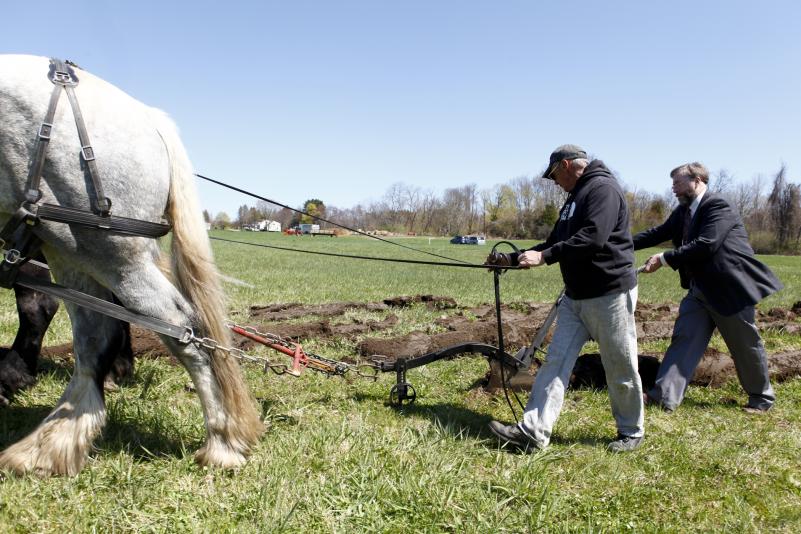
David Bradham, Business manager of Blue Star Equiculture, left, and Wesley R. Autio, Director of Stockbridge School of Agriculture use a horse-drawn hand plow, Thursday, during a groundbreaking at the site of the new UMass Agricultural Learning Center on N. Pleasant St. in Amherst.
David Bradham, Business manager of Blue Star Equiculture, left, and Wesley R. Autio, Director of Stockbridge School of Agriculture use a horse-drawn hand plow, Thursday, during a groundbreaking at the site of the new UMass Agricultural Learning Center on N. Pleasant St. in Amherst. Photo from Sarah Crosby of the Daily Hampshire Gazette.

Unlike the research farm UMass has in South Deerfield, with its turf and vegetable plots, and the Belchertown orchards, all of which are primarily for professor research and Stockbridge majors, the learning center will feature the entire spectrum of farming in New England — pastureland for livestock to graze, vegetable and agronomic crops, tree fruits and landscaping.

Stephen Herbert, director of the Center for Agriculture at UMass, said the idea is to get students into the active part of agriculture and supplement the training they get in the classroom. “Students will come and use the crops that are grown,” Herbert said.

As an example, Herbert said a student taking a soil and crop management class may get to see how the size of corn ears varies depending on how densely the crop is planted. The student will be able to see the larger or shorter ears and calculate the yields.

Other projects could include learning about planting cover crops, something that is done in campus greenhouses, which don’t always mimic real conditions.

Students are looking forward to these real-life opportunities.

“This center represents everything that I joined this program to do,” said Kaylee Brow, a junior from Northampton.

Brow said she expects the learning center will be an incredible opportunity.

“This is both very important for hands-on education and significant for the university to reinvest in agriculture,” Brow said.

Max Traunstein, a junior from Granby, said he expects the learning center will offer better hands-on experiences than other agriculture-related opportunities now on campus.

“There are some small places on campus to do permaculture, adjacent to the cafeterias,” Traunstein said.

John Gerber, a professor of Sustainable Food and Farming at Stockbridge, agreed, saying this will be real farming, not gardening.

“On campus, there’s really no sense of what farming is like,” Gerber said. “This will be a farm.”

Gerber said he anticipates that some classes will begin at the site this summer, with the year-round UMass Student Farming Enterprise class one of the first to take advantage.

Stockbridge already grows organic vegetables at the South Deerfield Farm, but the learning center, Gerber said, will allow students in both Sustainable Agriculture and Botany for Gardeners classes to actually harvest vegetables that will soon be planted.

“There are 27,000 students at UMass who don’t know where their food comes from,” Gerber said. “Our students will be a lot of the teachers when they walk over here.”

During the ground-breaking ceremony, UMass Chancellor Kumble Subbaswamy said the learning center brings UMass back to the roots when it was founded by Levi Stockbridge in 1863, but is also part of a vibrant food-secure future.

“The new center represents the spirit of our history and the cutting edge of agricultural understanding,” Subbaswamy said. “It will be a showpiece and destination for people to learn about agriculture.”

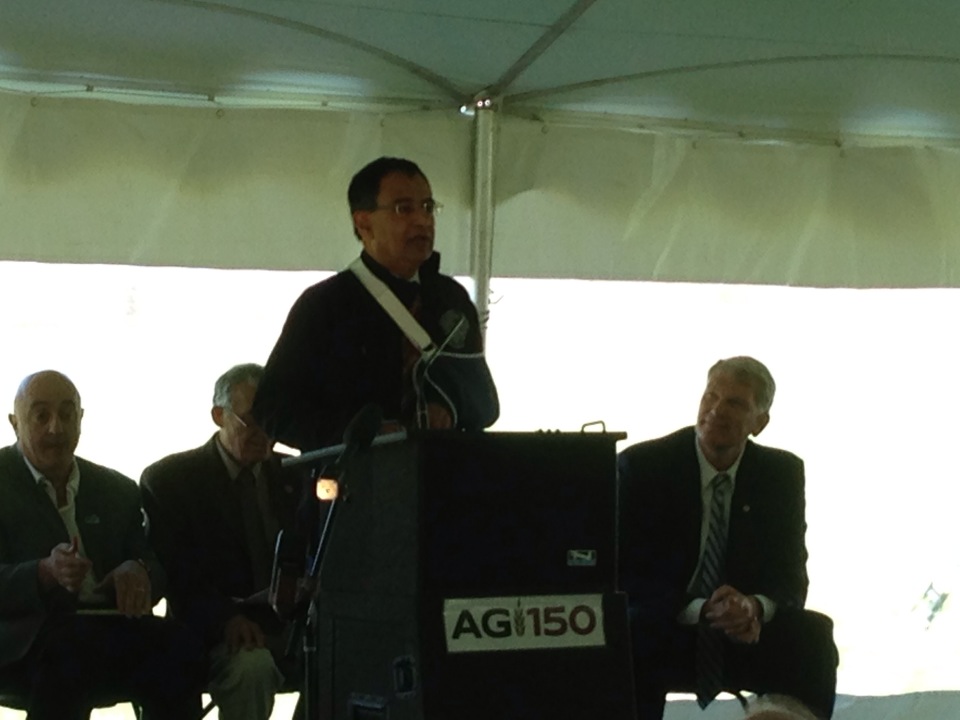
Chancellor Kumble Subbaswamy announced the creation of  the new UMass Agricultural Learning Center at the site on North Pleasant St.

Chancellor Kumble Subbaswamy announced the creation of the new UMass Agricultural Learning Center at the site on North Pleasant St.

The 50-acre site is made up of parts of four former farms, but has been primarily hayfield in recent years.

Alice Wysocki, whose family once owned a portion of the land, said she is pleased to see a return to agricultural production, especially in a sustainable way much like her family farmed it.

“My father would be very pleased. This was a way of life in the ’ 20s and ‘30s,” Wysocki said.

Jane Adams Roys, whose father Robert C. Adams ran a dairy farm on the land, traveled from Florida for the ground-breaking.

“I just think it’s wonderful for agriculture going on here,” Roys said.

Roys said she wished her father were still alive to see this project come to reality.

The learning center is expected to eventually have an 1894 horse barn and the Blaisdell House moved to the site from campus, though this depends on financing. Plans call for the ground level of the horse barn to have the horse stalls converted into a 90-seat classroom, while the loft becomes teaching laboratories.

Massachusetts Farm Bureau Federation president Rich Bonanno presented a $10,000 check in support of the project, and has pledged $500,000, and the university is expected to undertake a fundraising campaign to have work done so the center can formally open in fall 2014.

————————————————————-

And from Channel 22 TV news:  Groundbreaking new 50 acre working farm for UMass

Sustainable Food ‘Is on the Brink of Going Viral’ on Campuses

chroniccleTo the Editor:

Anyone concerned about quality of life on higher education campuses—especially food service operators—should appreciate and take heed of William R. Wootton’s “Fire Your Food Service and Grow Your Own” (The Chronicle, March 11).

I especially appreciate his point about the clashing missions of colleges and food-service providers. Whether a college food service is run independently or by a corporation, it is incongruous for the two entities to run separately and with different goals in mind. Only when food-service providers and their universities begin to align their respective missions and work collaboratively will we begin to see the systemic change his article calls for.

kentoongHere at the University of Massachusetts at Amherst, UMass Dining is an independent, college-operated food-service provider. UMass Dining places local, certified-organic sourcing as top priority. The students demanded it, and we’ve listened. Yet, as Mr. Wootton pointed out, it becomes difficult to change sourcing if you’re locked into a third-party contract. Nine times out of 10, financial feasibility seems to be the insurmountable hurtle—or, rather, the companies “have little financial or managerial incentive” to make changes.

If both independent and corporate food-service providers opened their eyes to the intangible values above the bottom line, we might find ourselves moving towards the future envisioned in this article.

UMass Dining’s mission is “to contribute to the campus life experience” as well as the local community. Our well-established relationships with neighboring farmers allow us to source nearly 30 percent of our produce locally. In turn, UMass provides healthy, vibrant, and engaging products, services, and knowledge that complement and support the academic, recreational, and social goals of the University.

We have successfully initiated and staffed one of the most aggressive and progressive sustainability programs in the country. Our switch to trayless dining, coupled with a dogged belief in composting and recycling has led to a waste-diversion rate in excess of 70 percent (at UMass Amherst we divert over 1,000 tons of organic waste annually), all while we continue working to reduce waste entirely.

In terms of education, UMass Dining and the university’s Stockbridge School of Agriculture have formed a partnership to expand academic programming for sustainable food systems. UMass also has one of the fastest growing undergraduate and graduate degree programs in sustainable food and farming in the nation, and many of our students elect to focus on permaculture within this degree.

UMass is not perfect, nor do we believe we have all of the answers, but we are certainly trying. In an effort to connect sustainable leaders and food-service providers from campuses around the globe, UMass Amherst is hosting the 2013 Permaculture Your Campus Conference this June. Students, food-service directors, and faculty and staff members will explore diverse models of institutional sustainability and establish an international network of colleagues working to create the culture of sustainability that every campus needs.

We pride ourselves in the fact that the aforementioned “good stuff” is a direct reflection of UMass Amherst as land-grant institution. The better our program is, the more we contribute what it means to be part of the campus community. But ours is just one example of the many university-dining programs that are joining this nationwide trend to source sustainable food and place a strong emphasis on educating their students about food and agricultural systems. The trend is on the brink of going viral. We can only hope that more universities and foodservice providers start working to the same end so we can collectively tip the scales toward a more sustainable future.

Ken Toong
Executive Director
Auxiliary Enterprises
University of Massachusetts
Amherst, Mass.

Original Post

Highlighting the Importance of Student-Run Cooperatives

geoby Meghan McDonough, (University of Massachusetts, Amherst student)

(EDITOR’S NOTE: This is an original report written for GEO.)

At the University of Massachusetts Amherst, approximately 145 full-time undergraduate students work as co-managers at seven different student-run cooperatives across campus. Ranging from a copy shop, a bike repair shop, and numerous food venues, these student-run businesses service all different areas of campus. Each co-manager in every cooperative has an equal say in business decisions, is involved in numerous committees (purchasing, marketing, catering, books, payroll, etc) and gains valuable, hands-on experience running a business.

Several student-run food venues such as Earthfoods, Greeno Sub Shop, and Sweets & More accept the Your Campus Meal Plan (YCMP) swipes, valued at $9.50 each. People’s Market, another student-run business located in the Student Union, however, is not permitted by the University to accept the YCMP meal plan because they do not technically sell “meals”, but rather food items as a market would. For several semesters, People’s has been advocating for a change to this policy so that they can begin accepting this meal exchange.

Recently at UMass, a University-owned Starbucks stand has opened in the Integrated Sciences Building, a populous and buzzing area of the University. Catering to students and faculty alike, this new coffee and pastry hotspot has stirred up controversy around campus. This venue sells Starbucks products, yet is permitted to accept the YCMP meal plan swipes whereas similar food venues such as People’s Market cannot. While meal exchange is just one of the apprehensions that this venue is raising, many other student advocacy groups such as the Student Workers Invested in Fair Treatment (SWIFT) and the Student Labor Action Program (SLAP) are voicing their concerns regarding the allowance of corporations on campus, as Starbucks is the first at UMass.

The Center for Student Businesses (CSB) is the University’s administrative department for these student-run businesses and is working to raise awareness about the benefits that each cooperative brings to the University in the hopes that more will be established on campus. Co-managers are voicing a “pro-collective” and “pro-community” mentality, not an anti-Starbucks one. They insist that the skills needed to be an effective student co-manager as well as the amount of information and abilities learned throughout a co-manager’s experience are both valuable and unique. Everything from purchasing, pricing, marketing, catering, books, payroll, cashout, community outreach and in-store responsibilities all require diligence and reliability.

The University employs 145 co-managers for this opportunity, which is a small number when compared to the 20,500 undergraduate students currently enrolled at UMass. Current co-managers would like to see this opportunity open up for more students.

Rumors have been swirling that there is intent to open even more areas on campus to sell Starbucks products, including in the Southwest residential area as well as the new honors dormitories scheduled to open in September, 2013. Though confirmation of this has been denied, if UMass continues to open University-owned Starbucks throughout the campus, co-managers argue that it would be beneficial to consider the advantages of having students more involved in the operation as the student-run cooperatives on campus already operate. Co-managers are assets to the community as well as the University. The skills acquired by working at a collective are rare in today’s workforce, where it is common for a college intern’s most important duty to be fetching coffees for the office.

The Center for Student Businesses itself is an asset to UMass as it gives students the opportunity to run a business and make all operating decisions as a collective. Should more students be given this opportunity, UMass will have an even stronger, unique community for students to gain valuable experiences.

NYT Editorial: Eating With Our Eyes Closed

opinion-logo-smallThe food that comes from factory farms is ultimately consumed by the public, which gives the public an interest in knowing how that food is produced. But in most of the major agricultural states, laws have been introduced or passed that would make it illegal to gather evidence, by filming or photography, about the internal operations of factory farms where animals are being raised.

The precedent was set by Iowa in 2012, when Gov. Terry Branstad signed a law that makes undercover investigation of animal abuses in these facilities a crime. Utah and Missouri have passed similar laws. Some states already exempt factory farms from animal cruelty restrictions. Now these proposals would make it almost impossible for anyone to gather the kind of information that might provoke enough public outrage to get these exemptions modified.

Factory farms, like all homes and businesses, are already protected by law against trespassing. The so-called “ag-gag” laws now being considered by several states, including California, Illinois and Indiana, have nothing to do with protecting property. Their only purpose is to keep consumers in the dark, to make sure we know as little as possible about the grim details of factory farming. These bills are pushed by intensive lobbying from agribusiness corporations and animal production groups.

The ag-gag laws guarantee one thing for certain: increased distrust of American farmers and our food supply in general. They are exactly the wrong solution to a problem entirely of big agriculture’s own making. Instead of ag-gag laws, we need laws that impose basic standards on farm conditions and guarantee our right to know how our food is being produced.

Meet The New York Times’ Editorial Board

——————————————————————————————————

For more on the downside of cheap meat

CISA marks two decades of support for local farming

By RICHIE DAVIS in the Daily Hampshire Gazette

Monday, April 11, 2013

The fields around the region seemed a bit bleaker back in the late 1980s, as far as local farming was concerned.

A federal dairy herd buyout program — implemented to cut into a nationwide milk surplus that was really concentrated in Western states — gave struggling Franklin County dairy farmers a way out of their difficulties by selling off their operations, and selling off their land to developers.

Many of the farms that dominated the region tended to be large operations that sold primarily potatoes, onions, corn and other commodity crops to wholesale markets and tried to squeeze profits out of long days and a limited growing season.

The Beginning

But there was also a new energy taking place, recalls John Gerber, a professor at University of Massachusetts Stockbridge School of Agriculture, who helped launch CISA.

“We’d just gone through a terrible crisis in Massachusetts agriculture, but at the same time we were starting to see CSAs (community supported agriculture farms) popping up,” Gerber said, and a segment of the population pushing for more earth-friendly farming practices, including organic agriculture.

cisaxThe committee learned that the W.K. Kellogg Foundation was offering grants to communities that were working on food systems, applied and won $1.2 million to help farmers create and implement a vision of a more sustainable food production system as well as identify and address the main obstacles to achieving it.

Out of that grant grew Community Involved in Sustaining Agriculture, a Deerfield nonprofit organization that has helped dramatically affect the attitude toward farming not just here but nationwide. This year marks its 20th anniversary.

A Cooperative Project Emerges

“We need our farmers, and they need us,” said Juanita Nelson of Deerfield, who along with the region’s food co-ops, was one of the honorees at CISA’s annual meeting Friday in Northampton, and who in the 1980s was one of the few area farmers selling at a Greenfield farmers market .

Finding ways to support the region’s farmers was central to CISA, which immediately focused on increasing the market share for area farmers by trying to build connections between residents and farms in the area.

By doing market research, said CISA Special Projects Director Margaret Christie, “We learned that people in this area already cared about local farms and saw the connection between how they spent their food money and how it helped the local economy. They didn’t need us to point it out to them, but we made it easier for people to act on that and to show them they could make a difference and how they could do it every day.”

Even before CISA formally launched its “Be a Local Hero” campaign, with advertising, a widely recognized logo displayed at supermarkets, farm stands and restaurants, one of the organization’s working groups began meeting with dairy farmers to launch a small local milk marketing cooperative, Our Family Farms, to allow them to increase their profit.

Some farmers in the region were skeptical of the Amherst-dominated group that had just won a $1 million grant and had Hampshire College as its sponsoring umbrella — especially because it was suspected of pushing an organic agenda over more conventional approaches. But Christie, who began working for CISA soon after it was created, recalls, “I think people began to see bringing consumers on board with regular promotions and opportunities to connect to farms could make a difference for their businesses, and they wanted to be a part of this. They could see it was making a difference. There’s always skeptics out there, but there were fewer of them.”

“Local zeroes” was how some of those early skeptics reacted, recalled Upinngil farmer Clifford Hatch, an early chairman of the effort.

“The whole farming community was pretty fractured at that point, in terms of not pulling together,” Hatch said. “It’s a little more united today. ‘Local’ wasn’t fashionable at that point. The whole farming trend has gone toward more farms doing direct marketing of their product.”

Hatch, whose own farming operation has been helped by the emphasis on local agriculture that now is taken for granted in this area, says, “To tell the truth, we really astounded ourselves when we evaluated our work and found what the market penetrations had been.” Even Kellogg wasn’t convinced that the marketing campaign would work, recalls Ed Maltby, who taught agricultural courses at Smith Vocational Technical High School at the time and then was involved in helping efforts by Our Family Farms and Adams Family Farm to launch processing facilities.

But the Michigan foundation was later so encouraged by what it saw that it provided another $450,000 to help other groups around the country do similar work.

Local Heroes

cisagrocer“We came up with something that was very relevant to the Valley,” Maltby said, and that eventually even caught the attention of Kathleen Merrigan, the current assistant U.S. deputy agriculture secretary, who has promoted a “know your farmer” approach.

“We started the ‘local hero’ campaign nationally in 1999, and 10 years later, it was like the New York Times discovered it,” said Philip Korman, CISA’s current executive director. Korman says his concerns about taking the organization’s reins in 2008 as the economy soured have been overcome by seeing a growth in memberships — now at 355 farms, restaurants and organizations around the three counties — as well as sale of local products.

“I was a little concerned, about whether people would still stay focused on buying locally when they might have a little less discretionary funds, was this going to be a fad that would ebb and disappear. But people are willing to learn some new skills, alter their shopping patterns and are wanting to get more connection with farmers. It’s helpful to have the national culture echo the message that we brought.”

Changing mind-set at UMass and the Region

The surprise, for some, has been also in the number of young farmers who have been attracted to the region as CISA has contributed to a change of the cultural mind-set.

“What I couldn’t have predicted was the number of young people bringing creativity to the marketplace,” said Gerber, citing enterprises like Valley Green Feast home delivery service and Many Hands Farm Corps internship training program for farm workers. “They’re doing things no one had thought of before. That’s what was exciting: Things (like CISA) have certainly changed the landscape that makes it more receptive to those kinds of experiments.”

In fact, Gerber said, the launch of a UMass degree program in sustainable agriculture — like a similar program launched last year at Greenfield Community College — is a direct result of a renewed interest young people have in farming.

“CISA helped provide a context for that,” Gerber said, “a visibility nationally that something’s happening here in the valley. UMass just happens to be sitting in a hotbed of sustainable agriculture. The excitement that CISA represents says, ‘Something’s going on here.’ I’m getting calls from North Carolina, from California, from Arizona from people who want to transfer to UMass. Partly, it’s the farming in the Valley, partly it’s CISA bringing visibility to all this. It’s really cool.”

Vicki Van Zee, an early director of the farming nonprofit, recalled that the median age of farmers 20 years ago was around 60 in the Pioneer Valley, and that has dropped dramatically.

“What’s completely a gleeful surprise is the amount of young folks who are as interested in farming as they are. They’re the ones leading the charge now, seeing this value of farming small, that you can make a living from farming with a couple of acres and much more relational marketing.”

It’s also a surprise, she noted, that UMass, which started out as an agricultural land-grant institution, has been able to make dramatic change and launch its new program in response to this trend.

If young farmers have been attracted to take some of the courses offered by CISA and other organizations in order to start farming, that’s because CISA has helped farmers gain a new respect, Maltby said.

“Why Massachusetts has been increasing the number of farmers whereas every other part of the country it’s dropping, is … there’s a level of respect. I remember a very poignant moment when Our Family Farms was asked to be in the Franklin County Fair parade, and (co-op member) Debbie Duprey was nearly in tears at the end of the parade because she said people came up to her and thanked her, and nobody had ever done that for her as a farmer.” The renewed success for farming in the Valley, in fact, has helped drive up competition for good farmland, Maltby said.

“There’s so much competition for good land,” said Valley Land Trust Executive Director Richard Hubbard. “CISA’s raised the awareness of buying locally and that’s generated a bigger demand for that kind of product, which gets people more interested in farming, and they realize they might actually make a living doing it. As a result, we’re getting calls from people looking for farmland,” at the rate of one or two a week.

CISA — which also helped fill the role left by a diminished Cooperative Extension Service beginning in the late 1980s and the 1990s — has also helped farmers by offering an array of workshops about marketing, business practices and planning, and other technical skills for which a new generation of farmers may not have been trained, said Van Zee and others. And in recent years, it’s also helped examine issues that will affect the future of agriculture in the region, such as the need for processing and storage facilities and ways to comply with new federal food safety regulations — while also advocating that those regulations need to take into account small farm operations.

As it marks its 20th anniversary, Korman says, CISA will be pushing to play more of a role in Hampden County, where about half the population says in a 2012 marketing survey that they recognize the “local hero” campaign, but the organization will face challenges of dealing with a more urban population further removed from farms, with more cultural diversity as well as urban poverty.

To do that work, and while continuing programs like a disaster relief fund set up in the wake of devastating storm damage in the past two years, Korman said CISA will need more staff. It’s launched a $100,000 challenge fundraising campaign that will match, two-for-one, every dollar raised.

“CISA, along with its farmers, has changed the culture here locally,” Korman said. “More people care about local agriculture. The respect that farmers have always earned, but not always received, can be passed along. Now someone can be excited as a 25-yearold to be a farmer, and farmers can be respected by people who will look out for them.”

On the Web: http://www.buylocalfood.org

Original Article

Proposed Law Could Deliver Major Boost to Urban Agriculture in California

urbangarmSmall-scale farming isn’t easy. The prices farmers receive for their goods are often low, the margins are tight, the days are long, and the chores never-ending. For farmers who don’t own their own property, land insecurity compounds financial instability. It’s tough to really dig in if you don’t know how long you can stay on the piece you’re farming.

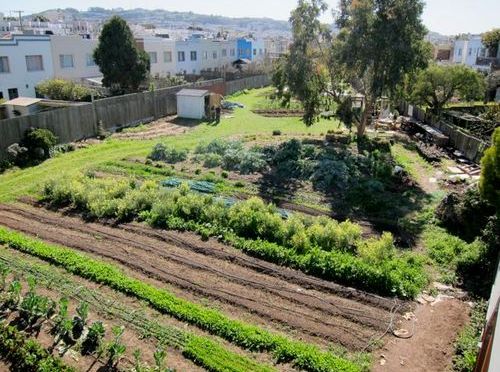
The problem of insecure land tenure is especially pressing for urban farmers in many cities, who have to contend with limited space and high real estate values. Brooke Budner and Caitlyn Galloway, the co-founders of San Francisco’s Little City Gardens, understand this better than anyone. They don’t own the three-quarter acre lot they farm and scrape by on a month-to-month lease.

“Small scale farming is already a high risk proposition,” Budner told me recently. “Anything Continue reading Proposed Law Could Deliver Major Boost to Urban Agriculture in California

Our College is at the heart of the UMass 150-year celebration

CNS is at the heart of UMass 150-year celebration

Dean Steve Goodwin – 03/25/2013

In April, UMass Amherst will launch a year-long commemoration of its 150th Anniversary — and as Dean of the college that proudly holds the legacy of the university’s land-grant mission, I can’t help feeling a bit of personal satisfaction. (The picture is of me in front of the new CNS Greenhouse.)

Steve Goodwin at CNS GreenhouseThe College of Natural Sciences carries forward the national land-grant university tradition of agricultural research and education that began with the creation of Massachusetts Agricultural College on April 29, 1863. “Mass Aggie,” as it was affectionately called, was founded with the proceeds from sales of land granted to Massachusetts under the federal Morrill Land Grant Act, passed by Congress and signed into law by President Lincoln in 1862.

The Stockbridge School of Agriculture has been educating students in all aspects of agriculture and the green industries for almost 100 years. The School has recently become a full academic unit with its own faculty, and has the capacity to provide research, teaching and outreach opportunities, as well as to offer AS, BS, and graduate degrees.

The college’s Center for Agriculture is the current home of two historic missions: applied research, and public outreach. The Center will soon be renamed the Center for Agriculture, Food and The Environment, to better reflect the full range of its 21st-century mission.

The Center’s Massachusetts Experiment Station supports faculty research in agriculture, food systems, nutrition, forestry, environment and other topics, and receives federal funding under both the Hatch Act of 1887 and McIntire-Stennis Forestry Research Act of 1962. Educational outreach to farmers and others goes back to Mass Aggie’s very earliest days and was formalized by the establishment of a campus Extension Service in 1909. UMass Extension, a unit of the Center for Agriculture, continues outreach to the Commonwealth, and receives funding from the USDA through the federal Smith-Lever Act of 1914.

In its time the Morrill Land Grant Act was an exciting experiment in higher education and it has had a profound impact many aspects of our lives. Today we are again experimenting with ways to integrate research, teaching, and learning across agriculture, the environment, energy, and health and wellness to benefit the public good.

As you can see from our newsletter, the College of Natural Sciences is dedicated to making a difference on campus, in the community, and in the Commonwealth. Clearly, we at CNS are carrying the torch of the land grant movement in our mission to improve the present, and impact the future. Here’s to another 150 years of innovation and tradition.

————————————————————————