I’ve never thought of myself as much of a rebel. You generally won’t find me smashing car windows or setting garbage cans aflame. (Let’s get real: You probably won’t find me speeding. Such are the depths of my rule-following nature.) But I realize now that all along, I’ve just been waiting for the right weapon with which to battle The Man.
Wildflowers, of course. More precisely: ping-pong ball-size globs of clay and compost laced with wildflower seeds called seed bombs (or green grenades — military nomenclature is a must). The other day, I stood in front of a fenced-off lot on a busy stretch of asphalt, fingering the tiny seed arsenal I’d packed into a Ziploc bag. I looked back and forth, took a deep breath, and let one fly over the chain links; the ball came to rest on a scrubby patch of dirt in the sun. “Take that!” I muttered under my breath.
Finally, I was beginning to understand the rebel thrill. This must be what Marlon Brando felt like.
Lobbing that seed bomb was my first foray into the worldwide movement of “guerrilla gardening,” or reclaiming underused land — empty lots, vacant yards, alleys, and other areas you technically don’t have the right to plant — for lovely and/or productive gardens. In this case, the enemy takes the form of a disinterested, wasteful society that misses out on abundant opportunities to beautify the ugly and cultivate the barren.
Sometimes it’s as simple as taking over an adjacent lot with some extra pepper plants, but often there’s more at stake. Among guerrilla gardeners, you’ll hear plenty of chatter about “land use,” “re-creating space,” and “Who actually owns the earth, man?” Make no mistake: Those petunias are political.
Some guerrilla gardening reportedly plays out like a scene from a spy movie: Black-clad growers sneak out to till and water vegetable patches in the dead of night. While that does sound fun, I had something a little less intense in mind for my first time out. Then my research uncovered seed bombs — perfect for inaccessible yards, tough-to-tend spaces, and ‘fraidy cats. Make a few green grenades, toss them all over town, and wait for the blooms to take over. This I could do.
And I did. Whipping up a batch of proto-wildflower balls is surprisingly simple — mine cost me about $10 (for seeds and clay; I grabbed the compost right from my worm bin) and 10 minutes. I picked up the native wildflower mix at my local grocery store and found the natural clay at an art-supply shop, where the clerk assured me “this is just what the Girl Scouts used to make their seed bombs last year.” (Fight the power, Brownies!) After letting the bombs sit out overnight to dry a bit, I was ready to sow some rebellion. (See below for step-by-step instructions on how to make them.)
Experienced guerrillas recommend seed-bombing right before rain is forecast. This usually wouldn’t be a problem in Seattle, but we were just about to enter an unusually warm and sunny period. Still, I couldn’t wait to dip a toe into the movement, so I loaded my bag with a handful of seed bombs and went out in search of abandoned space begging for wildflowers.
My destination was a busy thoroughfare near my apartment with a slightly, ahem, seedy reputation. Pocked with cheap motels and overgrown, weedy patches that don’t clearly belong to anybody, I figured it presented a prime opportunity for my “floral attack.” Plus, it’s close enough to let me check in on my gardens’ progress as the weeks go by.
I found my first site before I even reached the intended street: a plowed-over slope strewn with trash and construction detritus that’s lingered, untouched, for months. Nobody was around, so I chucked a seed ball into the expanse. (I don’t know who would object to a few blossoms here and there, but these days you never know when tossing an unidentified object — one you’re calling a bomb, no less — might get you tackled by a SWAT team.) “Good luck, little seeds,” I whispered.
Next up: A weedy patch near a lonely bus stop. Then a clear, empty dirt meadow. The fenced-in lot next to a boarded-up house. I strode along that eyesore of a road like a modern-day Janie Appleseed with safety pins in her ears, spreading flowers and righteous garden activism with every step.
I reserved the last ball in the bag for a quiet corner of my shared backyard. The lawn doesn’t need it, as neighbors have planted plenty of flowers, herbs, and veggies around the periphery, but I wanted to keep one seed bomb close so I could check on it every day. Hell, I might even water it. You might point out that cultivating flowers in my own backyard hardly counts as guerrilla gardening, but hey — like a true rebel, I totally did not ask my landlord first.
I’ll report back on my illicit wildflower patches and other excursions into guerrilla gardening as the spring goes on. ‘Til then, happy planting, everyone. Keep it on the downlow, and remember — if you get caught, you didn’t hear this from me. It was the Girl Scouts.
Homemade Seed Bombs
Materials:
5 parts clay soil/potter’s powder
1 part wildflower seeds
1 part compost/worm castings
1. Combine the seeds and compost in a large bowl; stir well.
2. Add the clay soil. If you’re using a dry clay, slowly add water, stirring as you go, until you have the consistency of thick mud (you don’t want it too watery to mold).
3. Shape the mixture into golf ball-size globs.
4. Set seed bombs in a tray and let them sit in the sun for a day or so to harden.
From time to time, questions are raised about the value of classes which provide students with opportunities to engage in “professional practice” within a university curriculum. Some faculty recognize the value of experiential learning but question the worth of any experience that is not done in the context of research – particularly laboratory research.
The tension between the perceived value of science (mostly associated with classrooms and laboratories) and professional practice (often associated with the world outside of academia) goes back to the early days of UMass, when the same question was raised by faculty of the “old college” – Amherst College – about the “new college” – Massachusetts Agricultural College (Mass Aggie). Indeed, the namesake of the Stockbridge School of Agriculture and his colleagues were engaged in this debate 150 years ago.
——————————————————————————-
According to William Henry Bowker, a member of the original 1867 entering class of the Massachusetts Agricultural College, “Levi Stockbridge was thirty-seven years of age when he came to this institution, a tall, thin, wiry, untiring farmer… a contribution from the public schools – a self-educated man…” unlike the other members of the famous “faculty of four” in the early days of the College.
Two members of the “big four”, William S. Clark, professor of botany and horticulture, and Henry Goodell, instructor of literature, were educated at Amherst College. Charles Goessmann, professor of chemistry, was educated at the University of Gottingen, in Germany. Interestingly, the namesake of the Stockbridge School of Agriculture was educated in the “field of professional practice” as a Hadley farmer and self-educated in science. Nevertheless, he was one of the most successful and revered professors in the early history of the institution.
Agricultural (professional) practice was a core value of the “new college,” setting it apart from the “old college” from which many of the early instructors were borrowed. Bowker writes “…we dug ditches, as instruction in drainage, we cut down and uprooted apple trees, as lessons in forestry, we leveled Virginia fences and graded land, for landscape effect and education, we milked cows and groomed horses, which I suppose would come under the head of veterinary science and practice; we mowed grass and harvested corn, which undoubtedly must be classified among the arts of agriculture.” While students no longer dig ditches, they are encouraged to engage in “enterprise” projects such as the UMass Student Farm & CSA described in the video here.
Professional practice has long been a critical component of the educational experience for students in the “new college.” Members of the “old college” – Amherst College – disparagingly called the new Aggies “bucolics” – and deemed practical education unworthy of the elite members of the more aristocratic neighbor. But Levi Stockbridge never denied the difference between the two educational approaches, seeing them as complementary and of equal value depending on the career goals of the students.
But for all that – “Mass Aggie” was never a narrow, technical training school. According to Henry Bowker, Mass Aggie offered “…in the broader sense of teaching all the natural and applied sciences which are related to agriculture, and at the same time, while training men along vocational lines, of giving them as liberal an education as possible in order to fit them to be good citizens and to do their part in society.” The legacy of Levi Stockbridge and the other members of the “big four” is a balance of science and professional practice, something the Stockbridge School of Agriculture strives for still today.
Mass Aggie – 1867 Durfee Greenhouse is in the foreground
Right from the beginning, the early professors put value on scientific research. Here is Bowker quoting the first president, Henry Flagg French, “let us pursue our study beyond the mere instruction of classes in their prescribed courses, and endeavor, by careful experiment in the field and careful investigation in the study and laboratory, to make discoveries in science and to enlarge the boundaries of existing knowledge….” The legacy of Mass Aggie is education in both science and practice.
The Massachusetts Agricultural College and its “offspring” the Stockbridge School of Agriculture were established with a specific intent “to make agriculture its leading subject” and further to “include, also, manual training in its curriculum.” The legacy of the early days of Mass Aggie, and particularly of Levi Stockbridge, who was described by Bowker as “no doubt the peer, if not the superior, in native wit and capacity” of the other members of the faculty, was to establish the value of practical education built upon a solid foundation of science.
The legacy of science and professional practice lives on in the laboratories, fields, and particularly the students of the recently expanded Stockbridge School of Agriculture. Students in the four B.S. degrees, the 6 A.S. degrees, as well as those working toward graduate degrees under the supervision of Stockbridge faculty remain proud of the legacy of science and practice established by the founding faculty of the University of Massachusetts Amherst.
———————————————————————————-
Quotes in this essay were taken from an address by Henry H. Bowker, trustee of the college, at the 40th anniversary of the Massachusetts Agricultural College, titled “The Old Guard; the Famous ‘Faculty of Four’ – the Mission and Future of the College – its Debt to Amherst College, Harvard College and other Institutions” presented on October 2, 1907.
Scientists, farmers, and chefs are developing new varieties of produce from heirloom seeds. It will make life better for organic farmers—and yummier for everyone else.
Kristin Ohlson has written for The New York Times, Christian Science Monitor, Salon, Smithsonian, Discover, Gourmet, and many others. Her book The Soil Will Save Us was published in March by Rodale.
————————————————————————————————————–
Sarah Kleeger pointed to a goldfinch perched on a waist-high millet plant and scowled, tightening her grip as the black cat in her arms twitched with interest. “That bird is just looking at us.”
“I’d like to shoot all the birds,” said Andrew Still, her husband and business partner.
“We don’t shoot birds,” Kleeger clarified for me.
“Yes, but I’d like to shoot them,” Andrew said. “We just lost half our crop of Castelfranco chicory seeds to the birds.”
Kleeger, 35, and Still, 34, can be forgiven their avian antipathy. They don’t sell the Castelfranco chicory or Red Bull brussels sprouts or Aprovecho fava beans or the hundreds of other vegetables they grow in their fields. Their plants don’t look like produce—they are all tall and shaggy, even the three-foot lettuces rattling with seeds. Kleeger and Still sell the seeds from these plants to other farmers through Adaptive Seeds, the small company they founded on their five-acre organic farm in Sweet Home, Ore., in 2009. The birds, not unreasonably, consider Adaptive Seeds’ products their food.
Later, Still squatted and plucked two dwarf Danish melons, pale yellow with green stripes and not much bigger than billiard balls. The couple brought the seeds for these melons from Europe, along with seeds of 800 other varieties of food crops, with the hope that in addition to their good taste and texture the fruit might show robust performance in organic fields in the Pacific Northwest, which, like Denmark, is typically not melon territory. So far the Danish melon experiment is going great. “I’m looking for my ideal melon,” Still said. “Medium-small that’s green and juicy and sweet, with early traits. Northwest adapted, so that it matures in August and not late September.”
That would give farmers more choice of what to plant, potentially raising their incomes, and the ability to pass that choice on to consumers. Gesticulating with one of the diminutive Danish fruit, Still said, “Our goal is to create a healthier, more resilient and sustainable food system. We need to correct the problems of the industrial food system, and seeds are one way to do that.”
Adaptive Seeds has a John Deere combine that’s not quite old enough to appear in a parade of vintage farm equipment at a 4-H fair, a shed overflowing with garlic, a winnowing room where Still dumps seeds from one bucket to another in front of a window fan that blows away the chaff, and an office where they handle seed orders from down the road and around the globe. Kleeger and Still’s living room is full of corn, hanging to dry from racks near the ceiling, for next year’s catalog.
The couple began working on an organic farm right after college but were dismayed to find, over dozens of seasons raising and selling vegetables, that farmers planted the same handful of varieties year after year. That seemed limiting. They decided to seek out varieties of vegetables not available in the United States and spent their savings on the trip to Europe, collecting seeds from varieties that seemed promising. Today they are leaders in a movement that could alter local food systems and economies, as well as strengthen the hand of organic and small farmers.
Andrew Still, holding Danish melons, and Sarah Kleeger on their seed farm in Sweet Home, Ore. (Photo: Kristin Ohlson)
The 20th century saw the rise of a consolidated agriculture sector that demanded volume and efficiency. That led to a drop in the number of varieties available to farmers from commercial seed companies and the resulting handful of mass-produced vegetable varieties in our grocery stores. But farmer-entrepreneurs like Kleeger and Still have joined with plant-breeding scientists and even high-profile chefs such as Dan Barber of New York’s Blue Hill at Stone Barns restaurant to remake food from the seed up. Such collaborations could serve as a model for others around the country seeking good organic varieties for their own fields and kitchens. Already, Stephen S. Jones, a wheat breeder and professor at Washington State University, says he’s contacted at least three times a week by farmers in other states, seeking new varieties or wheat tailored for their region and needs. If successful, they’ll soon be providing more of us with fruits, vegetables, and grains bred to thrive in the various microclimates around the country—suiting the needs of small farmers, artisan bakers and brewers, and chefs—and with correspondingly greater flavor, texture, and nutrient density.
John Navazio, formerly an organic seed specialist for Washington State University who now works for an organic seed company, says a new generation of farmers, chefs, and diners is demanding something better than the commercial seeds being developed and designed for industrial agriculture. “They want real seed from real farmers in their region, and…seed from the biggest companies does not suit their needs,” he says. “This is the DIY crowd, and they get it more than anyone has ever gotten it.”
In January, I joined 430 self-described “seedheads” at the seventh Organic Seed Growers Conference in Corvallis, Ore., hosted by the Organic Seed Alliance, a national organization based in Port Townsend, Wash., that encourages and teaches farmers to select and save seed, and organizes collaborations among plant breeders, seed companies, chefs, millers, brewers, and others both up- and downstream from organic farms.
The conference thrummed with the buzz of farmers growing seed; plant breeders from universities; representatives of seed libraries, seed cooperatives, and seed companies of varying sizes; and seed enthusiasts from foundations, public policy groups, and student organizations. It confused me at first. Wasn’t organic seed just seed plucked from plants grown without chemicals, and if so, what was the big deal? Even though I skew heavily organic in my shopping and eating, it had never occurred to me to object to an organically raised tomato or cabbage grown from the seed of a nonorganically grown plant. I assumed organic cultivation rendered its origins moot.
Over the course of two days of talking to seedheads from across North America, I discovered that there’s more to organic food than what’s aboveground. Organic farmers want organic seed for the same reason they want to grow their crops organically: They prefer seeds not produced with chemical fertilizers, pesticides, fungicides, herbicides, and other tools of industrial agriculture. Federal guidelines set in 2000 require the use of organic seed in organic production, but farmers are allowed to use conventional seed if it is not available commercially. Many certified growers still avail themselves of that loophole—there just aren’t enough good sources of these seeds.
This is one problem Kleeger and Still are addressing. The bigger issue is that there aren’t enough varieties of wheat, lettuce, corn, or anything else, really, bred specifically for organic production.
“The basic adage in plant breeding is that you breed in the environment of intended use,” explained Micaela Colley, OSA’s executive director. Conventional seeds cultivated organically are going against that adage, which places organic farmers at a disadvantage. In other words, crop varieties for conventional agriculture are bred to flourish in fields with intense chemical inputs—not just the vast rows of GMO corn and soybeans, our nation’s biggest crops, but also the smaller fields where tomatoes and spinach and other produce are grown. According to a recent survey by Consumer Reports, 84 percent of Americans say they buy organic at least some of the time. But when varieties aren’t bred for organic cultivation—in which roots need to be vigorous enough to scavenge for nutrients and stalks and stems must soldier on without sprays to protect them from insects, disease, and weeds—they’re likely to produce less. Plants grown organically from conventional seed don’t perform as well as they should be able to, or as well as conventionally grown alternatives. The lack of organic seed and of plant varieties developed for organic production may be one of the reasons that organic fields only occupy 6 percent of American vegetable acreage.
If the seedheads are able to reduce this deficit of organic varieties, more organic produce at a lower price may result. At Washington State University’s Mount Vernon Research Center, wheat breeder Jones—famous in seed circles for having rebuffed Monsanto’s bid to have him develop GMO wheat—oversees projects that are developing new wheat, barley, and oat varieties for both traditional and organic farming in Washington’s Skagit Valley. “We’re developing new varieties for flavor and functionality that have four to ten times the yield,” Jones told me. “This will eventually bring down the cost.”
Agriculture has been around for some 10,000 years, and until the 20th century, farmers saved seed that had produced desirable traits, such as sturdiness or large size, to plant again the following year. The practice changed food over the centuries as distinct varieties evolved in regions around the world, with modern plant breeders swapping pollen between two varieties with desirable traits, planting the offspring, and growing those that came out the best, generation after generation, until a new variety was stabilized.
We know some of these older varieties as “heirloom” seeds, a term that began to appear in seed catalogs like Johnny’s Selected Seeds in the 1970s. Commercial hybrids developed in the 20th century had advantages: high yields, produce that ripened at the same time, uniform size and shape. Some transported and stored better. That suited the production standards of agribusiness just fine. But a generation of organic farmers turned eagerly to heirlooms in the following years for a number of reasons—not least of which was the food tasted better.
Heirlooms were prized for their flavor and texture, but they often had major drawbacks for farmers trying to make an organic living. “The heirloom tomatoes tasted great, but they often cracked and didn’t ship well,” recalls Navazio, who became an organic farmer in the 1970s and later learned traditional plant breeding, earning a Ph.D. in plant breeding at the University of Wisconsin–Madison. “You could hardly even take them to town to sell them,” he says. Today he works at Johnny’s Select Seeds in Maine. “There was no one breeding varieties for the farmer marketing high-quality organic produce on a local scale.”
Some non-heirloom hybrids worked decently in an organic system. But the U.S. Patent and Trademark Office’s 1980 decision to allow the patenting of life-forms, among other factors, led to consolidation in the seed industry. Big corporations started buying up small regional companies and increased their focus on splicing together traits to create patentable seeds (many of them with genes from altogether different species, ergo GMOs). Meanwhile, many of the hybrids that organic and other small farmers found most useful were soon forgotten.
“The big companies narrowed their offerings to focus on seeds that have the largest market, such as varieties that either do well in a lot of locations or ones that are used in centers of large-scale agricultural production like the Sacramento Valley,” OSA’s Colley says. “But the varieties that have a smaller market share often have unique qualities [beneficial to] regional growers—say, sweet corn that ripens quicker in northern latitudes, which is not a sweet-corn-growing area.” In 2000 alone, more than 2,000 hybrids disappeared from the marketplace when Seminis—at the time the world’s largest vegetable seed company—bought several smaller companies. Now it’s part of Monsanto, which has stopped producing these hybrids.
Sarah Kleeger, harvesting at her farm. (Photo: Courtesy Adaptive Seeds)
At the same time, one of the major avenues for developing new varieties was also shrinking. Land grant universities founded in the 1800s to help improve agriculture saw funding cuts and changes to federal policy, including the 1982 Bayh-Dole Act, which encouraged the transfer of publicly funded research to the private sector. The number of researchers dedicated to cultivar development in public universities has fallen 30 percent in the last 20 years, according to a recent survey conducted by Bill Tracy, chair of the Department of Agronomy at the University of Wisconsin–Madison.
By the early 1980s, organic farmers were conferring about their need for improved varieties and well-produced seed. Frank Morton—now the plant breeder and seed seller behind Wild Garden Seed in Philomath, Ore.—recalls going to a meeting in 1984 at which a molecular biologist known as Mushroom stood up and announced, “If you grow organic crops, you need organic seeds. Those seeds don’t exist, and we have to create them.”
“It blew my mind,” said Morton.
Morton’s work inspires Kleeger and Still and others around the world. His varieties are grown in many countries and even in space: Outredgeous, one of his most popular lettuces—so named for leaves so red that the botany students who first saw it didn’t recognize it as lettuce—is being grown on the International Space Station. (It grows quickly, has a high concentration of antioxidants, and is highly bacteria-resistant—a concern for astronauts eating raw food.)
In July, I visited Morton at the 70-acre organic farm where he raises seeds between rows of organic crops grown for food. He offers a dazzling 81 varieties of lettuce in his catalog, created by selecting lettuces with certain traits, crossing them, and then carefully breeding them for years. As we walked the fields, he kept an eye out for plants with yellowed leaves or other signs of disease, for plants that were puny, for plants laced with insect bites. Even if these plants had other desirable characteristics, he would not bother saving their seed if they were not vigorous enough to flourish under organic cultivation.
Morton is a model for the kind of painstaking work good agriculture requires, as well as for the openness the new generation of seedheads expects. He does not patent his varieties. If other companies want to sell seeds grown from them, he wants them to pay him a 10 percent royalty. It’s a handshake agreement, and it’s worked so far. Morton assumes other breeders will shape new varieties from his and adapt them to other regions’ growing conditions and other customers’ flavor preferences. Which is to say he expects people to use his seeds as people have used seed for centuries.
Lettuces that have been allowed to grow until they produce seed. (Photo: Kristin Ohlson)
In 2010, organic vegetable farmers in the Pacific Northwest noticed that one of their favorite sweet peppers, an easy-to-grow, easy-to-harvest commercial hybrid called Gypsy, seemed to be disappearing from the marketplace. They were having a hard time finding Gypsy seed, and when they did, the resulting peppers were low in quality—a sign that a seed company has stopped doing the careful maintenance of the parent lines because it has lost interest in selling the hybrid. Gypsy was also beloved by area chefs, who started asking why they couldn’t find their red pepper of choice. All of this set off a sort of red-pepper panic, which soon came to the attention of Lane Selman.
Selman is a research assistant in the Organic Vegetable Research program at Oregon State University and a researcher with one of the big OSA research efforts called the Northern Organic Vegetable Improvement Collaborative. Since NOVIC started in 2009, it has helped bring together plant breeders and researchers from Cornell University, Oregon State University, the University of Washington, Wisconsin-Madison, OSA, and the U.S. Department of Agriculture to work with farmers to breed varieties that perform well in the shorter growing seasons of northerly regions, where many organic farmers must start seeds in greenhouses and transplant the shoots to their fields when the weather warms. NOVIC wanted to develop varieties that might eliminate that step and even help farmers grow crops rarely attempted in these environments—for example, sweet corn in Washington.
NOVIC set out to test varieties that could replace Gypsy. Selman soon discovered some likely candidates among the produce at the stand she manages for Gathering Together Farm, of Philomath, Ore., at the Portland farmers market. It turned out that Morton, in response to requests from his farmer friends at Gathering Together, had already bred five new sweet peppers that grew beautifully in the Pacific Northwest. Unbeknownst to the other farmers desperate for a successor to Gypsy, Gathering Together was growing them and sending them to market.
NOVIC’s trials confirmed that Morton’s peppers grew as well as, if not better than, Gypsy. But every Saturday morning at the farmers market, Selman had to face another constituency: Portland’s picky chefs, who were still pining for Gypsy. So in October 2011—about two years before Dan Barber convened international chefs and plant breeders at the Stone Barns Center for Agriculture in Tarrytown, N.Y., to discuss the role of seeds in selecting produce for flavor—she invited Portland chefs to Portland’s Tabla Mediterranean Bistro for a special tasting of 10 peppers. At the end of the evening, the chefs’ top three choices were all Morton varieties, including one called Stocky Red Roaster.
It quickly moved into the space in the chefs’ hearts formerly occupied by Gypsy, and now chefs come to the farmers market asking for it. Selman hopes that the chefs and ultimately consumers will become aware of the breeders behind all the varieties. “Restaurants already drop the names of farms on the menus,” she says. “I’d like to see something like ‘This month, you’re eating Stocky Red Roaster, a variety developed by Frank Morton of Wild Garden Seed.’ ”
In late September, more than 100 farmers, chefs, and food aficionados cruised a party room in the back of Chris King Precision Components, a Portland bike factory. The event was sponsored by the Culinary Breeding Network, which was organized in the aftermath of the 2011 red-pepper tasting in Portland. The group includes plant breeders, seed growers, fresh market farmers, chefs, and produce buyers who are developing a vision and an agenda for vegetables in the Pacific Northwest. It’s a fusion of the agricultural and the culinary, of breeders, growers, and eaters, and it’s taking the concept of local food to an entirely new level.
Twelve plant breeders had turned over some of their favorite new varieties to 12 chefs to see what they could come up with. The assorted grazers sampled dishes such as hominy and shrimp soup, polenta, and caramel popcorn, prepared by Portland chef Greg Higgens from the Amish Butter corn developed by breeders Anthony and Carol Boutard of Ayers Creek Farm in Gaston, Ore. Breeders also brought along samples of varieties in development. Guests filled out questionnaires: Which of the mild habañeros offered up at one table had the best flavor, color, shape, size, and pungency? How did the cherry tomatoes at another table fare in terms of appearance, flavor, sugar-acid balance, aftertaste, and skin thickness?
Selman calls this “community-driven plant breeding.” She’s planning more such events, and hopes to hold “farm days” in which chefs walk the fields looking for varieties that please their eye. She wants chefs and breeders to meet with a flavor consultant, who will teach them to speak the same language in matters of the palate. As far as she knows, this kind of thing “is not going on anywhere else in the country.”
Sarah Kleeger and Andrew Still were at the bike-factory party. They brought Adaptive Seeds onions and its seed catalog, with its many varieties new to Americans. Unlike Frank Morton’s Wild Garden Seed catalog, which I saw tucked under the arms of many a guest, Kleeger and Still’s catalog wasn’t crammed with varieties they’ve bred themselves. But they’re eager for the challenge of adding their own innovations to the Northwest’s agriculture and cuisine. “We’re lucky,” Kleeger told me. “We’ve got another thirty years to do this.”
The burgeoning network represented that night could provide new resources for farmers and may help the chefs it’s pulled into the mix expand the possibilities of local food and what it tastes like.
“The more people getting involved in seed projects, the better,” says Matthew Dillon, who cofounded OSA in 2004 and is now the director of Seed Matters, an arm of the Clif Bar Family Foundation, which advocates for the improvement and protection of organic seed. “For the last 50 years, there’s just been a handful of people and companies controlling our seed future and thus our food future. The more public-based seed projects that are going on, the harder it’s going to be for companies that want to control via patents to win. They can’t come and take it all.”
At dinner with a friend the other night, I mentioned that I was giving a talk this week debunking the idea that we need to grow more food on a large scale so we can “feed the nine billion” — the anticipated global population by 2050.
She looked at me, horrified, and said, “But how are you going to produce enough food to feed the hungry?”
I suggested she try this exercise: “Put yourself in the poorest place you can think of. Imagine yourself in the Democratic Republic of Congo, for example. Now. Are you hungry? Are you going to go hungry? Are you going to have a problem finding food?”
The answer, obviously, is “no.” Because she — and almost all of you reading this — would be standing in that country with some $20 bills and a wallet filled with credit cards. And you would go buy yourself something to eat.
The difference between you and the hungry is not production levels; it’s money. There are no hungry people with money; there isn’t a shortage of food, nor is there a distribution problem. There is an I-don’t-have-the-land-and-resources-to-produce-my-own-food, nor-can-I-afford-to-buy-food problem.
And poverty and the resulting hunger aren’t matters of bad luck; they are often a result of people buying the property of traditional farmers and displacing them, appropriating their water, energy and mineral resources, and even producing cash crops for export while reducing the people growing the food to menial and hungry laborers on their own land.
Poverty isn’t the only problem, of course. There is also the virtually unregulated food system that is geared toward making money rather than feeding people. (Look no further than the ethanol mandate or high fructose corn syrup for evidence.)
If poverty creates hunger, it teams up with the food system to create another form of malnourishment: obesity (and what’s called “hidden hunger,” a lack of micronutrients). If you define “hunger” as malnutrition, and you accept that overweight and obesity are forms of malnutrition as well, than almost half the world is malnourished.
The solution to malnourishment isn’t to produce more food. The solution is to eliminate poverty.
Look at the most agriculturally productive country in the world: the United States. Is there hunger here? Yes, quite a bit. We have the highest percentage of hungry people of any developed nation, a rate closer to that of Indonesia than that of Britain.
Is there a lack of food? You laugh at that question. It is, as the former Food and Drug Administration commissioner David Kessler likes to call it, “a food carnival.” It’s just that there’s a steep ticket price.
A majority of the world is fed by hundreds of millions of small-scale farmers, some of whom are themselves among the hungry. The rest of the hungry are underpaid or unemployed workers. But boosting yields does nothing for them.
So we should not be asking, “How will we feed the world?,” but “How can we help end poverty?” Claiming that increasing yield would feed the poor is like saying that producing more cars or private jets would guarantee that everyone had one.
That is, the kind of farming we can learn from people who still have a real relationship with the land and are focused on quality rather than yield.
The best method of farming for most people is probably traditional farming boosted by science. The best method of farming for those in highly productive agricultural societies would be farming made more intelligent and less rapacious. That is, the kind of farming we can learn from people who still have a real relationship with the land and are focused on quality rather than yield. The goal should be food that is green, fair, healthy and affordable.
It’s not news that the poor need money and justice. If there’s a bright side here, it’s that it might be easier to make the changes required to fix the problems created by industrial agriculture than those created by inequality.
There’s plenty of food. Too much of it is going to feed animals, too much of it is being converted to fuel and too much of it is being wasted.
We don’t have to increase yield to address any of those issues; we just have to grow food more smartly than with the brute force of industrial methods, and we need to address the circumstances of the poor.
Our slogan should not be “let’s feed the world,” but “let’s end poverty.”
Massachusetts Farm Bureau Federation (MFBF) has arranged for a special screening of Academy Award®-winning filmmaker James Moll’s feature length documentary, “Farmland” for their annual meeting, which will be held at the UMass Hotel in Amherst. MFBF is extending a special invitation to the UMass agricultural community to join them for this event.
The film offers viewers a firsthand glimpse into the lives of six young farmers and ranchers across the U.S., chronicling their high-risk/high-reward jobs and their passion for a way of life that has been passed down from generation to generation, yet continues to evolve.
“Farming in Massachusetts is growing and for the first time in many years more acres are being farmed, due in part to young farmers like those featured in this film,” says MFBF President, Rich Bonanno. “Farmland gives the audience real insight into what it takes to be a farmer nowadays. We think that the UMass agricultural community will find it informative and entertaining.”
Many Americans have never stepped foot on a farm or ranch or even talked to the people who grow and raise the food we eat, yet are increasingly passionate about understanding where their food comes from. “This is a film for anyone who eats,” says Moll. “It’s not what you’d expect. The world of farming is complex and often controversial, but the farmers themselves are some of the most hard-working and fascinating people I’ve ever met.”
A limited number of seats will be available for the screening, which is scheduled for 7:15pm on December 4th. Please call 508-481-4766, or email liz@mfbf.net by Nov. 20th to reserve a seat.
The Massachusetts Farm Bureau Federation is a non-profit, member-driven organization representing over 5,000 family members across the Commonwealth. Its mission is “to protect the rights, encourage the growth, and be of service to its members, in the best interest of agriculture.”
Professor of Agriculture in the Massachusetts Agricultural College from 1871 to 1882, and President from 1880 to 1882.
Read by William H. Bowker at Commencement shortly after the death of Professor Stockbridge
Amherst, MA – June 15, 1904
Professor Stockbridge was very near, very dear, and very necessary to ” his boys ; ” and he counted us all as ” his boys,” whether we had just entered the College or had grown weary and gray in life’s battle. He was a father to many and a counselor to all. We cannot think of him in an impersonal way, but always in the relationship of friend and comrade — one to whom we could take our troubles — one who would meet us on our own plane, whether we came from the farm or from the city.
He had been a farmer’s boy himself — he knew the boy’s environment, his habits of thought and his ambitions, and therefore could meet him on a common ground ;yet he was equally interested and successful in dealing with the city-bred boy. He loved young manhood from every station of life. To him all boys possessed great possibilities, and he felt it incumbent upon him to find these out and direct them into proper channels.
He came of the purest New England stock, of a large and devout family, whose parents, like so many others, were ambitious for their children, but not able to give each one a college education. In the Stockbridge family it fell to the lot of the oldest brother to enter Amherst college. Levi, no doubt, felt that it was unfortunate, if not wrong, that he should not have an equal chance, but very likely he never expressed regret or displeasure to his parents. He was one who never complained, and accepted his lot with the duty it entailed.
He did not, however, let the inability of his parents to send him to college daunt his courage or dampen his ambition, for when his brother was taking his course in the old college, Levi was studying the same books at home, and attending many of the lectures, particularly in chemistry, that his brother studied at Amherst. Thus, while he had little personal contact with the teacher and the professor — so important an influence in moulding young life — he was pursuing, as far as he could, many of the studies which so admirably fitted him for his life work.
Very likely at that time he had no thought of becoming a teacher, much less a moulder of character in an institution new in the field of education. Rather, he was fitting himself to be a good citizen and a good farmer. He saw, as but few others did at that time, the wide field and the great need of the educated farmer. He had read the works of Liebig, the founder of agricultural chemistry. The experiments of Lawes and Gilbert, in a field which he afterwards occupied and broadened, were not unknown to him. He was familiar with the teachings of Jethro Trull, and I am sure, with his enthusiastic nature, he must have enjoyed the writings of Charles Downing, that poet of the orchard and philosopher of the garden.
As a young man, he kept in touch with the proceedings which led up to the founding of the Board of Agriculture, and finally of this College. He knew and respected the work of Marshall P. Wilder, the philanthropic merchant, and Simon Brown, the talented agricultural editor. Just who was his prototype I do not know, but he must have been of a high order. Perhaps he has left somewhere a record of the man who exercised the greatest influence over him. There is rarely a man who cannot point to some one who, earlier or later in life, has helped to shape his course, either for good or for evil. We older men, in our contact with young men, sometimes forget our unconscious influence over them, but the teacher and the professor in a college should never do so.
Professor Stockbridge always remembered his relationship to the student body, and yet he was never stilted or unapproachable. Underneath his quaint, humorous speech and sometimes droll ways, there was a dignity and firmness of manner which the boys felt and respected. No teacher in my day preserved better order in the class room, and no one was more successful with his classes.
We have heard to-day, or shall hear, of his work in connection with the establishment and upbuilding of this College, and of his scientific and practical work in the field of agriculture, but after all, I feel, as you all must feel, that his most beneficent influence, his greatest achievement, was his personal, close relationship to the student body of this institution ; for while he was a natural instructor, clear, brilliant and enthusiastic, yet he was greatest and best as friend and adviser. The College was extremely fortunate in having at the start such a man — healthful, helpful, courageous, buoyant and optimistic, but always possessed of good judgment.
He was sunny, hopeful, sane. In all my thirty-seven years’ acquaintance with him I never saw him cast down. Many of us found him a helpful friend in a substantial way. I do not know how many young men owe the completion of their college course to his financial aid. I fear many would not have gone through this institution if he had not helped them. We can all see him now, at least some of us can, when we were strapped — and what young man does not get in that fix now and then ? — we can see him, after he had asked us a few leading questions, put in such a way as never to disclose his feelings but always ours — he was as keen as the keenest lawyer — we can see him pull out his old leather wallet from a pair of ungainly-fitting trousers, leisurely unstrap it, and hand out a five or a ten dollar bill without further comment. How relieved we were ! How the clouds lifted, and how life took on a new hope forus ! I sometimes think he took a secret delight in our temporary discomfiture, and in our manifest pleasure when the ordeal was over, for the twinkle of his eye and the smile of his lip were very expressive and will ever be remembered by his numerous boys.
I wonder if he always kept account of the aid which he gave. I hope and believe that the boys did, and returned it with interest ; but whether that was the case or not, he enjoyed helping them, for he had been there himself. Moreover, he had been taught that it was good to cast his bread upon the waters, knowing that it would come back to some one, if not to him, in God’s own way and time. He wanted no young man to fail of going through his beloved institution for lack of funds ; and yet he believed in every man helping himself. If he had been a millionaire he would not have been lavish in his aid — he would have assisted only those who assisted themselves. He was a keen reader of character. He sifted the wheat from the chaff, and no doubt many a boy stayed in college and many a boy went away because of the advice which he gave him, in that kindly way which never offended. Probably there was not in this institution during his day a student who did not at some time consult him. Thus he helped to mould as best he knew — and for the best, as I believe — the life of every man who came under his influence.
Mass Aggie – 1867 Durfee Greenhouse is in the foreground
What a work he undertook ! It must be borne in mind that when he came from the Hadley farm to take charge of the College farm and to superintend the erection of the first buildings, it was practically the first agricultural college to be started in this country. The field was absolutely new ; there was not a model to go by. The buildings were to be built and arranged not only for academic but for practical training. Again, when he undertook instruction in agriculture there was not another chair of agriculture in the country, and there was no one to whom he could turn for advice. He had to blaze the way, without books and without chart. And how well he did it !
His lectures were to me the most interesting of any I attended. They were clear, concise and always practical. They could not be otherwise, for he possessed a clear, logical mind and a terse form of speech. His English was exceptionally good.
He had an original and inventive mind. He saw, as others did not see, the necessity of taking what chemists, botanists, geologists and other scientists had worked out, and of applying it to practical ends ; stripping it, as far as possible, of all technicality, and making it plain and simple, not only to the farmer’s boy here in the College but to the father at home. He popularized and made assimilable the teachings of all the sciences related to agriculture, but he lectured to a larger audience than the students of the College — he spoke to the farmers of the land.
It is claimed that agriculture is not a science, but an art — that there is no need of a chair of agriculture in any college ; and I sometimes think that it is true, for agriculture is made up of so many collateral branches. Stockbridge realized this, and by his great insight and practical training was able to glean from all sources of knowledge that which was essential to the upbuilding of agriculture.
Massachusetts Agricultural College 1879
As he taught and exemplified agriculture in his day, he demonstrated the value of the chair of agriculture in all our agricultural colleges. He ploughed and sowed for all of them, and all of them are reaping the fruits of his labor.
May I be somewhat personal, for I take it that personal reminiscences will be interesting at this time ? I came here a green lad from a small farm in northern Worcester county, and I shall not forget my first meeting with Professor Stockbridge. I can see him standing on what is now the campus, superintending some of the finishing touches to the buildings, on which the paint was not dry — a tall, spare man, dressed in a rough suit of clothes and a slouch hat, with sandy hair and beard slightly streaked with grey, with keen, kindly-eyes looking out from beneath shaggy eyebrows — a striking character in the full vigor of manhood.
He was thirty-seven years old when he began the work of his life, and eighty-four when he died. As you may imagine, he was far from my picture of a college professor, who should have been dressed in black clothes, with gray beard and gold-bowed spectacles, and of whom I expected to stand in awe.
We were all standing at that time in a fifty-acre field surrounded with Virginia fences and filled in here and there with corn fields and apple trees and tumble-down tobacco sheds. An incongruous picture it made, with the modern buildings towering above it all. But the impression which he made upon me was that he was one of our kind — an approachable man, who could drive a yoke of oxen or preside at a town meeting with equal ease. Boys get curious impressions, but I know it went through my mind that if I got home-sick — which I did — I could go to him and talk it over — which I did not do, however, because it is a boy’s way to bluff it through.
The next recollection I have of him is in the management of a class of sixty unruly chaps from farm, city and village, in our first lesson in husking out a field of corn. It was a bright October afternoon, and although I was brought up amid beautiful scenery I shall never forget this picture and its superb setting. It had its healthful influence on us, as it must have had on those who have followed us.
Neither shall I forget his masterful and tactful way of handling us ; and just here let me say that I think his tact and judgment were, after all, his greatest gifts, which he had occasion many times afterwards to bring successfully into play in his management of the student body in manual training, then a new departure in college education. We must have been a sore problem to him, for it should be remembered that we were the pioneer class — the experimental class — and he and we were green together. The harvesting of this corn crop was a splendid object lesson to us in the management of men and teams and in the selection of seed, but I think it also opened his eyes to some things.
I next remember him taking a class into the hay field to learn how to make hay, to run a mowing machine and to use the scythe in trimming out. Some of us knew how to do it, for we had come from the hay field, but there were some from the city who had never seen a scythe — at least, had never swung one. When Herrick, a beaming boy from the city of Lawrence, looking through big, round, rimless glasses, started in with his scythe, everybody else fled for fear of accident. Stockbridge said, ” Keep your heel down, Herrick ! ” and Herrick, not knowing what he meant, plunged away, stamping his heel into the wet soil and running the point of his scythe into the ground, the rest of us laughing at him.
Finally, ” Old Prof,” with infinite patience, stepped up to him and said, ” Young man, it is not the heel of your boot, but the shank or the heel of the scythe which you must keep to the ground if you would cut a swath in this life.” Young Herrick was cut off by the great reaper too early to demonstrate the teachings of Stockbridge.
The next time I remember him as standing out prominently, to us at least, was in the fall of ’68, when Grant was first elected to the presidency of the United States. When the news of the election came to town, a glorification meeting was held to celebrate the victory. All the students of both colleges, of whatever political faith, joined in a procession and marched around to the professors’ houses, both of the old and the new college, calling each man out for a speech. We began down town, and were first addressed by President Stearns, Professors Seelye, Tyler and I think by dear old Professor Snell, one of the sunniest men I ever met ; then up to President Clark’s house, where he gave us a rousing reception and a good speech. Finally, we lined up in front of ” Prof. Stock’s ” house.
The Levi Stockbridge House
Stockbridge expected us, and evidently had been preparing something for us. I can see him now, coming down the rickety stairs of his little old woodshed office and deliberately walking up to the doorstep in front of the house. I cannot recall his language, but I remember his eulogy of Lincoln, and then of Grant, who had been Lincoln’s mainstay, closing with a splendid outline of the future for ” us boys,” as he called us, who were then coming on the stage, with a plea for good citizenship and patriotism, as exemplified by these two great Americans. It was voted by the students of both colleges to be the best speech of the evening.
Shall we ever forget him as a writer and public speaker ? He was clear, earnest, often brilliant, and always sensible ; but if he happened to be pleading for his beloved College or for the cause of agriculture, then it was that he rose to the occasion, convincing and unanswerable !
May I again be personal? Perhaps no one has had closer business relations with Professor Stockbridge than I during the past thirty years. I came to know him intimately in a business way. I touched him on the money side, and it is said that if one would know a man’s true character, one must have financial transactions with him. In all my thirty years’ association with Professor Stockbridge I never found him sharp or underhanded. He always took a broad, clear, business-like view of every situation, and was fair and liberal in his dealings. When he placed the Stockbridge formulas in in my hands — I was then a young man of twenty-five — I could but feel that it was a mark of confidence, for there were large and rich concerns in New York that had applied to him for the opportunity to manufacture them under his name. It was a gray, cold December day when the trade was closed in his woodshed office. I can see him now, with his long legs stretched out, toasting his shins at the little old broken-down stove which would hold only a stick at a time, and I remember wondering how he ever got time to write his lectures and keep that stove going.
When he was about to sign the agreement, he remarked : “ I know you ; you have been one of my boys and one of our College family, and I think I’ll take my chances with you.” I hope he never regretted the step, and I think he did not, for he voluntarily remained a director in our company, in which he took a great interest, to the day of his death. And let me say, in passing, that he always insisted upon our business being done on a high plane, and was as jealous of the good report of the company as of the formulas which bore his name. He set a high standard and expected us to live up to it.
It will be well to record here that the first money received by Professor Stockbridge in royalties for the use of his name (his formulas were given to the world for anybody to use) was devoted to experimental work at Amherst, which practically laid the foundation for the first experiment station to be established in this country in connection with an agricultural college, and the second station to be incorporated in the United States. The first was incorporated by Connecticut at New Haven, and the second by Massachusetts at Amherst.
Durfee Greenhouse 1889
These two stations were afterwards consolidated with the government stations, and along with forty-two others, one in each state, were endowed under the Hatch bill, and are now known as the Hatch Experiment Stations. But to Johnson and Atwater, of Connecticut, among the greatest of living agricultural chemists, and to Stockbridge and Clark, of Massachusetts, the wisest of practical educators, belongs the credit of inaugurating this great educational movement. Out of it, also, has grown the enlarged and vigorous Department of Agriculture at Washington, which in connection with the stations and the agricultural colleges is doing yeoman’s service for the advancement of knowledge. These stations and the agricultural colleges, each supplementing the other — the one to develop men and the other to develop methods — may well be considered the renaissance of our new agriculture.
I want to mention another personal recollection. In one of his lectures— or talks, as he liked to call them — the question of the large personal fortunes that were beginning to pile up was under discussion. He, as you all know, was very democratic in his feelings, inclined to side with the under dog, whether the dog was right or wrong. He regretted the advantage which the crafty and unscrupulous were taking of the people and of the laws of the people, in amassing wealth in lawful, but, as he thought, improper ways. And I remember his flashing out one day with this remark: “No man has a right to more than a stated amount of property, a million if you please. If he amasses more than the allotted amount he should yield up the excess to the state. The prizes should be divided more equally and distributed more widely.”
When asked how he would accomplish it, he replied: “Through the probate court, through which all estates must pass sooner or later, or by some other effective means.”
I suppose he meant that if a man’s estate was found by official appraisal to be more than the allotted amount he would have the excess pass to the government, and thus he would hope to check greed and selfish ambition. This remark was made more than thirty years ago, and he lived to see, in the inheritance tax, a partial step in that direction. He probably felt then, as many have come to feel since, that the game should be played more fairly, and, if necessary, that the rules of the game should be modified ; that the prizes, as in schools and universities, should be as many as possible, but limited in size — a maximum cum la tide, the highest with praise — beyond which no one should go.
And why not ? If our universities find it wise to fix a maximum prize, and our boys in their games find it necessary to place a handicap on the strongest player, to equalize conditions and to make the game fairer and more interesting, why not, in the game of life, have some kind of bar to the crafty and unscrupulous, to the end that the prizes shall be more fairly divided and more widely distributed ?
Stockbridge’s sympathies went out to the weak, and if he had been born in this century I believe he would have become, in the best sense of the word, a socialist. He abhorred a plutocracy, and believed in every man having a fair chance.
You all know how useful and influential he was in the early years of the College. I wonder if you know how many times, when it was without friends and without funds to pay current expenses, he raised the money at the local bank on his own notes, or on the College notes endorsed by himself. I remember a bank friend of his taking him to task for doing it, saying that if he had to pay the notes it would ruin him. Stockbridge’s reply was prophetic: “Oh, I am not afraid ! Never you worry ! The state of Massachusetts has entered into a contract with the United States government to maintain this institution, and the State of Massachusetts will never go back on her contract. What is more, some day she will see the error of her way, and will come to the rescue of this institution and do all that may reasonably be asked of her. I tell you, it is going to be a success ! “
We have lived — and, what is more gratifying, he lived — to see that remark come true. Not only did the state honor the paper which he endorsed, but it has given thousands upon thousands of dollars since then, and will give, as we require it, all that we may need for the development of this institution. It stands here to-day a monument to Levi Stockbridge as much as to any other man in Massachusetts.
Stockbridge Hall
Let us hope that some day there will be erected on the campus a statue to his memory, or, better still, a building which shall beknown as ” Stockbridge Hall,” for the agricultural department, in which shall be placed a tablet, stating in simple terms what he did for the College and for the young men who came under his beneficent influence. The impetus and the stimulus which he gave to our lives by his splendid manhood and buoyant, hopeful outlook on life, have left their imprint upon us all, and are an inheritance which we shall hand on to those who come after us.
The bright, cheery boy from the Hadley farm, self-taught, lives not only in this institution, but in the lives and character of hundreds of students who remember him and ever will remember him as ” dear old Prof. Stock,” whom they all loved.
If I were asked what was Stockbridge’s greatest contribution to agriculture, I should say that it was not his formulas for crop feeding by which he is so widely known ; for, useful as these were, they were but stepping stones to a better knowledge of the object and use of fertilizers. His greatest contribution to agriculture, as it seems to me, was his new conception of the office of fertility in farm economy.
Up to the time of the publication of the Stockbridge formulas, the practice had been to manure the soil in order to restore lost fertility and to supply deficiencies in the soil, as ascertained by a chemical or crop analysis of the soil. Stockbridge saw that this method was not a practical solution of the problem, for neither chemical nor crop analysis of the soil could be relied upon as a true guide to its enrichment. The chemist disclosed too much that was misleading and the crop too little that was conclusive. But, what is more to the point, Stockbridge saw that we had taken hold of the problem at the wrong end. It was not the soil, but the crop, that we should first consider. We should study it and its needs, and supply it, as far as we were able, with the necessary elements of plant nutrition by the use of properly balanced manures. In a word, he turned from the inert soil, which could not answer, to the living crop, which could, and put this question to it: “What shall I supply you in excess of what you may obtain from the soil or air by your own habits and conditions of growth to make you a perfect and profitable crop ? “
On the other hand the farmer was asking him: “What shall I use to produce profitable crops — how much and in what form?”
Starting then from the crop, with the farmer’s question ever spurring him on and with such data as he could find, he worked out his well known formulas, which were published broadcast in 1876. And let me say here that besides being published in many agricultural papers and reports more than half a million pamphlets containing them were distributed.
He did not claim that his formulas were infallible, for he anticipated and announced, what we soon discovered in practice, that they would need to be modified, as experience should point the way. They served, however, a greater purpose even than Stockbridge dreamed at the time — they centered our thought and our study on the crop. From that time on we discussed plant food and not soil food — plant feeding instead of soil manuring. ” Feed the crop rather than the soil,” was a frequent expression at this time.
It is well to observe here that crop formulas were not new. Ville and others had published various sets. The Stockbridge formulas, however, were unique in this : that they were based not alone on the analysis of the crop, but on its power of absorption from all the sources of fertility — from soil, air and water. Thus Stockbridge boldly prescribed: “To produce fifty bushels of shelled corn per acre (without any stable manure) and its natural proportion of stover, more than the natural yield of the land, apply so many pounds each of nitrogen, potash and phosphoric acid. Or to produce a stated quantity of tobacco leaf of the desired color and texture, apply a stated quantity of plant food elements, preferably in the form of sulphates and nitrates.”
Here then, for the first time, a definite way was prescribed to attain a definite object. It was a startling proposition, and, as might be expected, it brought ridicule from many quarters, but Stockbridge did not allow that to disturb him. He knew that the commercial farmer needed a tangible starting point. He knew that to consider the needs of the crop, the living thing, both as to amount and kind of plant food, rather than the needs of the soil, an unknown and unknowable quantity, was not only a common sense way of meeting the problem of plant nutrition, but a very direct way of helping the farmer out of the quagmire of doubt. The formulas might not be accurate; in some cases they might supply excessive amounts of plant food elements and apparently be very wasteful, yet he believed that in the end it was better economy to apply too much and insure a crop, than use too little and lose a crop.
Nevertheless, as Professor Stockbridge anticipated would be the case, the fertilizers based on his formulas were modified from time to time as we gained light, chiefly by the reduction of nitrogen and the increase of phosphoric acid, as it was found that many crops were able to gather from natural sources, through bacterial action or otherwise, some part of the required nitrogen, and that an excess of available phosphoric acid would hasten maturity.
It was also found that to supply the full complement of nitrogen in addition to what the crop would assimilate for itself tended in many cases to produce an unbalanced growth ; yet, on the other hand, it was found that in some cases, especially where a forced growth or a tender leaf was required, an excess of nitrogen was desirable. Thus it will be seen that the crop was both the starting and the objective point. Not only its chemical needs, but its habits and conditions of growth, the object for which it was grown, and its market qualities, were all factors which influenced the composition or modification of the fertilizers ; and the same factors are as potent to-day. Since, then, it was the crop that chiefly concerned Professor Stockbridge, how natural and sensible was his question : ” What shall I supply you to make you a perfect and profitable crop ? ”
Let us now consider for a moment another phase of the subject, namely, the potential fertility of the soil, or ” the natural yield,” to which Professor Stockbridge frequently referred. It has been known for a long time that practically all tillable soils are rich in plant food elements, and yet many of them are barren, and most of them will not produce profitable crops without the aid of manure or fertilizer.*
* Professor Frederick D. Chester, of Delaware, states in an able bulletin recently published: ‘“An average of the results of 49 analyses of the typical soils of the United States showed per acre for the first eight inches of surface 2600 pounds of nitrogen, 4800 pounds of phosphoric acid and 13,400 pounds of potash. The average yield of wheat in the United States is 14 bushels per acre. Such a crop will remove 29.7 pounds of nitrogen, 9.5 pounds of phosphoric acid and 13.7 pounds of potash.
” Now, if all the potential nitrogen, phosphoric acid and potash could be rendered available, there is present in such an average soil, in the first eight inches, enough nitrogen to last 90 years, enough phosphoric acid for 500 years, and enough potash for 1000 years.
“ This is what is meant by potential soil fertility, and yet such a soil possessing this same high potential fertility may, under certain conditions, be so actually barren of results to the farmer as to lead him to believe it absolutely devoid of plant food.”
In a word, potential fertility represents plant food which is so tightly locked up that it is not available for present needs, and becomes available only through the process of decay and disintegration, which is too slow to meet the requirements of the commercial farmer. Stockbridge realized the situation, but instead of asking the soil how much of the potential fertility could be depended upon for each crop (a question which will never be satisfactorily answered), he went to the crop and asked it how much it was necessary to supply for a stated yield over and above the natural yield of the land. In all cases he found it to be a very small quantity. For the corn crop not over 200 pounds of nitrogen, potash and phosphoric acid was necessary, which the crop would return fifty fold (at least five tons in stalk and grain) — so little to produce so much — and yet if this little quantity of 200 pounds was not supplied the crop would be a failure.
It was this little essential balance of available plant food which stood between success and failure that concerned Professor Stockbridge, as it concerns every farmer to-day. Although it was small, he did not deem it wise to depend upon the potential fertility of the soil to supply it, or even any considerable part of it. For the commercial farmer it was too risky and uncertain. To insure a crop, as far as one was able, was a cardinal principle with him ; not to do it was in his eyes almost a crime. But he felt that all these things would right themselves as we came to know more about farm crops and their environment.
As bearing on the economy of his system of plant feeding, I want to quote here one of his apt illustrations. He said in effect : ” In a sense the farmer is a manufacturer and the soil is his machine, into which he puts plant food, and out of which, by the aid of Nature and his own efforts, he takes his product at harvest time. If the soil machine is a good one, so much the better. If it has a balance of crop-producing power to its credit, let us preserve that balance for an emergency. Let us not draw on it for present needs.”
He had no patience with the so-called single-element doctrine, which depends for its success on the potential fertility — no patience with the farmer who was trying to find out for himself if he could leave out any one of the three leading elements of plant nutrition (nitrogen, potash and phosphoric acid), or how little of each he could get along with. That was a proper subject for the scientific worker to investigate, but until we knew more about it the practical farmer, who had his living to make and bills to pay, should not tinker with it.
To Stockbridge it meant, in the end, improvident farming. At best, the farmer had to take great chances, especially with the weather — the largest factor in crop raising, over which he had no control ; but he should take no chances with the things which he could control. Among these were the amount and kind of manure which he applied to his crops. Thus, if he hoped for a stated crop he should at least fertilize intelligently for that crop. For the man who was dependent on his crops any other course was unwise.
Moreover, any other course would leave the soil machine in a poorer condition than he found it. Broadly speaking, to encourage him to take out more than he put back was not only bad economy, but bad morals, and should be discouraged, for in the end it would lead to crop bankruptcy.
It is needless to say that the farmers appreciated this bold course. As Stockbridge put it, they jumped on his wagon before he was ready to start. He was indeed their prophet, who led them out of the wilderness of speculation into the light of practical methods.
As might be expected, this new conception of the use of chemical manures — or plant food, as he liked to call it — not only revolutionized all our notions of fertilization, but the entire fertilizer business as well. It immediately raised the standard of commercial manures from ordinary superphosphates, containing no potash, to “complete manures,” many of them rich in potash. Special fertilizers for special crops or classes of crops were brought out by various makers, and the business received a new impetus and a new recognition in the community. It was put on a sound footing, from which it can never be displaced.
As in stock feeding we chiefly concern ourselves with the study of the animal and its needs, so in plant feeding we must make an intelligent study of the needs of the living crop. As we know how to feed the cow for milk or beef, so we must know how to feed the plant for leaf or seed. Not only must we know the amount of plant food to be supplied, based on crop requirements, but the form and association of the different elements must be considered ; and in the study of this problem we must also continue to study the soil, its potential fertility, its physical and chemical characteristics, and particularly the lower orders of life which it contains, the bacteria and other unseen forces. In short, we must continue our study of all
the sources and forces of fertility, to the end that we may know what each contributes to the upbuilding, not necessarily of the soil, but of the crop life above the soil. Thus did Stockbridge teach and practice.
As Stevenson made practical the discovery of Watts, as Singer improved upon the invention of Howe, so Stockbridge took the teachings of Liebig and Johnson, the tables of Wolf, and the experiments of Goessmann, Atwater and Sturtevant, and applied them to practical and useful ends. While the system of plant feeding which he employed, or perhaps I should say the method of application as prescribed in his formulas, did not appeal to the scientific mind in the beginning, it did appeal to the practical farmers, for it met their needs as no other method ever before had done. As good practice and good science must agree in the end, so I believe the scientific world is coming to agree with the practical farmer that the system and the method of application for which Stockbridge stood and labored is as truly^scientific as it is thoroughly practical, and to accord him a high place among the workers for the advancement of scientific as well as practical husbandry.
Students who have not yet declared a major showed up yesterday to “go shopping” at the UMass Majors Fair held in the Campus Center Auditorium. There was lots of interest in Stockbridge majors.
Dr. Om Parkash spoke to students about the Plant, Soils and Insect Sciences major and highlighted opportunities for students to get involved in our research programs.
Students had fun guessing the weight of the Rouge de Provence winter squash (a French heirloom variety). Natural Resources Conservation student, Holly Giard, won a Stockbridge hat when she guessed the weight of the squash (which weighed 16 lbs. 7 oz.) missing the actual weight by only a few ounces! Special thanks to new Sustainable Food and Farming graduate student, Nikki Burton, who grew the squash!
Here is a list of grants and scholarships I share with students. If you find any broken links or grants/scholarships you think I should add, please send a note to jgerber@umass.edu.
While most of the SFF majors have come to Stockbridge in the past via transfer from other majors at UMass or from other colleges, the interest among high school students was exciting at the Open House. Lots of questions from students and parents!
Our “Yes Farms Yes Food” bumper sticker was a bit hit at Open House!
There has been a steady increase (green line) in Sustainable Food and Farming majors in the Stockbridge School of Agriculture over the past 10 years.
Sustainable Food and Farming is the largest program in Stockbridge (including both A.S. and B.S. students) representing about 40 % of our 300+ students.
Perhaps most important however, the Stockbridge School of Agriculture was ranked 4th highest (out of 55 departments) in the university for quality of experience in the Senior Survey for 2013. Stockbridge was also highest program overall for quality of advising and preparation for career .
Recent graduate Lilly Israel gave a tour of the Franklin Permaculture Garden to a few high school students and their parents at the Open House. Lilly is now working for Auxiliary Services, coordinating the UMass Permaculture Gardens
In its fourth year, National Food Day (held annually on October 24th) is an opportunity for people across the nation to celebrate the value and importance of eating fresh, local and healthy food.
During lunchtime on October 24th, students at the Amherst Regional Middle School had the opportunity to sample unique varieties of apples provided by the UMass Cold Spring Orchard.
Johnathan Sivel, Michelle Nikfarjam, and Jessica Maeder from the Stockbridge School of Agriculture assisted Rebecca Fricke (from Grow Food Amherst and District Aide to Representative Ellen Story) distribute the apples and answer students’ questions.
Two of the best quotes from the students during the tasting in the cafeteria were:
“This is like apple heaven!“
and
“I didn’t know apples could taste this good!”
This was a great opportunity for the students to taste local apple varieties that they don’t typically get from school or the grocery store. The students and teachers were really appreciative. Many of them came back for seconds and thirds and were genuinely interested in how the apple textures and tastes were so different.
A big thank you goes out to Rebecca Treitley, director of the ARPS Whitsons School Nutrition Program and her crew, led by Diane Tower, who helped Rebecca Fricke wash, set up and clean up the tasting. Also thanks to Dr. Duane Greene and the staff at Cold Spring Orchard for donating the apples.
Stockbridge Students served UMass apples at the Amherst Middle School

 I’ve never thought of myself as much of a rebel. You generally won’t find me smashing car windows or setting garbage cans aflame. (Let’s get real: You probably won’t find me speeding. Such are the depths of my rule-following nature.) But I realize now that all along, I’ve just been waiting for the right weapon with which to battle The Man.
 Some guerrilla gardening reportedly plays out like a scene from a spy movie: Black-clad growers sneak out to till and water vegetable patches in the dead of night. While that does sound fun, I had something a little less intense in mind for my first time out. Then my research uncovered seed bombs — perfect for inaccessible yards, tough-to-tend spaces, and ‘fraidy cats. Make a few green grenades, toss them all over town, and wait for the blooms to take over. This I could do.
 Experienced guerrillas recommend seed-bombing right before rain is forecast. This usually wouldn’t be a problem in Seattle, but we were just about to enter an unusually warm and sunny period. Still, I couldn’t wait to dip a toe into the movement, so I loaded my bag with a handful of seed bombs and went out in search of abandoned space begging for wildflowers.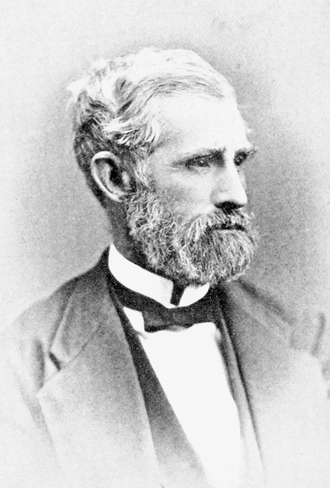
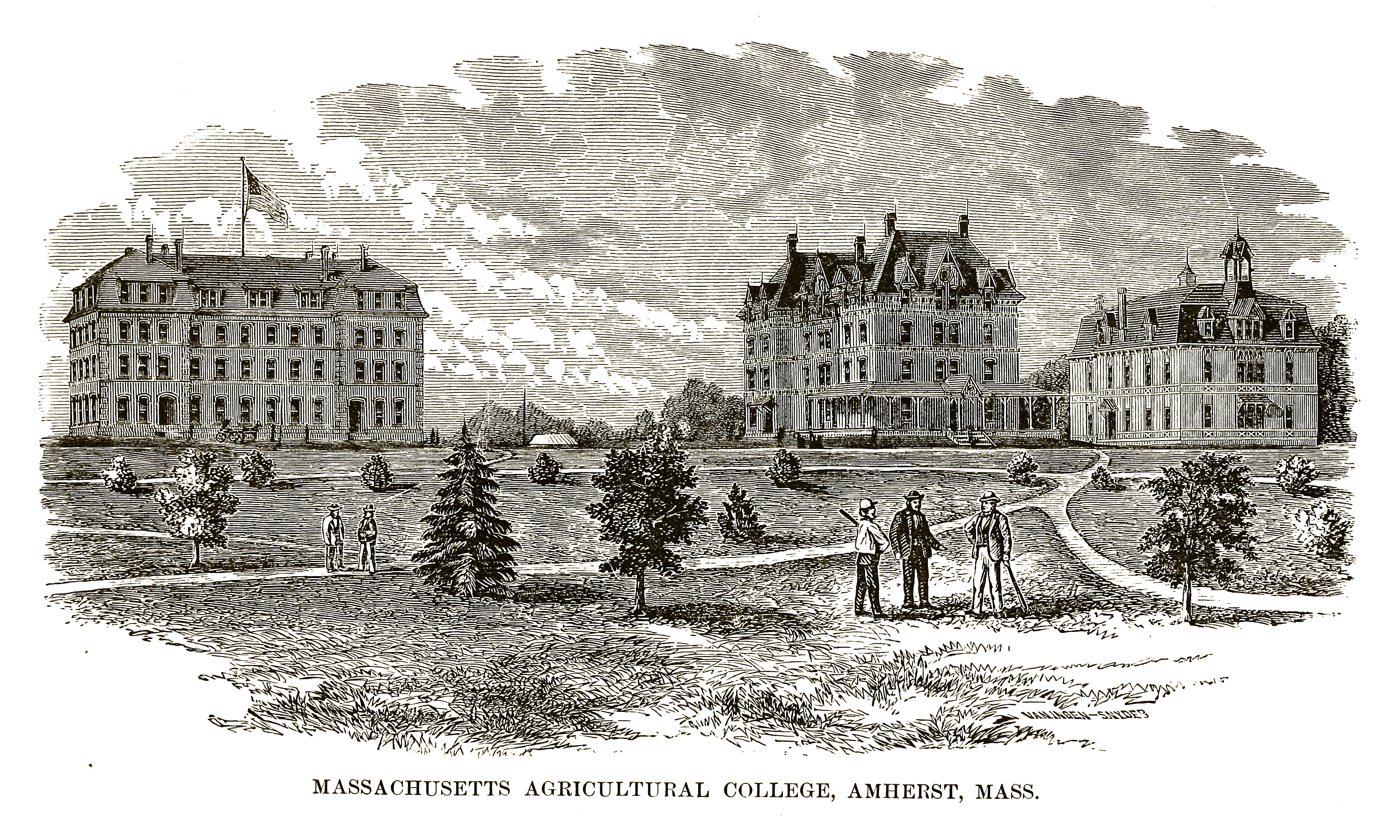


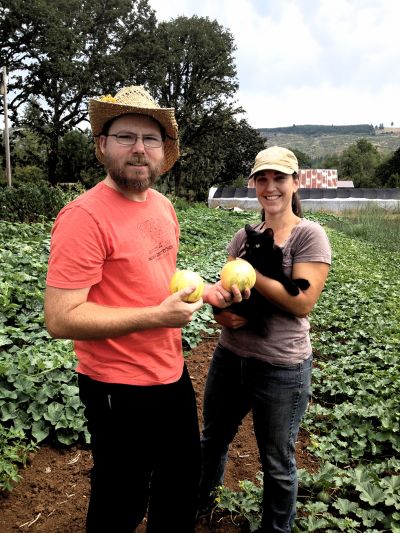

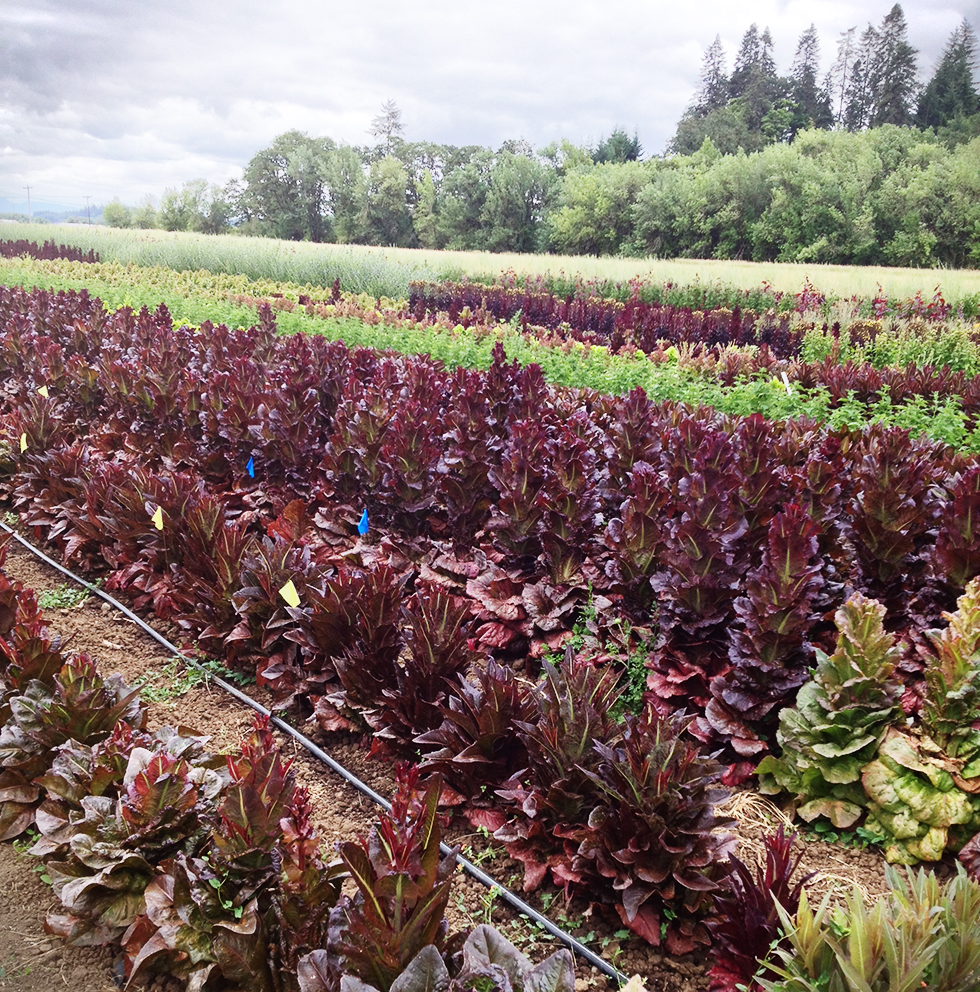

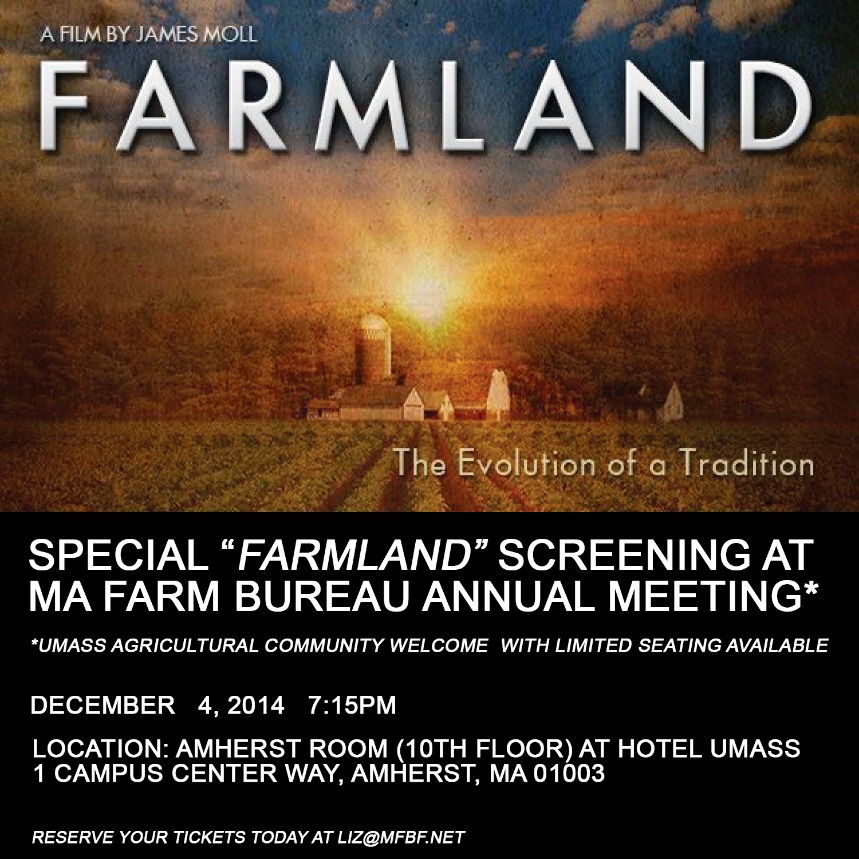
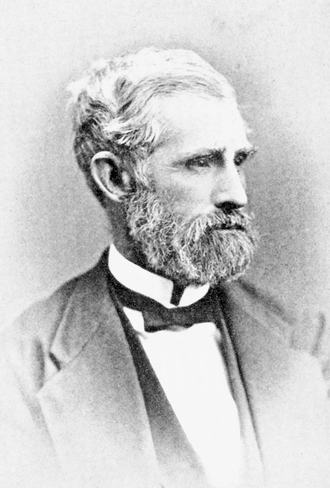
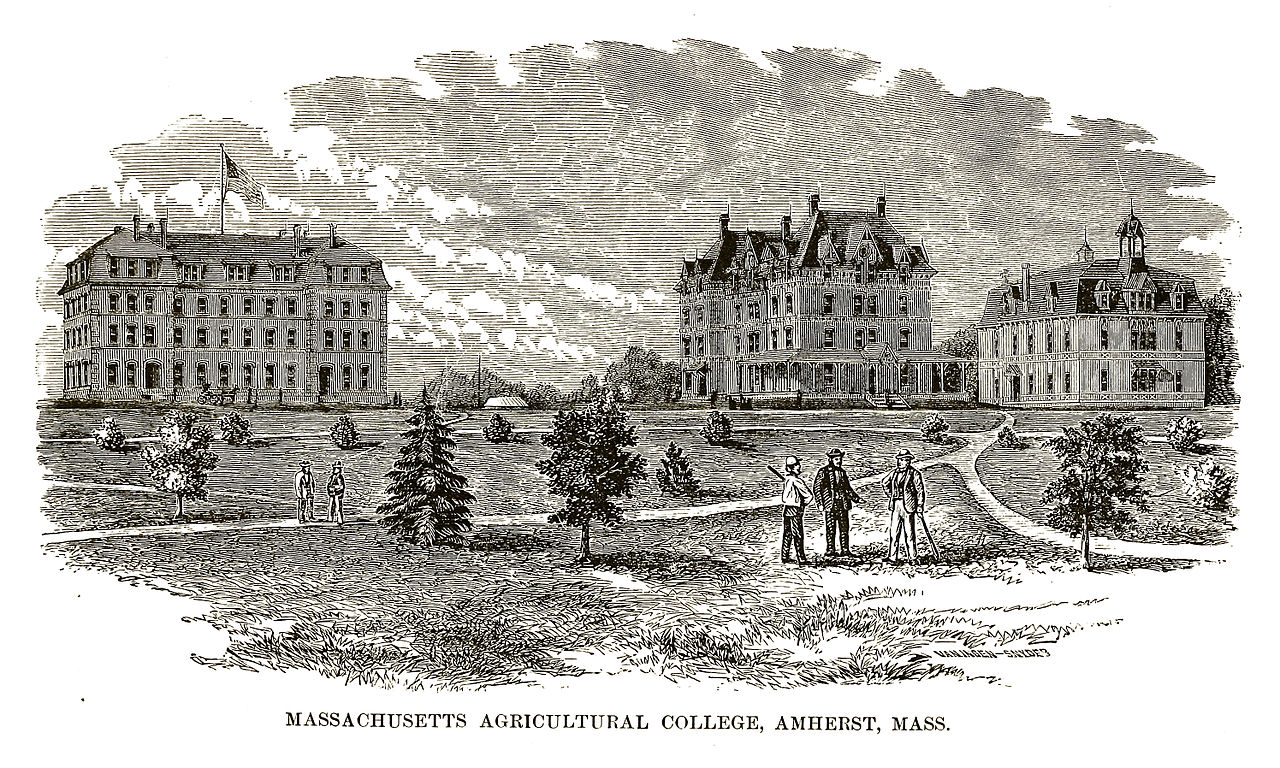



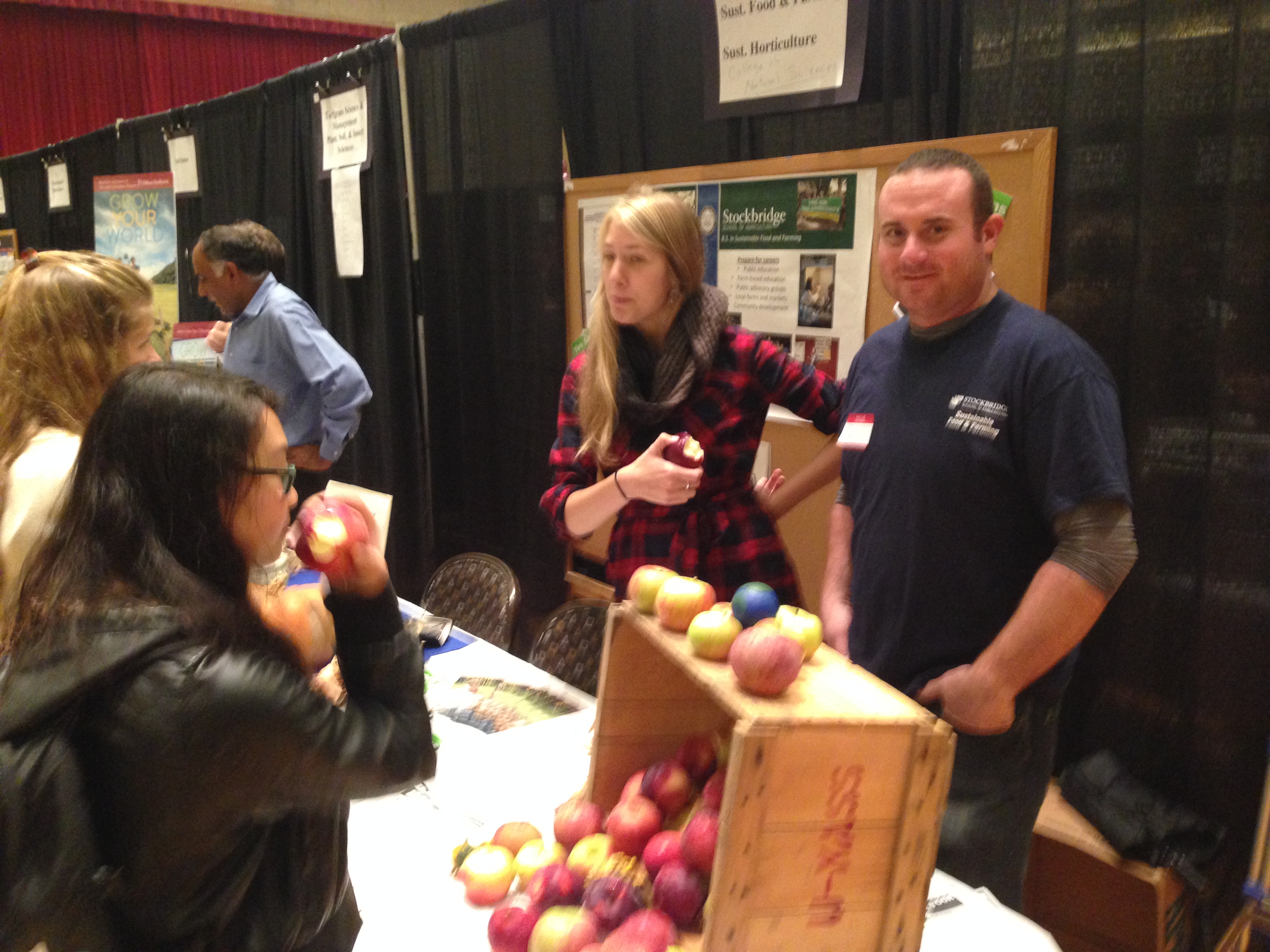

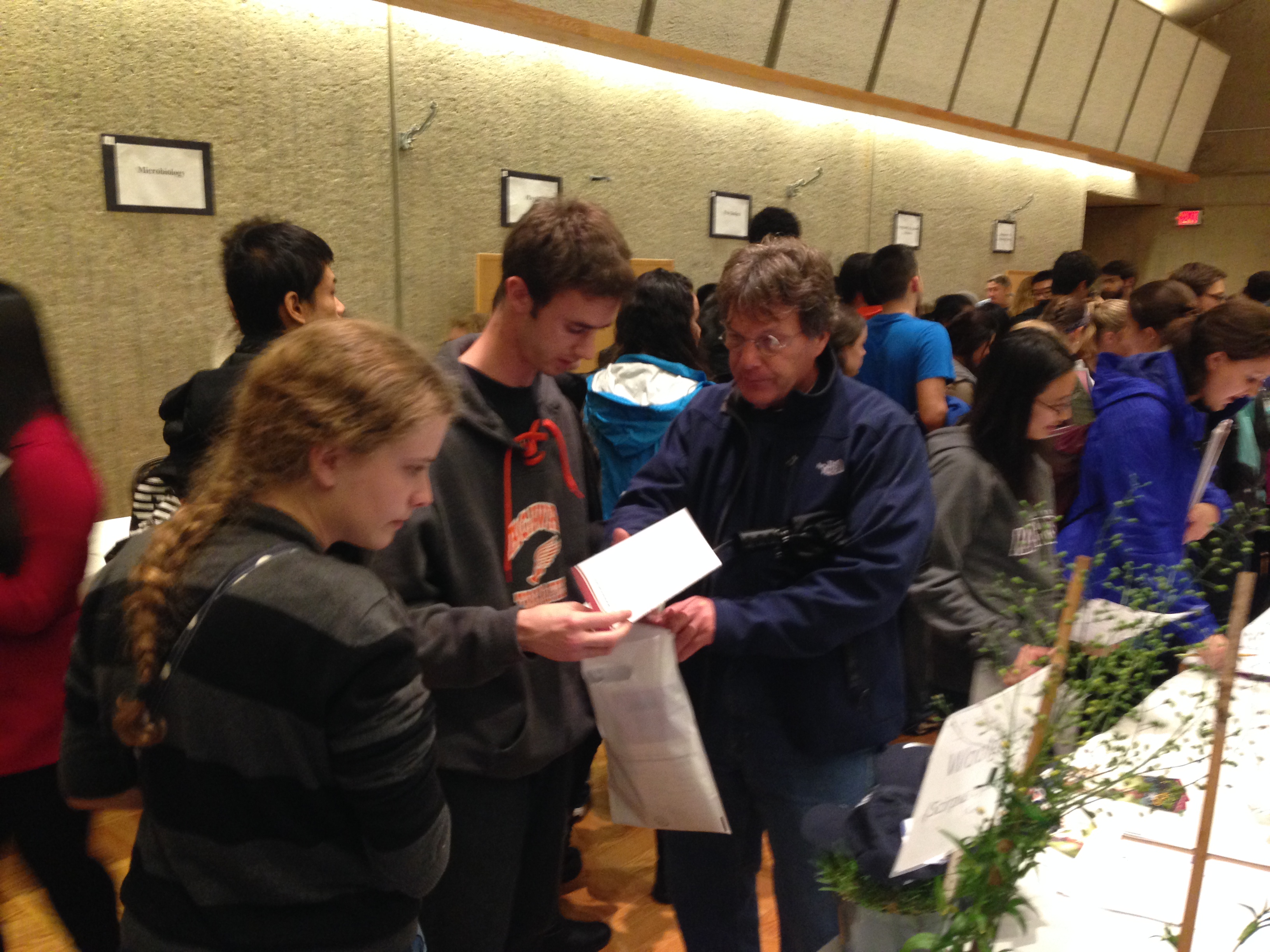

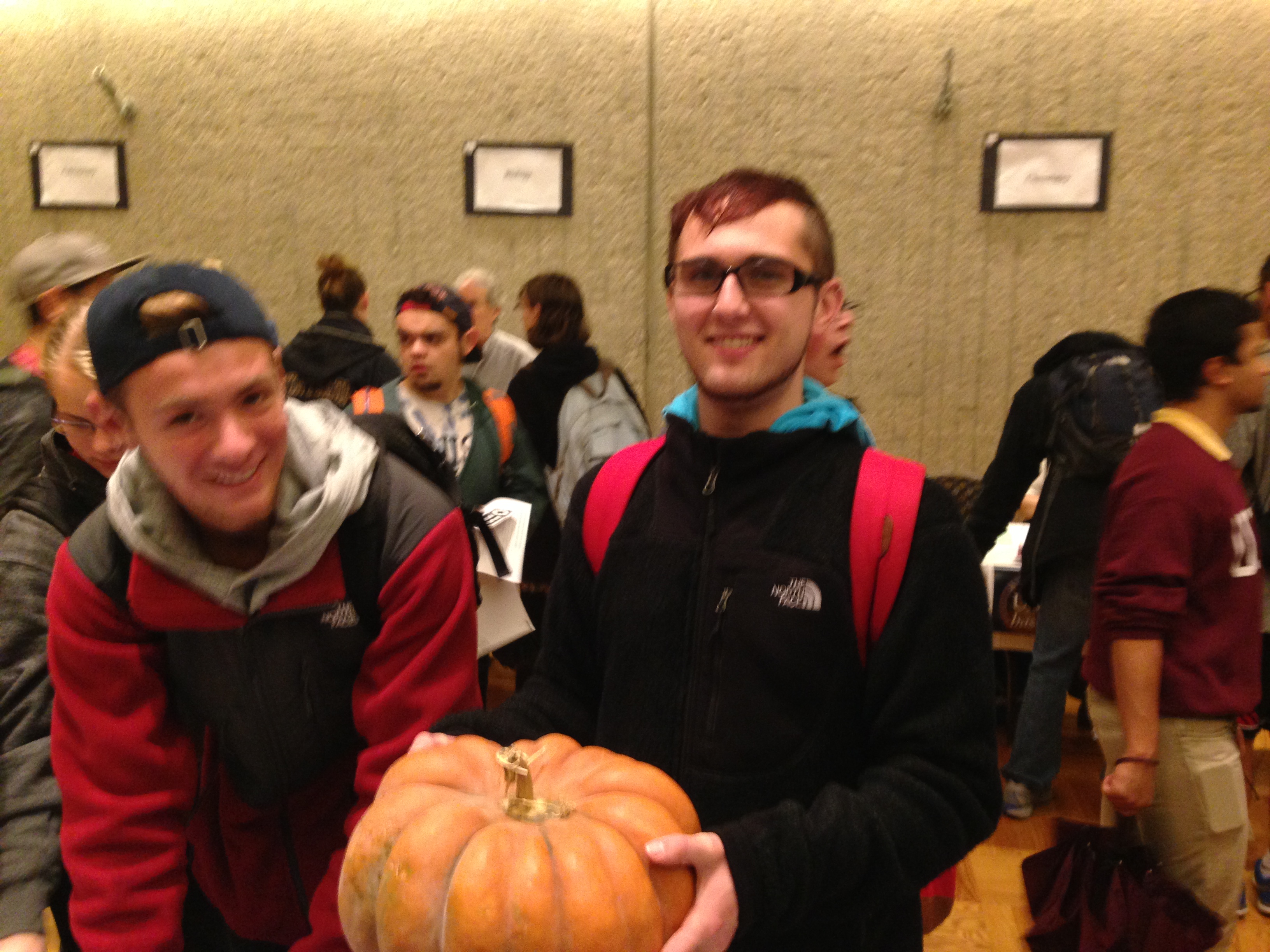
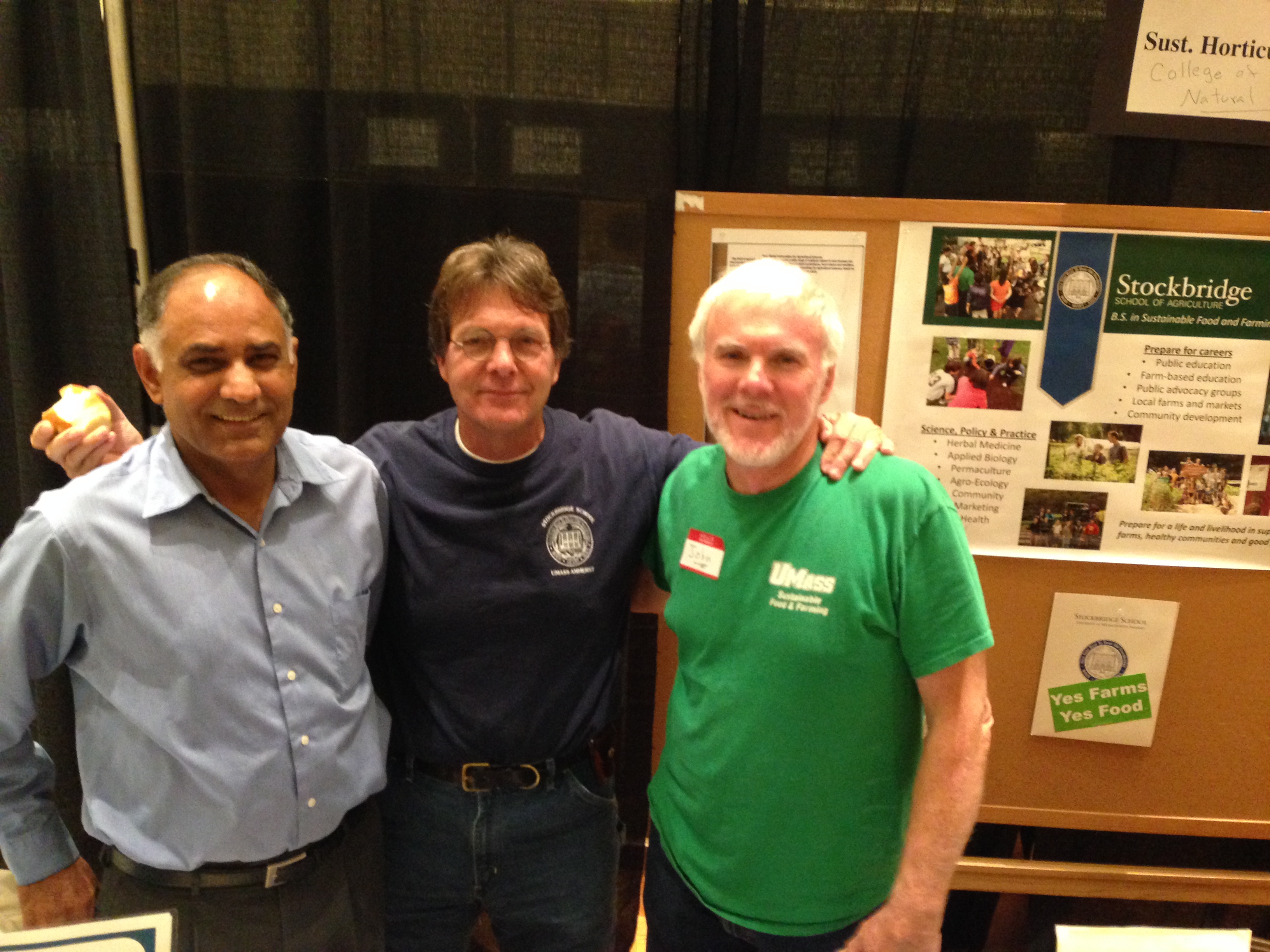
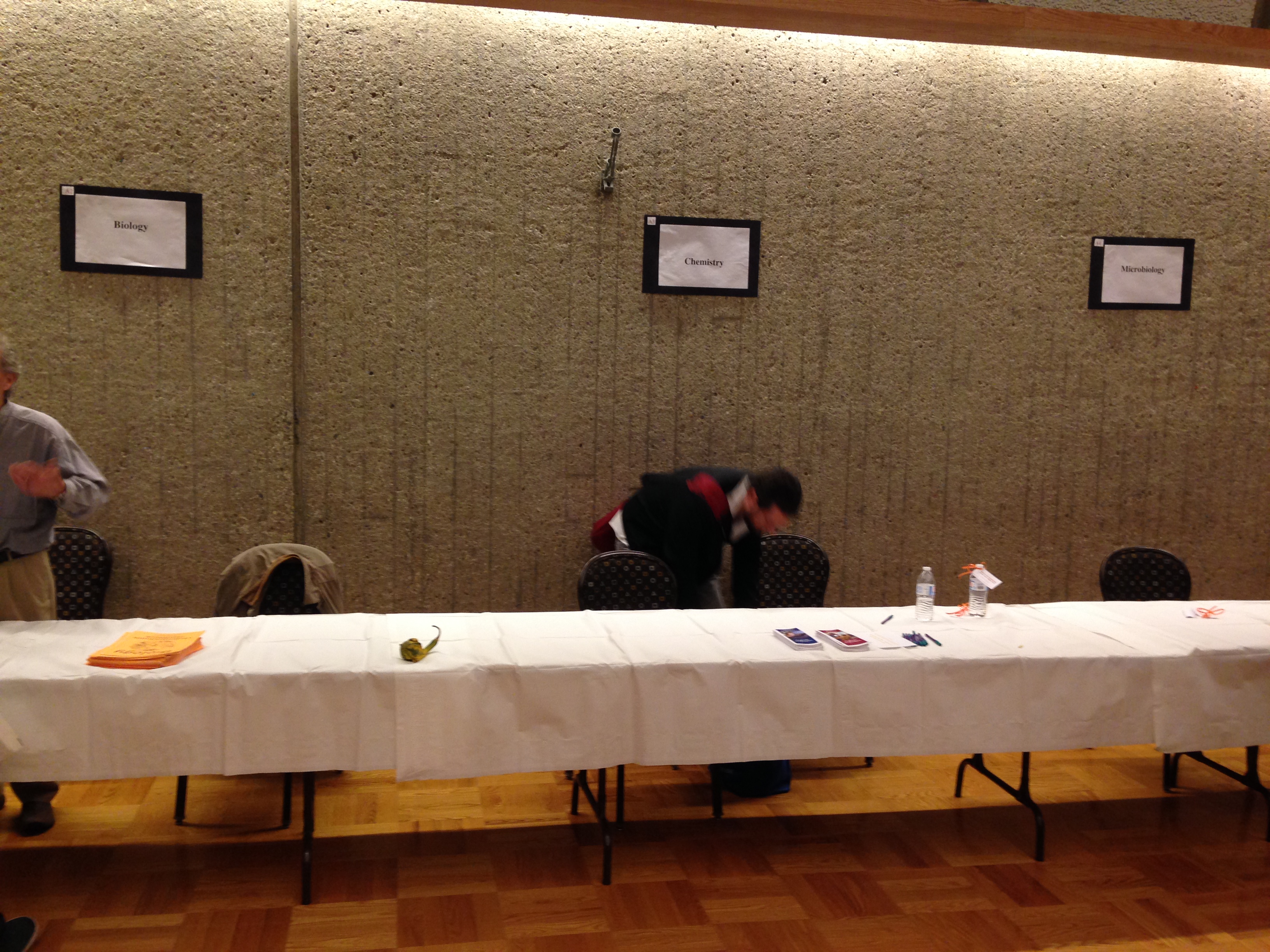


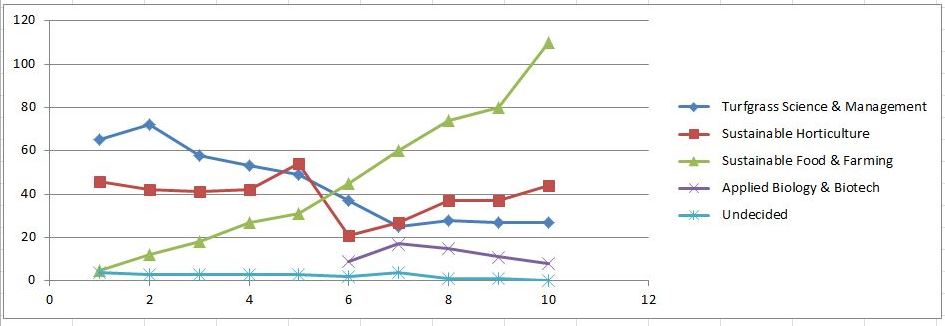 Per
Per


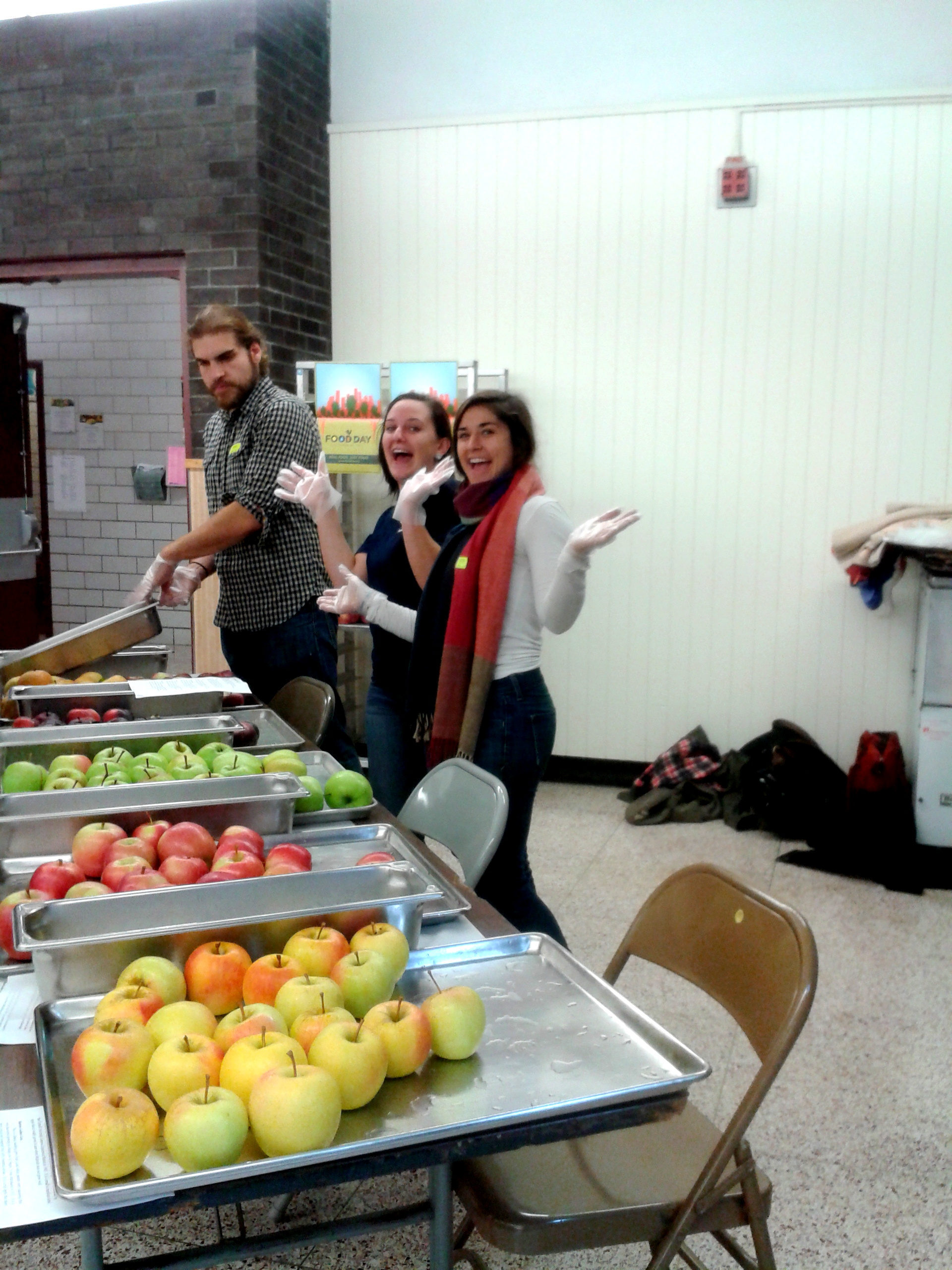
 UMass Sustainable Food and Farming