The UMass Stockbridge School of Agriculture, in partnership with Holyoke Community College and Hampshire College, has been awarded an $810,000 grant from the National Science Foundation to create collaborative programs combining sustainable agriculture with clean energy studies and share resources that will benefit students at all three schools.
“The main purpose of the grant is to marry what has for the most part historically been two separate sides of sustainability education – clean energy and agriculture,” said Kate Maiolatesi, coordinator of HCC’s Sustainability Studies program.
Much of the grant will allow the development of cross-campus courses that combine the strengths of existing programs at each of the three schools. The first of these joint courses is expected to begin in the summer of 2015.
Students from all three campuses will go to HCC to learn about clean energy and then go to UMass and Hampshire to study sustainable agriculture practices. The joint program is expected to create stronger pathways for students to transfer from HCC to Hampshire and UMass.
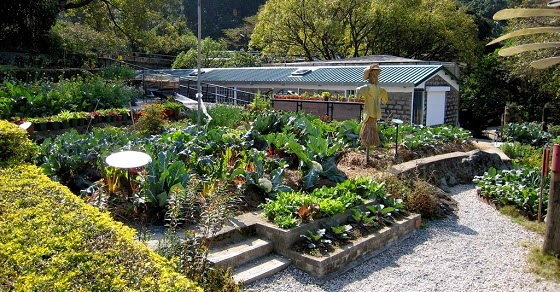
Another large portion of the grant will pay for new clean energy and sustainable agriculture equipment that will be used by students from all three schools. This will include a new micro-farm greenhouse demonstration and training facility at UMass and a mobile, solar powered refrigeration unit. HCC will install a new solar powered electric fence, along with composting and irrigation equipment as well as a wind turbine for its sustainability and permaculture gardens.
The grant will also pay stipends to students who want to do summer internships with clean energy businesses or local farms.
There is so much going on, and we can’t list it all here, but for a complete list check out our Culinary & Agriculture Events calendar. Don’t forget, Topsfield Fair runs through Columbus Day, October 13.
October 11 – 13: Harvest Hoedown, C.N. Smith Farm, East Bridgewater
In my last blog, I suggested that the big news coming out of the United Nations Climate Summit in N.Y. City – following the largest climate change march in history is……. what WILL NOT happen.
1. Divest UMass – The UMass Fossil Fuel Divestment Campaign (Divest UMass for short) is a dedicated student-led campaign organizing to confront the present and future issues created by climate change. Here is how to GET INVOLVED.
2. Divestment Massachusetts – College students, people of faith, environmentalists, economists, unions, mothers, and others converged on the State House on Sept. 10 to support S. 1225, a bill that requires MA to divest from fossil fuels! To support the effort to divest sign here – Divest Massachusetts from Fossil Fuels.
3. Mothers Out Front are mothers, grandmothers, and other caregivers who can no longer be silent and still about the very real danger that climate change poses to our children’s and grandchildren’s future. To connect to the Amherst group, go to; Amherst Mothers Out Front.
4. No Fracked Gas in Mass is working to stop the expansion of fossil fuel infrastructure in Massachusetts and to promote expanded efficiency and sustainable, renewable sources of energy and local, permanent jobs in a clean energy economy. Here are some suggestions on what you can do!
5. Climate Action Plan in Springfield – support the community actions of our neighbor to the south (and the biggest polluter in Western Mass). Help us to plan the march from the North End of Springfield to Springfield City Hall on October 20! Join the planning meeting October 1, 2014 at 6:00 pm at the South Congregational Church, 45 Maple Street, in Springfield.
Many people are motivated to take action around climate change out of anger or fear, and this is a powerful force. For those of us who are motivated out of love for all of creation and concern for our sisters and brothers living in poverty, you are invited to join us on Saturday, October 4 from 2:00-4:00pm to learn from each other and ask…..
So…. what would Francis do?
For those of you who agree with Pope Francis, who tells us that environmental degradation is the “sin of our time,” join us to celebrate the Feast of St. Francis at the Newman Catholic Center at UMass on Saturday, October 4 from 2:00-4:00pmin the Burke Lounge for a program titled From St. Francis to Pope Francis to You – Creating a Climate for Solidarity.
This workshop and discussion will focus on climate change from the perspectives of “the two Francises” – St. Francis and Pope Francis. If you are curious about the Catholic position on climate change and its impact on the poor, PLEASE JOIN US!
SUBJECT: Docket ID: EPA-HQ-OAR-2013-0602 – Support Carbon Pollution Standards for Power Plants
Dear Administrator McCarthy:
As someone who takes climate change seriously, I have committed myself to advocate on behalf of the poor, the vulnerable, and all of Creation.
Unfolding climate change caused primarily by our consumption of fossil fuels threatens both the planet and poor people. In light this,I believe that the Environmental Protection Agency’s proposed rule to regulate carbon pollution from existing power plants (Clean Power Plan Proposed Rule) can help limit damaging greenhouse gas emissions, uphold human life and dignity and demonstrate a greater respect for the planet.
At the same time, I urge the EPA to offer clear guidance to states on how to protect low-income individuals and families from undue suffering under potential energy rate hikes. Additionally, I encourage the EPA to work with policymakers to help workers impacted by the Plan transition to other employment.
If such steps to protect poor and vulnerable populations are taken seriously, then I support the Clean Power Plan Proposed Rule, Docket ID: EPA-HQ-OAR-2013-0602.
Sincerely,
Send the email to: a-and-r-docket@epa.gov
Or send a letter to:
USEPA Headquarters
William Jefferson Clinton Building
1200 Pennsylvania Avenue, N. W. Mail Code: 1101A
Washington, DC 2046
Speculation to Advocacy: Reducing Carbon Pollution
In advance of a community conversation at the University of Massachusetts Catholic Newman Center on Saturday, October 4, 2014 from 2:00pm – 4:00pm, this article is being shared to help us think about “what would Francis do” about climate change?
For information on the public workshop and discussion,
From St. Francis to Pope Francis to You – Creating a Climate for Solidarity
In his Summa Theologiae, Thomas Aquinas distinguishes between two facets of human intellect: “speculative intellect which directs what it apprehends, not to operation, but to the consideration of truth; while the practical intellect is that which directs what it apprehends to operation” (I, q. 79, a. 11). Although each aspect has unique characteristics, Aquinas insists that the speculative and the practical “are not distinct powers” but together constitute the fullness of human intellect (I, q. 79, a. 11, s.c.). In other words, speculation and application are two sides of the same coin.
For political theologians, it is often a challenge to translate abstract speculation into concrete political advocacy. Although there are likely many reasons for this reality, it is a situation with which we should not be satisfied. It is always necessary, therefore, to identify and take action in situations where a direct connection between the speculative and the practical exists. One such opportunity arose earlier this summer with respect to climate change mitigation, and political theologians should now advocate around the proposed policy.
Clean Power Plan and U.S. Catholic Bishops
On June 2, 2014, the U.S. Environmental Protection Agency (EPA) proposed the Clean Power Plan by which to reduce carbon pollution from existing power plants. The EPA is accepting public comments about the Plan until mid-October, and Republicans in Congress are working to block, interfere with, and/or otherwise eviscerate the Agency’s proposed carbon pollution standards.
The Catholic Church has explicitly and repeatedly recognized climate change as a moral issue that threatens to compromise the commitments of Catholic Social Teaching (to learn more, visit the Catholic Climate Covenant). As such, the Church continues to call on persons of faith and goodwill to address this issue through both individual efforts and coordinated public policies.
Shortly before the release of the Clean Power Plan, Archbishop Thomas Wenski of Miami wrote a letterto the Environmental Protection Agency on behalf of the United States Conference of Catholic Bishops (USCCB) as chair of its Committee on Domestic Justice and Human Development. There, the Archbishop highlighted the USCCB’s awareness that “the best evidence indicates that power plants are the largest stationary source of carbon emissions in the United States, and a major contributor to climate change” (indeed, carbon dioxide is the most pervasive greenhouse gas, and fossil fuel power plants—which account for 38% of U.S. carbon pollution—are the largest collective domestic source of this pollution).
In light of this reality, Archbishop Wenski emphasized that “the USCCB recognizes the importance of finding means to reduce carbon pollution.” Towards this end, the Archbishop insisted that carbon pollution standards be guided by key aspects of Catholic teaching: “Respect for Human Life and Dignity, Prudence on Behalf of the Common Good, Priority for the Poor and Vulnerable, Social and Economic Justice, Care for Creation and Participation.”
On July 30, 2014, Archbishop Wenski followed this initial letter to the EPA with anotherthat he co-authored with Bishop Richard E. Pates of Des Moines, Chair of the USCCB Committee on International Justice and Peace. There, the two bishops declared: “We … welcome the setting of standards to reduce carbon pollution from existing power plants and thereby mitigate climate change. We support a national standard to reduce carbon pollution and recognize the important flexibility given to states in determining how best to meet these goals.” Towards this end, the bishops reiterated the ethical criteria for carbon pollution standards that the USCCB articulated in its May letter to the EPA. Finally, the bishops “call[ed] upon our leaders in government and industry to act responsibly, justly and rapidly to implement such a [national carbon pollution] standard.”
Catholic Advocacy around Carbon Pollution Standards
In light of the Clean Power Plan and the Catholic bishops’ advocacy around a national carbon pollution standard for existing power plants, political theologians have a distinct opportunity to practically engage in an active policy debate. Although their contributions to the discussion might take several forms, there are two immediate steps that political theologians are able to take. First, political theologians can submit faith-based public comments to the EPA. In addition, political theologians can contact their elected officials and urge them to support a national carbon pollution standard for existing power plants that is animated by Catholic teaching.
Conclusion
In his 1990 World Day of Peace Message, St. John Paul II recognized that “the ecological crisis is a moral issue” (emphasis in original). Guided by this awareness, Pope Emeritus Benedict XVI asserted in his encyclical Caritas in veritate that “the Church has a responsibility towards creation and she must assert this responsibility in the public sphere” (# 51). The current debate around the Clean Power Plan is a unique opportunity within which to bring Christian theology to bear on an active policy debate. As such, I urge political theologians to, at the very least, submit faith-based comments about the proposal to the EPA and let their elected officials know that they support a national carbon pollution standard guided by Catholic teaching.
Daniel R. DiLeo is a Flatley Fellow and Ph.D. student in theological ethics at Boston College. His interests lie at the intersection of Catholic social thought, virtue ethics, political theology, environmental ethics and economic justice. He is especially focused on the issue of climate change and discernment of how Catholic theological ethics can contribute to deliberations about national climate policy. He has worked as Project Manager for the Catholic Climate Covenant since 2009, and was also a Mission Intern at the Catholic Health Association from 2009-2011. He is also a regular contributor to Millennial Journal.
For more writing and thinking about systems thinking, see my blog posts here. And for more, check out the writings of my friend and farmer, Karl North.
Group Norms for Ag. Systems Thinking – Fall ’14
Start with a breath at the “right” time
Respect each other: our backgrounds, learning styles, as people!
Embrace silence during discussions
Be there for each other
Yes, AND….
Move up and move back
Use active listening
Practice personal accountability and follow-through
It’s okay to bring food for everyone if we are conscious of allergies and clean up afterwards
We’ll take a stretch break
Respect end time for class
Lean into discomfort
Offer forgiveness to each other
Principle Resources Used to Develop the Course
Krafel, P. 1999. Seeing Nature: Deliberate Encounters with the Visible World. Chelsea Green Publishing Company, Vermont.
Capra, F. 1996. The Web of Life. Anchor Press.
Holmgren, D. 2009. Future Scenarios. Chelsea Green Press.
Meadows, D.H. 2008. Thinking in Systems. Chelsea Green Press
Senge, P. et al. 1994. The Fifth Discipline Fieldbook: Strategies and Tools for Building a Learning Organization. Doubleday Publishing Group.
Wilson, K. and G.E.B Morren Jr. 1990. Systems Approaches for Improvement in Agricultural and Resource Management. MacMillan Pub. Co.
Additional Resources Used to Develop the Course:
Alexander, C., Ishikawa, S., and M. Silverstein. 1977. A Pattern Language. Oxford University Press.
Anderson, V. and L. Johnson. 1997. Systems Thinking Basics: From Concepts to Causal Loops. Pegasus Communications.
Bateson, G. 1972. Steps to an Ecology of Mind. Chandler Publishing.
Bohm, D. and D. Peat. 1987. Science, Order, and Creativity. Bantam Books
Capra, F. 1996. The Web of Life. Anchor Press.
Carroll, C.R., Vandermeer, J.H., and P. M. Rossett. 1990. Agroecology. McGraw-Hill Press.
Edwards, C.A., Lal, R., Madden, P., Miller, R.H., and G. House. 1990. Sustainable Agriculture Systems. Soil and Water Conservation Society Press.
Few, A.A. 1996. System Behavior and System Modeling. University Science Books.Holmgren, D. 2009. Future Scenarios. Chelsea Green Press.
Lazlo, E. 2001. The Systems View of the World: A Holistic Vision for Our Time. Hampton Press.
Margulis, L. and D. Sagan. 1995. What is Life? University of California Press.
Meadows, D.H. 2008. Thinking in Systems. Chelsea Green Press
Senge, P. et al. 1994. The Fifth Discipline Fieldbook: Strategies and Tools for Building a Learning Organization. Doubleday Publishing Group.
Varela, F. J. 1999. Ethical Know-How: Action, Wisdom and Cognition. Stanford University Press.
Von Bertalanffy, L. 1968. General Systems Theory. Braziller Press
Wilson, K. and G.E.B Morren Jr. 1990. Systems Approaches for Improvement in Agricultural and Resource Management. MacMillan Pub. Co.
Even as the United States government continues to push for the use of more chemically-intensive and corporate-dominated farming methods such as GMOs and monoculture-based crops, the United Nations is once against sounding the alarm about the urgent need to return to (and develop) a more sustainable, natural and organic system.
The cover of the report looks like that of a blockbuster documentary or Hollywood movie, and the dramatic nature of the title cannot be understated: The time is now to switch back to our natural farming roots.
The findings on the report seem to echo those of a December 2010 UN Report in many ways, one that essentially said organic and small-scale farming is the answer for “feeding the world,” not GMOs and monocultures.
According to the new UN report, major changes are needed in our food, agriculture and trade systems, with a shift toward local small-scale farmers and food systems recommended.
Diversity of farms, reducing the use of fertilizer and other changes are desperately needed according to the report, which was highlighted in this article from the Institute for Agriculture and Trade Policy.
It also said that global trade rules should be reformed in order to work toward these ends, which is unfortunately the opposite of what mega-trade deals like the proposed Trans Pacific Partnership (TPP) and the U.S.-EU Trade and Investment Partnership (TTIP) are seeking to accomplish.
The Institute noted that these pending deals are “primarily designed to strengthen the hold of multinational corporate and financial firms on the global economy…” rather than the reflect the urgent need for a shift in agriculture described in the new report.
Even global security may be at stake according to the report, as food prices (and food price speculating) continue to rise.
“This implies a rapid and significant shift from conventional, monoculture-based and high-external-input-dependent industrial production toward mosaics of sustainable, regenerative production systems that also considerably improve the productivity of small-scale farmers,” the report concludes.
You can read more about the report from the Institute by visiting their website here.
Wait a sec. Nick, Caspar and Jared: Are those unconventional girls’ names now, like Kennedy and Reagan? Because if you’re looking for a farm-fresh tomato in the city this summer, you’re likely to find a woman growing it.
In recent years, chefs, writers, academics, politicians, funders, activists and entrepreneurs have jumped on the hay wagon for urban agriculture. New York now counts some 900 food gardens and farms, by the reckoning of Five Borough Farm, a research and advocacy project.
Deborah Greig, the agriculture director of East New York Farms in Brooklyn.Credit Erin Patrice O’Brien for The New York Times
Yet city farmers will tell you that the green-collar work on these small holdings is the province of a largely pink-collar labor force. Cecilia, not Caspar. And they’ll provide the staffing numbers to show it.
This is where the speculation begins — and, inevitably, the stereotypes. Are women more willing to nurture their communities (and also their beet greens)? Are men preoccupied with techie farm toys like aquaponics? Is gender the reason the radio at the Queens Farm washing station is always stuck on Beyoncé and Alicia Keys?
More significant, if urban ag work comes to be seen as women’s work, what will that mean for the movement’s farming model, mission and pay?
Counting New York’s urban farmers and market food gardeners can seem like a parlor game: part math, part make-believe. Data on gender is scarce to nonexistent.
The federal 2012 Census of Agriculture isn’t much help. It suggested 42 farm “operators” in New York were men and 31 were women. But the census published data from just 31 city farms. (Under confidentiality rules, it doesn’t reveal which farms participated.) And its definitions fail to capture New York’s unique abundance of nonprofit farms and community gardens.
A “farm,” by census standards, is any place that grew and sold (or normally would have sold) $1,000 worth of agricultural products in a year. Yet surveys from the parks department’s GreenThumb program suggest that some 45 percent of the city’s hundreds of community food gardens donate their harvest to neighborhood sources and food pantries. Blair Smith, who compiles New York’s data for the U.S.D.A., explained, “Those are not farm businesses, at least from our standpoint.”
New York’s urban farmers — the people who actually work in the field — offer a sharply different head count of what you might call bulls and cows. Of the 19 farms and farm programs that contributed information for this article, 15 reported having a majority of women among their leadership, staff, youth workers, students, apprentices and volunteers. (Of the remaining four, one claimed gender parity and another hired two men this summer from a seasonal applicant pool of 18 men and 30 women.)
It’s a snapshot, not a statistically rigorous poll. Still, the farms, from all five boroughs, represent a broad sample of New York’s particular growing models: a commercial rooftop farm; community gardens; and farms attached to schools, restaurants, parks, churches, housing developments and community organizations. The sample included two city-based farmer-training programs and two out-of-state sustainable farm-education schools and fellowships. These are the types of programs that mold future urban farmers.
Describing their own farms and gardens, managers suggested that women make up 60 to 80 percent of field workers, organizers and educators. Applicant pools are similarly unbalanced for summer postings, internships and certification programs.
Farm School NYC, an affiliate of the food-access nonprofit Just Food, “is 100 percent female-run,” said its director, Onika Abraham. But then, she added, “I’m the only staff person.”
More important, Farm School NYC receives 150 to 200 applicants annually for professional agriculture instruction. For this year’s entering 30-person class, Ms. Abraham said, “the breakdown for applicants was 76 percent women and 24 percent male.” (Applications for next year are open through Sept. 15.)
The gender divide appears to exist in salaried posts and volunteer work alike. For 18 years, Steve Frillmann has led Green Guerillas, which provides support and materials to more than 200 community garden groups. Most of these sites lie in central Brooklyn, Harlem and the South Bronx, and three-quarters of their volunteer leaders, he estimates, are women. So, too, women typically represent 75 to 80 percent of the applicants who want to join Green Guerillas on an AmeriCorps stipend.
It’s challenging work, and Mr. Frillmann, 49, is happy to hire whoever wants to do it. “To be honest with you, we’ve never really lifted and looked under the hood and tried to figure out why,” he said.
At the extreme, Edible Schoolyard NYC runs a food and garden-teaching program with two growing plots and a staff of 16. Sixteen of these employees are women.
Kate Brashares, 40, who is the group’s executive director, said: “It’s a little unusual we don’t have any men on staff at the moment. There are usually one or two.”
Ms. Brashares believes that the diversity of her employees should reflect the low-income communities where they work. That diversity includes gender. “We talk about wanting to get a few more men in the place,” she said. “It’s funny, we haven’t talked about it that much, though. It’s one of those things that just sort of happened. As we’ve gotten bigger, it’s gotten more obvious.”
Less obvious is why the discrepancy exists. Ms. Brashares speculated about the prevalence of women in education and nonprofit careers. But ultimately, she concluded, “I honestly don’t know.”
Onika Abraham, right, the director of Farm School NYC, at the Governors Island Urban Farm with Katherine Chin.Credit Robert Wright for The New York Times
Karen Washington has been observing the community garden scene for more than 25 years from her plot in the Garden of Happiness, a couple of blocks from the Bronx Zoo. She also organizes the Black Urban Growers conference and a long list of other food and neighborhood initiatives. This roster may explain why Ms. Washington, 60, is prone to make work calls at 10 o’clock at night, say, after teaching a class on season-extending hoop houses, or on the way home from running La Familia Verde farmers’ market.
Nowadays, she sees a cohort in her gardens that she gauges to be 80 percent women. “It was more 60/40 back in the early days,” Ms. Washington said. “Mostly Southern blacks and Puerto Ricans. They were in their 40s and they’re in their 80s now.”
Explaining the gender gap on a community garden level, she said, “a lot of it, from my point of view, had to do with the fact women lived longer than men.”
The stereotypical image of an American farmer may be a white man of late middle age captaining a $450,000 combine in an air-conditioned cockpit, high above a flokati of corn. But this profile is a poor match for farmers in Latin America, the Caribbean, Asia and Africa — that is, the groups that often predominate in New York’s community food gardens. Nevin Cohen, 52, an assistant professor at the New School and an expert on urban food issues, points to a telling statistic from a United Nations special rapporteur: “Women are 80 percent of the global agricultural labor force.”
Many of the women who farm in Bushwick with Maggie Cheney possess experience in small-scale agriculture. They’ve long fed their families out of extensive kitchen gardens (as Colonial-era immigrant women did in New England). Ms. Cheney, 30, is the director of farming and education for the food-access group EcoStation:NY. And on the group’s two growing sites, she said: “I tend to work with a lot of recent immigrants from Africa, Mexico, Ecuador. And the islands: Jamaica and Haiti, the Dominican Republic.”
Ms. Cheney’s youth interns (five boys and nine girls) include the children of some of those immigrants. Yet wherever they were born, the youth growers at the Bushwick Campus Farm do not approach New York gardens as virgin soil.
Their fathers may have experienced farm labor as a harsh and exploitative activity, Ms. Cheney said. These men are not necessarily the easiest people to recruit for a hot afternoon of unearthing potatoes. By contrast, “I see a lot of girls interested because they may have that positive relationship to being the ones who cook in the family and buy the food in the market.”
She added, “The ones that I see, their roles at home are very gendered.” The politics of the New York “food justice” movement start at progressive and run to radical. But the connection between women and urban farming can appear traditional and even conservative.
Born and raised on the Lower East Side, Ms. Abraham, 40, recalls visiting her family’s black farmstead in Alabama. She said: “My grandfather grew row crops: cotton, soybeans and corn. He worked the fields. My grandma was home with a large vegetable garden and chickens.”
Put another way: “My grandmother grew the food; he grew the money. And I think maybe the scale of what we do in the city relates more to this kitchen garden.”
Maggie Cheney, center, the director of farms and education for the food-access group EcoStation:NY, at the Bushwick Campus Farm in Brooklyn with Kristina Erskine, left, and Iyeshima Harris, garden managers. Credit Erin Patrice O’Brien for The New York Times
The Five Borough Farm project identified three commercial farms in New York, all of them sophisticated rooftop operations. Gotham Greens, for example, runs two (and soon three) climate-controlled hydroponic greenhouses in Gowanus and Greenpoint, Brooklyn. (Next stop: Jamaica, Queens.)
Of the company’s 50-odd employees, more than two-thirds are men, said the company’s 33-year-old co-founder, Viraj Puri. “At Gotham Greens, our approach is more plant-science and engineering focused and less ‘gardening’ focused,” Mr. Puri wrote in an email. He posited that this orientation may account for the different gender skew.
Beyond these few enterprises, the city’s farms exist not just to grow okra, but to advance a shopping list of social goals. These include recreation, nutrition, public health, environmental stewardship, ecological services, food access and security, community development, neighborhood cohesion, job training, senior engagement and education. We ask a lot of our gardens.
Mara Gittleman, who jointly runs the Kingsborough Community College farm program, at the end of Manhattan Beach, often sees urban farming likened in the news media to “the new social work, or this thing you do for poor people.” In response, Ms. Gittleman, 26, founded the research project Farming Concrete to record and publicize the surprising yield raised in community gardens. These are vegetables that come not from the glittering glass on high, but from the ground up.
Be that as it may, if you’re trying to account for why so many college-educated women are attracted to urban agriculture, nearly everyone agrees that a social calling is the place to start. “Definitely, the most visible influx is young white people, and I’m one of them,” Ms. Gittleman said.
Kristina Erskine, a garden manager at the Bushwick Campus Farm in Brooklyn.Credit Erin Patrice O’Brien for The New York Times
If urban farming were just about the crops, it would be cheaper and easier to do it 50 miles north. Urban farming, however, is not a solitary or single-minded activity. Along with the weeding and pruning, the job description includes sowing community interest and reaping grants.
Kennon Kay, the 31-year-old director of agriculture at Queens Farm, said: “What makes this farm different is the element of public interaction. We have over half a million visitors a year.”
The farm staff currently numbers two men and five women, which is actually a bumper crop of gents. And Ms. Kay takes pains to say: “I don’t want to knock the guys. They’re great.”
That said, in her experience, “Women have been extremely effective in multitasking, planning, communicating and being the representatives of this public organization.”
Inevitably, there’s an inverse to saying that women are attracted to work that involves children and the elderly, caring and social justice. In short, you’re implying that men don’t care, or care a lot less.
This is what you might call the men-as-sociopaths hypothesis (M.A.S.H.), and Nick Storrs, 29, who manages the Randalls Island Park Alliance Urban Farm, does not buy it. “I would refute the claim that guys are sociopaths,” he said.
Having cheerfully dispensed with that libel, he struggled to explain why men seem less interested in the social goals of community agriculture. “I don’t know, because I am interested in it,” Mr. Storrs said.
So where are the men?
“Wall Street,” Ms. Washington said (a theory that may not be inconsistent with M.A.S.H.).
The Bronx’s vegetable plots, she will tell you, are not insulated from what goes on outside the garden gates. “A lot of our men of color are incarcerated,” she said. “Huge problem. If you tell a 21-year-old man just out of jail to go into farming, he’s going to look at you as if you have two heads.”
Or in the words of Esther Liu, 25, a rooftop farmer at the Hell’s Kitchen Farm Project: “Men? Perhaps they want a living wage.”
The time has arrived, as it always does, to talk about money. The pay for community-based agriculture starts low and climbs over time to not much higher.
Ms. Cheney endeavors to pay her youth interns $8.30 to $9.30 an hour and the Bushwick farm managers $17 an hour. Farmers with longer tenure may earn $20. These are decent wages in agriculture, Ms. Cheney said. Yet they’re hardly enough to keep up with the climbing rents in a gentrifying neighborhood.
Deborah Greig, 32, oversees the crowded market at East New York Farms, leads the gardener-education program, manages dozens of youth workers, and cultivates specialty crops like dasheen and bitter melon. (And some 65 to 70 percent of her farm staff, apprentices and youth interns are women.) “I get paid $37,000 a year,” Ms. Greig said. “I started at $28,000 or $29,000, which was huge at the time. And I have insurance included.”
The permanence of the job, which she has held for seven years, is a boon to Ms. Greig and to the community where she works. Ultimately, Ms. Abraham, of Farm School NYC, argues that only stable employment will make urban farming viable for neighborhood women — and men — who lack the safety net of a college degree and family support.
For her part, Ms. Greig is probably underpaid. Don’t tell anyone, but she would do the job for less. “People don’t expect to be paid very much doing this work,” she said. “It’s a labor of love to a certain extent. I don’t think we’ve come up with a hard and fast model to pay people exceedingly well for doing nonprofit urban-farming work.”
The way we eat — the kind of food we buy, where we get it, how it’s prepared — has become a part of our identity, a guiding force that shapes how we live. It unites us. And divides us. Food brings people together in communal functions. But it also pits ideologies against each other: vegetarians vs. carnivores; all-natural evangelists vs. the convenience crowd; calorie counters vs. indulgence seekers.
No matter where individuals fall on the spectrum, we are a country obsessed with food. And with a seeming explosion in allergies, heightened concerns over obesity, increased scrutiny of chemical additives and growing environmental concerns, there’s more attention being paid to what we eat than perhaps ever before. After decades of stocking our kitchens with meat, cheese and noodles, while simultaneously dieting to reverse the effects of all those fatty, starchy foods, we may be realizing that food isn’t just a way to live, it’s a lifestyle choice.
“We’re beginning to get to where Eastern culture has been for thousands of years,” says Mark Erickson, provost at the Culinary Institute of America and a certified master chef, “which is the idea that food is medicine, and we cannot disassociate our health with what we eat.”
So where is this all headed?
USA WEEKEND asked some experts: How will Americans be eating in five years? Here’s what they said about the future of food:
Food that’s good for us will taste better
A growing number of chefs, food bloggers and restaurateurs have started dedicating themselves to promoting healthy food that’s also delicious. They’re finding ways to cut down on fat, sugar and meat and still make money. Vegan bakery Sticky Fingers in Washington, D.C., won the Food Network’s Cupcake Wars, and restaurants such as New York City’s Dirt Candy and Philadelphia’s Vedge are making vegetables the star of great meals.
“There are plenty of restaurants and food purveyors out there that are working to make nutrient-dense food delicious and appealing and exciting,” says Trish Watlington, owner of two farm-to-table restaurants in San Diego where she supplies most of the produce for the menu from her garden.
At Andrea McGinty’s vegan restaurant chain, Native Foods Cafe, most customers aren’t even vegan. “I bet one person would raise their hand,” she says. “All the rest are looking for a better way to eat.”
Betting that she’d be able to make vegan food — or a plant-based diet, as she likes to call it — mainstream, McGinty moved the headquarters of Native Foods from the health-nut hills of Palm Springs, Calif., to Chicago (a city once known as “Hog Butcher for the World”). McGinty was confident she’d be able to change people’s minds about her “hippie dippie” food, and she has designs on growing from 17 stores across the USA to more than 200 in the next five years.
McGinty says vegan is going mainstream as people seek healthier, convenient options. Included on her menus is a “bacon cheeseburger” made with seitan, a gluten-based meat alternative; caramelized onions; tofu bacon; and battered dill pickle chips. “When you can have something that tastes delicious and it feels good in your body and you feel like you did something good for yourself, why wouldn’t it sell?” she says.
Farm-to-table will trickle down
The advent of farmers markets and farm-to-table restaurants have brought food sourcing to the forefront of Americans’ consciousness. Not only are strawberries grown an hour away fresher and better tasting than the ones that spent days or even weeks being shipped across the country, buying that produce supports the local economy and a more sustainable way of eating.
But it’s also expensive. Access to locally grown produce is still relatively reserved for those who can afford it and have the time to seek it out. “Unfortunately, if you’re a single mom and work two jobs and can barely put food on the table, you don’t have time to think about where your food came from,” Watlington says.
That could change if the country collectively demands better food. Watlington hopes that support of local farmers and farmers markets, and programs that introduce kids to gardening, will help make access to better food a national movement. “If you can have this happen on a grass-roots level, then it spreads so it’s in the community. No one is dieting. They’re just eating better food.”
Erickson says the farmers market movement already serves a broader purpose. “As people begin to look for (fresh food) in their everyday dining occasion, they put more pressure on grocery and other fast-food segments of the industry.”
That has already started to happen, with companies such as Subway being called out for the chemicals they’ve added to food. Other major brands, such as Cheerios, are eliminating genetically modified organisms. And Panera Bread is removing artificial ingredients from everything on its menu by the end of 2016.
“I think the only way that it really changes is if it becomes a class-divide issue,” says Mary Beth Albright, a Washington, D.C.-based lawyer who specializes in sustainable food issues and a former contestant on Food Network Star. “Like, look, all these other people are getting better things than you. Either … the traceability movement is going to be reserved for the elite, or everything is going to have to go sustainable.”
We might see ads for broccoli
Another way to make produce cheaper? Get people to buy more of it. Processed foods dominate the grocery business, luring us with million-dollar marketing campaigns that show up on our TV screens as commercials with our favorite athletes or celebrities, in magazine ads and in eye-catching store displays.
“The problem is there’s no branding in produce,” says Michael Moss, author of Salt Sugar Fat, about the processed-food industry. “The power of marketing is huge.”
The produce growers could catch on, he says. “Absolutely we could see the produce association getting Madison Avenue-savvy and competing with snack foods and the rest of the grocery store in that arena,” says Moss, who last year challenged an ad agency that has worked with Coca-Cola and General Mills to come up with an ad campaign for broccoli.
Unfortunately, the government doesn’t necessarily make it easy, Moss says. “How do we level the playing field for people financially to make it possible for them to eat healthier in ways that aren’t going to cripple their budgets?” he asks. “One big way would be to totally rethink the Department of Agriculture. Because so much of that agency’s energy and research and development money is going into crops that fuel the highly processed food industry. And so little of it is going into making fruits and vegetables less expensive.”
We’ll see the end of the diet
Can a country that has built an entire industry around dieting decide to, instead, just eat healthier all the time?
Groups of people have adopted gluten-free diets even though they’re not technically allergic to gluten. Others prescribe themselves the Paleo diet, eating the protein-heavy, dairy-free foods of our Stone Age ancestors.
When it comes to eating, we are a country of extremes, Erickson says, opting for meat and potatoes or doing a complete 180 and going only for vegetarian and non-fat food. But what were once considered specialty diets are starting to be combined and adopted into a more balanced and manageable way of eating all the time.
“Somewhere in between is something we cannot treat as a diet, but treat as an accepted and sought-for lifestyle as it relates to what we consume,” Erickson says.
And as fresher, local food not only becomes more widely available but is prepared in ways that are appealing, “eventually people will make more choices of things that are better for them because it tastes good,” Watlington says, “not because they’re necessarily disciplined about it.”
Study: Malnutrition Among Cognitively Intact, Noncritically Ill Older Adults in the Emergency Department (Annals of Emergency Medicine) http://bit.ly/1mJSK4b
Study: Undernutrition in older adults across the continuum of care: nutritional assessment, barriers, and interventions. (PubMed) http://1.usa.gov/1pNWJS0
620,000 Military Families Rely on Food Pantries to Meet Basic Needs (The Nation) http://bit.ly/VLKObf
The Only Food Poor Americans Can Afford Is Making Them Unhealthy (The Atlantic) http://theatln.tc/1rTyXm4
Poverty Is Not Inevitable: What We Can Do Now To Turn Things Around (Yes) http://bit.ly/1slam9RThese 10 Companies Control the World’s Food (Huffington Post) http://huff.to/VAQWDo
Urban Farms Build Resilience Within Singapore’s Fragile Food System (NPR) http://n.pr/1oR4OpTThe Beef With Beef Labels: Do You Know What They Mean? (Takepart) http://bit.ly/1sVgmdsThese folks feed their family with a garden in their swimming pool – and you can, too (Grist) http://bit.ly/1o6li7I
Specialty Food And Agriculture Startups Are Ripening In Greece (NPR) http://n.pr/1pbq0GwBlack Americans, Cut Off From the Land (savvyroo via Yes!) http://bit.ly/1mmV2q3
The ticks that are going to turn us all into vegetarians (Salon) http://bit.ly/1mmYUat
Shifting Climate Has North Dakota Farmers Swapping Wheat For Corn (NPR) http://n.pr/1pQXngv
Forget Moving to the City – These Kids Are Farming Their Dreams at Home (Takepart) http://bit.ly/1p00cb
Is producing more food to feed the world beside the point? (Grist) http://bit.ly/1taGr78
EPA and USDA poised to approve herbicide with serious long-term health effects (GM Watch) http://bit.ly/1oW1Qj
New herbicide and GE seeds: EPA and USDA poised to approve herbicide with insufficiently unexamined cumulative and long-term health effects (ScienceBlogs) http://bit.ly/1sVwID1
EPA Launches Criminal Investigation Against Tyson Foods (Triple Pundit) http://bit.ly/1uXoefa
Now Your Food Has Fake DNA in It (Mother Jones) http://bit.ly/1rlYPvmStudy: Distribution of Glyphosate in Chicken Organs and its Reduction by Humic Acid Supplmentation (Japan Poultry Science Association) http://bit.ly/VJLHBJ
Apocalypse of the “Happy Meal”: Worshiping the Golden Calf (Truthout) http://bit.ly/VHunNqRemoving Antibiotics from Meat Production: The Market is Leading the Way (National Geographic) http://bit.ly/1sktmFE
Don’t let Americans put hormones and pesticides in our dinner, warns Jamie Oliver as he launches latest food offensive (Daily Mail) http://dailym.ai/1rIXSsq
McDonald’s Cozies Up to Foodies to Prove Its Food Is ‘Real’ (Takepart) http://bit.ly/1rZINmv
Former Rancho Employees Charged With 11 Felonies (Food Safety News) http://bit.ly/1tinzmy
Grass-Fed Waste: Thousands of Pounds of Gourmet Beef Trashed in Recall Fallout (Takepart) http://bit.ly/XAR6wv
This meat substitute is all-natural and GMO-free – and might be making people sick (Grist) http://bit.ly/1p00fUm
Food additives on the rise as FDA scrutiny wanes (Washington Post) http://wapo.st/1tdIR3L
GRAS Concerns are Back in the Media Spotlight (Food Safety News) http://bit.ly/1q13FKISalmonella Trial Illustrates Glaring Holes in Food Safety Control (Triple Pundit) http://bit.ly/1tFnaZ
By RICHIE DAVIS – Recorder Staff- Tuesday, August 19, 2014
When buying tomatoes or lettuce, there’s so much to consider: freshness, price, taste, farming practices — and fairness.
With a resurgence of interest in Pioneer Valley agriculture, some advocates have begun to look for ways to make sure that workers at farms are treated fairly, with livable working conditions, and that food co-ops and farm-product businesses do the same to their employees and farm suppliers.
The Agricultural Justice Project — with roots going back more than a dozen years in Florida, North Carolina, New Jersey and New York, and overseas — has been reaching out more recently to farmers in this region as well.
Looking at “Food Justice Certification” is an outgrowth of the organic certification effort that Portia Weiskel says she and other growers were involved in with formation of the Northeast Organic Farmers Association decades ago. But when federal organic standards were adopted, the “fairness” principle that was part of the original concept for organic was forgotten.
According to Elizabeth Henderson, the Northeast Organic Farmers Association representative on the Justice Project’s management committee, that meant “fairness to people who work in agriculture, fair pricing for farmers, fair treatment for farmworkers and fairness to animals and fairness to all creatures. The creatures got into the national organic program, but the people didn’t.”
Weiskel added, “It’s attempting to say the principles that apply (to how food is grown) also need to work on a larger scale, including people working on farms. This is taking in the whole system, this group of people trying to get social justice, earth justice and food justice.”
Weiskel — who runs a one-woman, five-acre farm that produces eggs, kale, rhubarb and raspberries — and farmer Jon Magee of Greenfield began approaching area farms this winter, along with food co-ops and food-product manufacturers.
After helping edit an international food justice document a couple of years ago, Weiskel said she volunteered to work on approaching Franklin County farmers to gauge their level of interest on working toward certification standards, such as “farmer provides at least one day of rest out of every seven,” “regular and timely payments” and “clear multi-step conflict resolution process with no retaliation.”
Many of the standards, Weiskel said, are probably already being met.
“I feel my presence is not about saying, ‘How much are you paying your workers?’ but in asking, ‘Do you regard what you’re paying your workers a fair, living wage? Do you house your workers on the farm?’ and whether they’d be interested in certifying for their customers that they do.
“Some of these people are operating on a shoestring, and a lot don’t have any employees,” acknowledged Weiskel. “If I had to pay anybody here, I couldn’t do it.”
Most of the farmers and the co-ops she and Magee have approached have been open to the idea, although one told her, simply, “I can’t fill out any more paperwork.”
Admittedly, this is the busiest time of year for many farmers to be approached — especially with the idea of adding another chore to their load and the expense of certification fees.
Yet, Magee said, “It seems everyone is interested in knowing more. Most are cautious because they perceive more of a managerial burden. … In the Pioneer Valley, no one has anything against farmworkers and people are fairly fond of their farms.”
Even for farmers who do not become certified, he said, many seem interested in having a conversation about issues like spelling out a clear conflict resolution process, having defined policies about sickness and maternity or paternity benefits, or health and safety protections.
“It’s a chance to bring agricultural justice to the table,” said Magee.
At Red Fire Farm in Montague, Ryan and Sarah Voiland said they are committed to trying to improve pay and conditions for their workers who number between 60 to 80 at the peak of the growing season between their Montague and Granby farms. And they said they are willing to look at the specific standards of the project, for which the Pioneer Valley Workers Center at the University of Massachusetts would be the independent certifying agent.
At the same time, Ryan Voiland said, “We feel we’re stuck between what consumers are willing to pay for their produce and what we’re able to pay our workers,” while at the same time being asked to donate food under the banner of “food justice” to the Food Bank of Western Massachusetts.
“We try to think about the right way to do things, and to make it viable for the people who work for us. And we’re in favor of having a just workplace and strive toward that,” he said. “But I’m not super-excited about having another set of forms to fill out.”
Philip Korman, executive director of Community Involved in Sustaining Agriculture in South Deerfield, agreed that many local farmers care deeply about providing liveable wages, along with better benefits and fair working conditions for employees, although “they have a lot less wiggle room than larger, industrial agriculture enterprises. And the challenge is when the farmers are working under the same conditions as their laborers.”
He added, “The way this needs to move is how we can get more people to understand that the price to grow food that’s healthy and fresh and sustainable for all of us is more than what we’ve been paying.”
Claire Hammonds of the Pioneer Valley Labor Center said the hope is to get a couple of farms involved initially to raise awareness among consumers and other farmers.
“Some farms are already largely meeting these standards,” she said. “But they don’t necessarily have these standards and these policies written down.”








 UMass Sustainable Food and Farming