
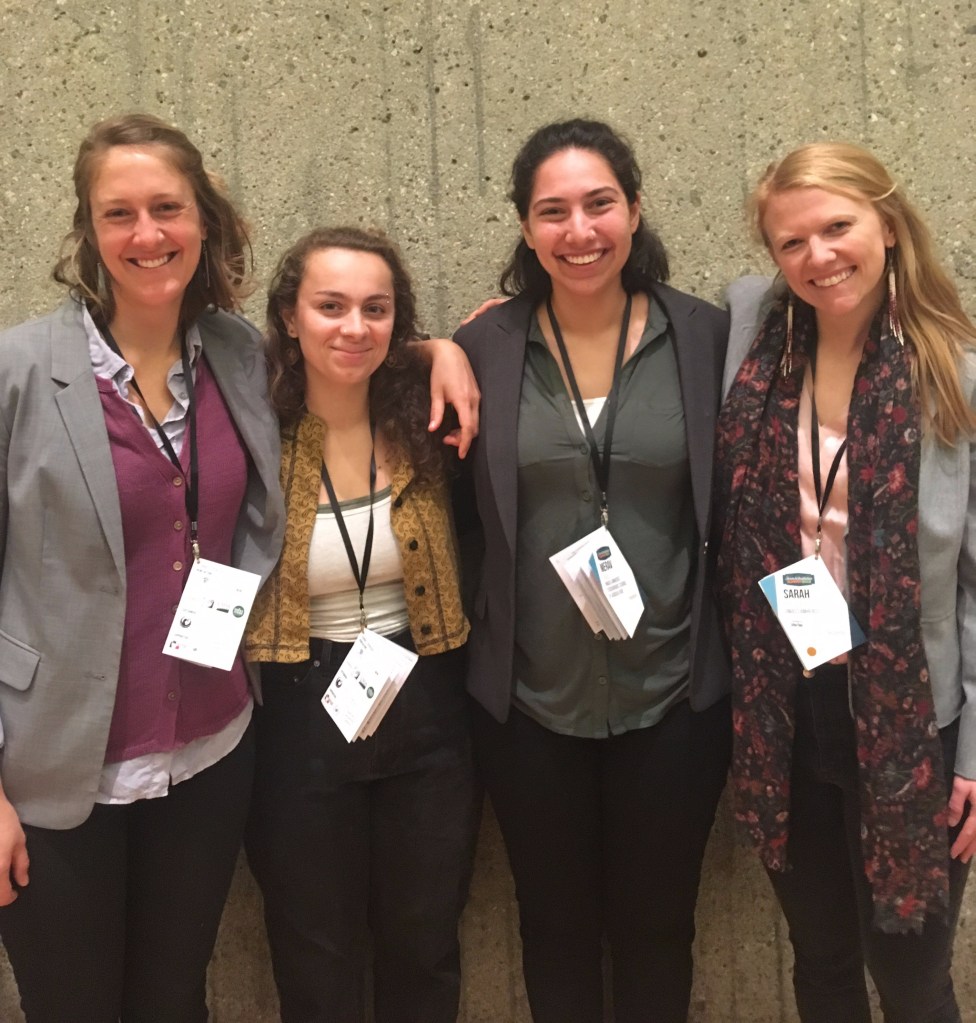
Leila Tunnell: Amherst School Garden Educator, Jordan Lake & Merav Dale: UMass SFF Students and Sarah Berquist: Sustainable Food & Farming Faculty before their presentation
On April 2-4, University of Massachusetts Amherst was the host of the Farm to Institution New England (FINE) Summit. The themes for the summit were “Celebrate, Mobilize, Transform” and the program included field trips to local farms, food processing facilities and, of course, the UMass Agricultural Learning Center. Presenters and attendees gathered from a breadth of sectors: education, culinary, farmers, policy/advocacy, county jails, and government.
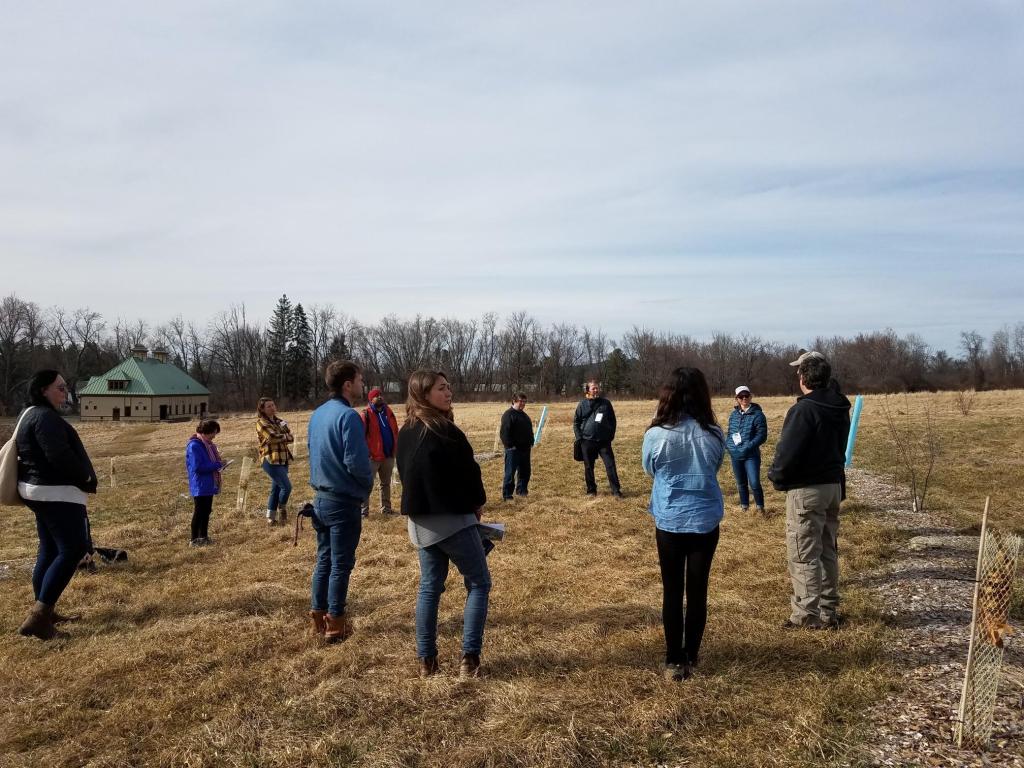
UMass Faculty Amanda Brown, Nicole Burton & Lisa DePiano give a tour of the UMass Agricultural Learning Center with help of SFF students
Each day, in the presentations and audience, there was a strong presence of UMass Continue reading UMass students and faculty engage in farm to institution conference

 Cuba’s former agricultural system—large-scale, mechanized, and “modern”—relied on a steady flow of resources from the Soviet Union. Before 1989, the Soviet Union sent vast amounts of agricultural supplies, including petroleum, pesticides, fertilizers, and livestock vaccinations, to fuel Cuban production of cash crops such as sugar cane, tobacco, coffee, and bananas. The Cuban government prioritized the export of cash crop products and imported 80 percent of what the country consumed: rice, beans, grains, and vegetables. To the north, the United States enforced el bloqueo, an economic blockade against Cuba first established in 1960, prohibiting the flow of goods, including food and medicine, to and from the socialist island. When the Soviet Union collapsed in 1989, severing the supply of food and farming supplies, Cuba woke up to a major economic crisis. Without food imports to stock the grocery store shelves, how would Cuba feed 11 million people? How would Cubans till the soil without diesel to run the tractors? How could farmers stimulate yields without synthetic fertilizers? Agricultural production plummeted dramatically. State farms and factories shut down. Livestock perished. Precious cash crops rotted in the fields and, as a result, revenue from exports crashed.
 degree program in the Stockbridge School of Agriculture, Sarah Berquist, was chosen as the 2019 recipient of the Massachusetts Distinguished Service Award by Phi Kappa Phi, the nation’s oldest, largest, and most selective all-discipline honor society. According to society President, Professor Theresa Y. Austin, the UMass Chapter recognized Ms. Berquist for her outstanding service to the University in ways that are consistent with the Society’s motto of “Let the love of learning rule.”


 UMass Sustainable Food and Farming