Jessica Wisniewski’s two children play among old beehives during a CISA sponsored tour of Warm Colors Apiary, Thursday, May 26, 2016 in South Deerfield. RECORDER STAFF/ANDY CASTILLO
——————————————————–
SOUTH DEERFIELD — The air suddenly becomes thick with angry bees as a beekeeper, garbed in white, removes the cover from a beehive at Warm Colors Apiary and searches for a queen.
Inside the swarm, the overpowering sound of wings beating against air is almost as strong as the permeating scent of raw honey, which drifts up from the cluster of hives, across a small farm yard and into a quaint building, where a group of about 20 local farmers, chefs, students and business owners have gathered for a tour of the apiary to learn both about the farm, and about honey production in the Pioneer Valley.
“We have currently about 800 (hives) that are primarily honey producing colonies, another 200 raise queens,” says Dan Conlin from the front of the room.
Conlin, who has kept bees since he was 14, owns the apiary on South Mill River Road, along with his wife Bonita Conlin. Throughout the year, the apiary produces honey, pollinates farmers’ crops, sells beeswax candles and beekeeping supplies, and offers educational classes to aspiring beekeepers.
By Naila Moreira – Daily Hamphshire Gazette – June 9, 2016
I’ve always had a thing for creepy crawlies. I was the kid who always caught the wasp stuck in the classroom to let it out the window. I’ll still crouch to move a worm from the sidewalk into the grass.
So when a colleague of mine, Sara Eddy, started her first beehive, I devoured her Facebook posts about the process. And this spring, I had a chance to visit her and her bees.
Dan Wright holds a frame of Sara Eddy’s bees. Wright, who owns about 20 hives, mentors Eddy. NAILA MOREIRA
The hive sat pertly in her Amherst backyard, painted lavender and protected from bears by an electric fence. The smoker she uses to calm the bees waited in her driveway, puffing a stream of gray into the air from its metal spout.
Asked about bee stings, Eddy shrugged it off. “Last year I was stung three times,” she said. “But one of them was in front of Seelye,” the building at Smith College where Eddy works.
Her teenage children are less relaxed, she said, yet still attracted. “My daughter gets freaked out. But she’s an artist, and bees are turning up everywhere in her art.”
There’s just something compelling about bees. At age 29, Sylvia Plath – among our region’s most well-known poets – embarked on the adventure of beekeeping. The fuzzy yellow-brown insects soon swarmed into her writing, inspiring her famous sequence of bee poems.
Plath’s queen bees are metaphors for feminine power, leaders of an army of infertile female workers who protect the hive, collect food, and raise young.
“I stand in a column/ Of winged, unmiraculous women,” wrote Plath in her poem “Stings.” “Honey-drudgers. /I am no drudge.”
Besides Plath, our region has other special connections to honeybees. The walls of Seelye Hall have been home to a huge community of 40,000 bees for more than a decade. A 2012 effort to move the bees failed because the hive’s exact location couldn’t be found.
Beekeeping ‘father’
The creator of the modern beehive, Lorenzo Langstroth, also lived and worked here, serving as pastor for Greenfield’s Second Congregational Church in the 1840s and ’50s. Sometimes called “The Father of American Beekeeping,” he was celebrated June 4 at the church’s yearly Bee Fest.
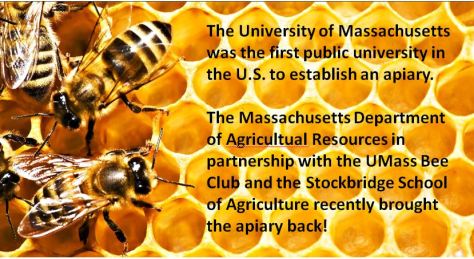
And the first university apiary program in the nation was founded at the University of Massachusetts.
Students from the UMass Beekeeping Club are installing the new hives at the UMass Apiary.
Story continued…..
In Eddy’s backyard, I watched her honey-drudgers scurry near their long, slender queen on a hive frame pockmarked with brood cells and pollen.
Eddy said she began keeping bees in part to do her share to fight back against the phenomenon of colony collapse disorder. Since 2006, an average of 30 percent of all hives yearly have failed to survive, according to USDA statistics. This past year saw a 44 percent hive loss nationwide.
But she soon found she was in for as much of a challenge as beekeepers everywhere.
Varroa mites
Her first hive contracted the bane of beekeepers: varroa mites. These tiny tick-like pests are an invasive species first documented in the United States in 1987. Despite Eddy’s efforts to overcome the infestation, the hive succumbed. By spring, the bees were dead.
“They’re little vampires, sucking the blood out of bees,” said Dan Wright, Eddy’s beekeeping mentor, who owns about 20 hives at Hampshire College, Small Ones Farm in Amherst, and near the UMass Hadley farm. “But varroa itself won’t kill bees, it’s the disease load they’re passing around from bee to bee.”
Hives infested by varroa often survive the summer but fail in winter, when bees can’t leave the hive and must survive off their summer reserves of honey and strength.
A battle has also been raging over whether a new class of pesticides used since the 1990s, neonicotinoids (known as neonics), are partly responsible for colony collapse.
Neonics aren’t sprayed on fields but instead applied to seeds before planting, theoretically making them safer. Growing plants take up pesticide into their leaves and flowers as a “systemic” pesticides that only kills insects that eat the plant.
Used on crops that bees don’t pollinate like corn and soybeans, neonics shouldn’t reach bees. But in practice, bees may get exposed by several routes.
If not carefully handled, dust from treated seeds can waft away before and during planting. Studies have found neonics in soil, water, and bee favorites such as dandelions near treated crops. Known toxins to bees, neonics can also interfere with their navigation, according to controlled studies where bees were fed the pesticide directly.
But so far, just one 2015 study has linked the amount of neonics actually present in the environment to increased levels of colony collapse. And where neonics are common, other bee toxins are often present in even higher amounts – especially pesticides sprayed by homeowners to kill mosquitos and other pests, according to a separate 2015 study in the journal Nature.
“There is not enough evidence to call for a complete ban on the neonics – there are simply too many beekeepers successfully keeping healthy hives in areas of seed-treated crops,” notes professional apiarist Randy Oliver, who writes the blog ScientificBeekeeping.com.
Multiple stresses
Experts now believe that no single problem prompts colony collapse. Varroa, pesticides, global warming, and habitat loss can all stress bees. Weakened by one problem, the hive simply can’t survive the others.
“You can’t just blame pesticides, you can’t just blame one thing. It’s a lot of factors coming together,” said Dan Conlon, who owns Warm Colors Apiary in Deerfield. He added, however, that at least in New England, varroa mites “are the number one killers of bees.”
Conlon, who provides pollinator hives to farms, noted that farmers are often eager to work with apiarists to help minimize bees’ pesticide exposure, such as by spraying at night when bees aren’t active, or choosing non-persistent chemicals.
Conlon is also one of just 15 beekeepers nationwide USDA-certified to raise and sell Russian queens, a strain of bee resistant to varroa mites. Most honeybees today come from an Italian strain imported to the U.S. in the mid 1800s.
The Russian bees remove mites from the hive, grooming them off each other and the larvae. Conlon said his 1,200 hives, all housing Russian bees, no longer require chemicals for mite control.
“They live through the winter without any special attention, they take care of the mites pretty much by themselves,” he said. “They’re resistant to a lot of diseases. They’re just hardier than other bees.”
For the backyard beekeeper, this option may help provide a respite from the struggle to keep bees alive. “The future of beekeeping is like a three-legged stool,” said Alice Armen, a Montague resident who has kept bees for 16 years and recently bought three of Conlon’s queens. A broader gene pool including bees like the Russians, a decreased reliance on pesticides, and community sharing of knowledge and ideas will help bees recover, she said.
In terms of community, beginners hoping to own a hive can join the Franklin County or Massachusetts Beekeepers’ Associations for advice getting started and to meet potential beekeeping mentors. The Massachusetts Beekeepers’ Association will also offer hands-on workshops at its annual field day June 18 at the UMass Agronomy Farm in South Deerfield.
Eddy went into the 2015-2016 winter, her second year keeping bees, with two hives of Italian bees. In spring, she discovered one hive was empty, despite having had no mites. At first, she said, she was devastated. But then she opened her surviving hive.
The number of bees had doubled. One hive had simply moved in with the other – perhaps because it lost its queen, or had been disturbed by a mouse Eddy found living underneath.
“They’re amazing,” she told me, as she slid a frame vibrating with bees back into the hive. “Sometimes I think, maybe this hobby is too expensive, and too much work. Because it is a lot of work. And it’s a lot of mental work, a lot of worry.”
She smiled. “But then I come out here and I look at them, and … I just love them.”
Naila Moreira is a writer and poet who often focuses on science, nature and the environment. She teaches science writing at Smith College and is the writer in residence at Forbes Library. She’s on Twitter @nailamoreira.
The Stockbridge School of Agriculture teaches a course, STOCKSCH 166 – Practical Beekeeping, as part of the Sustainable Food and Farming degree program.
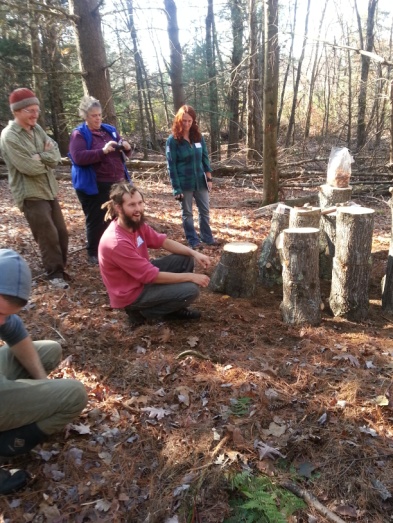
Willie Crosby teaches a class on growing mushrooms for the UMass Amherst Stockbridge School of Agriculture
HADLEY –Twenty-five year old William R. “Willie” Crosby grew up in a family of golfers in Boxboro, so it made sense that he went to school to study turf management at the Stockbridge School of Agriculture.
He earned a bachelor’s degree in plant soil science from the University of Massachusetts at Amherst in 2012, and he completed two internships at golf courses.
But he wasn’t satisfied with the work.
“I didn’t feel satisfied with the end result – a place for people to go and hit a ball around,” he said. “I want the end product (of what I do) to be something I’m really proud of and exciting to offer to my community.”
So, he changed courses and got involved in vegetable farming. Today, he is in the business of growing mushrooms.
“I didn’t see a huge opportunity to start a business in vegetable farming, so I started looking at mushrooms,” he said, noting that they are a medicinal food source and grow on waste products from other industries like sawdust or soybean hulls.
He learned how to grow mushrooms at a workshop in the state of Washington and during an internship in Nevada. He continues to learn “by trial and error,” he says, as well as from other farmers, buyers and Community Involved in Sustaining Agriculture.
Founder and owner of Fungi Ally in Hadley, Crosby began growing mushrooms in North Amherst in 2013 when he and a friend inoculated about 500 logs with shiitake mycelium.
In 2015 he moved the business to a 3,000-square-foot rented warehouse in Hadley where he and his two part-time employees harvest about 150 pounds of shiitake, oyster and lion’s mane mushrooms a week.
The process there begins with a delivery of oak sawdust from Lashway Lumber in Williamsburg – about 20 yards every couple of months.
Working with about 200 gallons of sawdust at a time, Crosby mixes in wheat bran, sorghum and gypsum to act as a nitrogen supplement. The mixture is wet and put in special 18-by-8-by-6 inch plastic bags with filters and then steamed to kill bacteria and unwanted fungi.
A small amount of mushroom mycelium is put into each bag; they are then sealed and stored in the warehouse where it takes one to three months to colonize. Holes are then poked into the bags – or the sawdust blocks are removed completely from the plastic – and placed in the fruiting (growing) room for about 10 days until the mushrooms are harvested.
Crosby eats mushrooms every day; he likes them sautéed, roasted and dried as well as in soups, salads and pate.
Mushrooms are harvested daily at Fungi Ally, where they are packaged then distributed to two area food co-operatives, restaurants and distributors for the Worcester, New York City, Boston and Providence markets.
Mushroom sales total about $10,000 a month.
Fungi Ally received a $10,000 grant earlier this year from the state Department of Agricultural Resources‘ Matching Enterprise Grants for Agriculture Program that helps beginning farmers grow or improve their farm operations. Crosby used the grant to begin construction of a lab for the steaming and inoculating process and to grow spawn to provide to people to grow mushrooms at home.
Fungi Ally sells shiitake and lion’s mane mushroom growing kits for $20; they produce about two to three pounds of mushrooms over two three months.
Grant money also was used to build a second fruiting room. “It has given us the opportunity to increase production and begin looking at large customers buying 100 to 200 pounds of mushrooms each week,” he said.
Besides selling mushrooms and kits, Fungi Ally offers workshops about mushrooms and how to grow them at home.
“Mushrooms are really tasty. They are a fun, different food source and good source of protein,” Crosby said. “And they have medicinal benefits like boosting the immune system.”
As he looks to the future, he would like to add more mushroom varieties to his business and expand production of the shiitake mushrooms, which he said are popular.
“Providing food for the community I’m living in and seeing the people my work is literally feeding feels really, really good,” he said. “As decomposers, (mushrooms) transform dead material into basic nutrients for plants and animals to use. They are a link between death and life.”
LEARN MORE
Business: Fungi Ally Where: 311 River Drive, Hadley For more info: Online, fungially.com; call (978) 844-1811
Phil and Becky Brand hold their 4-month old son Tom at their farmstand at Brandmoore Farm in Rollinsford. Photo by John Huff/Fosters.comr a caption
When you picture a New England farm, it might look something like McKenzie’s Farm.
Owners Jock and Annie McKenzie purchased the original 5.5 acres of land in Milton in 1987. Half the land was riddled with rocks and brush, and took two years to become plantable and yield a crop.
Now, the main farm is 80 acres, with another 20 acres being leased in Milton Mills. McKenzie’s has survived many calamities, from struggling to get off the ground and turn a profit, to losing an entire crop of strawberries to black vine weevil in 1999, to dealing with the constant threat of marauding deer and porcupines.
Sometime in the future, McKenzie’s will face another farming challenge: changing hands to a new owner. Luckily for Jock, 70, and Annie, 66, their oldest son, Brett McKenzie, 31, is Continue reading Young farmers wanted as generation ages→
BOSTON – The University of Massachusetts today became the first major public university to divest its endowment from direct holdings in fossil fuels. The decision was made by a unanimous vote of the Board of Directors of the UMass Foundation, a separate not-for-profit corporation that oversees an endowment whose value was $770 million at the end of the last fiscal year.
The decision followed a series of developments that signaled the University community’s desire to fight climate change. Last year, the Foundation voted to divest from direct holdings in coal companies in response to a petition from the UMass Fossil Fuel Divestment Campaign, a student group. The UMass Board of Trustees later endorsed the Foundation’s decision and described climate change as “a serious threat to the planet.” Last month, the Campaign staged a series of demonstrations at UMass Amherst to call for divestment from all fossil fuels.
“This action is consistent with the principals that have guided our university since its Land Grant inception and reflects our commitment to take on the environmental challenges that confront us all,” said UMass President Marty Meehan. “Important societal change often begins on college campuses and it often begins with students. I’m proud of the students and the entire University community for putting UMass at the forefront of a vital movement, one that has been important to me throughout my professional life.”
During last month’s protest at UMass Amherst, Meehan met with two representatives of the UMass Fossil Fuel Divestment Campaign, Sarah Jacqz and Kristie Herman. After that meeting, he said he was prepared to recommend that UMass build on its coal divestment by removing from its endowment direct investments in fossil fuel companies and making additional investments in clean/sustainable energy.
To accomplish the latter, Meehan also announced today that he planned to tap the President’s Science and Technology Initiative Fund, which last year provided more than $900,000 in grants to UMass faculty researchers, to ensure future funding for sustainability/green technology projects. He said that UMass is also set to boost its academic and financial involvement in offshore wind energy.
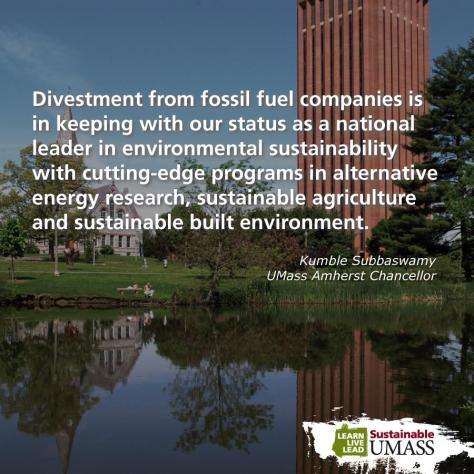
“The Foundation’s action today makes a powerful statement about UMass’s commitment to combatting climate change and protecting our environment,” said UMass Amherst Chancellor Kumble Subbaswamy. “It also speaks volumes about our students’ passionate commitment to social justice and the environment. It is largely due to their advocacy that that this important issue has received the attention that it deserves.”
UMass Board of Trustees Chairman Victor Woolridge said he would ask the Board to endorse the Foundation’s decision when it meets on June 15.
“With this vote, the UMass Foundation adopts a divestment position that is among the most aggressive established for any major university—public or private—in the United States,” said Woolridge. “We do so, in part, because members of the UMass community have urged us to consider divestment in moral terms. Since we acknowledge the moral imperative, we are willing to go beyond last year’s action and take this additional step, but we’re also mindful of our moral and fiduciary obligation to safeguard the University’s endowment, which provides critical funding for faculty research and student scholarships, and must be protected against losses. We believe this conclusive action balances those two priorities.”
“Divesting from investments in any particular sector is not done lightly and we have done so rarely,” said Foundation Treasurer and Investment Committee Chairman Edward H. D’Alelio. “The Foundation’s primary responsibility is a fiduciary one. Its primary mission is overseeing the endowment in an effort to maximize returns on funds donated for research, academic programs, financial aid and other purposes. That we took this step reflects not just our comfort as fiduciaries but the seriousness with which we see climate change.”
In addition to its divestment moves, the Foundation has taken a series of other steps to promote socially responsible investing. These include:
Becoming a founding member of the Intentional Endowment Network, which supports colleges, universities, and other mission-driven tax-exempt organizations in aligning their endowment investment practices with their mission, values, and sustainability goals without sacrificing financial returns.
Formally incorporating into its investment policies Environmental, Social and Governance (ESG) criteria.
Establishing a Social Choice Endowment option for donors.
Becoming a signatory to the Carbon Disclosure Project (CDP), which provides a global system for organizations to measure, disclose, manage and share environmental information.
The Foundation’s efforts are part of a broader University commitment to sustainability—grounded in its origins as a land-grant university and its original mission as an agricultural school—that is reflected in the following achievements and initiatives:
UMass conducts more than $20 million in environmental science research annually, and is recognized as a leader in areas including wind energy, climate science, marine science and biofuels.
UMass Amherst ranked 21st in the 2015 edition of The Princeton Review’s Guide to 353 Green Colleges.
UMass Boston launched the world’s first doctoral program in Green Chemistry.
At UMass Dartmouth, researchers are developing technology to generate power from ocean and tidal currents.
UMass Lowell’s National Science Foundation-supported research center brings together wind-energy industry and research experts to create next-generation thinking and technology.
UMass Medical’s Albert Sherman Center, a LEED Gold research and education center that opened in 2013, employed an energy-efficient design and advanced technologies that make it 25 percent more efficient than similar buildings.
Since 2007, the UMass system has reduced greenhouse gas emissions by about 17 percent, with UMass Amherst reducing its emissions by 23 percent.
The University has aggressively increased the use of renewable energy, entering into 15 separate solar contracts with 10 different solar developers, with the vast majority already operational. When all fully on line, they will generate 59 million kilowatt hours and help the state’s electric grid avoid 28,500 metric tons of CO2. Over 20 years, UMass solar operations will allow the grid to avoid more than 544,000 metric tons of CO2.
The University is a founding member of the Massachusetts Green High Performance Computing Center in Holyoke, a data center that supports the computing needs of the state’s five most research-intensive universities. The facility is the first university data center in the U.S. to be LEED platinum certified.
About the UMass Foundation
The UMass Foundation is a private, non-profit corporation founded in 1950 to foster and promote the growth, progress and general welfare of the University of Massachusetts, recently ranked as the No. 1 public university in New England in the World University Rankings. The Foundation provides a depository for charitable contributions to UMass, manages the University’s endowment, promotes private support of public higher education, and supports the fundraising efforts of the five UMass campuses—UMass Amherst, UMass Boston, UMass Dartmouth, UMass Lowell and UMass Medical School.
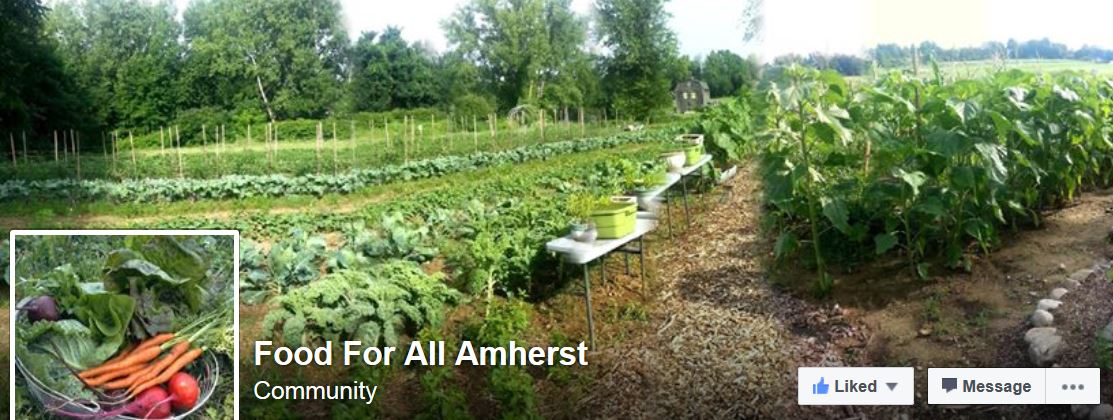
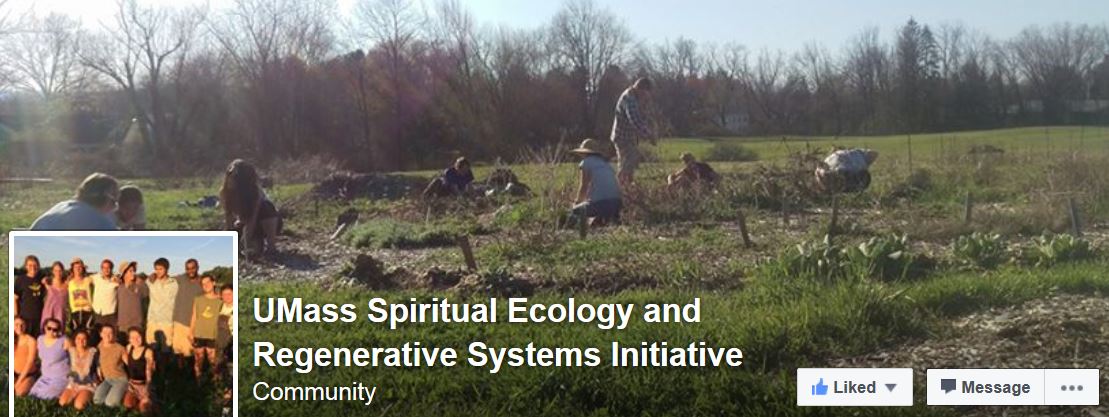
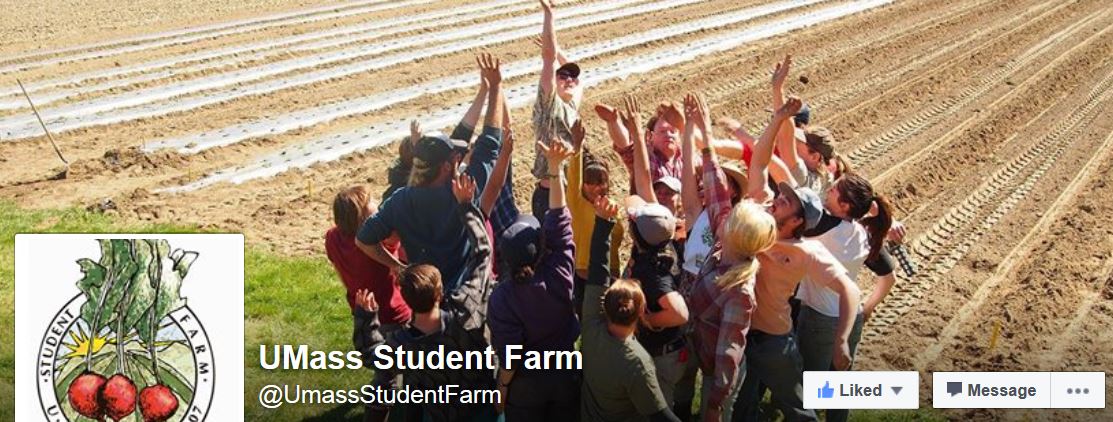
Spring has sprung at the UMass Stockbridge School of Agriculture and as you might expect, our students are busy at work in some of our many gardens and farms. For a more complete list of student projects, see: Sustainable Food and Farming Student Projects.
Just click on the name or the photo for more pictures……
The University of Massachusetts recently announced a collaboration among three academic departments, establishing the newUMass Amherst School of Earth and Sustainability. While many students are attracted to the concept of sustainability, some wonder about opportunities for employment after graduation. Here are a few thoughts on “jobs in sustainability” addressed to those students who have chosen to major in Sustainable Food and Farming, one of the 10 undergraduate majors offered by the new School.
Sustainable Food and Farming Jobs
Sustainable Food and Farming students are offered guidance throughout their time in college to seek and find their calling (career). When students in this major take Junior Writing for example, they explore the concept of Good Work, which according to economist E.F. Schumacher should...
Provide us with a decent living (food, clothing, housing)
Enable us to perfect their natural gifts & abilities
Allow us to serve other people to free us from our egocentricity
While students are often inspired by these powerful ideas, parents want to know about JOBS!
Of course, entry to this profession is a challenge. Access to land, finance and competition from industrial farming that exploits the land and people make more sustainable ways of growing and marketing food difficult. But there is help. The Massachusetts Beginning Farmer Network for example, is one of the local organizations that have emerged over the past few years to help young people navigate this rapidly changing situation.
Looking Ahead with Alan AtKisson
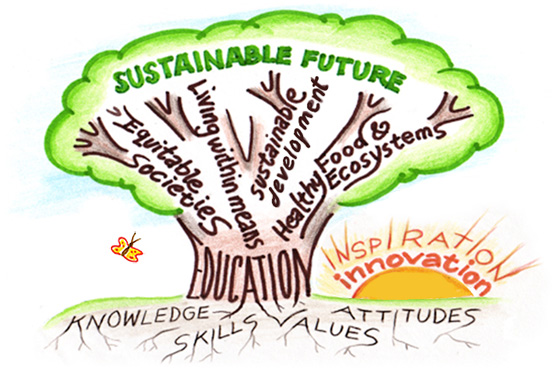
Our students know that we are living in a time of rapid transformation, not only for the New England food system, but for every biological and technological system on the planet.
“people dedicated to promoting sustainability ideas and innovations—are needed in every field, in ever increasing numbers.
“We need, especially:
“The artists, to help us feel the gravity of our predicament, to facilitate our envisioning a more beautiful way of life, and to inspire us to strive for better things;
“The scientists and engineers, to find solutions, inventions, new ideas that can rapidly transform our way of life;
“The designers, to redesign virtually everything, and to fuse beauty and functionality in a transformed world;
“The business people, to reimagine and redirect the flows of money and investment and talent in ways that can recreate the world while enhanc- ing global prosperity;
“The activists, to call attention to those issues about which societies at large are in denial or unable to act because of systemic or hegemonic forces;
“The average citizens, so-called, to reimagine themselves as global citi- zens, to enthusiastically support change efforts, and to dare to reach for their own aspirations for a better world;
“The professionals, so-called, such as those in health care or the law or international development, to change the standards of practice in their profession and to lend their considerable weight to a general movement for change;
“The politicians, to motivate us with inspiring rhetoric, to frame new policies that encourage transformation, and to tear down obstacles to innovation and transformation;
“The educators, to prepare current and future generations for a great responsibility: directing human development toward sustainability, and beyond.
“If a critical mass of people in all walks of life seriously take the charge to make transformation happen and if they are supported with widespread communication networks, resources, and incentives, then transformation will happen, and sustainability will become an attainable dream.
“And transformation will enrich us, not impoverish us. It will enrich us spiritually, socially, and economically. We will know our purpose more profoundly, live together more compassionately, and develop wealth more equitably. There is so much work to be done that there will be jobs for all the generations of life to come after us.” Note: the long quote above is from “Sustainability is Dead.“
Sustainability Education in Food and Farming
Those of us who teach in the Stockbridge School of Agriculture are inspired by the words of Alan AtKisson and are working to help students learn how to navigate in this rapidly changing world. We have created new classes such as Agricultural Leadership and Community Education and Tools for Life, and we encourage students to gain real-world experience through internships and apprenticeships.
The Sustainable Food and Farming major at UMass helps prepare a student for both life and livelihood.
Many of us believe that the work of our new School of Earth and Sustainability is to create an educational environment in which students may acquire information, knowledge, and wisdom. In addition to gaining basic skills and subject matter knowledge, students must be guided to clarify their core values, and to examine their behavior in the context of these values. In this process students are challenged to discover their place as citizens of the world, by constructing a sense of self beyond the individual-self to include the family-self, community-self, and global-self.
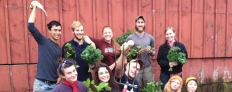
This approach seems to have made the Sustainable Food and Farming major attractive to many students who search to find meaning in their lives, their studies, and their intended careers. In fact, this major has grown from just 5 students to over 150 in the past 10 years.
The Sustainable Food and Farming major provides students with the opportunity to build their own major, guided by experienced faculty who help them make choices among a diverse array of course offerings. In addition to the traditional career path of food production and marketing, students may explore the rapidly growing interest areas of food and land policy, as well as community-based agricultural education, permaculture, urban agriculture, and much more.
The Stockbridge School of Agriculture is pleased to be one of the three founding departments in the new College of Earth and Sustainability, as well as an integral part of the history of UMass dating back 150 years to Mass Aggie. The story of the remarkable growth of the Sustainable Food and Farming major and the opportunities available to students today may be found on our blog page.
AMHERST, Mass. – The University of Massachusetts Amherst has established a new School of Earth and Sustainability (SES), which will serve as a central hub for a suite of academic programs, research, innovation, outreach and extension activities focused on finding solutions to the complex, global environmental challenges of the 21st century.
The school was approved by the Board of Trustees on April 13.
A partnership between the university’s department of environmental conservation, department of geosciences and the Stockbridge School of Agriculture within the College of Natural Sciences, the school brings together 18 undergraduate programs and five graduate programs. Faculty associated with SES conduct research on conservation, sustainable agriculture, earth sciences, environmental geography, renewable energy, sustainable building and design, climate sciences, environmental policy and decision-making, and sustainability.
Professor Curt Griffin, the founding director of SES, says the structure of the school will create an engaging academic environment for students, faculty, staff and the community.
“Our innovative SES community of students and faculty are passionate about making a big difference in the world, and are committed to finding sustainable solutions for meeting the needs of people today without compromising future generations,” he says.
Griffin says SES showcases the campus’ significant strengths in earth, sustainability and environmental sciences, while also strengthening collaboration with partners across campus and beyond the university. The school is also unique in New England, he adds.
“With this new partnership, we have the largest and most diverse set of earth, environmental and sustainability sciences programs across all public and private universities in the region. SES—in concert with our diverse partners—has the capacity to make UMass Amherst the destination of choice for students interested in sustainability and the environment.”
The School of Earth and Sustainability adds to the robust sustainability-related opportunities available at UMass Amherst. The university not only offers 300 courses related to sustainability, it also has a variety of green initiatives on campus including energy reduction, the sourcing of sustainable and local foods, composting, clothing and furniture reuse, and the promotion of alternative transportation. UMass Amherst holds a STARS Gold designation from the Association for the Advancement of Sustainability in Higher Education (AASHE) and ranked among Top 50 Green Colleges by Princeton Review in 2015.
If you are interested in studying Sustainable Food and Farming in the fastest growing major at UMass, check us out here: https://stockbridge.cns.umass.edu/SFF-BS
Free range chickens are priced higher than factory raised chickens for a reason
Have you ever asked yourself why an everyday “value” chicken can now be cheaper, pound for pound, than bread? Cheap chicken has become the “healthy” meat of choice for most shoppers and sales are booming, up 20% since 2000 in the UK. But is it really either cheap or healthy?
Producers who use intensive methods are not financially accountable for the harm they cause. The apparently cheap price tag of industrial chicken does not include any of the costs related to pollution of the environment, destruction of natural capital, greenhouse gas emissions or the damage to public health resulting from such systems. It turns out that low-cost chicken isn’t cheap at all.
By contrast, a pasture-fed organic chicken is now seen as a niche market option, because it costs more than three times as much. These chickens spend much of their lives outside. Their feed is grown without the use of chemical fertilisers and synthetic pesticides. And because they are healthy and happy, with stocking densities low enough to ensure that the birds derive a significant percentage of their nutritional requirements from grazed grass, worms and insects, they need no insurance drugs or antibiotics to stop them getting sick.
Despite the fact that sustainable poultry production systems deliver huge benefits to the environment and public health, the producers using these methods have no option but to compete on an unlevel playing field. Worse, we are paying for the damage caused by industrial food production in hidden ways, through taxes, in the form of misdirected subsidies from the common agricultural policy, through water pollution clean-up costs and through national health service treatment costs.
If consumers knew how factory chickens were raised, they might never eat it again
If the true cost of the factory bird was added to the price tag, it might even be greater than the pasture-raised organic bird.
So who’s to blame for this crazy state of affairs? It’s tempting to blame the farmers and food companies, but we farmers are stuck in an economic system that mainly rewards those who produce food at the cheapest price, as a result of which only those who are selling into high-end niche markets can afford to do the right thing.
The truth is this is a rigged, cheap food system that has two prices: the one you pay now and the one we all pay later. It’s a story that repeats with carrots, apples and peas, meat, milk and cheese. Even breakfast cereal. At some point we need to ask ourselves, why do we support such a destructive food system?
The good news is we do have the power to change it. We should insist that, in future, common agricultural policy payments should be available only to farmers whose practices benefit the environment and improve public health; we could tax chemical fertilisers and pesticides (just like sugar) and use the money to incentivise farmers to adopt more carbon-friendly soil management. We should insist that all food for schools, hospitals and care homes is locally and sustainably sourced. We could offer tax breaks for investors who finance sustainable food businesses. Finally, we should ensure that food workers are paid a living wage and have safer working conditions.
By making these choices, we would help create a fairer, sustainable and health-promoting food system that we all want to see for ourselves, our families and our community.
Patrick Holden is executive director of the Sustainable Food Trust. He produces an organic cheddar cheese from his 80-cow milking herd in west Wales.
UPDATE: The President of the UMass System has pledged his support to the Divest Movement started at UMass Amherst. If passed, we would be the first public university in the nation to stop investing in corporately controlled fossil fuel companies. For details see: DIVESTMENT UPDATE
Below is an article from the local news a week earlier….
AMHERST — If University of Massachusetts officials fully divest the state system’s endowment from the top 200 publicly traded fossil-fuel companies as student protesters are demanding, a UMass economics professor says the impact would be largely symbolic — at first.
“By itself, this would be a drop in the bucket. The UMass folio is just not that big,” Gerald Friedman said Wednesday. “I don’t think ExxonMobil is going to notice.”Continue reading Divest Movement Grows at UMass→




 In 2015 he moved the business to a 3,000-square-foot rented warehouse in Hadley where he and his two part-time employees harvest about 150 pounds of shiitake, oyster and lion’s mane mushrooms a week.



 U
U


 Of course, entry to this profession is a challenge. Access to land, finance and competition from industrial farming that exploits the land and people make more sustainable ways of growing and marketing food difficult. But there is help. The

 “The activists, to call attention to those issues about which societies at large are in denial or unable to act because of systemic or hegemonic forces;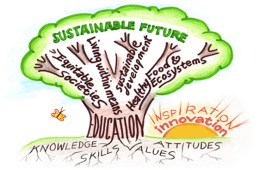
 This approach seems to have made the Sustainable Food and Farming major attractive to many students who search to find meaning in their lives, their studies, and their intended careers. In fact, this major has grown from just 5 students to over 150 in the past 10 years.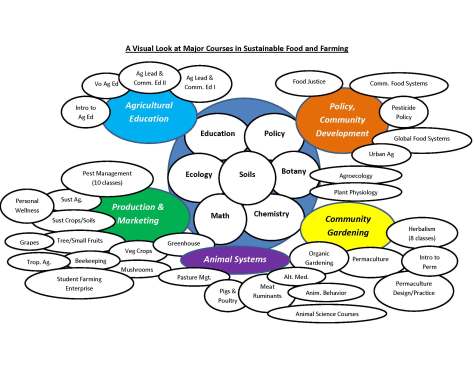


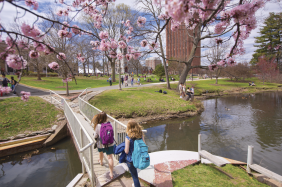 AMHERST, Mass. – The University of Massachusetts Amherst has established a new School of Earth and Sustainability (SES), which will serve as a central hub for a suite of academic programs, research, innovation, outreach and extension activities focused on finding solutions to the complex, global environmental challenges of the 21st century.
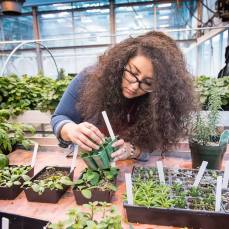 Professor Curt Griffin, the founding director of SES, says the structure of the school will create an engaging academic environment for students, faculty, staff and the community.
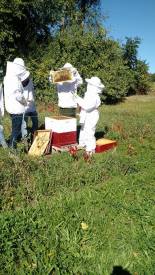 The School of Earth and Sustainability adds to the robust sustainability-related opportunities available at UMass Amherst. The university not only offers 300 courses related to sustainability, it also has a variety of green initiatives on campus including energy reduction, the sourcing of sustainable and local foods, composting, clothing and furniture reuse, and the promotion of alternative transportation. UMass Amherst holds a STARS Gold designation from the Association for the Advancement of Sustainability in Higher Education (AASHE) and ranked among Top 50 Green Colleges by Princeton Review in 2015.


 UMass Sustainable Food and Farming