By RICHIE DAVIS
Recorder Staff
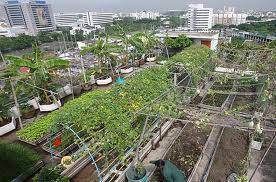
AMHERST — Students are getting back to the Earth — literally. When a group of University of Massachusetts students hatched an idea to create a permaculture garden, they convinced administrators to let them convert a quarter-acre parcel near Franklin Dining Commons into a garden that would help produce a half-ton of produce to feed the dining halls.
More than 1,000 students were involved in preparing and managing the new garden, which could be seen as something of a return of UMass to its 149-year roots as Massachusetts Agricultural College (Mass Aggie).
 Now, much bigger changes are under way at UMass, as some faculty point to a renewed interest in the earth that rivals the “back to the land movement” they saw in the 1970s. The Stockbridge School of Agriculture is being recast as the home of four-year as well as two-year degrees, in cooperation with a newly created Center for Agriculture that reflects the resurgence of interest among students of all stripes.
“There’s such an incredible interest in agriculture, not so much from students who want to be dairy farmers, but who want to have a house and who want to learn to grow this or that or to have land to milk some goats,” said Stockbridge School Dean William Mitchell, who’s seen the Sustainable Food and Farming program expand from 10 to 15 students when he arrived 3½ years ago to about 70 today. “We’ve got students in political science who want to learn about agriculture. It’s like the ’70s, when I was a student, and it was ‘back to the earth.’ This is almost the same movement; just a different generation.”
 Stockbridge, which was authorized by the Legislature to offer a two-year course in practical agriculture in 1918, hasn’t had its own faculty or its own students since other disciplines at what grew to be the university become dominant. “Even though agriculture has always been here, it’s fluctuated up and down in terms of importance,” said Mitchell, who directs Stockbridge, which he said has an impressive national reputation.
Academic programs at Stockbridge will come under the College of Natural Sciences and partner with the Center for Agriculture. The center will bring together research and Extension Service outreach programs, according to the center’s director, Stephen J. Herbert. But a symbol of its renewed support will be a new “agricultural learning center” being created as a hands-on training laboratory on a roughly 100-acre site within walking distance of the UMass campus.
The center will feature a restored 1894 barn that was once a showplace for Massachusetts Agricultural College, but has been boarded up since its last use as stables for UMass police horses. The barn, which Herbert and others hope to move to the new, undisclosed site with funds pledged by the Massachusetts Farm Bureau Federation and others, would become a visitors center, with classrooms and meeting space.
“As soon as we can get the barn up there and people realize we’re serious about this, I think you’ll find the community as a whole pitching in,” said Mitchell, who said the hope is to get financial donors from various agricultural sectors in the state to support “learning nodes” at the new center. There might even be a cranberry bog created, a small dairy herd or a golf green where students could try planting or maintaining different kinds of turf.
Coordinating fundraising and clearing hurdles for moving the barn and creating the new learning center — which Herbert said could be as large as 150 to 200 acres if it includes forestry — is Sandra Thomas of Greenfield, who over the past couple of years has helped Greenfield Community College create its Farm and Food Systems Program.
UMass already has agronomy and turf research farms in South Deerfield, but those facilities are strictly for research, not for the kinds of practical experience that will be available to farming and non-farming students alike at the proposed center, said Herbert.
“Students go visit the South Deerfield research farm but they can’t play in it, they can only look at it,” Herbert said. “Here it doesn’t matter if anybody screws something up. Then we try to correct it. It’s real-world agriculture.”
 Stockbridge will have a new major — Sustainable Food and Farming — which is being reorganized from the program Plant, Soil and Insect Science professor John Gerber introduced about 10 years ago, which as grown from five students in 2004 to 60 today.
Gerber’s Sustainable Living course has also grown from just 35 students in 2004 to over 300 today, said Gerber. “There’s a huge student awareness and upsurge in interest in the bigger questions — like how do we live more sustainably? That’s mirrored more in specialized interest in energy, green buildings, food and farming.”
 But he added, “If you’re in agriculture, you have to learn with your hands as well as your head.” A new agricultural learning center, he said, should expand possibilities for students, who now have a 2-acre plot at South Deerfield, where no more than a dozen students can raise vegetables with which they operate a small farmers market and Community Supported Agriculture (CSA) operation on campus.
“I hope this will open farming up to a much broader group of students,” said Gerber, who thinks hands-on learning with livestock would also be a valuable experience. “I think a larger percentage of the student body in general is interested learning how to grow their own food.” The proposed center, he said, could even be made available to the public to learn sustainable farming techniques to practice in their own backyards.
The UMass Faculty Senate is scheduled to take up changing the status of Stockbridge on May 3. Mitchell said he’s spoken with veteran Stockbridge alumni who have been enthused about the planned changes to create a four-year Stockbridge degree and give the agricultural school a little more control of its programs.
“They comment, ‘It’s about time,’” said Mitchell, who said the school would have 200 students in its two-year and four-year programs when it launches in the fall. The goal is to have 500 students in five years, he added. And having all of its agricultural-related programs under a single umbrella should help with recruitment.
The surge of renewed interest in farming — and in making the UMass agricultural programs more resilient — comes at a key time, says Mitchell, who entices potential supporting organizations with the direct question, “Who’s the next generation that’s going to take over your farm?”
Herbert adds, “We know that average age of farmers is 56 or 57. We need to train students as we lose older, experienced people from farming operations – as they retire. The world is getting more complex, with more hungry people all the time, so we need to have students well trained.”
—————————————————————————–
Links and photos were added and a few minor corrections (with permission of the author) were made to this article published by The Recorder. You can reach Richie Davis at:|rdavis@recorder.com|or 413-772-0261 Ext. 269

 We work to provide respectful land stewardship services to benefit the community, the earth and all its creatures. Integrating years of experience and knowledge in food production, landscape design and installation, tree-care and herbal medicine, we offer a variety of services that empower people through meaningful connection with the land.




 UMass Sustainable Food and Farming