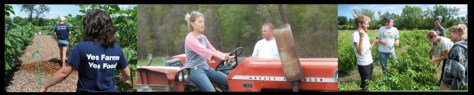
Young farmers wanted as generation ages

 By Caitlin Andrews  –  June 05. 2016
youngfarmer
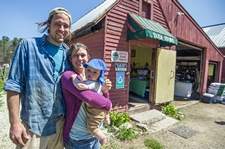
Phil and Becky Brand hold their 4-month old son Tom at their farmstand at Brandmoore Farm in Rollinsford. Photo by John Huff/Fosters.comr a caption


When you picture a New England farm, it might look something like McKenzie’s Farm.

Owners Jock and Annie McKenzie purchased the original 5.5 acres of land in Milton in 1987. Half the land was riddled with rocks and brush, and took two years to become plantable and yield a crop.

Now, the main farm is 80 acres, with another 20 acres being leased in Milton Mills. McKenzie’s has survived many calamities, from struggling to get off the ground and turn a profit, to losing an entire crop of strawberries to black vine weevil in 1999, to dealing with the constant threat of marauding deer and porcupines.

Sometime in the future, McKenzie’s will face another farming challenge: changing hands to a new owner. Luckily for Jock, 70, and Annie, 66, their oldest son, Brett McKenzie, 31, is Continue reading Young farmers wanted as generation ages

UMass Becomes First Major Public University to Divest from Direct Fossil Fuel Holdings

NOTE:  Students from the Sustainable Food and Farming program in the Stockbridge School of Agriculture were “right in the middle” of the UMass Divest Movement this past spring. See: https://sustfoodfarm.org/2016/04/14/divest/

divest

Contact: Robert P. Connolly 617/287-7073

BOSTON – The University of Massachusetts today became the first major public university to divest its endowment from direct holdings in fossil fuels. The decision was made by a unanimous vote of the Board of Directors of the UMass Foundation, a separate not-for-profit corporation that oversees an endowment whose value was $770 million at the end of the last fiscal year.

The decision followed a series of developments that signaled the University community’s desire to fight climate change. Last year, the Foundation voted to divest from direct holdings in coal companies in response to a petition from the UMass Fossil Fuel Divestment Campaign, a student group. The UMass Board of Trustees later endorsed the Foundation’s decision and described climate change as “a serious threat to the planet.” Last month, the Campaign staged a series of demonstrations at UMass Amherst to call for divestment from all fossil fuels.

“This action is consistent with the principals that have guided our university since its Land Grant inception and reflects our commitment to take on the environmental challenges that confront us all,” said UMass President Marty Meehan. “Important societal change often begins on college campuses and it often begins with students. I’m proud of the students and the entire University community for putting UMass at the forefront of a vital movement, one that has been important to me throughout my professional life.”

During last month’s protest at UMass Amherst, Meehan met with two representatives of the UMass Fossil Fuel Divestment Campaign, Sarah Jacqz and Kristie Herman. After that meeting, he said he was prepared to recommend that UMass build on its coal divestment by removing from its endowment direct investments in fossil fuel companies and making additional investments in clean/sustainable energy.

To accomplish the latter, Meehan also announced today that he planned to tap the President’s Science and Technology Initiative Fund, which last year provided more than $900,000 in grants to UMass faculty researchers, to ensure future funding for sustainability/green technology projects. He said that UMass is also set to boost its academic and financial involvement in offshore wind energy.

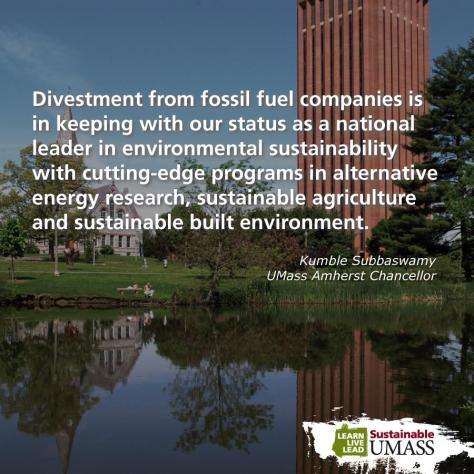
“The Foundation’s action today makes a powerful statement about UMass’s commitment to combatting climate change and protecting our environment,” said UMass Amherst Chancellor Kumble Subbaswamy. “It also speaks volumes about our students’ passionate commitment to social justice and the environment. It is largely due to their advocacy that that this important issue has received the attention that it deserves.”

UMass Board of Trustees Chairman Victor Woolridge said he would ask the Board to endorse the Foundation’s decision when it meets on June 15.

“With this vote, the UMass Foundation adopts a divestment position that is among the most aggressive established for any major university—public or private—in the United States,” said Woolridge. “We do so, in part, because members of the UMass community have urged us to consider divestment in moral terms. Since we acknowledge the moral imperative, we are willing to go beyond last year’s action and take this additional step, but we’re also mindful of our moral and fiduciary obligation to safeguard the University’s endowment, which provides critical funding for faculty research and student scholarships, and must be protected against losses. We believe this conclusive action balances those two priorities.”

“Divesting from investments in any particular sector is not done lightly and we have done so rarely,” said Foundation Treasurer and Investment Committee Chairman Edward H. D’Alelio. “The Foundation’s primary responsibility is a fiduciary one. Its primary mission is overseeing the endowment in an effort to maximize returns on funds donated for research, academic programs, financial aid and other purposes. That we took this step reflects not just our comfort as fiduciaries but the seriousness with which we see climate change.”

In addition to its divestment moves, the Foundation has taken a series of other steps to promote socially responsible investing. These include:

  • Becoming a founding member of the Intentional Endowment Network, which supports colleges, universities, and other mission-driven tax-exempt organizations in aligning their endowment investment practices with their mission, values, and sustainability goals without sacrificing financial returns.
  • Formally incorporating into its investment policies Environmental, Social and Governance (ESG) criteria.
  • Establishing a Social Choice Endowment option for donors.
  • Becoming a signatory to the Carbon Disclosure Project (CDP), which provides a global system for organizations to measure, disclose, manage and share environmental information.

The Foundation’s efforts are part of a broader University commitment to sustainability—grounded in its origins as a land-grant university and its original mission as an agricultural school—that is reflected in the following achievements and initiatives:

  • UMass conducts more than $20 million in environmental science research annually, and is recognized as a leader in areas including wind energy, climate science, marine science and biofuels.
  • UMass Amherst ranked 21st in the 2015 edition of The Princeton Review’s Guide to 353 Green Colleges.
  • UMass Boston launched the world’s first doctoral program in Green Chemistry.
  • At UMass Dartmouth, researchers are developing technology to generate power from ocean and tidal currents.
  • UMass Lowell’s National Science Foundation-supported research center brings together wind-energy industry and research experts to create next-generation thinking and technology.
  • UMass Medical’s Albert Sherman Center, a LEED Gold research and education center that opened in 2013, employed an energy-efficient design and advanced technologies that make it 25 percent more efficient than similar buildings.
  • Since 2007, the UMass system has reduced greenhouse gas emissions by about 17 percent, with UMass Amherst reducing its emissions by 23 percent.
  • The University has aggressively increased the use of renewable energy, entering into 15 separate solar contracts with 10 different solar developers, with the vast majority already operational. When all fully on line, they will generate 59 million kilowatt hours and help the state’s electric grid avoid 28,500 metric tons of CO2. Over 20 years, UMass solar operations will allow the grid to avoid more than 544,000 metric tons of CO2.
  • The University is a founding member of the Massachusetts Green High Performance Computing Center in Holyoke, a data center that supports the computing needs of the state’s five most research-intensive universities. The facility is the first university data center in the U.S. to be LEED platinum certified.

About the UMass Foundation

The UMass Foundation is a private, non-profit corporation founded in 1950 to foster and promote the growth, progress and general welfare of the University of Massachusetts, recently ranked as the No. 1 public university in New England in the World University Rankings. The Foundation provides a depository for charitable contributions to UMass, manages the University’s endowment, promotes private support of public higher education, and supports the fundraising efforts of the five UMass campuses—UMass Amherst, UMass Boston, UMass Dartmouth, UMass Lowell and UMass Medical School.

Our students are busy!

Spring has sprung at the UMass Stockbridge School of Agriculture and as you might expect, our students are busy at work in some of our many gardens and farms. For a more complete list of student projects, see: Sustainable Food and Farming Student Projects.

Just click on the name or the photo for more pictures……

GardenShare

gardenshare

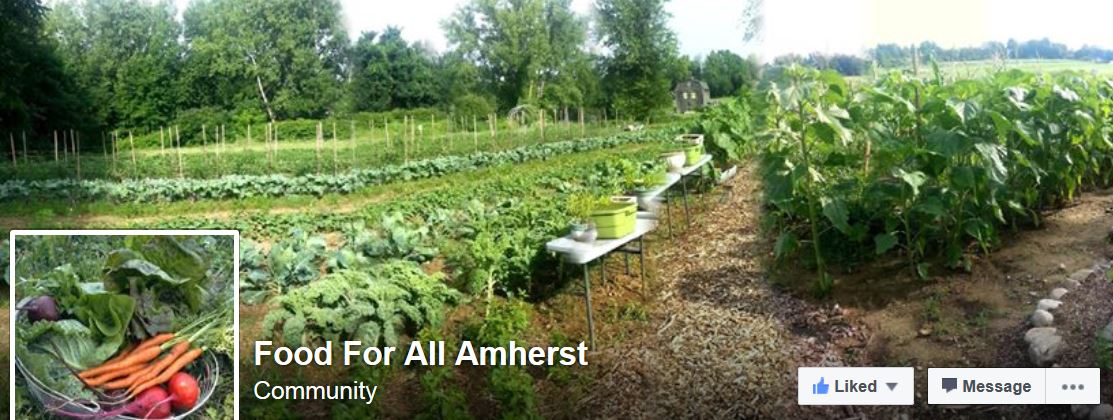
Food for All Garden

foodforall

UMass Food Forest

foodforest

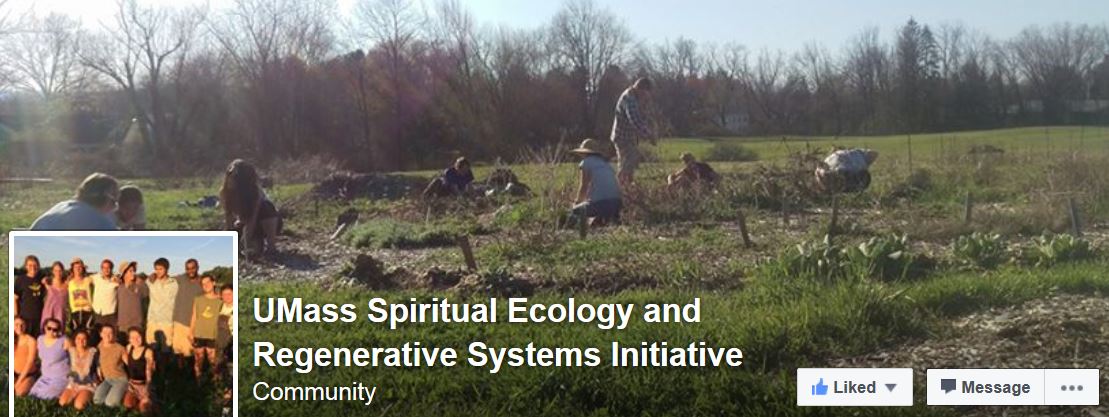
 Spiritual Ecology and Regenerative Design Initiative

sersiU

UMass Permaculture Gardens

perm

UMass Renaissance Garden

renaissance

UMass Bee Club

bees2

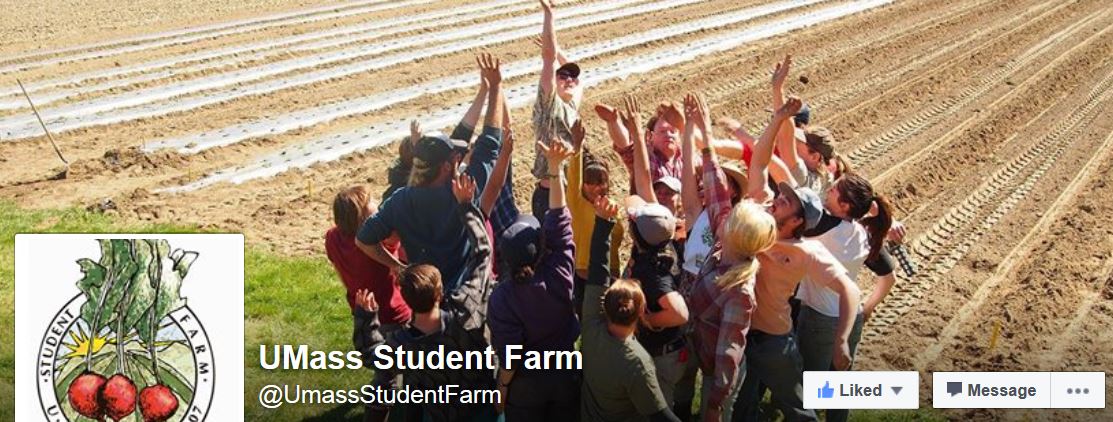
UMass Student Farm

studfarm

For more events sponsored by students in the Sustainable Food and Farming major over the past few weeks, see:

And More Events


Lets talk about jobs in sustainability

The University of Massachusetts recently announced a collaboration among three academic departments, establishing the new UMass Amherst School of Earth and Sustainability.  While many students are attracted to the concept of sustainability, some wonder about opportunities for employment after graduation.  Here are a few thoughts on “jobs in sustainability” addressed to those students who have chosen to major in Sustainable Food and Farming, one of the 10 undergraduate majors offered by the new School.

Sustainable Food and Farming Jobs

Sustainable Food and Farming students are offered guidance throughout their time in college to seek and find their calling (career).   When students in this major take Junior Writing for example, they explore the concept of Good Work, which according to economist E.F. Schumacher should...

  1. Provide us with a decent living (food, clothing, housing)
  2. Enable us to perfect their natural gifts & abilities
  3. Allow us to serve other people to free us from our egocentricity
While students are often inspired by these powerful ideas, parents want to know about JOBS! 

So we list resources that provide students with access to internships and jobs on our Stockbridge School of Agriculture web page.  We also provide examples of the diverse nature of employment opportunities after graduation by listing the early career paths chosen by our recent graduates.  And we know that about 30% of the farmers in New England will retire in the next 10 years and 90% of them have no young person farming alongside them to take over the farm.  Trends analyses suggest sustainable food and farming is one of the hottest growing professions in America.
bfnOf course, entry to this profession is a challenge.  Access to land, finance and competition from industrial farming that exploits the land and people make more sustainable ways of growing and marketing food difficult.  But there is help.  The Massachusetts Beginning Farmer Network for example, is one of the local organizations that have emerged over the past few years to help young people navigate this rapidly changing situation.

Looking Ahead with Alan AtKisson

Our students know that we are living in a time of rapid transformation, not only for the New England food system, but for every biological and technological system on the planet.

According to futurist and sustainability pioneer, Alan AtKisson, who wrote in Sustainability is Dead – Long Live Sustainability

“people dedicated to promoting sustainability ideas and innovations—are needed in every field, in ever increasing numbers. 

“We need, especially:

ecoartist

“The artists, to help us feel the gravity of our predicament, to facilitate our envisioning a more beautiful way of life, and to inspire us to strive for better things;

“The scientists and engineers, to find solutions, inventions, new ideas that can rapidly transform our way of life;sustainable-business

“The designers, to redesign virtually everything, and to fuse beauty and functionality in a transformed world;

“The business people, to reimagine and redirect the flows of money and investment and talent in ways that can recreate the world while enhanc- ing global prosperity;

503_400_occupy_painting“The activists, to call attention to those issues about which societies at large are in denial or unable to act because of systemic or hegemonic forces;

“The average citizens, so-called, to reimagine themselves as global citi- zens, to enthusiastically support change efforts, and to dare to reach for their own aspirations for a better world;

“The professionals, so-called, such as those in health care or the law or international development, to change the standards of practice in their profession and to lend their considerable weight to a general movement for change;

“The politicians, to motivate us with inspiring rhetoric, to frame new policies that encourage transformation, and to tear down obstacles to innovation and transformation;

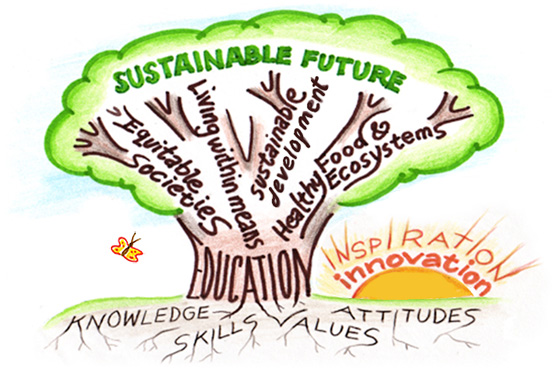
“The educators, to prepare current and future generations for a great responsibility: directing human development toward sustainability, and beyond.susteduc
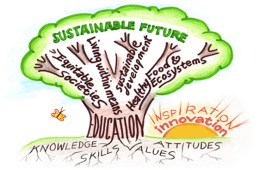
“If a critical mass of people in all walks of life seriously take the charge to make transformation happen and if they are supported with widespread communication networks, resources, and incentives, then transformation will happen, and sustainability will become an attainable dream.

“And transformation will enrich us, not impoverish us. It will enrich us spiritually, socially, and economically. We will know our purpose more profoundly, live together more compassionately, and develop wealth more equitably. There is so much work to be done that there will be jobs for all the generations of life to come after us.”               Note: the long quote above is from “Sustainability is Dead.

Sustainability Education in Food and Farming

Those of us who teach in the Stockbridge School of Agriculture are inspired by the words of Alan AtKisson and are working to help students learn how to navigate in this rapidly changing world.  We have created new classes such as Agricultural Leadership and Community Education and Tools for Life, and we encourage students to gain real-world experience through internships and apprenticeships.

The Sustainable Food and Farming major at UMass helps prepare a student for both life and livelihood. 

Many of us believe that the work of our new School of Earth and Sustainability is to create an educational environment in which students may acquire information, knowledge, and wisdom.  In addition to gaining basic skills and subject matter knowledge, students must be guided to clarify their core values, and to examine their behavior in the context of these values.  In this process students  are challenged to discover their place as citizens of the world, by constructing a sense of self beyond the individual-self to include the family-self, community-self, and global-self.
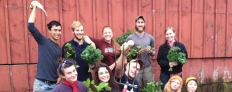
sfebannerThis approach seems to have made the Sustainable Food and Farming major attractive to many students who search to find meaning in their lives, their studies, and their intended careers.  In fact, this major has grown from just 5 students to over 150 in the past 10 years.

The Sustainable Food and Farming major provides students with the opportunity to build their own major, guided by experienced faculty who help them make choices among a diverse array of course offerings.  In addition to the traditional career path of food production and marketing, students may explore the rapidly growing interest areas of food and land policy, as well as community-based agricultural education, permaculture, urban agriculture, and much more. CurriculumColor
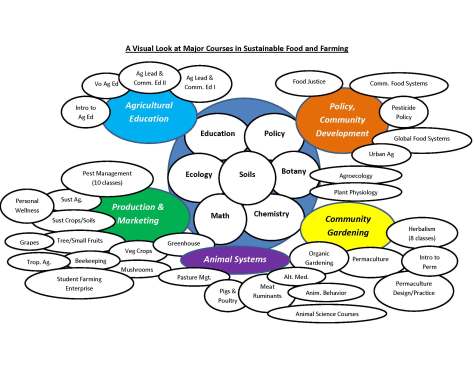
The Stockbridge School of Agriculture is pleased to be one of the three founding departments in the new College of Earth and Sustainability, as well as an integral part of the history of UMass dating back 150 years to Mass Aggie.  The story of the remarkable growth of the Sustainable Food and Farming major and the opportunities available to students today may be found on our blog page.

Its surely a good time to be a Stockie!

massag.jpg

—————————————-

If you want to learn more about the major, check us out here: SFF Major at UMass.  Or check out our ONLINE classes in Sustainable Food and Farming which will allow you to earn a Certificate or Associate of Sciences degree fully online.

stockbanner4

UMass establishes new Sustainability School

SES Image - John Solem.pngAMHERST, Mass. – The University of Massachusetts Amherst has established a new School of Earth and Sustainability (SES), which will serve as a central hub for a suite of academic programs, research, innovation, outreach and extension activities focused on finding solutions to the complex, global environmental challenges of the 21st century.
The school was approved by the Board of Trustees on April 13.

A partnership between the university’s department of environmental conservation, department of geosciences and the Stockbridge School of Agriculture within the College of Natural Sciences, the school brings together 18 undergraduate programs and five graduate programs. Faculty associated with SES conduct research on conservation, sustainable agriculture, earth sciences, environmental geography, renewable energy, sustainable building and design, climate sciences, environmental policy and decision-making, and sustainability.

xochigripe (2)Professor Curt Griffin, the founding director of SES, says the structure of the school will create an engaging academic environment for students, faculty, staff and the community.
“Our innovative SES community of students and faculty are passionate about making a big difference in the world, and are committed to finding sustainable solutions for meeting the needs of people today without compromising future generations,” he says.

Griffin says SES showcases the campus’ significant strengths in earth, sustainability and environmental sciences, while also strengthening collaboration with partners across campus and beyond the university. The school is also unique in New England, he adds.

“With this new partnership, we have the largest and most diverse set of earth, environmental and sustainability sciences programs across all public and private universities in the region. SES—in concert with our diverse partners—has the capacity to make UMass Amherst the destination of choice for students interested in sustainability and the environment.”

beesThe School of Earth and Sustainability adds to the robust sustainability-related opportunities available at UMass Amherst. The university not only offers 300 courses related to sustainability, it also has a variety of green initiatives on campus including energy reduction, the sourcing of sustainable and local foods, composting, clothing and furniture reuse, and the promotion of alternative transportation. UMass Amherst holds a STARS Gold designation from the Association for the Advancement of Sustainability in Higher Education (AASHE) and ranked among Top 50 Green Colleges by Princeton Review in 2015.

Original Post

Link to more information

===========================================

If you are interested in studying Sustainable Food and Farming in the fastest growing major at UMass, check us out here: https://stockbridge.cns.umass.edu/SFF-BS

stockbanner4


“Industrial” meat is lower priced but costs more than locally raised

free-range-chickens_xft5b1
Free range chickens are priced higher than factory raised chickens for a reason

Have you ever asked yourself why an everyday “value” chicken can now be cheaper, pound for pound, than bread? Cheap chicken has become the “healthy” meat of choice for most shoppers and sales are booming, up 20% since 2000 in the UK. But is it really either cheap or healthy?

Producers who use intensive methods are not financially accountable for the harm they cause. The apparently cheap price tag of industrial chicken does not include any of the costs related to pollution of the environment, destruction of natural capital, greenhouse gas emissions or the damage to public health resulting from such systems. It turns out that low-cost chicken isn’t cheap at all.

By contrast, a pasture-fed organic chicken is now seen as a niche market option, because it costs more than three times as much. These chickens spend much of their lives outside. Their feed is grown without the use of chemical fertilisers and synthetic pesticides. And because they are healthy and happy, with stocking densities low enough to ensure that the birds derive a significant percentage of their nutritional requirements from grazed grass, worms and insects, they need no insurance drugs or antibiotics to stop them getting sick.

Despite the fact that sustainable poultry production systems deliver huge benefits to the environment and public health, the producers using these methods have no option but to compete on an unlevel playing field. Worse, we are paying for the damage caused by industrial food production in hidden ways, through taxes, in the form of misdirected subsidies from the common agricultural policy, through water pollution clean-up costs and through national health service treatment costs.

Florida_chicken_house

If consumers knew how factory chickens were raised, they might never eat it again

If the true cost of the factory bird was added to the price tag, it might even be greater than the pasture-raised organic bird.

So who’s to blame for this crazy state of affairs? It’s tempting to blame the farmers and food companies, but we farmers are stuck in an economic system that mainly rewards those who produce food at the cheapest price, as a result of which only those who are selling into high-end niche markets can afford to do the right thing.

The truth is this is a rigged, cheap food system that has two prices: the one you pay now and the one we all pay later. It’s a story that repeats with carrots, apples and peas, meat, milk and cheese. Even breakfast cereal. At some point we need to ask ourselves, why do we support such a destructive food system?

The good news is we do have the power to change it. We should insist that, in future, common agricultural policy payments should be available only to farmers whose practices benefit the environment and improve public health; we could tax chemical fertilisers and pesticides (just like sugar) and use the money to incentivise farmers to adopt more carbon-friendly soil management. We should insist that all food for schools, hospitals and care homes is locally and sustainably sourced. We could offer tax breaks for investors who finance sustainable food businesses. Finally, we should ensure that food workers are paid a living wage and have safer working conditions.

By making these choices, we would help create a fairer, sustainable and health-promoting food system that we all want to see for ourselves, our families and our community.

Patrick Holden is executive director of the Sustainable Food Trust. He produces an organic cheddar cheese from his 80-cow milking herd in west Wales.

Divest Movement Grows at UMass

UPDATE:  The President of the UMass System has pledged his support to the Divest Movement started at UMass Amherst.  If passed, we would be the first public university in the nation to stop investing in corporately controlled fossil fuel companies.  For details see: DIVESTMENT UPDATE

Below is an article from the local news a week earlier….

AMHERST — If University of Massachusetts officials fully divest the state system’s endowment from the top 200 publicly traded fossil-fuel companies as student protesters are demanding, a UMass economics professor says the impact would be largely symbolic — at first.

“By itself, this would be a drop in the bucket. The UMass folio is just not that big,” Gerald Friedman said Wednesday. “I don’t think ExxonMobil is going to notice.” Continue reading Divest Movement Grows at UMass

Spring Events at UMass Amherst in Sustainable Food and Farming

The Stockbridge School of Agriculture is proud of our passionate and engaged students  in  Sustainable Food and Farming.  Stockbridge encourages students to “learn by doing” and we would like to share some of the things we are doing with you –  especially if you….

  • love to be outdoors
  • enjoy good food
  • care about healthy people and community
  • want to study sustainable food and farming systems

Here are some student-organized events which we thought you might enjoy….

The Franklin Permaculture Garden

permacultureVolunteer at the Franklin Permaculture Garden
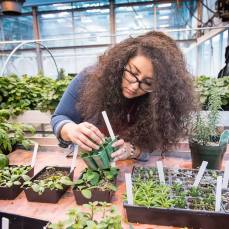
Spring Volunteer hours  will be held every Tuesday, Thursday and Friday 9:30 AM – ­11:00 AM at the Franklin Permaculture Garden outside of the Franklin Dining Commons.  No prior experience is required, just show up and get your hands dirty!
 —————————————————

 Sponsored by the UMass Bee Club

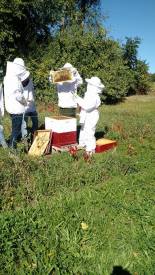
beesThursday March 31 the UMass Bee Club will be hosting another candle making event! We encourage you to bring your shot glasses to make personalized tea candles.  The event will begin at 7 in Fernald Hall (right next to Franklin Dining Common).
 —————-

Saturday, April 2 the UMass Amherst Beekeeping Club will help us redefine our relationship with bees and create a new paradigm of caring for bees.This event is FREE for UMass Students. $20 for public.

More Sustainable Food and Farming Events

Monday, April 4 the Spiritual Ecology and Regenerative Systems Initiative will sponsor a DIY Herbal Spa Workshop in French Hall room 102.  Come and make your own herbal body care products.

Wednesday, April 6 the UMass Student Farm will have its Spring Farmers Market and Celebration.  Music, vendors, food and fun.  Stop by the Cape Cod Lounge any time from 12:00 noon – 4:00pm to join the fun and check them out!

studentfarm22

Wednesday, April 6 a group of students in the Sustainable Food and Farming major will sponsor a New Farmer Panel and Expo at the Earth Foods Cafe, right after the Farmers Market on the same day.  The will run from 4:00-6:00pm.  Join us!

And…..

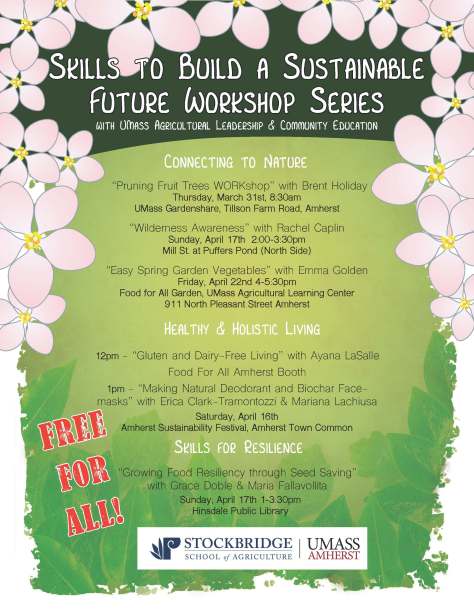
workshop_flyer-3

And….

truth

 And still more…

herbfest flyer (2)

Amherst Sustainability Festival

Amherst Sustainability Festival On Saturday, April 16 students in the Sustainable Food and Farming major will be teaching workshops at the annual Amherst Sustainability Festival between 10:00am and 4:00pm on the Amherst Commons.  Here are a few workshops:
  • Natural Deodorant Making
  • Biochar Face-mask Workshop
  • Gluten and Dairy-Free Living
  • Planting Seeds for Kids

Please stop by the festival and join in the fun!

Earth Day at UMass

Stop by the Stockbridge School of Agriculture booth for fun and educational stuff on Earth Day at UMass, April 22 from 9:00am-6:00pm at the Student Union North Lawn!

————————————————–

  • To see more of the “hands-on” projects of students in the Sustainable Food and Farming major check out STUDENT PROJECTS.…. and get involved!
  • For information on the fastest growing major at UMass and the largest sustainable agriculture program in the nation, check out our “official” web page at:

Sustainable Food and Farming at UMass  (where students have more fun)

banner5

Agriculture is fertile ground for high-skilled positions

Adapted from Special to NJ.com  on March 06, 2016 at 5:00 AM
farm jobs.jpg
Young people interested in agriculture are likely to find a surplus of job opportunities in the coming years.

High school students interested in pursuing a career in agriculture will likely find job opportunities are ripe for the picking in the coming years.

According to a report from Purdue University, the U.S. will have nearly 58,000 high-skilled job openings per year in the food, agriculture, renewable natural resources and environmental fields between now and 2020. That compares to only about 35,000 U.S. students graduating with degrees in those fields per year for the same time.

One factor driving the demand for skilled workers is the diverse mix of challenges facing farmers. By 2050, U.S. farmers are expected to help increase global food production by 70 percent to feed a world population of 9 billion people. In the near term, farmers must also contend with lower commodity prices, cope with severe weather and labor shortages, and combat greater weed resistance and crop diseas

online
Click to learn how many career changing adults are getting their start online!

A new generation of skilled professionals is needed to help take farmers to 2050 and beyond. This includes not only the farm operators who will be expected to apply more sophisticated farming technologies and practices in the field, but the researchers, scientists and engineers who will shape the future of agriculture through research and innovations.

Another factor contributing to the robust job market is an aging workforce. According to a report from the STEM Food & Ag Council, nearly a quarter of industry professionals in advanced agriculture fields such as plant and soil science, food science and technology, and agricultural economics are age 55 or older. Meanwhile, more than 60 percent of principal farm operators are now age 55 or older, reports the USDA Census of Agriculture.

An influx of young talent will be needed in the next several years to replace these workers both in the field and in the lab.  For help finding good work or internships, see: https://stockbridge.cns.umass.edu/SFF-good-work.

So what can young people who are interested in agriculture do to prepare for an eventual career in the industry?

Find the Right Program: Students should be diligent in evaluating agriculture programs against their personal and career interests. This means seeking out schools that not only offer the right degrees, but also provide internship, student-involvement and research opportunities in areas relevant to them.

cropped-bannersff
The Sustainable Food and Farming major at UMass Amherst offers flexibility, hands-on courses, and opportunities for internships and to study abroad.

Get Support: The number of scholarships available to students from different organizations can be overwhelming. Agriculture-focused scholarships can be a good place to start, especially as companies seek to support more young people joining the industry.

“The agricultural industry can sustain success by investing in the future,” said Paul Rea, senior vice president, Agriculture Solutions, North America, BASF. “We are pleased to provide scholarships to bright, agriculture-passionate individuals to support their education and assure the sustainability of the industry in the years to come.”

Scholarships-header
For more, go to: Food and Farming Scholarships

These scholarships are available to college-bound children of the association farmer members. For more information, interested students should visit www.ncga.com/topics/education/college-scholarships and www.agrimarketing.com/s/100072.

The future of food security hinges on tomorrow’s agriculture workforce. Helping today’s students find their calling in the industry can improve the likelihood that key positions are filled — and ensure that a growing world is fed.

Original Post

Editors Note – the demand for high quality and progressive education in sustainable food and farming is evidenced by enrollment trends in the UMass Stockbridge School of Agriculture enrollment trends. See below.

enroll